● Tesla 2026 Reckoning Scale Beats Tech Energy Power Surge
“2026 Will Not Be Easy”: Why a Former Tesla Director’s Warning Matters
Competition will be decided by scale (deployment), not technology alone
This report consolidates four points:
1) Why 2026 becomes a validation year for Tesla’s equity story and operating performance.
2) The key factor often missed when the Waymo vs. Tesla autonomy race is framed only as a technology comparison.
3) Why the energy/power infrastructure opportunity could monetize sooner and at larger scale than robotaxis.
4) A practical checklist that is underemphasized in mainstream coverage (regulation, operations, unit economics, grid constraints).
1) News Brief: Two Competing Narratives Around Tesla
Market positioning is increasingly polarized:
- Bull case: Tesla is being re-rated as an AI and energy platform, not only an automaker.
- Bear case: The re-rating is detached from slowing vehicle demand and margin compression.
The core implication is that sustaining peak-level valuation requires measurable financial and operational proof in 2026, not narrative reinforcement.
2) Summary of the Former Director’s Warning: 2026 as a “Judgment Year”
Key messages attributed to Steve Wesley:
- Tesla faces discussion of two consecutive years of declining revenue and reduced profitability.
- To sustain a premium valuation, vehicle sales alone are insufficient; robotaxi execution must show (i) regulatory approvals, (ii) multi-city expansion, and (iii) realized revenue.
- Waymo targets expansion into multiple markets by late 2026 and is scaling operational volume (ride count) with a broader deployment plan.
The relevance is heightened because the perspective comes from a former insider emphasizing execution and operating metrics.
3) Waymo vs. Tesla: Why a Technology-Only Lens Can Mislead
The comparison is often framed around technical reliability metrics, including distance between safety-critical interventions. This is directionally informative but incomplete because the two companies pursue structurally different scaling approaches:
- Waymo: Geofenced deployment (defined areas, high-definition mapping, constrained ODD) optimized for high performance within limited domains.
- Tesla: Broad real-world data collection across general roads, continuous OTA updates, and fleet-wide learning to lift average performance at scale.
The investment question therefore shifts from “who drives better” to “who can scale a compliant operating model faster,” including regulation, insurance/liability, safety governance, and cost structure.
4) Scale as the Decisive Advantage: Tesla’s Strategy Is to Reset the Field
Autonomy outcomes depend on performance, but diffusion speed may be the larger competitive lever. Tesla’s OTA distribution can propagate capability improvements across a global installed base simultaneously, a scaling mechanism that is difficult for geofenced operators to replicate.
The “Cybercab” concept (a steering-wheel-free, robotaxi-native platform) signals a shift from retrofitting existing vehicles to designing manufacturing cost, maintenance workflow, utilization, and fleet operations around commercial robotaxi deployment. If executed, this would move autonomy from demonstration to an operating industry.
5) Tesla Energy: From Ancillary Revenue to AI-Era Grid Infrastructure
Tesla’s energy segment is positioned within a macro structure:
AI data center build-out → accelerating electricity demand → grid bottlenecks → rising value of storage and load balancing (batteries/ESS).
Megapack and Powerwall function as grid assets that stabilize supply, manage peaks, and enable “time-shifting” of energy. Under supportive demand conditions, the energy segment can contribute a second valuation pillar rather than merely offsetting vehicle softness.
In procurement cycles where utilities expand ESS purchases aggressively, backlog visibility can become as important as reported revenue growth.
6) The Operating Metrics the Market Is Likely to Demand in 2026
Vehicle deliveries alone may become less explanatory. Likely evaluation metrics include:
- Robotaxi: number of regulatory-approved cities; share of operations without onboard safety personnel; utilization per vehicle; cost per mile; insurance and incident costs.
- FSD: subscription conversion rate; geographic rollout speed; repeatability of performance gains following updates.
- Energy: Megapack shipment volume; backlog; margin durability; utility and data-center supply agreements.
Macro sensitivities likely to affect multiples and capital allocation include U.S. rate direction, inflation trajectory, and supply-chain normalization versus renewed disruption.
7) Under-Discussed Investor Checklist (Highest Signal Items)
The 2026 valuation debate will likely center on whether autonomy is an operable business, not whether the model is impressive.
1) Robotaxi economics are a combined game of regulation + insurance + operations, not AI alone
Key determinants include where service is permitted, liability structure, and operating cost components (remote assistance, maintenance, damage, cleaning, charging).
2) Tesla’s scaling advantage is the distribution mechanism (installed base), not only data volume
OTA-enabled diffusion can create step-function adoption if a threshold is reached.
3) Waymo’s advantage is accumulated city-level operations experience
Geofencing limits breadth, but operational learning compounds across dispatch, curb management, rider issues, incident handling, pricing, and fleet turn rates.
4) Energy storage is moving toward “must-have” status in the data-center-driven grid cycle
Data centers increase load; grids constrain; ESS monetizes the constraint by stabilizing and arbitraging supply over time.
5) The primary 2026 risk is not technical failure but speed versus embedded expectations
The key is not binary success, but quarter-by-quarter evidence of deployment velocity and improving unit economics.
8) Conclusion: One-Sentence Framework for 2026
2026 is likely to be a year in which Tesla must translate the “autos + AI + energy” narrative into verifiable operating metrics—city expansion, unit economics, and power-infrastructure backlog—while autonomy competition is decided by scalable commercialization rather than technical scoring alone.
< Summary >
- To sustain a premium valuation in 2026, Tesla likely needs robotaxi regulatory approvals, multi-city expansion, and quarterly visible operating results.
- Waymo’s geofenced completeness strategy and Tesla’s OTA-plus-installed-base diffusion strategy require different comparison frameworks.
- Tesla Energy (Megapack/ESS) is leveraged to AI data-center-driven power demand and grid bottlenecks and can serve as a second valuation engine.
- The core 2026 emphasis is deployment speed, unit economics, and commercialization capability across regulation, insurance, and operations.
[Related Articles…]
- Tesla robotaxi commercialization and market impact: https://NextGenInsight.net?s=tesla
- Autonomy regulation changes and investor metrics: https://NextGenInsight.net?s=autonomous-driving
*Source: [ 오늘의 테슬라 뉴스 ]
– “2026년은 쉽지 않다” 전 테슬라 이사의 경고, 기술이 아니라 스케일을 놓친 이유는?
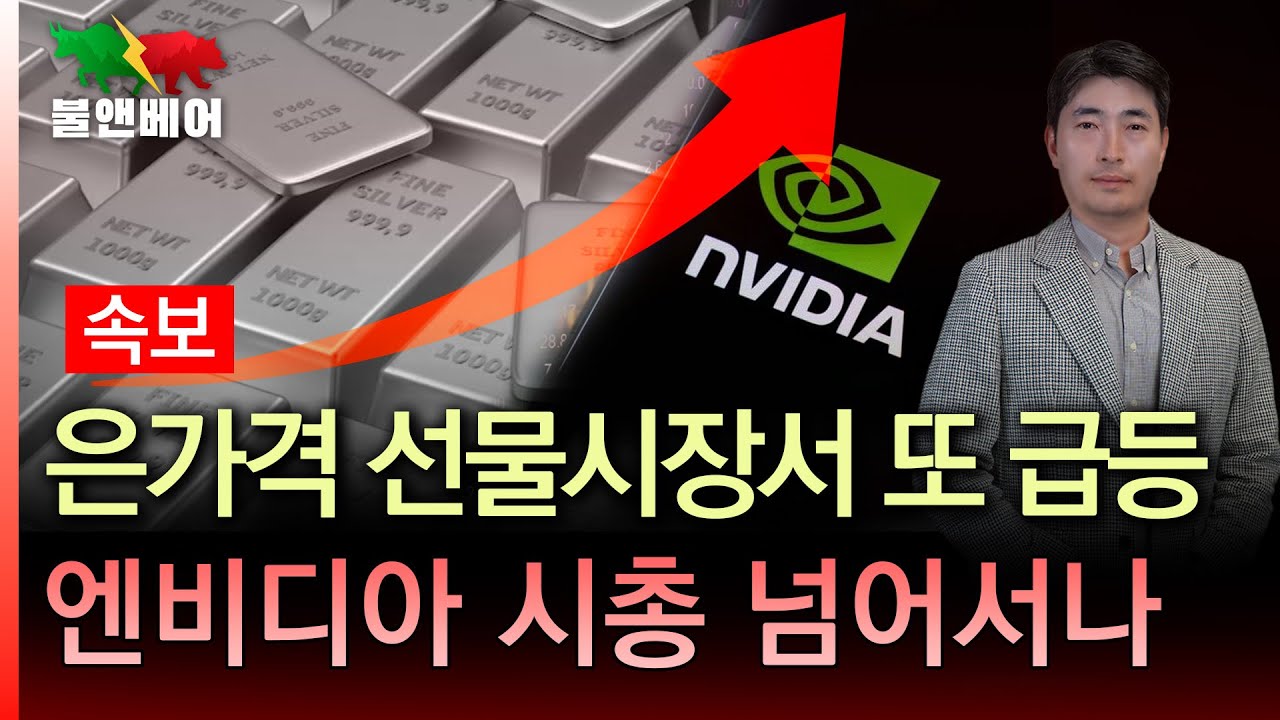
● Silver Futures Explode Past 80, 100 Next Dash
Silver Futures Surge, Break Above $80/oz: Key Drivers, $100 Scenario Conditions, and the Underappreciated Industrial Supply-Demand Mechanism
This report consolidates four elements:1) Why silver futures spiked immediately after the news (underlying capital flow drivers)2) Why comparisons to NVIDIA’s market capitalization are circulating, including methodological pitfalls and what the comparison signals3) Conditions under which a $100/oz scenario could hold vs. a post-surge drawdown risk checklist4) The key point often omitted in mainstream coverage: how “industrial silver” supply-demand dynamics can amplify price moves
1) Key Breaking Update (News-Style Summary)
● Silver futures surged immediately after the U.S. futures market open, breaking above $80/oz
The session high reached approximately $82/oz before a modest short-term pullback.
● The line between valuation-driven gains and speculative momentum has narrowed materially
Typical late-cycle surge mechanics include “narrative (inflation/USD) + leverage (futures) + momentum chasing (FOMO).” Current price action reflects this combination.
● Silver’s implied “market value” is being discussed as approaching NVIDIA’s scale
Some comparisons place silver among the top global assets, suggesting that a further price increase could push it above NVIDIA by certain estimates.
2) Why Silver Moved “Now”: Capital Flows in Three Points
1) Renewed inflation concerns increase preference for real assets and alternatives over cash.
2) A USD-weakness narrative structurally supports USD-denominated commodities, including precious metals.
3) Rate-cut expectations lower the opportunity cost of non-yielding assets (gold/silver).
Overall, the move appears driven less by silver-specific fundamentals than by macro positioning layered onto the asset.
3) “Silver Exceeds NVIDIA’s Market Cap”: How Much Weight to Assign
This framing is attention-grabbing, but the actionable takeaway is limited.
● Signal
It reflects silver’s potential re-rating within the global capital allocation set, often cited when institutions and macro traders increase precious-metals exposure as a hedge.
● Methodological risk
Silver “market cap” estimates typically multiply price by an assumed above-ground inventory figure; the inventory input is model-dependent and disputed. NVIDIA’s market capitalization is directly observable from listed equity market data.
● Conclusion
The comparison is best treated as a sentiment/overheating gauge rather than an investment thesis.
4) $100/oz: Conditions for Upside Continuation vs. Breakdown Scenarios
4-1) Conditions Supporting a $100 Scenario (Upside Logic)
● Inflation proves more persistent than expected
Sticky inflation can depress real yields (nominal yields minus inflation), supporting precious metals for longer.
● USD weakness becomes a sustained trend
A weaker USD tends to support commodities broadly and reinforces precious metals’ monetary-hedge characteristics.
● Industrial demand tightens the market further
Silver is both an investment asset and an industrial metal. Rising prices can trigger pre-emptive procurement, tightening supply and potentially accelerating price increases.
4-2) Conditions That Can Reverse the Surge (Downside/Correction Risks)
● Futures position liquidation (leverage unwind)
If leverage is a primary driver, modest adverse moves can trigger cascading liquidations.
● USD rebound or renewed upward pressure on rates
Precious metals are highly sensitive to macro variables, particularly real-yield directionality.
● Industrial linkage can be a short-term headwind
If prices rise too quickly, manufacturers may defer purchases, substitute where possible, or draw down inventories. Short-term spikes can also pull forward demand, followed by a demand air pocket.
5) Investor Checklist (Implementation-Oriented)
● Prioritize volatility management over momentum entry
A rapid break above $80/oz typically implies elevated drawdown risk even if the broader direction is correct.
● Exercise caution with silver futures and leveraged ETFs
Upside capture is faster, but downside convexity can be materially worse during corrections.
● Focus on three macro indicators1) USD trend
2) Rate path (especially real yields)
3) Inflation expectations (survey- and market-based measures)
6) Key Point Often Missing: Industrial Silver Can Amplify Price Dynamics
Silver can exhibit a reflexive loop: price increases → precautionary procurement → tighter effective supply → additional price pressure.
Gold demand is primarily investment/storage-driven; silver sits inside industrial supply chains, where buyers may accelerate purchases to avoid higher replacement costs. This can produce moves resembling a supply shock.
This mechanism can also reverse quickly, contributing to sharp corrections. Silver should be treated as structurally high volatility on both the upside and downside.
7) Interpreting the Rally as a Macro Trend
● Global macro perspective: The move signals that concerns around inflation and currency purchasing power have resurfaced in risk allocation discussions.
● AI trend perspective: The linkage is indirect. Continued investment in power, infrastructure, and manufacturing could support broader interest in industrial metals, but silver differs materially from cyclical bellwethers such as copper. A simplistic “AI = silver upside” framing is not robust.
< Summary >
Silver futures broke above $80/oz shortly after the U.S. futures market open, reaching roughly $82/oz before easing. The rally appears primarily driven by macro positioning tied to inflation risk, USD dynamics, and rate expectations rather than purely silver-specific fundamentals. Comparisons claiming silver could exceed NVIDIA’s market capitalization function more as a sentiment indicator, given inventory-assumption sensitivity. A $100/oz outcome is possible under persistent inflation, sustained USD weakness, and incremental industrial tightening, but leverage unwinds and USD/real-yield reversals can produce rapid drawdowns; volatility management remains central.
[Related…]
- Silver price outlook and core silver investment strategy overview: https://NextGenInsight.net?s=silver
- Inflation re-acceleration scenarios and asset allocation guide: https://NextGenInsight.net?s=inflation
*Source: [ Maeil Business Newspaper ]
– [홍장원의 불앤베어] 은 가격 단숨에 80달러 돌파! 진짜 100달러 가는건가요?