● MSRP Mirage, AI Discount Frenzy, Resale Lifeline
“Do Not Trust US List Prices”: Why This Is Structural, Not Cultural (US Consumption, Inflation Perception, and AI-Driven Shopping Mechanics in 2026)
This report covers:
- Why MSRP in the US functions as a negotiation anchor rather than a clearing price, and how this alters perceived inflation and consumption behavior.
- How secondhand markets have become a default channel (not an alternative), enabling household spending resilience in a high-rate environment.
- The 2025–2026 inflection: AI automating discount discovery and increasing consumption elasticity within US GDP.
- Why the Times Square ball drop appears “ad-free” yet operates as a concentrated capital allocation and branding KPI venue, and how the 2026 semiquincentennial may amplify this.
- A dedicated section on the most decision-relevant points typically underemphasized in mainstream coverage.
1) News Briefing: Why “Discount-First” Became the Default in US Consumption
1-1. In the US, MSRP Is Not a Price; It Is the Starting Point
In Korea, list price typically anchors consumer expectations and discounts are episodic.
In the US, list price often represents the “no-action” price. Consumer behavior is structured around identifying the actionable purchase price (discounted price) rather than accepting MSRP as the reference.
1-2. The Coupon System: Monetizing Consumer Friction
Paper coupons, app-based coupons, and membership-linked offers are frequently stackable.
The critical point: a large share of US consumers use coupons, and conversion rates increase materially once discounts cross relatively modest thresholds.
1-3. Membership Pricing: Converting Discounts into Subscription-Like Access
Paid programs such as Amazon Prime and Costco function as “price-access rights.”
High renewal rates increase revenue stability for retailers. For consumers, repeated exposure reinforces the perception that paying MSRP represents avoidable value leakage.
1-4. Dynamic Pricing: A Market Without Fixed Prices
Airfare, hotels, and car rentals reprice continuously based on real-time supply/demand.
Historically, monitoring price volatility required active consumer effort. AI now reduces that effort by tracking price movements and suggesting purchase timing, translating convenience into measurable cost reduction and supporting consumption.
2) Core Trend for 2025–2026: What “The First Year of AI Shopping” Implies
2-1. AI’s Function: Automating Price Comparison, Discount Code Discovery, and Personalization
Recommendation systems are not new; the shift is practical execution.
AI increasingly extends beyond product discovery into checkout-price reduction: price comparison, coupon/code application guidance, and optimal timing suggestions in a single workflow. As this becomes standardized, MSRP loses relevance as an economic signal.
2-2. AI at the Point of Sale: “Would You Like to Apply This Coupon?”
In-store systems and staff prompts (e.g., CVS-style workflows) actively surface applicable offers or guide auto-application.
This lowers purchase friction and increases propensity to buy.
2-3. Macro Linkage: “Weak Sentiment” vs “Resilient Consumption”
A recurring question in US macro analysis is why consumption remains resilient despite elevated inflation.
A key mechanism is discount culture plus AI-driven optimization. When couponing, memberships, and AI reduce effective prices, consumption durability increases even when nominal price levels remain high. This also supports the view that technology firms can be evaluated as part of the consumption/retail infrastructure layer.
3) Secondhand as the US Default: A Market with an Exit Channel
3-1. Secondhand Signals Rationality, Not Constraint
In the US, secondhand purchasing is often framed as economic rationality: paying incremental cost for “new” is not always justified when utility is comparable.
3-2. The First Car Is Typically Used: Depreciation as a Learned Framework
Early licensing and common “first used car” norms embed depreciation awareness.
Consumers internalize resale value and treat purchase decisions with an implicit exit price in mind.
3-3. Furniture and Household Goods as Mobile Assets
Higher mobility and housing formats (including storage capacity) facilitate rapid turnover of durable goods.
Households buy when needed, sell when not, and rebuy later, reinforcing liquidity expectations even for non-financial assets.
3-4. Secondhand Infrastructure Is Institutionalized
National thrift chains (e.g., Goodwill) and large-scale peer-to-peer channels (notably Facebook Marketplace) make resale a structured market, not an ad hoc coping strategy.
3-5. Conclusion: “Discount as Entry, Resale as Exit” Supports Spending Resilience
Lower entry prices plus credible exit liquidity reduce psychological and financial friction.
This framework can increase willingness to transact, even when headline prices and borrowing costs are elevated.
4) The Times Square Ball Drop: The Reality of an “Ad-Free Billboard”
4-1. The Event Appears Clean; the Surrounding Space Is Advertising-Dense
The ball itself may be brand-neutral, but the surrounding LED environment functions as a concentrated global branding arena, with year-end positioning as peak inventory.
4-2. 2026: The US 250th Anniversary Amplifies National-Scale Branding
The semiquincentennial increases symbolic weight.
National, municipal, media, and corporate stakeholders may concentrate activity, increasing the effective return on visibility and sponsorship.
4-3. Hotels, Broadcast Rights, and Billboard Rents: KPI Concentration in One Window
Hotel pricing for Times Square views spikes, broadcast rights validate media reach, and billboard rents monetize peak attention.
The event functions less as a cultural ritual and more as a synchronized economic and branding marketplace.
5) Most Decision-Relevant Points (Typically Underemphasized)
5-1. US Discount Culture Functions as a De Facto Parallel Pricing System
When MSRP is not the transaction anchor and coupons, memberships, and dynamic pricing drive realized prices, multiple price regimes coexist.
This can widen the gap between official inflation measures and household-level inflation perception.
5-2. AI’s Larger Impact Is Not Smarter Ads, but Automated Lower Checkout Prices
AI is often discussed through targeting and recommendation.
The higher-impact shift is execution automation: codes, coupons, and timing optimization that directly increase consumer surplus and consumption elasticity.
5-3. Standardized Resale Is an Underappreciated Shock Absorber in a High-Rate Regime
Higher rates should compress discretionary spending.
However, a credible resale exit can cause purchases to be evaluated more like partially recoverable expenditures, supporting continued transaction volume.
5-4. Winners May Be “Price Optimizers,” Not “Price Cutters”
As retail, platforms, payments, fintech, and AI agents converge, power may accrue to entities that deliver individualized optimal pricing rather than absolute lowest prices.
This logic can extend from retail into subscriptions, travel, insurance, and telecom.
6) Practical Interpretation for Korean Investors and Professionals
6-1. US Consumption Cannot Be Modeled as “MSRP-Based Spending”
US consumption is closer to “discount-optimized spending.”
This helps explain why retail performance, consumer sentiment, and inflation narratives can diverge.
6-2. AI Shopping Is a Structural Upgrade to Price Discovery
In equity analysis, AI should be evaluated not only as a theme but as infrastructure changing consumption data flows and price-setting mechanisms.
6-3. Corporate Strategy Checkpoints
- Existence of membership lock-in (subscription-like) structures.
- Progression from generic promotions to personalized couponing and offers.
- Integration with resale ecosystems (official resale, trade-in, buyback programs).
These factors indicate whether a company is aligned with the US consumption engine.
< Summary >
- In the US, MSRP functions as an anchor; discounts are the default. Consumption is driven by optimized realized prices rather than list prices.
- Coupons, memberships, and dynamic pricing create layered price regimes; AI automates optimization and increases consumption elasticity in 2025–2026.
- Secondhand is standardized; discount entry plus resale exit supports spending resilience under high interest rates.
- The Times Square ball drop is perceived as ad-free, but the surrounding space concentrates branding KPIs and monetization; 2026 may intensify this effect.
[Related Links…]
- https://NextGenInsight.net?s=US
- https://NextGenInsight.net?s=discount
*Source: [ Maeil Business Newspaper ]
– “미국 가격표 믿지 마세요” 미국인이 절대 제값 안 내는 이유 | 홍키자의 美쿡 | 홍성용 특파원
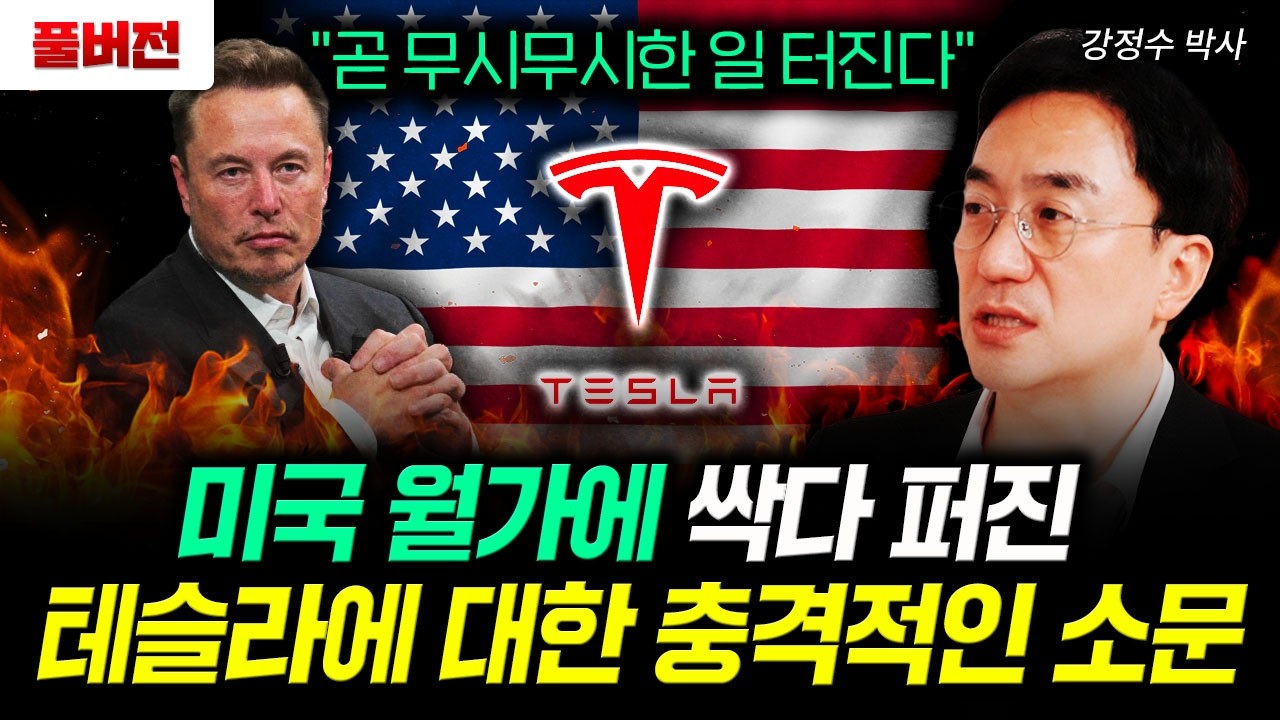
● Wall Street Tesla Rumor Shock, Robotaxi Optimus EV Meltdown Collide, 2026-2027 Watchlist
Why Wall Street Is Reacting to “Tesla Rumors”: Robotaxi, Optimus, and EV Margin Compression Converge (Key Watchpoints for 2026–2027)
This report covers three items only.
1) The substance of Wall Street’s Tesla rumors (“a major event is imminent”) and the underlying catalyst assumptions
2) How Robotaxi (FSD) and Optimus Gen3 could shift Tesla from an auto manufacturer to an AI platform
3) A supply-chain view that links the BYD/China EV shock, structural stress on German and Japanese OEMs, and a potential re-rating of Hyundai Motor
1) Key News Briefing (Condensed from Source Content)
1-1. Tesla: New highs driven by Robotaxi optionality
The primary driver behind Tesla’s break to new highs is the market’s reassessment of Robotaxi (FSD) upside.
Valuation focus is shifting from unit sales to platform scale and monetization potential enabled by autonomy.
1-2. 2026 catalyst: North America World Cup and potential “Cybercab” operations
June 2026: FIFA World Cup hosted by the United States, Mexico, and Canada.
The source highlights the possibility that Tesla Robotaxi (“Cybercab”) could operate in a meaningful share of host cities (approximately 50% referenced).
This would function as a high-volume, real-world validation window for autonomous ride-hailing under peak-demand conditions.
1-3. Near-term risk: Weak Q4 results could trigger a pullback
The source assumes Q4 performance may be materially weak.
Base framing:
- Near term: Earnings disappointment / correction risk
- Medium term: Upside skew from Robotaxi and Optimus catalysts
1-4. 2025–2026 momentum: Optimus Gen3 production of 5,000–10,000 units
The source identifies Optimus Gen3 as a key next-year catalyst.
A projected 5,000–10,000 units is significant because it implies a transition from demonstration to early commercial deployment.
2) Practical Interpretation of the “Shock Rumor” Narrative
2-1. The rumor is likely event-driven
Wall Street “something big is coming” narratives typically reduce to one of the following:1) Regulatory/permits: Commercial Robotaxi approval in specific states/cities
2) Technical metrics: Sharp improvements in disengagement rates and/or accident rates
3) Contracts: Large fleet agreements (rental, logistics, municipal transit)
4) Product: Cybercab / dedicated Robotaxi platform disclosure or a confirmed production roadmap
Given the emphasis on the World Cup, the most plausible path is a city-level approval and deployment tied to event-driven demand spikes.
2-2. Market focus: vehicle sales vs. service revenue
If Tesla begins deploying Robotaxi as a service, market framing could shift toward:Manufacturing (lower margin) → Platform/network (higher margin)
This increases the probability that Tesla is categorized as an AI exposure rather than primarily an auto exposure.
3) “EV Market Disruption” Framework: China Shock and Structural Pressure on Europe/Japan
3-1. What the BYD “shock” implies (price, volume, speed)
The core message is an aggressive combination of:
- Price: lower pricing
- Volume: higher output
- Speed: faster iteration cycles
This forces competitors into a cash-flow contest rather than a product contest:discounting pressures margins, weaker margins constrain R&D, and the technology gap can widen.
3-2. Why pressure on Germany is structural
German OEMs historically relied on ICE-optimized supply chains and premium branding. In EVs, value shifts to:batteries, software, energy efficiency, and data
With China-led pricing pressure, German OEMs face an unfavorable choice set:
- Maintain premium pricing: volume erosion
- Cut pricing: brand dilution and profitability deterioration
This is the structural basis for the “EV market disruption” thesis.
3-3. Why Japan is also exposed
Japan’s hybrid strength provides time, but it may not represent a durable endpoint if regulation, city policy, and fleet electrification intensify.
Over time, EV/autonomy/software competition becomes difficult to avoid.
4) Hyundai Motor Re-Rating: Structural Interpretation
4-1. Strength beyond product quality: electrification execution
The source argues for a positive view on Hyundai Motor. In investor terms, the key differentiator is operational capability:
- Speed of EV lineup expansion
- Production, procurement, and quality execution
- Market-by-market adaptability (United States / Europe / emerging markets)
Operational resilience may be more valuable in a high-uncertainty environment.
4-2. Supply-chain reconfiguration may be an opportunity
The competitive arena extends beyond vehicle design to end-to-end system design across:batteries, semiconductors, raw materials, and localized manufacturing
The ability to secure and stabilize supply chains faster is positioned as a core advantage.
5) Translating “Hold Cash and Buy Tesla on the Dip” into an investable framework
5-1. Focus on volatility management, not price prediction
The message implies:Tesla trades as an event-driven asset (earnings, regulation, incidents, technical milestones), and position sizing should incorporate expected volatility rather than leverage-like behavior.
5-2. Monitoring checklist (if Tesla is underwritten as AI + Robotaxi)
- Commercial footprint: paid deployment expansion by city/state
- Safety/disengagement metrics: measurable improvement rather than anecdotal perception
- Robotaxi unit economics: revenue per vehicle and utilization (hours in service)
- Optimus customers: progression from internal pilots to external contracts
- CAPEX direction: EV capacity vs. Robotaxi/AI infrastructure buildout
6) Under-discussed but decision-relevant considerations
6-1. Robotaxi economics depend on operating rights
Technology alone is insufficient; monetization depends on partnerships and operating access at high-density demand nodes (airports, stadiums, event districts).
The World Cup angle aligns with early operating-rights positioning and standards-setting dynamics.
6-2. EV competition is ultimately determined by cash flow
As price competition intensifies, outcomes depend on:break-even structure, cash reserves, and cost of capital (interest rates)
This provides a linkage between rate expectations and EV/growth equity volatility.
6-3. Optimus as labor re-pricing, not only robotics
At meaningful scale, Optimus represents:a software-like reduction in the unit cost of repetitive labor
The impact is broad for manufacturing-intensive economies (Germany, Japan, Korea) and supports the reframing of Tesla toward AI/robotics.
7) 2026–2027 Scenario Map (Actionable Reference)
7-1. Bull case (Tesla)
- Limited Robotaxi commercialization → operational proof during high-demand events → multi-city expansion
- Optimus Gen3 demonstrates measurable productivity gains in repetitive factory processes → external customer pilots and contracts
7-2. Bear case (Tesla)
- Regulatory delays and/or safety incidents slow commercialization
- Prolonged earnings weakness re-centers valuation on auto margin constraints
- Competitive pricing compresses EV profitability further
7-3. Crossroads for European/Japanese OEMs
- If price defense fails: share loss and restructuring risk
- Success conditions: rapidly closing software/battery/platform gaps via partnerships and alliances
Tesla’s new-high narrative is primarily supported by Robotaxi (FSD) platform optionality rather than vehicle sales.
The 2026 North America World Cup may serve as a city-level commercialization and validation window for Cybercab/Robotaxi operations.
Near-term downside risk remains tied to potential Q4 earnings weakness and associated volatility.
Medium-term upside is linked to whether Optimus Gen3 production of 5,000–10,000 units marks a transition from demo to field deployment.
The EV disruption thesis is driven by China’s price-volume-speed model compressing profitability across Europe and Japan.
Key variables extend beyond technology to operating rights, cash-flow resilience, and the re-pricing of labor via humanoid robotics.
[Related Articles…]
- Tesla Robotaxi (FSD) commercialization and implications for global equities: https://NextGenInsight.net?s=Tesla
- EV price war: China shock and global supply-chain reconfiguration: https://NextGenInsight.net?s=EV
*Source: [ 달란트투자 ]
– “곧 무시무시한 일 터진다” 미국 월가에 싹다 퍼진 테슬라에 대한 충격적인 소문 | 강정수 박사 풀버전