
● Tesla Shifts Unsupervised FSD Goal From 10B km To 10B Miles Timeline Shock
Is Tesla’s “Unsupervised Autonomy” Timeline Actually Slipping? (Implications of Changing from 10 Billion km to 10 Billion Miles)
This report focuses on four points:1) Why Elon Musk changed the requirement from “10 billion km” to “10 billion miles.”
2) How that change affects the practical timeline for deploying unsupervised FSD.
3) Why claims that “inference solves the long tail” miss the core issue (and that Tesla already uses inference).
4) The underappreciated strategic point: how Tesla is pre-emptively addressing long-term bottlenecks (chips and power).
1) News Brief: The Moment “10 Billion km” Became “10 Billion Miles” and Interpretations Diverged
Key event
Elon Musk stated that “approximately 10 billion miles of training data are needed for safe unsupervised autonomy.”
Previously, the figure had often been communicated as 10 billion kilometers; this time, the unit was explicitly “miles.”
Why markets reacted
The change from km to miles can be interpreted as raising the threshold by roughly 60%, not merely a wording change.
For investors, a higher requirement often translates directly into perceived schedule risk.
Current Tesla FSD cumulative mileage
Approximately 7.1–7.2 billion miles.
Under a “10 billion km” framing, the target could have appeared near-achieved; under “10 billion miles,” a material gap remains.
Macro/market linkage
This issue extends beyond Tesla-specific news and can influence AI investment flows and technology-sector volatility into 2026.
2) Is the Timeline “Delayed by Months”? Data Growth Is Not Necessarily Linear
Common linear estimate
Assuming a linear accumulation rate, reaching 10 billion miles could fall after July.
Why linear assumptions may not hold (material)
Cumulative FSD miles are driven by two interacting factors:
(1) Total miles driven by the Tesla fleet
- Increases with a larger vehicle population.
- Increases if miles driven per vehicle rise.
(2) Share of driving done with FSD enabled
- Increases as FSD performance improves and adoption rises.
- Improved automation can reduce driver burden and may increase miles driven per vehicle.
Implication
Cumulative miles may accelerate rather than grow linearly. A July estimate could move earlier (e.g., April–May) under favorable adoption dynamics.
Separately, relative to a prior December objective, slippage remains a legitimate investor concern.
3) The Real “Long Tail” Context: Nvidia (Inference) vs. Tesla (Real-World Data Loop)
Musk’s emphasis: the long tail
Real-world driving contains an effectively unbounded set of rare edge cases, creating a gap between demos and scalable commercialization.
Nvidia’s message (as interpreted)
Inference can cover a meaningful portion of extreme edge cases.
Tesla’s counter-argument (reframed)
1) Inference is already used across the industry, including Tesla.
2) The core dynamic is not “inference solves exceptions,” but “exception data enables robust inference.”
Evidence that Tesla already uses inference
Ashok indicated that certain inference-driven behaviors (e.g., navigation route changes, parking option selection) are included in v14.2, with additional inference features planned for 1Q.
Clarifying simulation
Tesla’s simulation is primarily used to replay and vary rare real-world cases (e.g., 0.001% events) to improve training efficiency, rather than generating novel scenarios from scratch.
Accordingly, “simulation/inference alone solves the long tail” is not aligned with Tesla’s stated approach.
4) Investor Interpretation: Why the Timeline Can Shift While Musk’s Stance Remains Consistent
Observed posture
Aggressive targets are used as execution drivers rather than firm commitments; schedule risk is structurally persistent.
Investment translation
Despite frequent timeline volatility, investors may assign value to directional execution based on Tesla’s history of delivering large-scale initiatives (EV adoption, charging infrastructure, ecosystem build-out, energy expansion).
Rate environment sensitivity
In higher-rate regimes, long-duration growth equities are more sensitive to discount-rate changes.
Therefore, FSD timeline revisions can influence valuation through both technical risk and macro-driven multiple compression.
5) Undercovered Point: Tesla’s Long-Term Bottleneck Is “Chips,” Then “Power”
Long-term framing
Musk has argued that scaling an AI-driven economy introduces bottlenecks: first compute (chips), then electricity generation and delivery.
Tesla’s approach to the power bottleneck: energy storage (ESS)
Tesla’s energy storage deployments are described as growing ~50%–100% annually.
The strategic role of storage is less about replacing generation and more about increasing utilization efficiency and managing peaks, which becomes more valuable as AI data center load grows.
Signal from China
Rapid month-over-month storage additions in China suggest competition is expanding from “GPU procurement” toward “grid, storage, and system integration.”
Pairing with solar
If storage improves system efficiency, solar increases supply. Together, they position Tesla’s energy business as infrastructure adjacent to AI expansion.
6) Compute Bottleneck: Why xAI Data Center Expansion Can Be Strategically Supportive for Tesla
Reference point: xAI’s Colossus data center
Co-located near power infrastructure and designed for large-scale AI compute expansion.
Relevance to Tesla
xAI can concentrate operational know-how in data center build-out and scaling within Musk’s broader ecosystem, with potential spillover to Tesla’s AI efforts.
Capital allocation logic: mitigating demand uncertainty for a semiconductor fab (“Terra”)
Semiconductor fabs require large upfront investment; demand shortfalls at completion can be severely value-destructive.
Tesla can potentially underwrite internal demand across FSD chips, Optimus chips, and adjacent xAI compute needs, reducing perceived demand uncertainty relative to standalone fab projects.
Supply-chain context
AI compute competition is broadening from GPU availability to power, land, cooling, storage, and semiconductor manufacturing capacity, expanding Tesla’s strategic option set.
7) Conclusion: Is “10 Billion Miles” Negative, or a Realism Check?
Near term (market reaction)
A higher-seeming requirement can increase volatility, particularly when rate-driven sensitivity is elevated across tech.
Medium term (product execution)
Cumulative FSD miles may accelerate, making the 10 billion miles threshold primarily a function of time and adoption dynamics.
However, “reaching the threshold” does not automatically equate to immediate unsupervised deployment; regulatory constraints, safety validation, and region-specific ODD limitations remain decisive.
Long term (business model)
Unsupervised FSD is a gateway to monetization models (robotaxi, logistics, insurance, and a data flywheel).
Tesla’s parallel investments in compute and power infrastructure via energy storage/solar and xAI can be interpreted as de-risking key scaling bottlenecks.
This intersects with inflation, global macro conditions, AI capex cycles, supply-chain restructuring, and market rates, which together shape sector volatility into 2026.
Most Material Points Often Missed in Coverage
1) “10 billion miles” may reflect a more conservative communication stance aligned with product liability, regulation, and brand-risk costs, rather than reduced technical confidence.
2) The core competitive advantage is the speed of the real-world loop: data capture, cleaning, training, and deployment, not inference in isolation.
3) Tesla’s implicit hedge is its energy business. As AI-driven power constraints intensify, ESS and solar may increase strategic value and provide valuation support during FSD-driven volatility.
4) xAI should not be viewed as unrelated; it may function as a mechanism to accumulate semiconductor, power, and data-center operating capabilities within an interconnected ecosystem, potentially improving the risk profile of Tesla’s chip verticalization scenarios.
Elon Musk’s shift from “10 billion km” to “10 billion miles” can be interpreted as raising the required cumulative data threshold by roughly 60%.
With Tesla FSD cumulative usage at ~7.1–7.2 billion miles, near-term concerns about slippage increase; however, cumulative miles can accelerate through fleet growth and rising FSD utilization.
The long-tail challenge is primarily solved through real-world data acquisition and fast training loops, not inference alone; Tesla already incorporates inference elements.
A less-discussed strategic theme is Tesla’s preparation for AI-era bottlenecks in compute and electricity through energy storage/solar scaling and xAI data center expansion.
[Related Articles…]
-
Unsupervised Autonomy Commercialization: Data, Regulation, and Liability Structure
https://NextGenInsight.net?s=autonomous-driving -
AI Data Center Power Competition: Why the ESS Market Is Accelerating
https://NextGenInsight.net?s=power
*Source: [ 허니잼의 테슬라와 일론 ]
– [테슬라] 무감독 자율주행 지연 암시? 일론의 타임라인이 정확하지 않은 경우도 많지만 흔들리지 않는 이유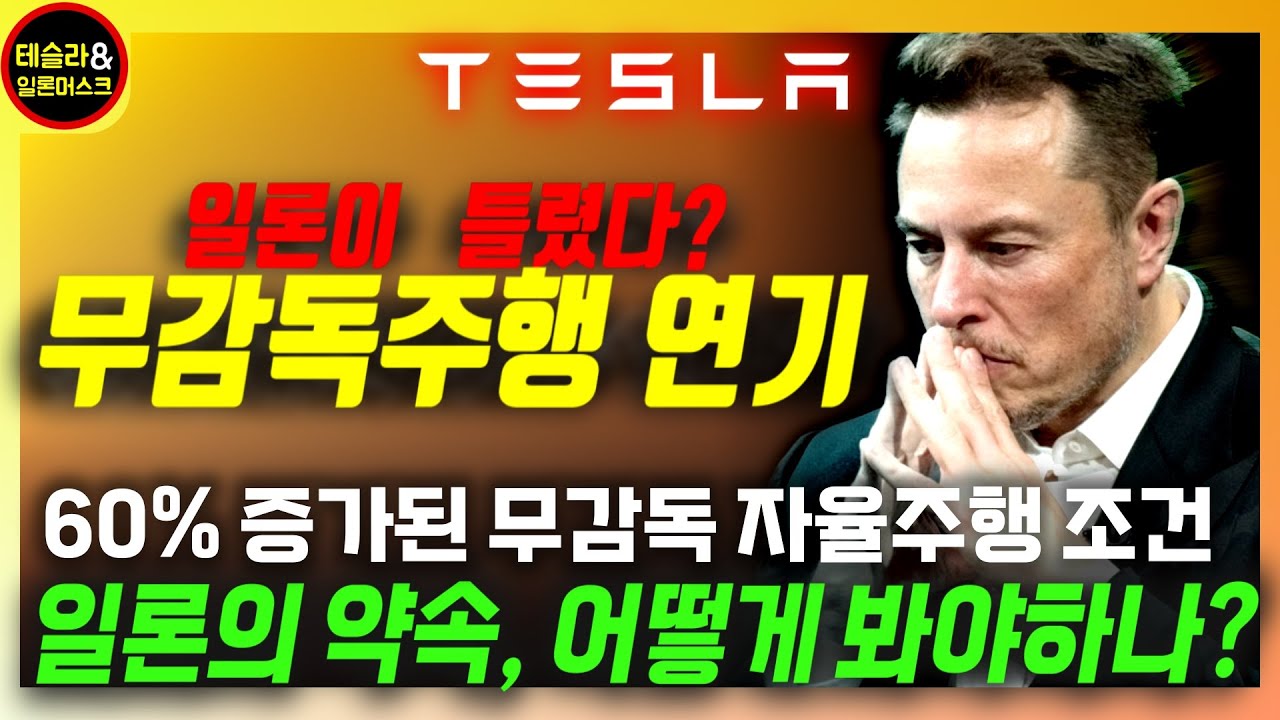
● China Holds Fire on Taiwan, US Turns More Aggressive, Split Economy, Currency War, AI Power Crunch
Why China Is Unlikely to Move “Immediately” on Taiwan, and Why the U.S. Is Becoming More Aggressive (Geoeconomic Fragmentation, Currency Competition, and AI Compute Power in One Framework)
This report focuses on four points:
First, structural reasons why “status quo over war” can be economically rational for both China and Taiwan.
Second, why the United States may act more coercively even as relative power narrows (including domestic political drivers).
Third, how geoeconomic fragmentation is bloc-forming energy, currency, and supply-chain systems.
Fourth, why the decisive arena is converging on AI compute capacity (data centers) and the power/energy required to run it.
1) News Briefing: Key Messages
The central framing treats a Taiwan contingency not as a purely military issue but as a structural sequence:
relative hegemonic erosion → more forceful hegemonic behavior → geoeconomic fragmentation → energy, currency, and AI technology competition.
- China: Incentives for an “immediate” forcible unification are smaller than commonly assumed.
- United States: As dominance narrows, behavior can become more coercive and unconventional (overreaction dynamics).
- Japan: The Taiwan Strait is a critical logistics/trade corridor; intervention rhetoric also reflects domestic politics and “normal state” debates.
- Future competition: A hybrid contest combining energy, data centers, and monetary networks, not only oil.
2) Why China Is Not Striking “Immediately”: Status Quo Can Be More Advantageous Than War
The relevant claim is not that China lacks willingness to use force, but that a “tense status quo” can offer favorable payoff relative to near-term war.
2-1. China Maintains Conditional Triggers for the Use of Force
Frequently cited conditions include:
- Formal declaration of independence or institutionalization of independence (e.g., constitutional revisions)
- Severe internal disorder in Taiwan
- Clear direct intervention by external powers (notably the United States)
This reflects a conditional option structure rather than an unconditional decision to attack.
2-2. Structural Reasons Status Quo Can Favor China
-
Sustained tension functions as leverage
Maintaining military pressure without war can raise costs for the United States, Japan, and Taiwan, while postponing China’s immediate exposure to sanctions, financial shock, and supply-chain disruption. -
War resolves one problem while creating multiple new ones
Even if initial military objectives were achieved, governance, security, economic normalization, and sanctions management would impose large and persistent costs. Tactical success and durable control are distinct problems. -
Taiwan is not a fully severed counterparty
Ongoing informal and private-channel interactions exist, indicating continued connectivity rather than complete isolation.
3) Why the U.S. Is Becoming More Aggressive: Overreaction Dynamics Under Relative Decline
Core logic: when the capacity to enforce a unified order weakens, fragmentation accelerates and the hegemon may escalate actions to signal credibility.
3-1. Globalization Relied on an Overwhelming Coordinator
Rule-based globalization required a dominant actor capable of underwriting and coordinating the system. As that capacity weakens, self-help strategies and bloc formation increase, accelerating supply-chain reconfiguration.
3-2. Domestic Politics Can Harden Foreign and Security Policy
Hardline external policy can align with domestic electoral incentives and coalition management. Under elevated inflation pressure, external “strength signaling” can become politically easier to justify, while raising incident risk.
3-3. The Federal Reserve Angle: System Predictability as Strategic Advantage
Institutional constraints shape monetary leadership outcomes regardless of the individual chair. In strategic competition, interest rates, currency credibility, and financial-system predictability are critical. Lower predictability in competing systems can be a structural disadvantage over time.
4) Japan’s Role: The Taiwan Strait as an Economic Lifeline
Japan’s stance is not only alliance-driven; it also reflects domestic political economy and trade exposure.
- Economic artery: High reliance on Taiwan Strait shipping and trade routes
- Political objective: Expanded military role consistent with “normal state” positioning
- Domestic politics: Leadership approval and governing dynamics can enable tougher rhetoric
5) Geoeconomic Fragmentation: Not a Simple Bipolar Split, but Functional Bloc Formation
Fragmentation is better understood as function-by-function divergence across energy, currency, technology, and logistics networks.
5-1. Currency Competition: Payment Rails, CBDCs, and Stablecoins
- U.S.-aligned axis: Dollar-centric order plus stablecoins as an extension layer
- China-aligned axis: Expansion of RMB settlement plus CBDC deployment
- Network layer: SWIFT versus China-linked payment infrastructure (including CIPS)
Currency power increasingly operates through network access rather than physical cash. Payment-rail alignment affects trade, investment flows, and sanctions exposure.
5-2. Energy Competition: Changing Characteristics of the Petrodollar System
The strategic role of the petrodollar is perceived to be less dominant than in prior decades. While the U.S. has strengthened in energy production, China’s scale as a major oil importer increases incentives to promote RMB settlement. These shifts interact with inflation dynamics through energy pricing and settlement structure.
6) The Decisive Arena: AI Power = Compute + Data Centers + Electricity (Energy)
Competitive advantage is increasingly tied to AI compute capacity, with physical constraints centered on data centers and power supply.
6-1. As Data Centers Expand, Electricity Becomes a Strategic Asset
Large-scale data centers can approach city-level power consumption, shifting competitive bottlenecks toward generation, transmission, and grid reliability.
- AI competition = securing GPUs/chips
- Running chips requires = data centers
- Running data centers requires = stable electricity and energy procurement
Technology competition thereby loops back into energy competition.
6-2. Data Competition: Language-Scale Data vs Population-Scale Data
A central question is whether AI advantage accrues more to globally reusable language data or to high-volume behavioral data.
- U.S. strengths: Global generality of English-language data; corporate ecosystem
- China strengths: Large-scale behavioral data from population size; easier centralized data mobilization
Beyond capability, data collection and usage choices drive governance and trust considerations.
7) Underemphasized Points
-
(1) Focus on the “status quo payoff model,” not only invasion probability
Delay can reflect rational expected-value optimization where the tense status quo yields higher returns than immediate war. For markets, this implies a persistent risk premium rather than a single-event shock. -
(2) Fragmentation is an infrastructure split, not merely camp politics
Divergence in payment rails, currency systems, energy sourcing, and data-center infrastructure forces firms to choose systems, not just markets, with potential drag on long-term growth. -
(3) The AI bottleneck may be electricity, not only semiconductors
In addition to GPUs, HBM, and foundry capacity, power infrastructure and electricity pricing may determine the pace of AI deployment. -
(4) Endgame leverage may hinge on values, trust, and predictability
AI deployment models that prioritize control can influence alliances, norms, and investor confidence. Capital and talent allocation often follows perceived system reliability.
8) Practical Checklist: What to Monitor in 2026
- Taiwan: Structural cost inflation from sustained tension (insurance, logistics, investment sentiment), not only invasion odds
- United States: Whether election cycles amplify hardline policies and market volatility
- China: Pace of RMB settlement expansion and the intensity of standards/norms conflicts in technology and data systems
- Japan: Whether Taiwan-related rhetoric tracks domestic political events
- AI/Power: Data-center capex, electricity pricing, and generation-mix shifts that reshape industrial competitiveness
< Summary >
China may rationally prefer leveraging a tense status quo rather than initiating immediate conflict.
The United States may adopt more coercive behavior as a credibility signal under narrowing relative advantage.
Geoeconomic fragmentation is a functional decoupling of payment rails, currencies, energy sourcing, and supply-chain infrastructure.
AI competition is increasingly constrained by compute deployment, with data centers and electricity/energy infrastructure emerging as core strategic bottlenecks.
[Related Articles…]
- Taiwan risk and its impact on global markets (search: Taiwan)
- Stablecoin competition, dollar dominance, and 2026 investment scenarios (search: stablecoin)
NextGenInsight.net?s=Taiwan
NextGenInsight.net?s=stablecoin
*Source: [ 경제 읽어주는 남자(김광석TV) ]
– 중국이 대만을 당장 치지 않는 이유, 미국은 더 거칠어진다. 패권 약화와 지경학적 분절화 | 경읽남과 토론합시다 | 전가림 교수 3편
● 2026 Dividend Tax Break Confirmed, High Yield Stocks Surge, Active ETF Bets on Payout Boosters
Finalized 2026 Dividend “Separate Taxation”: True Beneficiaries and the Positioning of the SOL Dividend Payout Ratio Top Picks Active ETF
This report focuses on four points.
First, a consolidated summary of the eligibility thresholds and tax rates for the dividend income separate taxation regime effective from 2026.
Second, why the market’s key timeline (January to March: earnings, disclosures, and shareholder meetings) matters.
Third, why “related ETFs” can attract attention despite ETF distributions being excluded from separate taxation (flow and price triggers).
Fourth, the positioning of the SOL Dividend Payout Ratio Top Picks Active ETF (listed on 1/13) and an investment checklist.
1) News Briefing: Separate Taxation for Dividends from “High-Dividend Companies” Effective from 2026; Eligibility Criteria Finalized
One of the most discussed themes in the Korean equity market through 2025 was separate taxation of dividend income.
The key update is that the eligibility criteria determining which companies qualify has been finalized.
1-1. Eligibility Criteria for Separate Taxation (Core Conditions)
Dividends received from investments in “high-dividend (or dividend-enhancing) companies” that meet at least one of the following conditions are eligible for separate taxation.
- Dividend payout ratio of at least 40%
- Or dividend payout ratio of at least 25% and dividends increased by at least 10% year-over-year
The regime applies starting with dividends for fiscal year 2025 that are received in 2026.
In practice, investors begin to feel the impact from 2026 onward.
1-2. Separate Tax Rates (By Bracket)
The principal feature is that eligible dividends are not aggregated into comprehensive income taxation.
Rates vary by bracket, and a local income tax surcharge (typically 10%) applies separately.
- KRW 20 million or less: 14% (approximately 15.4% including local tax)
- Over KRW 20 million to KRW 300 million: 20% (approximately 22% including local tax)
- Over KRW 300 million to KRW 5.0 billion: 25%
- Over KRW 5.0 billion: 30%
This policy directly affects 2026 Korean dividend investing, tax planning, and portfolio design in pension accounts.
For higher-income brackets, avoiding comprehensive taxation can influence investment decisions.
2) Key Point Often Missed: “ETF Distributions Are Not Eligible for Separate Taxation”
A critical constraint is that distributions from indirect investment vehicles such as ETFs and REITs are excluded from the separate taxation regime under the finalized policy.
Accordingly, buying an ETF solely to obtain separate taxation benefits may be inconsistent with the tax framework.
However, interest in related ETFs can still rise for other reasons.
3) Why “Separate Taxation Beneficiary Company ETFs” Can Still Gain Traction: Not Tax Benefits, but Flow and Price Triggers
Even if ETF investors do not receive the separate taxation benefit directly, the market can respond because qualifying companies may experience increased demand in single-name markets, creating a flow-driven price catalyst.
These ETFs function less as “tax-saving products” and more as thematic vehicles positioned ahead of companies likely to qualify under the regime.
This dynamic is linked to broader themes including narrowing the Korea discount, strengthening shareholder return policies, and structural changes in domestic capital markets.
4) Why January to March 2026 Is the Key Window: The Timeline Clarifies the Setup
The critical factor is when qualifying companies become identifiable, with visibility concentrated in January to March 2026.
- January: Preliminary FY2025 earnings releases begin, clarifying profit levels
- January to February: Board resolutions and preliminary dividend disclosures improve estimates of payout ratios and dividend growth
- March: Audited annual reports and shareholder meetings finalize dividends for definitive assessment
Markets may price expectations multiple times during this sequence, followed by re-rating as outcomes are confirmed.
This supports the view that Q1 2026 is the most policy-dense period for dividend momentum.
5) Structural Change in Dividend Record Dates (Since 2023): Reduced “Blind Dividend” Investing
Historically, many companies set dividend record dates at year-end, requiring investors to invest before knowing the dividend amount.
Since 2023, companies have been able to amend articles of incorporation to shift record dates (e.g., to after shareholder meetings), increasing cases where investors can invest with clearer dividend information.
This matters for 2026 dividend strategies: companies seeking eligibility may communicate dividend policies more actively, and timing can differ depending on record-date adjustments.
6) SOL Dividend Payout Ratio Top Picks Active ETF (Listed 1/13): Target Positioning
Product concept: an active ETF designed to hold companies that meet, or are likely to meet, the separate taxation criteria, with active rebalancing toward eligible names.
6-1. Why “Active” Management Is Central
Eligibility becomes clearer through January to March 2026 disclosures and shareholder approvals.
Traditional index-based passive rules may not reflect inflection points quickly enough.
The active approach aims to adjust holdings and weights promptly when preliminary dividends are disclosed or finalized at shareholder meetings.
6-2. Difference Between the Benchmark and Actual Management
The reference benchmark consists of 20 constituents and is described as indicative rather than binding.
As qualifying companies become visible in January to March 2026, the strategy allows for active inclusion of names not in the benchmark.
6-3. Mentioned Sector/Name Hints (Source-Based)
Commonly cited dividend segments include financial holding companies and established dividend payers (e.g., KT&G, insurers).
A key candidate set may include firms currently below thresholds but capable of meeting the “improvement” condition through dividend increases.
7) Capital Reduction Dividends (Tax-Exempt Dividends): Potential Impact on After-Tax Cash Flow
Dividends funded from retained earnings are generally taxable, while dividends funded through reclassification from capital or capital reserves can be tax-exempt under certain structures.
If more companies utilize capital reduction dividends, after-tax cash flow may differ even when headline dividend yields appear similar.
This is a material consideration beyond stated dividend yield for 2026 dividend strategies.
8) Rationale for Continued Relative Support for Domestic Dividend Equities in 2026: Inflows and Policy Momentum
Domestic dividend strategy ETFs reportedly saw meaningful inflows in 2025, and market scale expanded rapidly.
Policy momentum toward stronger shareholder returns (including discussions around share buybacks and cancellations) is ongoing.
This combination can provide sustained support for domestic dividend themes into 2026. If expectations of policy rate cuts strengthen, demand for cash-flow-oriented assets may also increase, subject to inflation, growth, and FX conditions.
9) Comparison of Three SOL Dividend ETFs: Same Monthly Distribution Format, Distinct Strategies
- SOL Dividend Payout Ratio Top Picks Active ETF
A thematic approach focused on companies meeting (or likely to meet) separate taxation criteria - SOL Korea High Dividend ETF
A broader approach reflecting separate taxation, share buybacks/cancellations, and capital reduction dividends within a “Korea-style shareholder return” framework - SOL Financial Holding Plus High Dividend ETF
A sector-focused approach based on the premise that financial holding companies can deliver dividend increases more rapidly
10) How Monthly Distributing ETFs Operate Despite Predominantly Annual Corporate Dividends
Although many domestic companies pay dividends annually, monthly distributing ETFs can pay monthly by estimating expected dividends and smoothing payments across 12 installments.
This structure can provide cash-flow regularity that is difficult to replicate with individual stocks, and can serve as reinvestment or withdrawal funding within pension accounts such as pension savings and IRP accounts.
11) Practical Tip on Monthly Distribution “Record Date/Purchase Timing”: Remember T+2 Settlement
With T+2 settlement in domestic equities, investors typically need to purchase at least two business days before the record date to be registered.
- Early-month payment type (Dividend Payout Ratio Top Picks Active; Financial Holding Plus High Dividend): check purchase timing two business days before the last business day of the prior month
- Mid-month payment type (Korea High Dividend): record date typically moves around the 15th (or the prior business day if a holiday)
Combining these funds can be structured to approximate a biweekly cash-flow cadence.
12) Underemphasized but Material Points
12-1. January to March 2026 Is a “Rebalancing Event,” Not a One-Time “Tax Event”
Separate taxation is not a single headline; data updates from earnings to preliminary dividends to finalized dividends can trigger repeated repricing.
The investment focus is less the benefit itself and more how companies adjust dividend policy to meet criteria and how the market prices that adjustment through rebalancing.
12-2. If ETFs Are Excluded, ETF Alpha Depends on Timing, Not Tax Treatment
Direct investors may receive tax benefits while ETF investors may not.
Therefore, ETF differentiation depends on how quickly and accurately candidate beneficiaries are identified and incorporated.
Active ETFs can respond to disclosure and shareholder-meeting signals earlier than passive methodologies that may incorporate changes with delay.
12-3. Dividend Payout Ratio Is a Policy Outcome, Not Just a Metric
The payout ratio is a reported result driven by board decisions, shareholder approvals, bylaw changes, and capital policy.
In 2026, competition in visible shareholder-return policy may intensify.
Assessments may be improved by combining dividend growth, policy sustainability, buyback policy, and capital reduction dividends rather than relying solely on static high-dividend lists.
13) Investment Checklist: Minimum Items to Review for 2026 Dividend ETFs
- Whether distributions are based on expected dividends and the implied variability structure
- Whether portfolio rules are fixed to historical data or can respond to disclosure events (active vs. passive)
- Whether sector concentration (e.g., financial holdings) aligns with risk tolerance
- Whether the strategy incorporates exposure to companies utilizing capital reduction dividends (tax-exempt dividends)
- Clear objectives for pension savings/IRP usage (reinvestment vs. withdrawals)
Under this framework, 2026 may favor identifying companies undergoing structural shareholder-return policy changes rather than simply selecting stocks with high stated dividends.
< Summary >
From 2026, dividend income separate taxation applies to FY2025 dividends received in 2026.
Eligible companies are those with a payout ratio of at least 40%, or at least 25% with dividends increased by at least 10% year-over-year.
ETF/REIT distributions are excluded from separate taxation under the finalized policy, but increased single-name demand for eligible companies can act as a price catalyst.
The key window is January to March 2026 (preliminary earnings → preliminary dividend disclosures → shareholder meeting finalization), when rebalancing is concentrated.
The SOL Dividend Payout Ratio Top Picks Active ETF (listed 1/13) targets momentum by actively allocating to companies meeting (or likely to meet) the eligibility thresholds.
Capital reduction dividends and record-date structural changes should be evaluated to assess after-tax cash flow in 2026 dividend strategies.
[Related Articles…]
- 2026 Dividend Income Separate Taxation: Key Criteria and Why High-Dividend Strategy May Change
- How to Build Pension-Account Cash Flow with Monthly Distributing ETFs: Record Dates and Distribution Mechanics
*Source: [ Jun’s economy lab ]
– 이 ETF만 있으면 배당으로 평생 현금흐름 만들 수 있습니다(SOL 배당성향탑픽액티브 ETF)