● Trump Polls Slide-Bitcoin Slips Liquidity-Fed Shock Strategic Bitcoin Shift Gold Dumps
Bitcoin Is Driven More by Politics, Liquidity, and Strategic-Asset Policy Than by the Halving: A Consolidated Framework Covering Trump, the 2026 Midterms, and the Fed
This report covers:
– The primary actor (whales) behind the “post-halving cycle-end” signal and the mechanism used.
– Why Trump approval and Bitcoin prices often move together.
– Why the US may require a “liquidity-led market” ahead of the 2026 midterm elections.
– A scenario in which the US shifts its strategic-asset framework from gold toward Bitcoin.
– A dedicated section on the most consequential point that is often underemphasized in mainstream coverage.
1) Key News Briefing (Condensed)
1) “The 4th halving season may have ended without a strong final rally”
Professor Tae-min Oh interprets the current move not as a routine correction within an uptrend, but as a potential end of the cycle itself.
The defining feature is not a sharp crash, but a persistent decline that underperforms prior expectations.
The premise is that market structure (flows/politics/liquidity) may dominate the halving narrative.
2) Whales (approximately 100 entities) may still dictate price
The recurring four-year pattern is attributed to market immaturity: concentrated holders can create cycles via discretionary selling/buying decisions.
A key trigger discussed is the possibility that “legacy whales” (early accumulators) sold hundreds of thousands of coins in H2 2025.
3) Trump approval ↔ Bitcoin price: a meaningful correlation is observed
Causality is not asserted, but the pattern described is: stronger expectations for Trump/Republican outcomes often coincide with Bitcoin strength, while weakening approval aligns with downside pressure.
This is framed as evidence that Bitcoin has become politicized.
4) A “liquidity-led market” may be needed ahead of the 2026 midterms
To improve electoral prospects, policymakers may prefer supportive conditions for risk assets (equities/crypto), with liquidity provision as a core driver.
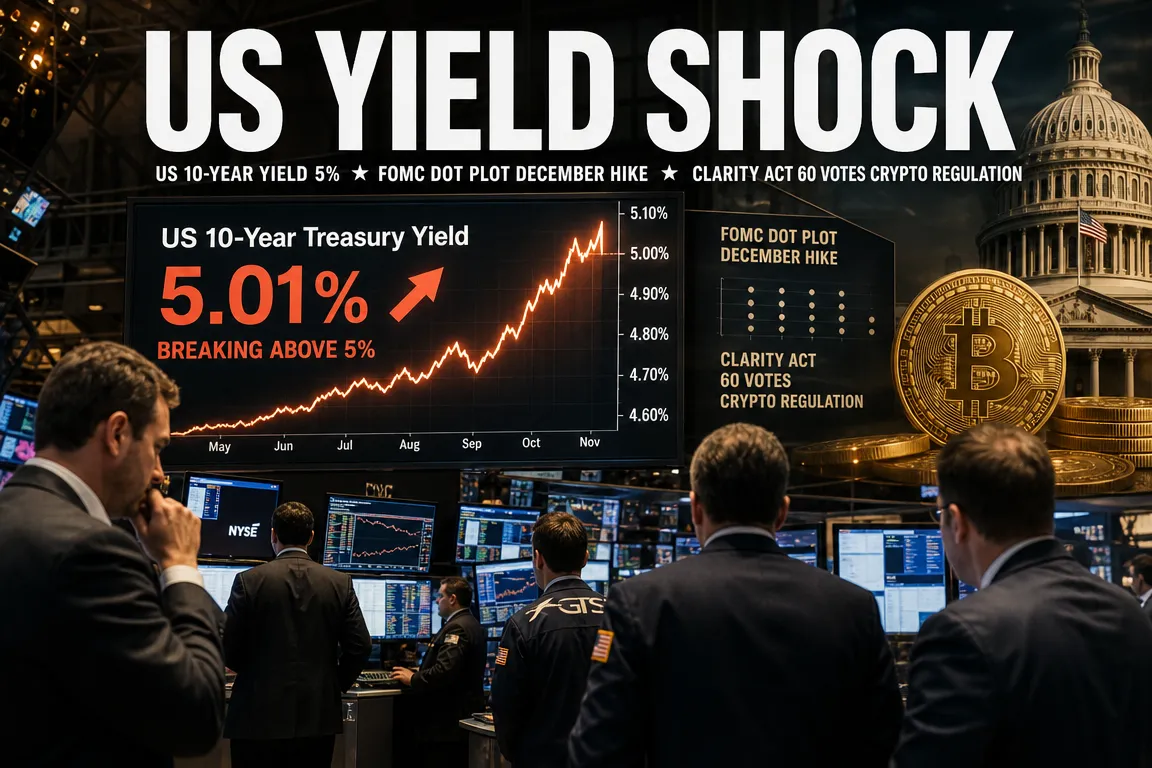
This connects directly to the Fed, policy rates, and the 10-year Treasury yield.
While rapid easing is constrained, political pressure could intensify as elections approach.
5) Strategic policy option: potential shift from gold to Bitcoin
The scenario proposed: the US holds an unusually large share of global gold reserves; if it were to add Bitcoin as a strategic reserve asset, it must fund purchases by selling or reallocating other assets.
Gold is presented as the most plausible source of funding.
However, the discussion highlights alleged uncertainty regarding physical gold at Fort Knox; gold functions as a psychological foundation of trust, and destabilizing that framework could be high-risk.
2) Three Primary Drivers Beyond the Halving: Liquidity, the Fed, and Politics
Driver A. Liquidity (money supply, M2, QE/QT)
The core message is that what is often interpreted as a “halving cycle” may be better explained as a “liquidity cycle.”
US liquidity historically expands sharply during easing phases and contracts forcefully during tightening (QT).
Bitcoin, as a high-beta risk asset, is therefore sensitive to US liquidity conditions.
Driver B. The Fed and the “next Fed Chair” event
The start of the next Fed Chair’s term is framed as a potentially important inflection point.
Markets tend to price policy shifts in advance; as elections near, expectations for easing may gain influence on valuations.
The critical factor is not only rate cuts, but the market’s conviction that the policy regime is shifting back toward accommodation.
Driver C. Politics (Trump, midterms, and policy packages)
US asset markets are structurally tied to politics; for crypto, the linkage is more direct due to promises, regulation, and strategic-asset framing.
Once Trump positioned himself as a “crypto-friendly president,” crypto began trading more like a policy-sensitive thematic asset.
3) Bitcoin Price Scenarios Anchored to the 2026 Midterm Timeline
The operational framework presented: if prices cannot rise continuously, the politically optimal path may involve near-term consolidation followed by strengthening closer to the midterms.
In this view, a current drawdown can be interpreted as a less damaging trade-off versus risking weakness immediately before elections.
Scenario 1) Near-term drawdown → renewed uptrend from mid-2026 (election-driven liquidity)
If pre-midterm conditions require improved growth and asset-price momentum, liquidity support could increase and re-rate risk assets.
Bitcoin, given its liquidity sensitivity, could respond disproportionately.
Scenario 2) A strategic-reserve (US Bitcoin accumulation) initiative emerges later
The transition from rhetoric (expectations) to action (purchases/institutionalization) could create a larger price response.
If Bitcoin is elevated to “strategic asset” status, follow-on buying by other sovereigns/institutions becomes a plausible second-order effect.
Scenario 3) Politicization creates downside and volatility risks
The argument: pro-crypto policy may attract votes while simultaneously expanding opposition constituencies.
Politicization can function as both an upside catalyst and a volatility catalyst.
4) Strategic-Asset Framework: Gold vs Bitcoin, and the Fort Knox Issue
Core logic
US gold holdings are substantial → funding is required to build a Bitcoin reserve → gold could be the funding source.
A speculative tactical concept is discussed: support higher gold prices, then exchange into Bitcoin at relatively lower levels.
Constraints
If concerns about the existence or auditability of physical gold persist, any action perceived as “touching gold” could weaken confidence in the USD’s reserve-currency premium.
Implementation feasibility must incorporate political and market-confidence risks.
5) The US Government May Already Be Accumulating Bitcoin (Seized BTC)
A numerical framing is presented:
– ~200,000 BTC from criminal seizures + ~100,000 BTC referenced in connection with Cambodia-related matters → ~300,000 BTC potentially under control.
Historically, seized assets have often been sold via auction, but the claim is that sales appear absent, which is interpreted as a signal of holding intent.
This may later connect to a formal strategic-reserve policy announcement.
6) The Most Material Points Often Underemphasized in Mainstream Coverage
1) The halving may be an explanatory narrative, not the causal driver
The central claim: while markets focus on the halving story, liquidity and whale flows may be the actual price-setting forces.
For investors, the priority is the direction of liquidity and the actions of concentrated holders, not the calendar event itself.
2) Bitcoin is now a political asset; bullish catalysts also increase volatility
Once crypto becomes a front-line policy topic, it trades like a policy-driven theme.
As expectations grow, so can opposition narratives (regulatory backlash, distributional concerns), increasing volatility risk.
3) For “strategic reserve” policy, accounting, governance, and disclosure are the true inflection points
Markets may be more sensitive to how holdings are recognized, reported, and managed than to a simple “buy/no-buy” headline.
Holding seized coins is materially different from formally designating Bitcoin as a strategic asset within an official operating framework.
Disclosure details may be the actual catalyst for regime change in pricing.
4) 2026 may be a cross-asset liquidity contest: equities, rates, USD, and crypto
Ahead of the midterms, policy rates, Treasury yields, the USD, and risk assets may move as a single linked system.
Bitcoin should be evaluated alongside US monetary policy and global capital flows.
This framework also extends to capital-intensive themes such as AI, semiconductors, and robotics, where liquidity is a binding constraint on performance.
7) Investor Checklist (Actionable Monitoring Items)
1) Fed personnel and communication shifts
Monitor signals related to the next Fed Chair and changes in the Fed’s reaction function.
2) Liquidity indicators
Track M2 growth, QT pace adjustments, and changes in financial conditions indices; these affect both Bitcoin and global equities.
3) Trump/Republican polling and the execution stage of crypto policy
Assess transitions from messaging to action: executive orders, legislation, institutionalization, and purchases.
4) Gold and USD dynamics (reserve-currency framework)
Shifts in the gold-USD-Treasury yield triangle may determine whether Bitcoin trades more like a risk asset or a defensive asset.
5) Disposition of US government BTC holdings (seized assets)
Key branches: resumption of auctions, continued holding, or formal strategic-reserve designation.
< Summary >
Liquidity, the Fed, and politics may be more decisive than the halving.
The current drawdown may reflect structural drivers, including whale supply and political variables (Trump approval).
Ahead of the 2026 midterms, the US may prefer a liquidity-supportive backdrop, which could re-price Bitcoin given its liquidity sensitivity.
A shift in strategic-asset emphasis from gold toward Bitcoin is discussed, but gold-confidence risk (Fort Knox) is a constraint.
The key inflection is not the “strategic reserve” headline itself, but the institutional design: custody, disclosure, accounting, and operating framework.
[Related Links…]
Bitcoin Outlook: 2026 Liquidity Cycle and Price Dynamics
How Fed Policy Shifts Affect Global Asset Markets
*Source: [ 경제 읽어주는 남자(김광석TV) ]
– 비트코인 반감기 끝났나? 트럼프·중간선거가 비트코인 가격을 좌우하는 미국의 전략적 선택 시나리오 | 경읽남과 토론합시다 | 오태민 교수 2편
● Currency Crash Triggers Cost of Living Meltdown, Regime Risk Surge
Why Inflation Is Structurally Dangerous: FX Shock → Essentials Breakdown → Regime Risk, and Immediate Preparedness
This report covers:1) Why a sharp FX depreciation becomes a primary trigger for price surges (mechanism-focused).
2) Inflation’s distributional impact that separates wage earners from asset holders.
3) Why “cost-of-living” protests have historically escalated into political turnover.
4) A clear criterion distinguishing “benign” vs “adverse” inflation (wage–price spread).
5) Key risk indicators for Korea (FX, rates, real wages, consumption patterns).
A final section summarizes the most under-discussed point in mainstream coverage.
1) News Briefing: Executive Summary Format
[Core Situation]
The text argues that when rapid FX depreciation coincides with inflation, an economy can shift from stress to functional paralysis. A sharp move in the exchange rate (illustrated via an assumed Iran-type scenario) immediately lifts import prices, drives a surge in essentials, and can trigger merchant shutdowns and protests.
[Why Merchants Close First]
When authorities impose price controls (e.g., mandated selling prices) or market prices change too quickly, merchants may suspend sales because selling implies a loss. This shifts conditions from “price increases” to “distribution breakdown,” materially raising perceived risk.
[Historical Parallels]
The narrative references the 1970s United States (post-gold convertibility inflation), and cites cases such as the French Revolution and Venezuela as examples where loss of access to essential goods contributed to political instability.
2) Why an FX Spike Is High-Risk: It Disrupts the Operating System of Daily Life
The central claim is that FX depreciation can push the economy toward near non-functionality, not merely higher prices.
2-1. FX → Import Prices → Essentials/Energy/Raw Materials Domino
Many inputs (commodities, grains, energy, components) are priced globally in USD. FX depreciation increases local-currency input costs, raises manufacturing costs, transmits into retail prices, and ultimately affects dining, processed foods, and basic household necessities. This is the standard pathway of imported inflation.
2-2. Beyond Higher Prices: A “Goods Not Available” Regime
During gradual inflation, consumers may continue purchasing at higher prices. During rapid repricing:
- Merchants cannot reliably post prices (replacement cost changes daily)
- Consumers reduce or abandon purchases
- Governments attempt controls, which may halt distribution
Market price discovery can fail, shifting conditions from recessionary pressure to operational paralysis.
3) Inflation’s Distributional Effect: Uneven Burden by Balance Sheet Position
Inflation does not impose uniform costs; outcomes depend materially on asset ownership.
3-1. Asset Holders: Partial Hedge and Potential Benefit
Assets such as real estate, equities, and gold may rise in nominal terms as currency purchasing power declines, partially insulating asset holders.
3-2. Wage Earners: Essentials Inflation Hits Immediately
Wages typically adjust with a lag. When essentials rise first, household budgets deteriorate quickly. Inflation becomes politically salient when necessities—not discretionary items—become less affordable.
4) Benign vs Adverse Inflation: The Wage–Price Spread as the Key Test
4-1. Benign Inflation (Gradual Uptrend)
If prices rise slowly:
- Wage negotiation and labor-market adjustment can catch up
- Pull-forward demand (“buy earlier”) can temporarily support activity
4-2. Adverse Inflation (Sharp Acceleration)
If prices spike:
- Wages fail to keep pace
- Consumption contracts (“do not buy”)
- Corporate revenues become unstable
- Unemployment and social friction can rise
This increases stagflation risk.
5) From Cost-of-Living Stress to Regime Risk: Transmission Mechanism
5-1. Household Stress → Attribution to Policy
When financial strain becomes broad-based, it is framed as a systemic issue rather than an individual problem, increasing political accountability pressure on government.
5-2. “Survival” Protests Have Higher Escalation Risk
Demands tied to basic living conditions are harder to negotiate and can escalate more quickly. Historically, spikes in essential goods have been a primary driver of social instability.
6) Korea: Investor-Focused Monitoring Checklist
Although examples are international, the relevant question is domestic risk monitoring.
6-1. Exchange Rate
FX levels and persistence matter. If the currency devalues and remains in a higher band, import prices may become embedded.
6-2. Interest Rates
Rates are necessary for inflation containment but increase debt-service burden for households and small businesses. Investors should track whether policy prioritizes price stability versus growth protection.
6-3. Consumption Patterns (Downtrading Signal)
Migration toward low-price retailers can indicate resilience in headline spending while signaling household quality-of-life downgrades.
6-4. Real Wages (Wage Growth – Inflation)
The key variable is purchasing power, not nominal wage growth. A negative spread implies ongoing deterioration in consumer fundamentals.
6-5. Supply Chain/Commodities/Energy Costs
A significant share of consumer inflation is linked to global supply chains and commodity inputs; instability here typically transmits quickly to household inflation perceptions.
7) Under-Discussed Points (Condensed)
Point 1) The critical risk is not “higher prices,” but the moment prices become unpostable
When shops close, goods availability declines, and transactions stall, perceived risk accelerates. This reflects market-function instability, not just inflation.
Point 2) Price controls tend to elevate shortage risk and distribution failure
If costs rise while selling prices are capped, supply contracts and scarcity emerges. Households move from “cannot afford” to “cannot obtain.”
Point 3) Inflation should be treated as a political-stability variable
Essentials inflation can raise the country risk premium, affecting foreign capital flows and FX volatility.
8) Practical Actions: Inflation Resilience for Salaried Households
The recommended approach is not only cost-cutting, but active purchasing-power management.
8-1. Audit Fixed Costs First
Telecom, subscriptions, insurance, and loan interest are recurring and become more burdensome under inflation. Small reductions compound.
8-2. Substitute Consumption (Value Channels) and Quality Convergence
In categories where low-cost products have improved, rational downshifting can be efficient.
8-3. Cash Is Not a Full Solution
Cash provides liquidity, but purchasing power erodes in sustained inflation. Risk-appropriate diversification (cash/short-duration instruments/inflation-sensitive assets) should be evaluated.
< Summary >
FX depreciation can transmit quickly into imported inflation and essentials, shifting from “price increases” to “distribution impairment.” Inflation’s burden is distributional: asset ownership materially changes outcomes, and essentials inflation has direct social and political consequences. Benign inflation is characterized by wages keeping pace; adverse inflation reflects a negative wage–price spread and rising risk of demand contraction and instability. For Korea, investors should monitor FX levels, rate policy, real wages, and downtrading patterns, and prioritize purchasing-power preservation frameworks.
[Related]
- Comprehensive review: How FX depreciation impacts import prices and investment markets (NextGenInsight.net?s=exchange%20rate)
- Asset allocation under inflation: rate/equities/real estate scenarios (NextGenInsight.net?s=inflation)
*Source: [ Jun’s economy lab ]
– 인플레이션이 진짜 무서운 이유
● Satellite-red-flag North-Korea-nukesub-stalled South-Korea-nuclear-sub-dash LEU-deal-export-split SMR-solid-state-gamechanger Canada-final-key
North Korea’s Nuclear Submarine: “Failure Indicators” vs. South Korea’s Nuclear-Propelled Submarine Roadmap
① Decisive satellite-detected signals ② How US–ROK agreements constrain K-defense exports ③ The “game changer” created by the SMR + solid-state battery combination ④ Canada as the final missing piece
This report combines (i) why North Korea’s nuclear-submarine program appears structurally constrained (with emphasis on satellite indicators) and (ii) what framework South Korea must establish within Q1 to make a nuclear-propelled submarine feasible (US–ROK agreements, fuel, and industrial ecosystem). The analysis reframes the central bottleneck: not reactor engineering itself, but fuel, regulation, and alliance architecture, particularly a low-enriched uranium (LEU) pathway.
1) News-style briefing: Structured extraction of core claims
1-1. Implications of “South Korea may soon become a nuclear-armed state” (political signal vs. institutional reality)
- Such statements are more likely to signal an upgrade of extended deterrence (e.g., sharing, operational integration, fuel access, platforms) than an imminent declaration of nuclear armament.
- The market-relevant variable is whether the US–ROK agreement and regulatory framework will change, rather than the rhetoric itself.
1-2. Key meaning behind “the world’s first nuclear submarine in South Korea”
- Operationally, this implies establishing a nuclear-propelled submarine development and deployment system, including fuel access, maintenance, safety, and approval processes.
- Beyond shipbuilding capability, a viable program requires an integrated package: fuel procurement, reactor safety certification, crew doctrine, and port/maintenance infrastructure.
1-3. “Satellite-detected shock signal: North Korea’s nuclear submarine has already failed”
- The claim relies on open-source satellite interpretation suggesting a high probability of failure or prolonged delay.
- Nuclear submarines are constrained less by hull appearance than by reactor integration and trials (thermal stability), acoustic performance (pumps/turbines), radiation shielding, refueling cycle, and safe operations.
- A prolonged pause in key phases or lack of facility expansion can indicate delay or partial failure; however, open-source data does not support definitive conclusions. A more supportable interpretation is that North Korea faces major bottlenecks in achieving operational deployment.
1-4. “Not even Trump can stop it” + US rumors around Hanwha Ocean
- Independent of election outcomes, US naval shipbuilding and sustainment supply-chain restructuring is likely to remain structurally driven.
- The US faces production bottlenecks for warships and submarines and is increasingly incentivized to leverage allied shipyards and maintenance capacity.
- South Korea’s shipbuilding and defense sectors, particularly submarine/ship MRO capabilities, may benefit from this realignment.
1-5. “Why the South Korean submarine boom depends on Canada”
- Canada is positioned as a decisive variable via its next-generation submarine procurement and alliance supply-chain participation.
- The outcome may shape South Korea’s export strategy, co-development opportunities, and localization model, given Canada’s dual-ocean operating requirements and growing undersea demand.
2) Translating “a Q1 framework is required” into an industrial and economic lens
2-1. The binding constraint is not the reactor; it is the LEU system
- The most operationally significant point is the requirement to enable LEU for military propulsion use via accelerated US–ROK agreement-making.
- An LEU-based design can reduce proliferation risk and political burden, but still hinges on binding frameworks for fuel supply, use, verification, and constraints on reprocessing.
2-2. How South Korea’s SMR/nuclear competitiveness could translate to a submarine platform
- The critical linkage is not miniaturization alone, but safety design philosophy, manufacturing quality assurance, specialized supply chains (materials, valves, pumps, control systems), and accumulated regulator-facing certification experience.
- SMR strength should be interpreted as industrial-system maturity for high-reliability nuclear modules and operations, which may be extensible to defense platforms.
2-3. Interpreting the claim that submarine reactors are “1,000x safer” than land-based reactors
- The statement is likely overstated.
- Submarine reactors operate under different requirements: constrained space, shock/vibration tolerance, and high reliability under rapid maneuver conditions often drive conservative design choices.
- The defensible interpretation is “high-reliability designs meeting distinct safety requirements,” not a simple cross-domain safety multiple.
2-4. The meaning of solid-state batteries combined with nuclear propulsion
- Nuclear propulsion does not eliminate the need for energy storage; submarines still require emergency power, peak-load management, and power-stability functions.
- Solid-state batteries offer potential gains in energy density and safety, but naval integration depends on reliability validation and scalable production, implying a long pathway from concept to certification and procurement.
- South Korea’s battery industrial base remains a potential long-term advantage within an integrated “submarine capability package.”
3) Where this issue connects to the global economic outlook (investment/industrial map)
3-1. Defense is shifting from short-cycle themes to structural export industry
- European rearmament, Indo-Pacific tensions, and US shipbuilding constraints are jointly moving K-defense from episodic orders toward long-duration contracts and MRO-driven recurring revenue.
- This represents a value-chain reconfiguration across materials, components, assembly, and sustainment.
3-2. Cross-industry coupling among shipbuilding, nuclear, and batteries as a new growth axis
- A nuclear-propelled submarine program requires integrated performance across shipbuilding (platform), nuclear (power), batteries (power architecture), electronics/sensors (combat systems), and specialized materials/processing.
- This coupling may support higher-end manufacturing sophistication and export-oriented industrial policy options.
3-3. Agreement/regulatory shifts are primary market catalysts
- “A Q1 framework” effectively means policy visibility: fuel agreements, export controls, and co-development structures that enable corporate capex, hiring, and long-lead procurement.
- Technical readiness without regulatory clarity can constrain exports and delay industrial scaling.
- Macro variables (rates, FX, commodity prices) can directly affect margins in defense and shipbuilding via input costs and contract structures.
4) Under-discussed but high-impact points
4-1. The decisive factor is fuel access plus operational autonomy
- The central question is not “can it be built,” but under what agreement, verification regime, and autonomy level the program can access and use fuel.
- Diplomacy, legal frameworks, and alliance design set the speed ceiling for industrial execution.
4-2. The North Korea issue is sustainability of operational deployment, not demonstration
- A reveal does not equal force integration; sustainment requires continuous maintenance cycles, fuel management, crew training, spare parts, and doctrine.
- Satellite indicators should focus on repeatable infrastructure expansion and operational support signals, not only shipyard activity.
4-3. Canada is less about a single export win and more about alliance shipbuilding ecosystem entry
- The strategic value lies in becoming embedded in a North American shipbuilding/MRO network, enabling follow-on sustainment, parts supply, and co-development.
4-4. Solid-state batteries are an architecture option, not a marketing claim
- While commercialization timelines remain uncertain, defense procurement can accelerate adoption when mission requirements justify it.
- The key competitive variable is who establishes certification pathways and supply chains suitable for naval platforms.
5) Key indicators to monitor (Q1 through year-end)
- Whether US–ROK discussions on nuclear/fuel/export-control issues are formalized into concrete documents or enforceable frameworks.
- Announcements by South Korean shipbuilding/defense firms regarding submarine MRO, combat-system integration, and overseas localization partnerships.
- In major submarine procurements (including Canada), whether requirements emphasize platform price or full lifecycle operating packages (training/maintenance/munitions/upgrades).
- Potential bottlenecks in intermediate goods such as special steels, nuclear components, and battery materials amid supply-chain restructuring.
- The impact of heightened geopolitical risk on defense demand versus the effect of FX volatility and interest-rate levels on profitability.
< Summary >
- The program’s success is driven less by reactor technology than by an LEU-based US–ROK agreement and the associated regulatory framework.
- Satellite-visible production and infrastructure signals suggest North Korea faces substantial constraints in achieving operational deployment, though definitive failure cannot be concluded from open sources alone.
- South Korea can potentially integrate SMR/operational nuclear experience, shipbuilding capability, and solid-state battery options into an exportable “submarine capability package.”
- Canada is a strategic lever not only for exports but for entry into a North American allied shipbuilding and MRO ecosystem.
[Related Articles…]
- Canada submarine procurement: why South Korea’s shipbuilding position may be advantaged
- https://NextGenInsight.net?s=submarine
- SMR commercialization roadmap and investment watchpoints in the global nuclear market
- https://NextGenInsight.net?s=SMR
*Source: [ 달란트투자 ]
– 북한이 숨겨온 충격 징조. 북한 핵잠수함 이미 망한 이유 | 문근식 교수 풀버전