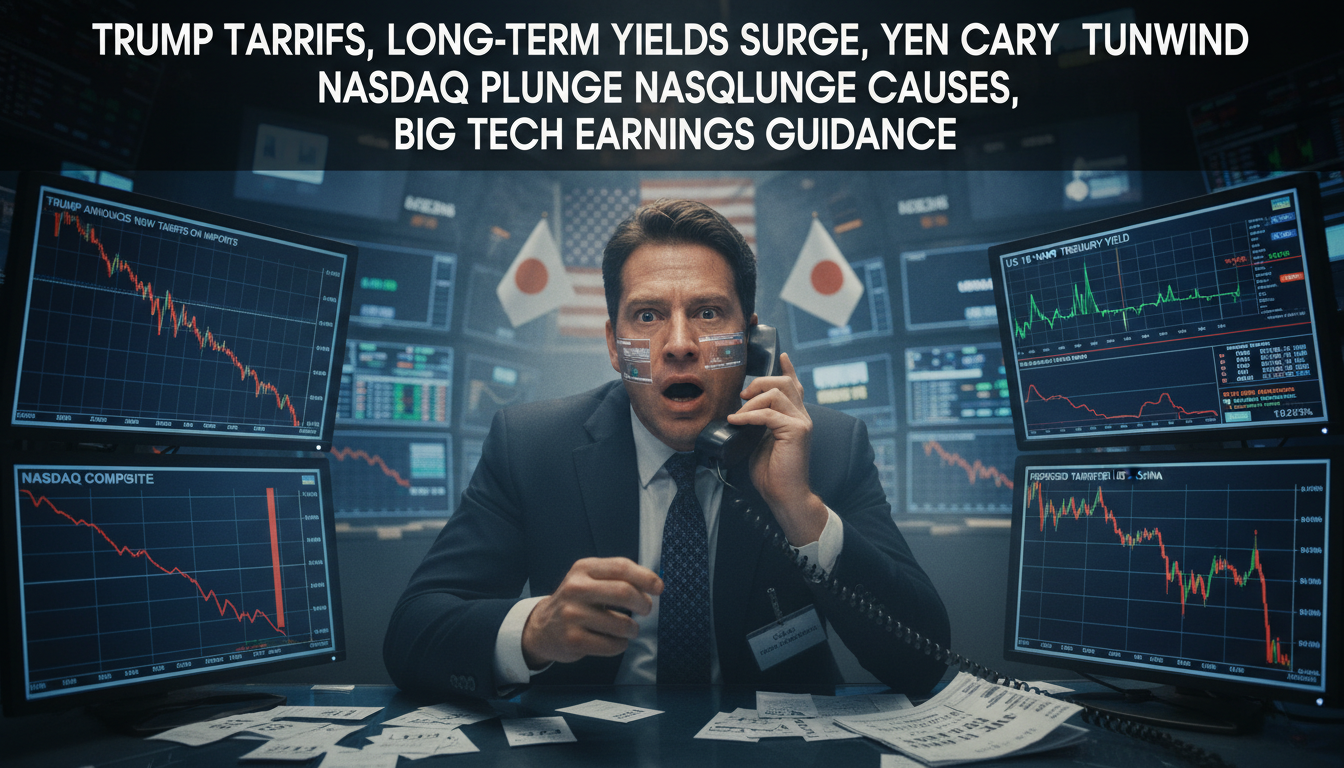
● Tariff Shock, Bond Rout, Yen Carry Unwind
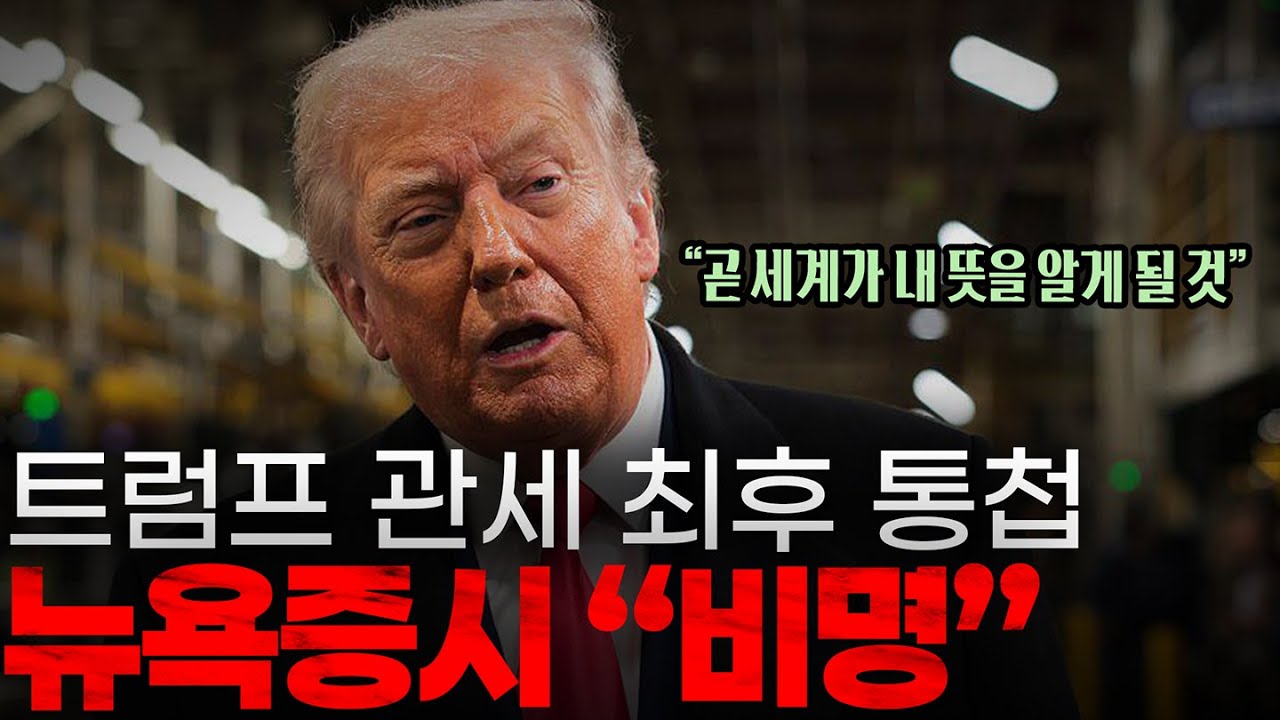
Tariff panic repeating again? The ‘real cause’ of this market plunge lies elsewhere (Trump tariffs · US Treasuries · Yen-carry unwind all summarized at once)
Today’s piece contains exactly four items.
1) Why “Trump tariff war replay” often ends similarly, broken down into a pattern
2) The mechanism of a market where stocks and bonds fall together (including US 30-year approaching 5%)
3) A key variable people miss: surge in Japanese long-term yields → risk of yen-carry trade unwinds
4) The “structural holes” of this tariff issue that YouTube/news rarely point out, and the points the market is actually watching
1) Why did both stocks and bonds fall today?
Situation summary
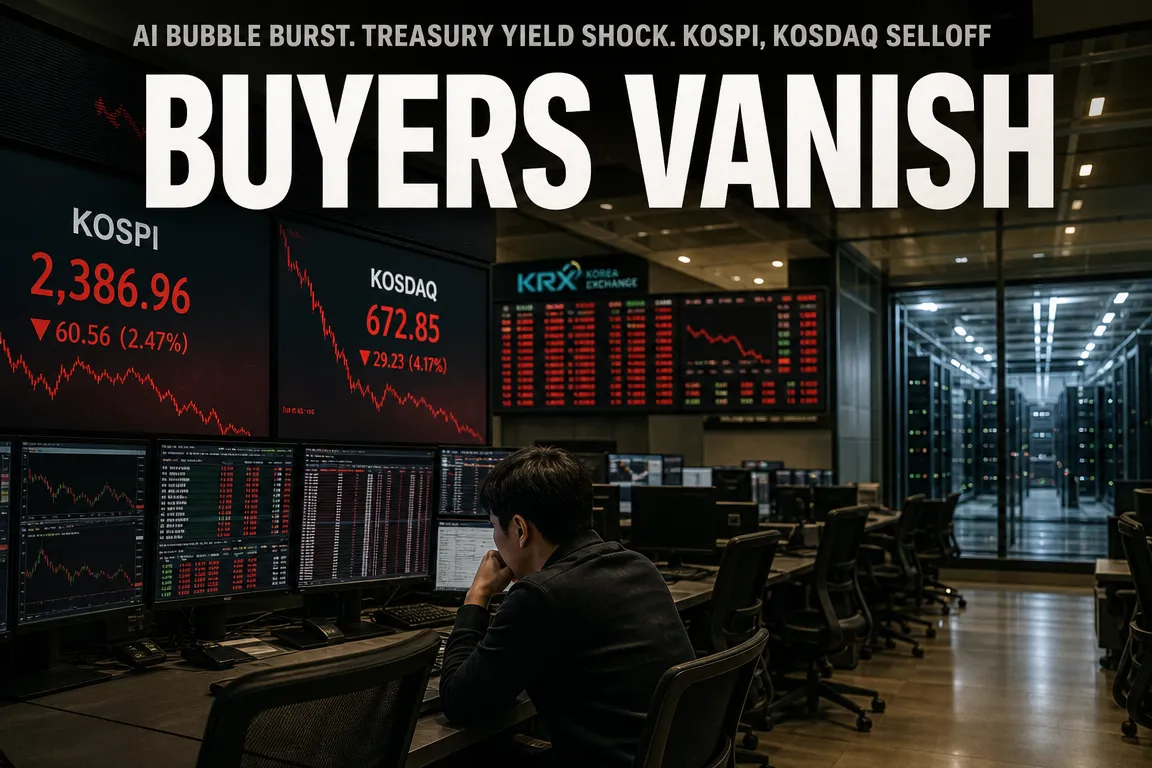
– Nasdaq, S&P and other risk assets plunged
– Crypto like Bitcoin/Ethereum also weakened together
– At the same time US Treasury prices fell (= Treasury yields rose)
– The move of the US 30-year yield approaching the 5% range especially increased market tension
Mechanism
– Normally in “risk-off” stocks fall and bonds rise (yields fall),
– When you see stocks down + bonds down at the same time, the market generally interprets it like this.
① Reignition of inflation concerns (tariffs can raise prices)
② Fiscal/Treasury supply burden (the suspicion that more bonds will be issued pushes long-term yields up)
③ Concern that foreign demand for bonds may weaken (particularly the Japanese variable)
In short, when a reassessment of rates and liquidity happens simultaneously rather than pure “fear,” this pattern often appears.
2) “Trump tariff war season 2″… but the ending is somewhat predictable and why
Original core point claim
– Trump tends to open negotiations asking for 100 and ultimately gets around 20 (strong opening → negotiation card)
– In the past too, the pattern repeated: “big announcement → retaliation → near deadline → reprieve/softening → the average tariff ends up lower than expected”
If you break the pattern into news-style steps
1) US: overturn the negotiation table with the highest-intensity statements like “100% tariffs are possible”
2) Counterparty: responds with “retaliatory tariffs”
3) Market: risk assets shake on fears of ‘trade collapse’
4) Near deadlines: both sides start crafting exit strategies like “several months’ reprieve”
5) Outcome: compromise at a lower level than the announced numbers, and actual application is even lower
Key point
– The market watches the actual scope of application (items/exemptions/ways around it) and the duration more than the “tariff number.”
– That is why headlines can be loud but the real shock often gets eroded over time.
3) Why Europe’s “we will sell all US Treasuries” talk is unlikely to be realistic
Original argument from the source
– Europe holds US Treasuries in very large amounts
– If they actually “sold everything,” Treasury prices would crash → the assets they hold would crash too
– In other words, a “strategic sale” is easy to talk about but very hard to execute
Practical market interpretation
– Such statements are mostly strong “negotiation signals.”
– Treasuries have deep markets, but selling everything causes large price shocks so it’s quite self-harming.
4) Why Europe can’t act as strongly as it talks: the energy (especially LNG) variable
Original text core point
– Since the Russia-Ukraine war, Europe has reduced dependence on Russian LNG/gas pipelines
– Europe’s dependence on US LNG has significantly increased
– If abnormal weather stresses winter supply, energy becomes a “bargaining chip”
Summary
– Tariffs are a negotiation card, but energy is a survival card
– Even if Europe verbally vows to “hold out,” its actions are necessarily constrained.
5) If tariffs truly increase a lot, who gets hit first: GDP and inflation paths
Original core point claim
– An additional tariff around 10% is a shock that can be endured (some GDP slowdown)
– If it grows above 25%, Europe would be heavily shaken and US inflation would face renewed upward pressure
Connection from the market perspective
– Tariffs → higher import prices → push consumer prices → weaken expectations of Fed rate cuts
– If that pushes long-term yields back up, valuation pressure on growth/big tech is large.
6) “But the real essence is elsewhere” — Trump’s political constraints
Original core point
– Trump’s approval ratings are weakening, and pushing policies aggressively increases political cost in this phase
– Ahead of midterms, a hardline drive could work against votes
Reinterpretation
– The market looks more coldly at
– “Does he have the political stamina/justification to push this through?” rather than the statements themselves.
– Therefore, even loud headlines often end up being used up as negotiation cards in practice, and many funds bet on that.
7) The ‘holes’ in tariff barriers people often miss (workarounds/legal risks)
Points mentioned in the original text
– If certain trade gateways/hub countries are left out, workarounds become possible
– If tariff policy is shaken by court rulings (such as the Supreme Court), risks like refunds/policy revisions appear
Why this matters
– Tariffs are more about
– enforceability (law/administration/customs structure) than making loud statements.
– The market fears not the “statement” but the “continuity of enforcement.”
8) The real trigger that shook the Nasdaq more today: Japanese long-term yields surge → yen-carry trade unwind worries
Original core point figures
– Japanese 30-year yields rose sharply in a short time (for example: from the high-2% range to the high-3% range was mentioned)
– If elections/fiscal expansion/tax cuts increase bond issuance (supply), yields face upward pressure
Mechanism (simple version)
– When Japanese yields were low: cheap yen borrowing funded dollar assets (US stocks/bonds) and that money expanded
– When Japanese yields rise: investors ask “why go to the US?” and funds return to Japan, closing positions
– This process is the link to yen-carry trade unwinds, which amplifies global risk asset volatility.
Why big tech is more sensitive
– Yen-carry capital is often linked to leverage/liquidity,
– Growth stocks (especially Nasdaq) with high rate sensitivity see larger initial shocks when yields rise.
9) Three things to watch going forward: look at these before the tariff headlines
① Direction of US long-term yields (especially 10-year and 30-year)
– If the tariff issue stimulates inflation expectations, long-term yields could resume rising
② Japanese yields and the yen
– Whether the surge in Japanese long-term yields stops
– Whether yen appreciation accelerates and yen-carry unwinds expand
③ Big tech earnings reports (guidance)
– More important than earnings is whether “AI CAPEX (investment) is maintained/expanded” and margin guidance
– In a rising-rate environment, “good guidance” matters more than just “good results” for pricing.
10) The “most important things” other YouTube/news rarely mention, summarized separately
core point 1: The essence of tariff panic translates into ‘rates’, not ‘trade’
– What the market really fears is not the tariffs themselves,
– but the path: tariffs → prices → Fed stance → long-term yields rising.
– That is why you see episodes where stocks and bonds both fall.
core point 2: Half of this volatility may be Japan-driven (yen-carry)
– Trump statements repeat often,
– but surges in Japanese long-term yields move actual capital flows.
– News headlines focus on tariffs, but capital fears the yen-carry more.
core point 3: Tariff shocks don’t last long if enforcement continuity is lacking
– The more workarounds, exemptions, and legal risks there are,
– the faster the loud numbers are diluted in practice.
< Summary >
– Stocks and bonds falling together reflects more of a reassessment of inflation · long-term yields · liquidity than pure fear
– Trump tariffs are likely to follow the pattern “strong opening → retaliation → reprieve/softening → low effective tariffs”
– Europe’s “selling US Treasuries” is unlikely in practice because it is self-harming, and energy (LNG) constraints limit strong responses
– A large part of today’s volatility can be interpreted as coming from a surge in Japanese long-term yields → yen-carry trade unwind worries
– Going forward, prioritize watching US long-term yields, Japanese yields · the yen, and big tech earnings guidance over tariff headlines
[Related posts…]
Complete summary of how Trump’s tariff issue affects US stocks and inflation
Mechanism of how yen-carry trade unwinds impact the Nasdaq
*Source: [ 월텍남 – 월스트리트 테크남 ]
– 관세 폭락 재현?.. 어짜피 답은 정해져 있습니다. 속지마세요