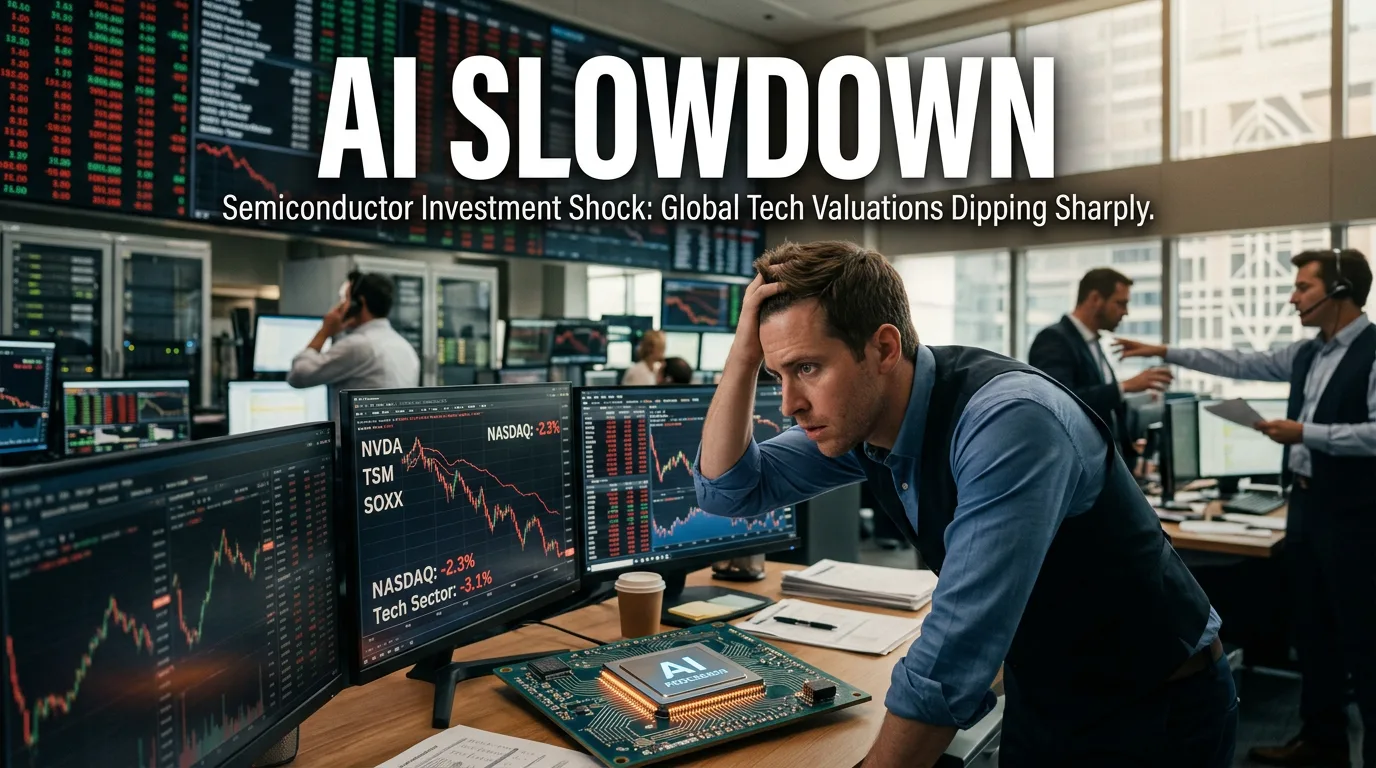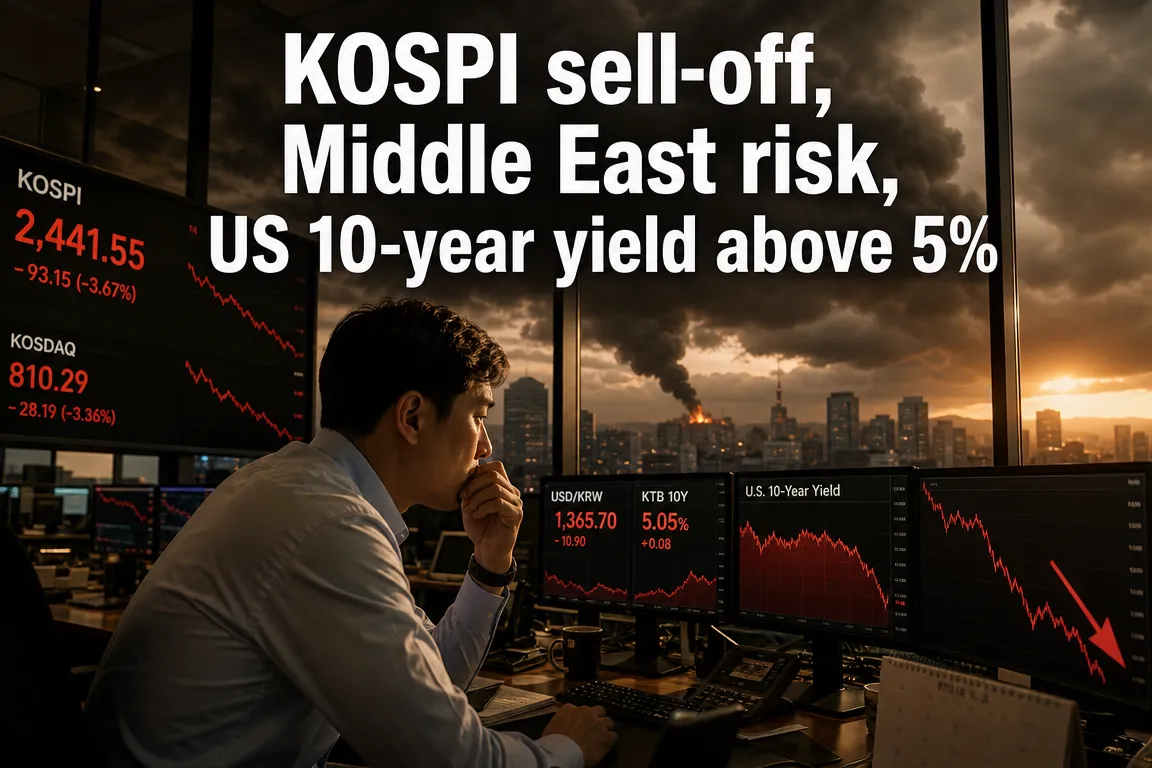
● Burry DeepSeek Bombshell Sparks Big Tech Rout, Nasdaq Whipsaw Panic A vs Panic B, V4 Rumor Shock
Michael Burry’s “DeepSeek” Remark Shook Big Tech: The Real Drivers of Nasdaq Volatility (Fear A vs. Fear B) and How to Reframe the “DeepSeek V4” Rumor
This report focuses on four points.
1) The structural framework behind the recent Nasdaq and S&P 500 sell-off/rebound: the interaction of two distinct fears (Fear A/Fear B)
2) Why Michael Burry’s mention of “DeepSeek” directly challenges Big Tech valuations
3) Whether the “DeepSeek V4 rumor” represents a material risk or a fear already priced in
4) A risk checklist that is often underemphasized: where the market is de-risking vs. where capital is concentrating
1) Market in one line: “Fear is driving fear”
Down more than 1% at the open → testing the 100-day moving average → rebound.
Repeated occurrences of this pattern indicate a regime where volatility, not directional exposure, becomes the primary source of alpha.
Growth-heavy indices such as the Nasdaq tend to reprice on narrative shifts before earnings data confirms the change.
2) The root cause of volatility: a structural collision of two fears
2-1. Fear A: AI becomes so powerful that legacy business models may become non-viable
The core mechanism is straightforward.
As agentic AI adoption increases, the perceived need for high-priced SaaS subscriptions can weaken, which transmits directly into multiple compression in public markets.
Historical parallels include media: equity prices often collapsed before fundamentals deteriorated.
Fear A is primarily about long-term business model survivability rather than near-term earnings.
In this regime, one to two quarters of solid revenue may be insufficient to restore valuation multiples.
2-2. Fear B: AI CAPEX is accelerating, but monetization and ROI are being questioned
Big Tech continues to deploy substantial capital into AI infrastructure (data centers, GPUs, power, networking).
Investors are reassessing the pace and certainty of payback.
Key tail-risk channels commonly cited by institutions include:
1) Higher depreciation burden leading to margin pressure
2) Intensifying competition driving AI service price cuts (margin compression)
3) Slower-than-expected conversion of investment into revenue, undermining market confidence
This explains why growth equities can remain sensitive even amid expectations of rate cuts.
2-3. When Fear A and Fear B collide: sectors can be hit from both sides
One cohort sells on disruption risk (“AI will erode existing software/traditional businesses”).
Another sells on overinvestment risk (“Big Tech AI CAPEX may be excessive and under-monetized”).
Capital can rotate tactically toward segments with simpler narratives, including financials, traditional value, and dividend/cash-flow-oriented equities.
This dynamic can amplify sector rotation within U.S. equities, producing index-level instability alongside pockets of resilience.
3) Why Michael Burry’s “DeepSeek” reference became a Big Tech sell-off catalyst
The key framing is:
AI trends toward convergence → commoditization → compression (margins and valuation multiples).
DeepSeek functions as a symbol within this thesis.
As “similar performance at lower cost” gains traction, markets quickly translate it into cash-flow assumptions:
1) Current AI infrastructure CAPEX may be excessive
2) AI monetization may be weaker than expected due to pricing pressure
3) The valuation premium embedded in Big Tech may need to be reduced
Accordingly, the DeepSeek narrative is less a technology headline and more a challenge to Big Tech cash-flow and terminal value assumptions.
4) The DeepSeek V4 rumor (1T parameters, 1M-token context, 10–40x cost reduction): material risk or priced-in fear?
4-1. The market’s downside scenario (primarily amplifying Fear B)
If a China-based model achieves Western-tier performance at materially lower cost, the Western Big Tech hyperscale CAPEX strategy could be perceived as inefficient.
Investors may apply more conservative payback assumptions and reduce growth multiples.
This would pressure valuation frameworks across Big Tech.
4-2. Key counterarguments
Three points are central:
1) Execution strength does not necessarily imply paradigm leadership.
The question is whether a clear, original “game-changing” shift has been demonstrated recently.
2) Distillation risk: reliance on a “teacher model” may cap performance.
Distillation can improve cost efficiency but may not represent foundational innovation, potentially creating an upper bound on real-world capability.
3) Benchmark results may diverge from production performance.
Even with similar benchmark scores, practical usability can differ meaningfully. Enterprise buyers ultimately pay for workflow productivity, not benchmark tables.
4-3. Additional conclusion: if DeepSeek is a true threat, the market may have already overreacted
Markets tend to price widely discussed risks early.
Therefore, even if V4 is released:
1) If it matches expectations, the event may fade (catalyst exhaustion)
2) If it underdelivers, a relief rally is plausible
3) If it is a genuine step-change, repricing would likely extend beyond single names to the full CAPEX supply chain
5) Single-page issue summary
[Market] Nasdaq and S&P 500: early sell-off followed by rebound; volatility regime persists
[Drivers] Collision of two AI-driven fears
– Fear A: AI disrupts incumbent business models → valuation pressure on software/SaaS
– Fear B: potential AI CAPEX overshoot → heightened scrutiny of monetization and ROI
[Catalysts] DeepSeek V4 rumor + Michael Burry’s “commoditization/compression” framing
[Flows] Tactical rotation from growth into financials/value/dividend and cash-flow defensives
[Key point] Markets discount perceived “inevitable futures” before they appear in reported earnings
6) Underemphasized points: core risks
6-1. The main shock is not whether DeepSeek is “good or bad,” but what happens when AI pricing declines
More than performance competition, the larger risk is falling service prices that reduce AI economic rents.
Early pressure may emerge not only for model providers, but also for subscription software businesses monetizing AI as a premium add-on.
6-2. The essence of CAPEX risk is concentration: too many dollars allocated by too few players in the same direction
Several hyperscalers are pursuing similar strategies simultaneously.
The key risk is not which company wins technologically, but whether combined supply (compute/models/services) becomes excessive, compressing returns across the group.
6-3. Risk checklist: less-discussed catalysts that can drive larger dislocations
1) Power and data-center bottlenecks increasing costs (electricity pricing, cooling constraints, regulatory friction)
2) Slower progression from pilots (POCs) to enterprise-wide rollouts and budget allocation
3) Performance gains translating primarily into price cuts rather than incremental revenue
7) Investment takeaway
Rather than materially changing strategy based solely on a DeepSeek release, it is more actionable to separate:
– potential structural multiple compression in software business models, and
– verification risk around Big Tech AI CAPEX ROI.
In a volatility regime, monitoring which fear is intensifying (Fear A vs. Fear B) may be more practical than forecasting index direction.
< Summary >
Nasdaq volatility reflects the interaction of Fear A (incumbent disruption) and Fear B (CAPEX overshoot and monetization uncertainty), not a single DeepSeek headline.
Michael Burry’s DeepSeek reference reinforced a “AI commoditization → margin/valuation compression” framework, pressuring Big Tech.
The DeepSeek V4 rumor may appear high risk, but if broadly anticipated it may have limited incremental impact at release.
Key items to monitor are structural multiple risk for subscription software under AI price deflation and supply-driven return compression from concentrated CAPEX.
[Related Links…]
- Nasdaq Volatility Expansion: Implications of the 100-Day Moving Average Battle
- Big Tech CAPEX Surge: Where Will AI Monetization Come From?
*Source: [ 내일은 투자왕 – 김단테 ]
– 마이클버리 “딥시크 이슈로 빅테크 폭락?”