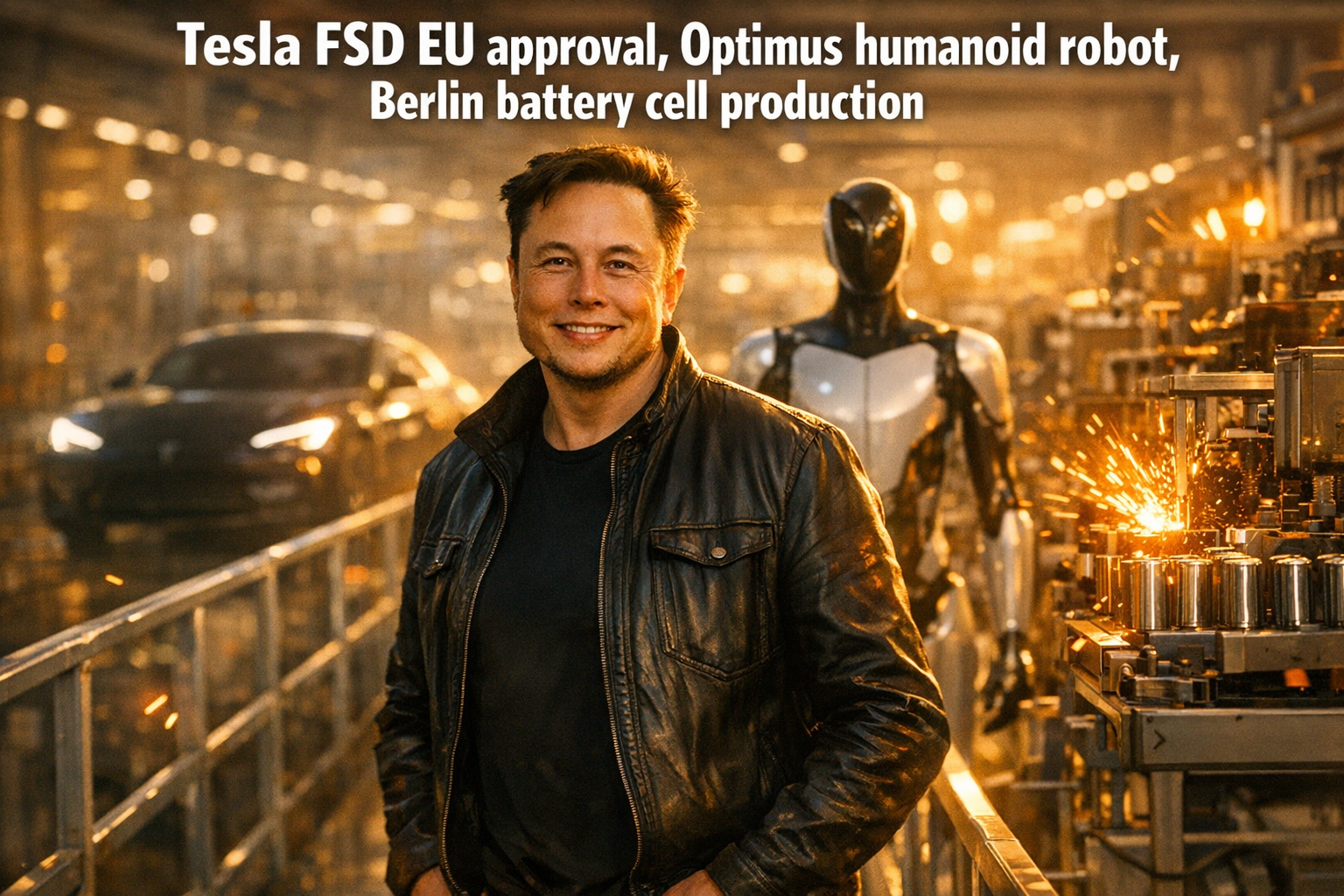
● Musk Bombshells, Europe FSD Greenlight March 20, Cybercab Mass Production April, Robot Labor Disruption, Tesla Supply Chain Power Grab, Berlin Expansion Blockers, Semi Europe Push
Seven Signals Musk Put on the Table “By 2026”: FSD EU Approval (3/20, Netherlands), Cybercab Mass Production (April), Optimus “Work as a Choice” (Within 10 Years), EU Battery Cell/Materials Vertical Integration, Tesla Semi Entry into Europe, and “External Groups” Expansion Risk
This interview provides time-specific milestones (3/20; April) and links production, supply chain (lithium/nickel/cathode/anode/battery cells), regulation (EU approval), labor-market implications (work as a choice within 10 years), and structural constraints in European manufacturing (limited automation innovation) into a single narrative.
It can be read as Tesla’s integrated industrial restructuring thesis across: AI (software) → robots (hardware) → energy/materials (supply chain) → regulation/politics (scalability).
1) News Briefing: Timelines/Plans Presented as Near-Confirmed
1-1. FSD (Full Self-Driving) EU Approval: March 20 Reference to the Netherlands
Musk stated that he had been told by authorities that approval in the Netherlands would occur on March 20, moving beyond general expectations to a date-specific claim.
This matters because EU approval standards are comparatively stringent, and an approval in one jurisdiction can become a reference point for broader regional adoption. He also indicated high confidence in perceived performance once available in Europe.
1-2. “Fall Asleep in the Car and Wake Up at the Destination” Framed as Achievable This Year
He said that, technically, it should become possible this year to fall asleep in a Tesla and wake up at the destination.
This is material not only as a feature claim but because it would affect liability, insurance, and regulatory frameworks.
1-3. Cybercab Mass Production: Gigafactory Texas; Ramp From April
He noted that production could be considered started, with the key point being a shift to full mass-production mode from April, and meaningful volumes by year-end.
Cybercab is positioned as a critical element for transitioning from vehicle sales to an autonomous service/fleet model.
1-4. Optimus (Humanoid Robot): “Work Becomes Optional” Within 10 Years
Musk stated that, over the long term, within 10 years work could become optional, while acknowledging employment-related sensitivities.
He outlined adoption prerequisites:1) Build one genuinely useful robot
2) Scale production capacity and supply chain
3) Start with simple tasks and increase sophistication over time
4) Long-term potential extending to medical applications, including surgery
1-5. Battery Cells and Materials Vertical Integration: Berlin Cells; Texas Lithium Refining; Austin Nickel/Cathode Processing
He said Tesla would begin battery cell manufacturing at Gigafactory Berlin. In the US, he referenced:
- Texas lithium refinery beginning operations
- Austin nickel/cathode material processing beginning operations
This frames EV competitiveness as an integrated stack: materials → refining → cells → vehicles → AI/software.
1-6. “Five Factories or Major Production Lines” Entering Mass Production This Year
He described this year as featuring multiple major initiatives, including five factories (or five major production lines) starting mass production.
This signals a focus on manufacturing scale-up and supply-chain internalization rather than a product-announcement-driven cycle.
1-7. Tesla Semi: Targeting Entry Into Europe Around Next Year
He expressed intent to bring Tesla Semi to Europe around next year.
Given Europe’s joint dynamics of logistics costs, energy costs, and environmental regulation, electrification in commercial trucking can function as a barometer for broader industrial electrification.
2) Musk’s Assessment of the European Auto Industry: Delayed Electrification, Autonomy, and Automation Innovation
2-1. “Insufficient Automation Innovation”
He identified limited automation innovation as a core issue, stating that vehicles produced today are not meaningfully different from those produced five years ago, implying stagnation in both product and manufacturing innovation.
2-2. EV Transition Was “Resisted,” Then Driven by External Pressure
He argued that incumbents delayed electrification and would revert if possible, implying sensitivity to shifts in EV subsidy policy, emissions rules, and trade/tariff frameworks.
2-3. ICE Without Autonomy: “Like Riding a Horse While Using a Flip Phone”
He suggested ICE vehicles and non-autonomous vehicles may not disappear entirely but could become rare. The central claim is that failure to execute on electrification + autonomy increases the risk of structural competitiveness loss.
3) Gigafactory Berlin Roadmap: Expansion Preconditions Have Shifted
3-1. Vision: Higher Output + Battery Cells + Materials Vertical Integration
He described an aspiration for Berlin to become a large-scale manufacturing hub including:
- Significant production expansion
- Large-scale battery cell production
- Materials production (cathode/anode/lithium)
- Potential production of additional platforms such as Cybercab and Optimus
This indicates an ambition to build an integrated energy-and-materials manufacturing complex in Europe, not merely an assembly site.
3-2. Primary Expansion Risk: “External Groups” Increasing Operating Difficulty
He said Tesla would not close the plant but might not expand due to “external groups” making the situation more difficult.
This frames European capacity expansion as constrained less by technology or demand and more by permitting, local opposition, and political/social acceptance.
4) Core AI Implication: Tesla’s Definition of “Real-World AI”
4-1. Definition: “See the World Like a Human; Software Directly Drives”
He characterized Tesla FSD as a “true AI-based vehicle,” emphasizing perception-and-decision systems operating in the physical world. This aligns with “physical AI,” where sensor inputs generate real-world actions rather than text outputs.
4-2. Why He Emphasized the “Hand” in Optimus
He stated that hand design is particularly difficult. In humanoids, the hand is central to:
- Fine manipulation
- Safety in shared human environments
- Generality via tool use
This indicates focus on concrete engineering bottlenecks relevant to durability, cost, precision, and manufacturability.
4-3. Implications of Mentioning Medical Use (Including Surgery)
Medical deployment requires more than technical capability, including:
- Regulation and certification
- Liability frameworks
- Data and clinical validation
- Insurance and hospital adoption economics
Positioning Optimus for medical use suggests a long-term aim beyond factory automation toward broader service-sector disruption.
5) Global Macro Reframing: Effects of “Electrification + Autonomy + Vertical Integration”
5-1. Greater Vertical Integration Increases Industrial Policy Friction
As firms internalize refining, cathode/anode processing, and cell production, competition increasingly intersects with industrial policy, including tariffs, subsidies, environmental constraints, and local-content rules.
5-2. Automation Raises Productivity and Distribution Challenges
While “work as a choice” implies productivity gains, the transition may involve:
- Sharp increases in corporate productivity
- Labor-market restructuring
- Higher costs for social safety nets and retraining
Regions with higher consensus and regulatory costs may experience more uneven adoption.
5-3. Autonomy Commercialization May Influence Service Prices
Cybercab commercialization could change the cost structure of mobility services, with spillovers into delivery, logistics, and commercial transport (including Semi). This may affect how certain service categories are priced and could influence broader inflation dynamics over time.
6) Key Points Often Underweighted in Other Coverage
6-1. The Core Topic Is Not Products; It Is Permitting, Expansion, and Vertical Integration
The linkage presented is:EU FSD approval (regulation) → Berlin expansion (social/political constraints) → battery/materials vertical integration (industrial policy) → Cybercab mass production (service model).
6-2. “External Groups Blocking Expansion” Highlights a Structural European Risk
European manufacturing capacity is increasingly shaped by:
- Permitting
- Environmental and community constraints
- Labor and political conflict
This implies European capacity growth should be treated as an option rather than a certainty.
6-3. Identifying the “Hand” as a Bottleneck Suggests Practical Execution Focus
Calling out a specific subsystem constraint indicates attention to engineering and manufacturability trade-offs rather than marketing-led demonstrations.
6-4. “Five Lines Entering Mass Production” Signals Supply-Side Structural Change
Capacity additions can alter market structure through pricing pressure and margin dynamics in EV markets, potentially outweighing short-cycle macro fluctuations.
6-5. The Critique of Europe Centers on Innovation Velocity
The underlying argument is that slow-moving organizations are disadvantaged in fast-changing technology sectors, beyond the specific issue of electrification.
7) Embedded Macro/Market Keywords (5)
The text integrates five commonly searched macro variables in investor contexts:rate cuts, inflation, FX, recession, EV subsidy policy.
Autonomy and robotics may influence service-price formation (inflation). European expansion and localization are exposed to FX and policy constraints (subsidies, permitting). Even if markets price in rate cuts, company value drivers may remain execution-dependent (approvals, ramps, and expansion).
< Summary >
- Musk referenced a specific EU FSD approval timing (3/20, Netherlands), Cybercab ramp to mass production from April, and a view that work could become optional within 10 years via Optimus.
- Tesla’s next competitive phase is framed less around new-model announcements and more around battery cells and lithium/nickel refining vertical integration, plus manufacturing scale—especially in Europe via Berlin.
- He assessed Europe’s auto industry as lagging primarily on innovation and automation velocity, with ICE and non-autonomous vehicles potentially becoming niche over time.
- The primary determinants for Tesla’s Europe strategy are regulation (approval), social/political constraints on expansion, and industrial policy dynamics tied to vertical integration.
[Related Articles…]
- https://NextGenInsight.net?s=FSD
- https://NextGenInsight.net?s=Optimus
*Source: [ 허니잼의 테슬라와 일론 ]
– [일론 머스크]방금 공개된 일론 머스크 최신 인터뷰 한국어 풀더빙!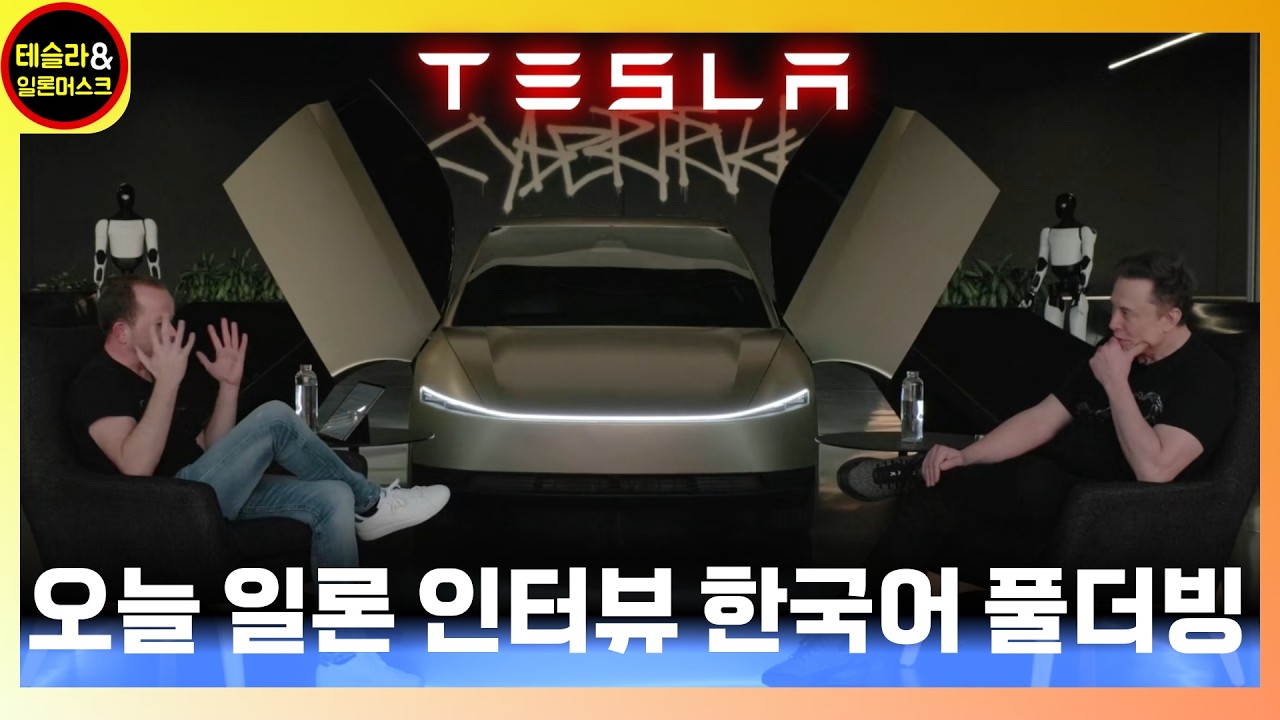
● AI Bubble Fever No Crash Just Volatility
In an Era Where Long-Term Outlooks Have Lost Relevance, “Response” Is Still Possible: From Gaps in the AI Bubble Debate to a KOSPI 6,600 Probability Model
This report contains three elements:
First, why “AI may be a bubble, but not a collapse” can be simultaneously valid.
Second, a “diagnose-and-probability-weight” framework that enables investment decisions even under the view that “long-term forecasts are meaningless” (KOSPI 6,600 example).
Third, why the current market is being driven not only by rates/liquidity but also by shifts in sentiment and participant composition, summarized in a news-style format.
1) Key News Briefing: What Markets Should Extract From the Discussion
1-1. AI Bubble Debate: Why It Converges on “A Bubble Is Possible, but Not a Collapse”
The recurring message is consistent:
AI may exhibit overheating (excitement), but it is difficult to agree that this necessarily implies a fundamental collapse.
A critical distinction is emphasized:
Prices (equities) are driven by liquidity and sentiment, while fundamentals (technology adoption, productivity gains, value-chain restructuring) accumulate over time.
1-2. The Meaning of the Rule: “Do Not Engage in Bubble Debate Before 15% Penetration”
The rule suggests that labeling a phenomenon as a bubble before it reaches a meaningful societal/industrial penetration threshold (approximately 15%) is largely unproductive.
The focus is on adoption and penetration inflection points rather than price-level debates.
For AI, this implies prioritizing indicators such as enterprise adoption rates, workflow redesign penetration, and the revenue share of AI-native products over near-term price signals.
1-3. Inca Civilization Analogy: “The Lack of Recognition Reflects a Difference in Definitions”
Skepticism toward AI is framed via an analogy: a large ship misperceived as an island due to a constrained definition of what a “ship” is.
The implication is that existing experience-based definitions can prevent recognition of a new scale of change.
For investing, the relevant point is:
The boundary of an investor’s understanding is not the boundary of reality, and markets can price changes before full understanding is widespread.
2) Interpreting “Long-Term Forecasts Are Meaningless” as a Practical Framework
2-1. Reduce Assertions, Increase Diagnosis: Respond With a Probability Model
Although the speaker states that he “does not forecast,” the operational approach is to use forecasts differently.
Rather than targeting a single-point estimate, multiple scenarios are probability-weighted to form a rational expected value.
Example framework presented:
If the market discusses 6,000 and 7,000 simultaneously, decompose each rationale and assign weights based on relative plausibility.
If both appear similarly credible, weight 50:50 to arrive at 6,500.
If 6,000 appears less credible, weight 30% vs. 70% for 7,000 to arrive near 6,700.
The statement “currently assessed around 6,600” follows this process.
2-2. Navigation Analogy: Forecasting as an Updating System, Not an Arrival-Time Prediction
The navigation analogy frames forecasting utility:
Departure time is fixed by plan, but arrival time changes with traffic, incidents, and weather.
Therefore, revised forecasts matter.
The operational conclusion:
The objective is not “being right” once, but maintaining a system that updates decisions as variables change.
In high-volatility regimes, forecasting should function as a risk-management process rather than a one-off report number.
2-3. Why Macro Forecasting Has Become More Difficult: Rapid Growth in Relevant Variables
A pragmatic assertion is that the number of variables influencing global growth is extremely large, while models typically incorporate only a limited subset.
Compared with earlier decades when structures were simpler and change was slower, the post-1990 environment features faster information diffusion, technological shifts, and complex global capital flows, increasing modeling constraints.
3) The Current Market’s Core Engine: Rates/Liquidity + Sentiment + Participant Composition
3-1. 2022: A Market Dominated by “Fed Rates”
In 2022, Federal Reserve policy and US Treasury dynamics (including curve structure) were dominant.
In such regimes, macro indicators and economic forecasts can strongly explain cross-asset directionality because inflation, rates, and recession risk pull assets in a common direction.
3-2. 2025–2026: “AI + Late-Stage Participation Incentives” Distort Pricing
The current regime is multi-layered.
Early participants (2023–2024) entered primarily through judgment and analysis, while later participants (2025–2026) are characterized as entering due to fear of falling behind.
As price formation shifts from logic toward psychology, volatility rises and forecast models are more frequently invalidated.
3-3. Conclusion: Separate Fundamentals From Price
Translated into investment terms:
AI fundamentals (adoption, productivity, value-chain change) can accumulate.
Prices fluctuate with liquidity and sentiment.
Price moves should not be used to determine “real vs. false”; instead, investors should implement a fundamentals checklist.
4) Investment-Oriented Reframing: A Practical Checklist From the “Forecast Skepticism” View
4-1. Do Not Rely on Forecasts; Use Forecasts as Inputs
Long-term forecasts are inherently incomplete.
However, markets move based on collectively incomplete forecasts.
For individual investors, comparing assumptions across differing forecasts is more actionable than treating any single forecast as authoritative.
4-2. Converting “Probability Weighting” Into an Investment Rule (KOSPI 6,600 Method)
Operational steps:
(1) Identify 2–3 representative market scenarios.
(2) Write each scenario’s core assumptions in sentences (rates, earnings, policy, FX, global flows).
(3) Assign probabilities based on internal plausibility criteria.
(4) Compute an expected value (e.g., 6,600).
(5) When major variables shift, revise probabilities rather than attempting numerical “prophecy.”
4-3. In AI Trends, Adoption and Workflow Redesign Lead Technology Metrics
Applying the 15% threshold concept:
Leading indicators are not solely model performance but the share of real-world workflow change.
Examples include office productivity metrics, automation in development/marketing, and shifts in semiconductor demand structure.
5) Key Points Often Underemphasized in General News/Video Coverage
5-1. The Core of “Forecast Skepticism” Is Updating Capability, Not Pessimism
“Forecasts are meaningless” is often presented as nihilism.
Here, the emphasis is the opposite: systematize decision-making by continuously updating probabilities rather than making a single static call.
5-2. Why the “Bubble Collapse” Frame Can Be Counterproductive: It Halts Fundamental Monitoring
As AI bubble narratives intensify, a common error is binary labeling: declines imply “fake,” rises imply “real.”
This reduces attention to adoption rates, earnings structure changes, and value-chain restructuring.
5-3. Macro Model Limitations Are Primarily About Acknowledging Variable Proliferation
Frequent forecast errors reflect the reality that models include far fewer variables than the real economy.
The practical requirement is not a more persuasive single number, but predefined rules for how positioning changes when policy, technology, sentiment, or global flows shift.
6) Investor-Facing Conclusion (SEO-Structured)
AI may experience overheating, but as long as industrial penetration continues to accumulate, a collapse-only narrative is not well supported.
For indices such as the KOSPI, the objective is not precise point forecasting. A more resilient approach is to treat inflation, rates, recession risk, asset allocation, and central bank policy as state variables and continuously re-weight scenario probabilities as conditions change.
< Summary >
AI can be overheated, but should not be assessed solely through a collapse framework; monitoring fundamentals (adoption, productivity, value-chain change) is central.
Long-term forecasts are imperfect, but probability-weighted scenarios can produce actionable expected values (e.g., KOSPI 6,600).
Macro forecasting faces increased constraints due to variable proliferation; the priority shifts from “being right” to maintaining an updating, response-driven decision system.
[Related Posts…]
- AI Trends Affecting Asset Markets: Five Items to Monitor Now (https://NextGenInsight.net?s=AI)
- KOSPI Outlook: Timing of “Revised Forecasts” Matters More Than the Number (https://NextGenInsight.net?s=KOSPI)
*Source: [ 경제 읽어주는 남자(김광석TV) ]
– “장기 전망 의미없다” 변수에 대응하는 방법 | 경읽남과 토론합시다 | 오종태 대표_2편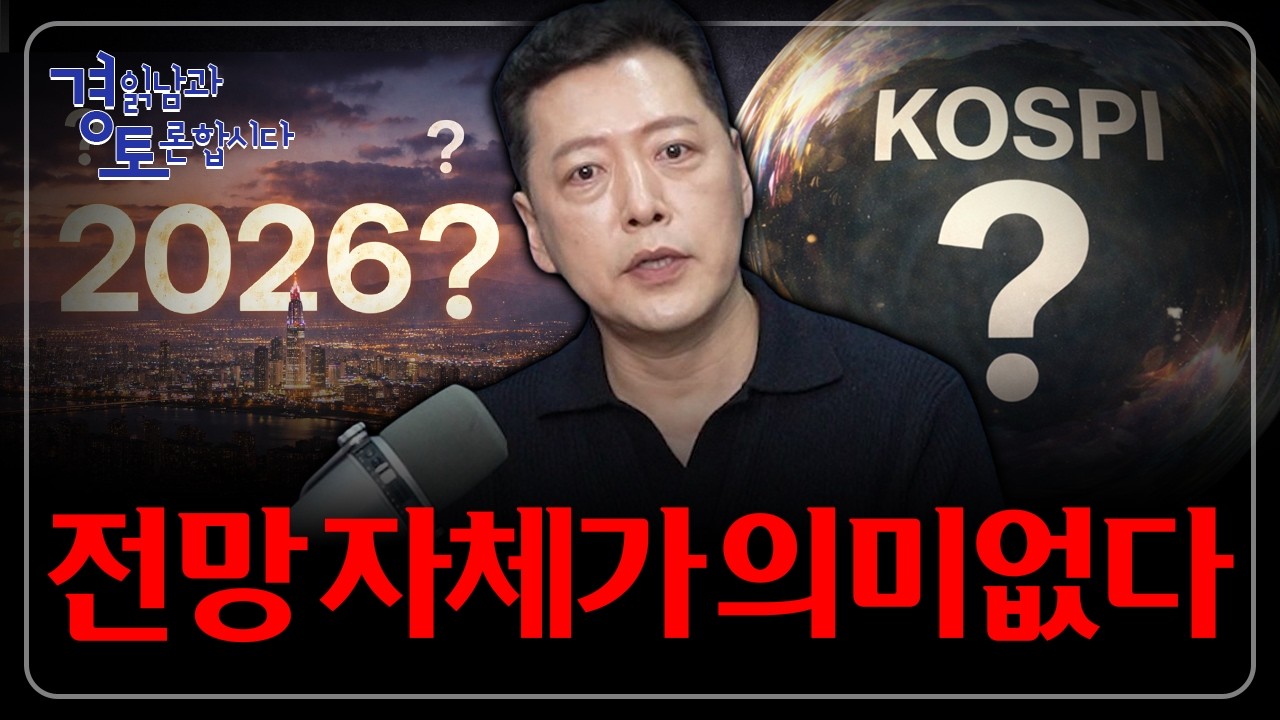
● Korea Chip Giants Drive KOSPI Surge, Power Grid AI Agents Next, Private Credit Freeze Risk
Structural Drivers Behind Korea’s Semiconductor Strength (Still), Potential Next Leaders (Power Infrastructure, AI Agents), and the Risk Implications of a Private-Fund Redemption Halt
This report consolidates three topics:
1) Why recent KOSPI gains are often described as being driven primarily by Samsung Electronics and SK hynix.
2) What may lead next (with a rationale for power infrastructure potentially preceding materials/equipment).
3) Whether the Blue Owl fund redemption halt represents a systemic crisis risk or a structural warning signal.
1) Market headline: “More than 40% of KOSPI gains driven by Samsung Electronics and SK hynix”
Key points
- Based on the referenced commentary, the contribution of Samsung Electronics and SK hynix to recent KOSPI upside is interpreted as 40%+ on a weight-and-contribution basis.
- The view was stated that recalculating the index excluding these two names would yield a materially different index level (rhetorical framing, but a clear message).
Why it matters
- It explains the divergence between index performance and investor “felt” performance.
- When performance dispersion widens between holders and non-holders of the two names, attention tends to shift toward “what else is available,” which can intensify sector rotation.
2) What rises “with” Samsung and SK hynix: not linkage, but independent catalysts
Core point
- A semiconductor-led rally does not mechanically lift other sectors; each sector requires its own catalyst (momentum) to outperform.
- Examples of causal framing include: stronger markets benefiting brokers, AI expansion increasing demand for power-related capacity.
Common investor error (practitioner framing)
- Investors often avoid the leading names because they “look expensive,” then seek substitutes and underperform.
- The analogy used implies that the strongest assets can remain strong for longer; laggards may follow later but with lower returns.
3) The “handkerchief” framework for leaders vs. laggards: laggards rise later and decline earlier
Framework summary
- When lifting the center of a handkerchief, the center (leaders) rises first; the edges (laggards) follow later.
- When setting it down, the edges touch down first; the center holds up the longest.
Implication
- In bull phases, leaders often appear “expensive” at most points in time.
- The focus should be value (earnings growth) rather than price action alone; “up a lot” is not equivalent to “overvalued.”
4) How to identify the next theme after semiconductors: materials/equipment are conditional; power is structural
(1) When materials and equipment can outperform
- If semiconductor demand accelerates sufficiently to drive aggressive CAPEX increases by Samsung Electronics and SK hynix, materials/equipment can act with higher operating leverage.
- However, if CAPEX does not expand as much as the market expects, a simple “follow-through” trade into materials/equipment may deliver lower relative returns.
(2) Power-equity rationale: power becomes the next AI bottleneck
- The thesis is that scaling AI increases power demand and makes power availability a binding constraint.
- The magnitude of prospective shortages may be underappreciated, including among analysts.
- As a result, power is framed less as a short-lived theme and more as a structural beneficiary of infrastructure investment.
Macro linkages
- Power and infrastructure spending tends to be policy-driven and may persist even during downturns due to industrial strategy considerations.
- If supportive macro variables (e.g., rate-cut expectations) align, valuation conditions may also improve.
5) Why rotation occurs: not because assets are “cheap,” but because catalysts emerge
Key claim
- Rotational leadership typically requires triggers such as news flow, policy, regulation, or earnings inflections—not timing alone.
- Example cited: corporate-law revisions that can raise expectations for buybacks, cancellations, or dividend policy changes, driving selective sector/stock moves.
Implementation note
- Tracking policy, disclosures, and regulatory changes may be more effective for rotation than relying on charts alone.
6) 2026 AI trend: leadership shifts from training to inference to AI agents
AI should not be treated as a single trade
- Early phase: emphasis on LLM training infrastructure.
- Next phase: inference expands, shifting beneficiaries toward compute/memory/system optimization.
- Current framing: the emergence of “Claude” is cited as an inflection toward AI agents, implying a new market phase.
What AI agents change
- As AI moves from answering queries to executing tasks, some software companies may face rapid value compression (existing features replaced by agent workflows).
- Conversely, task-executing agents require new infrastructure (tools, data pipelines, security), potentially creating less-obvious winners.
7) Blue Owl Fund III redemption halt: closer to a “blind-spot warning” than a systemic crisis
Conclusion (as characterized)
- It is not directly comparable to the 2008 subprime dynamic where underlying assets were already impaired and forced liquidity spirals.
- Nonetheless, private credit/private funds can sit in supervisory blind spots; over time, sustained high rates can compound stress.
Why private credit can become a delayed risk
- Exposures are difficult to observe (limited transparency).
- A cited tail risk is the possibility of “moral hazard” structures such as duplicate pledging of the same collateral across lenders.
Two idiosyncratic factors highlighted
- (1) Exposure to venture/software and concerns that AI agents may disrupt software valuations, potentially accelerating redemption requests.
- (2) Structural mismatch: long-duration loan assets paired with investor terms such as quarterly liquidity, amplifying redemption pressure.
8) Three underemphasized but decision-relevant points
Key point 1: distinguish “seeking alternatives” from “avoiding the right answer”
- Avoiding Samsung Electronics/SK hynix solely due to perceived expensiveness can become avoidance rather than diversification.
- Alternatives are only valid when their own upside drivers are clear.
Key point 2: in the semiconductor supply chain, focus on CAPEX direction before materials/equipment
- The simplistic equation “semiconductors up = equipment up” is not reliable.
- Materials/equipment alpha depends on whether CAPEX is chasing demand or being restrained versus demand.
Key point 3: AI agents are a double-edged sword for listed software
- Broad-based “AI software” rallies are not assured; feature-oriented SaaS may face pricing and margin pressure.
- Potential beneficiaries may concentrate in the “execution layer” (permissions, security, data access, payments, audit logs), which remains less clearly priced by the market.
9) Investor checklist: 7 questions to monitor
1) Is the portfolio avoiding leaders primarily due to “price” optics?
2) For semiconductors, is valuation assessed against the pace of earnings growth?
3) For materials/equipment, are there signals of accelerating CAPEX?
4) For power, is supply keeping pace with the scale of data center/AI investment?
5) Is rotation explained by catalysts (policy/regulation/earnings) rather than themes?
6) In AI exposure, which phase is being targeted: training, inference, or agents?
7) For private credit/private funds, is risk evaluated as a lagged, time-dependent dynamic rather than an immediate collapse scenario?
- Recent KOSPI upside has been heavily concentrated in Samsung Electronics and SK hynix, widening leader–laggard dispersion.
- Other sectors require sector-specific catalysts; semiconductor strength alone is insufficient.
- The “handkerchief” framework emphasizes that laggards typically move later and decline earlier, while leaders often hold longest.
- Materials/equipment upside is most levered to accelerating CAPEX; power infrastructure is positioned as a structural beneficiary as AI increases power constraints.
- AI leadership is framed as shifting from training to inference to AI agents; agents may both create new beneficiaries and pressure incumbent software models.
- The Blue Owl redemption halt is characterized as a structural warning in less-transparent private markets; risks may build with a lag rather than presenting as an immediate systemic event.
[Related links…]
- https://NextGenInsight.net?s=semiconductors
- https://NextGenInsight.net?s=power
*Source: [ Jun’s economy lab ]
– 한국 반도체가 이렇게 잘 나가는 이유(AFW파트너스 이선엽 대표 2부)