● Tesla FSD Crash Fury, 4-Second Video, Battery War, BMW Challenge
Tesla FSD Cybertruck Crash Controversy: Why Conclusions Should Not Be Drawn From a 4-Second Clip
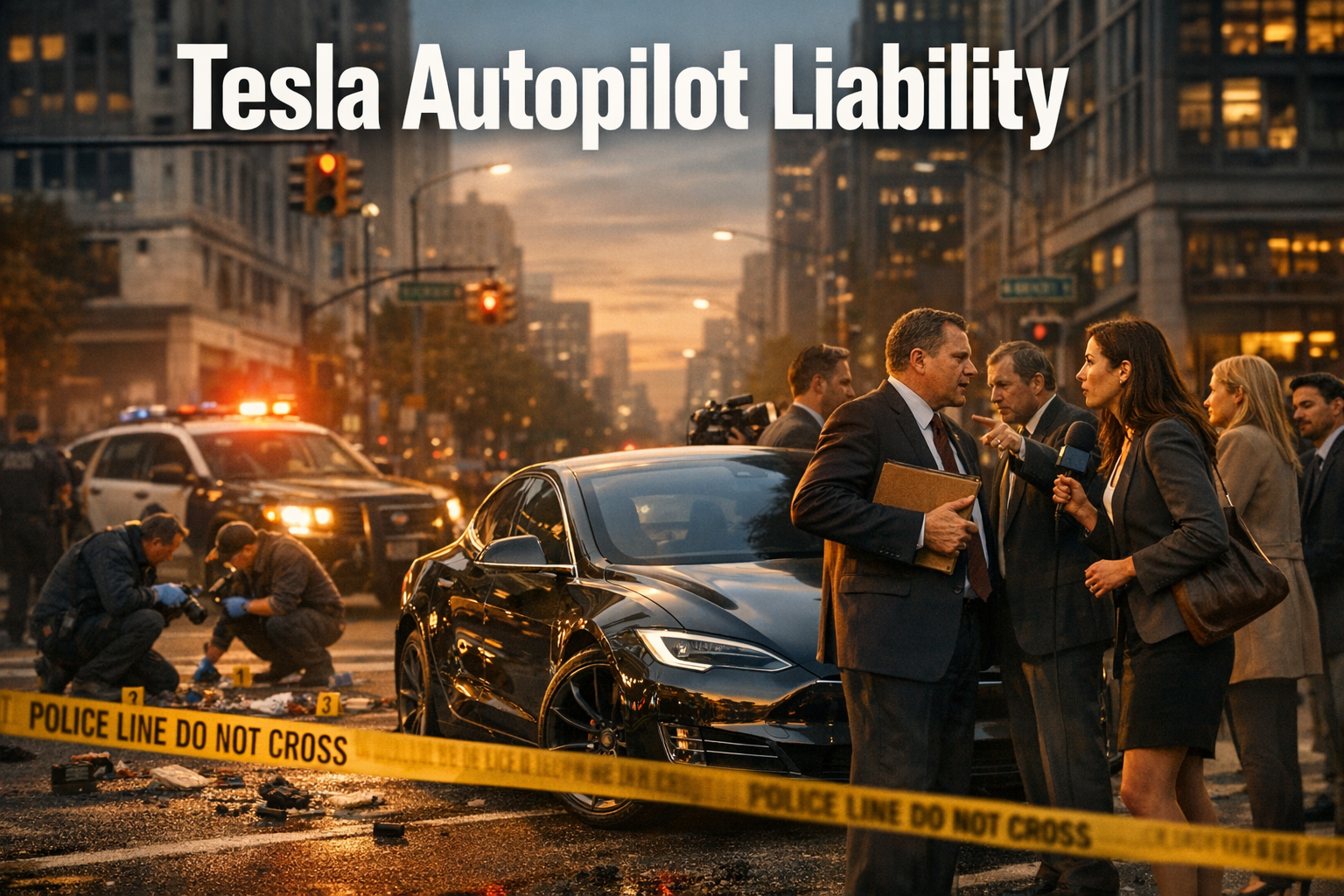
This development is not a standard traffic-accident headline. It intersects with Tesla FSD, the Cybertruck, autonomous-driving litigation, battery technology disputes, and competitive dynamics in the EV market.
This report consolidates: the significance of the publicly circulated 4-second clip; Elon Musk’s claim that Autopilot was disengaged 4 seconds before impact; how media framing can influence market sentiment; BMW’s next-generation electric sedan strategy; and supply-chain litigation surrounding 4680 dry-electrode technology.
Key emphasis areas include: why only 4 seconds were released; whether the lawsuit is positioned as a technical defect claim versus an expanded brand/executive-liability narrative; and how the issue could propagate through EV-sector and U.S. equity-market investor sentiment.
1. Issue Snapshot
Four core items:
- A Cybertruck crash at a Houston freeway split and disputed FSD/Autopilot liability
- BMW’s unveiling of a new electric sedan (i3) and increased convergence with Tesla-style manufacturing strategy
- A Cybertruck anti-dooring software update
- Legal disputes over Tesla’s 4680 battery dry-electrode process
Common denominator: whether Tesla sustains perceived technology leadership amid rising competitive, regulatory, and litigation pressure.
2. Houston Cybertruck Incident: What Is Actually in Dispute
2-1. Incident Overview
The crash occurred at a highway interchange in Houston, Texas.
Plaintiff’s allegation: a Cybertruck operating in an automated-driving mode failed to follow the curve at a split, continued straight, and struck a concrete structure, endangering the driver and child. A lawsuit seeks approximately USD 1 million in damages, naming Tesla and Elon Musk.
2-2. Plaintiff Narrative: Expanded Liability Thesis
The plaintiff’s framing extends beyond vehicle malfunction:
- Safety deprioritized relative to marketing
- Deployment of incomplete automated-driving technology on public roads
- Structural limitations of a camera-only vision approach
- Alleged strategic error in rejecting LiDAR in favor of cameras
- Board-level governance and oversight failure
This positions the case as a challenge to Tesla’s engineering philosophy and leadership accountability, not solely a product-defect claim.
2-3. Tesla Response: Control-State Timing
Elon Musk stated on X that vehicle logs indicate the driver disengaged Autopilot 4 seconds before impact.
If accurate, the interpretation changes materially because the widely circulated clip reportedly covers only the final 4 seconds before the collision. If the clip begins at the disengagement point, the footage may reflect manual driving rather than active FSD/Autopilot control.
3. Why the “4-Second Video” Is Central
3-1. Four Seconds Represents Material Distance at Highway Speed
At approximately 65 mph (~105 km/h):
- Distance per second: ~29 meters
- Distance over 4 seconds: ~116 meters
If Autopilot was disengaged 4 seconds prior, the vehicle traveled roughly a full-field distance under manual control. This does not prove avoidability, but it challenges a definitive claim that automated driving remained in control until impact.
3-2. The Editing Window Shapes the Message
Short clips often drive public perception more than full logs. A 4-second pre-impact segment can lead viewers to infer immediate system failure, even if earlier context is missing.
Key questions requiring resolution:
- Why was only a 4-second segment released?
- What did the system perceive and decide before disengagement?
- Did the driver brake or execute an evasive maneuver after disengagement?
- Was the decisive control period under system control or manual control?
These points are prerequisites to assessing technical fault.
4. Media Dynamics and Market Sensitivity
4-1. Tesla Is a High-Engagement Media Topic
“Telsa,” “Elon Musk,” “autonomous-driving crash,” and “lawsuit” reliably drive traffic. Coverage often prioritizes impact over technical specificity due to digital media incentives.
4-2. Framing Divergence Versus Conventional Auto Accidents
Comparable incidents in non-Tesla vehicles are frequently treated as isolated accidents. Tesla incidents are more readily framed as “autonomy failure,” “AI risk,” or “technology overreach,” reflecting heightened expectations and amplified downside narrative risk.
4-3. Implications for Sentiment and Valuation
In U.S. equities, Tesla functions as a proxy for EV growth and autonomy expectations. Negative autonomy headlines can pressure sentiment, particularly when combined with macro catalysts (rate expectations, inflation trajectory, recession risk). Spillover risk extends to EV-sector multiples and autonomy-related positioning.
5. Interpreting the FSD Debate Through a Data Lens
5-1. Tesla’s Claimed Advantage: Scaled Real-World Data
Reported cumulative FSD miles: >8.7 billion miles (~14 billion km). This scale is positioned as a structural advantage for AI training and iteration.
Operating model:
- Large-scale on-road data capture
- Neural-network-based perception and planning improvements
- Iterative OTA updates
- Software-centric differentiation over hardware-intensive approaches
5-2. Scale Does Not Eliminate Case-Specific Accountability
High cumulative mileage does not negate liability in a specific event, and a single event does not, by itself, establish systemic failure. The decisive inputs are raw logs and precise control-handoff timing.
6. Why the Lawsuit May Reflect a Legal Strategy Beyond a Single Crash
6-1. Litigation Models and Naming/Marketing Risk
Prior outcomes, including cases where Tesla faced substantial awards despite apparent driver error, increase incentives to frame claims around reliance, naming conventions, and induced overconfidence (e.g., “Autopilot”). The Houston case similarly broadens scope toward:
- System design philosophy
- Branding and marketing representations
- CEO leadership responsibility
- Board oversight responsibility
6-2. Investor Relevance: Legal Risk Premium
If such cases proliferate, valuation may incorporate a higher legal-risk premium, especially for businesses where autonomy is a key growth narrative. Investor monitoring should prioritize:
- Transparency and credibility of log disclosures
- Regulatory posture and standards applied
- Whether jury outcomes repeat or are reversed on appeal
- Whether brand impact translates into measurable demand effects
7. Other Development (1): BMW Electric Sedan i3 and Strategic Convergence
7-1. BMW Moving Toward Tesla-Style Manufacturing Logic
BMW introduced a next-generation electric sedan based on the Neue Klasse platform, with aggressive stated specifications:
- Range: ~708 km
- Dual-motor AWD
- Output: 463 hp
- 800V architecture
- Up to 400 kW fast charging
Strategically notable elements include cylindrical cells, cell-to-pack concepts, and structural battery directionality, indicating convergence toward Tesla-led manufacturing approaches.
7-2. EV Competition Now Extends Beyond Vehicle Performance
Key competitive axes:
- Battery cost structure
- Charging access and network availability
- Software update capability
- Manufacturing efficiency and supply-chain control
Tesla retains advantages, particularly via Supercharger network density; theoretical peak charging rates are less relevant without broad infrastructure availability.
8. Other Development (2): Cybertruck Anti-Dooring OTA Update
8-1. Practical Safety Feature With Platform Implications
The anti-dooring function detects approaching cyclists, pedestrians, or vehicles when parked and prevents immediate door opening, reducing dooring incidents via software.
This highlights Tesla’s differentiation beyond driving automation: treating the vehicle as a continuously improving software platform across both driving and stationary safety domains.
8-2. Core OTA Value Proposition
Legacy OEM safety improvements typically arrive with model-year changes or hardware revisions. OTA enables continuous upgrades for existing fleets, potentially supporting long-term customer experience and retention, even amid autonomy-related controversy.
9. Other Development (3): 4680 Battery Technology Dispute and Supply-Chain Risk
9-1. Dispute Summary
A conflict emerged with a former key supply-chain partner involving 4680-related dry-electrode process and equipment rights. The counterparty cites arbitration outcomes to assert equipment sales rights; Tesla alleges proprietary technology and designs are being transferred into competing products.
9-2. Why 4680 and Dry-Electrode Matter
The 4680 program links cell format to manufacturing throughput, cost reduction, energy density, and structural integration. Dry-electrode processing can reduce equipment complexity and energy consumption relative to wet processes, affecting EV unit economics. If process know-how becomes replicable externally, Tesla’s manufacturing moat could weaken.
9-3. Investor Monitoring Points
- Tesla’s ability to maintain process IP and supplier control
- Timeline and stability of 4680 mass production
- Competitors’ pace in adopting similar processes
- Translation of battery cost reductions into operating margin recovery
10. Under-Covered Core: Interpretation Framework Risk
10-1. The Central Variable Is Framing, Not the Clip
Focus should extend beyond the collision itself to what was selected for release, by whom, and how that selection shapes public inference.
10-2. The 4-Second Clip Is Not a Technical Validation Artifact
Technical adjudication requires full logs, control-state transitions, and time-aligned steering/brake/throttle data. A short pre-impact clip functions more as a sentiment catalyst than as a diagnostic record.
10-3. Objective May Extend Beyond Compensation to Narrative Control
The claim set appears designed to consolidate multiple themes—FSD risk, leadership risk, and camera-only autonomy risk—into a coherent narrative with downstream effects on regulation, consumer perception, investor sentiment, and competitor messaging.
10-4. Resolution Likely Depends on Data Disclosure
Tesla’s defensibility may depend less on rebuttal rhetoric and more on structured disclosure: disengagement timing, driver inputs, avoidability analysis, and perception state on a unified timeline.
11. Key Items to Watch
- Release of raw logs and additional footage
- Whether plaintiffs submit pre-4-second context in court
- Potential NHTSA or other regulatory investigations
- Changes to autonomy naming and marketing language
- Expansion of FSD-related litigation
- Impact of the 4680 dispute on production schedules
- Whether competitor EV launches translate into measurable share gains
12. Conclusion
The Cybertruck crash controversy cannot be reduced to “Tesla autonomy is unsafe” based solely on a 4-second clip. The event sits at the intersection of autonomy verification, media framing, litigation strategy, and EV leadership competition.
BMW is adopting manufacturing and battery concepts associated with Tesla’s approach, while Tesla continues to deploy incremental OTA safety features and defend battery-process IP. The EV market is increasingly defined by software capability, supply-chain control, legal exposure, and brand trust.
Primary focus should be on verified data rather than headlines, and on the information-selection mechanisms shaping perception.
< Summary >
The Houston Cybertruck incident cannot conclusively attribute responsibility to FSD based only on a publicly circulated 4-second clip. Elon Musk stated Autopilot was disengaged 4 seconds before impact; if confirmed, liability interpretation changes materially. The lawsuit targets not only alleged vehicle defects but also Tesla’s engineering philosophy, executive leadership, and board oversight, consistent with an expanded legal strategy. Concurrently, BMW is converging toward Tesla-like battery and manufacturing approaches, while Tesla advances OTA safety features and defends 4680 dry-electrode technology. The core issue is data transparency amid a broader competition for EV leadership.
[Related Links…]
- Tesla FSD: Recent issues and how to interpret autonomous-driving data
https://NextGenInsight.net?s=FSD - The 4680 battery race: a key variable shaping EV market structure
https://NextGenInsight.net?s=4680
*Source: [ 오늘의 테슬라 뉴스 ]
– FSD가 사이버트럭을 추락시키려 했다? 현장 4초의 영상공개 그리고 진실은 ?
● AI Boom, Oil Shock, Tesla Unleashed
Explosive AI Industry Growth, Strait of Hormuz Risk, and Tesla’s Steering-Wheel-Free Era — Integrated Macro-to-Tech Brief
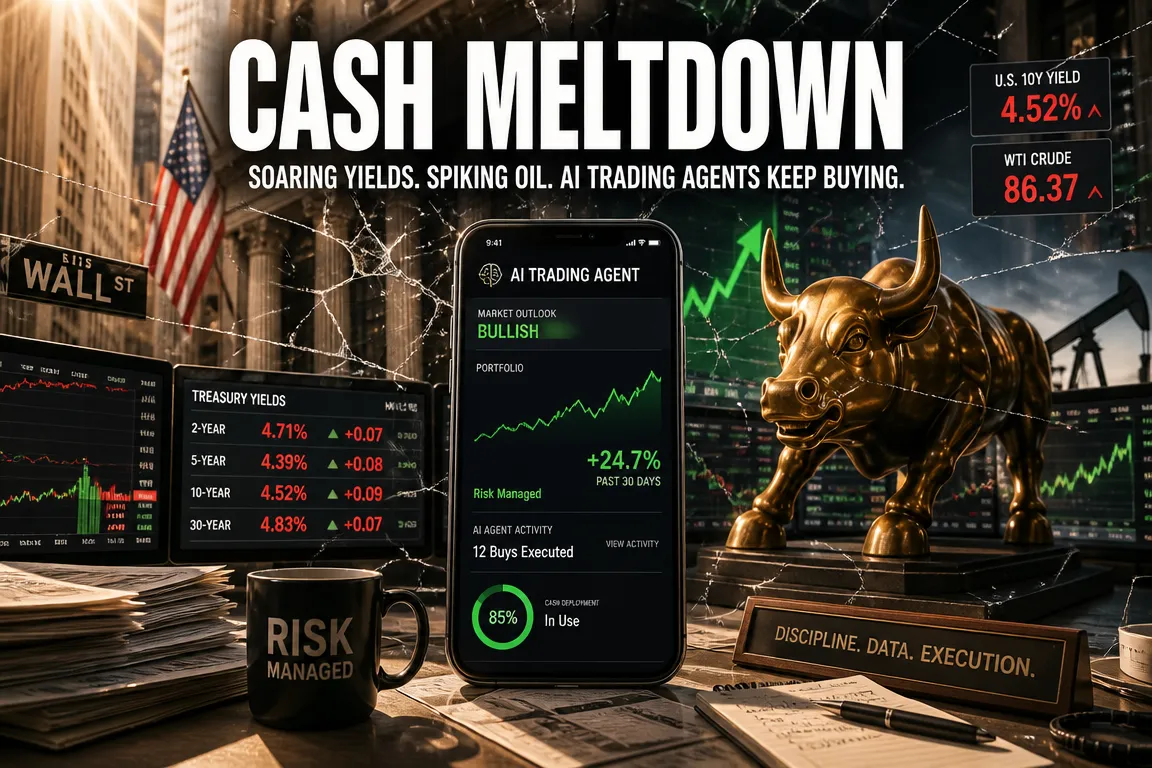
This is not three separate headlines. The relevant framework links: (i) US policy rates and inflation expectations, (ii) Middle East geopolitical risk and crude oil spikes, and (iii) AI semiconductors, data centers, and autonomous driving.
Key coverage:
- Post-FOMC: why equities declined while the USD and Treasury yields rose
- Why Hormuz risk extends beyond oil into global inflation and recession concerns
- Micron results as quantitative evidence of unusually strong AI-cycle demand
- Jensen Huang’s thesis on whether AI displaces software companies, and the practical counterpoint
- Why Tesla’s potential removal of steering wheel and pedals signals a business-model shift, not design change
- Additional under-discussed implications summarized separately
1. FOMC Key Takeaways: Inflation Uncertainty Mattered More Than the Hold
The policy rate was held at 3.75% with an 11–1 vote, near-consensus.
Market reaction was risk-off:
- Equities declined
- The US dollar strengthened
- US 10-year Treasury yields rose
- Gold weakened
1-1. Why Markets Did Not Treat the Hold as Dovish
The central issue was the tone of the Fed’s outlook. The Fed characterized:
- Economic activity as expanding at a moderate pace
- Labor conditions as relatively stable
- Inflation as still elevated
- Middle East developments as a material source of uncertainty for the outlook
The effective message: growth remains resilient, but inflation risks could re-accelerate.
1-2. Dot Plot Interpretation: Market Easing Expectations May Be Ahead of the Fed
The dot plot implied:
- 2026: ~3.5%
- 2027: ~3.25%
This suggests a slow and limited easing path, inconsistent with aggressive market-implied cuts. In this regime, long-duration growth equities with elevated valuations are more exposed to drawdowns.
1-3. Next Inflection: June FOMC
Key variables into the next major meeting:
- Pass-through from higher energy prices to US inflation data
- Potential policy direction changes linked to leadership transition risk
Current market sensitivity favors “inflation re-acceleration risk” over “rate-cut optimism.”
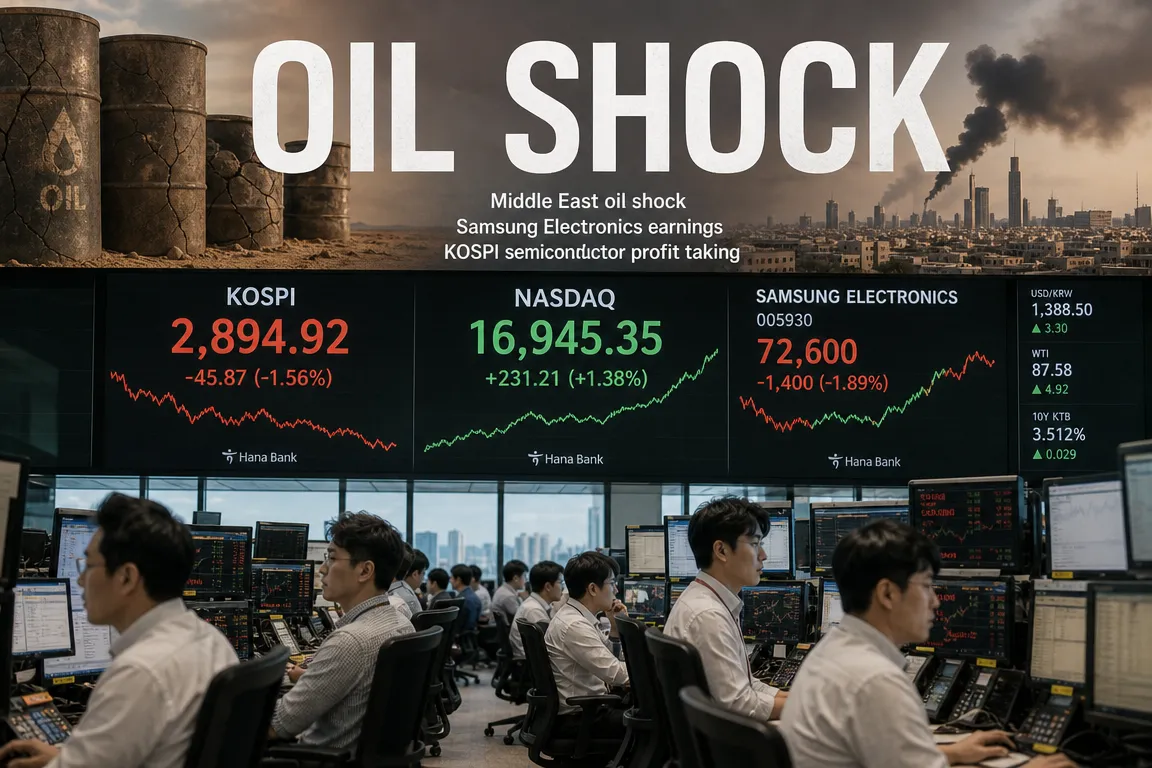
2. Strait of Hormuz and Crude Oil: Why This Episode Is More Market-Sensitive
The Strait of Hormuz is a major global chokepoint. Disruption risk can transmit from crude prices into shipping, manufacturing costs, and consumer inflation.
2-1. More Important Than Brent: The “Asia Premium”
When Brent approaches ~$100, discussion of Oman crude (a key Asia benchmark) around ~$150 indicates:
- Regional supply imbalance
- A sharp rise in geopolitical risk premium
This is particularly adverse for Asia’s import-dependent economies (e.g., Korea, Japan, China).
2-2. Does Higher Oil Automatically Cause a Recession?
Oil is a critical variable, but not a single-variable recession trigger. Historical episodes include:
- Recessions that followed oil spikes
- Recessions that arrived after oil stabilized
- Periods of sustained oil increases without recession
Assessment requires broader confirmation from employment, consumption, corporate earnings, financial conditions, credit, and policy response.
2-3. Why This Oil Move Still Raises Risk
This episode reflects supply disruption concerns combined with geopolitical risk, a structure that can:
- Reignite inflation expectations
- Constrain the Fed’s ability to cut rates
- Increase global equity volatility
Reduced transit volume through Hormuz would affect crude, refined products, petrochemicals, and logistics costs.
3. AI Industry: Conditions Resemble Overheating More Than Slowdown
Against rising geopolitical and recession concerns, AI-linked fundamentals remain unusually strong. The dominant signal is accelerating AI infrastructure capex rather than cyclical contraction.
3-1. What Micron’s Results Indicate: Memory Bottlenecks Persist
AI training and inference are memory-intensive. In GPU-led data center expansion, memory frequently becomes a binding constraint.
Key takeaways from the release:
- Revenue nearly tripled year-over-year
- Strong sequential revenue growth
- EPS significantly above prior levels
- Results exceeded prior guidance
- Next-quarter outlook was substantially stronger
3-2. Why These Numbers Matter
This is not a single-company story. It supports the view that demand is broad across the AI supply chain:
- GPUs
- HBM and server memory
- Power infrastructure
- Cooling and thermal management
- Data center build-out equipment
The AI cycle has moved beyond expectations-driven software narratives into a phase where hardware revenue and operating profit expansion are visible.
3-3. Why the Stock Can Decline Despite Strong Results
Post-earnings weakness is consistent with:
- Elevated expectations
- Positioning and profit-taking
- Valuation compression amid higher yields
- Short-term supply/demand imbalances
This reinforces that AI-linked equities are priced with substantial forward assumptions and are sensitive to disappointment versus elevated consensus.
4. Jensen Huang’s Core Point: AI Is More Likely to Increase the Value of Verifiable Software
Market debate increasingly asks whether agentic AI will “kill” incumbent software companies. Huang’s framing distinguishes roles rather than implying replacement.
4-1. Probabilistic AI vs Deterministic Software
AI is inherently probabilistic. Many enterprise and safety-critical domains require deterministic correctness and repeatability, including:
- Semiconductor design
- Databases
- Industrial automation
- Financial accounting
- Safety systems
As a result, structured systems, data models, and deterministic tooling (e.g., database systems and query layers) can become more important, not less.
4-2. More Agents Can Increase Tool Demand
Historically, human headcount constrained software license demand. If AI agents perform more design, coding, and analysis, demand for:
- Enterprise-grade tooling
- Auditable workflows
- Structured storage and verification layersmay expand, because outputs must remain inspectable and governable.
4-3. Investment Implications
AI upside may broaden beyond semiconductors into:
- Cloud infrastructure
- Databases and data platforms
- EDA and design automation
- Cybersecurity
- Enterprise software
A potential sequencing: hardware-led gains followed by software and platform re-rating, contingent on monetization and governance adoption.
5. Tesla: Why Removing Steering Wheel and Pedals Is Material
Regulatory discussion enabling autonomous vehicles without steering wheels or pedals is a structural milestone.
5-1. Not Aesthetics: Liability and Accountability Re-Definition
With conventional controls present, accidents create gray zones over:
- whether the driver intervened
- whether driver-assist or FSD was active
- how responsibility is allocated
A purpose-built vehicle without manual controls reduces ambiguity and can reshape:
- legal liability frameworks
- insurance models
- fleet operating structures
5-2. Regulatory Change Can Unlock Commercialization
US-level rulemaking discussion indicating that autonomous vehicles may be permitted without steering wheels/pedals, if adopted after consultation, would lower a key institutional barrier. Tesla’s robotaxi thesis requires both technical capability and regulatory clearance; this suggests early-stage alignment.
5-3. “Cybercab” and the Path to Scale
A “Cybercab” appearing with federal motor vehicle safety standards labeling signals pre-commercial preparation rather than concept-only intent. If regulation opens, deployment could move beyond ~2,500-unit pilots toward scaled rollout. This would support a valuation framework shifting from EV manufacturing toward autonomous network platform economics, subject to execution and approval.
6. Samsung, Nvidia, and Tesla Chip Production: Supply Chain Diversification Signal
Indications that Samsung’s Texas facility could produce Tesla and Nvidia-related chips point to:
- expansion from single-source concentration toward multi-fab production
- potential acceleration of AI infrastructure build-outs as manufacturing constraints ease
Key AI bottlenecks extend beyond GPUs to:
- memory
- power availability
- cooling
- foundry capacity
- design and verification software
The market is entering a phase where global industrial capacity is being mobilized to relieve these constraints.
7. Middle East Shock and US-First Dynamics: What Investors Should Monitor
The Iran/Hormuz situation functions less as isolated military news and more as a linkage to US politics, economic policy, and global asset allocation.
7-1. Near-Term: Inflation Risk
The first-order market channel is energy and inflation:
- weaker consumer sentiment
- delayed rate-cut expectations
- margin pressure for energy-intensive sectors
7-2. Medium-Term: Potential Intensification of US-First Policies
Rhetoric suggests a stronger emphasis on allied burden-sharing narratives, which can translate into:
- tariffs and trade restrictions
- defense cost-sharing demands
- reshoring incentives
- expanded domestic investment inducements
This would be a headwind to global growth but could increase relative premium for US-based assets.
7-3. Why US Allocation Can Regain Relative Appeal
The dominant global growth narrative remains US-centered in:
- AI
- semiconductors
- data center capex
- policy influence
If Middle East tensions stabilize and US-led supply chain reconfiguration strengthens, US equities—especially AI-linked assets—could remain structurally supported, with elevated volatility.
8. Headline Summary
- The Fed held rates but emphasized inflation and Middle East uncertainty, limiting risk-asset relief.
- Strait of Hormuz risk is transmitting from crude to broader inflation pressure.
- Higher oil does not mechanically imply recession; confirmation requires broader macro evidence.
- Micron’s results support continued surge in AI semiconductor and data center demand.
- Jensen Huang argues AI increases the value of verifiable, structured enterprise software.
- Tesla’s steering wheel/pedal removal discussion may be a regulatory inflection for full autonomy.
- Foundry diversification (including Samsung) reinforces that AI infrastructure is a structural industrial shift.
- Higher geopolitical uncertainty can increase relative attractiveness of US-centered AI assets.
9. Most Under-Discussed Points
1) The market is focused less on “recession vs no recession” and more on whether the AI capex cycle can outweigh energy, rates, and geopolitical headwinds; current earnings prints lean toward resilience.2) The critical AI bottlenecks are not limited to GPUs: memory, power, cooling, capacity, EDA, and verification are all constraints; the beneficiary set is wider than commonly framed.3) Tesla’s removal of steering wheel and pedals is primarily a legal/insurance/liability regime change, not a technology demo; approval could alter valuation methodology for autonomy.4) Oil is a near-term negative, but persistent uncertainty can redirect flows toward regions and sectors with observable earnings and technological leadership, potentially reinforcing US AI asset concentration.5) Huang’s message implies not “AI replaces everything,” but “AI increases the premium on systems that can verify truth and enforce structure,” a key lens for enterprise software and industrial AI.
10. Investor Checklist (5 Items)
1) Does crude oil spike and then normalize, or persist at elevated levels?2) At the June FOMC, does the Fed intensify concern over inflation re-acceleration?3) Do AI semiconductor and data center capex plans continue to revise upward?4) Does autonomous-driving deregulation translate into formal rule changes?5) How directly do US-first policies benefit domestic manufacturing, semiconductors, and technology equities?
Overall: near-term volatility is plausible, but the structural center of gravity remains AI, US equities, semiconductor supply chains, and the transition toward autonomous mobility. Geopolitical shocks may create drawdowns, but sectors with observable earnings momentum are likely to remain market leadership candidates.
< Summary >
The Fed held rates but emphasized inflation and Middle East uncertainty, pressuring risk sentiment. Strait of Hormuz risk is contributing to higher crude and global inflation pressure, though higher oil alone does not guarantee recession. Micron’s results indicate AI demand remains exceptionally strong. Jensen Huang’s framework suggests AI increases the importance of verifiable, structured software systems. Tesla’s steering wheel/pedal removal discussion may represent a regulatory turning point for full autonomy. The key question is whether AI, semiconductors, data centers, and US technology leadership can maintain structural market leadership amid geopolitical risk.
[Related Links…]
- https://NextGenInsight.net?s=AI
- https://NextGenInsight.net?s=tesla
*Source: [ 허니잼의 테슬라와 일론 ]
– [테슬라/호르무즈/AI산업] 폭발하는 AI산업 어닝 MU 작년 대비 3배 증가 매출 / 유가 상승과 경기 침체 우려를 만드는 호르무즈 해협의 배경 / 사라지는 “운전대와 페달”!
● Middle East War, Oil Shock, Trump-Xi Deal Markets
Middle East War, Crude Oil, and a Potential US–China Summit: The Market’s Key Variable Is Elsewhere
This issue is not primarily about the Middle East conflict itself. The central question is how Trump manages war-related risk and attempts to convert it into deliverables at a US–China leaders’ meeting, then channels the outcome into crude oil prices, inflation dynamics, the timing of rate cuts, and broader risk-asset performance.
This report outlines: (i) why a prolonged conflict conflicts with the US political calendar, (ii) why increased Chinese purchases of US energy could become a key bargaining tool, (iii) why price stability may matter more than tariffs in the near term, and (iv) how these linkages may transmit to equities, crypto, the US dollar, and rates.
A core under-discussed point is that de-escalation may be driven less by developments on the battlefield and more by negotiations at the US–China table.
1. One-sentence framing
The key variable is not the war itself, but how quickly Trump can contain associated risks and repackage the outcome as a US–China summit deliverable.
A prolonged conflict tends to raise crude oil prices; higher oil prices can re-accelerate US inflation; firmer inflation weakens the rationale for Federal Reserve rate cuts.
Ahead of midterm elections, Trump has incentives to support price stability, restore expectations of rate cuts, improve liquidity conditions, and stabilize risk-asset sentiment.
Accordingly, longer conflict duration increases the likelihood that the administration seeks an expedited diplomatic off-ramp, potentially via US–China negotiations.
2. Market focus: 5 key points
2-1. If the conflict persists, the first transmission channel for the US is inflation
The most immediate variable in periods of elevated Middle East risk is crude oil.
Heightened tension around the Strait of Hormuz, Iran’s escalation posture, and the risk of broader regional involvement can materially increase oil volatility.
Oil shocks rarely remain confined to energy. They feed into transportation costs, input prices, and consumer prices.
If inflation re-firms, expected rate-cut timing may shift out, weakening liquidity expectations across equities and digital assets.
A prolonged conflict therefore functions as a macro variable affecting monetary policy and asset prices, not solely a geopolitical headline.
2-2. The administration may prioritize early containment over military “victory”
A key interpretation is that the administration may not have positioned for a long-duration conflict.
A short, decisive episode would be easier to translate into political capital; an extended timeline increases uncertainty.
Iran may prefer asymmetric responses and time extension, which can be cost-effective.
Even with military superiority, the US can become politically constrained as duration rises through domestic fatigue, fiscal burden, and inflation pressures.
This increases the incentive to pursue de-escalation and link it to a diplomatic outcome.
2-3. A US–China leaders’ agenda could expand from tariffs/semiconductors to energy
Historically, the core agenda has centered on tariffs, technology competition, semiconductor restrictions, and export controls.
Current conditions increase the probability that energy becomes a meaningful component.
China could reduce marginal dependence on Iranian/Russian supply and increase purchases of US crude and related energy products as part of a negotiated package.
This matters because the US has strengthened its position as an energy exporter, and energy production expansion aligns with the administration’s industrial strategy.
Higher Chinese imports of US energy can support US trade-balance optics, while China could seek relief on tariffs or technology pressure.
Energy therefore can function both as a negotiating instrument and as a channel for reducing geopolitical risk.
2-4. Higher inflows of Chinese consumer goods could directly ease US inflation pressure
Tariffs dominate public narratives, but markets may react more to the practical re-expansion of consumer-goods supply into the US.
Inflation sensitivity is highest in everyday consumer categories.
If tariff pressure eases and Chinese essentials and consumer goods re-enter at scale, goods-price inflation could soften.
Given year-over-year base effects, headline inflation prints may decelerate faster than consensus in such a scenario.
For the administration, this supports an environment more compatible with rate-cut expectations and improved financial conditions.
2-5. Markets respond most to “lower uncertainty + improved liquidity expectations”
Consider the following scenario:
- The Middle East conflict moves into a contained phase without broader escalation.
- A US–China leaders’ meeting proceeds on schedule.
- China increases cooperation via US energy, selected agricultural products, and consumer-goods channels.
- Tariff escalation is delayed, extended, or partially eased.
- US inflation cools, and rate-cut expectations strengthen.
This combination can produce a broad risk-on response rather than a marginal improvement.
Equities, crypto, growth sectors, semiconductors, and AI-infrastructure-linked assets would be the primary beneficiaries through the liquidity channel.
Markets typically price the direction of risk reduction and the implied policy backdrop more than the war headline itself.
3. Why China is the pivotal counterparty
3-1. China is one of the few actors that can influence US inflation, trade optics, and diplomacy simultaneously
China materially affects US consumer-goods supply, trade balance narratives, and can indirectly shape Middle East energy flows via purchasing patterns.
This places China at the intersection of US economic and foreign policy objectives.
A US–China summit should therefore be treated as a potential inflection point for market pricing, not a symbolic event.
3-2. Increased Chinese imports of US soybeans and energy carry domestic political value
Signals around strong Chinese purchases of US soybeans are notable.
Agricultural exports influence US rural constituencies; energy exports align with domestic production strategy.
A visible increase in Chinese purchases is readily framed as a “America-first” trade outcome.
This can be leveraged in the run-up to midterms.
3-3. China can also extract benefits
China faces growth headwinds, softer US demand, technology restrictions, and elevated geopolitical uncertainty.
A controlled increase in US imports in exchange for partial tariff relief, reduced technology pressure, or lower uncertainty can be rational.
The structure is likely transactional, emphasizing exchange of needs rather than a zero-sum outcome.
4. Global macro implications
4-1. Oil stabilization can be a starting point for global disinflation
Lower or stabilized oil prices reduce import burdens across Europe, Asia, and emerging markets.
Energy prices influence both producer and consumer inflation; stabilization is a direct signal of reduced macro uncertainty.
4-2. Implications for the USD, rates, and bonds
If war risk declines and inflation expectations soften, US Treasury yields may face downward pressure.
Bond markets may price rate cuts earlier, and the USD’s safe-haven premium could compress.
However, the FX response is not linear: if improved US–China dynamics lift US growth expectations, the USD could strengthen for growth-differential reasons.
The dominant driver is the interaction between inflation, policy expectations, and growth pricing.
4-3. Linkages to AI investment and risk assets
AI-related investment is sensitive to financial conditions.
In a high-rate regime, long-duration growth assets face valuation pressure.
If inflation moderates and rate-cut expectations rebuild, AI infrastructure, semiconductors, data centers, cloud, and power-grid capex themes can regain momentum.
Thus, geopolitics and US–China diplomacy can indirectly influence AI valuation and risk appetite through the rates channel.
5. The most under-covered point
5-1. The resolution mechanism may be trade and energy-flow reconfiguration, not battlefield outcomes
Coverage often focuses on strikes, chokepoints, and escalation probabilities.
Markets frequently weigh the diplomatic and trade package used to cap risk more than the military endpoint.
If China increases US energy imports and the marginal flow of Iranian/Russian energy is reshaped, this can affect Iran’s revenue channels and the broader geopolitical configuration.
Structural trade adjustments can therefore alter the landscape even without a decisive battlefield outcome.
5-2. A likely policy sequence: oil stabilization → inflation cooling → renewed rate-cut expectations
Market-relevant outcomes matter more than rhetorical posture.
A coherent objective function is to cap oil prices, reduce inflation momentum, and restore rate-cut expectations to support liquidity conditions.
This sequence supports equities, consumer sentiment, and political positioning.
5-3. Long-horizon and short-horizon positioning should differ
For near-term capital, leverage and short duration make the conflict timeline critical.
For long-horizon allocations (e.g., retirement), the focus shifts to disciplined diversification and phased entry rather than reaction to each headline.
6. Investor framework
6-1. Near-term: crude oil and the US–China meeting schedule
Key variables:
- Strait of Hormuz risk trajectory
- Iran’s escalation intensity
- Whether the US–China summit remains on schedule
- Signals on Chinese imports of US energy and agricultural products
- Probability of tariff extensions, delays, or partial easing
These factors are central to near-term direction.
6-2. Medium-term: US inflation prints and the Federal Reserve’s reaction function
The convergence point is US inflation.
Oil stabilization and increased inflows of lower-priced goods can support disinflation in CPI and PCE measures.
This can reopen the window for rate cuts, improving the backdrop for growth, technology, and AI-linked equities.
6-3. Long-term: time horizon and risk management dominate
Headline intensity is typically highest during peak uncertainty.
For long-horizon portfolios, diversification, systematic buying, and risk controls are generally more robust than reactive trading around conflict headlines.
7. Bottom line: why a US–China summit may matter more than expected
This meeting may extend beyond tariff negotiations.
Middle East risk, crude oil, US inflation, rate-cut expectations, liquidity conditions, performance across equities and crypto, and AI investment sentiment can be connected through a single policy-and-trade pathway.
The relevant focus is the negotiated package: what each side offers, what constraints remain, and how the resulting inflation and policy path changes.
In this framing, the core issue is not “the Middle East war,” but how rapidly geopolitical risk is absorbed into diplomacy and trade, and translated into financial-condition stabilization.
8. Key checklist (at a glance)
- Prolonged conflict can lift crude oil and re-intensify inflation pressure.
- The administration likely benefits more from rapid containment and diplomatic conversion than escalation.
- The US–China agenda may expand from tariffs/semiconductors to energy.
- Greater Chinese purchases of US energy and agricultural products support US trade optics and domestic politics.
- Increased inflows of Chinese consumer essentials can support US disinflation and rate-cut expectations.
- Lower uncertainty plus improved liquidity expectations can favor equities, crypto, and AI-linked risk assets.
- Long-horizon investors should prioritize time horizon, diversification, and disciplined execution over headline reaction.
< Summary >
The central issue is not the conflict itself but its linkage to US–China negotiations.
A policy sequence of oil stabilization, inflation cooling, and renewed rate-cut expectations would be consistent with improved financial conditions ahead of midterms.
Increased Chinese imports of US energy and agricultural products, partial tariff easing, and stronger consumer-goods inflows are potential mechanisms.
If Middle East risk de-escalates and US–China tensions soften, global uncertainty may decline and liquidity may rotate back into risk assets, including equities, crypto, and AI-related themes.
Near-term positioning should account for headline risk, while long-term allocations are better served by diversification and phased deployment.
[Related Posts…]
-
International crude oil outlook and the global inflation trajectory: Key takeaways
https://NextGenInsight.net?s=international%20crude%20oil -
Post-summit scenarios for the global economy and equity markets
https://NextGenInsight.net?s=US-China%20summit
*Source: [ 경제 읽어주는 남자(김광석TV) ]
– 중동 전쟁의 해법은 미중 회담에 있다. 트럼프가 노리는 진짜 카드는 ‘이것’ | 경읽남과 토론합시다 | 오건영 단장_3편