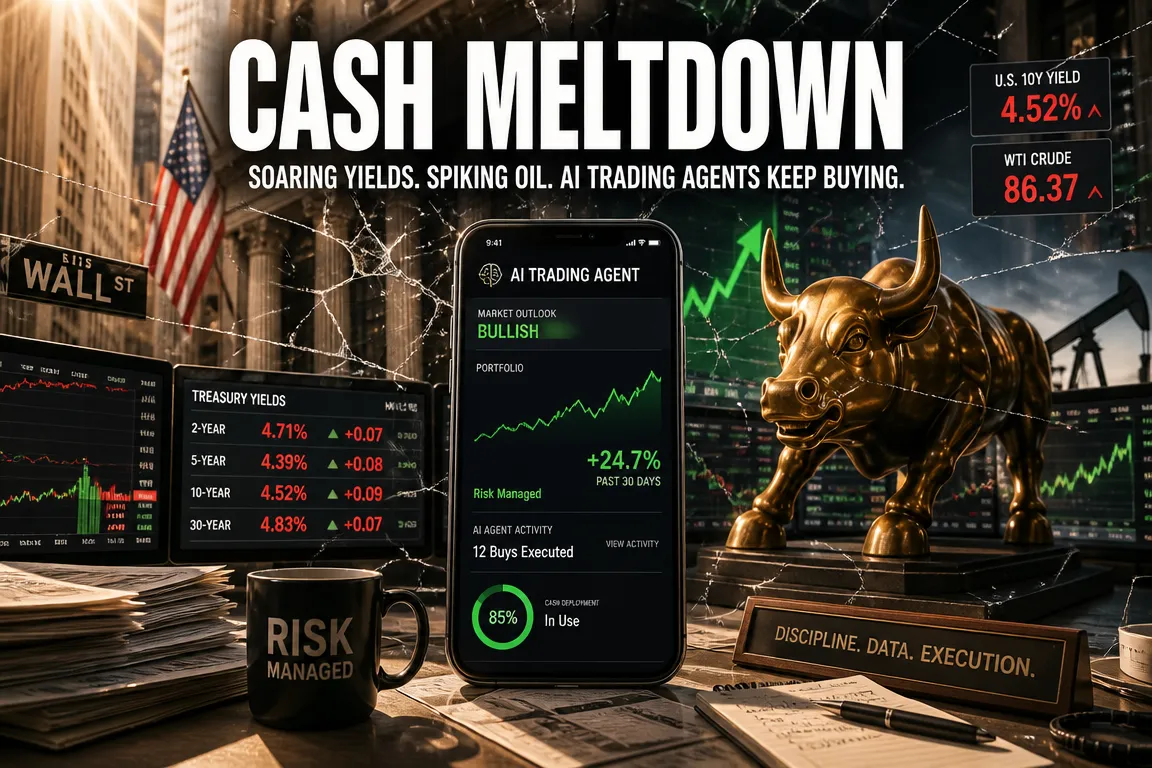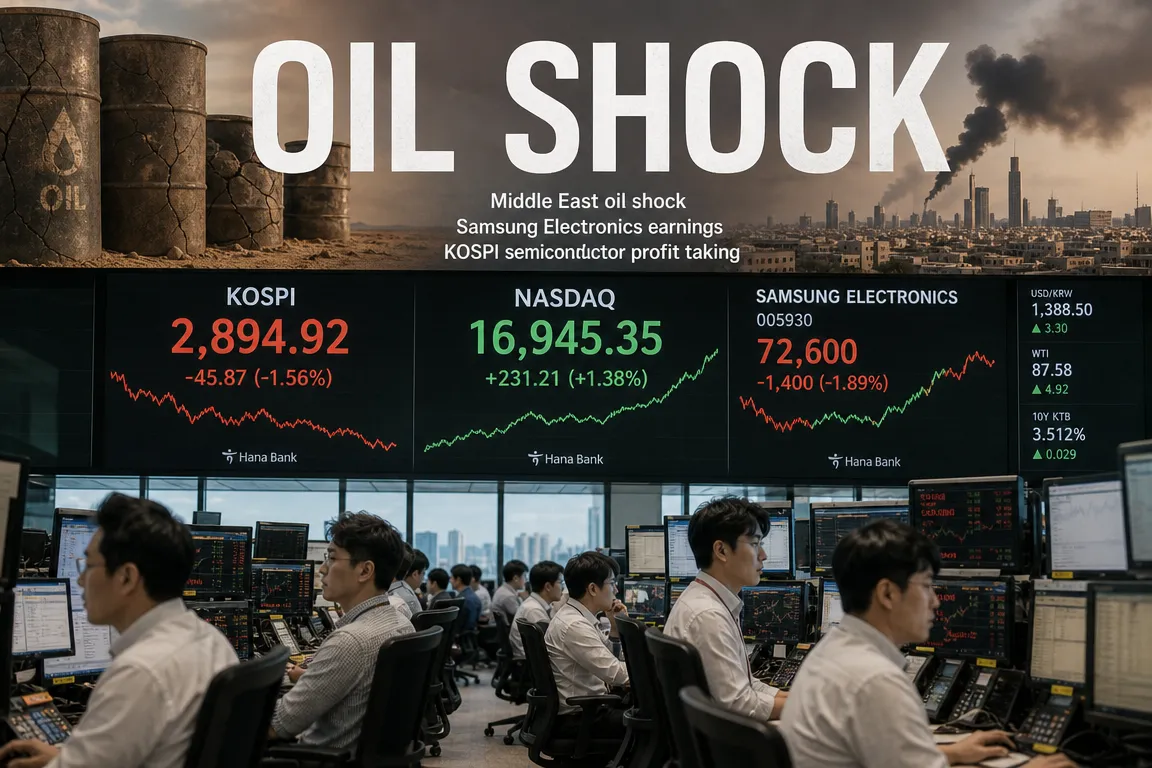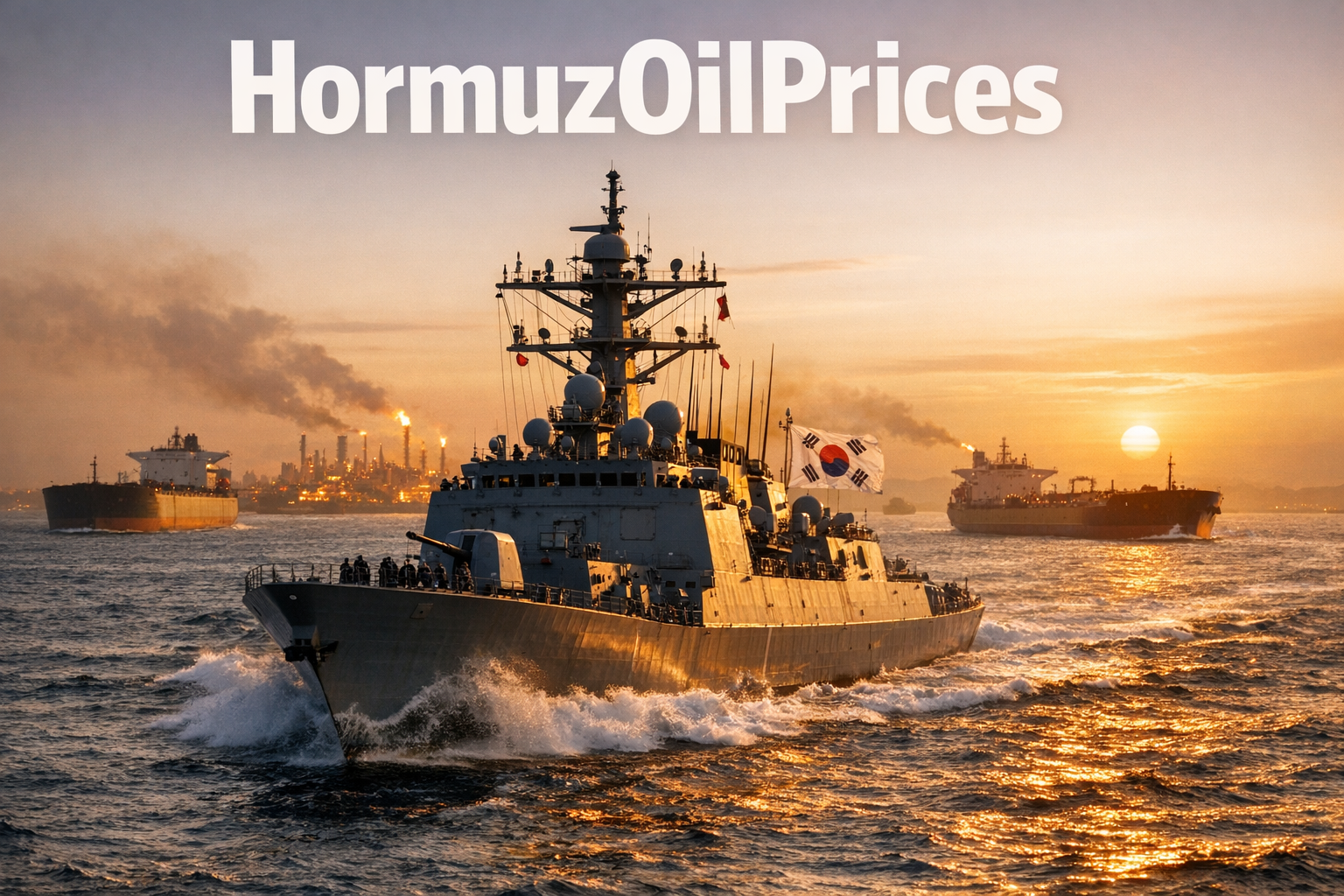
● Trump Pressure, Korea Troops, Hormuz Shock, Oil Surge, Economic Fallout
Will South Korea Deploy Forces to the Middle East: Trump Pressure, the Strait of Hormuz, Oil Price Spikes, and the Core Risks to the Korean Economy
This is not a binary decision about dispatching a naval asset. It is a multi-variable risk event spanning the US–ROK alliance, Japan’s potential preemptive actions, relations with Iran, China’s response, maritime logistics, energy pricing, and Korea’s import/export structure.
This note moves beyond “pro vs. con” debates and focuses on: (i) which deployment structures are likely to be interpreted as belligerent participation, (ii) why Japan’s posture can become a binding constraint on Korea’s decision set, (iii) how Strait of Hormuz risk transmits into Korea’s macro variables (oil, inflation, shipping, supply chains), and (iv) the less-visible but higher-impact diplomatic and trade spillovers.
The issue is framed as a military question, but the primary transmission channels are economic outlook, geopolitical risk premium, energy security, and the stability of advanced-industry supply chains, including AI-related infrastructure.
1. Core premise: why “pressure to participate” should be treated as already in motion
The key signal is the nature of Trump-style messaging. Even without a formal diplomatic request, public references to Korea can function as de facto participation pressure.
Typical pattern:
- Apply public pressure first.
- Observe counterpart reactions.
- Keep formal requests ambiguous.
- Later bundle the issue with trade, tariffs, and alliance-related leverage.
For Korea, “no formal request” may not reduce exposure because the topic can be linked to alliance commitments, tariff negotiations, defense burden-sharing, and broader industrial cooperation.
Market-relevant points:
- The decision variable is not only whether Korea deploys, but how Washington evaluates Korea’s stance.
- That evaluation can translate into trade pressure and diplomatic leverage.
- Potential spillovers include FX sensitivity, export-sector sentiment, and risk premia.
2. The critical question: does deployment equal participation in conflict?
Two operational criteria define how a deployment will be interpreted:
- Who holds command and control.
- What mission set is executed.
2-1. Integration under US command increases the probability of being viewed as participation
If Korean assets operate under US operational command, the deployment is more likely to be perceived as alignment within a US–Iran confrontation framework, even if described as “escort” or “security.”
Implications:
- Reduced diplomatic space with Iran.
- Higher operating risk for Korean firms across the Middle East.
- Elevated probability of Korean-flagged ships and facilities being treated as retaliatory targets.
- Higher insurance premiums and shipping costs.
2-2. Maintaining national command improves legal/political rationale but materially raises cost
If Korea retains national command and limits missions to self-defense and protection of Korean-flagged shipping, the rationale is clearer and more defensible internationally.
Trade-off: independent operations require broader capabilities than a single destroyer deployment, potentially including:
- Aegis-capable platforms
- Replenishment support
- Command-and-control assets
- Counter-drone and missile-defense measures
- Long-range sustainment capacity
Resulting burden:
- Larger operational footprint
- Higher budgetary and manpower requirements
In practice:
- US command path: higher diplomatic/escalation risk.
- National command path: higher military/financial burden.
3. Scenario map
3-1. Scenario A: limited deployment under US command
- Pros: fast execution with fewer assets.
- Cons: higher probability Iran interprets as participation.
- Economic impact: increased regional business risk, shipping/insurance cost pressure, constrained diplomacy.
3-2. Scenario B: national-command escort focused on Korean shipping
- Pros: stronger self-defense justification and clearer mission framing.
- Cons: higher operational cost and force-structure burden.
- Economic impact: defensible energy-security narrative, partial risk containment.
3-3. Scenario C: delay via legislative process and extended deliberation
- Pros: avoids near-term military exposure.
- Cons: may be interpreted as non-cooperation by Trump.
- Economic impact: higher probability of linkage to tariff/trade pressure.
3-4. Scenario D: Japan acts first; Korea follows
- Considered among the most plausible pathways.
- If Japan deploys first, Korea becomes a direct comparator in alliance burden-sharing narratives, tightening Korea’s options.
4. Why Japan’s posture can matter more than Korea’s initial intent
Korea’s decision space may be structurally constrained by Japan’s response, particularly if the US makes a specific request to Japan and Tokyo visibly complies.
Key linkage points:
- Trilateral security cooperation framework
- China-containment signaling
- Defense-industrial collaboration
- Supply-chain realignment
- Trade negotiation atmosphere
If Japan moves first, the debate can shift from “whether to deploy” to “how to participate with minimum strategic and economic downside.”
5. Why Strait of Hormuz risk is economically acute for Korea
The Strait of Hormuz is a critical chokepoint for global crude oil and LNG maritime flows. For an energy-import-dependent economy, it is a high-impact vulnerability.
5-1. Oil price shock risk
Even absent an actual blockade, perceived risk can move futures markets, insurance rates, and freight costs.
Transmission channels:
- Higher import unit costs for crude
- Larger margin volatility in refining and petrochemicals
- Higher aviation and maritime operating costs
- Upward pressure on electricity and gas pricing
Net effect: inflation pressure can re-accelerate via energy and logistics inputs.
5-2. Maritime logistics and supply-chain instability
Beyond energy, elevated risk increases freight and routing uncertainty. For an export-driven economy, higher transport risk can pressure both earnings and investment sentiment.
Sectors exposed through cost and reliability:
- Semiconductors
- Batteries
- Automotive
- Chemicals
- Shipbuilding
5-3. Equity and FX sensitivity
Typical market reaction to geopolitical shocks:
- KRW depreciation pressure
- Higher demand for safe assets
- Risk of foreign outflows
- Higher KOSPI volatility
Given Korea’s external dependence, concurrent Middle East risk and US political risk can amplify FX and equity market sensitivity.
6. How Iran may interpret Korea’s position
Korea has not historically been an unequivocal adversary of Iran, with prior economic linkages in energy, construction, engineering, plants, and infrastructure.
If Korea participates under US command, Iran may treat it as hostile alignment rather than maritime safety support.
Potential spillovers:
- Reduced probability of future re-entry into the Iranian market
- Weaker positioning in Middle East infrastructure projects
- Higher risk profile for Korea-related assets and shipping
- Erosion of informal diplomatic channels
This can alter multi-year business optionality in the region.
7. Why China’s response may be the highest-impact tail risk
China may interpret Korean military participation primarily as deeper integration into a US-led geopolitical architecture.
Even without a military reaction, China retains tools via economic and supply-chain channels:
- Customs delays
- Import restrictions on selected categories
- Uncertainty in industrial material supply
- Informal pressure on tourism, consumption, and distribution
These measures often do not appear immediately in headline statistics, increasing operational uncertainty. In a fragile global supply-chain environment, even modest frictions can produce outsized on-the-ground effects.
8. Underappreciated core issues
8-1. Command authority, not asset count, is the key variable
Similar-looking deployments can carry fundamentally different diplomatic meanings depending on command structure, affecting interpretations by Iran, China, the US, and domestic stakeholders.
8-2. If Japan moves first, Korea’s options compress quickly
Monitoring Japanese statements and mission definitions may be as important as Korean announcements.
8-3. “Trade and financing costs” may exceed direct military costs
Beyond defense outlays, primary cost vectors can include tariffs, export frictions, maritime insurance, oil, FX, and risk-premium effects.
8-4. Indirect impact on AI and advanced-industry economics
AI and digital transformation depend on electricity pricing, data-center operating costs, semiconductor supply chains, and stable global logistics. Energy price spikes can pressure data-center economics, manufacturing costs, and competitiveness across advanced manufacturing.
9. Operationally feasible policy posture (risk-minimizing configuration)
A practical configuration implied by the above constraints:
- Retain national command authority
- Limit missions to protection of Korean-flagged shipping
- Emphasize rear-area and enabling support roles
- Implement phased decisions aligned with legislative and public constraints
- Maintain separate diplomatic channels with Iran
- Manage messaging to avoid unnecessary escalation with China
This approach does not eliminate risk but preserves greater diplomatic recoverability than direct integration under US command.
The core decision is not “deploy or not,” but:
- mission rationale,
- command structure,
- operational scope,
- and escalation control.
10. Investor checklist (near-term indicators)
Monitor:
- Global crude oil and LNG price trends
- Strait of Hormuz transit developments and maritime insurance pricing
- Japan’s Middle East deployment decisions and mission announcements
- US public pressure intensity toward Korea
- USD/KRW and foreign flow dynamics
- Equity reactions in refining, shipping, defense, and shipbuilding
- Signals of informal Chinese trade and customs friction
Over the medium term, elevated geopolitical risk can accelerate supply-chain reconfiguration, increasing attention to defense, shipbuilding, energy infrastructure, data-center efficiency, and smart logistics.
11. One-line conclusion
Korea’s Middle East deployment decision is a high-complexity geopolitical risk event with primary consequences in alliance management, comparative diplomacy versus Japan, future economic optionality with Iran, potential China trade retaliation, oil-driven inflation, and supply-chain stability; the central objective is a design that protects national interests without being interpreted as belligerent participation.
< Summary >
- Trump’s public messaging can be interpreted as de facto pressure on Korea to participate in Middle East maritime security.
- The decisive variables are command-and-control authority and mission scope, not the number of deployed assets.
- Operating under US command raises the probability of being viewed as participation; retaining national command improves defensibility but raises cost and operational burden.
- Japan’s prior action can intensify pressure on Korea through alliance burden-sharing comparisons.
- Strait of Hormuz risk transmits directly into oil, inflation, FX, shipping costs, and supply-chain stability.
- Spillovers include deterioration in Iran-related optionality and potential informal China trade pressure.
- A risk-minimizing posture is national command, limited escort missions focused on Korean shipping, phased implementation, preserved Iran channels, and disciplined messaging toward China.
[Related Links…]
- https://NextGenInsight.net?s=oil
- https://NextGenInsight.net?s=AI
*Source: [ 경제 읽어주는 남자(김광석TV) ]
– 한국도 중동에 군함 보내나. 트럼프의 파병 압박, 호르무즈 해협의 위험한 선택 | 경읽남과 토론합시다 | 백승훈 교수_1편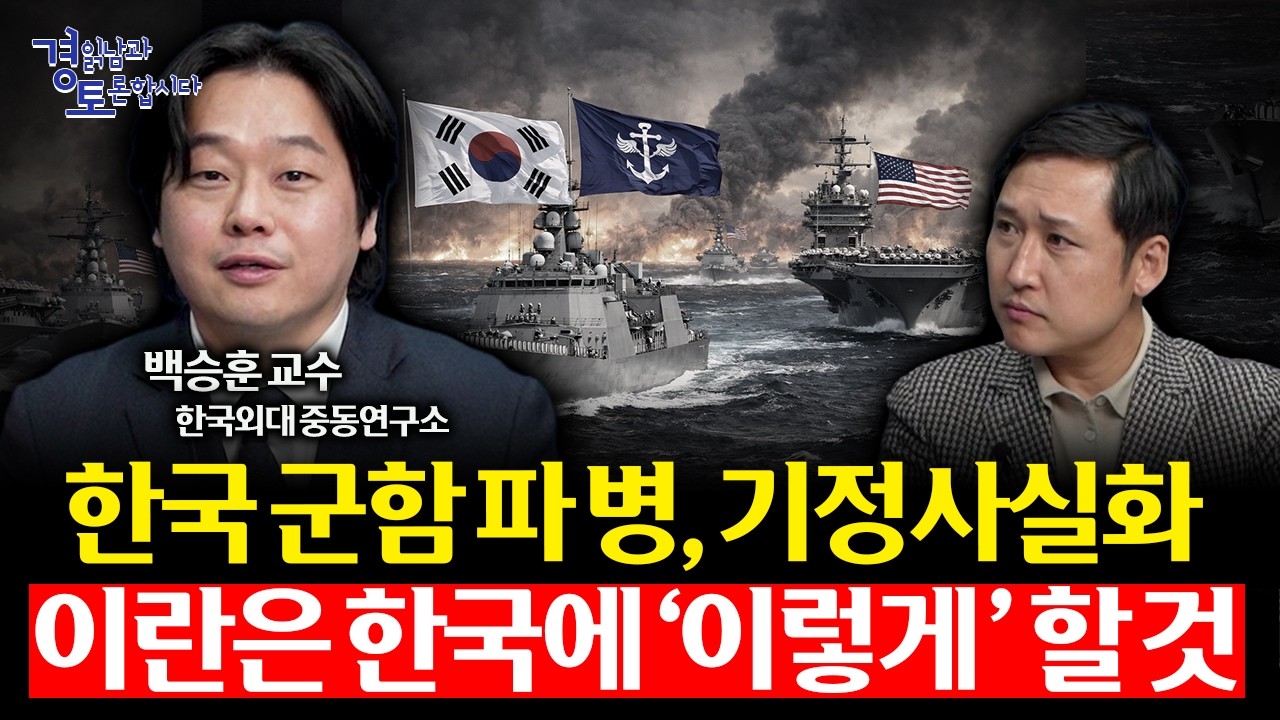
● From Poverty to Wealth, Brutal Money Habits That Build Real Riches
What Becomes Visible After Escaping Poverty: Key Takeaways on “Habits That Build Wealth” (Kim Jong-yul)
This is not a generic self-help success story.
It explains:
- Why “wealth” is a more actionable objective than “success”
- Why weekly planning outperforms long-term life plans in execution
- Why commute distance affects capital formation
- Which investment and cash-flow habits enabled recovery after a major fraud loss
It also links personal asset management to Korea’s macro environment and the AI-driven productivity cycle.
1. Core Message: “Wealth” Is More Actionable Than “Success”
The central claim is that “success” is too abstract, while “becoming wealthy” is operationally defined.
Primary paths to wealth:
- Inheritance
- High earned income
- Effective investing
- Successful business/commerce
For most employees, the realistic levers are:
- Investing
- Building business capability
Shifting from an abstract goal (“live well”) to an asset-growth objective changes behavior and allocation.
2. The Strongest Asset Produced by Scarcity: Urgency and Money Sense
Early-life deprivation shaped:
- Strong savings bias
- High sensitivity to cash and costs
- A persistent accumulation mindset
Key points:
- Wealth is not necessarily initiated with large starting capital
- Financial outcomes are strongly linked to how money is handled, not only how much is earned
- Scarcity can increase accumulation discipline
3. Trigger for Pursuing Money: Understanding the Structure Before Credentials
The emphasis was not on academic performance, but on quantifying constraints:
- Calculating startup costs while still in high school
- Asking about parental income and recognizing limits of wage-only compounding
Actions that followed:
- Factory part-time work to build initial capital
- Minimizing living expenses and increasing savings rate
- Using high-yield deposit products (where available)
- Studying financial newspapers and brokerage content
- Joining subscription-based savings products linked to housing allocation
- Transitioning into early real-estate investing
This reflects a standard early-stage asset-building sequence: savings discipline + financial literacy + timing.
4. Key Statements (Condensed)
4-1. Goal Setting
Replace “success” with “wealth” as an explicit target to make actions measurable.
4-2. Starting Point of Wealth
Small, repeatable execution matters more than large-scale life planning; weekly action lists changed outcomes.
4-3. Core Habit
Sustained financial learning is presented as a stronger differentiator than lifestyle perfection.
4-4. Location Strategy
Living near the workplace reduces time cost; reclaimed time compounds into learning, side income, and investment execution.
4-5. Crisis Recovery
After a large-scale fraud loss (KRW 1.2bn level) and additional liabilities, recovery focused on lowering housing cost and increasing labor/income hours.
4-6. What to Avoid
Do not copy elite routines that exceed one’s capacity; over-engineered habits increase abandonment risk.
5. Why Weekly Planning Changes Outcomes
Weekly planning is positioned as more execution-relevant than:
- Annual targets
- 5-year plans
- Life roadmaps
Implementation method:
- Build a weekly action sheet in Excel
- Assign weights by category
- Score completion
- Review achievement rate weekly
Examples of weekly constraints and targets:
- Alcohol consumption: no more than 2 times per week
- Reading: 125 pages
- Maintain a spending cap
- Complete 1 course/lecture
- Execute scheduled real-estate study tasks
Rationale: asset growth is driven by systems and repeatable behaviors, not motivation.
6. Why Living Close to Work Matters: Time as Capital
Living approximately 5 minutes from work was described as a strategic choice.
Effects:
- Lower physical fatigue from commuting
- More discretionary hours
- Increased time for side work, study, and investment analysis
- Long-term improvement in income potential and asset formation
For Seoul metro housing decisions, the lowest rent is not always the highest “return” if it destroys productive time. Housing is treated as a productivity asset, not only a price-appreciation instrument.
7. Common Trait of Wealth Builders: Repetition of Financial Learning, Not Perfection
The message rejects “perfect lifestyle” frameworks and prioritizes persistence in financial attention.
Repeatable monitoring/study behaviors:
- Read macro and market news daily
- Track rate cycles
- Understand FX movements
- Observe sector rotation in equities
- Study real-estate location fundamentals
- Monitor housing allocation/subscription rules
Investment skill is framed as repeated exposure and iteration rather than innate talent.
8. Recovery After Major Loss: Cut Fixed Costs First
Following a fraud loss at the KRW 1.2bn scale and incremental debt burden, the response focused on cash-flow repair.
Actions:
- Sell the home
- Reduce housing costs to approximately deposit KRW 30m / rent KRW 0.9m per month
- Increase teaching/lecturing and labor hours materially
- Prioritize cash-flow stabilization
Generalized crisis playbook:
- Reduce fixed costs
- Audit leverage
- Increase liquidity
- Diversify income sources
This is presented as directly applicable in high household-debt conditions and volatile rate regimes.
9. Why Physical Stamina Matters: The Base Layer of Productivity and Decision Quality
Stamina is treated as an operational input to:
- Sustain work output
- Maintain attention and consistency
- Improve decision quality under stress
In an AI-driven information environment, filtering and interpreting data still requires human concentration. AI can generate ideas; final risk decisions remain human.
10. Relevance Under 2026 Market Conditions
The discussion is positioned as more relevant under higher volatility.
10-1. Rates and Asset Repricing
Rate direction affects valuation across assets; cash-flow resilience becomes more important than aggressive positioning.
10-2. Recession Risk and Selective Opportunity
In slowdown regimes, opportunity concentrates by sector and region; dispersion increases between prepared and unprepared investors.
10-3. Real Estate: Not “Over,” but Less Forgiving
The claim is not that real estate is finished, but that unresearched buying is less viable. Advantage shifts to analysis of:
- Location
- Demand/supply
- Transport access
- Income base
- Policy impact
10-4. AI Trend and Retail Investor Edge
AI is framed as:
- A research and summarization accelerator
- A data-analysis enhancer
- A productivity tool for individuals
Investors with established study habits can scale them with AI.
11. Underemphasized Points
11-1. Wealth Is Not Built by Moral Perfection
Wealth accumulation is linked to sustained execution of a few financial behaviors, not total lifestyle purity.
11-2. Large Goals Can Harm Execution
“KRW 1bn target” narratives often omit weekly measurable actions (pages read, spending caps, site research). Wealth is created via quantified micro-behaviors.
11-3. Commute Distance Is an Investment Variable
A near-work residence is treated as “buying time,” enabling higher long-term expected returns through learning, side income, networking, and recovery.
11-4. In Crisis, Cash Flow Overrides Pride
Downshifting lifestyle to stabilize cash flow is presented as the economically optimal decision.
11-5. Wealth Builders Are “Continuers,” Not “Endurers”
Sustainable routines outperform extreme austerity or excessive risk-taking; durability improves win rates over time.
12. Immediate, Employee-Focused Action Items
12-1. Build a Weekly Plan Now
- Read 5 economic articles
- Read 100 pages
- Set a spending cap
- Research 1 target area
- Review current asset allocation
12-2. Quantify the Economic Value of Commuting Time
- 2 hours round-trip/day = 10 hours/week
- 40 hours/month approximates an additional workweek
- Reallocate this time to learning or side income to widen wealth trajectory
12-3. Establish a Financial Learning Routine
- Daily: rates, FX, equity market check
- Weekly: read one real-estate/industry report
- Monthly: portfolio review and risk check
12-4. Lower Targets to Increase Durability
Design routines that can be sustained for 12 months, not optimized for a single week.
13. Wealth Principles That Persist in the AI Era
Core principles are presented as stable:
- Protect cash flow
- Accumulate quality assets
- Maintain continuous learning
- Systematize repetition
AI accelerates these processes but does not replace risk management, interpretation, and execution.
14. Conclusion
Wealth is presented as the result of sustained, measurable financial behaviors rather than large-scale life planning.
Key linked components:
- Early scarcity and savings discipline
- Small initial capital formation
- Market and policy reading
- Housing allocation preparation
- Real-estate study
- Weekly planning systems
- Time optimization
- Cash-flow repair during shocks
In periods of macro instability, these fundamentals become more important, and compounding favors those with durable execution capacity.
< Summary >
Key messages:
- “Wealth” is a more concrete objective than “success.”
- Weekly planning drives execution more effectively than long-horizon plans.
- Short commute distance is a time-investment that supports compounding.
- Wealth correlates with sustained financial learning rather than personal perfection.
- During crises, cash-flow stabilization outranks status maintenance.
- In the AI era, disciplined asset management and repeated market learning remain decisive.
[Related Links…]
- https://NextGenInsight.net?s=interest-rate
- https://NextGenInsight.net?s=AI
*Source: [ Jun’s economy lab ]
– 가난을 극복하고 나서 깨달은 한 가지(ft.김종율 작가 1부)
● US-Iran Strikes Shock, China Panic, Korea Chip Boom, Global Inflation Surge
Spillover Effects of US–Iran Airstrikes: Why China Is on High Alert and Key Implications for Korean Semiconductors and the Global Macro Outlook
This development extends beyond Middle East geopolitical risk. It links energy markets, inflation dynamics, US CPI sensitivity, China’s cost structure, supply-chain realignment, and Korean semiconductor fundamentals, particularly AI-related demand.
1. One-line summary
US pressure on Iran and elevated Middle East military risk may disrupt China’s discounted crude procurement model, with second-order effects on global oil prices, inflation, US CPI outcomes, supply chains, and Korea’s semiconductor cycle.
2. Situation update (news format): what is happening now
The airstrike issue is primarily an energy-control and flow-risk event
Markets are focused less on the military headline and more on potential disruptions to Middle East crude flows and which economies face the greatest exposure.
Why China is more sensitive than peers
China has relied on relatively low-priced crude sourced from Russia, Iran, and Venezuela. This has supported manufacturing input costs, export competitiveness, domestic price stability, and overall industrial operating expenses. Any tightening of enforcement or constraints on these channels would reduce China’s flexibility and raise marginal energy costs.
US signaling: effective push toward US-aligned energy supply
US tools include sanctions, diplomatic pressure, maritime presence, potential sea-lane control, and financial enforcement capacity. A plausible outcome is gradual substitution away from Russian/Iranian/Venezuelan barrels toward US supply or US-aligned sources.
3. Why this is a structural “high alert” issue for China
First: the discounted-energy model is at risk
With China facing pressure from property-sector weakness, soft consumption, local-government debt, and labor-market challenges, low-cost energy has functioned as a stabilizer. Higher crude costs would weaken this buffer.
Second: direct pressure on manufacturing profitability
Higher energy costs transmit across chemicals, steel, logistics, shipping, power, and export pricing, compressing margins and reducing price competitiveness.
Third: reduced strategic leverage in US–China competition
If energy procurement becomes more exposed to US pressure, China’s position weakens across energy-intensive sectors including AI, semiconductors, EVs, batteries, and defense-related industries.
4. Why the US may be shaping this trajectory
Energy leverage remains a core geopolitical instrument
AI expansion increases electricity demand via data centers and related infrastructure, raising the strategic value of fuel supply and power availability. The US appears to pursue energy leverage alongside semiconductor leadership.
Inflation and US CPI management are directly linked
Any disruption to sanctioned-barrel flows can tighten global supply and elevate oil prices, increasing CPI risk. This creates a trade-off: stronger energy control can conflict with domestic inflation objectives if prices rise materially.
Potential “carrot-and-stick” interpretation: incentives for Russia, pressure on China
A partial de-escalatory approach toward Russia in some contexts could weaken China’s external support network, reducing Beijing’s energy and diplomatic optionality.
5. Implications for the global macro outlook
Higher oil prices can reaccelerate global inflation pressures
Oil affects costs across shipping, aviation, transport, petrochemicals, power, heating, and food logistics. A sustained rise would feed into inflation in the US, Europe, and Asia.
Rate-cut expectations may be delayed
A scenario of slowing growth with renewed inflation pressure increases stagflation risk and limits central banks’ flexibility, pressuring equity valuations and risk appetite.
Liquidity and defensiveness may regain relevance
Elevated uncertainty supports maintaining adequate cash and defensive allocations. Energy-driven inflation shocks can persist longer than markets initially discount, increasing leverage risk.
6. Korea-specific impacts
Korea is highly sensitive as an energy importer
Rising oil prices can pressure the trade balance, production costs, consumer inflation, and corporate profitability. Sectors with direct exposure include refining, chemicals, transportation, airlines, and steel.
Semiconductors may decouple and remain relatively strong
While broader equities may face oil and inflation headwinds, semiconductors can follow a separate track tied to AI infrastructure investment. Samsung Electronics and SK hynix benefit from AI supply-chain demand, particularly in memory.
Practical rationale for Samsung Electronics and SK hynix strength
AI expansion requires not only GPUs but also high-performance memory. Demand for high-bandwidth memory (HBM) increases alongside Nvidia-led ecosystem growth, supporting earnings visibility for key memory suppliers and lifting sector re-rating potential.
7. Key points through the lens of the AI and industrial transition
AI is a combined competition in semiconductors, power, and resources
AI growth materially increases requirements for electricity, cooling, servers, networking, materials, and fuel inputs. The industrial transition is simultaneously a digital and energy transition.
Higher energy prices can raise AI deployment costs
Power is a significant component of data-center operating expenses. Volatile oil, gas, and electricity prices can increase infrastructure costs and affect cloud pricing and enterprise adoption pace.
Competitive advantage increasingly requires the “energy + semiconductors + AI” stack
The US targets leadership across all three. China has scale in AI and manufacturing but is structurally more exposed to energy constraints. Europe faces energy-cost and growth limitations. Korea is energy-vulnerable but strategically positioned in semiconductors and AI infrastructure supply chains, making energy-risk management and semiconductor competitiveness central priorities.
8. Variables to monitor
1) Whether oil spikes fade or persist
Market impact depends on realized supply disruption and enforcement intensity rather than headlines alone.
2) US CPI trajectory and the Federal Reserve rate path
Higher oil can reintroduce CPI upside risk, increasing volatility and delaying easing expectations.
3) Changes in China’s crude procurement channels
The degree to which China can sustain indirect imports versus shifting to higher-cost supply will influence industrial resilience.
4) Semiconductor cycle centered on Samsung Electronics and SK hynix
If AI memory demand remains strong, semiconductors may support the Korean index even amid broader macro stress.
5) Speed of global supply-chain realignment
Shifts among US-aligned, China-centric, and third-country intermediary supply chains will shape trade and investment flows.
9. Underappreciated core issue
The key risk is potential deterioration in China’s cost structure
Beyond escalation risk, the strategic concern is weakening of China’s low-cost energy foundation that underpins industrial competitiveness, with medium- to long-term implications.
Energy is inseparable from AI leadership
As AI scales, power availability and energy security become binding constraints. Excluding this linkage leads to incomplete interpretation of both US strategy and semiconductor outperformance.
Korea faces simultaneous risk and opportunity
Oil-driven inflation is a headwind, but Korea’s position in AI semiconductor supply chains is a structural tailwind. Market perception may increasingly shift from “traditional manufacturing” toward “core AI infrastructure supplier.”
10. Portfolio interpretation (practical framing)
Conservative focus: oil and inflation first
Near-term, oil and US CPI are the primary variables; instability in either reduces confidence in rapid policy easing.
Pro-cyclical focus: AI semiconductor demand trend
Even with macro volatility, AI capex may prove resilient. Memory, HBM, and server-infrastructure exposures may retain stronger fundamentals.
Maintain sensitivity to deeper China slowdown risk
If discounted crude access weakens, China’s manufacturing and export competitiveness may deteriorate, with spillovers to commodities, shipping, global consumer sectors, and Asian exporters.
11. Restated conclusion (single sentence)
US pressure on Iran and heightened Middle East risk is not only a military event; it may constrain China’s discounted crude supply, raise global inflation and US CPI risk, and simultaneously reinforce demand visibility for Korea’s AI-linked semiconductor value chain.
< Summary >
- The core of the US–Iran risk is energy control and indirect pressure on China, more than military escalation alone.
- China’s reliance on discounted crude from Russia, Iran, and Venezuela is a key support for industrial competitiveness; disruption raises cost pressure.
- This can translate into higher oil prices, renewed inflation risk, US CPI pressure, and delayed rate cuts.
- Korea faces an energy-import headwind, but Samsung Electronics and SK hynix may benefit from sustained AI semiconductor demand, especially HBM and server memory.
- The integrated framework to track is energy, inflation, China’s cost structure, supply-chain realignment, and AI semiconductor demand.
[Related]
- AI semiconductor investment strategy and key supply-chain shifts: https://NextGenInsight.net?s=AI
- China slowdown risk, oil variables, and 2H market outlook: https://NextGenInsight.net?s=%EC%A4%91%EA%B5%AD
*Source: [ 달란트투자 ]
– “미국 정부가 이걸 숨겼다” 이란 공습의 충격 진실. 중국 지금 초비상 걸렸다|유신익 박사 2부