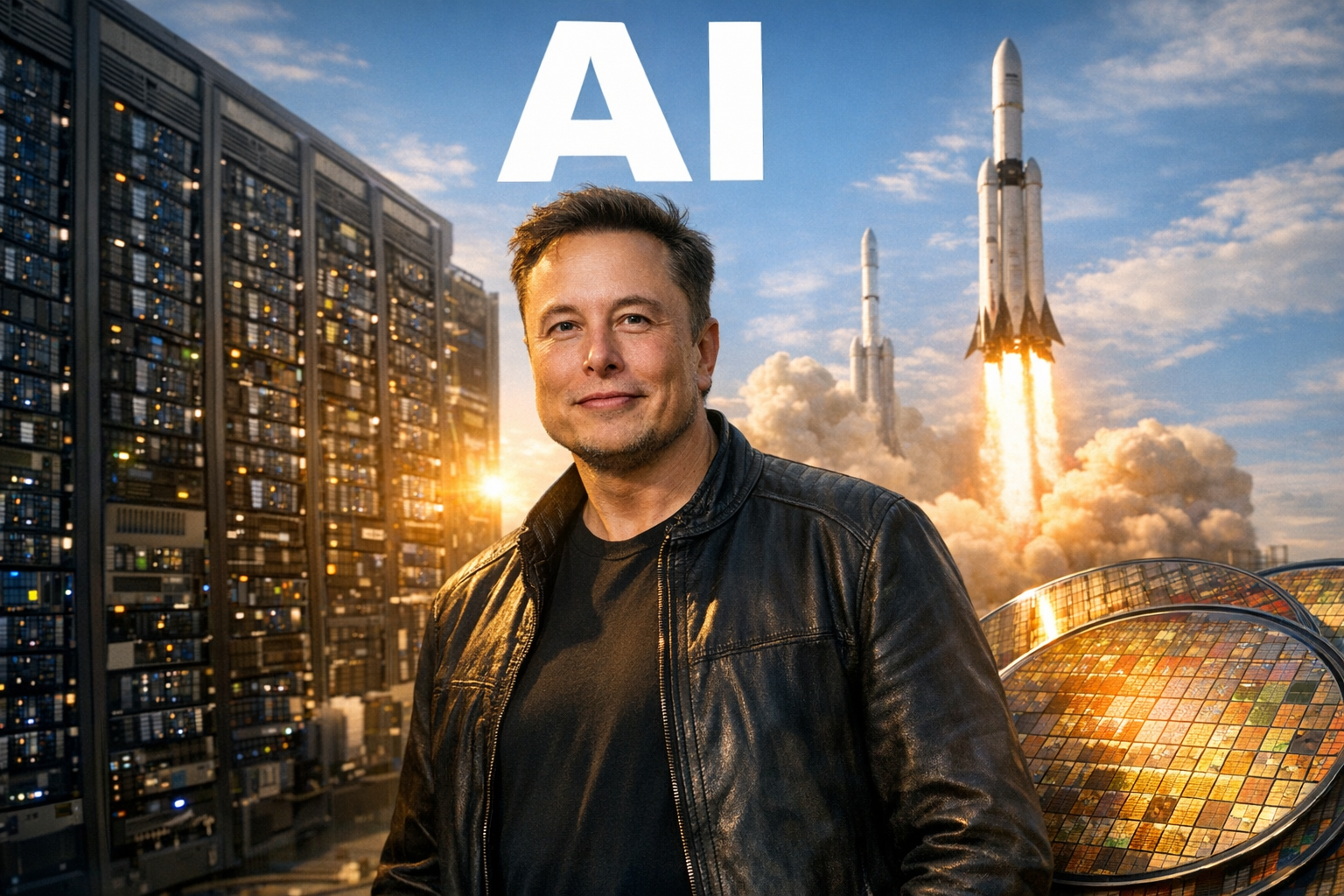
● Musk Shock, Space Chip Blitz, Power Crisis
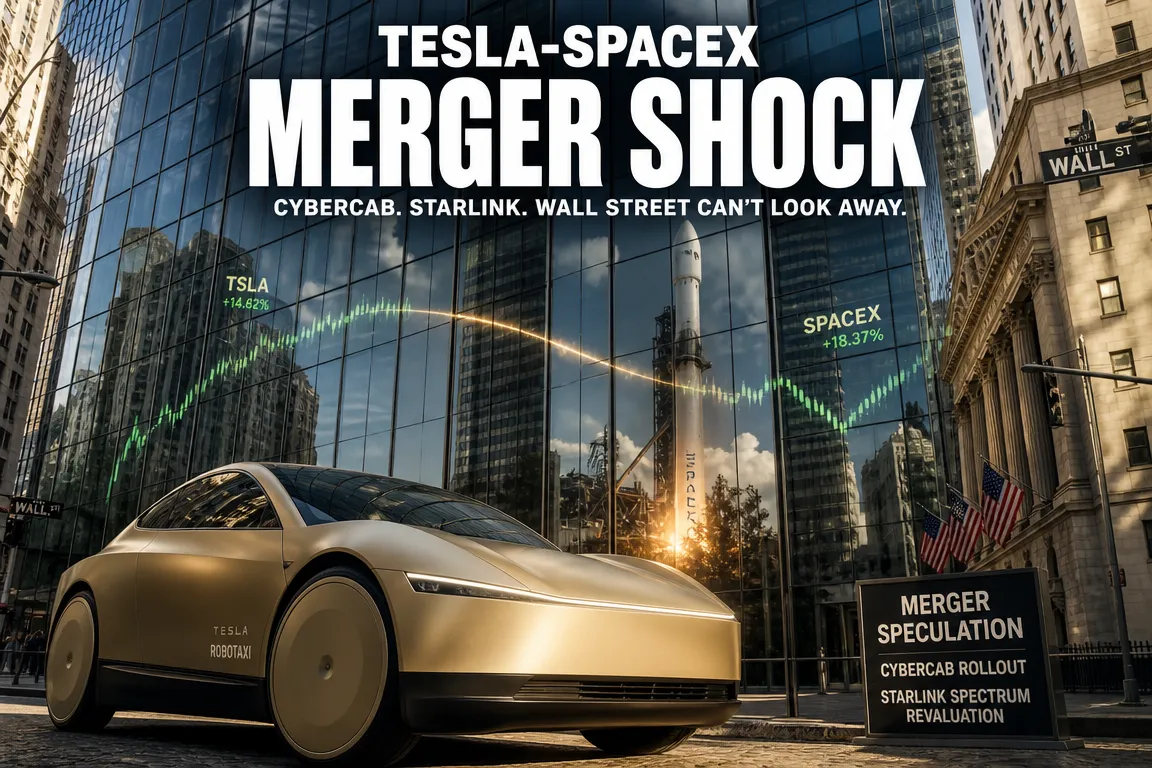
Musk Declares an “All-In” Push on Space Semiconductors; The Core Constraint Is Power, Not Chips
This announcement should not be interpreted as merely “Tesla will build a semiconductor fab.” The central implications are as follows:
1) Musk is signaling that Earth-based AI infrastructure competition alone is insufficient.
2) The primary bottleneck is power availability, not semiconductor supply; the proposed response is a space-based data center industry structure.
3) Tesla, xAI, and SpaceX are being organized as an integrated value chain to redesign long-term growth engines.
This should be viewed as a convergence of AI infrastructure, semiconductors, power, and the space economy.
1. One-line summary: Not a “new semiconductor fab,” but a “space AI infrastructure program”
What was disclosed is not simply an internal semiconductor manufacturing plan. The core is a long-horizon AI infrastructure buildout described as the “Terape Project,” structured as a coordinated initiative across Tesla, xAI, and SpaceX. The communication format suggests an ecosystem-level roadmap rather than a single-company event.
Even if execution timelines are distant, capital allocation and supply-chain positioning can begin materially ahead of full realization.
2. Musk’s stated diagnosis: In the AI era, power is scarcer than chips
Musk’s core argument is that Earth-based compute capacity is inadequate for superintelligence-era demand.
- By his figures, global data center power planned through 2030 is approximately 20 GW.
- His implied requirement for the superintelligence era is approximately 1,000 GW (1 TW).
- Under this framing, planned infrastructure would represent roughly 2% of the perceived requirement.
This shifts attention from GPUs/HBM/foundry capacity to power generation, transmission, and grid expansion as binding constraints, with implications for capex cycles, industrial policy, and inflation-sensitive infrastructure investment.
3. Why build internally while continuing to use Samsung Electronics and TSMC
The message is not supply-chain replacement but parallelization. The likely approach is a dual-track model: continued reliance on leading external foundries alongside development of internal design and manufacturing capacity.
The rationale is less about unit-cost optimization and more about securing control over availability, delivery timing, and scale—particularly for companies expanding simultaneously across autonomous driving, humanoid robotics, and AI data centers.
4. “Tera” manufacturing structure: Build on Earth, deploy in space
A distinguishing feature is the proposed allocation of output:
- Approximately 80% of produced semiconductors and solar panels: space computing infrastructure
- Approximately 20%: Tesla vehicles and Optimus robotics
This positions Tesla’s strategic identity expansion from terrestrial manufacturing toward AI infrastructure and space infrastructure.
5. Why space-based data centers
The rationale presented is primarily operational:
5-1. Solar power utilization
Space solar is framed as more directly accessible than terrestrial solar due to reduced exposure to clouds, weather, seasonality, and diurnal cycles, with a goal of lowering long-run power cost.
5-2. Avoidance of land-use and permitting friction
Terrestrial data centers face land constraints, community opposition, transmission disputes, and environmental regulation. Space is positioned as having fewer analogous constraints.
5-3. Reframing cooling and energy storage economics
While space introduces engineering challenges, the proposal implies a long-term pathway to more efficient cooling and power utilization, potentially reducing dependence on large-scale battery storage.
5-4. Launch-cost decline as a prerequisite
Economic viability depends on a steep reduction in space transport cost. Starship is therefore central to feasibility.
6. Three-stage roadmap: Factory, launch, and lunar logistics
The roadmap is described in three stages:
6-1. Stage 1: Semiconductor and solar-panel production near Austin, Texas
- Implied investment: USD 20–25 billion
- Targeted production timing referenced: 2027
6-2. Stage 2: Starship launches and construction of space data centers
Starship is the logistics backbone for transporting semiconductors and solar panels to orbit. Feasibility is tightly linked to Starship’s operational success. Payload references are in the 100–200 ton class.
6-3. Stage 3: Lunar base and railgun-type logistics
A long-duration concept includes establishing a lunar base and using it as an intermediate logistics hub for outbound cargo. This is positioned as a distant endpoint, consistent with a “final-state first” sequencing approach.
7. Key beneficiary sectors to monitor
The potential beneficiaries are better assessed at a sector level than as a single name.
7-1. Semiconductor equipment, foundry capacity, and advanced packaging
Regardless of whether Tesla fully executes an internal fab strategy, required inputs include equipment, process technology, materials, inspection, and advanced packaging. Continued use of Samsung Electronics and TSMC reinforces that incumbent foundry relevance is not negated; incremental demand may require both external and internal capacity.
7-2. Power infrastructure: grid, transformers, and energy storage
The primary implication is structural demand for power infrastructure:
- Grid expansion and modernization
- Transformer supply and transmission/distribution equipment
- Efficiency upgrades and power electronics
- ESS deployment and generation-mix investment debates (including nuclear and renewables)
This segment combines cyclicality with potentially sustained structural growth if AI data center buildout, industrial reshoring, and public infrastructure programs overlap.
7-3. Launch systems, satellites, and space infrastructure
Even ahead of commercialization, capital markets may re-rate space exposure on narrative and policy tailwinds (e.g., Artemis, competing launch programs, and SpaceX-related monetization expectations). Volatility risk remains elevated.
7-4. AI data center infrastructure (terrestrial)
Even if space deployment is delayed, near- and mid-term requirements remain for ground-based expansion:
- Servers, networking, and optical interconnect
- Cooling and power management semiconductors
- AI accelerators
References to accelerator roadmaps for space-oriented use underscore competitive positioning, though near-term impact is more strategic than earnings-driven.
8. News-style fact summary: Key points stated in the announcement
- A long-horizon, integrated initiative linking Tesla, xAI, and SpaceX was presented.
- The objective is to move beyond Earth-based AI infrastructure limits via a space data center architecture.
- Internal semiconductor manufacturing is pursued while continuing to utilize Samsung Electronics and TSMC.
- A substantial share of output is intended for space computing rather than vehicles.
- The binding constraint is power; space solar and space infrastructure are presented as long-run solutions.
- Starship logistics and launch-cost decline are prerequisites for economic viability.
- A 2027 production target and USD 20–25 billion capex range indicate program scale.
9. Underemphasized implications in broader coverage
9-1. Potential signal of large capex expansion, not a standalone positive catalyst
As scope increases, cash-flow burden rises. If automotive demand softens or margins compress concurrently, elevated capex may pressure valuation in the near term. Long-term optionality should be weighed against funding and execution risk.
9-2. Primary beneficiaries may be infrastructure suppliers rather than Tesla itself
Historically, major industrial transitions often deliver steadier returns to equipment, grid, materials, and network infrastructure suppliers. Demand can accumulate in measurable orders even if end-state ambitions are delayed.
9-3. Terrestrial power scarcity likely precedes space commercialization
The near-term market reaction may concentrate on on-Earth power and grid investment, where constraints are immediate and policy-linked.
9-4. Pre-positioning an “enterprise group synergy” narrative for capital markets
The framing effectively describes an integrated economic system:
- Manufacturing: Tesla
- AI: xAI
- Launch and logistics: SpaceX
This structure can influence future expectations around listings, equity structuring, partnership models, and potential corporate-combination scenarios, even if not explicitly stated.
10. Why this matters in a global macro framework
10-1. AI competition is shifting from model performance to infrastructure control
Differentiation increasingly depends on securing chips, power, and data center capacity, implying a potential relative re-rating of hard infrastructure versus pure software exposure.
10-2. Industrial reshoring and national industrial policy may intensify
Domestic semiconductor capacity and power infrastructure expansion align with U.S.-centric industrial policy dynamics, with links to subsidies, supply-chain security, and technology competition.
10-3. Capex-driven cycles may re-accelerate inflation-sensitive segments
Large-scale investment in AI and space infrastructure can stimulate capex, influencing commodities, equipment pricing, and power equipment lead times.
11. Investment framework: Three practical lenses
11-1. Core leaders
Tesla, Nvidia, major foundries, and leading power infrastructure companies.
11-2. “Picks and shovels”
Semiconductor equipment, transmission and distribution equipment, transformers, cooling systems, power management semiconductors, and communications infrastructure.
11-3. Space-sector option exposure
Space-themed ETFs and space-infrastructure-linked equities; treat as higher-volatility exposure and separate long-term narrative from near-term earnings.
12. Conclusion: The core issue is civilization-scale power demand growth, not semiconductor scarcity
This is not primarily a single-fab story. It highlights an ecosystem convergence: semiconductors, data centers, grids, and space logistics. Feasibility debates are expected, but market positioning can occur well before full realization.
Key keywords: semiconductors, power, AI infrastructure, space economy, and supply-chain control. Among these, power is presented as the central constraint.
< Summary >
Musk’s statement describes a long-horizon AI infrastructure program that includes space-based data centers, rather than a standalone semiconductor fab. The central bottleneck is power availability, and the initiative frames Tesla, xAI, and SpaceX as an integrated value chain. Potential beneficiaries extend across semiconductor equipment and foundries, power infrastructure, data center supply chains, and broader space-industry exposure. A key implication is that this may signal a broader acceleration in power-related capital investment rather than a Tesla-only catalyst.
[Related Posts…]
https://NextGenInsight.net?s=space
https://NextGenInsight.net?s=power
*Source: [ 소수몽키 ]
– 머스크 우주 반도체 올인 선언의 최대 수혜주들
● War Shock, Oil Spike, Rate Panic
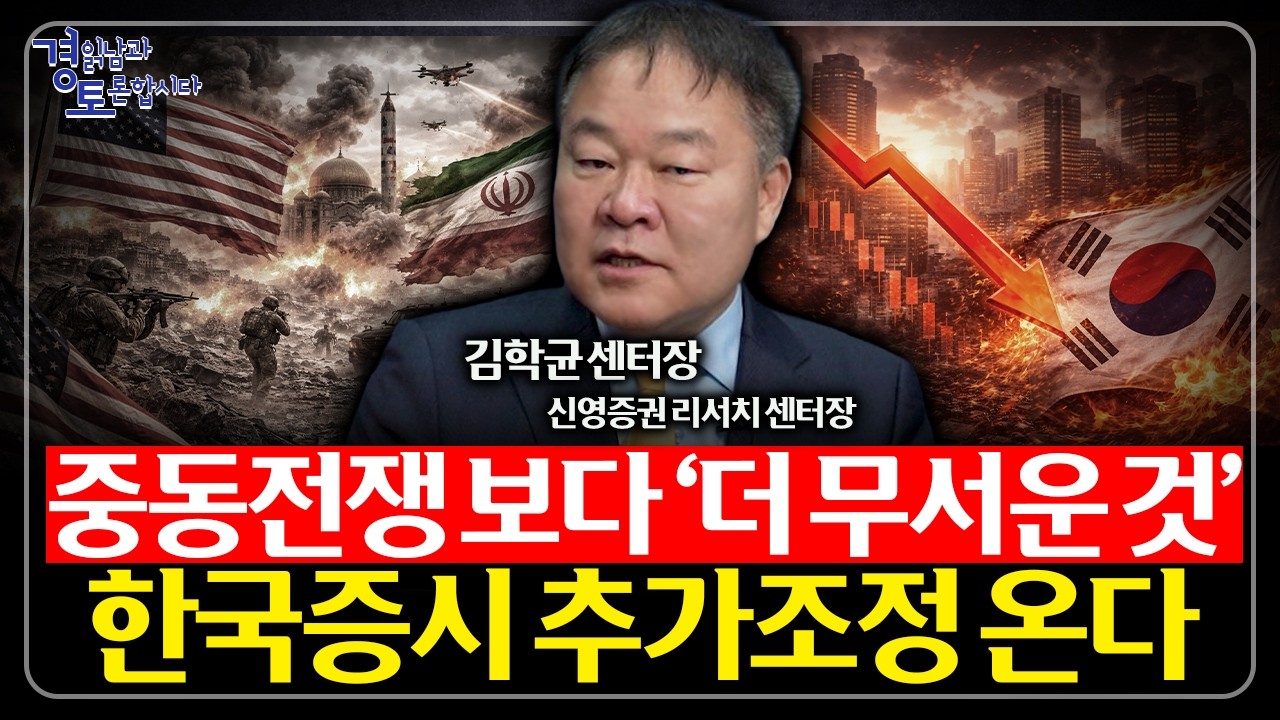
Three Factors More Dangerous Than the Middle East War: The True Variables Driving the Korean Equity Market
Viewing the issue solely through the lens of the Middle East war risks missing the key drivers. For Korean equities and the KOSPI, the dominant impact typically comes not from the conflict headline itself, but from second-order effects created by the interaction of crude oil prices, inflation, interest rates, supply chains, and FX dynamics.
Based on the core remarks of Director Hakgyun Kim, this report summarizes: (i) why the Korean market sold off, (ii) which indicators are most relevant going forward, and (iii) where media narratives tend to oversimplify. The central point is that Korean equity outlook requires a combined read of global macro conditions, monetary policy, semiconductor supply chains, and the manufacturing cycle.
1. Key Takeaways: Why the Korean Market Reacted So Sharply
Following the outbreak of the Middle East conflict, the KOSPI experienced a rapid drawdown. While the headline suggests a direct “war shock,” the market response is more structural.
Director Kim’s view is that the decline reflected not only the conflict but also prior positioning: assets that had already rallied substantially were more vulnerable to an external shock and therefore corrected more.
Korea’s structural sensitivities amplified the move: high manufacturing exposure, high energy import dependence, and meaningful reliance on Middle Eastern crude. As a result, higher oil prices can transmit into real activity, corporate earnings, inflation, and the interest-rate path.
Japan showed similar weakness, consistent with markets pricing potential fundamental deterioration rather than purely reacting to risk-off sentiment.
2. Core Message: Markets Are Not Prophets; They Are Diligent Test-Takers
One of the most relevant statements in the discussion was:
Financial markets resemble diligent test-takers more than wise prophets.
Markets do not forecast perfectly; they extrapolate from historical analogs and apply them to current conditions.
Therefore, concluding that “Middle East wars do not have lasting equity impacts” is not sufficiently precise. A more accurate framing is:
Past Middle East conflicts often ended relatively quickly, limiting the duration of equity-market shocks.
If the current conflict extends beyond April and May, market transmission could differ materially from historical patterns. Duration is a primary variable.
3. The Three True Variables Shaping Korean Equities
3-1. Variable 1: Higher Crude Oil Prices
The most direct channel is crude oil. Korea is an energy-importing, manufacturing-heavy economy; oil-price increases pressure both corporate margins and consumer prices.
Higher oil prices affect a broad set of industries, including refining, chemicals, transportation, steel, autos, and semiconductors. The macro linkage is sequential:
- Higher input costs for corporates
- Higher living costs for households
- Greater inflation-management constraints for fiscal and monetary authorities
In practice, oil is less a standalone factor than a trigger for inflation and rates.
3-2. Variable 2: Re-acceleration Risk in Inflation
The principal risk is not a 1–2 day equity shock, but the possibility that a prolonged conflict re-ignites inflation.
The Russia–Ukraine war demonstrated a similar structure: the major market impact came less from the headline and more from commodity-driven inflation.
A comparable mechanism could emerge through:
- Higher crude oil prices
- Higher freight rates
- Higher commodity prices
- Increased FX-related import costs
For a manufacturing economy with high intermediate-goods import intensity, the pass-through can be larger. If inflation firms, markets typically reduce expectations for rate cuts, weighing on growth and high-multiple assets.
3-3. Variable 3: Monetary Policy and the Interest-Rate Path
The primary directional driver for risk assets remains monetary policy. As Korea is not a direct combatant, markets are likely to focus on inflation and central-bank reaction functions.
If the conflict persists and inflation rises:
- The Federal Reserve may delay easing
- The Bank of Korea may face constraints in turning accommodative
Equities can be pressured via:1) Higher discount rates compressing valuations
2) Slower growth expectations weakening earnings outlooks
The core structure is: conflict -> inflation pressure -> rates repricing -> equity de-rating.
4. Three Indicators to Monitor Most Closely
4-1. Crude Oil
A high-frequency indicator that rapidly changes inflation and earnings expectations. A short-lived spike followed by stabilization would likely reduce stress; persistent elevation would shift Korea’s outlook more defensively.
4-2. CPI Inflation
A monthly data point, but critical for policy expectations. Re-acceleration in inflation typically forces markets to scale back rate-cut assumptions. Both US CPI and Korea CPI matter given the centrality of US policy to global rates and the sensitivity of Korean assets to USD and US yields.
4-3. US 10-Year Treasury Yield
Director Kim highlighted the US 10-year yield as the most practical real-time indicator, as it aggregates daily repricing of oil, inflation, and rate expectations.
During the Russia–Ukraine conflict, a rapid rise in the US 10-year yield coincided with a broader market shock. At present, an equivalent “disorderly” yield spike has not yet emerged, suggesting markets have not fully priced a worst-case long-duration inflation scenario.
5. Higher-Impact Real-Economy Risk: Supply-Chain Shock and a Higher-Cost Structure
Beyond oil and equities, supply-chain effects may be more persistent.
A prolonged conflict can raise freight rates, create shipping delays, increase route risk, lift insurance costs, and disrupt raw-material procurement. These effects are material for globally integrated industries such as semiconductors, autos, batteries, and chemicals, where localized logistics disruptions can translate into production interruptions.
Even without complete cutoff, slower delivery and higher costs can compress margins.
The larger structural shift is toward resilience over efficiency:
- Higher inventory buffers
- Supplier diversification
- Contingency routing
This implies a transition toward a structurally higher-cost global system, potentially supporting higher underlying inflation over time.
6. Scenario Framework for Korean Equities: Short Conflict vs. Prolonged Conflict
6-1. If the Conflict Ends Quickly
A relatively fast resolution would likely allow rapid stabilization. As the geopolitical risk premium compresses, oil prices may normalize and the KOSPI could retrace part of the decline.
The key confirmation would be that the shock does not translate into renewed inflation pressure, limiting damage to the rate path and supporting risk appetite.
6-2. If the Conflict Extends Beyond April–May
Second- and third-order effects become dominant.
If oil remains elevated and freight, import prices, and FX pressure rise simultaneously, Korea could face both valuation compression and earnings headwinds. Foreign flows are highly sensitive to US yields and USD strength; in a prolonged scenario, KOSPI rebound momentum may be weaker.
In summary:
- Short duration: primarily a transient shock
- Prolonged duration: a three-way squeeze via inflation, rates, and earnings
7. Key Points Commonly Oversimplified in Media
7-1. Duration Matters More Than the Headline
Historical comparisons are incomplete without accounting for conflict length. Short conflicts produced limited persistence; prolonged conflicts can change the transmission path.
7-2. Korea’s Economic Structure Is More Exposed to Geopolitical Supply Shocks
High manufacturing share and energy import dependence can make Korea more sensitive than larger, more energy-diversified economies.
7-3. Markets May React More to Rate Data Than to War Headlines
While headlines dominate attention, asset prices often respond more to US yields and inflation prints.
7-4. Supply-Chain Reconfiguration Can Become a Persistent Cost Driver
Resilience spending and reduced supply-chain efficiency can raise costs structurally, potentially sustaining inflationary pressure beyond the immediate shock window.
8. Investor Checklist: Practical Monitoring Framework
1) Distinguish between a one-off oil spike and a trend move.
2) Assess whether the US 10-year yield remains stable as a first-line stress gauge.
3) Track whether US and Korea CPI trajectories continue disinflating.
4) Monitor whether FX and freight rates rise concurrently; simultaneous increases intensify import-price pressure.
5) Differentiate sector sensitivity: semiconductors, autos, chemicals, and transportation are more exposed to supply-chain and cost variables; balance-sheet and pricing-power differences will matter.
9. Conclusion: Inflation and Rates Are the Dominant Risk Channels
The conflict is the initial catalyst; the primary drivers for Korean equities are the linked chain of higher crude oil, inflation re-acceleration risk, and monetary-policy repricing.
Headlines shape sentiment, but market direction is determined by measurable variables: oil levels, inflation momentum, and the trajectory of the US 10-year yield. For an energy-importing, manufacturing-heavy economy, geopolitical risk can translate into sustained cost pressure, making this period a stress test for Korea’s macro and equity fundamentals.
< Summary >
The initial shock has been partially reflected, but the key variables remain: higher crude oil, inflation risk, and central-bank rate stance. If the conflict is short, effects may remain contained. If prolonged, supply-chain disruptions and a structurally higher-cost environment could increase pressure on Korea’s economy. Monitoring should prioritize the US 10-year yield, CPI, FX, and freight rates over headline-driven sentiment.
[Related Links…]
KOSPI volatility expansion: key signals to monitor
Inflation re-acceleration risk: 2H asset-market outlook
*Source: [ 경제 읽어주는 남자(김광석TV) ]
– 중동 전쟁보다 더 무서운 것. 한국 증시를 흔드는 진짜 변수 3가지 | 경읽남과 토론합시다 | 김학균 센터장_1편