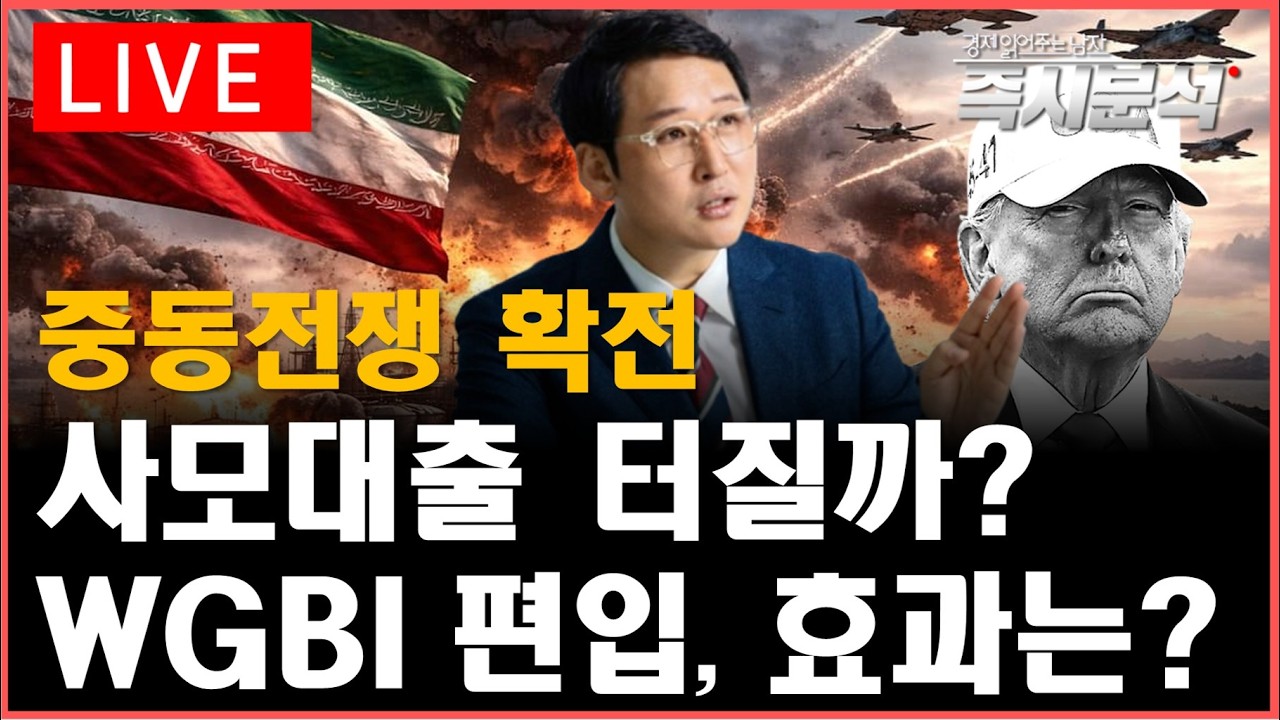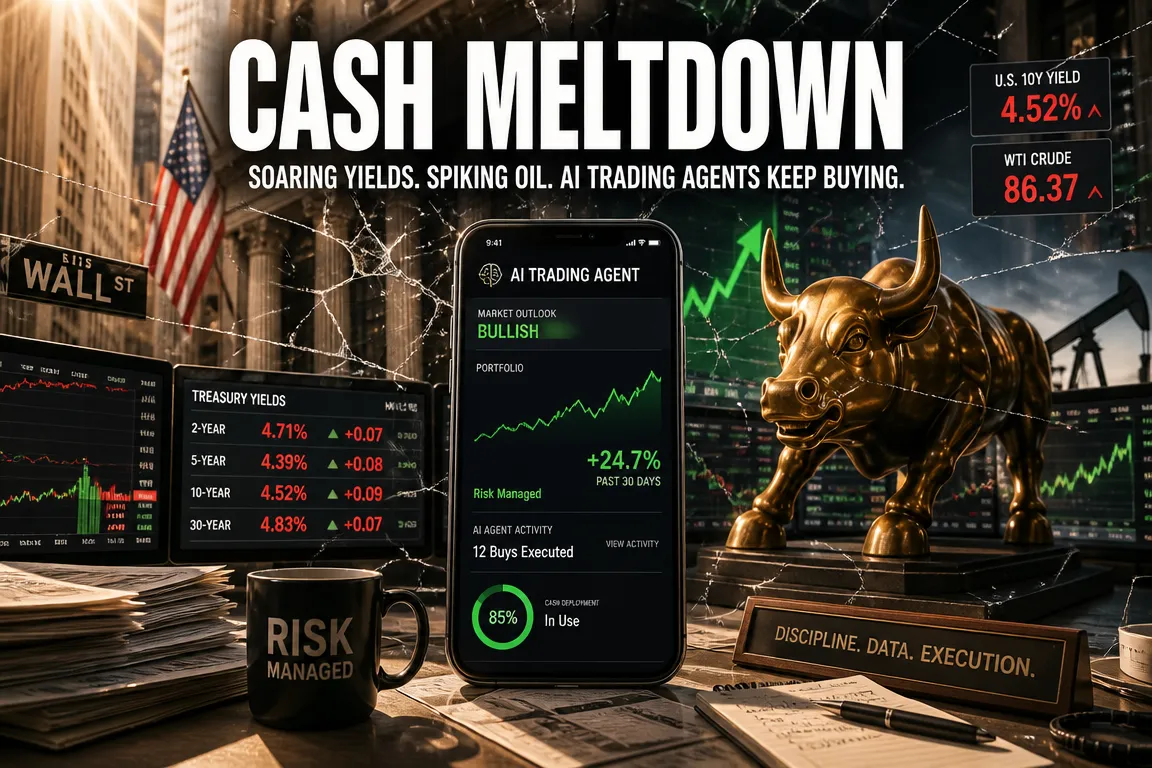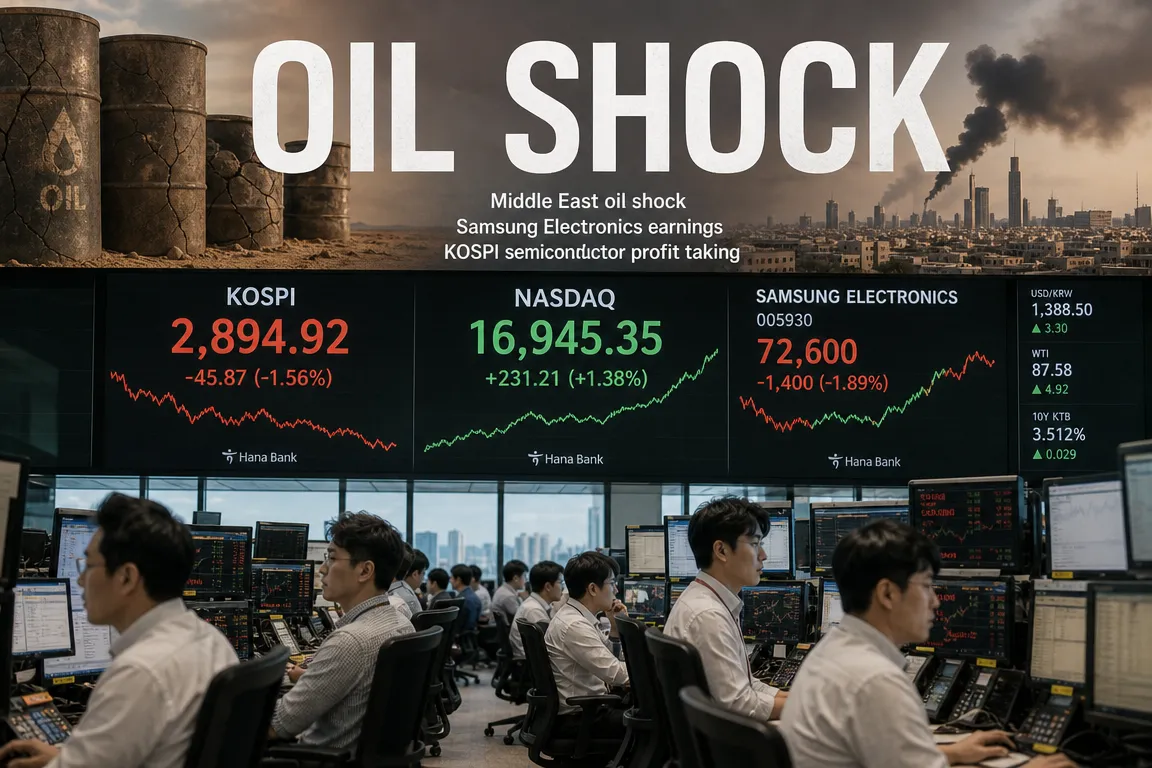
● War Shock, Credit Crunch, Korea Bond Bonanza
Escalation Risk in the Middle East, Private Credit Stress, and Korea’s WGBI Inclusion
This report consolidates the key market drivers investors should monitor.
This is not merely an “equities are volatile due to war” story. The transmission runs through energy, inflation, policy rates, the USD, and FX.
This report addresses three themes:
1) Why escalation risk in the Middle East can simultaneously affect crude oil, inflation, policy-rate expectations, USD strength, and FX.
2) Whether current private credit stress resembles a 2008-style systemic event or is being overstated.
3) How Korea’s WGBI inclusion beginning in April may affect sovereign yields, FX, foreign flows, and macro expectations.
It also explains why:
- Private credit stress is unlikely to translate into an immediate, full-scale systemic crisis.
- WGBI inclusion is constructive but unlikely to trigger an abrupt FX reversal on its own.
1. Primary Market Driver: Middle East Escalation Risk and Potential Inflation Shock
The core risk is not geopolitics per se, but the pathway from escalation risk to higher crude prices, higher inflation, and a shift in central-bank policy paths.
1-1. Why Geopolitics Transmits Broadly Across Markets
The Middle East is central to global energy supply. Escalation risk increases concerns around refineries, shipping routes, the Strait of Hormuz, and broader oil and gas supply chains.
Resulting upward pressure on crude prices feeds into transport costs, production costs, and input prices, ultimately lifting CPI and PPI.
1-2. The Key Risk: Re-acceleration of Inflation
For markets, the dominant concern is inflation re-acceleration that delays Federal Reserve rate cuts.
Global risk assets have been supported by expectations of rate cuts and improved liquidity conditions. If crude-driven inflation rises, the Fed’s ability to ease diminishes, and “higher for longer” or renewed tightening risk can reprice across assets.
Typical adverse combination:
- Higher oil prices
- Re-accelerating inflation
- Delayed rate cuts
- Stronger USD
- Higher USD/KRW
- Reduced risk appetite
1-3. Why Korea Is More Sensitive
Korea is highly dependent on energy imports, and KRW typically faces greater depreciation pressure during USD strength.
An escalation-driven shock can simultaneously increase:
- Crude import burden
- Imported inflation
- FX pressure
This explains higher sensitivity in KOSPI, sovereign yields, and USD/KRW.
2. Private Credit Stress: A Precursor to a 2008-Scale Crisis?
Private credit has become a major area of concern because substantial lending has occurred outside the banking system, often to lower-credit-quality corporates, during a high-rate environment.
The setup shares similarities with 2008, but the structure is not identical.
2-1. Definition (Practical)
Private credit refers to direct lending by asset managers or non-bank institutions to private companies, SMEs, and lower-rated borrowers.
It is not inherently negative; it provides financing to firms that are pre-IPO, smaller, or unable to meet bank underwriting standards.
The risk increases when higher rates and slower growth weaken debt service capacity.
2-2. Why the Market Is Concerned Now
Key vulnerabilities:
- Concentration in lower-quality borrowers
- High share of floating-rate exposure
- Deterioration may be under-reflected in headline default metrics
The third point is critical: cash-flow stress can be masked through extensions, covenant resets, restructurings, or PIK features.
2-3. Hidden Stress via PIK Structures
PIK effectively capitalizes interest that cannot be paid in cash, adding it to principal for later repayment.
This can suppress near-term delinquency/default indicators while underlying cash generation deteriorates, increasing the risk of delayed recognition.
2-4. Similarities to 2008
Common elements include:
- Lower-credit-quality borrower base
- High sensitivity to rising rates
- Gradual emergence of early credit stress signals
- Liquidity pressure as redemption demands increase
The asset class differs (subprime mortgages vs. private corporate lending), but the “credit to fragile borrowers under higher rates” dynamic is comparable.
2-5. Why It Is Difficult to Classify as an Immediate Global Financial Crisis
The primary differences relate to a more limited contagion pathway.
2-5-1. Weaker Derivatives/Structured-Finance Linkages
In 2008, subprime risk was amplified through large-scale securitization and complex structured products (e.g., CDOs), spreading risk broadly and reducing transparency.
Private credit includes some securitization, but system-wide derivatives-linked amplification appears materially lower than in 2008.
2-5-2. More Limited Direct Bank Exposure
Systemic crises typically accelerate when banks become the epicenter, triggering credit contraction and broader real-economy impact.
Post-crisis regulation has reduced banks’ direct exposure relative to 2008. Indirect channels exist, but the structure is different from a bank-centered collapse.
2-5-3. More Policy Backstops and Higher Risk Awareness
Authorities have more established liquidity tools, and the risk is more widely recognized rather than “unknown and unpriced.”
Recognized risks are generally more containable than opaque, unacknowledged exposures.
2-6. Conclusion: Low Probability of 2008-Scale Systemic Crisis, Meaningful Risk of Market Shock
A direct path to a 2008-style global crisis appears less likely. However, a combination of prolonged geopolitical stress, oil spikes, inflation re-acceleration, and delayed easing could weaken vulnerable borrowers further and widen risk premia across markets.
3. Korea’s WGBI Inclusion Beginning in April: Why It Matters
Korea’s inclusion in the World Government Bond Index is a meaningful event for capital markets.
3-1. What WGBI Is
WGBI is a major global government bond benchmark used by institutional investors.
Inclusion typically forces benchmark-tracking funds to allocate to Korean government bonds (KGBs), creating structural demand.
3-2. Why Inclusion Was Delayed
Korea’s market size and credit quality were not the main constraints. The key issue was accessibility: registration, taxation, FX trading hours, settlement, and operational convenience. Reforms improved these frictions.
Inclusion signals formal recognition of improved market accessibility.
3-3. First Effect: Support for Sovereign Yield Stability
Increased structural demand lifts bond prices and lowers yields.
This matters as fiscal execution and potential counter-cyclical measures can raise issuance needs. Higher issuance typically pressures yields upward; WGBI-driven foreign demand can partially offset that pressure.
3-4. Second Effect: Broader Foreign Investor Base
Beyond near-term inflows, WGBI inclusion diversifies the investor base and can improve market resilience by reducing reliance on a narrower set of domestic buyers.
3-5. Third Effect: Supportive for FX Stability
Foreign purchases of KGBs require KRW, improving FX supply-demand balance and supporting KRW stability, particularly during USD strength and risk-off periods.
3-6. Why an Abrupt FX Reversal Is Unlikely
WGBI inclusion is positive, but it is unlikely to drive a sharp USD/KRW reversal alone because:
- Passive/benchmark flows are typically phased over multiple months
- Geopolitical risk premia and USD strength can dominate near-term FX dynamics
Framework:
- WGBI inclusion -> FX stabilization factor
- Middle East escalation -> FX depreciation factor
At present, the latter is likely the stronger impulse.
4. Outlook Framework: Sovereign Yields and FX
4-1. Sovereign Yields
Near-term KGB yields remain more sensitive to crude, inflation, and policy-rate expectations. Escalation-driven inflation risk can limit immediate yield stabilization even with WGBI support.
Over the medium term, broader foreign demand can reduce yield volatility.
4-2. FX (USD/KRW)
Near-term USD/KRW is likely driven by USD strength, crude dynamics, and geopolitical risk. A meaningful downtrend typically requires concurrent easing of risk premia, stabilization in crude, and some USD weakening.
WGBI inflows may help moderate the level and pace of KRW weakness rather than trigger a rapid reversal.
5. Key Points (News-Style)
Middle East Escalation
Rising escalation risk increases upward pressure on crude. This raises the probability of inflation re-acceleration and strengthens concerns over delayed Fed easing, weighing on risk assets.
Private Credit
Credit stress is increasing in lower-quality borrowers. Headline defaults may understate risk due to restructuring/PIK usage. Compared with 2008, the derivatives-linked amplification and bank-centered contagion channel appear more limited.
WGBI
Korea’s WGBI inclusion starting in April is supportive for KGB demand, yield stability, and FX balance. Effects are likely gradual, implying stabilization rather than an immediate regime shift.
6. Core Investor Takeaways Often Underemphasized
6-1. The Market’s Core Variable Is the Policy Path, Not the Conflict Headline
The investable question is whether escalation meaningfully changes inflation and thus the Fed’s rate path.
6-2. The More Realistic Channel Is Wider Credit Spreads, Not a Sudden Systemic Collapse
A more probable outcome is higher funding costs for weaker issuers and broader repricing of risk premia, which is typically unfavorable for equities.
6-3. WGBI Is Supportive, Not a Macro “Override”
In a high-uncertainty macro regime, WGBI functions more as a cushion than a dominant directional catalyst.
6-4. Three Data Streams to Monitor
- Crude oil trend
- US inflation data
- USD/KRW and KGB yield movements
Joint interpretation of these variables is critical for assessing Korea’s macro and market direction.
7. Practical Implications for Investors
7-1. Equities
Near-term volatility is likely to remain headline-sensitive. Oil-sensitive sectors, margin-compressed industries, and duration-heavy growth equities may see heightened volatility if inflation risk rises.
7-2. Bonds
WGBI inclusion is structurally positive for KGBs. Near-term yield performance remains constrained by geopolitics and inflation; the more durable benefit is improved medium-term demand and reduced volatility.
7-3. FX
USD/KRW is likely to remain volatile. Positioning for sharp KRW appreciation based solely on WGBI is not well supported; stabilization is more plausible than a rapid reversal absent easing geopolitical and inflation pressures.
8. Final Synthesis
The current market regime is best framed through three pillars:
- Middle East escalation -> higher oil prices and inflation risk
- Private credit stress -> tighter credit conditions via wider risk premia
- WGBI inclusion -> structural buffer for KGB demand and FX balance
Near-term uncertainty remains elevated. Private credit warrants monitoring but does not currently match a 2008-style systemic setup. WGBI is a constructive development, but it is unlikely to overwhelm geopolitical risk premia in the short run.
The key inflection points remain the duration of geopolitical stress, US inflation trajectory, and the Fed’s easing path.
< Summary >
Middle East escalation risk can lift crude and re-ignite inflation pressures, weakening expectations for rate cuts.
Private credit stress shares certain features with 2008 but appears less systemically transmissible given more limited derivatives amplification and reduced direct bank exposure.
Korea’s WGBI inclusion beginning in April is supportive for sovereign yields, external balance, and FX stability, but the impact is likely phased and more consistent with cushioning than an immediate reversal.
Priority indicators: crude prices, US inflation, USD/KRW, and Korean sovereign yields.
[Related Links…]
https://NextGenInsight.net?s=WGBI
https://NextGenInsight.net?s=private-credit
*Source: [ 경제 읽어주는 남자(김광석TV) ]
– [LIVE] 중동전쟁 확전, (1)사모대출 신용불안 위험한가? (2)4월 WGBI 한국 편입으로 국채금리와 환율 급반전 올까? [즉시분석]