● Oil Shock, Tesla Slumps, Markets Panic
WTI Breaks Above $113, Tesla’s China Sales Rise, Yet Market Anxiety Intensifies
Today’s key development is not limited to higher oil prices or a decline in U.S. equities. The current move reflects overlapping forces: renewed inflation pressure, delayed expectations for rate cuts, distortions across the semiconductor and AI supply chain, a shifting interpretation of Tesla’s valuation framework, and emerging risk in private credit.
This report consolidates: why WTI reached its highest level since 2022; why all sectors except energy weakened; why Tesla’s higher China sales did not support its stock; why some investors increasingly view Tesla and SpaceX as a single ecosystem; and how these linkages may influence global growth, AI semiconductors, U.S. equities, commodities, and FX markets.
1. Market Snapshot: Simple Prints, Complex Drivers
U.S. equities traded broadly lower. The Nasdaq recovered from deeper intraday losses but remained down around the 1% range; the S&P 500 and Dow also fell. The Russell index declined in the high-1% range, signaling a sharp deterioration in risk appetite.
The primary catalyst was WTI crude moving above $113/bbl, the highest level since 2022. The move was amplified by WTI outperforming Brent, increasing the shock effect for U.S.-anchored pricing expectations. Brent also advanced to roughly $109/bbl.
Energy was the lone notable outperformer, while technology, semiconductors, growth, and financials came under pressure. Bitcoin fell toward the mid-$66,000 area and the VIX rose sharply. Market pricing reflected cost shock and geopolitical risk rather than growth optimism.
2. Why the Move Was Disproportionate: The Holiday Gap Risk
The market response exceeded what would be implied by headline conflict risk alone due to calendar-driven positioning constraints. With the next session a market holiday, institutional investors faced heightened weekend gap risk: deterioration in conflict conditions or further oil spikes could not be hedged in real time. A U.S. jobs report is also scheduled during the closure.
As a result, risk management dominated fundamentals, with a shift toward cash and reductions in macro-sensitive exposures.
3. The Core Issue Behind WTI at $113: Second-Round Inflation Effects
Oil’s immediate impact on gasoline prices extends to broader second-round transmission: higher transportation costs, rising input costs, and pass-through into food and consumer goods. The inflation impulse can alter central bank reaction functions.
The market’s key concern is that sustained energy-driven inflation would impede near-term rate cuts. The combination of slowing growth signals and renewed price pressure raises stagflation risk, pressuring margins and earnings while limiting policy flexibility.
4. Tail Risk Scenario: $150 Oil Is Being Reconsidered
If conflict becomes protracted or uncertainty around the Strait of Hormuz persists, oil could price structural supply insecurity rather than a temporary spike. Some global banks have previously referenced Brent at $150 as a scenario; the rapid move to WTI above $113 has increased the market’s willingness to treat such outcomes as non-trivial tail risk.
For energy-import-dependent economies, the impact extends beyond commodities into fuel costs, electricity pricing, logistics, import inflation, cost structures, and currency sentiment.
5. FX and Korea: KRW Weakness Amplifies the Oil Shock
Elevated USD/KRW levels increase the local-currency burden of higher dollar-denominated energy imports. Even without an exceptionally strong dollar index, idiosyncratic KRW weakness can raise import costs materially. Liquidity concerns and fiscal-expansion expectations can further sensitize markets to currency depreciation risk.
The result is a dual shock: rising oil in USD terms and an amplified hit in KRW terms, potentially weighing more directly on domestic activity and consumer sentiment than in the U.S.
6. Employment Data Looks Fine; Markets Still Cannot Relax
Weekly initial jobless claims were better than expected and ADP employment did not signal a breakdown. However, in the current setup, “strong labor” is not unambiguously positive because it supports the case for keeping rates higher for longer, particularly as energy prices rise and complicate inflation progress.
7. Tesla: China Sales Up, Stock Down
Tesla’s Shanghai-made vehicle sales for March reportedly rose 8.7% year over year. Despite this, the stock fell sharply. Macro forces dominated: geopolitics, oil, rates, and valuation compression in high-beta growth.
For Tesla, discount-rate sensitivity can outweigh incremental demand signals in risk-off regimes.
8. Tesla Beyond Autos: Hardware Platform Within a Musk Ecosystem
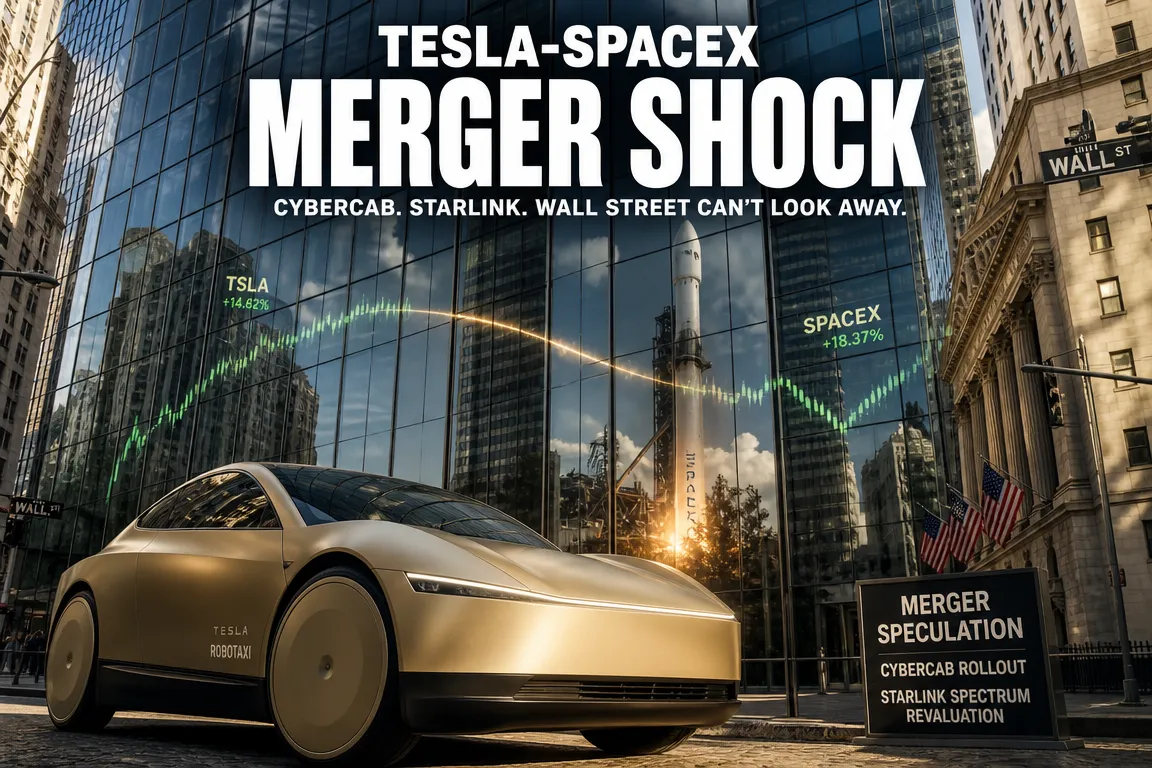
Some market participants increasingly frame Tesla not as a conventional automaker but as the hardware platform within a broader Musk ecosystem. Under this lens, valuation is less anchored to deliveries and auto margins and more to optionality in FSD, robotaxi, Optimus, AI compute, and potential linkages with space-related assets.
As SpaceX and xAI scale, Tesla may be interpreted as a key conduit for real-world devices and data acquisition. Vehicles become data endpoints; robotics becomes a prospective labor platform.
9. SpaceX and Artemis: From State-Led Space to Private Infrastructure Dominance
Artemis II represents the first crewed lunar-orbit mission in over 50 years, emphasizing system validation rather than landing. The more material shift is structural: U.S. space leadership increasingly relies on private execution capacity, with SpaceX’s operational role expanding. SpaceX is also the lunar lander contractor for Artemis III.
Combined with renewed discussion of a potential SpaceX IPO pathway, space may be re-rated from a thematic investment to a strategic infrastructure domain.
10. Why SpaceX Is More Than a Rocket Company: Communications, Logistics, and Platform Economics
SpaceX integrates Starlink subscriber scale, launch and transport infrastructure, reusability, and significant defense/government dependence. Starlink increasingly functions not only as a commercial connectivity product but also as a contingency network and national-security asset.
Accordingly, a SpaceX public-market event could represent a major asset-repricing catalyst in U.S. equities.
11. Underappreciated Linkage: Autonomous Systems and “Off-Earth” Labor
Even if Optimus does not scale immediately on Earth, extreme environments may represent earlier adoption pathways, including lunar infrastructure, Mars missions, hazardous operations, and low-gravity construction.
Tesla’s autonomy stack (sensor processing, real-time decisioning) could have longer-term applicability to automated navigation and remote robotics under latency constraints, creating a conceptual bridge between Tesla’s autonomy and SpaceX’s space infrastructure.
12. Why AI Semiconductors Can Raise Appliance Prices: Capacity Allocation Distorts Supply Chains
Price increases in TVs, refrigerators, washers, and appliances are not solely oil-driven. AI semiconductor demand is reshaping production priorities: manufacturers allocate capacity to higher-margin HBM, high-performance memory, and data-center chips. Lower-end, general-purpose chips (MCUs and commodity components) can become constrained, tightening appliance BOM availability and supporting higher end-product pricing even without a surge in appliance demand.
AI-led growth may therefore raise costs in non-AI categories via supply-chain crowding effects.
13. Why Semiconductor Stocks May Not Rally: AI Upside vs Macro Headwinds
Equities discount both earnings and the discount rate. Higher oil can reinforce inflation and push out rate-cut expectations, increasing discount rates and pressuring long-duration growth valuations.
Demand is also bifurcated: data-center AI demand may remain strong while consumer electronics (smartphones, PCs, appliances) can weaken as households defer replacement purchases under higher living costs. The market is pricing “AI strength” alongside “consumer softness.”
14. Next Consumer Inflation Pulse: Seasonal Demand May Increase Visibility
Existing retail inventory can delay full pass-through. Over the next one to two months, seasonal categories such as air conditioners may reflect higher sticker prices more directly as demand rises. With oil, FX, components, logistics, and power costs up, margin absorption becomes harder, increasing the probability that inflation pressure becomes more visible at the household level.
15. Under-Monitored Risk: Private Credit Liquidity Mismatch
A key non-consensus risk is the emergence of redemption restrictions in private credit. The sector expanded as a form of shadow banking, offering investor-like liquidity against long-duration, illiquid loans. In stable markets, the mismatch is manageable; under stress, simultaneous redemption demand can force gating, as managers cannot rapidly convert assets to cash.
This differs structurally from bank deposits and can reprice risk premia if confidence deteriorates.
16. Why the Private Credit Issue Could Grow
The sector’s implicit assumptions were: (1) high rates support attractive yields, and (2) eventual rate cuts ease refinancing pressure. If oil-driven inflation delays easing, corporate refinancing stress can persist. That increases delinquency risk, weakens collateral values, and can intensify redemption pressure.
A second-order transmission channel is plausible: conflict escalation → oil spike → inflation → higher-for-longer rates → private credit stress.
17. Subscription Inflation: A Consumer-Sentiment Signal
Price increases in streaming and other recurring digital services add to perceived cost of living. Many consumers undercount the cumulative burden of auto-billed subscriptions, which can pressure discretionary spending (electronics, dining, travel). In a stagflation-like environment, pricing power can weaken as higher prices meet constrained demand.
18. One-Sentence Market Summary
This was not merely a “war headline” session; it was a session in which an energy shock began to transmit simultaneously into inflation, rates, growth valuations, real-economy consumption, and shadow-finance risk.
19. Investor Checklist: Near-Term Indicators
1) Monitor whether WTI and Brent stabilize after the spike. A return to low-$100s versus a sustained $110–$120 regime implies materially different macro and policy outcomes.
2) A strong U.S. jobs report may further delay rate-cut expectations. In the current setup, labor strength can be interpreted as hawkish.
3) Track semiconductors and mega-cap tech: AI optimism may persist, but macro headwinds can keep multiples compressed.
4) For Tesla, assess whether pricing is driven more by China sales data or by “ecosystem re-rating” narratives tied to autonomy, robotics, AI, and space adjacency.
5) Watch for additional private credit redemption restrictions; a confidence shock could raise systemic risk premia.
20. Three Core Takeaways Often Missed in Headlines
1) Oil is not only an energy story; it directly affects the expected path of rate cuts.
2) AI strength can impose costs on non-AI supply chains through capacity crowding and commodity-chip constraints.
3) Even if geopolitical stress fades, the next instability could originate in private credit and shadow-banking liquidity mismatches.
< Summary >
WTI rose above $113/bbl, the highest since 2022, while U.S. equities declined across most sectors except energy. Key drivers were Middle East risk, oil-driven inflation pressure, and delayed expectations for rate cuts.
Tesla’s reported China sales increase did not offset macro headwinds. Some market narratives increasingly frame Tesla as part of an integrated Musk ecosystem alongside SpaceX and xAI.
AI semiconductor demand is contributing to supply-chain distortions that can raise costs for general-purpose chips used in consumer appliances, supporting broader living-cost inflation.
A potentially underpriced risk is private credit gating; if oil and inflation keep rates higher for longer, credit stress could increase and spill into broader market risk premia.
[Related Links…]
-
WTI Rally: Repositioning Points Across Global Equities and Commodities
https://NextGenInsight.net?s=WTI -
Tesla, SpaceX, xAI: Reframing the Musk Ecosystem Valuation Structure
https://NextGenInsight.net?s=Tesla
*Source: [ Maeil Business Newspaper ]
– WTI 원유 배럴당 113달러 돌파, 22년 이후 최고치ㅣ테슬라, 中생산 모델 판매 3월 +8.7%(YoY)ㅣ홍키자의 매일뉴욕