● Tesla-SpaceX Merger Shock, AI Empire Shift
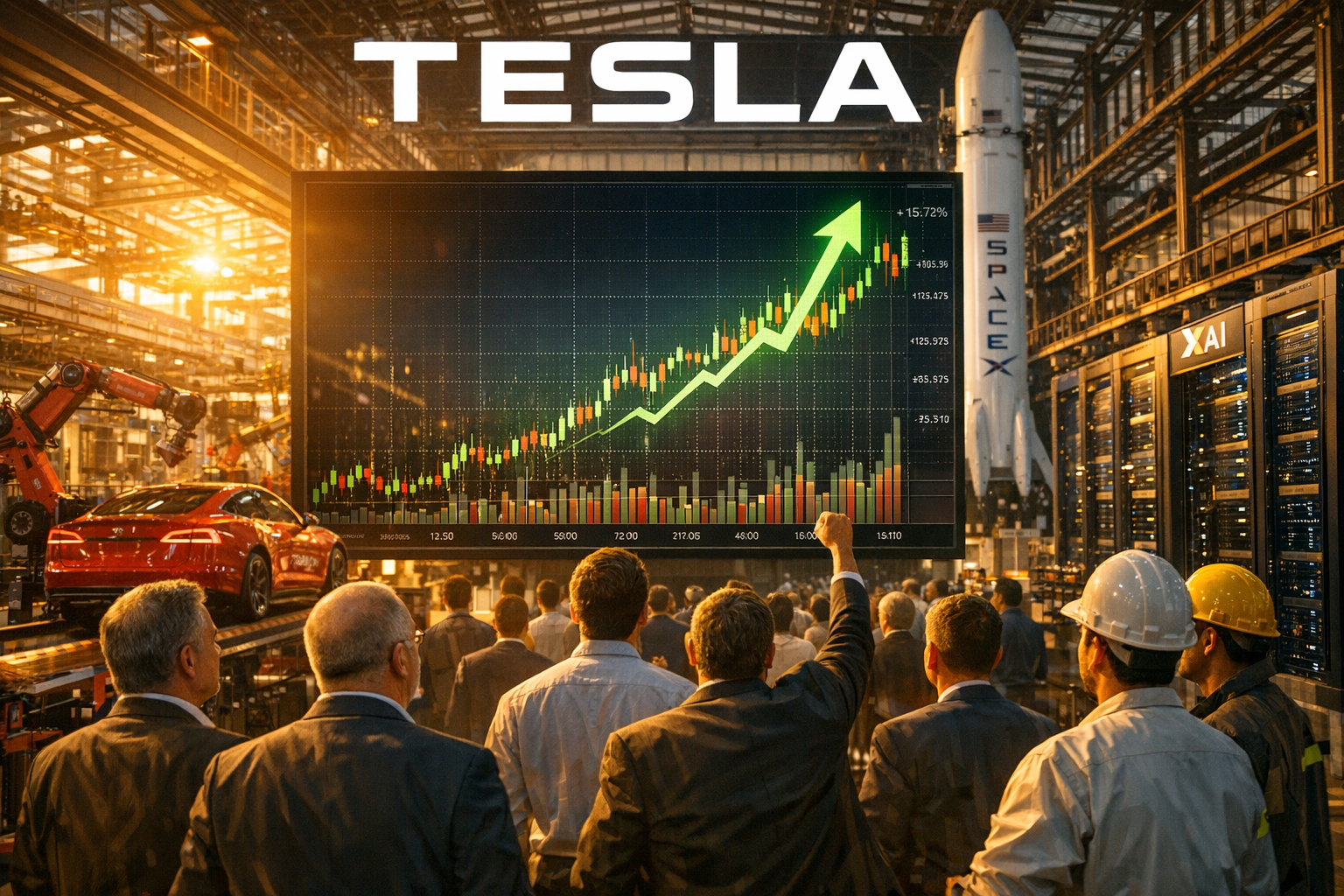
Tesla–SpaceX Merger “99.999%” Scenario: Key Takeaways for Tesla Shareholders at $360
The central issue is not simply whether a merger occurs. The more material question is whether the market begins to value Tesla as more than an EV manufacturer.
This report summarizes: (i) why Chamath Palihapitiya cited a 99.999% probability, (ii) how Tesla, SpaceX, and xAI may be structurally converging, (iii) why AI semiconductors, robotics, autonomy, and space infrastructure can be framed as a single industrial stack, and (iv) the potential implications for US equities, global capital markets, and future industry structure.
A key point often understated is that even without a formal merger, operating linkages may already be moving toward functional integration, with potential consequences for valuation frameworks.
1. Issue Overview: Why Tesla–SpaceX Merger Talk Escalated
Silicon Valley investor Chamath Palihapitiya recently stated that Tesla and SpaceX are “99.999%” likely to become one company, increasing market attention.
At face value, Tesla focuses on EVs, energy, autonomy, and robotics, while SpaceX focuses on launch services, satellites, Starlink, and space logistics. The thesis gains relevance because the two companies may overlap beyond shared leadership, including technology, talent, infrastructure, and capital flows.
2. News-Style Summary: Context and Key Points
First, the source is influential.
Palihapitiya is a former Facebook executive and an early Tesla investor, viewed as closely connected to Silicon Valley capital-market dynamics. His comments appear grounded in capital-market logic rather than purely promotional framing.
Second, the IPO as a starting mechanism.
SpaceX remains private and is not continuously price-discovered by public markets. Tesla is publicly traded with a transparent market valuation. An IPO could establish a reference valuation required for any exchange ratio or consolidation framework.
Third, addressing concerns about executive time allocation.
Investors have criticized Elon Musk’s simultaneous involvement across Tesla, SpaceX, X, and xAI. A more unified structure could shift perception from “a CEO managing many companies” to “a CEO running a single platform-scale enterprise,” potentially affecting governance assessment and investor sentiment.
3. Why a Combination Is Considered Plausible: Three Technology Linkages
A core premise is that Tesla and SpaceX may already be converging technically.
1) Robotics: Optimus as a general-purpose automation platform
Tesla’s humanoid robot Optimus may extend beyond factory automation. If deployed across SpaceX manufacturing, launch operations, or extreme-environment maintenance, Optimus could be positioned as a cross-industry labor-substitution platform, including aerospace and space operations. This could shift the robotics narrative from “auto manufacturing support” to “industrial automation at scale.”
2) AI chips and data centers: Semiconductor roadmap extending beyond vehicles
Notable signals include the return of key Tesla AI chip talent and Musk’s commentary on multi-generation AI chip planning. A conceptual roadmap often described is:
- AI4: enhanced autonomy safety
- AI5: higher autonomy capability and Optimus enablement
- AI6: robotics plus data center compute
- AI7: space-based AI computing
If space-based compute is an explicit endpoint, the strategy implies that vehicle compute is not the terminal market. Space-based AI infrastructure would be difficult to execute without SpaceX launch and orbital capabilities.
3) xAI: an intelligence layer connecting platforms
xAI can be framed as an intelligence layer connecting Tesla’s real-world sensor and mobility data with SpaceX’s communications and space infrastructure. In this structure:
- Tesla supplies real-world data and embodied deployment
- SpaceX supplies global connectivity and orbital infrastructure
- xAI supplies model training and decision optimization
This combination can be positioned as an integrated AI ecosystem spanning terrestrial and space infrastructure rather than a single-industry company.
4. The Primary Consideration: Valuation Framework Shift May Matter More Than a Merger
The market often values Tesla primarily through EV deliveries, margins, and competitive dynamics, consistent with a manufacturing framework.
If investors begin to price Tesla as an integrated platform encompassing autonomy, AI semiconductors, robotics, energy storage, satellite connectivity, and space logistics, the core valuation question may shift from “units sold” to “control of AI infrastructure and deployment surface area.” This could influence growth premiums, technology multiples, and long-duration cash-flow discounting assumptions. The outcome depends on execution and market acceptance, not narrative alone.
5. Potential Upside Scenarios for Tesla Shareholders
1) Reduced “EV manufacturer” discount
If the integration thesis gains traction, Tesla may be priced less as a cyclical auto manufacturer and more as an AI-enabled industrial platform, potentially affecting valuation multiples.
2) Asset value re-rating via public-market reference points
SpaceX is widely believed to carry a high private-market valuation. If an IPO formalizes that valuation, linkages to Tesla could be reframed from narrative synergy to a more explicit asset-valuation discussion.
3) Exposure to multiple high-premium domains
AI, semiconductors, robotics, space, and energy transition attract significant market premiums. A Tesla–SpaceX–xAI convergence story potentially intersects all five, supporting a platform-level narrative if substantiated by deliverables.
6. Key Risks and Constraints
1) Market-implied probability of near-term execution remains limited
Many market participants do not treat a merger as a near-term actionable event. Timing uncertainty reduces tradability of the thesis.
2) Exchange ratio and dilution mechanics
In any merger, the exchange ratio is decisive. If SpaceX valuation is set high relative to Tesla, Tesla shareholders could face dilution. If Tesla’s contribution is undervalued, existing shareholders could be disadvantaged. Transaction math may dominate strategic narrative.
3) Regulation and governance complexity
Tesla is a public company; SpaceX operates in areas sensitive to defense, space, and communications regulation. Any consolidation could face heightened scrutiny involving national security considerations, antitrust risk, and governance transparency.
4) Expectation risk and volatility
If prices reflect optimistic integration assumptions before operational proof, delays or weaker-than-expected structures can amplify volatility. Macro conditions (rates, liquidity) can also constrain how long narrative-driven premiums persist.
7. Why This Matters in a Global Macro Context
This theme may be less about a single stock catalyst and more about the direction of industrial organization.
1) Blurring lines between manufacturing and platforms
Historically separated sectors (automotive, telecom, aerospace, software) are increasingly integrated into single corporate stacks combining hardware, software, AI, connectivity, and energy.
2) Valuation shifting from “sales volume” to “ecosystem control”
Large US technology companies often command premiums based on ecosystem dominance rather than a single product line. A Tesla–SpaceX convergence story can be interpreted as an extreme version of this model.
3) AI competition expanding beyond models
AI leadership increasingly depends on chips, data centers, power, connectivity, robotics, and real-world deployment. Vertical integration across these layers can be framed as a strategic advantage if executed.
8. Under-discussed Core Points
First, formal merger is an endpoint; operational integration can precede it
Even absent a legal merger, shared technology, talent, capital pathways, and infrastructure linkages can create de facto integration and deliver partial synergies.
Second, “space-based computing” as a strategic signal
Explicit discussion of space-based AI compute suggests Tesla’s compute strategy may extend beyond automotive. If pursued, it structurally aligns with SpaceX orbital infrastructure.
Third, convergence around “machines that build machines”
The unifying logic across Tesla and SpaceX can be framed as building automated production systems and deployment infrastructure, not only end products. This supports a narrative of industrial-scale automation and infrastructure integration.
9. Practical Implications for Tesla Shareholders at $360
The main question is how Tesla is being underwritten.
If treated primarily as an EV company, $360 can be sensitive to deliveries, margins, and competition. If underwritten as a long-duration platform spanning AI, robotics, autonomy, energy, and space-adjacent infrastructure, the same price implies a different set of assumptions and risk tolerances.
A valuation re-framing, if it occurs, can change how the market prices Tesla. However, the thesis requires evidence through execution and governance clarity.
10. Monitoring Checklist
1) Confirmation of a SpaceX IPO process
An IPO would create public-market price discovery and facilitate any consolidation framework.
2) Tesla AI chip execution cadence and key talent movement
Semiconductors remain foundational to autonomy, robotics, and data center scaling.
3) Expansion of Optimus into real operational use cases
Validation depends on deployment beyond controlled internal environments.
4) Degree of data and platform integration across xAI, Tesla, and SpaceX
Competitive AI capability depends on data access, connectivity, and operational feedback loops.
5) US rate regime and growth-equity risk appetite
Macro conditions affect the market’s willingness to sustain long-duration growth premiums.
11. Conclusion: Less a “Merger Rumor,” More a Signal on Future Industrial Structure
The merger discussion has multiple plausible linkages across robotics, AI chips, autonomy, data centers, Starlink connectivity, space logistics, and xAI. However, practical constraints remain material, including IPO timing, governance design, exchange ratios, and regulatory risk. Near-term realization is uncertain.
The investment-relevant focus is whether Tesla’s market definition shifts from EV manufacturing toward an integrated AI and automation infrastructure platform, and whether that shift is supported by measurable execution.
< Summary >
- Chamath Palihapitiya stated a 99.999% likelihood that Tesla and SpaceX ultimately combine.
- The rationale centers on converging technology layers: robotics, AI chips, xAI, and space-based computing concepts.
- The primary investment implication is not the merger itself, but a potential shift in Tesla’s valuation framework from EV manufacturer to AI/robotics/space-adjacent platform.
- Key uncertainties include IPO timing, regulation, dilution/exchange ratios, and governance complexity.
- The core underwriting question is whether future value is driven primarily by vehicle sales or by platform-scale ecosystem control and infrastructure positioning.
[Related Articles…]
- Tesla stock rebound conditions and AI/autonomy re-rating factors: https://NextGenInsight.net?s=Tesla
- Drivers of SpaceX valuation expansion and space industry investment strategy: https://NextGenInsight.net?s=SpaceX
*Source: [ 오늘의 테슬라 뉴스 ]
– 테슬라·SpaceX 합병 99.999% — 이게 현실이 되면 지금 $360 테슬라 주주에게 생기는 일
● Shock,ETF,Buy,Now
The core question is not timing, but investment structure
This is not limited to “Should I buy U.S. ETFs now?” It consolidates why long-term, ETF-centered investing is being revisited despite U.S. market volatility, and how geopolitical risk, expected rate cuts, AI growth, Big Tech concentration, and phased buying connect into a single investment framework—especially as a practical system for salaried investors.
1. Key conclusions
- The long-term case for U.S. ETFs remains valid.
- For salaried investors, ETFs are generally more practical than single stocks.
- External shocks (e.g., Middle East conflict) raise short-term volatility but do not necessarily impair the long-term growth thesis.
- The AI- and Big Tech-led market structure in the U.S. is unlikely to reverse quickly.
- The primary issue is not “when to buy,” but “how to keep buying consistently.”
A critical implication is that building a disciplined investment system matters more than predicting short-term market direction.
2. Core issues (news-style): why U.S. ETFs again
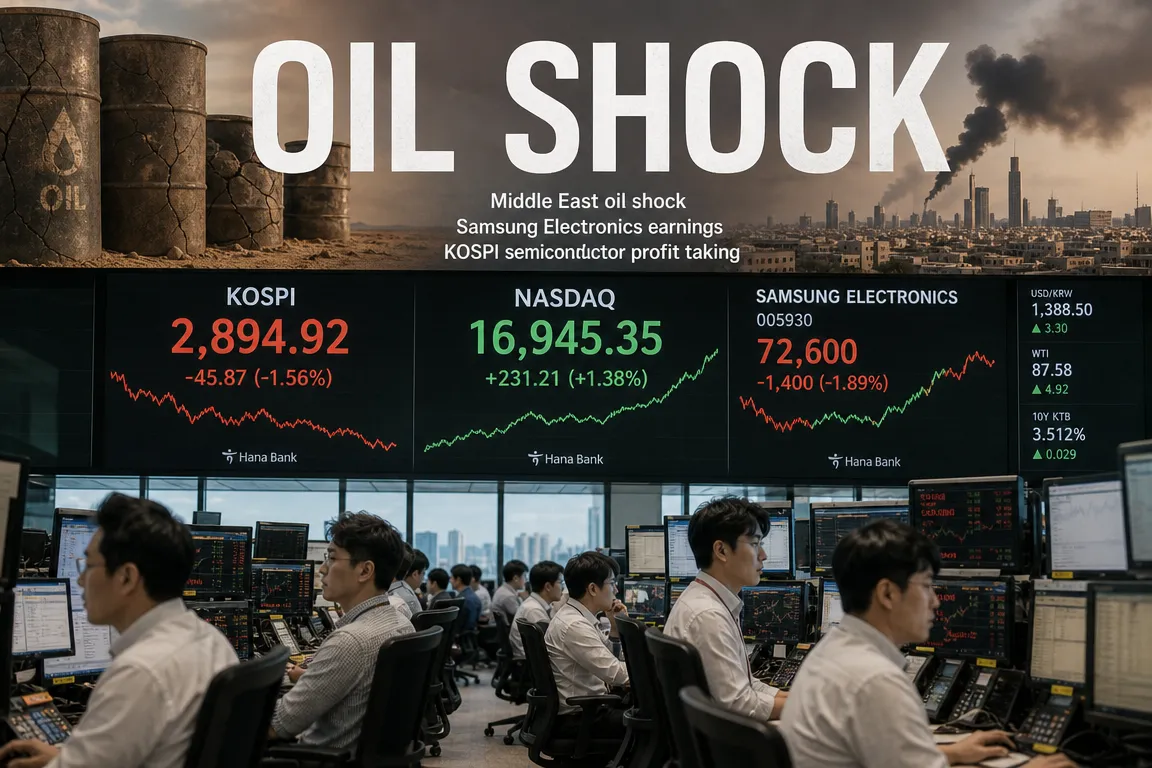
2-1. Middle East conflict and global uncertainty: prices moved, fundamentals largely unchanged
Geopolitical escalation typically triggers de-risking and flows into safe havens such as the U.S. dollar and bonds. This can pressure U.S. equities, with higher sensitivity in Nasdaq and AI-related segments.
If the conflict does not materially disrupt corporate earnings structures, a portion of the drawdown may reflect risk-premium expansion and sentiment-driven repricing rather than a deterioration of core business fundamentals. If AI capex, cloud growth, semiconductor demand, and platform dominance remain intact, prices can normalize rapidly when risk signals ease.
2-2. U.S. Big Tech and AI remain central to market leadership
The overweight view on U.S. equities is framed around where control over future industrial value accrues. Current growth vectors include:
- AI infrastructure and platforms
- Semiconductors and data centers
- Robotics and automation
- Aerospace and next-generation industrial technologies
Capital, talent, and ecosystem scale remain most concentrated in the U.S. Large platforms (e.g., Apple, Microsoft, Nvidia, Google, Amazon, Meta) combine substantial free cash flow with sustained investment capacity, supporting continued participation in AI-era infrastructure buildout.
While valuation concerns are relevant after strong performance, the same cash-flow and reinvestment advantages can reinforce competitive durability.
2-3. Why rate-cut expectations can favor risk assets
The tightening regime of 2022–2023 reduced liquidity and increased discount-rate pressure, disproportionately affecting growth equities. Into 2025–2026, markets may increasingly price gradual easing.
Typical effects in an easing cycle include:
- Lower relative attractiveness of cash
- Improved risk appetite
- Reduced valuation headwinds for growth equities
- Potential reallocation toward technology-heavy indices (e.g., Nasdaq)
Short-term headlines may drive volatility, but the liquidity backdrop can become more supportive for equities if easing progresses.
3. Why ETFs are more realistic than single stocks
3-1. Market leaders change; ETFs are structurally adaptive
Top market-cap constituents rotate over time; concentration in a handful of single names can be fragile for non-professional investors. Index ETFs mitigate this by reweighting winners upward and reducing exposure to deteriorating constituents through reconstitution and market-cap weighting, reducing the need for active stock replacement.
3-2. ETFs reduce behavioral errors rather than eliminate the need to think
ETFs are not “no-study” products. Their key advantage is reducing frequent investor errors—momentum chasing, capitulation selling, failed rotations, and overconfidence.
Common strengths of U.S. ETFs include:
- Diversification
- Long-horizon capture of broad market growth
- Lower idiosyncratic risk from single-company events
- Compatibility with automated recurring purchases
- Reduced time and emotional burden for salaried investors
The primary benefit is improving the probability of maintaining a sound process over time.
4. Why DCA, phased buying, and automation matter again
4-1. Market timing is difficult
Retail investors often react after information is already reflected in prices and are prone to emotion-driven decisions: buying after rallies and selling after declines, then missing rebounds. Dollar-cost averaging (DCA) addresses this by purchasing at fixed intervals without forecasting.
4-2. The function of DCA is error minimization, not return maximization
DCA results in mixed entry prices but can stabilize average cost and accumulate more shares during drawdowns. Combined with long holding periods, broad indices such as the S&P 500 or Nasdaq-100 have historically reduced loss probability over time, while acknowledging that past performance does not guarantee future results.
4-3. Automated investing is infrastructure for salaried investors
Automation is not convenience; it is enforcement of rules. Scheduling purchases after payday turns investing into a repeatable habit and reduces discretionary interference. Attempting daily, reactive trading alongside full-time work can impair both decision quality and personal wellbeing.
5. Should investors rely on macro views or simply buy consistently?
5-1. The two approaches are complementary
- Investors with strong macro skill: tactical allocation shifts may add value.
- Investors without timing confidence: DCA and automation may be more suitable.
- Most salaried investors: automation as the base case, supported by a working macro understanding, is a practical combination.
5-2. Economic literacy supports endurance, not perfect timing
Macro knowledge helps distinguish drivers of drawdowns—tightening shocks, geopolitical risk, earnings deterioration, or liquidity adjustment—thereby reducing panic selling and supporting process adherence.
6. Practical investment considerations for the current environment
6-1. What types of U.S. ETFs to evaluate
Rather than naming products, the main buckets are:
- Broad U.S. market exposure centered on the S&P 500
- Technology-heavy exposure centered on the Nasdaq-100
- Growth-oriented ETFs with higher weights in AI, semiconductors, and Big Tech
- Defensive ETFs adding dividends and lower-volatility characteristics
A more aggressive posture typically increases Nasdaq-like exposure; a more stable posture typically increases S&P 500 weight. Structure should reflect time horizon, cash-flow capacity, and volatility tolerance rather than theme-chasing.
6-2. Should Korean equities be excluded entirely?
A U.S.-heavy allocation can be justified by USD exposure, technology leadership, AI infrastructure, and platform dominance. However, full exclusion is not required; Korea can remain relevant through semiconductors, AI supply chains, and select manufacturing competitiveness. A common approach is a U.S.-centric core with a smaller Korea allocation.
6-3. The most common failure is abandoning a sound strategy mid-cycle
Long-term underperformance often results from inconsistency: capitulation in drawdowns, impatience in rallies, and reactive switching based on peers’ returns. Strategy should be defined as something maintainable for 10+ years, particularly for salaried investors. Excessive information intake and short-term performance comparisons tend to degrade outcomes.
7. The most important point often omitted in media content
7-1. The essence of U.S. ETF investing is lifestyle-compatible process design
Investment practice should not undermine work performance, family time, health, or emotional stability. The objective is a durable process that can be sustained.
7-2. “Low-touch investing” is not ignorance; it is reducing overtrading
The intended approach is: think deeply, act simply. In an information-saturated environment, minimizing unnecessary actions reduces decision errors.
7-3. Future outcomes may depend more on persistence than forecasting
Many investors seek prediction accuracy, but wealth accumulation is often driven by long-term ownership of quality exposures. In structurally shifting domains such as AI, automation, semiconductors, and platform economics, persistence can dominate short-term positioning.
8. Should investors still buy U.S. ETFs now?
A case remains for U.S. ETFs based on structural competitiveness, AI/Big Tech-driven growth, potential easing, long-term equity appreciation potential, and diversification plus automation fit.
However, it is not possible to assert that the current level is a definitive bottom; volatility can persist. Therefore, phased buying and automated DCA are positioned as more robust than concentrated, one-time entry decisions.
U.S. ETF investing is framed less as a “right answer” problem and more as building a structure that reduces avoidable errors, particularly when headlines are noisy and markets are unstable.
< Summary >
U.S. ETF investing remains viable; the critical factor is structure rather than timing. Geopolitical shocks can drive short-term repricing without necessarily invalidating the AI- and Big Tech-led growth thesis. Rate-cut expectations can improve the environment for growth equities. ETFs reduce single-stock replacement risk and behavioral errors through systematic reweighting and diversification. DCA and automation prioritize error minimization and long-term consistency. The objective is a sustainable system that preserves work, health, and family priorities while maintaining long-horizon market exposure.
[Related articles…]
- U.S. ETF long-term strategy and phased buying: key points recap (https://NextGenInsight.net?s=ETF)
- AI and Big Tech era: checkpoints for Nasdaq and U.S. equity outlook (https://NextGenInsight.net?s=AI)
*Source: [ 경제 읽어주는 남자(김광석TV) ]
– 지금도 미국 ETF를 사야 하나요? 흔들릴수록 더 강해지는 투자법 | 경읽남과 토론합시다 | 경제포차_김성동