● Tesla-ARK Bombshell-SpaceX Merge-FSD 100B Mile Shock
Reasons Cathie Wood Re-Accumulated Tesla: FSD Approaching 10 Billion Miles and the SpaceX Combination Narrative
The key variable for Tesla is no longer unit EV sales alone. This update consolidates the implications of (i) FSD nearing 10 billion cumulative miles, (ii) Morgan Stanley’s simultaneous upside case and risk flags, (iii) Cathie Wood’s purchases across ARK funds including a space-focused ETF, (iv) recurring Tesla–SpaceX combination narratives and their technical rationale, and (v) investor checkpoints around the ~$348 price area.
1. Key Developments at a Glance
This topic has two primary pillars: Morgan Stanley’s framing of the “10 billion FSD miles” milestone and Cathie Wood’s renewed accumulation, including interpretation of SpaceX-related scenarios.
- Tesla FSD cumulative mileage: ~9.2 billion miles
- Daily accumulation: ~19 million miles; 10 billion milestone approaching
- Morgan Stanley views the data accumulation rate constructively
- Morgan Stanley also warns that higher capex could weaken free cash flow
- Cathie Wood accumulated Tesla via ARKK, ARKQ, and ARKX
- Inclusion via ARKX (space ETF) drew attention
- Market narrative links Tesla, SpaceX, xAI, and Starlink as a converging technology stack
2. Why “10 Billion FSD Miles” Matters
“10 billion miles” is not only symbolic. Elon Musk has previously cited this order of magnitude as a data scale associated with achieving safe, unsupervised autonomy.
2-1. Data Accumulation Has Shifted Toward an Exponential Curve
- 2021 FSD miles: ~6 million
- 2025: ~4.25 billion
- 2026: +1 billion miles added in ~50 days
This trajectory is consistent with platform dynamics: larger fleet usage increases data, which can improve model performance and further drive usage (an FSD flywheel effect).
2-2. The Critical Variable Is Data Quality, Not Only Quantity
A cumulative figure does not, by itself, validate full autonomy. The value depends on scenario coverage, including:
- Dense urban intersections
- Pedestrian-heavy zones
- Unprotected left turns
- Severe weather / low-visibility conditions
- Pickup/drop-off zones and exception handling
As a result, Morgan Stanley’s positive view on data accumulation is paired with caution that robotaxi operating scale-up remains slower than headline mileage growth might imply.
3. Why Austin Robotaxi Expansion Appears Slow: Capability vs Operationalization
Skeptics interpret slow expansion of unsupervised robotaxi operations in Austin as a technical ceiling. An alternative interpretation is that commercial robotaxi operations require a broader operating system beyond driving performance:
- Dispatch and routing
- Passenger pickup/drop-off point selection
- Handling unpredictable curbside stops and urban anomalies
- Safety operations and regulatory compliance
- System robustness under exception conditions
This supports a view that pace can reflect operational, regulatory, insurance, and customer-experience constraints in addition to model capability.
4. Why FSD Version 15 Is a Market Focus
FSD v15 is a key checkpoint for long-duration investors. Musk has suggested v15 could involve a model with ~10x more parameters than current versions.
This implies more than incremental improvement, aligning with concurrent scaling vectors:
- Larger model
- More real-world driving data
- Broader coverage of edge cases
- Potential European expansion increasing geographic diversity
If these factors converge, Tesla’s market framing could continue shifting from automaker to AI-enabled mobility platform, with valuation increasingly tied to the feasibility and timing of unsupervised FSD commercialization.
5. European FSD Approval: Larger Than It Appears
Approval by the Netherlands’ RDW for supervised FSD mode is a material signal due to Europe’s conservative regulatory posture.
5-1. Why European Expansion Matters
- Europe is generally more stringent on approvals
- A precedent market can influence broader regional adoption
- Potential to lift expectations for approvals in larger markets (e.g., Germany, France)
- Enables both subscription revenue expansion and faster data accumulation
Europe also provides a higher-complexity operating environment, supporting broader generalization testing for autonomy systems.
6. Morgan Stanley’s Risk Flag: Free Cash Flow Pressure
Morgan Stanley highlights that if capex increases materially (potentially more than doubling), Tesla’s free cash flow could turn negative.
- Estimated near-term cash use: ~$8 billion
- Inventory and demand-softening risks remain
- Weak Q1 deliveries may weigh on near-term sentiment
Implication: long-term optionality may remain intact while near-term reported metrics could be pressured.
7. Why Cathie Wood Bought Tesla Now
The purchases appear to reflect more than tactical dip-buying, given execution across ARKK, ARKQ, and notably ARKX.
- Total purchases: ~$28 million
- ARKX historically had minimal Tesla exposure; Tesla now holds a meaningful weight within the fund
This positioning suggests ARK increasingly frames Tesla as an AI, robotics, energy, and infrastructure platform rather than a pure EV manufacturer.
8. Tesla–SpaceX Combination Narrative: How Realistic?
There is no official announcement, and no confirmed statement from Musk validating a merger. The topic should not be treated as a base-case.
8-1. Why the Narrative Persists
- Musk has indicated the companies are “converging faster than expected”
- Increasing technical adjacency among Tesla, SpaceX, xAI, and Starlink
- A platform thesis: robotics and AI link mobility, communications, energy, and infrastructure
- Some investors interpret ARK’s allocation choices through this convergence lens
8-2. Potential Synergies the Market Associates with Combination Scenarios
- Robotaxi networks supported by Starlink connectivity
- Reduced connectivity gaps for autonomous operations
- Energy systems integrated with infrastructure-scale power management
- Optimus robotics applied to industrial automation and potentially space-related construction
- xAI models trained across vehicle/robot/satellite networks
Such narratives can support non-automotive valuation frameworks, though they remain speculative without formal structure and execution details.
8-3. Key Structural Barriers
- SpaceX IPO timing remains uncertain
- Potential requirement for Tesla shareholder approval
- Lengthy regulatory review risk
- Antitrust and governance concerns
- Multi-quarter to multi-year implementation risk
Practical takeaway: treat as optionality, not a near-term catalyst.
9. Under-Discussed Points
9-1. “10 Billion Miles” Is Primarily a Commercialization Threshold Signal
The more relevant linkage is to monetization pathways: subscription revenue, insurance, vehicle demand elasticity tied to autonomy, and scalable robotaxi operations.
9-2. European Approvals Can Shift Revenue Mix Before They Move the Share Price
Software subscriptions convert one-time hardware sales into recurring revenue streams, potentially changing margin structure and earnings quality.
9-3. The Critical Question Is Convergence Without Legal Merger
The core issue is ecosystem integration across services, data, and deployment, even if entities remain separate.
9-4. 2026 Checkpoints May Matter More Than Near-Term Price Action
- FSD v15 release and measured performance improvement
- Pace of unsupervised robotaxi scaling in Austin
- Expansion of approvals across major European markets
- Degree of FSD subscription revenue contribution
- Whether free cash flow pressure is investment-driven or demand-driven
10. What to Monitor Around ~$348
This is not a buy/sell recommendation; it is a decision framework.
10-1. For Short-Horizon Investors
Investors with 6–12 month liquidity needs should prioritize volatility and event risk. Tesla remains sensitive to deliveries, earnings, autonomy headlines, and regulatory outcomes. Near-term demand and cash flow concerns may cap upside.
10-2. For Medium-to-Long Horizon Investors
The central question becomes whether unsupervised autonomy and software-driven monetization open at scale, rather than whether a single quarter’s results exceed expectations.
10-3. Suggested Investor Checklist
- Post-10 billion miles: is there observable, sustained performance improvement?
- Does v15 meet market expectations?
- Is European expansion visible in reported metrics?
- Does robotaxi shift from demonstration to scaling?
- Is cash flow deterioration driven by growth investment or demand weakness?
If at least three of these trend positively, market valuation frameworks could shift again.
11. Overall Framing
Tesla increasingly trades less like a traditional auto manufacturer and more like an AI-infrastructure equity pending verification. EV sales alone can make valuation appear expensive, while quarterly results can look uneven. The premium persists due to multiple embedded options:
- One of the largest real-world driving data platforms
- Exposure to grid storage and energy infrastructure buildout
- Robotics commercialization optionality
- Long-term potential to become a mobility operating system
If narratives around Starlink and xAI integration persist, Tesla may continue to be evaluated as an infrastructure and platform company rather than a pure automotive OEM.
12. News-Style Summary
Morgan Stanley notes Tesla’s cumulative FSD miles are approaching 10 billion, supporting a constructive view on autonomy data scaling. The firm simultaneously flags that higher capex could pressure free cash flow, with potential near-term cash use around $8 billion. Cathie Wood accumulated Tesla through three ARK ETFs, including ARKX, reinforcing a platform interpretation linking AI, robotics, and infrastructure themes. Tesla–SpaceX combination narratives remain unconfirmed and face significant governance and regulatory hurdles; they are better treated as longer-dated optionality. Near-term direction is likely driven by earnings and cash flow; medium-term re-rating hinges on FSD v15, robotaxi scaling, and measurable subscription expansion in Europe.
< Summary >
Tesla’s primary variables are shifting from EV unit sales toward autonomy milestones, v15 performance, European expansion, and robotaxi commercialization. Morgan Stanley balances constructive autonomy data scaling with a warning on free cash flow risk from elevated capex. Cathie Wood’s inclusion of Tesla in ARKX signals a convergence thesis spanning AI, robotics, and infrastructure. Merger narratives are unconfirmed; operational convergence across Tesla, Starlink, and xAI may be more relevant than legal consolidation. Around ~$348, investors should prioritize medium-term commercialization checkpoints through 2026 over near-term noise.
[Related Links…]
- https://NextGenInsight.net?s=Tesla
- https://NextGenInsight.net?s=AI
*Source: [ 오늘의 테슬라 뉴스 ]
– 캐시 우드가 테슬라·SpaceX 합병에 415억 원 베팅한 진짜 이유 — $348 지금 어떻게 해야 하나?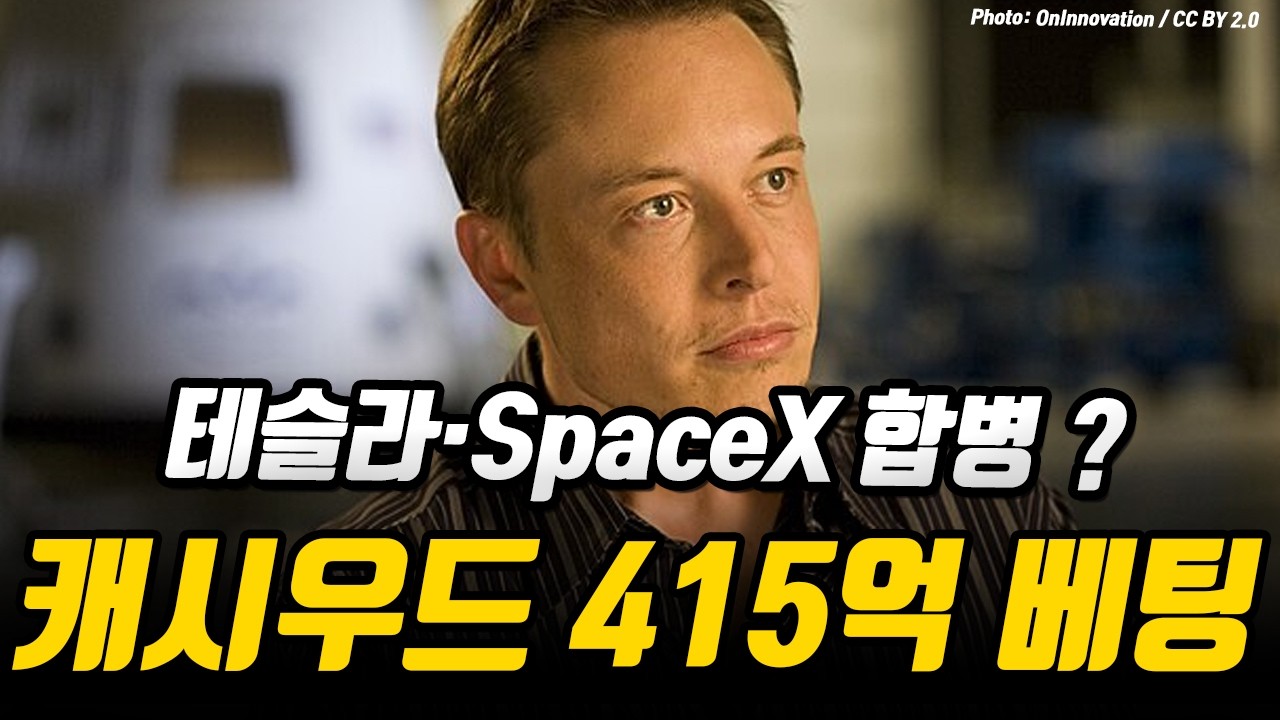
● SpaceX-IPO-Explodes-US-Space-Race-Gets-Hotter
SpaceX IPO Appears Near; Why Space Investing Merits Renewed Attention Now: Key U.S. Space-Tech ETFs and Primary Beneficiaries
SpaceX IPO headlines alone can obscure more material drivers. This report summarizes (i) why the space economy is expanding structurally, (ii) why the competitive landscape is increasingly U.S.-centric, and (iii) which equities and ETFs are most relevant for implementation.
Key topics include:
- Core shifts in the “NewSpace” transition toward private-sector leadership
- Investment considerations by space-industry value chain
- Why the U.S. ecosystem is trending toward a winner-takes-most structure
- Beneficiary segments to monitor immediately following a SpaceX IPO
- Differentiation points of the TIGER U.S. Space Tech ETF
- The central thesis often underemphasized: space is increasingly a competition in data, communications, defense, and infrastructure platforms—not solely launch vehicles
1. Space Industry News: Key Takeaways
SpaceX IPO expectations have reaccelerated investor attention toward space and U.S. growth equities. The more material driver is the broader transition from a government-led industry to a commercially led industry, enabling market expansion, cost compression, service proliferation, and longer-duration investment opportunities.
2. Why Space Is Re-Rating Now: From Old Space to NewSpace
2-1. Legacy Space Was Budget-Constrained and Government-Led
Historically, space activity was anchored in geopolitical competition and funded primarily through government budgets, with large defense primes (e.g., Lockheed Martin, Northrop Grumman, Boeing) playing central roles.
2-2. Private Players Are Reshaping the Cost Curve
The NewSpace inflection is driven by launch-cost disruption. Reusability materially reduces per-launch costs, enabling more frequent and lower-cost satellite deployment. As in other industries, cost deflation expands feasible business models and increases addressable markets.
2-3. Space Is Shifting from “Launch” to “Utilization”
The higher-growth opportunity set increasingly resides downstream of launch: monetizing satellites and the data they generate. Key use cases include:
- Communications and connectivity
- Disaster response and resilience
- Climate and Earth observation
- Defense and surveillance
- Logistics optimization and asset tracking
- Aviation and maritime internet
- Remote infrastructure connectivity
- Data-driven services built on satellite-derived information
This evolution positions space as a cash-flow-generating digital infrastructure segment aligned with data-economy and AI-adoption trends.
3. Space Value Chain: Upstream vs. Downstream
3-1. Upstream: Getting Assets to Orbit
Includes launch vehicles, propulsion, satellite manufacturing, components, and launch services. Representative companies include SpaceX and Rocket Lab. Barriers to entry are high (capital intensity, engineering complexity, execution risk), increasing the likelihood of durable competitive advantages for established leaders.
3-2. Downstream: Monetizing Space Data
Includes satellite communications, Earth-observation analytics, defense monitoring, and data products for agriculture, climate, and logistics. AI is a key enabler due to the scale and complexity of satellite data. Competition is expected to center on both constellation scale and the ability to convert data into integrated, high-value services.
4. Why Focus on the U.S. Space Ecosystem
4-1. Capital, Talent, Policy, and Government Demand Are Concentrated in the U.S.
The space sector requires large-scale capital, proven engineering, operational flight heritage, and deep integration with government procurement and national security needs. The U.S. currently offers the most complete ecosystem spanning launch, satellites, communications, and defense-linked demand, supported by strategic policy priorities.
4-2. Space Exhibits Winner-Takes-Most Dynamics
- Upstream: lower costs drive more customers, more flight cadence, more experience, and further cost reductions.
- Downstream: larger constellations expand coverage, increase data accumulation, improve service quality, and enable more competitive pricing.
These feedback loops can reduce the probability of late entrants closing the gap over time.
5. Market Growth Context
The referenced baseline indicates approximately 7.9% CAGR through 2034. More relevant than the headline rate is the quality and durability of growth: commercial revenue models increase persistence relative to a purely budget-constrained regime. Macro factors (rates, liquidity, policy expectations) may influence near-term multiples, while the long-duration thesis is anchored in structural adoption.
6. Representative U.S.-Listed Space-Related Equities
6-1. SpaceX: Sector-Defining Leader
SpaceX combines upstream leadership (reusable launch) with downstream monetization (Starlink). A public listing could function as a broad catalyst for sector attention and valuation reassessment, independent of direct participation in the IPO.
6-2. Rocket Lab: Beyond Launch Services
Rocket Lab is frequently discussed for small-satellite launch, but the more relevant positioning is vertical integration across satellite manufacturing, components, and tailored mission services. Defense-linked demand and program participation may provide additional policy-aligned revenue pathways.
6-3. AST SpaceMobile: Direct-to-Device Satellite Connectivity
AST SpaceMobile targets satellite-to-handset connectivity, expanding coverage where terrestrial networks are limited (aviation, maritime, remote regions, disaster zones). If commercialized at scale, boundaries between telecom infrastructure and space platforms could narrow materially.
7. TIGER U.S. Space Tech ETF: Why It Attracts Attention
7-1. Listing Date and Core Positioning
The referenced listing date is April 14. The ETF emphasizes U.S. space exposure with an allocation tilt toward NewSpace-oriented companies.
7-2. Reduced Legacy Defense Prime Exposure; Higher NewSpace Purity
A stated differentiator is lower weighting to traditional aerospace/defense incumbents (e.g., Boeing, Lockheed Martin) and higher exposure to companies more directly leveraged to NewSpace structural change. This design is more aligned with growth-oriented space adoption than with defense-sector stability.
7-3. Post-IPO Inclusion Mechanics for SpaceX
The ETF highlights index rules intended to enable relatively rapid inclusion following a SpaceX listing. For thematic investors, inclusion timing can be material, as passive vehicles may otherwise incorporate new mega-cap constituents with lag.
8. Investor Risks to Monitor
8-1. High Expectations vs. Uneven Near-Term Visibility
Sector attractiveness does not imply uniform profitability. Company outcomes can be highly sensitive to development timelines, contract awards, commercialization milestones, policy schedules, and financing conditions. Key diligence areas include cash flow trajectory, backlog quality, customer concentration, and technical validation.
8-2. Sensitivity to Rates and Liquidity
Many space companies trade as long-duration growth assets. Rising rates or tightening liquidity can compress valuations. Broader U.S. equity sentiment and Federal Reserve policy remain relevant.
8-3. ETF Diversification Helps, but Thematic Concentration Remains
ETFs reduce single-name risk but retain sector-level drawdown risk when the theme de-rates. Portfolio sizing should reflect its classification as an aggressive growth allocation.
9. Underemphasized Core Thesis
9-1. The Endgame Is Platform Economics, Not Rockets
The strategic center of gravity is shifting toward platform control: integrating communications, data, security/defense applications, logistics, and AI-enabled services across large-scale constellations. Launch is increasingly an enabler rather than the sole value pool.
9-2. AI and Space Are Convergent
As satellite data volume expands, AI-driven analytics and automation increase the monetization potential across climate, disaster response, surveillance, logistics, geospatial services, and network traffic management.
9-3. A SpaceX IPO Is a Sector Repricing Event
A listing can catalyze capital inflows and attention across adjacent public-market exposures (launch peers, satellite communications, components, Earth-observation analytics, and space-focused ETFs). The incremental variable may be the breadth of capital reallocation rather than the IPO itself.
10. Practical Implementation Framework
10-1. Aggressive Profile
Combine a core allocation via thematic ETF with selective satellite positions in higher-volatility single names, subject to risk controls.
10-2. Neutral Profile
Prefer ETF-led exposure when conviction on eventual winners is limited. Compare vehicles on NewSpace weighting, inclusion mechanics for newly listed leaders, and legacy defense prime exposure.
10-3. Conservative Profile
Monitor post-listing valuation resets and commercialization evidence before sizing exposure meaningfully. Track macro conditions (rates, U.S. equity risk appetite) and operational milestones across the sector.
11. Conclusion: Space as Structural Change, Not a Short-Term Theme
The renewed focus is driven by the private-sector transition, declining launch costs, expanding satellite-enabled services, a U.S.-centered ecosystem with winner-takes-most dynamics, and convergence across communications, AI, defense, and digital infrastructure. Space exposure is best evaluated as a long-duration structural allocation rather than a momentum trade.
< Summary >
SpaceX IPO expectations have renewed attention toward space investing.
The structural driver is the transition from government-led “Old Space” to private-led “NewSpace.”
Declining launch costs are expanding addressable markets in satellite communications, data services, defense, logistics, and AI-enabled applications.
The U.S. holds advantages in capital, technology, and policy support, consistent with winner-takes-most dynamics.
Representative companies include SpaceX, Rocket Lab, and AST SpaceMobile.
The TIGER U.S. Space Tech ETF emphasizes NewSpace exposure and highlights potentially faster post-IPO inclusion of SpaceX versus more defense-heavy alternatives.
The core investment thesis is that value accrues to platforms integrating data, communications, AI, defense, and infrastructure—not to launch capability alone.
[Related Links…]
SpaceX IPO expectations and a framework for U.S. space-industry investment strategy
https://NextGenInsight.net?s=SpaceX
Future-industry investment considerations via U.S. growth equities and ETFs
https://NextGenInsight.net?s=ETF
*Source: [ 소수몽키 ]
– 스페이스X 상장 임박, 우주 산업 대장주들에 투자하는 법
● Crypto Under Pressure, AI Boom, ETF Drag, Liquidity Squeeze
Why Crypto Prices Are Not Rising: AI Infrastructure, Bitcoin ETFs, and Market-Structure Shifts Behind Persistent Price Suppression
The key point is not a lack of positive headlines, but a market structure in which favorable developments can coexist with capped price performance.
This report explains why major cryptoassets such as Bitcoin, Ethereum, and XRP have not rebounded as expected, linking real-economy shifts, AI infrastructure capex, ETF flow mechanics, stablecoins, US Treasuries, liquidity constraints, and potential market-making dynamics.
The long-term direction for blockchain and digital assets remains intact. However, near-term pricing is being driven by macro conditions, liquidity, energy costs, institutional flow structures, and market microstructure. In this phase, “industry growth” and “token price appreciation” should not be treated as equivalent.
1. The current stagnation in one sentence
The long-term narrative is constructive, but near-term flows and the macro backdrop are not yet fully supportive.
Participants are positioned for structural adoption (blockchain, smart contracts, tokenization, stablecoins), while prices remain constrained by capital rotation into AI infrastructure, reduced ETF arbitrage returns, liquidity limitations, and geopolitical risk.
2. Reason 1: AI infrastructure investment is a near-term headwind for crypto
2-1. Power and capital are reallocating from mining to AI data centers
AI infrastructure is one of the strongest global investment themes. Large technology firms and institutional capital are deploying substantial funds into data centers, semiconductors, power grids, cooling systems, and servers.
This reallocates scarce power and facility capacity toward AI, reducing priority for mining-related demand.
2-2. Higher electricity prices pressure smaller miners
As power demand shifts toward AI infrastructure, electricity prices can rise. The impact is disproportionately negative for smaller miners without scale.
This increases the probability of miner capitulation:
- lower mining profitability
- sale of holdings to fund operations
- shutdowns
- incremental supply overhang in spot markets
If short-lived, capitulation can signal a cyclical low; if prolonged, it can extend downside or range-bound conditions.
2-3. Why this matters for capital markets
Although AI and crypto are both framed as “future technologies,” they often compete for risk capital in the short term.
AI is increasingly perceived as linked to near-term earnings and policy support, while crypto remains categorized as a high-volatility risk asset. As a result, institutional allocation may prioritize AI over crypto even if both have long-term tailwinds.
3. Reason 2: A spot Bitcoin ETF is not automatically bullish
3-1. ETF inflows alone are an incomplete indicator
Spot Bitcoin ETFs are significant for regulatory and distribution normalization, but price impact is not linear.
The common assumption “ETF approval = institutional inflows = price appreciation” does not capture the full set of transmission channels.
3-2. Lower basis-trade returns change marginal demand
Historically, the basis trade (spot vs. futures spread capture) offered attractive yields. When annualized returns reached ~15%–20%, arbitrage-oriented capital participated aggressively.
Post-ETF, broader participation and improved efficiency have compressed these opportunities; reported returns have moved toward ~5%–10% in some periods. This can reduce the attractiveness of certain systematic or hedge-fund allocations that previously supported market depth.
3-3. ETFs increase access but also accelerate financialization
ETFs improve accessibility and custody simplicity. They can also shift Bitcoin further toward a financial product influenced by futures curves, hedging activity, options positioning, and rebalancing flows.
This can increase sensitivity to market-structure variables relative to long-term value narratives.
4. Reason 3: The crypto market remains structurally easier to destabilize
4-1. Smaller market depth amplifies large-player impact
Despite growth, crypto market depth remains modest compared with traditional asset classes. A limited number of large flows or market-maker strategies can materially affect price discovery.
4-2. Retail-unfriendly microstructure during crowded narratives
High-upside narratives can attract leverage and crowded positioning. Subsequent volatility expansions and liquidation cascades can force de-risking even when the longer-term thesis remains unchanged.
Altcoin markets are particularly sensitive to short-term flows, narrative momentum, and liquidity conditions.
4-3. Implication: prioritize spot exposure over leverage
Given the current environment, leverage is structurally disadvantaged. Even correct directional views can be impaired by interim volatility and liquidation risk.
5. Core framework: Real-economy adoption and market pricing can diverge
5-1. Adoption can expand while prices lag
Blockchain, smart contracts, digital assets, and tokenization are expanding in real-economy use cases including payments, settlement, supply chains, asset tokenization, and data verification.
These adoption trends are typically slower-moving and less sensitive to short-term geopolitical headlines.
AI enterprise adoption is also progressing and is not solely determined by near-term market volatility.
5-2. Capital markets respond to different variables
Risk assets reprice rapidly to changes in geopolitical risk, liquidity, rates, legislation, and ETF flow dynamics. Therefore, adoption progress can coexist with prolonged price consolidation.
5-3. Investor implication: separate “technology adoption” from “price momentum”
In this phase, a dual-track framework is required:
- adoption trajectory and regulatory/institutional integration
- liquidity timing, rates, and positioning
6. US macro conditions as the dominant cross-asset variable
6-1. US growth remains relatively resilient
The prevailing view described is that US activity has remained relatively firm, not fully consistent with a clear recession scenario. This leaves policy in an ambiguous zone: insufficient weakness to justify aggressive easing, but persistent uncertainty for risk assets.
6-2. Rate cuts may be slower or more limited than markets assume
Risk rallies often price in easing expectations. If inflation and labor-market indicators do not decelerate sufficiently, the Federal Reserve’s flexibility to cut is constrained.
Renewed energy-price volatility can reintroduce inflation pressure, raising the probability of risk-asset pullbacks after premature easing expectations.
6-3. Liquidity provision faces constraints
Traditional tools such as aggressive rate cuts or large-scale QE may be more constrained due to political and inflation considerations.
US Treasury issuance also requires sustained demand. To the extent that marginal global demand is less automatic than in prior cycles, liquidity conditions can remain tighter than expected.
7. Why stablecoins are increasingly a macro-relevant variable
7-1. Stablecoins are not only a crypto payment instrument
From a policy and market perspective, stablecoins increasingly function as a structural buyer base for short-dated US Treasuries via reserve asset management by issuers.
7-2. Mechanism resembling a “new” liquidity channel
As stablecoin usage expands, issuers typically scale reserves, including large Treasury allocations. This can broaden the buyer base for US government funding and act as an indirect liquidity channel.
Accordingly, stablecoin regulation and standardization should be evaluated not only as a crypto policy issue but also in the context of US fiscal funding and liquidity strategy.
7-3. Implications for crypto markets
Over the long term, institutional-grade stablecoin frameworks can support market infrastructure, settlement reliability, and regulated participation.
Near-term token prices, however, may still depend more on liquidity timing and risk conditions than on structural regulatory progress.
8. XRP and the bridge-asset thesis
8-1. The view “stablecoins replace XRP” is overly simplified
An alternative perspective is that as the number of stablecoins grows, the need for interoperability standards and bridge assets across currencies and networks may increase.
8-2. Bridge assets address fragmentation
Global payments and settlement are unlikely to converge on a single currency or single network. A multi-rail environment (national currencies, private stablecoins, CBDCs, multiple chains) can increase the value of neutral bridging and routing mechanisms.
Under this framework, XRP can be evaluated as a candidate bridge asset for financial messaging and settlement workflows rather than as a purely speculative altcoin.
8-3. Adoption risk remains material
This thesis does not guarantee price appreciation. Outcomes depend on real usage, regulatory clarity, partnerships, competitive protocols, and measurable transaction activity.
9. Key checkpoints for the current market
9-1. Primary pressure factors
- AI data-center capex is absorbing power and capital that previously supported mining economics.
- Rising electricity prices increase miner capitulation risk and potential near-term supply pressure.
- Spot Bitcoin ETFs improve access but can compress arbitrage yields, reducing some specialized inflows.
- Limited market depth increases sensitivity to market-maker and large-flow dynamics.
9-2. Structural positives
- Real-economy adoption of blockchain, smart contracts, tokenization, and digital-asset rails continues.
- Payment and settlement infrastructure is increasingly aligned with institutional and regulatory pathways.
- Stablecoin formalization has policy tailwinds due to its linkage with Treasury demand.
9-3. Variables investors should monitor
- US inflation and labor-market deceleration
- the Fed’s realized policy path (not only expectations)
- progress on stablecoin legislation and regulatory frameworks
- geopolitical risk transmission into energy prices and inflation
10. Under-discussed but decision-relevant observations
10-1. The issue may be liquidity routing, not a shortage of “good news”
Explanations focused on token-specific news can miss the broader allocation reality: capital is currently prioritized toward AI infrastructure, while crypto’s institutionalization may be progressing with slower price transmission.
10-2. Stablecoins should be analyzed within US fiscal and liquidity strategy
When stablecoins are treated as a scalable Treasury buyer base, they become part of a broader macro-financial framework tied to dollar funding and market liquidity, not solely a sector narrative.
10-3. Adoption speed and price appreciation are not synchronized
Early-stage diffusion often coincides with cycles of over-expectation and liquidity scarcity. Investors should explicitly distinguish whether their exposure targets adoption fundamentals or short-term momentum.
11. Practical positioning considerations
11-1. A medium- to long-term framework is advantaged
The market is not currently structured for clean trend reversals driven by single catalysts. A macro-policy-liquidity framework is more appropriate than headline-driven trading.
11-2. Spot over leverage; structure over narrative
In high-volatility regimes, leverage often introduces path-dependence that impairs survival. Allocation should emphasize assets with clearer regulatory pathways and observable utility rather than purely narrative-driven upside.
11-3. Information and analysis gaps remain wide
Crypto remains a regime where regulation, technology, liquidity, and governance interact. Effective decision-making requires integrating market structure with macro drivers rather than relying on charts alone or technology narratives alone.
12. Conclusion: prioritize structure over sentiment
The current price stagnation reflects multiple simultaneous forces: AI-driven power and capital absorption, ETF-driven financialization, constrained liquidity, and a market structure that remains sensitive to large flows.
Structural adoption trends in blockchain, stablecoins, and tokenization remain active, but near-term pricing may continue to be governed by macro liquidity and market microstructure.
< Summary >
Crypto underperformance is less about missing catalysts and more about concurrent structural constraints: AI infrastructure capex, electricity-cost pressure on miners, post-ETF arbitrage compression, market-maker influence in a relatively shallow market, and an incomplete liquidity reopening.
In contrast, real-economy adoption of blockchain, smart contracts, stablecoins, and tokenization continues. Stablecoins are increasingly relevant due to their linkage to US Treasury demand and liquidity dynamics, warranting analysis as a macro-financial variable.
Investors should separate adoption progress from liquidity timing and price behavior.
[Related Articles…]
Bitcoin outlook and key liquidity-cycle considerations:
https://NextGenInsight.net?s=Bitcoin
Stablecoins, US Treasuries, and the core linkage in digital-asset markets:
https://NextGenInsight.net?s=Stablecoin
*Source: [ 경제 읽어주는 남자(김광석TV) ]
– 코인 왜 안 오를까. AI 인프라·ETF·시장 조작까지, 지금 암호화폐가 눌리는 진짜 이유 | 경읽남과 토론합시다 | 문창훈 작가_4편