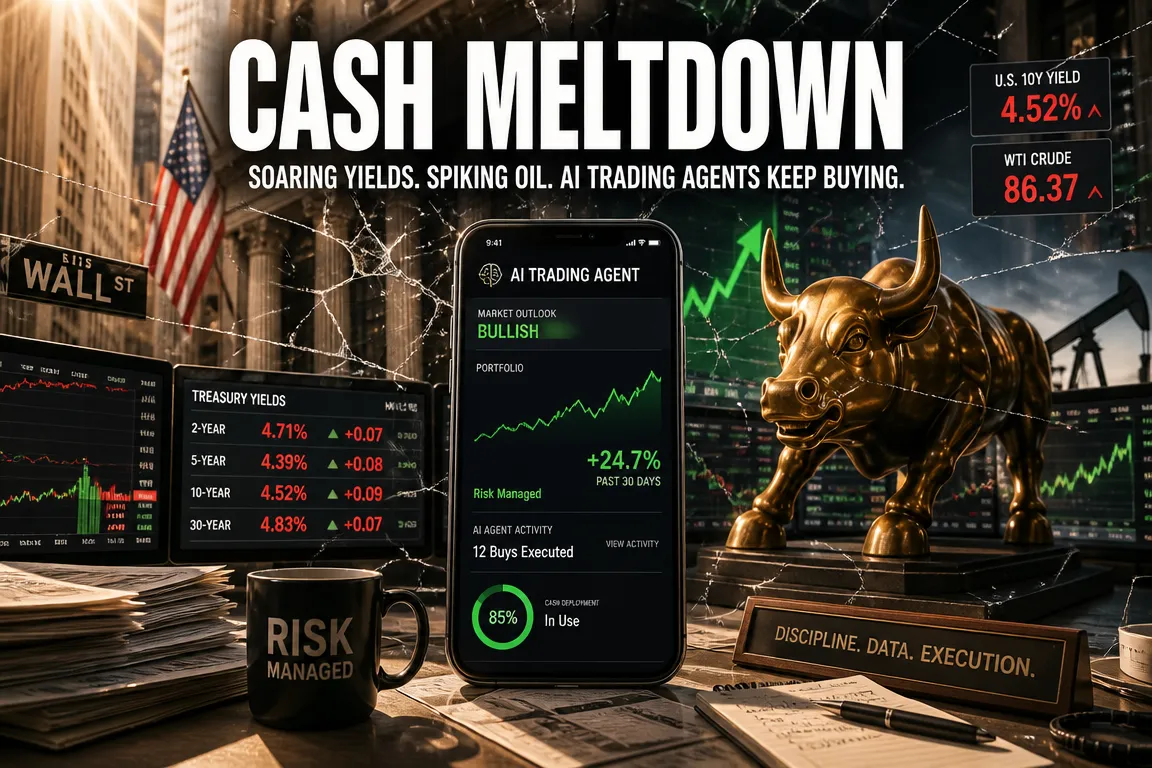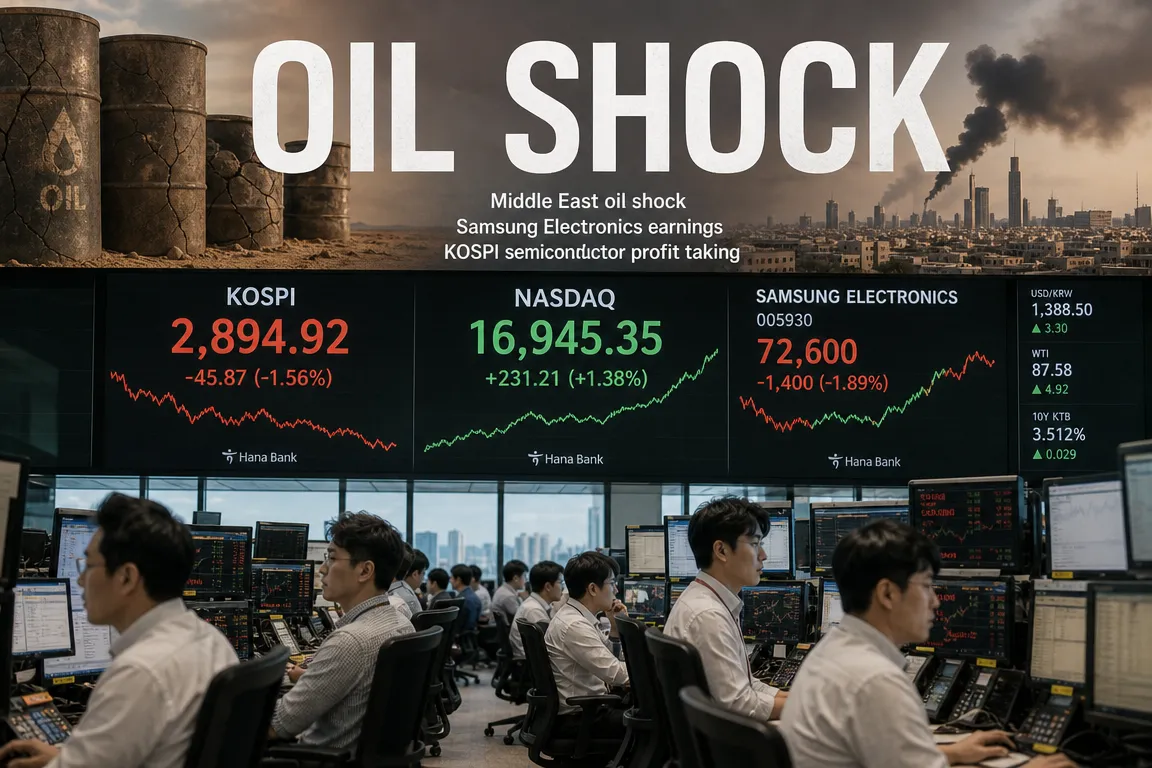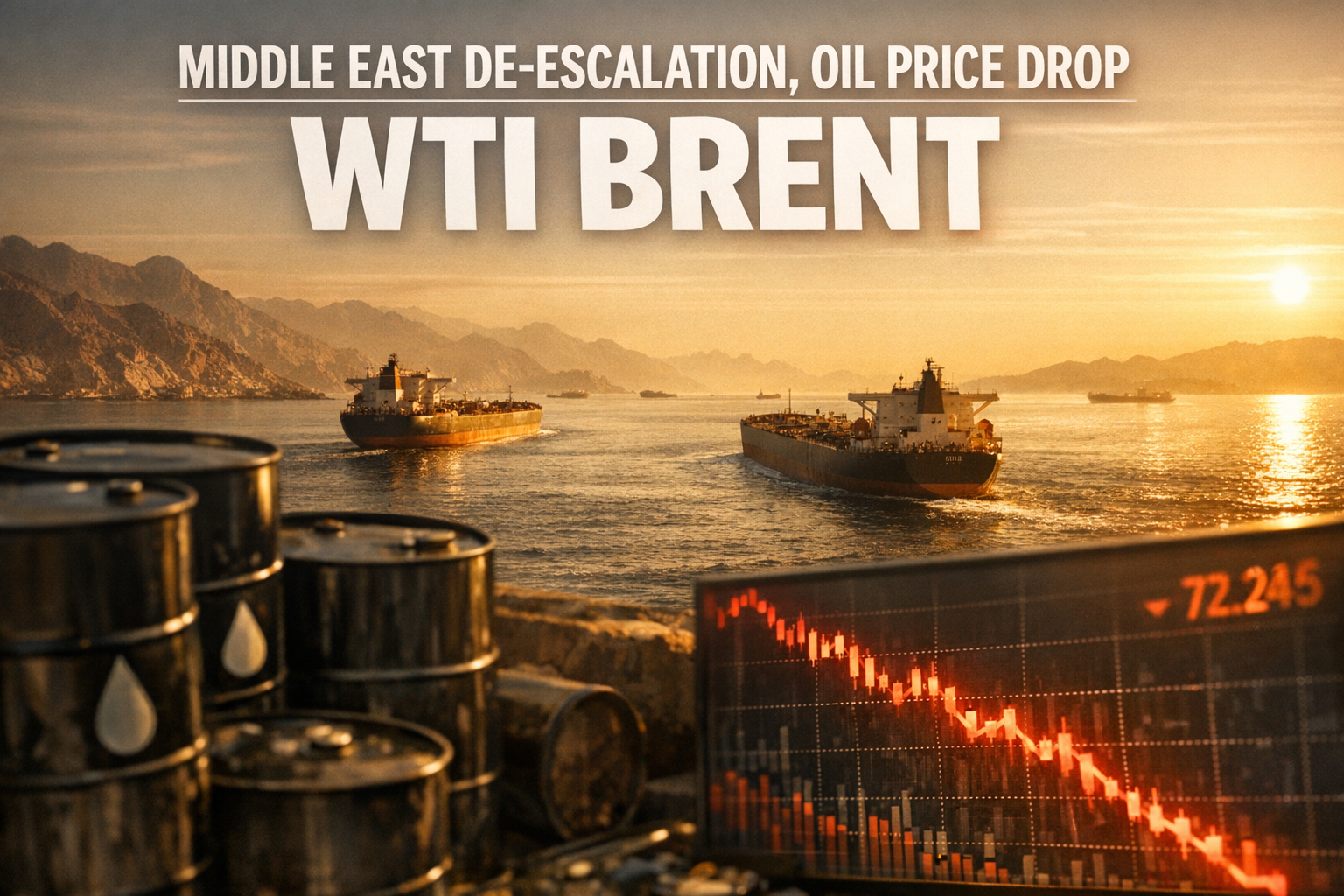
● Oil Crash, War Risk Eases, AI Shakeup
Strait of Hormuz, Oil Price Pullback, and AI Software Restructuring: Why Markets Are Pricing a Higher Probability of De-escalation
This move is not explained by a single Middle East headline.
This report consolidates: the Strait of Hormuz “open passage” signal; the implications of WTI and Brent declines for global inflation; the rebound in US risk appetite; the core of the “data center capex bubble” debate; and why Anthropic’s new Claude release is pressuring the SaaS landscape.
Key points often missed elsewhere are addressed explicitly: (i) diplomatic signaling can matter more than immediate vessel normalization, (ii) lower oil prices directly ease valuation pressure on growth equities via rates, and (iii) the conditions under which software companies remain defensible in an AI-driven market.
1. One-line market summary: Pricing is shifting from escalation risk to a higher probability of a negotiated end-state
The dominant market interpretation is that the probability of a ceasefire and negotiations has increased relative to further escalation.
This view was first expressed in crude:
- WTI fell toward the low-80s.
- Brent eased into the high-80s.
Equities moved in the same direction:
- Nasdaq, Dow, S&P 500, and Russell broadly advanced.
- Energy and utilities underperformed.
This pattern is consistent with a reduction in the “war premium.”
2. Why the Strait of Hormuz “open passage” signal mattered
The critical development was an Iranian statement indicating an intention to keep the Strait of Hormuz fully open during a ceasefire period.
As a central global oil-shipping chokepoint, Hormuz affects not only regional risk but global supply expectations and crude pricing.
2-1. Markets prioritize “intent” before “actual vessel traffic”
A statement does not immediately restore normal shipping. Carriers and insurers typically require high confidence in safety before fully resuming operations.
Markets reacted because the statement was interpreted as a diplomatic signal: willingness to keep negotiation channels open. Directional de-escalation signaling can reprice risk faster than physical logistics normalization.
2-2. Why Hormuz is a barometer for the global macro outlook
Disruption risk in Hormuz transmits through:
- shipping costs,
- insurance premiums,
- broader commodity price stability.
Accordingly, Hormuz headlines affect inflation expectations, rate paths, equity risk premia, and FX.
3. Why strong Trump messaging coincided with market relief
Messaging from Trump’s side was notably hawkish:
- continued US blockade posture,
- demands tied to Iran’s nuclear program,
- references to frozen funds.
Despite the tone, markets treated it less as an imminent escalation signal and more as endgame negotiation pressure aimed at improving bargaining leverage.
3-1. Markets focused on the existence of negotiations, not rhetorical intensity
Pricing reflected whether dialogue remained active. Even aggressive rhetoric is often discounted if negotiations appear ongoing, shifting risk into a “manageable” category.
Trump’s language was interpreted as consistent with a late-stage bargaining posture that still implies a potential pathway to closure.
3-2. Blockade pressure may have raised Iran’s incentives to negotiate
If maritime routes are credibly constrained, Iran’s economic exposure increases, including risks to oil export flows and FX liquidity, potentially reducing incentives for prolonged conflict. This is best understood through energy exports and cash-flow constraints rather than purely military balance.
4. Why the oil pullback mattered more than the geopolitical headline: direct linkage to rates and equity multiples
For investors, crude matters because it anchors inflation expectations, which then informs Fed policy expectations and rate markets.
4-1. Implications of WTI moving into the low-80s
A potential test below 80 would indicate markets are materially lowering the probability of a near-term supply shock.
This matters because crude had remained sticky even during equity strength, sustaining concerns about renewed inflation pressure. The latest decline reduced that constraint.
The rally therefore reflects both:
- lower geopolitical risk premia, and
- easing inflation/rates pressure.
4-2. Why this is particularly supportive for tech and growth
Lower oil prices reduce inflation risk and can ease upward pressure on long-duration yields. That benefits long-duration equities such as technology, AI, and growth.
Nasdaq leadership is consistent with this channel: de-escalation is not only an energy stability input, but also a valuation relief factor for US equities.
5. Sector reactions clarify the narrative
A broad advance alongside relative weakness in energy and utilities is informative.
5-1. Energy weakness = war premium compression
Energy equities are direct beneficiaries of higher crude. Underperformance indicates markets are reversing supply-disruption pricing.
5-2. Utilities weakness = reduced defensive positioning
Utilities typically trade as defensives. Underperformance alongside risk assets suggests a shift from “defense” to “risk-on.”
5-3. Breadth strength = more than event-driven short covering
Broad participation suggests a more general reduction in perceived risk premia rather than a narrow technical rebound.
6. Is the conflict ending: practical checkpoints
Current pricing is more consistent with de-escalation than with expansion, but confirmation remains incomplete.
6-1. Positive signals
- Iran signaled negotiation openness.
- The US retains incentives to pursue a negotiated path.
- Crude is declining, consistent with reduced supply-risk pricing.
- Risk assets have begun to reflect this scenario.
6-2. Remaining variables
- Israel-related developments can introduce abrupt regime shifts.
- Actual normalization of shipping operations may lag political statements.
- The durability and intent of US pressure (negotiation leverage vs. preparation for further action) remains a key determinant.
7. Data center investment: bubble debate looks different on a GDP-adjusted basis
A second key theme is US data center capex. Market discussion increasingly frames AI infrastructure spending as overheated.
GDP-adjusted context complicates a simple “bubble” conclusion.
7-1. Absolute dollars look large; scale-adjusted comparisons matter
Nominal investment is substantial, but the US economic base is larger than in prior cycles, making direct dollar comparisons potentially misleading.
Relative to historical mega-projects (e.g., rail buildouts, the Manhattan Project, the Apollo program), capex intensity measured against GDP does not clearly indicate an extreme outlier.
7-2. AI infrastructure may be productivity infrastructure, not a transient theme
While often compared to dot-com overinvestment, AI infrastructure may resemble power, rail, and communications networks that enable long-run productivity gains.
If so, current capex may represent enabling investment rather than purely speculative excess.
7-3. Returns will likely diverge meaningfully across subsectors
Infrastructure necessity does not imply uniform equity upside.
Across power, semiconductors, networking, cooling, data center REITs, and hyperscalers, unit economics and pricing power can differ materially. The trade is shifting from broad thematic exposure toward cash-flow durability and pricing power.
8. Anthropic’s new Claude release: why SaaS is being repriced
The relevant signal was not merely a product launch, but growing market concern that foundation models are absorbing software functionality.
8-1. Why design-tool equities reacted immediately
The reaction reflects expectations that generative AI is moving beyond assistive features into core workflows: app/web design, prototyping, and UI construction.
8-2. Why SaaS sells off in “baskets”
In the short run, markets do not finely segment winners and losers. If AI threatens a category’s core functions, multiples compress broadly first; fundamentals are assessed later. Even strong operators can be affected initially.
8-3. Long-term survivability conditions for SaaS
Not all SaaS is equally exposed. Higher-resilience profiles typically include:
- proprietary data advantages,
- deep embedding in customer workflows,
- domain-specific know-how and strong customer lock-in.
Conversely, products centered on commoditizable, general-purpose functionality face faster value dilution.
9. Most important points frequently omitted in mainstream coverage
9-1. The key de-escalation metric is energy flow normalization expectations, not battlefield headlines
Markets focus on whether energy logistics can normalize. The crude decline suggests a reassessment of supply risk rather than a simple relief rally.
9-2. Aggressive rhetoric can be consistent with late-stage negotiation patterns
Strong language can function as leverage. Overreading rhetoric as escalation can invert the market’s interpretation.
9-3. The core of the data center debate is productivity transition, not only bubble risk
The strategic question is whether AI capex reshapes productivity, automation, and margin structures over time.
9-4. AI is moving from augmenting software to substituting software functions
Market repricing reflects the risk that foundation models absorb core SaaS features. Screening may shift from “AI beneficiaries” to “low AI-substitution risk” franchises.
10. Investor checklist
10-1. Macro checkpoints
- Whether WTI moves sustainably below 80
- Whether Brent continues to stabilize lower
- Whether Middle East shipping rates and insurance premiums normalize
- Whether US long-duration yields respond to crude stabilization
10-2. Equity market checkpoints
- Whether Nasdaq leadership is a one-off bounce or a renewed trend
- Whether energy underperformance persists
- Whether semis, cloud, and data center exposures regain leadership
- Whether SaaS multiple compression deepens
10-3. AI industry checkpoints
- The pace at which Anthropic, OpenAI, and Google vertically integrate software functions
- Substitution speed across design, coding, customer support, and sales automation
- Whether defensibility concentrates in firms with proprietary data and workflow control
11. Conclusion: Markets are simultaneously repricing de-escalation risk and AI-driven software restructuring
Two forces are being priced:1) a higher probability of Middle East risk moderation and a negotiated path, and2) rapid structural change in software economics driven by AI.
The first transmits through crude, inflation expectations, rates, and US equity valuations. The second is redefining likely winners and losers across the software stack.
< Summary >
The Strait of Hormuz “open passage” signal and an improving negotiation backdrop drove a rapid repricing of Middle East risk.
Declines in WTI and Brent reduce inflation pressure and are supportive for US risk assets via the rates channel.
Trump’s hawkish messaging was interpreted more as negotiation leverage than as an immediate escalation trigger; markets prioritized the continuation of dialogue.
Data center capex appears less extreme on a GDP-adjusted basis; the more material question is long-run productivity impact rather than near-term overheating alone.
Anthropic’s release reinforced the view that AI is moving from augmenting SaaS to substituting core software functions, increasing dispersion between defensible and commoditizable software models.
Future positioning likely depends on oil stability and the pace of AI-driven restructuring across the software ecosystem.
[Related Posts…]
International oil pullback and equity rebound: key items to monitor now
https://NextGenInsight.net?s=oil
AI data center investment and SaaS restructuring: changes likely through 2026
https://NextGenInsight.net?s=AI
*Source: [ 내일은 투자왕 – 김단테 ]
– 이제는 정말 전쟁의 끝이 보이는 진짜 이유
● Oil Crash, Risk Eases, Stocks Shift
Brent Crude Down 10% as Strait of Hormuz Risk Eases: Market Focus Shifts from “War” to “Rates, Earnings, and AI”
The key takeaway is not the oil price decline itself. With perceived transit risk through the Strait of Hormuz easing, the market is repricing energy, inflation, rate-cut expectations, U.S. equity risk appetite, and the forward path for AI-linked growth equities.
This note consolidates: (i) why the move was largely pre-priced, (ii) sector-level winners and losers, (iii) the post-Iran narrative in U.S. equities, and (iv) under-covered variables such as war-risk insurance premia, freight rates, and changes in the implied Fed policy path.
1. What Happened Today: Oil Selloff and Equity Market Reaction
Global markets opened with a risk-on tone. The most pronounced move was in crude:
Iran indicated that, during the ceasefire period, it would fully allow commercial vessels to transit the Strait of Hormuz via designated routes, reducing near-term supply-disruption concerns. President Trump also made remarks consistent with the strait being effectively open.
Crude fell more than 10% to the low-80s, and the VIX declined. Markets interpreted this as a reduction in tail-risk scenarios.
2. Why Oil Reacted So Strongly: The Role of the Strait of Hormuz
The Strait of Hormuz is a critical global choke point for crude shipments. When disruption risk rises, oil futures, shipping markets, marine insurance pricing, and inflation expectations tend to reprice simultaneously.
The selloff primarily reflected a rapid unwind of the geopolitical risk premium rather than a measurable improvement in physical supply.
3. Headline Summary: Key Points Priced by Markets
- Iran stated that commercial vessels would be allowed to transit the Strait of Hormuz via designated routes during the ceasefire period
- President Trump made comments broadly confirming an “open” status
- Crude fell more than 10%, returning part of the geopolitical risk premium
- Energy equities weakened; broader risk appetite improved
- Expectations for at least one Fed rate cut later this year modestly recovered
- Equity upside was limited, consistent with substantial pre-pricing
- Market focus is likely to rotate from Middle East risk toward earnings, rates, and AI-related growth catalysts
4. Why Equities Did Not Surge: A Market That Had Already Priced In the News
The equity response was relatively contained. This is consistent with markets moving ahead of headlines: probability-weighted easing of Middle East risk had been partially reflected in futures and equities before official confirmation. The current move resembles validation rather than initial repricing.
5. Sector Implications: Beneficiaries and Headwinds
5-1. Energy
Energy was the most directly pressured. Lower crude prices can weaken near-term sentiment for integrated and upstream producers, and can trigger profit-taking in names positioned for higher oil.
5-2. Fertilizers and Commodities-Linked Equities
Fertilizer names such as CF Industries declined on similar logic. If energy inputs and commodity cost pressures ease, segments that had benefited from cost inflation or supply-risk narratives may face mean reversion.
5-3. Airlines, Transportation, and Consumer
Lower fuel costs are generally supportive for airlines, logistics, transportation, and select consumer categories. Reduced inflation pressure can also improve real purchasing power and demand conditions. Positioning may shift from “conflict beneficiaries” toward margin-expansion and earnings-upside exposures.
5-4. Technology and AI-Linked Growth
The oil-driven disinflation impulse can be constructive for rate-sensitive growth equities. If inflation expectations fall, discount-rate pressure may ease, improving conditions for higher-duration assets, including mega-cap technology and AI-linked platforms. While triggered by energy headlines, the transmission mechanism is primarily macro via valuation.
6. Rates and the Fed: Why the Oil Move Matters
The main linkage is inflation. Lower crude can reduce near-term energy-price pressure and contribute to softer CPI trajectories at the margin.
Markets still assign meaningful probability to a prolonged hold, but by year-end the pricing of “hold vs. cut” has moved closer, implying reduced fear of renewed tightening. For Korean investors, shifts in the U.S. policy path can transmit to USD/KRW, foreign flows, and local equity volatility.
7. Core Point: The Market Narrative Is Rotating
The significance is less the event itself than the shift in what drives prices. As Middle East tail risk fades from the center of market attention, focus may move back to micro fundamentals:
- Which companies can deliver earnings and cash flow
- Which AI spend is translating into profits
- Which sectors benefit from both oil disinflation and rate stability
- Whether Nasdaq-led growth leadership can reassert
8. Under-Covered Variables That Matter
8-1. Beyond “Open Strait”: Normalization of the Insurance Market
Even if the route is nominally open, safe passage depends on normalization in war-risk insurance premia and marine freight rates. The key indicators are not only crude prices, but also insurance pricing, freight indices, and the pace of throughput normalization.
8-2. Oil May Be Volatile; Risk Sentiment Shifts Can Persist
Crude can reprice quickly. However, once investors perceive that worst-case outcomes are less likely, capital can rotate more durably into higher-beta and higher-duration assets. Beneficiaries may extend beyond oil consumers to semiconductors, cloud, and the broader generative AI ecosystem via lower risk premia.
8-3. As Geopolitics Fades, Earnings Dispersion Typically Rises
During high-macro-risk periods, weak fundamentals can be masked. As uncertainty declines, performance tends to differentiate more by company-level execution. “Theme beneficiaries” may underperform “earnings beneficiaries.”
9. Global Macro Interpretation: Why This Matters
Three implications:
First, it reduces the probability of a renewed inflation impulse, marginally expanding central-bank policy flexibility.
Second, it can stabilize global supply-chain sentiment as Middle East shipping risk moderates.
Third, it increases the likelihood of a style rotation back toward growth, particularly in Nasdaq and AI infrastructure exposures that are sensitive to rates and risk premia.
10. Why This Must Be Framed Through the AI Trend
Separating macro and AI risks missing the transmission channel. Lower oil and reduced geopolitical risk can improve the financial conditions underpinning the AI value chain.
10-1. AI Infrastructure Is Capital-Cost Sensitive
Data centers, GPUs, power infrastructure, and cloud capacity expansions require heavy capex. Lower rates and tighter credit spreads improve project economics and investment durability.
10-2. Large-Cap Tech Benefits from Reduced Uncertainty
When geopolitical risk and oil volatility decline, discount rates and risk premia can compress, a relative positive for platform-scale technology and AI leaders.
10-3. The Definition of “AI Winners” Is Tightening
Markets may increasingly differentiate between companies “exposed to AI” and those demonstrating measurable productivity gains, semiconductor demand pull-through, and cloud revenue growth. The theme is likely to shift toward verification via results.
11. Investor Checklist: What to Monitor Next
- Whether the oil move is a one-off repricing or evolves into a trend
- Whether war-risk insurance premia and freight rates normalize in practice
- Whether Fed cut expectations continue to firm
- Evidence of sector rotation from energy into technology
- Whether U.S. equities respond more to earnings and AI narratives than geopolitics
- Whether Korea sees stronger intra-market dispersion across semiconductors, batteries, transportation, and airlines
12. One-Line Summary
The 10% oil decline is not merely an energy headline; it signals a potential end to a Middle East fear regime and reopens channels for disinflation, shifts in rate expectations, U.S. equity style rotation, and repricing of AI-linked growth.
13. Practical Implications
Market attention is shifting from “Is the conflict contained?” to “Where does capital rotate next?” Focus is likely to move toward the U.S. earnings season, Fed communications, Nasdaq leadership, and AI investments translating into revenue and margin expansion.
< Summary >
Strait of Hormuz transit headlines drove a >10% drop in crude as markets interpreted reduced Middle East risk. Energy equities softened, while disinflation and improved rate expectations may be supportive for technology and AI-linked growth.
The key variables are not only oil prices but also normalization in marine insurance and freight. Market drivers may shift from geopolitics to earnings, rates, and AI.
[Related Articles…]
- https://NextGenInsight.net?s=international%20oil%20prices
- https://NextGenInsight.net?s=AI
*Source: [ Maeil Business Newspaper ]
– [속보] 국제유가 단숨에 10% 급락. 이란발 증시는 끝났다 I 홍장원의 불앤베어