● Tesla-SpaceX Shockwave, Musk SEC Twist, Rate Fear Crash
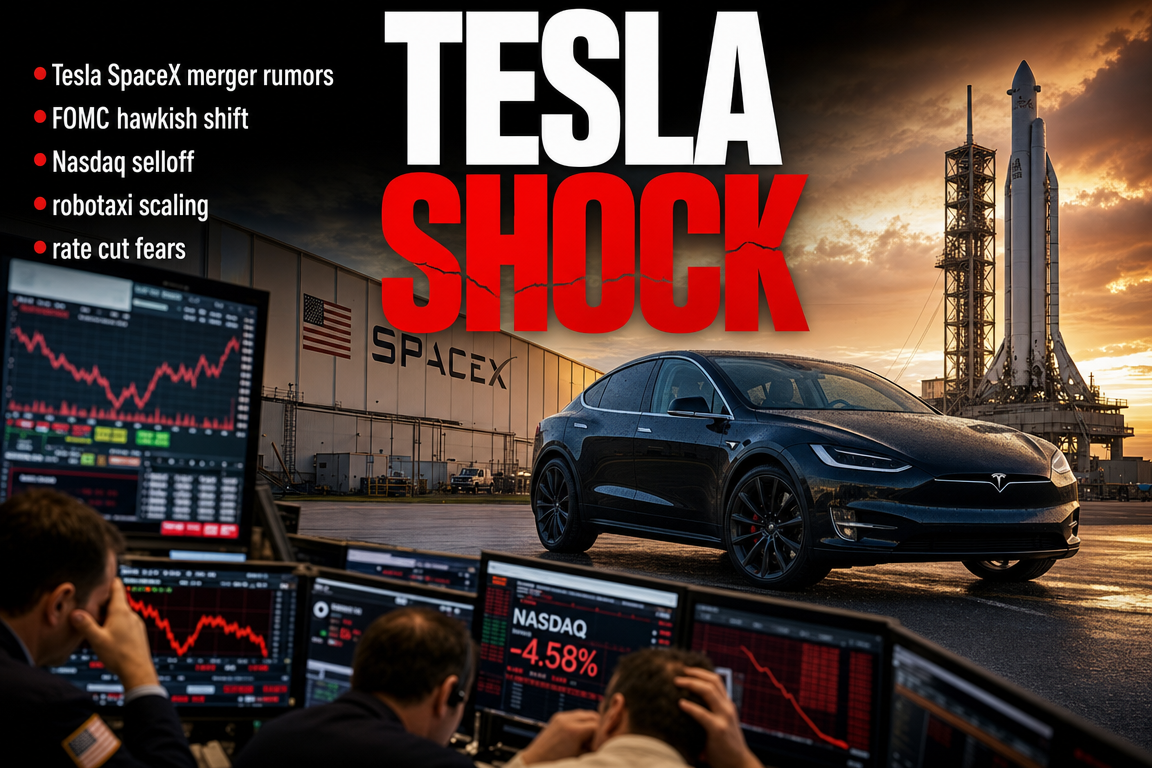
SpaceX Market Capitalization Surge, Now 1.7x Tesla: Merger Math and the Robotaxi Landscape to Watch With Tesla at $396
The key issue is not simply that “Tesla fell today.”
The core points are:
First, why shifts in the Fed’s rate stance translate directly into valuation pressure for growth equities such as Tesla.
Second, why Elon Musk’s SEC filing is not necessarily a “sell signal,” but may instead provide insight into changes in ownership structure.
Third, why a SpaceX–Tesla merger scenario continues to circulate beyond rumor, given implications for capital markets, corporate valuation, and the reshaping of future industries.
In addition, why the apparent gap between Texas robotaxi registrations (69 vehicles) and Waymo’s (620 vehicles) can be misread, and how Tesla may be positioning on price competitiveness.
This report consolidates U.S. market dynamics, rates and inflation, Tesla’s share price, SpaceX valuation, robotaxi scaling strategy, and key points often overlooked by the market.
1. Today’s Market: Why Tesla and Tech Were Pressured Simultaneously
Tesla closed at $396.38, down approximately 2.05%.
Private-market sentiment around SpaceX also weakened, while the S&P 500, Nasdaq, and Dow closed broadly lower.
This indicates a risk-off move tied primarily to interest-rate sensitivity rather than a Tesla-only issue.
1-1. More Important Than a Hold: A Shift in the Forward Path
The policy rate decision was a hold.
Market focus centered on forward guidance. Interpretations of Fed officials’ projections suggested that the probability of an additional hike later in the year increased, raising pressure across growth equities.
This is particularly negative for high-duration names such as Tesla.
1-2. Why Higher-Rate Risk Impacts Tesla More
Tesla’s valuation reflects not only current earnings but also expectations for future cash flows and future industry positioning.
Higher rates reduce the present value of distant cash flows.
In practical terms, markets discount “future large profits” more aggressively when rates rise, directly compressing valuation multiples.
1-3. Signals From Re-Accelerating Inflation
Recent readings have been interpreted as renewed inflation pressure, increasing the likelihood the Fed remains restrictive for longer.
External factors such as higher energy prices add to the risk.
In this environment, sectors with significant embedded future expectations—EVs, AI, robotics, and autonomy—can exhibit outsized volatility.
Tesla’s price action should therefore be viewed as the intersection of company-specific narratives and macro-driven multiple compression.
2. Elon Musk SEC Filing: Selling, or Ownership Reconfiguration?
This is a frequent source of misinterpretation.
Per SEC disclosures, Musk exercised a portion of stock options granted under prior compensation arrangements.
The exercise price was significantly below the prevailing market price, and share dispositions occurred largely for withholding/tax settlement purposes.
The key point: this does not necessarily represent open-market liquidation for cash.
2-1. Simplified Mechanics
- Exercise previously granted, low-strike options.
- Acquire Tesla shares at a low cost basis.
- Settle resulting tax obligations via withholding or related share disposition.
Interpreting this process as unequivocal “Musk sold” can distort the signal.
2-2. What Markets Should Track
The primary implication is potential change in ownership structure rather than cash-out behavior.
In some cases, post-exercise net ownership can increase.
This can indicate sustained or increased alignment with Tesla rather than reduced exposure.
2-3. Why This Connects to Merger Scenarios
Musk’s ownership and control structure is a critical input to any strategic transaction between Tesla and SpaceX, whether merger, share exchange, asset integration, or other forms of combination.
Voting control and governance design are central constraints.
Accordingly, the SEC filing can be viewed as a data point relevant to potential capital-structure evolution.
3. If SpaceX Becomes Larger Than Tesla, Is That Necessarily Negative for Tesla Shareholders?
This is often misunderstood.
A common view is: “If SpaceX’s valuation rises further, Tesla shareholders become disadvantaged in any future merger.”
Intuitively plausible, but M&A economics can differ.
3-1. Why Simple Ratio Thinking Appears Adverse
Example assumption: SpaceX at $2.5T and Tesla at $1.5T.
A pro forma ownership split based purely on valuation would allocate a larger share to SpaceX holders, which can appear unfavorable to Tesla holders.
3-2. Negotiated Terms Can Include a Premium
Large-cap combinations rarely settle at a simple market-cap sum.
To secure shareholder approval, deals often include a premium to one party.
A larger acquirer can sometimes bear a higher premium more easily.
Under this framing, a higher SpaceX valuation could increase flexibility in exchange terms.
3-3. Why “50/50” Structures Are Repeated in Market Narratives
Some bullish scenarios frame the transaction as an “equivalent strategic combination.”
If a combined entity exceeds $4T in implied value and ownership approaches 50/50, Tesla shareholders could realize an effective premium relative to Tesla’s standalone valuation.
The thesis is that integration synergies and strategic positioning may justify a re-rating beyond spot market capitalization.
3-4. Key Practical Constraints
No official transaction has been announced.
Execution would require alignment across legal and regulatory considerations, governance and control, financing, shareholder approvals, private-asset valuation methodology, and tax structuring.
SpaceX also involves sensitive aerospace assets, while Tesla is a public large-cap issuer.
This is not a discretionary decision based solely on perceived strategic fit.
4. July–August Merger Timing Claims: Why the Window Is Repeated
Some market narratives cite late July through early August as a potential window for major announcements.
This is more scenario-driven than evidence-based and appears linked to capital-markets calendar logic.
4-1. Index Inclusion Can Mechanically Distort Demand
Large IPOs or newly eligible names entering major indices can trigger forced buying from ETFs and passive mandates.
In such periods, flows can move price independent of fundamentals.
If SpaceX were near peak flow conditions, perceived negotiating leverage could improve.
4-2. Lock-Up Expiration Windows Are Typical Event Periods
Approaching lock-up expirations raise concerns about early-investor selling.
Companies often time favorable disclosures ahead of such windows to stabilize sentiment.
This dynamic is frequently cited in timing narratives.
4-3. Transaction Structure Matters More Than Timing
The decisive factors would be:
- exchange ratio and implied premium,
- changes in Musk’s control and governance,
- value capture for existing Tesla shareholders, and
- coherent post-combination industrial logic.
Date speculation is less relevant than terms and structure.
5. Robotaxi: 69 Vehicles vs. Waymo 620 Vehicles—What Headline Numbers Miss
On the surface, Tesla appears significantly behind.
Texas registrations are cited at approximately 69 vehicles versus roughly 620 for Waymo.
However, direct comparison is not definitive.
5-1. More Important Than Fleet Size: The Scaling Model
Waymo’s model is closer to centralized fleet ownership and operations.
Tesla’s long-term concept includes owner-vehicle participation, conversion of consumer vehicles into network assets, and expansion via dedicated platform vehicles.
This implies that initial fleet count may be less informative than the distribution model.
5-2. Tesla’s Potential Trajectory: Network Step-Change vs. Linear Growth
A 69-vehicle footprint can reflect a testing and operational-stability phase.
If FSD capability, regulatory approvals, insurance frameworks, and dispatch/operations platforms mature, growth could accelerate non-linearly.
If an installed base can be activated into a network, scaling dynamics differ materially from fleet-only competitors.
5-3. Price Competitiveness as a Strategic Lever
Some analyses indicate Tesla could price robotaxi rides below competing services.
If pricing is approximately 20% lower, consumer adoption could shift meaningfully.
Robotaxi is ultimately a daily transportation service; price can shape habitual usage and market share.
6. Why the Market Still Lacks Conviction on Tesla Robotaxi
The limiting factor is not only technology, but trust.
6-1. Consumer Trust Remains a Barrier
Many consumers do not fully trust autonomous operation.
Demonstrations and scaled commercial reliability are not equivalent.
Safety perception tends to dominate adoption.
6-2. Robotaxi Is Operationally a Scaled Service Business
AI, sensors, compute, and data matter, but outcomes are determined by:
- accident frequency,
- insurance cost,
- utilization and uptime,
- maintenance economics,
- customer support, and
- regulatory compliance.
Robotaxi is best understood as transportation infrastructure, not a product demo.
Operational advantage must be demonstrated alongside technical capability.
6-3. Purpose-Built Vehicles and Owner Participation as Potential Inflection Points
If a dedicated unmanned vehicle platform and owner-vehicle network participation become viable, Tesla could be re-rated from automaker to mobility platform.
This is a central reason Tesla continues to trade with an AI- and platform-linked premium.
7. Goldman Sachs Q2 Delivery Estimate Increase: Why the Core Business Still Matters
Merger narratives and robotaxi visibility can overshadow the fundamentals.
Tesla’s current valuation is still anchored in vehicle sales.
Some institutions have raised Q2 delivery estimates, citing potential outperformance versus consensus.
7-1. Weak U.S. Demand Partly Offset by Overseas Strength
Strength across certain international markets has been cited as offsetting U.S. softness.
This matters tactically because AI and robotaxi narratives require earnings durability to sustain valuation premiums.
7-2. Tesla Trades on a Dual Framework
Tesla is:
- an automotive manufacturer, and
- an autonomy/AI/robotics/energy/software platform candidate.
During earnings cycles, it can trade more like a manufacturer; during technology catalysts, it can trade more like an AI-linked name.
Understanding this duality is essential for interpreting Tesla at $396.
8. How to Frame Tesla at $396
A simple “cheap vs. expensive” framing is insufficient.
A more actionable approach is to segment the scenarios embedded in price.
8-1. Bear Case
- Restrictive Fed stance persists.
- Inflation remains elevated.
- Robotaxi commercialization is delayed.
- EV demand recovery is slow.
In this case, valuation can remain constrained.
8-2. Base Case
- Deliveries stabilize.
- FSD and robotaxi progress gradually.
- Merger talk remains speculative while execution focuses on standalone growth.
Price action may remain range-bound between macro pressure and incremental operating progress.
8-3. Bull Case
- Robotaxi price advantage translates into sustained demand.
- FSD reliability improves rapidly.
- Optimus, energy storage, and software margin expansion become more visible.
- Strategic combination expectations with SpaceX amplify platform valuation.
Under this scenario, Tesla could be priced less as an EV manufacturer and more as a next-generation platform.
9. Key Points (News-Style Summary)
- U.S. equities reacted more to the Fed’s hawkish forward path than to the rate hold itself.
- Tesla’s growth-equity profile makes it highly sensitive to rates and inflation via valuation compression.
- Musk’s SEC filing appears driven primarily by option exercise and tax settlement rather than discretionary open-market selling.
- A higher SpaceX valuation is not necessarily negative for Tesla holders; it may expand room for merger-related premium structures.
- July–August timing narratives cite index/flow dynamics and lock-up windows, but lack official support.
- Robotaxi fleet counts can be misleading; scaling architecture differs materially by operator.
- Price competitiveness could be a meaningful adoption lever for Tesla’s robotaxi strategy.
- The largest obstacles for autonomy commercialization are trust, regulation, and operational reliability, not only model capability.
10. Most Material Points Often Underemphasized
The central issue is not whether a merger occurs.
10-1. Markets Are Assigning Value to an Integrated “Musk Ecosystem” Supply Chain
Tesla, SpaceX, xAI, robotics, satellite connectivity, energy, and autonomy are increasingly viewed as interconnected.
Even without a formal merger, stronger perceived linkages can influence Tesla’s valuation framework.
10-2. The Core Robotaxi KPI Is Active Network Conversion Rate, Not Current Fleet Count
The key variable is not 69 vs. 620.
It is how many vehicles can transition into an actively utilized robotaxi network.
If conversion is high, Tesla’s scaling curve could diverge sharply from traditional automakers and fleet-only operators.
10-3. Higher Rates Are a Headwind and a Competitive Filter
High rates compress growth valuations.
They also weaken competitors with limited cash flow and constrained financing access.
Firms with scale, brand strength, and production capability can consolidate position during industry restructuring.
From this angle, Tesla could remain central to long-term industry reallocation despite near-term volatility.
11. Investor Checklist Questions
1) Is Tesla primarily an EV manufacturer, or an AI and robotaxi platform?
2) Is SpaceX linkage near-term noise, or a plausible long-term capital-structure path?
3) How much does the current U.S. rate regime cap Tesla’s valuation premium?
4) When does robotaxi adoption cross the trust and regulatory threshold?
Different answers imply materially different interpretations of the same $396 price level.
< Summary >
The immediate driver of Tesla’s decline was hawkish Fed signaling and inflation-related pressure.
Musk’s SEC filing is more consistent with option exercise and tax settlement than discretionary selling.
SpaceX valuation expansion is not automatically unfavorable for Tesla shareholders and may support merger-premium logic under certain structures.
In robotaxi, scaling architecture and pricing power may matter more than current registered fleet size.
Tesla continues to be valued on both auto fundamentals and potential re-rating as an AI, autonomy, and mobility platform.
[Related Articles…]
- Tesla robotaxi expansion: key variables investors are monitoring
- Rates and inflation: implications for growth-stock valuation
*Source: [ 오늘의 테슬라 뉴스 ]
– SpaceX 3일 만에 테슬라 1.7배 앞섰다 — 커질수록 테슬라 주주에게 유리한 합병 수학, $396 지금 어떻게?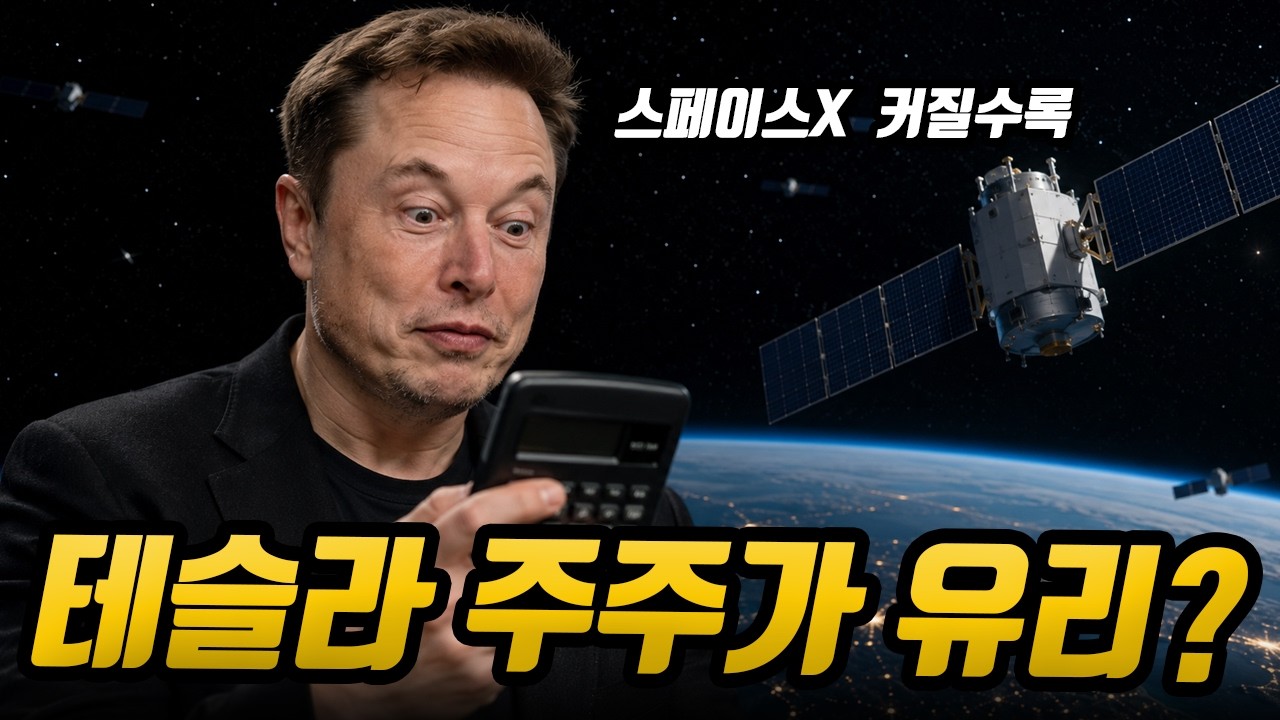
● Fed Shock, Nasdaq Slammed, 2026 Hike Fears
Reasons for the Nasdaq Sell-Off: How One FOMC Meeting Reset Market Sentiment — Kevin Warsh as a Variable and the Rising Probability of a 2026 Rate Hike
The primary surprise from this FOMC was not whether the policy rate was held or raised.
The key issue was that the first set of messages following a Fed chair transition ran counter to market expectations.
To understand the market’s sensitivity, it is necessary to connect the Nasdaq drawdown, shifts in the U.S. rate path, the Fed’s hawkish posture, valuation pressure on growth/technology, and potential spillovers into Korean equities.
This report summarizes the FOMC outcome, why Kevin Warsh-related communication was interpreted as a shock, expected transmission channels to the Nasdaq and KOSPI, and the most decision-relevant points that have received less attention in mainstream coverage.
Why Markets Broke Down After the FOMC: “Hawkish” Is the Core
The immediate driver of the Nasdaq’s sharp decline was the Fed’s hawkish signal.
Markets had positioned for the possibility that a new Fed chair would deliver a more dovish tone early in the tenure.
Expectations were reinforced by the perception that a chair nominated by Trump could lean more growth-friendly and be more tolerant of rate cuts.
The actual communication moved in the opposite direction.
Rather than accelerating the case for cuts, the messaging was interpreted as leaving the door open to further tightening if required.
This shifted risk pricing abruptly, with the most valuation-sensitive segment—Nasdaq growth and technology—selling off first and hardest.
Three Key Market Disappointments from This FOMC
1. No “easing tone” from the new Fed chair
The primary disappointment was communication.
Investors often expect an initial meeting under a new chair to minimize market disruption.
Instead, the messaging suggested a firmer policy stance than priced.
This undermined the assumption that rate pressure would ease within the year.
2. A stronger-than-expected dot plot
The dot plot indicated a trajectory consistent with the possibility of rate increases during 2026, which surprised markets.
Although the dot plot is sometimes treated as non-binding, it is widely used to infer internal policy bias.
The implication was that senior officials do not view inflation risk as fully resolved.
If growth remains resilient and inflation risks re-emerge, a definitive “end of tightening” is less certain.
3. Re-emergence of a rate regime most unfavorable to technology valuations
The Nasdaq is structurally rate-sensitive.
AI, semiconductors, and mega-cap technology have been priced on high expected future earnings.
When discount rates rise—or are expected to remain elevated—valuation compression risk increases disproportionately.
This meeting revived discount-rate concerns, explaining the Nasdaq’s underperformance versus broader U.S. equities.
Why the Nasdaq Moved the Most
U.S. rates and growth equities: the core linkage
Growth stocks are valued by discounting expected future cash flows.
Higher policy rates, or a higher expected terminal path, reduce the present value of those cash flows.
This increases the difficulty of sustaining premium valuations, making the Nasdaq especially reactive to rate-related news.
The stronger the AI rally, the larger the positioning unwind
AI and semiconductors have led global equity performance.
High expectations had already been priced in, increasing sensitivity to negative surprises.
This episode is better characterized as a repricing of the liquidity/discount-rate premium than a deterioration in the AI secular thesis.
The Kevin Warsh Variable: Why Sensitivity Increased
A new chair affects “policy credibility,” not only policy levels
A change in Fed leadership alters market assumptions about reaction functions, priorities between inflation and growth, and communication strategy.
The market takeaway was relatively clear:
“Political proximity does not imply immediate policy easing.”
In the near term, this can strengthen credibility around inflation vigilance, transmitting quickly into Treasury yields, the USD, and technology equity multiples.
A hawkish tone from a perceived pro-growth nominee increases expectation error
Markets are more destabilized by gaps between expectations and outcomes than by negative information itself.
If investors expected a more accommodative posture, a hawkish first message forces rapid repositioning.
This dynamic amplifies price moves, consistent with the magnitude of the Nasdaq decline.
Implications for Korean Equities: KOSPI Is Not Insulated
Nasdaq weakness transmits directly to Korean semiconductor risk
Korean equities are highly correlated with U.S. technology, particularly semiconductors.
Weakness in major U.S. technology names can pressure Samsung Electronics, SK hynix, and KOSDAQ AI-linked equities through risk sentiment and peer valuation resets.
Foreign investor flows are sensitive to U.S. yields and USD direction; a more hawkish Fed typically tightens financial conditions for emerging market assets.
KRW-USD and foreign flows are critical variables
Renewed attention to rate hikes supports USD strength.
A stronger USD can pressure the KRW, reducing the relative attractiveness of Korean equities for foreign investors.
KOSPI risk is therefore a function of both U.S. equity spillovers and FX-driven flow dynamics.
Key Takeaways (News-Style Summary)
Policy outcome
The principal shock was the forward policy bias rather than the current rate level.
Market reaction
Given its rate sensitivity, the Nasdaq reacted first and most forcefully.
Interpretation of core messaging
The new Fed chair did not validate easing expectations and was interpreted as leaving open the possibility of further hikes.
Dot plot implications
Signals consistent with potential 2026 hikes suggested continued internal concern about inflation risks.
Equity market impact
U.S. technology, semiconductors, and AI-related equities face increased probability of valuation compression.
Korea impact
KOSPI and KOSDAQ are exposed simultaneously to U.S. tech spillovers, USD strength, and foreign flow shifts.
Under-Discussed but Material Point
The core issue is not “whether rates rise,” but a shift in the Fed reaction function
Much coverage focuses on “hike risk” and “Nasdaq sell-off.”
More consequential is that the market’s assumed sensitivity of the Fed to incoming data has shifted.
Because markets price expectations ahead of decisions, a perception that the Fed will respond more aggressively to inflation data can move long-end yields and equity valuations even without an immediate policy change.
This implies higher volatility around CPI, employment, wage, and energy-price data.
The AI trend is intact; the “liquidity premium” is being repriced
A Nasdaq drawdown is often misread as a weakening of the AI thesis.
This episode aligns more closely with a reassessment of the monetary-policy environment.
AI semiconductors, cloud, data centers, and power infrastructure remain medium-to-long-term demand pillars.
The adjustment is primarily about how much valuation premium the market is willing to pay under tighter financial conditions.
Indicators and Market Variables to Monitor
1. U.S. CPI and PCE
A renewed rise in inflation would reinforce hawkish positioning.
Services inflation, housing-related components, and wage dynamics are particularly relevant.
2. Labor market cooling
If labor conditions remain strong, the Fed can justify maintaining restrictive policy for longer.
Key releases: unemployment rate, nonfarm payrolls, average hourly earnings.
3. U.S. Treasury yields
Bond markets often lead equity repricing.
Sustained increases in long-term yields would remain a headwind for growth equities.
4. DXY and KRW-USD
USD strength is typically negative for emerging market risk assets.
For Korea-focused investors, FX is a primary monitoring variable.
5. Big Tech earnings and guidance
Earnings strength can offset valuation pressure.
The market will focus on whether AI, semiconductor, and cloud leaders can convert expectations into measurable revenue and profit growth.
Investor Interpretation
Near-term: acknowledge higher volatility
This meeting re-established that rate risk is not fully priced out.
Both U.S. and global equities may remain vulnerable to policy-sensitive swings.
Medium-term: higher dependence on incoming data
Markets are likely to shift into a “data verification” regime.
Marginal upside surprises in inflation or employment may trigger outsized reactions.
Long-term: financing conditions matter more than narratives
AI adoption may continue, but equity performance will be increasingly determined by funding costs and cash-flow delivery.
Dispersion within AI-related equities is likely to increase between companies with durable earnings power and those reliant on narrative-driven multiples.
Conclusion: The Nasdaq Decline Reflects a Reset of Expectations, Not a Single-Event Pullback
This FOMC functioned as an expectation reset.
The new chair’s initial communication diverged from prior pricing, forcing investors to re-evaluate the U.S. rate path, inflation risk, technology valuations, and global risk appetite.
The Nasdaq sell-off was the first expression of that repricing. Going forward, sensitivity to incremental macro data is likely to remain elevated.
The key investment question is less “Is AI over?” and more “Which companies can sustain growth and deliver earnings under a higher-for-longer rate regime?”
< Summary >
The Nasdaq sell-off following this FOMC was primarily driven by unexpectedly hawkish communication from the new Fed chair.
Markets had priced a more accommodative tilt, but the meeting reintroduced hike risk and highlighted a dot-plot path consistent with potential tightening into 2026.
U.S. equities—especially technology and AI-linked names—faced renewed valuation pressure, while Korean equities may face additional stress via FX dynamics and foreign flows.
The underlying issue is not a breakdown of the AI secular trend, but a repricing of valuation and liquidity premia under tighter monetary conditions.
[Related Articles…]
- FOMC Volatility: Key Market Transmission Channels
- AI Valuations: Discount Rates, Earnings, and Repricing Risk
*Source: [ 내일은 투자왕 – 김단테 ]
– 나스닥에 새로운 저승사자가 찾아왔습니다. (FOMC 리뷰)