● Tesla Crash, 5B Deal Ignored
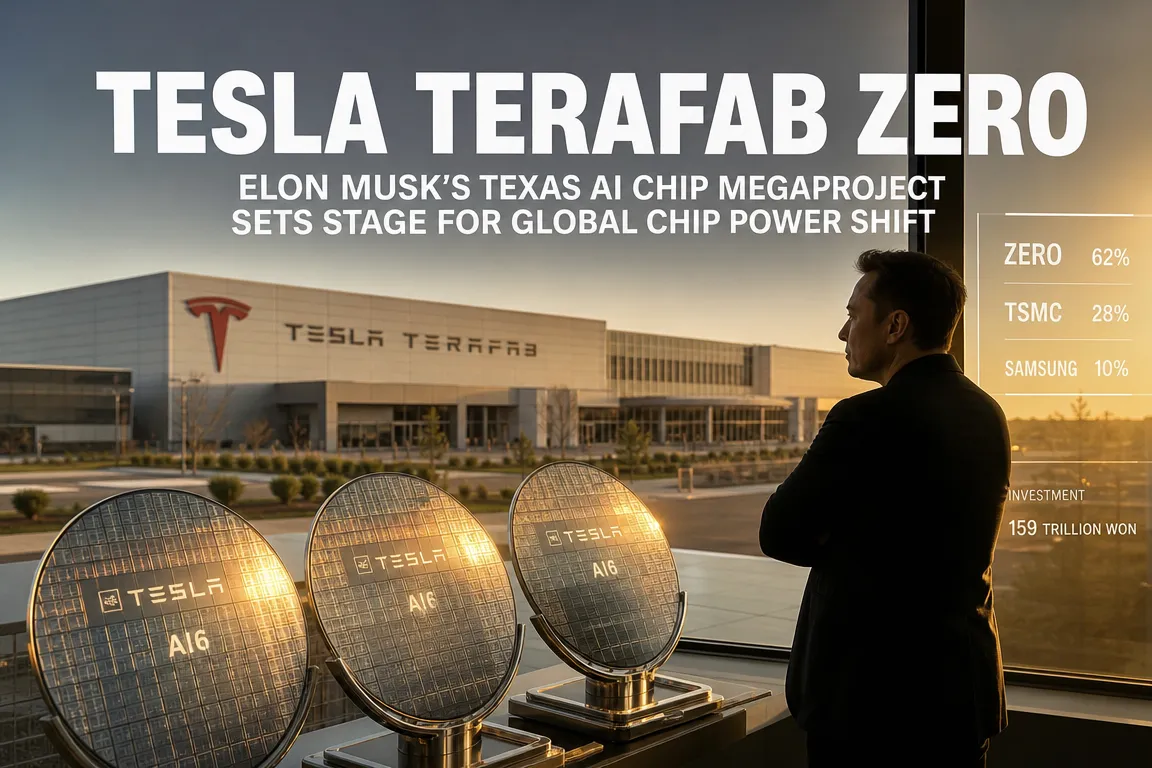
Tesla Shares Fall 5.79% as a $5 Billion Megapack Contract Is Overlooked
Tesla shares closed at $381.61, down 5.79% on the day.
At first glance, the move appeared to be a routine correction in technology stocks, but it came amid a broader Nasdaq selloff, FSD-related accident investigation risk, and uncertainty ahead of the company’s second-quarter delivery report.
More notably, Tesla’s energy business announced a European Megapack contract worth about $5 billion on the same day, yet the market showed little reaction.
This report summarizes the three main reasons behind Tesla’s decline, why Q2 delivery estimates range widely from 390,000 to 420,000 units, and why the energy storage business remains an important long-term valuation variable.
1. Why Tesla Shares Fell 5.79% in a Single Day
The decline reflected not only Tesla-specific issues but also a broader risk-off environment in the market.
The Nasdaq fell about 2.2% on the day, and large technology stocks that had benefited from the AI investment cycle faced pressure.
Higher rates, geopolitical risks, and short-term profit-taking combined to weigh on Tesla, a leading electric vehicle stock.
- The first factor was a broad correction in technology stocks.
Tesla continues to be valued as a growth stock and an AI-related stock.
As a result, when the Nasdaq weakens, market liquidity, rate expectations, and risk appetite tend to matter more than auto sales data. - The second factor was the Texas accident and FSD investigation risk.
Tesla stated that the driver fully depressed the accelerator at the time of the accident and that the pedal remained pressed after the collision.
However, the issue cannot be considered fully resolved until the NHTSA completes its independent review. - The third factor was uncertainty ahead of the Q2 delivery announcement.
With the second-quarter delivery report due in about nine days, Wall Street estimates currently range from the high 390,000s to 420,000 units.
Such a wide gap indicates that views on Tesla demand recovery remain sharply divided.
2. FSD Accident Risk: The Market’s Most Sensitive Issue
The key question in the Texas accident is not simply whether an accident occurred.
The central issue is whether FSD was active at the time and how responsibility is assigned between the system and the driver.
Tesla said the vehicle was using FSD while entering a residential street, but the driver overrode the system by pressing the accelerator.
Under Tesla’s account, the incident would point more toward driver intervention than a system failure.
However, the market is not relying solely on Tesla’s own explanation.
The NHTSA must independently analyze the vehicle data recorder to confirm whether Tesla’s account is accurate.
- The NHTSA has conducted multiple special investigations into Tesla’s autonomous driving systems over the past decade.
- A large-scale engineering analysis related to FSD is reportedly underway.
- If the review leads to a recall order, Tesla shares could face significant near-term pressure.
This does not necessarily mean the long-term direction of autonomous driving technology has changed.
However, Tesla’s valuation depends heavily on how quickly regulatory risk is resolved during the transition to full autonomy.
3. Q2 Delivery Estimates: Why the Gap Between 390,000 and 420,000 Matters
Tesla’s second-quarter delivery report is expected around July 2.
Current Wall Street estimates vary significantly by institution.
- Baird: about 392,900 units
- UBS: about 405,000 units
- RBC: about 405,000 units
- Goldman Sachs: about 420,000 units
- Wall Street consensus: about 401,100 units
The difference between the low and high estimates exceeds 27,000 units.
That is a meaningful gap for a single quarter of Tesla’s results.
The current market threshold is 400,000 units.
If Q2 deliveries exceed 400,000, the result may be interpreted as a sign of demand recovery.
If deliveries remain in the high 390,000s, concerns about EV demand softness and pricing pressure could return.
| Q2 Delivery Outcome | Market Interpretation | Possible Stock Reaction |
|---|---|---|
| Around 420,000 | Strong demand recovery, Goldman Sachs call validated | Higher chance of a near-term rebound |
| 400,000 to 405,000 | In line with consensus, neutral outcome | Subsequent focus shifts to margins and guidance |
| Around 393,000 | Below consensus, renewed demand concerns | Potential for additional volatility |
For investors holding Tesla near $381, this delivery report could become a key short-term sentiment inflection point.
For the stock to recover from already discounted negatives, the result must show not only that demand is not deteriorating, but that concerns about a broader slowdown are easing.
4. A $5 Billion Megapack Contract the Market Largely Ignored
The most notable aspect of the day was that a major positive development in Tesla’s energy business had little impact on the stock.
According to Reuters, Tesla signed a Megapack supply agreement with an independent energy company in Europe.
- Region: Italy and the United Kingdom
- Initial scale: about 25 GWh
- Initial construction cost: about $4 billion to $5 billion
- KRW equivalent: about KRW 6 trillion to KRW 7 trillion
- Long-term target: up to a 100 GWh program
- Expected 20-year revenue: more than $15 billion
The significance of this deal goes beyond its size.
Tesla’s California Megapack factory is reportedly capable of producing about 40 GWh annually, and the initial 25 GWh order would represent about 62.5% of that annual capacity.
In other words, a single contract could absorb more than half of the plant’s annual output.
This suggests that Tesla’s energy storage business is no longer a side business.
5. The Core of the Megapack Deal Is Software, Not Hardware
The more important aspect of the contract is that it is not limited to Megapack hardware.
Tesla’s power-trading software, Autobidder, is also part of the arrangement.
Electricity prices vary significantly by time of day.
Power is cheaper at night and more expensive during daytime and peak hours.
Autobidder is designed to analyze these price differences automatically and support energy trading activity.
Tesla is therefore building a model that goes beyond selling batteries as hardware and captures software-based revenue in energy markets.
This segment may offer better margin potential than vehicle sales.
While the market focuses on automotive deliveries, Tesla’s energy business is steadily building a longer-duration cash flow base.
That remains one of the least reflected aspects of Tesla’s investment case.
6. Tesla Ranks First and Second on the American-Made Index, a Hidden Buffer in a Tariff Environment
Tesla Model 3 reportedly ranked first and Model Y second in Cars.com’s American-Made Index.
The index measures how much of a vehicle sold in the U.S. is produced domestically and how much of its parts content is sourced locally.
This matters in connection with tariff policy.
Automakers with high import exposure and heavy reliance on foreign parts can face meaningful tariff costs.
By contrast, Tesla benefits from Giga Texas production, a high domestic parts mix, and a local employment structure.
As competition in EVs intensifies, production structure and cost competitiveness matter more than brand power alone.
Tesla’s strong domestic ranking suggests structural resilience in a tariff-driven environment.
7. Tesla-SpaceX Merger Speculation: Divergent Views From Baird and Jefferies
Another issue drawing market attention was the possibility of a Tesla-SpaceX merger.
Baird said the two companies could move toward merger discussions within the next 12 to 18 months.
- Elon Musk has previously referred to the possibility of combining the two companies
- The companies share engineering talent and technical culture
- Combining computing power, raw materials, and manufacturing capabilities could improve efficiency
- AI, robotics, space infrastructure, and autonomy could converge into a single ecosystem
Baird set a $522 price target for Tesla and sees upside from current levels.
By contrast, Jefferies reduced its Tesla target to $375 and adopted a more cautious stance.
Jefferies’ concern is straightforward.
Tesla stock could increasingly trade as a proxy for indirect exposure to SpaceX rather than for Tesla’s own operating performance.
In that case, Tesla’s valuation could become less tied to automotive, energy, and autonomy fundamentals.
A completed merger would also raise dilution concerns for existing shareholders through a larger share count.
As a result, investors should not view a merger scenario as a one-sided positive.
The merger ratio, SpaceX valuation, and shareholder protection terms would be central issues.
8. Europe FSD Approval: Finland Quietly Holds an Important Key
Also important was the Finnish Transport and Communications Agency’s positive stance on Tesla FSD approval.
It said approval could move faster after summer once additional information is verified.
Finland matters because of its difficult driving conditions.
Reviewing FSD in a Nordic environment with long winters, snow-covered roads, and limited daylight adds credibility to the technology’s performance.
In Europe, some countries may allow broader FSD adoption by recognizing approvals granted by the Netherlands.
However, EU-wide use still requires approval by multiple countries or relevant committee procedures.
The key issue is the speed offset function.
In the U.S., drivers can set the system to travel slightly above the speed limit, but some countries, including Sweden and Norway, have raised concerns about this feature.
If Tesla limits or adjusts the feature by country, approval odds may improve.
If it keeps the feature unchanged, EU-wide approval could take longer.
9. The Most Important Point Often Missed in Other Coverage
- The core of Tesla’s stock decline is not deteriorating earnings, but simultaneous pressure from discount rates and regulatory risk.
The Nasdaq decline raises the discount rate applied to growth stocks, while the FSD investigation adds uncertainty to future AI valuation.
The market is therefore repricing future expectations rather than current vehicle sales. - The Megapack contract matters more for long-term valuation than for the near-term share price.
The $5 billion deal is large on its own, but the addition of Autobidder suggests Tesla Energy could evolve into a recurring software-driven revenue business.
While the market remains focused on vehicle deliveries, energy storage is becoming Tesla’s second cash flow pillar. - The 27,000-unit gap in Q2 delivery estimates is not a minor forecasting error.
Wall Street has not reached consensus on whether Tesla demand is recovering.
As a result, even a small deviation from expectations could create significant volatility when results are released. - Europe’s FSD approval process is driven more by regulation design than by technology alone.
A single feature such as speed offset can affect broader EU approval.
Tesla’s ability to adapt to country-specific rules may determine the pace of autonomy expansion and robotaxi rollout. - The Tesla-SpaceX merger story carries both upside and downside.
If it materializes, the combined story around AI, robotics, and space infrastructure could strengthen.
However, dilution and valuation distortions could become a burden for existing Tesla shareholders.
10. What Tesla Shareholders Around $381 Should Watch
For investors holding Tesla near $381, the sequence of upcoming events matters more than the day-to-day share price.
The current setup is driven by multiple overlapping factors rather than a single catalyst.
- Q2 deliveries above 400,000 units
A result above 400,000 could support expectations for a demand recovery.
A result in the high 390,000s could trigger short-term selling pressure. - NHTSA investigation outcome
If Tesla’s explanation aligns with the independent review, uncertainty should ease.
If additional review or recall risk increases, pressure on the stock may continue. - Actual revenue recognition from the Megapack contract
The key issue is not the announcement but production, delivery, and margin realization.
If energy business results become visible in earnings, Tesla’s valuation framework could change. - Timing of European FSD approval
Developments in Finland, the Netherlands, and other Nordic markets will be important.
If the speed offset issue is resolved, expectations for broader European adoption may improve. - Elon Musk’s comments in the second-quarter earnings call
The merger speculation, robotaxi expansion, Optimus updates, and Semi production plans could all influence rerating.
< Summary >
Tesla shares closed at $381.61, down 5.79%.
The decline reflected a combination of a Nasdaq selloff, FSD-related investigation risk, and uncertainty ahead of the Q2 delivery report.
Wall Street’s second-quarter delivery estimates currently range from about 393,000 to 420,000 units, with 400,000 as the key threshold.
On the same day, Tesla announced a European Megapack contract worth about $5 billion, but the market largely ignored it.
The contract is important not only for energy storage, but also for the potential software revenue contribution from Autobidder.
The Tesla-SpaceX merger narrative contains both synergy potential and shareholder dilution risk.
European FSD approval continues to depend on Finland’s positive stance and on regulatory issues such as speed offset.
Shareholders near $381 should focus first on Q2 deliveries, the NHTSA review, Megapack monetization, European FSD approval, and management commentary in the earnings call.
[Related Articles…]
- Tesla Energy Expansion and Megapack Growth Outlook
- AI Investment Cycle and Global Technology Stock Outlook
*Source: [ 오늘의 테슬라 뉴스 ]
– $50억 Megapack 계약 체결한 날, 테슬라 왜 -5.79% 빠졌나 — Q2 배송 D-9, 세 가지 이유 완전 분석, $381 주주는?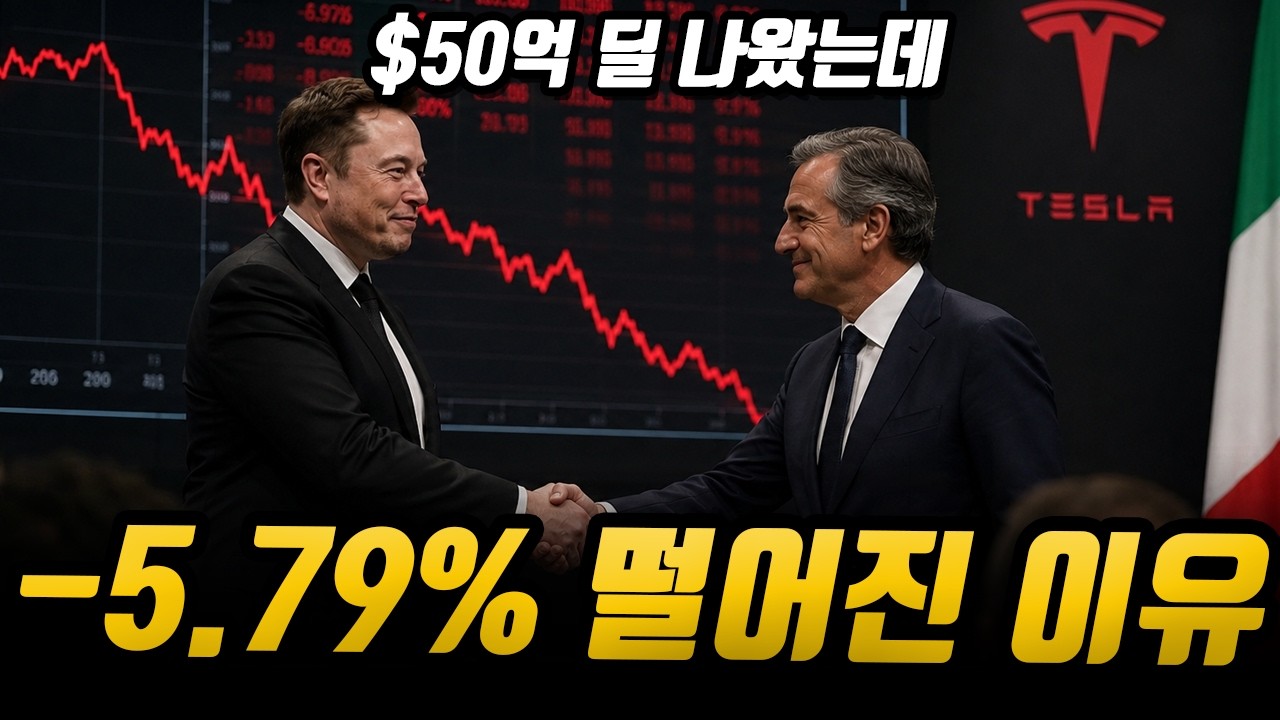
● Semiconductor Shock-Rebound
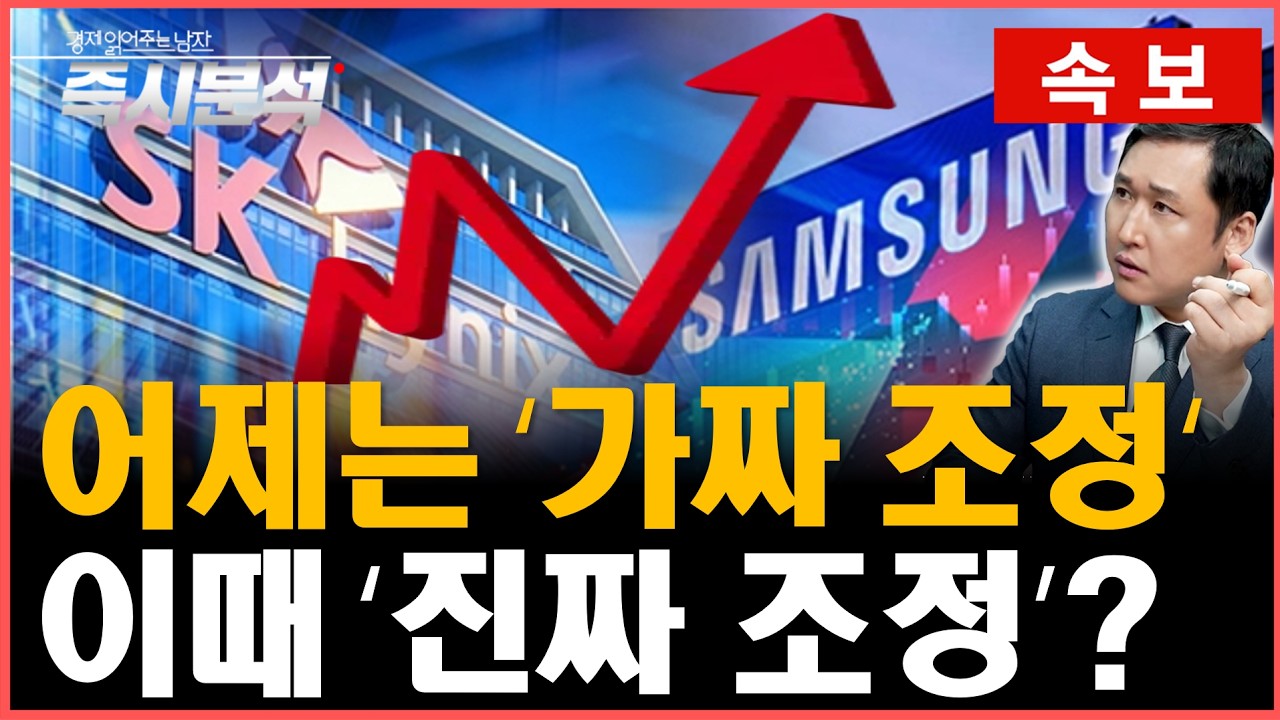
Samsung Electronics and SK Hynix Rebound After Sharp Declines: Distinguishing Between a False Correction and a Genuine Correction
The key issue is not simply that Samsung Electronics rebounded.
The critical question is whether the previous day’s decline reflected a deterioration in the semiconductor cycle or a temporary shock driven by leveraged ETFs and overheated sentiment.
This must be assessed alongside Micron’s earnings release, AI semiconductor demand, HBM supply constraints, the KOSPI outlook, and risks related to margin debt and leveraged ETFs.
The market is not signaling that semiconductors are over; rather, it is entering a phase in which expectations have been priced in too quickly and even minor shocks can trigger large swings.
This report summarizes the distinction between a false correction and a genuine correction, investment implications for Samsung Electronics and SK Hynix, and the key variables the market may be overlooking.
1. Sharp decline followed by rebound: why buyers returned
Samsung Electronics fell more than 12% in the prior session, then rebounded by more than 8% at the open in the next session.
Based on the source text, Samsung Electronics rose 8.55% from 310,000 won to 336,500 won.
Intraday, it opened at 314,000 won and advanced to 341,000 won.
In the previous session, it had dropped from 353,500 won to 310,000 won, a decline of 12.31%.
Such a two-digit daily move in a mega-cap stock is highly unusual.
However, bargain buying entered quickly after the selloff, and SK Hynix also posted a strong rebound.
The source text noted Samsung Electronics was up in the 9% range and SK Hynix in the 5% range at the time of reporting.
This rebound appears to reflect more than a technical bounce; it suggests that the market’s confidence in the semiconductor fundamentals has not collapsed.
2. Why this was interpreted as a false correction
The source text emphasized that the decline was not the start of a structural downtrend.
In other words, the selloff was not driven by a breakdown in earnings expectations or AI semiconductor demand.
The main causes cited were single-stock leveraged ETFs and excessive volatility.
Leveraged ETFs are designed to track more than 2x the daily move of the underlying asset.
They amplify gains in rising markets, but they also accelerate losses in declining markets.
When concentrated in benchmark stocks such as Samsung Electronics or SK Hynix, leveraged ETF flows can mechanically intensify selling pressure in a downturn.
In practical terms, this means that even without a major deterioration in the companies themselves, derivative structures and liquidation pressure can magnify price swings.
Such a move is better described as a supply-and-demand correction rather than a fundamental correction.
For that reason, the source text classified the move as a false correction rather than a genuine one.
3. The simplest way to distinguish a false correction from a genuine correction
For investors, the key question is not whether the stock fell, but why it fell.
The response differs materially depending on whether the decline reflects a deterioration in intrinsic value or simply short-term flows and sentiment.
-
A false correction occurs when fundamentals remain intact but prices are distorted by flows, sentiment, or leveraged liquidation.
-
A genuine correction occurs when earnings outlooks, industry demand, pricing, or competitive positioning weaken.
From the perspective of the source text, the Samsung Electronics and SK Hynix decline is closer to a false correction.
Expectations for memory semiconductor recovery remain intact, and demand for HBM in AI servers continues to hold up.
Standard DRAM prices are also showing signs of recovery.
In addition, limited production capacity suggests that memory demand may continue to exceed supply.
In short, prices have been volatile, but the industry cycle itself has not clearly turned down.
4. The key point the market may be missing: stocks react to expectations, not just results
One of the most overlooked points in market commentary is this:
For Micron, what matters is not simply whether earnings are strong, but whether they exceed expectations.
The source text identified Micron’s June 25 earnings release as a critical event for assessing whether the recent selloff was temporary.
Micron’s revenue and EPS are already embedded in market consensus.
In other words, current share prices already reflect expectations of solid results.
As a result, even strong earnings may not support the stock if they fall short of consensus.
Conversely, results and guidance that exceed elevated expectations can trigger a strong rebound in semiconductor stocks.
This is the difference between an earnings surprise and an earnings disappointment.
-
If earnings are strong and exceed consensus, that is an earnings surprise.
-
If earnings are strong but below consensus, the market may still react negatively.
-
Short-term stock prices respond to the gap between expectations and actual results.
-
Medium- to long-term stock prices respond to earnings direction and the industry cycle.
This is the central issue in the current semiconductor investment case.
Samsung Electronics and SK Hynix do not move simply because earnings are good.
What matters more is how much the market has already priced in, and how much the actual results exceed that bar.
5. Why Micron’s earnings matter for Korean semiconductor stocks
Micron is an important barometer for the global memory semiconductor cycle.
It is especially useful for assessing D-RAM, NAND, and HBM demand and pricing.
What the market wants to confirm in Micron’s earnings is not simply revenue growth.
The key questions are whether AI server demand remains strong, whether HBM shortages continue, and whether the rebound in standard memory prices is translating into earnings.
If Micron posts results and guidance that exceed expectations, it is likely to provide a positive read-through for Samsung Electronics and SK Hynix.
By contrast, if results are solid but not enough to beat expectations, or if guidance weakens, Korean semiconductor leaders could come under pressure.
The source text also noted that because Samsung Electronics and SK Hynix have a large weight in the KOSPI, weakness in these names can translate into broader index pressure.
For that reason, semiconductor stocks are effectively a key variable in the KOSPI outlook.
6. AI semiconductors and HBM demand remain intact
The rebound was supported by continued demand for AI semiconductors.
As AI server investment expands, demand for HBM continues to rise.
HBM, or high-bandwidth memory, is a critical component in AI servers and NVIDIA GPUs.
SK Hynix has attracted strong attention for its HBM competitiveness, while Samsung Electronics is also expected to benefit from the expansion of higher-value products such as HBM4.
Securities firms are increasingly focusing on Samsung Electronics’ earnings momentum in the second half.
In a period of rising standard memory prices, Samsung Electronics has room for profitability improvement.
If HBM4 and other higher-value products contribute further, there is potential for a re-rating of the large-cap semiconductor names.
In other words, the market is increasingly viewing Samsung Electronics and SK Hynix not just as manufacturers, but as key beneficiaries of AI infrastructure growth.
7. A weaker U.S. market does not automatically mean a weaker Korean market
An important point in the source text is the sequence between the U.S. and Korean markets.
Investors often assume that when U.S. equities fall, Korean equities will decline the next day.
That correlation often exists, but it is not always one-directional.
According to the source text, U.S. semiconductor stocks were relatively stable through the early hours of June 23, and Micron and Intel posted strong gains.
However, the Korean market and broader Asian markets weakened first, and that shock then fed back into U.S. tech sentiment.
In other words, global markets interact rather than move in a single sequence.
The U.S. can influence Korea, but shocks originating in Korea and Asia can also affect sentiment in U.S. tech stocks.
Because the semiconductor supply chain is tightly linked across Korea, Taiwan, and the United States, shocks can circulate with a time lag.
8. Leverage ETF flows and margin debt can distort the market
The source text strongly criticized leveraged ETFs.
In particular, it argued that single-stock leveraged ETFs can push retail investors into excessive speculation.
Leveraged ETFs are attractive in rising markets.
However, once volatility increases, losses accumulate much faster than in ordinary stocks.
When combined with margin debt, even a modest correction can trigger forced selling or panic liquidation.
The source text argued that regulators should have managed these products more aggressively.
It identified three necessary measures:
-
First, additional single-stock leveraged ETFs should be restricted.
-
Second, existing leveraged products should be adjusted in scale and structure where necessary.
-
Third, retail access to leveraged ETF products should be subject to stricter requirements.
It also stated that public institutions such as the Bank of Korea and the Ministry of Economy and Finance should use financial education channels to better explain the risks of leveraged ETFs.
This matters for investors as well.
Whether a company is fundamentally strong is a separate issue from whether the stock is crowded with leverage, which can make price action much more violent.
9. What investors should focus on now
The current market appears to be facing elevated volatility rather than a broken trend.
The source text characterized June as a period of volatile trading and emphasized the need to distinguish the causes of each pullback.
The key is not to buy in fear and sell into euphoria.
Rather, a more rational approach is to buy into fear and reduce exposure selectively when valuations become overheated.
That said, indiscriminate dip-buying is risky.
Investors should use a checklist to determine whether the move is a false correction or a genuine one.
-
Confirm whether earnings expectations for Samsung Electronics and SK Hynix remain intact.
-
Monitor whether the rebound in DRAM and NAND pricing continues.
-
Check whether HBM demand and the AI server investment cycle remain intact.
-
Review earnings and guidance from global semiconductor companies such as Micron and NVIDIA.
-
Assess whether leverage ETF exposure and margin balances have become excessive.
-
Also monitor macro variables such as exchange rates, interest rates, and liquidity conditions.
If these factors remain broadly intact, a sharp short-term decline may present an opportunity.
If, however, earnings expectations weaken, memory prices roll over, and the AI investment cycle slows, a genuine correction becomes more likely.
10. Distinguishing surface movement from the underlying trend
The source text used the metaphor of splashes versus waves.
Small fluctuations within a broader uptrend should not be mistaken for a structural reversal.
Under a view that the market remains in a long-term uptrend through 2025 and 2026, temporary selloffs may represent opportunities rather than threats.
Of course, not every decline should be treated as a buying opportunity.
However, if fundamentals and industry growth remain intact while the stock falls due to flow-driven pressure, the move is closer to volatility than to a true crisis.
When semiconductor fundamentals remain intact yet prices fall sharply, investors should focus on the cause before reacting to the price.
The most dangerous approach in this market is to judge only by price.
Investors need to assess the reason behind the move.
11. The most important points that are often left out
First, the current correction is more of a market-structure issue than a business-risk issue.
The core business of Samsung Electronics and SK Hynix has not deteriorated abruptly; rather, leveraged ETF flows and overheated sentiment have amplified volatility.
Second, Micron’s earnings should be viewed in terms of relative expectations, not only absolute quality.
Many investors focus only on whether earnings grew, but prices are already discounting expectations.
Consensus versus actual results, and forward guidance, matter more.
Third, analyzing the Korean market solely through the U.S. market is increasingly insufficient.
Because the semiconductor supply chain is global, Korean and Asian market moves can also influence U.S. tech sentiment.
Fourth, the AI semiconductor cycle does not appear to be over.
If HBM demand, AI server spending, and memory pricing remain supportive, the medium-term trend for semiconductor stocks remains intact.
Fifth, the real risk is not the decline itself, but being positioned in a structure where leverage makes it impossible to hold through volatility.
Even in a fundamentally sound company, excessive leverage can turn a modest pullback into a severe loss.
12. Key events and variables to watch ahead
The most important short-term variable is Micron’s earnings release.
Its revenue, EPS, commentary on HBM, and forward guidance can directly affect Korean semiconductor sentiment.
The next major event is the July earnings release from Samsung Electronics and SK Hynix.
At that point, investors should verify whether the rebound in standard memory pricing is translating into earnings improvement.
It will also be important to assess how quickly HBM4 and other higher-value products are being reflected in results.
From a KOSPI perspective, large-cap semiconductor stocks are likely to remain the primary driver of index direction.
Investors should also monitor interest rates, exchange rates, global liquidity, and valuation levels in U.S. tech.
In an overheated market, even a small disappointment can trigger an outsized correction, making expectation management essential.
< Summary >
From the perspective of the source text, the sharp decline in Samsung Electronics and SK Hynix was a false correction driven by leveraged ETFs and overheated sentiment rather than a fundamental breakdown.
Demand for AI semiconductors, HBM, and the rebound in memory pricing remain intact.
Whether the move develops into a genuine correction will depend in part on whether Micron’s earnings exceed market expectations.
What matters more than strong earnings is whether results beat consensus and whether guidance remains firm.
Investors should focus on the cause of the decline rather than the price alone.
Leverage ETFs and margin debt are major sources of volatility and must be managed carefully.
In short, this is not a time for panic, but for separating a false correction from a genuine one while closely monitoring semiconductor fundamentals and earnings expectations.
[Related Articles…]
*Source: [ 경제 읽어주는 남자(김광석TV) ]
– [🚨중요🚨] ‘가짜조정’과 ‘진짜조정’을 꼭 구분하십시오. [즉시분석]