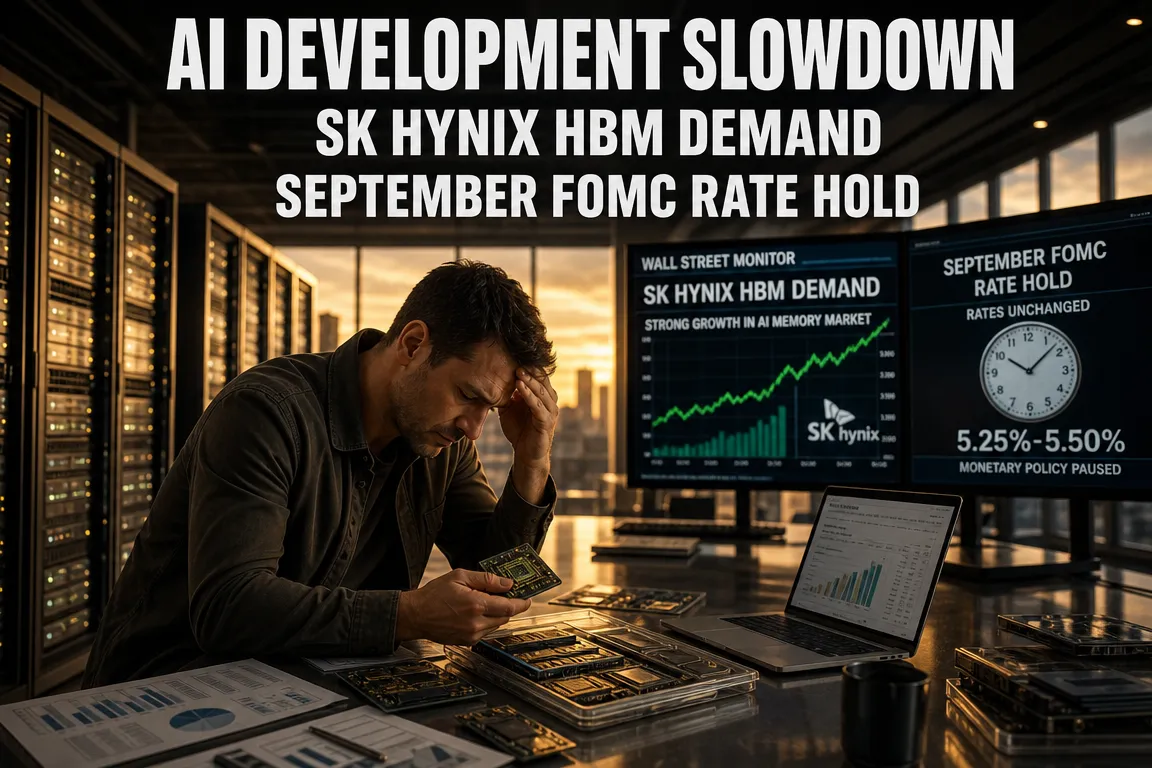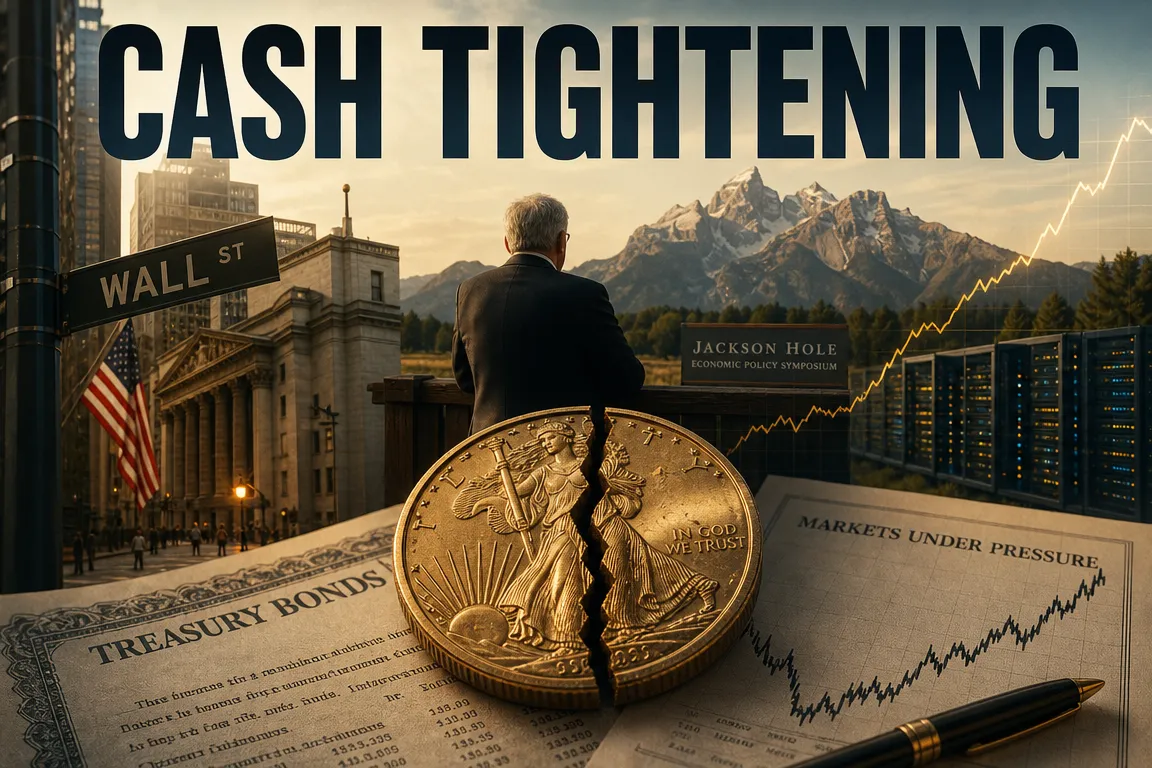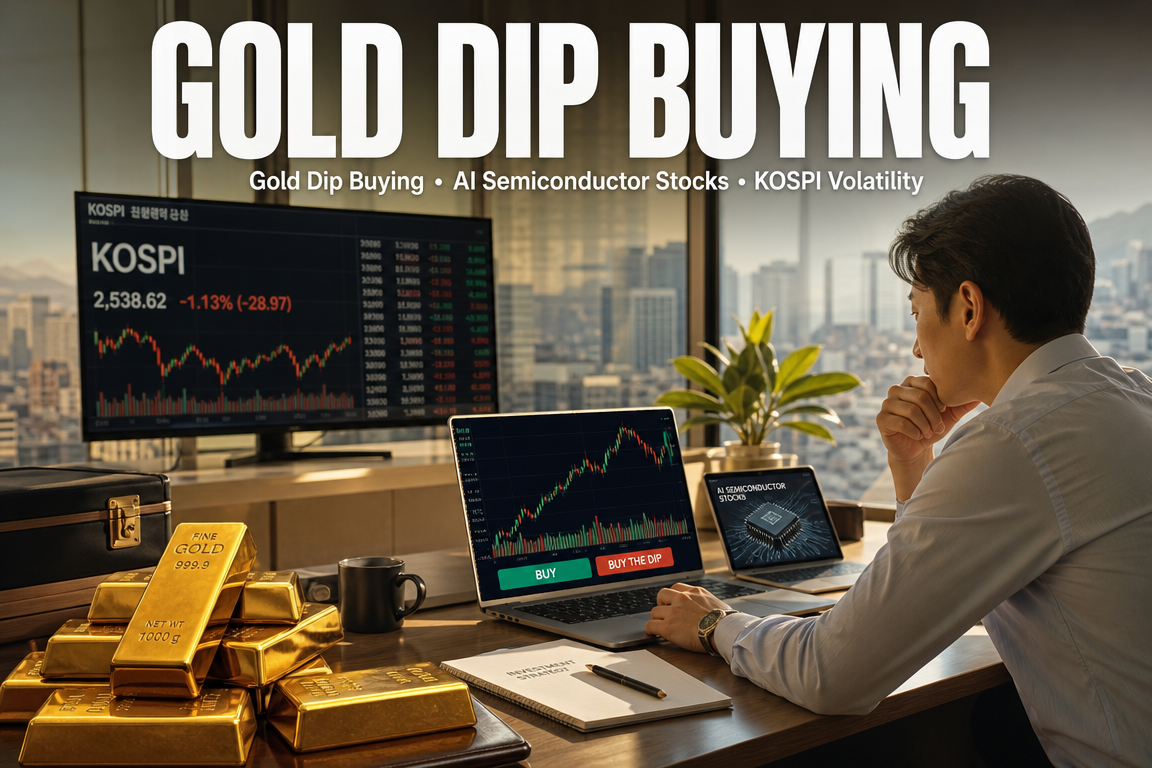
● Gold Crash, Buy Dip
Gold Prices Fall 25% From Their Peak: Is It Time to Buy? Why Rate Hikes Could Eventually Support Gold
The key point in this gold correction is not simply that gold fell because of rate-hike concerns.
What matters is where capital moved after leaving gold, and why funds shifted into the dollar and AI semiconductor equities rather than into the traditional safe haven.
To assess the outlook properly, this must be viewed alongside the Middle East conflict, surging oil prices, renewed inflation pressure, rising government bond yields, dollar strength, central bank gold purchases, and de-dollarization trends.
In particular, one of the most important takeaways is that the conventional view that “rate hikes are always negative for gold” has often been contradicted by historical data.
There have been cases, such as the 1970s, in which gold rallied sharply after rate hikes began, and a similar macro structure may emerge again in the second half of the year.
1. Why gold fell roughly 25% from its peak
The gold correction discussed in the video is approximately 25% from its peak.
Compared with crypto assets such as Bitcoin or XRP, which have fallen 60% to 70% from their highs, gold’s drawdown has been relatively moderate.
However, for investors who entered late, even a 25% decline can be significant.
The primary short-term driver of the decline was rate-hike concern.
The market initially expected disinflation, rate cuts, and a soft landing.
That outlook was disrupted by the emergence of the Middle East conflict.
The conflict pushed up crude oil prices.
The video notes that spot crude briefly reached around $170 per barrel.
When oil prices surge, the impact extends beyond gasoline.
Higher energy costs raise production expenses across apparel, plastics, logistics, fertilizers, agrochemicals, and chemicals.
In other words, a sharp rise in oil prices is a powerful trigger for renewed inflation expectations.
As inflation expectations rise, the market begins to price in a different policy path:
“The central bank may not be able to cut rates easily.”
“A renewed rate hike may even be possible.”
This shift in expectations weighed on gold in the short term.
2. Why the Middle East conflict did not lift gold more decisively
Gold is usually expected to rise during wartime because it is a classic safe-haven asset and conflict increases uncertainty.
However, in this case, gold did not sustain a strong advance despite the geopolitical shock.
The reason is that this conflict affected more than geopolitics alone.
It also pressured oil prices and government bond yields simultaneously.
As conflict intensifies, governments tend to expand defense spending.
They replenish weapons, invest in energy security, and deploy fiscal support to stabilize growth.
To finance this spending, governments issue more debt.
Higher bond issuance increases supply, pushes bond prices lower, and places upward pressure on yields.
Gold does not generate income.
By contrast, US Treasury securities become more attractive when yields rise because they offer higher income.
As a result, gold can temporarily lose relative appeal during periods of rising bond yields.
In effect, the Middle East conflict increased demand for safe havens, but it also amplified inflation and bond-yield concerns.
This allowed the dollar to function as the stronger short-term safe haven.
3. Where the capital left gold went
The most important question in this correction is not why gold fell, but where the capital moved.
The video identifies two major destinations.
The first is the dollar.
The second is AI semiconductor equities.
The dollar remains the most powerful liquidity asset in global risk-off episodes.
With the Middle East conflict, rate-hike concerns, and higher bond yields occurring together, investors preferred dollars over gold.
Gold is a safe haven, but the dollar offers immediate utility in payments, liquidity, and access to bond markets.
More importantly, capital did not move broadly into equities.
It concentrated in semiconductor companies tied to the AI value chain.
The AI value chain can be viewed in three layers.
At the top are the AI services used by end users.
Below that are large language models and model competition.
At the base are data centers, GPUs, HBM, servers, and power infrastructure.
AI services require models, and models require data centers and semiconductors.
As a result, capital in the first half of 2026 moved more toward semiconductor companies with visible earnings than toward gold or crypto.
Gold pays no interest and no dividend.
Most crypto assets also generate no cash flow.
By contrast, semiconductor companies are producing earnings from AI demand.
That difference shaped capital allocation.
4. The key point rarely highlighted elsewhere: gold’s real competitor was not the dollar, but AI earnings equities
Gold outlook discussions typically focus on the dollar, rates, and inflation.
In this correction, however, the more important comparison was with AI semiconductor stocks.
Investors always compare relative returns.
Even if gold is a safe haven, capital will shift toward AI semiconductor names if those companies are delivering explosive earnings growth.
When bond yields rise and the dollar strengthens, assets without cash flow become less attractive.
This means the decline in gold was not simply a deterioration in gold’s intrinsic value.
It reflected lower relative attractiveness as dollar strength and the AI semiconductor rally occurred at the same time.
This is a key factor often omitted in gold analysis.
5. Second-half outlook: gold could rebound if rate-hike concerns fade
The video suggests that major economies may continue to maintain caution on rates or tightening through July 2026, depending on domestic conditions.
The US has not actually been raising rates over the past year, but the market has still priced in the risk of renewed tightening.
The critical turning point is after August 2026.
If crude oil stabilizes and inflation does not revisit prior highs, rate-hike concerns may ease.
At that point, investor sentiment toward gold could improve.
A weaker dollar would also matter.
Gold is priced in dollars globally.
When the dollar weakens, more dollars are generally needed to buy the same amount of gold, which tends to support prices.
The video argues that the second half of the year could bring greater liquidity and dollar weakness.
In that environment, not only gold but also non-yielding assets such as crypto could benefit.
The central theme is debasement.
Debasement refers to the decline in the value of money.
When money loses value, gold, Bitcoin, commodities, and certain real assets can appreciate on a relative basis.
6. Are rate hikes really negative for gold?
Many investors view rate hikes as uniformly negative for gold.
The logic is straightforward.
Because gold yields no interest, higher rates reduce its relative appeal.
This explanation can be valid in the short term.
However, it does not always hold over longer cycles.
The main example cited in the video is the 1970s.
In 1970, the US policy rate was about 3.5%.
By 1980, it had risen to about 18%.
By conventional logic, gold should have collapsed, yet it increased roughly 26-fold over that period.
Why did this happen?
When central banks raise rates, it can signal that inflation is not transitory but structural.
Investors may then conclude that the value of cash will continue to erode.
In that case, concerns about currency debasement can matter more than the rate hike itself.
In 1974, gold also corrected sharply as rate-hike concerns intensified.
However, once the actual tightening cycle took hold, gold recovered.
In other words, rate-hike fears can be a short-term headwind, but when the backdrop is structural inflation, rate hikes can become a catalyst for gold appreciation.
7. Gold is more sensitive to currency debasement than to war alone
Gold is commonly described as a war hedge.
However, historical data show that war alone has rarely driven sustained long-term appreciation in gold.
In many cases, gold spiked for two or three months after conflict began and then returned to prior levels.
The more durable driver is not war itself, but the fiscal expansion and currency debasement that follow.
War typically increases government spending.
Governments issue more debt.
Central banks and fiscal authorities may also expand liquidity to defend growth.
As a result, markets begin to price in further erosion in money’s value.
That is where gold responds most strongly.
Its primary sensitivity is not uncertainty alone, but the expectation of currency debasement.
8. The gold supply cycle also supports the long-term case
Supply is an important variable that is often overlooked in gold analysis.
Gold is not an asset that can be issued instantly like equities.
It is also not as mechanically capped as Bitcoin, but expanding physical supply takes a very long time.
Mine development begins with exploration.
Companies identify deposits and assess economic viability.
They then secure permits.
Infrastructure such as industrial facilities, housing, roads, rail links, and refining equipment must also be built.
The full process can take roughly a decade before production begins.
For that reason, gold supply cannot expand quickly.
Historical data indicate that gold bull cycles often begin when production growth slows.
Those cycles can last as little as 9 years or as long as 13 years.
Central bank demand is also strong at present.
As de-dollarization continues, many countries are increasing the share of gold in their foreign exchange reserves.
If supply remains constrained while central bank demand stays structural, the long-term case for gold remains intact.
9. Should investors buy gold now? A phased approach is preferable to an all-in position
Buying aggressively simply because gold has fallen 25% from its peak is risky.
Gold remains attractive over the long term, but near-term volatility is significant.
If rate-hike concerns, dollar strength, and rising bond yields persist, further downside is possible.
That said, if rate-hike fears ease in the second half of the year and the dollar weakens, gold could rebound.
For that reason, a phased accumulation strategy is more practical than a lump-sum purchase.
For beginner investors, only a limited share of total assets should be allocated to gold.
Even more aggressive investors should treat gold primarily as a portfolio hedge rather than a short-term trading vehicle.
Gold should be viewed through the lens of the monetary system, rates, inflation, and geopolitical risk, not earnings releases.
10. Gold investment methods: physical bullion, ETFs, and the KRX gold market
There are three main ways to invest in gold: physical bullion, gold ETFs, and the KRX gold market.
Physical gold involves direct ownership of bars or coins.
The advantage is the sense of security associated with holding a tangible asset in a crisis.
The disadvantages include storage, theft risk, bid-ask spreads, and additional costs.
It may be inconvenient for beginner investors.
Gold ETFs are easy to trade through a brokerage account.
However, investors should consider management fees, slippage, and tax treatment.
The video notes that capital gains on ETF investments may be subject to a 15.4% tax burden.
The KRX gold market is presented as a particularly efficient option for domestic investors.
Gold can be bought and sold through a stock trading app via the physical gold menu.
Transaction costs are relatively low, and there is no tax on trading gains, according to the video.
The KRX gold market fee is cited at around 0.3%, making it more cost-efficient than ETFs.
Another notable point is the price gap between domestic and overseas gold prices.
When domestic demand is weak, local gold prices may trade below international prices.
In that case, investors may be able to buy gold at a relative discount.
As always, this spread should be checked before investing because it varies with market conditions.
11. Key indicators gold investors should monitor
Gold outlook should not be based on headlines alone.
The following indicators are important for a more complete assessment.
First, US real interest rates.
When real rates fall, gold tends to benefit.
Second, the dollar index.
A weaker dollar generally supports gold prices.
Third, crude oil.
If oil prices surge again, inflation concerns may rise and gold could face short-term pressure from rate-hike fears.
Over time, however, this can also support gold by reinforcing debasement concerns.
Fourth, central bank gold purchases.
Central bank demand is more structural than speculative demand.
If de-dollarization continues, central bank buying can provide a floor for gold prices.
Fifth, the relative appeal of AI semiconductor equities.
If AI semiconductor earnings remain strong, capital may stay in equities rather than flow into gold.
Conversely, if AI stocks undergo a correction, some capital could rotate back into gold and other safe havens.
12. Gold price scenarios from an investment perspective
Positive scenario: rate-hike concerns ease and the dollar weakens.
If inflation remains elevated and liquidity expands, gold may resume an upward trend.
Central bank buying and constrained supply would also support the long-term case.
Neutral scenario: rates and the dollar remain elevated but stable.
In this case, gold is more likely to trade sideways than to break out sharply.
Investors may use phased buying and portfolio rebalancing in this range.
Negative scenario: US bond yields rise sharply and dollar strength returns.
Gold could face additional correction in that case.
If the market again prices in renewed rate hikes, both gold and other non-yielding assets such as crypto may come under pressure in the short term.
13. Conclusion: the 25% decline in gold is more likely a mid-cycle correction than a structural break
This decline in gold is better understood as the result of rate-hike concerns, dollar strength, and a strong rotation into AI semiconductor equities, rather than as a collapse in gold’s long-term value.
The Middle East conflict should have been supportive for gold, but in this case it also lifted oil prices and bond yields, which created a headwind.
Still, if rate-hike concerns ease in the second half of the year and the dollar weakens, the investment backdrop for gold could improve.
It is also important not to assume that rate hikes are always negative for gold.
If higher rates signal persistent inflation, markets may prefer gold over cash.
As in the 1970s, rate increases and gold appreciation can occur at the same time.
For that reason, the key variables for gold are not short-term price action alone, but currency debasement, central bank demand, the supply cycle, and dollar trends.
For beginner investors, the KRX gold market may be a more efficient entry point than physical bullion because of costs and taxes.
Gold is better treated as a long-term portfolio asset designed to hedge inflation and financial-market uncertainty than as a short-term trading instrument.
< Summary >
Gold has corrected roughly 25% from its peak, but the long-term investment case remains intact.
The decline has been driven by rate-hike concerns, dollar strength, surging oil prices, rising bond yields, and capital rotation into AI semiconductor equities.
The Middle East conflict increased safe-haven demand, but it also fueled inflation and rate concerns, which created short-term pressure on gold.
In the second half of the year, gold could recover if rate-hike concerns ease and the dollar weakens.
Rate hikes are not always negative for gold; if they reflect structural inflation, they can become a catalyst for higher gold prices.
For gold exposure, the KRX gold market may be more cost-efficient for beginner investors.
[Related Articles…]
- Gold Price Outlook and Safe-Haven Allocation Strategy
- Dollar Weakness and Global Asset Allocation Strategy
*Source: [ 경제 읽어주는 남자(김광석TV) ]
– 금값 25% 급락, 지금 사야 하나? ‘금리 인상’이 오히려 상승 신호인 이유 | 채널 50만 특별영상 | 취중전망 [2편]
● ETF, ADR, and AI Fuel KOSPI Turmoil
The Real Reasons Leverage ETFs and ADRs Increased KOSPI Volatility
The core issue in this episode is not simply that Samsung Electronics and SK Hynix shares rose sharply.
A structural change has emerged in the KOSPI outlook, driven by single-name leverage ETFs, the SK Hynix ADR, foreign investor flows, the derivatives market, and the AI semiconductor cycle.
The market is no longer moving solely on earnings. It is now being shaped by public attention and fear, overnight U.S. price signals, and the next day’s Korean equity flows, creating a regime of elevated volatility.
On the surface, the narrative may appear to be “semiconductors are strong,” “AI demand is firm,” or “foreign investors are buying.” In practice, the key question is who is monetizing this volatility.
This report summarizes why KOSPI is moving sharply on a daily basis, why leverage ETFs and ADRs have acted as amplifiers, and how retail investors should approach asset allocation and risk management.
1. The main issue in KOSPI is not the rise, but concentration
The most important recent change in the KOSPI market is not that the index has risen, but that dependence on a small number of large-cap names has increased materially.
The original text notes that Samsung Electronics, SK Hynix, and other major semiconductor names have become large enough to drive the entire KOSPI.
In simple terms, this is a team that relies excessively on one or two star players rather than having balanced strength across the lineup.
When those players advance, the index rises sharply; when they weaken, the entire market can fall just as quickly.
In this structure, flows and sentiment can matter more than fundamental valuation.
As a result, volatility increases, and retail investors often face the paradox of seeing the index rise while their own portfolios do not.
2. Where capital concentrates, market participants emerge to monetize the flow
The original text uses the phrase that wherever money is made, players appear to collect “tolls.”
This should be interpreted less as a conspiracy and more as the reality that capital concentration always creates opportunities for participants to extract value from the resulting price movements.
In equity markets, these participants may be called institutions, foreign investors, global funds, program traders, derivatives players, or ETF issuers.
While the labels differ, the mechanism is similar: concentrated capital moves prices, price movement creates volatility, and volatility becomes tradable.
South Korea has long been regarded as a market with highly developed derivatives infrastructure.
KOSPI 200 futures and options have historically provided foreign investors with a favorable venue for trading direction and volatility.
The key change now is that this structure has intensified.
As flows concentrated in large-cap semiconductor names, the index became easier to trade directionally, and profits from futures and options became more accessible.
3. Single-name leverage ETFs mattered more for sentiment than for size
Many investors look first at the size of a leverage ETF and ask how much capital it attracted.
The original text states that the market capitalization of these products was not large enough to directly move Samsung Electronics or SK Hynix to a meaningful degree.
In other words, the ETF assets themselves did not directly drive the stock prices.
However, the more important issue is how they redirected investor attention.
With single-name leverage ETFs, retail investors’ choices became more concentrated.
Earlier, investors could choose among semiconductor equipment, materials, power infrastructure, AI server-related names, and software companies.
Now the decision set has narrowed to “buy Samsung Electronics or its leveraged ETF” and “buy SK Hynix or its leveraged ETF.”
This redirected liquidity toward the two largest index constituents.
As a result, the ETFs acted less as direct price support and more as an amplifier of attention and concentration.
4. The rise in sidecar activations after ETF listings is significant
The original text states that sidecars were triggered 37 times in the KOSPI market this year.
By month, the figures were 3 in February, 7 in March, 3 in April, and 6 in May. After the single-name leverage ETF listing in June, the number rose to 10.
Assuming around 20 trading days in June, that means sidecars were triggered on roughly half the sessions.
In July, the pattern became more severe.
The original text says sidecars were triggered 8 times in 12 trading days.
That does not indicate a normal bull market. It suggests that the market structure itself has become overheated.
Rising prices are not necessarily positive if the market is moving hundreds of points in a single day.
When two large-cap names can move the entire index, investors should focus on risk before return.
5. ADR listing increased foreign access but created a new pricing reference
The second catalyst highlighted in the original text is the SK Hynix ADR.
An ADR allows a foreign company’s shares to be traded more easily in the U.S. market.
For global investors who may not be able to access Korean equities directly, the ADR provides easier exposure to SK Hynix.
This has positive implications.
It can improve foreign inflows and may also support won stability to some extent.
However, the issue raised in the original text is that the ADR float is small relative to the domestic share count.
When the trading base is small, supply-demand imbalances can emerge more easily.
Prices can move sharply on limited volume, and those moves can influence the next day’s Korean market.
If the ADR rises sharply overnight in the U.S., domestic investors may interpret that as a higher valuation reference for SK Hynix.
This can lead to a follow-through move in the Korean listing, even if the change is driven more by external pricing signals than by fundamentals.
6. Why foreign investors favor this setup
Foreign investors do not look at Korean equities in isolation.
They also consider KOSPI 200 futures, options, the exchange rate, interest rates, and the U.S. equity backdrop.
If KOSPI becomes highly dependent on Samsung Electronics and SK Hynix, the market becomes easier to model from a directional standpoint.
By correctly positioning on those two names, investors can gain a strong read on the index.
When leverage ETFs channel retail attention into large caps and ADRs provide overnight reference pricing, foreign investors gain additional tools for strategy execution.
For example, the original text describes a scenario in which foreign investors buy KOSPI futures the previous day.
Overnight, the ADR rises sharply in the U.S. market.
The next day, domestic investors buy the Korean listing based on the ADR price signal.
The KOSPI rises sharply, while the foreign investor earns on the futures position.
There is no evidence here of coordinated behavior.
Foreign investors are not a single entity but a collection of global funds, hedge funds, pension funds, and algorithmic trading capital.
The relevant point is that in this type of market structure, volatility users are better positioned than spot-only retail investors.
7. Reduced pressure from National Pension Service selling also mattered
The original text identifies the National Pension Service’s reduced domestic equity selling burden as another factor supporting foreign confidence.
The interpretation is that rule adjustments allowed the fund to maintain a somewhat higher allocation to domestic equities, reducing the volume it needed to sell.
Foreign investors dislike uncertainty.
In particular, an unclear large-scale seller creates a burden.
If the expected selling pressure from the National Pension Service declines, the market becomes more predictable for foreign capital.
With lower uncertainty and additional catalysts such as leverage ETFs and ADRs, trading the index becomes easier.
8. Investors often confuse a good company with a good entry price
Samsung Electronics and SK Hynix are fundamentally strong companies.
The AI semiconductor cycle, HBM demand, memory recovery, and data center capex remain supportive over the long term.
U.S. big tech AI investment also remains an important tailwind for Korean semiconductor suppliers.
However, a good company is not always a good investment at any price.
When expectations and flows run ahead of fundamentals, share prices can move much faster than earnings.
In such periods, upside can be sharp, but downside can also accelerate on limited negative news.
The original text notes that the market became overheated after June and that such conditions tend to create victims.
Investors need to assess not only whether a company is good, but also whether the price level is tolerable relative to their risk capacity.
9. Investors should also revisit the names that have been left behind
When flows concentrate in large semiconductor names, other quality companies can be overlooked.
The original text notes that several growth names beyond Samsung Electronics and SK Hynix have weakened significantly as liquidity shifted away.
That can create opportunities for retail investors.
When the market becomes narrowly concentrated, companies outside the spotlight may still be improving fundamentally.
Examples include AI infrastructure, power equipment, cooling systems, semiconductor materials, industrial automation, cybersecurity, and cloud infrastructure.
Of course, low prices alone are not enough.
Investors should assess earnings growth, cash flow, industry direction, valuation, and foreign flows.
Still, in a market dominated by concentration risk, diversification becomes more important.
10. The most important point often missed by media coverage
The most important point is that leverage ETFs and ADRs did not directly lift prices. They changed investor behavior.
Most news coverage separates events such as ETF listings, ADR listings, foreign buying, and semiconductor strength.
The real issue is that these events together changed the market’s reference points.
Leverage ETFs narrowed retail attention toward Samsung Electronics and SK Hynix.
ADR pricing created an overnight benchmark for the next day’s Korean session.
Reduced National Pension Service selling pressure gave foreign investors a more predictable environment.
The semiconductor cycle and AI capex boom provided the fundamental narrative that justified the flow.
The market therefore shifted from a valuation-driven regime to one increasingly driven by flow and price signals.
In this setup, global capital that can simultaneously monitor futures, options, FX, ADRs, and the U.S. market has a clear advantage over domestic spot-only investors.
Retail investors need more than stock selection to navigate this environment.
They must understand who is creating the volatility, who is monetizing it, and where their own positions sit within that structure.
11. Practical guidance for retail investors
First, review concentration risk in the portfolio rather than simply increasing exposure to large semiconductor names.
Samsung Electronics and SK Hynix are strong companies, but excessive exposure to both increases volatility risk.
Second, leverage products should be used with short holding periods.
Leveraged ETFs can generate strong returns when direction is correct, but losses can also build quickly in volatile markets.
They are not suitable as long-term holdings because of compounding effects and volatility decay.
Third, ADR prices should not be followed mechanically.
Just because an ADR rises overnight in the U.S. does not mean the Korean listing will move in a rational or proportional way the next day.
Pricing distortions can occur when liquidity is thin.
Fourth, foreign futures positioning and the exchange rate should be monitored together.
Foreign flows cannot be understood by looking only at spot purchases.
Futures buying, options positioning, KRW/USD trends, and U.S. rates all need to be considered.
Fifth, investors should also look for undervalued growth names with solid cash flow.
AI semiconductors are not the entire market.
AI data center power networks, robotics, cybersecurity, cloud infrastructure, and industrial software may also offer medium- to long-term opportunities.
12. Key indicators to monitor going forward
Investors should not look only at the index level when assessing KOSPI.
They should track whether the weight of Samsung Electronics and SK Hynix in the index continues to rise.
They should also monitor whether trading value in single-name leverage ETFs continues to increase.
The pricing gap between the SK Hynix ADR and the domestic listing is another important indicator.
Foreign net buying in both futures and spot markets should be checked for alignment.
Sidecar frequency is also a useful measure of market stability.
In addition, investors should watch whether the won stabilizes and whether U.S. rates resume upward pressure.
Finally, the performance of AI semiconductor names in the U.S. market remains critical.
Korean semiconductor stocks are now driven not only by domestic factors but also by Nvidia, AMD, Micron, TSMC, and U.S. capex trends.
13. One-sentence summary of the issue
KOSPI is strong because of high-quality companies, but it is also experiencing excessive volatility as concentration in a few large names interacts with derivatives market mechanics.
Leverage ETFs narrowed retail attention, ADRs created overnight pricing references, and foreign investors are best positioned to use this structure.
Retail investors should distinguish between valuation-driven gains and flow-driven overheating.
Investing is a long-duration game.
In the current environment, survival matters more than short-term return maximization.
The key disciplines are diversification, asset allocation, volatility control, and the ability to read the market from a foreign investor’s perspective.
< Summary >
KOSPI volatility has increased due to excessive concentration in Samsung Electronics and SK Hynix.
Single-name leverage ETFs mattered more as sentiment amplifiers than as direct price drivers.
The SK Hynix ADR has become a new overnight reference point for the Korean market.
Foreign investors can use spot, futures, options, FX, and U.S. market signals, giving them an advantage in a volatility-driven regime.
Retail investors should focus on portfolio balance, reassessment of overlooked growth names, and disciplined asset allocation rather than chasing leveraged exposure.
The key task now is to separate fundamental value from flow-driven excess.
[Related Articles…]
- KOSPI Volatility and Foreign Flow Monitoring Checklist
- AI Semiconductor Cycle and Korean Large-Cap Investment Strategy
*Source: [ Jun’s economy lab ]
– 레버리지와 ADR가 코스피를 망쳤습니다