● Buffett’s AlphaBet Bombshell, Big Tech AI Railroads
Stock Markets May Be Misreading the Situation: Interpreting Warren Buffett’s Alphabet Bet and Big Tech AI Infrastructure Spending
The key point is not simply that Buffett bought Google.
The real issue is that Warren Buffett appears to be viewing Alphabet not as a technology stock, but as a monopolistic infrastructure business that generates long-term cash flow.
He is also interpreting the massive AI infrastructure spending by big tech not as wasteful capex, but as the construction of a 21st-century digital railway network.
Markets currently view large-scale data center investment and AI semiconductor spending by big tech as a burden. From Buffett’s perspective, however, these investments may be creating the barriers to entry and durable cash flows that define long-term winners.
This report summarizes Warren Buffett’s increased Alphabet exposure, his reassessment of Apple, big tech AI infrastructure investment, U.S. equity investing principles, and the implications for the global economic outlook.
1. Why Buffett Selected Alphabet
In a CNBC interview, Buffett said the Alphabet investment was his own decision.
It was not initiated by his successors or the investment team, but by Buffett himself.
This matters because Buffett has historically been cautious on technology stocks.
-
The Alphabet investment was Buffett’s own call
Buffett indicated that Alphabet was an investment he started personally.
This was not merely portfolio diversification, but a re-evaluation of Alphabet within Berkshire Hathaway’s core investment framework.
-
He suggested it may outperform many Wall Street products
Buffett said Alphabet may be better over the medium to long term than a substantial portion of ETFs and stocks sold on Wall Street.
This should be read as a judgment on long-term earnings power, not as a reaction to a single earnings release.
-
Rising portfolio weight
Based on the reported sequence, Alphabet rose into a top position in Berkshire’s portfolio through the initial purchase and subsequent additions.
Its mention alongside Apple, American Express, railroads, and insurance businesses is significant because these are assets Buffett has long favored.
2. Buffett Did Not Buy Alphabet as a Technology Stock
The most important point is that Buffett did not buy Alphabet simply because it is a technology company.
Buffett focuses less on the distinction between tech and non-tech and more on whether a business can sustain a high return on capital over time.
-
ROIC is the key metric
Buffett places emphasis on ROIC, or return on invested capital.
In simple terms, this measures how much profit a company can generate consistently from each unit of capital invested.
-
He prefers companies capable of generating 30%+ long-term returns
The report indicates that Buffett favors companies capable of sustaining annualized returns on capital above 30% over long periods.
Alphabet, Apple, American Express, and Coca-Cola are presented as fitting that framework.
-
Operating profitability, not leverage-driven returns
Buffett does not favor companies that inflate returns through excessive debt.
Strong businesses generate high margins and cash flow from core operations without relying on heavy leverage.
Under this framework, Alphabet is no longer just a search company.
It is a broad cash-generating system spanning search advertising, YouTube, cloud services, AI models, and the Android ecosystem.
In Buffett’s terms, Alphabet is becoming a company with a stronger economic moat.
3. Big Tech AI Spending Is Not Wasteful Capex: It Is Digital Rail Infrastructure
The most notable interpretation in the interview was the comparison between AI infrastructure spending and the railroad revolution.
Buffett is well known as an investor who has long favored railroads.
Railroads are infrastructure assets that, once built, are difficult for new entrants to replicate.
-
100 years ago: railroads; today: AI data centers
Historically, rail networks formed the foundation of logistics and industrial development.
Today, data centers, GPUs, cloud networks, and AI operating infrastructure are becoming the foundation of the digital economy.
-
Once built, they are difficult for competitors to match
AI infrastructure cannot be replicated simply by having capital.
It requires land, power access, cooling systems, semiconductor supply chains, cloud customers, and accumulated data.
-
Big tech capex can become a barrier to entry
The market currently treats rising AI infrastructure spending as a short-term drag on margins.
From a Buffett-style perspective, however, these investments may be building the barriers that keep future competitors out.
This is a critical lens for U.S. equities.
Investors worry that big tech is overspending on AI, but Buffett’s view suggests that only firms capable of deploying this level of capital may ultimately remain dominant.
4. The Market May Be Missing the Real AI Profit Pool: Infrastructure Usage Fees
Most coverage focuses on chatbot performance, semiconductor demand, and Nvidia’s earnings.
But the more important question is this:
Who will collect the tolls when AI becomes ubiquitous?
-
From search to AI agents
As users spend more time with AI assistants instead of search boxes, Alphabet and Microsoft may develop new advertising and subscription models.
-
Cloud may become the highway system of the AI economy
Enterprises that want to run AI services will need cloud and data center capacity.
Amazon AWS, Microsoft Azure, and Google Cloud could become core infrastructure platforms for the AI economy.
-
Rising AI usage can translate into recurring infrastructure revenue
AI models are not trained once and finished; inference and service delivery continue to generate costs.
Those costs become revenue for the infrastructure providers.
This is the channel through which Buffett may be viewing future big tech cash flows.
In other words, the winners of the AI cycle may not be the companies with the best models.
They may instead be the firms that control the roads, power systems, cloud platforms, and data centers on which AI runs.
5. Buffett’s View on Apple: A Consumer Products Business, Not a Technology Stock
Buffett also reaffirmed his confidence in Apple.
He appears to view Apple less as a technology company and more as one of the most powerful consumer brands in history.
-
The iPhone is more than a device
For U.S. consumers, the iPhone has become a near-essential product.
Like recurring purchases of consumer staples, customers continue to buy iPhones, iPads, and MacBooks as needed.
-
Strong brand and ecosystem
Apple’s core advantage is not a single product but its ecosystem.
The iPhone, App Store, Apple Watch, AirPods, Mac, and subscription services are interconnected, making customer switching more difficult.
-
Buffett’s consumer franchise framework
Buffett favors businesses with repeat purchases and strong brand loyalty, such as Coca-Cola.
Apple fits that framework and can therefore be viewed as a long-term holding.
This interpretation is important for U.S. equity investors.
Viewing Apple only as a lagging AI stock overlooks the structural strengths that matter more to Buffett.
He seems to care more about consumer behavior and brand dominance than about short-term technology competition.
6. Why Buffett Described the Market as a Casino
Buffett also criticized the current market environment.
His comments reflected concern that Wall Street benefits from trading activity, while governments benefit from tax revenue.
-
Wall Street is focused on trading volume, not long-term value
Quarterly earnings, chart patterns, theme stocks, and options activity attract attention.
Buffett has long argued that this structure is not favorable to individual investors.
-
Retail investors are disadvantaged in volatile markets
In a market shaped by rate expectations, recession risk, inflation data, and earnings volatility, it is difficult for individuals to outperform through short-term trading.
-
If you do not know what to buy, buy the index and hold it
Buffett has consistently emphasized the value of index investing and long-term holding.
If an investor lacks conviction in individual stock selection, broad market exposure may be the more rational approach.
This message is especially relevant in a period of AI speculation and heightened big tech volatility.
The focus should be on durable profitability and barriers to entry, not on short-lived narratives.
7. The Real Story Most Coverage Misses
The real point is not that Buffett likes big tech.
The more important issue is that the nature of big tech is changing.
-
Big tech used to be light software businesses
Historically, software companies required limited tangible assets and could face rapid competitive disruption.
Buffett may have found such intangible, rapidly changing businesses difficult to evaluate.
-
Today, big tech is becoming a heavy infrastructure business
In the AI era, big tech companies are spending heavily on data centers, power, semiconductors, networks, and cloud infrastructure.
This may have made the business model more understandable to Buffett.
-
The key is capital strength, not only model quality
AI models may become commoditized over time.
By contrast, the capital base required to build hyperscale data centers and cloud infrastructure is far harder to replicate.
-
Rising costs may be the price of future dominance
The market is worried about short-term margin pressure, but long-term investors need to assess whether those expenditures support future cash flow.
That is the most important Buffett-style reframe.
8. What Investors Should Monitor
Buffett’s remarks should not be treated as a reason to chase Alphabet or big tech indiscriminately.
Buffett typically operates on a much longer time horizon than most investors.
His positions are often built over one to two years, and sometimes longer.
-
Track AI investment payback, not just near-term earnings
For Alphabet, Microsoft, and Amazon, investors should look beyond capex growth and monitor cloud revenue growth and operating margin recovery.
-
Distinguish temporary cash flow pressure from structural deterioration
Good investments often involve short-term cost increases followed by stronger long-term cash flow.
If spending rises but monetization is delayed, stock performance may weaken.
-
Monitor ROIC retention
Buffett’s central criterion remains high return on capital.
The key question is whether big tech can expand AI investment while preserving long-term ROIC.
-
Also assess interest rates and valuation
Even strong AI growth may not offset valuation pressure if rates remain elevated.
U.S. equities should therefore be assessed together with AI infrastructure spending and the interest-rate outlook.
9. Big Tech AI Investment in the Context of the Global Economic Outlook
AI infrastructure investment is not only a stock market issue.
It is part of a broader structural shift affecting the U.S. economy, semiconductor supply chains, power infrastructure, cloud markets, and productivity trends.
-
A new capex cycle in the U.S. economy
Big tech data center spending is increasing U.S. capital investment and power demand.
This may benefit certain regional economies and industrial companies.
-
Semiconductors and power infrastructure may grow together
As AI data centers expand, demand rises not only for GPUs but also for memory, networking equipment, power systems, and cooling solutions.
Analyzing AI through Nvidia alone may no longer be sufficient.
-
Productivity gains remain the key variable
If AI reduces costs and increases revenue for businesses, it could support long-term U.S. earnings growth and economic expansion.
If expectations remain high but productivity improvements lag, markets may correct.
10. Conclusion: Buffett’s Message Is Less About Whether AI Is Real and More About Who Collects the Tolls
Buffett’s message can be summarized as follows:
The winners of the AI era are likely to be the companies with durable high returns on capital and monopoly-like infrastructure, not necessarily the most compelling stories.
Alphabet is being re-rated beyond search and advertising toward a cloud and AI infrastructure platform.
Apple is being viewed less as a technology company and more as a dominant consumer franchise.
Amazon, Microsoft, and Alphabet may become the operators of the digital rail network in the AI era.
That said, Buffett’s view does not imply immediate share price gains.
He operates on a much longer horizon than most investors.
The relevant task is not to copy the trade, but to understand the underlying structure.
In U.S. equity markets, investors who evaluate AI infrastructure spending, cash flow, ROIC, valuation, and the interest-rate outlook together are likely to be better positioned.
< Summary >
Warren Buffett appears to be viewing Alphabet not simply as a technology stock, but as a business with durable cash flow and high ROIC.
Big tech’s AI infrastructure spending is a near-term margin drag, but it may become the digital rail network of the 21st century.
Alphabet, Microsoft, and Amazon could collect tolls in the AI economy through cloud infrastructure.
Apple is better understood as a powerful consumer franchise than as a pure technology stock.
Buffett’s core message is to focus on long-term ROIC and economic moats rather than popular themes.
Investors should monitor AI payback, cash flow, ROIC, and interest rates rather than near-term hype.
[Related Articles…]
- AI Infrastructure Investment Cycle and the Global Economic Outlook
- U.S. Equity Portfolio Strategy Through the Lens of Buffett’s Investment Principles
*Source: [ 소수몽키 ]
– 증시는 지금 큰 오해 중?버핏의 마지막 베팅 또 적중할까
● AI Power Bottleneck, Brent Surge, Yen Crash
Brent Crude Touched $95, JPY Fell to 163, and GE Vernova Slumped: The Market Is Really Focused on the AI Power Bottleneck
Today’s visible market themes were surging crude oil, a weaker yen, a mixed U.S. equity session, and a pullback in semiconductors.
The more important issue is whether the AI data center investment cycle can continue, and whether the key bottleneck has shifted from semiconductors to power infrastructure.
GE Vernova’s earnings should be viewed not merely as a single company result, but as an important signal for how large technology companies may secure AI infrastructure going forward.
Combined with Brent crude touching $95, potential risk around the Strait of Hormuz, renewed Trump tariff risk, USD/JPY at 163, and KRW/USD in the 1,480 won range, the market is entering a more complex phase.
1. U.S. Equity Market: Indices Hold Up, While Semiconductors Remain Volatile
U.S. equities closed mixed.
The Nasdaq fell about 0.4%, the S&P 500 was roughly flat to slightly lower, and the Dow Jones edged higher.
The Russell 2000 also traded marginally lower.
On the surface, this does not resemble a broad correction.
However, market internals show that sentiment remains unstable in semiconductors and AI-related names.
Micron gave back part of the prior day’s gains, and SanDisk also declined.
Semiconductor stocks have been alternating between sharp rallies and pullbacks.
This suggests investors are not rejecting AI chip demand itself, but are waiting for confirmation that large technology companies will continue to expand AI capital spending.
Server-related stocks were relatively stronger.
Super Micro Computer’s results, including healthy backlog and solid server demand, also supported names such as Dell.
This indicates that AI infrastructure spending is extending beyond GPUs to servers, power, cooling, and networking equipment.
2. GE Vernova Earnings: The Stock Fell, but the AI Power Infrastructure Thesis Remained Intact
GE Vernova was the most important company release of the day.
The company operates across gas turbines, power grid infrastructure, and wind power, and has recently attracted strong investor interest as AI data center power demand accelerates.
Following the earnings release, the stock fell by nearly 6%.
At first glance, the report may appear disappointing.
However, the underlying details point to a more nuanced picture.
Revenue was roughly $11.1 billion, which was solid.
The main issue was that EPS fell well short of expectations.
The EPS weakness was driven primarily by the wind segment, not the AI power business.
The wind business faced lower volumes and higher offshore wind costs, with an estimated annual loss of about $400 million.
This reflects not only company-specific issues, but also the growing cost constraints facing clean energy policy in the U.S. and Europe.
AI data centers require stable, round-the-clock electricity.
Wind and solar power remain limited in that respect because generation fluctuates with weather and time of day.
That is why their role as core power sources for the AI era remains constrained.
By contrast, GE Vernova’s gas turbine and grid infrastructure segments were strong.
Adjusted EBITDA margin for the second quarter was 11.3%, up 340 basis points year over year.
This was not simply a sign of higher unit sales.
It also suggests demand is strong enough for the company to maintain pricing power.
Second-quarter free cash flow was also strong at roughly $5.1 billion.
Full-year free cash flow guidance was raised materially.
The market focused on EPS weakness, but the core businesses addressing the AI power bottleneck strengthened further.
3. The Key Takeaway Elsewhere: GE Vernova Is Becoming the “TSMC of Power” for Large Tech
The most important part of GE Vernova’s report was not the numbers, but the call commentary.
Management said it is working with hyperscalers on next-generation power equipment.
Hyperscalers include large technology companies such as Google, Microsoft, and Amazon.
The key point is that large tech companies are no longer just waiting for grid connection capacity.
They are now directly co-developing custom power equipment with GE Vernova.
This resembles the way Broadcom co-designs custom AI chips with major technology clients in semiconductors.
In the past, power companies were viewed as simple suppliers.
Now they are becoming core technology partners for AI data centers.
Investors who focus only on semiconductors may miss this shift.
The next bottleneck in AI infrastructure is likely to extend beyond GPUs to power grids, gas turbines, transformers, UPS systems, and cooling infrastructure.
GE Vernova plans to expand gas turbine production capacity from about 20 GW to 30 GW by 2030.
Backlog remains strong.
If this trend continues, power infrastructure companies may be re-rated not merely as second-order AI beneficiaries, but as essential enablers of the AI cycle.
4. Why Alphabet’s Earnings Matter: If AI CapEx Slows, the Semiconductor Rally Will Be Pressured
Alphabet’s earnings were scheduled after the close.
The market’s focus is not limited to advertising revenue.
The real issue is AI capital expenditure.
The market is currently trading on the assumption that large technology companies will continue to increase AI data center investment.
Nvidia, Broadcom, Super Micro Computer, Dell, and power infrastructure companies are all linked to this assumption.
If Alphabet signals that it will reduce AI capital spending, the market could quickly price in the risk of slowing semiconductor demand.
Conversely, if it says AI investment will continue to expand, recent weakness in semiconductors and AI infrastructure names could reverse.
Tesla also announced further expansion of its robotaxi business.
Although there were discussions about adding cities such as Orlando, U.S. city-level expansion should not be equated with the concept of a large metropolitan area in Korea.
As a result, the update is constructive, but not large enough on its own to drive a major stock move.
IBM and Texas Instruments were also in focus.
Texas Instruments is particularly relevant as a reference point for industrial semiconductors and broader economic trends.
5. Jensen Huang’s Message: Chinese Open-Source AI May Expand GPU Demand Rather Than Reduce It
Nvidia CEO Jensen Huang made a notable comment on Chinese open-source AI models.
He argued that the U.S. government should not broadly ban or restrict Chinese open-source AI models.
Recent attention has centered on models such as Kimi K3 from Moonshot AI in China.
In the U.S., concerns have increased around national security and technology transfer.
Huang argued that companies can manage security risk by controlling models within sandboxed environments.
At face value, the remarks appear to run counter to the U.S. government’s tougher stance on China.
For Nvidia, however, the message is strategically aligned.
The wider the adoption of open-source AI models, the lower the cost of AI deployment becomes.
That increases adoption across hospitals, schools, small businesses, and public institutions.
Models may be free, but the data centers and GPUs required to run them are not.
In other words, lower software costs can increase hardware demand.
From Nvidia’s perspective, a diversified open-source ecosystem may be preferable to a market dominated by a small number of closed AI developers such as OpenAI or Anthropic.
As the AI ecosystem broadens, the GPU demand base broadens as well.
6. Why the S&P 500 Is Being Framed as a Potential 8,000-Point Index: It Is About Earnings, Not Liquidity
Some Wall Street firms are projecting that the S&P 500 could reach 8,000 by year-end.
That may appear overly optimistic given the index’s recent gains.
However, the core rationale is earnings.
Bloomberg Intelligence’s S&P 500 EPS guidance momentum score is at a record high.
This metric reflects how corporate guidance is trending for future profitability.
Management teams typically guide conservatively.
If guidance is still being raised, it implies confidence in demand and margins.
Equity value is ultimately a function of EPS and the valuation multiple.
Even if valuations appear elevated, rapidly rising EPS can reduce valuation pressure.
That is why some investors now describe the market as an earnings-led rally rather than a pure liquidity-driven move.
Risks remain.
These include circular investment among AI companies, mark-to-market gains on balance sheets, and the sustainability of large technology capital spending.
The current earnings season through the end of July will be critical for market direction.
7. Brent Crude Touched $95: Strait of Hormuz Risk Is Reintroducing Inflation Concerns
Brent crude touched $95 intraday before trading around $93.
WTI also strengthened.
The main driver was rising tensions between the U.S. and Iran.
President Trump said that if Iran attacks ships in the Strait of Hormuz, the U.S. could strike key infrastructure in Tehran, including power facilities.
This is not just a political statement; it directly affects geopolitical risk in the oil market.
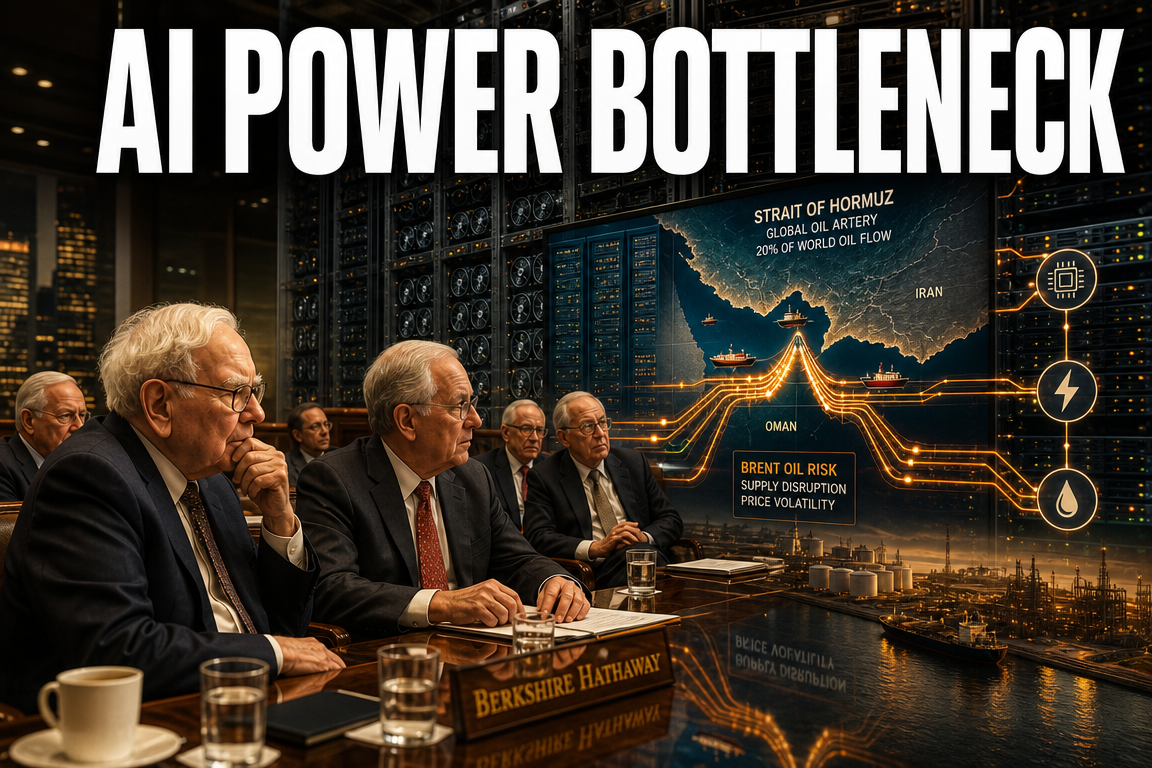
The Strait of Hormuz is a critical route for global oil flows.
If it is disrupted, supply concerns could intensify and Brent could move above $100.
Goldman Sachs noted that OECD commercial diesel inventories and U.S. strategic petroleum reserve levels are at their lowest since 2017.
That means the buffer that previously absorbed shocks is thinner.
If the Strait of Hormuz were actually blocked, Brent could move toward $120, according to some warnings.
That said, a direct move to $120 is not the base case.
China still has ample crude inventories and could reduce imports or draw on reserves if prices spike.
For now, the more plausible scenario is that oil remains sticky in the $90 range and tests the psychological $100 level.
The problem is that higher oil prices could revive inflation pressure.
That would weaken expectations for Fed rate cuts.
When rates, oil, and the dollar move together, equity market volatility tends to rise.
8. Tariff Risk Returns: 50% for Canada, 25% for Brazil, and Up to 200% for Generic Drugs
Tariff risk is also increasing again.
As the legal deadline for broad tariffs approaches, the Trump administration is considering alternative measures.
A 50% tariff has been discussed for Canada.
The rationale includes restrictions on U.S. liquor, dairy, and auto exports.
For Brazil, a 25% tariff has been mentioned, and for imported generic drugs, tariffs of up to 200% have been raised.
Tariffs are not just trade policy.
They raise costs, pressure inflation, and disrupt supply chains.
They can also increase policy uncertainty, which tends to support safe-haven flows and a stronger dollar.
A stronger dollar creates pressure on emerging-market currencies and Asian currencies.
That links tariff risk to KRW/USD, USD/JPY, and the yuan.
9. Yen Weakness to 163: A 40-Year Low for the Currency, and the Won Is Not Immune
USD/JPY touched 163, the weakest yen level since 1986.
This indicates that the yen is under structural pressure.
Japan has maintained highly accommodative monetary policy for an extended period.
Combined with U.S. high rates, a strong dollar, and tariff risk, this has intensified yen weakness.
Some market participants see room for USD/JPY to move toward 170.
The issue is that yen weakness also affects the won.
The won and the yen have historically shown strong correlation.
That is partly because Korea and Japan compete in export sectors, and global investors often sell Asian currencies as a basket.
KRW/USD is currently holding in the 1,480 range.
Foreign buying in the KOSPI and semiconductor optimism have supported the won to some extent.
However, if tariff risks rise further and the yen continues toward 170, it will be difficult for the won to remain independently strong.
USD inflows related to the SK hynix ADR and domestic capital conversion could provide near-term support for the won.
For example, investments related to the Cheongju plant could generate demand for won conversion.
However, whether this can offset a broader strong-dollar trend over the long term is a separate question.
10. Reported Expansion in SpaceX Short Interest to $25 Billion: Risk Premiums Are Rising for Private Mega-Cap Growth Assets
The original headline also referred to SpaceX short interest expanding to $25 billion.
Because SpaceX is a private company, this is not as straightforward to interpret as short interest in a listed stock.
Still, the fact that this number is being discussed in the market is significant.
First, it may reflect growing skepticism toward highly valued private technology companies.
As valuations rise in AI, aerospace, robotics, and defense tech, some investors are becoming more focused on overheating risk.
Second, rates and liquidity remain central.
In a high-rate environment, companies valued primarily on long-duration growth assumptions become more sensitive to discount rates.
SpaceX, with its strong long-term growth narrative, can be affected by changes in that environment.
Third, expanded short interest is not necessarily a purely negative signal.
It may include private shares, derivatives, and hedging activity in related listed securities.
Accordingly, it is more accurate to view this as a sign that the market is tightening risk management around large growth assets rather than as evidence that SpaceX’s business fundamentals have weakened.
11. Key Points Investors Should Monitor Today
First, Alphabet’s AI capital spending.
If Google says it will continue expanding AI data center investment, sentiment toward semiconductors and power infrastructure could improve.
Second, GE Vernova’s order flow in grid infrastructure and gas turbines.
Although the stock fell due to weakness in wind, the AI power bottleneck remains favorable for its core businesses.
Third, whether Brent crude breaks above $100.
If oil moves above that level, inflation and rate-cut expectations would face immediate pressure.
Fourth, the possibility of USD/JPY reaching 170.
Further yen weakness could push KRW/USD back toward 1,500.
Fifth, tariff risk.
If Trump-era tariffs intensify, global supply chains, import prices, corporate margins, and dollar direction could all shift at once.
The Most Important Point Rarely Emphasized in Other Coverage
The key issue today is not whether semiconductors are up or down.
The real story is that the bottleneck in the AI data center cycle is shifting from semiconductors to power infrastructure.
GE Vernova’s stock decline may look disappointing.
However, excluding wind, demand for gas turbines, grid infrastructure, next-generation transformers, UPS systems, and related AI power equipment remains strong.
Large technology companies no longer view power firms as simple suppliers.
They now treat them as technology partners needed to keep AI data centers operating reliably.
This shift is highly relevant for investment strategy.
AI investing is not only about Nvidia.
It is a broad infrastructure cycle that includes AI semiconductors, servers, power grids, gas turbines, cooling, nuclear power, and transformers.
Ultimately, the next AI rally may depend not only on who makes the GPUs, but on who can provide the electricity needed to run them reliably.
< Summary >
U.S. equities were mixed, but S&P 500 earnings guidance remains strong.
Semiconductor stocks corrected, but AI infrastructure demand has not yet weakened.
GE Vernova declined on wind-related weakness, but gas turbines and grid infrastructure were strong on AI data center demand.
The key issue in Alphabet’s earnings is whether AI capital spending remains elevated.
Brent crude touched $95, and Strait of Hormuz risk is reviving inflation concerns.
Trump tariff risk may add pressure to the dollar and global supply chains.
The yen weakened to 163, and the won may face renewed downside pressure.
Reported expansion in SpaceX short interest suggests growing risk management around highly valued growth assets.
The most important investment theme is that the AI bottleneck is expanding from semiconductors to power infrastructure.
[Related Articles…]
- Why AI Data Center Power Infrastructure Is the Next Investment Cycle
- Yen Weakness and KRW/USD Outlook in a Strong-Dollar Environment
*Source: [ Maeil Business Newspaper ]
– 치솟는 유가, 브렌트유 $95불 터치ㅣ스페이스X 공매도 잔액, $250억까지 확대ㅣ엔화값 급락 40년만에 163엔선ㅣ홍키자의 매일뉴욕