● AI CAPEX Shock
Big Tech AI Investment Expansion and Semiconductor Outlook: What Google and Tesla Earnings Revealed About the True Market Direction
What really matters in this earnings season is not the stock declines of Google and Tesla themselves.
The core point is that even if Big Tech earnings are strong, stock prices can still be pressured, and on the other hand, the semiconductor outlook can become even stronger.
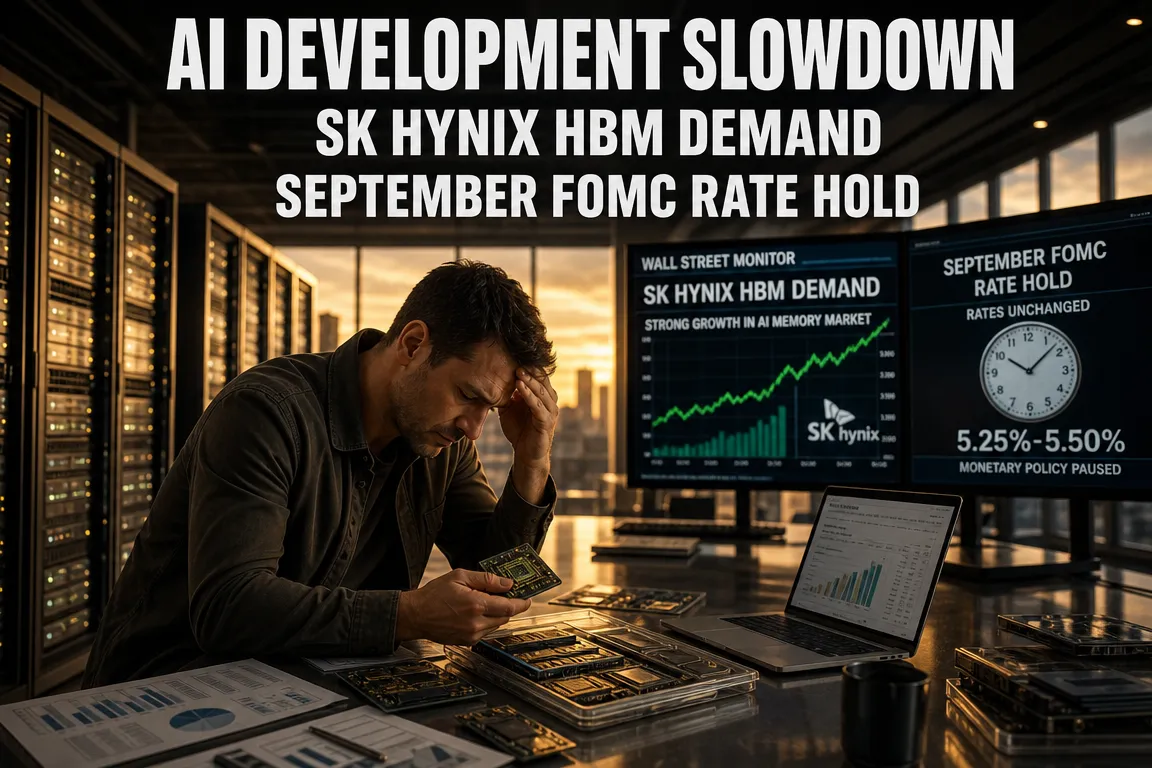
In particular, Google’s expanded AI investment, cloud growth rate, data center infrastructure shortage, HBM memory demand, and hyperscaler capital expenditure trends are all pointing in the same direction.
In simple terms, the U.S. stock market is entering a phase where it is reacting more sensitively to “bottleneck companies that actually absorb AI investment money” than to “companies that are good at AI.”
In this article, we will organize the hidden meaning of Google and Tesla earnings, the impact of Big Tech CAPEX expansion on semiconductor stocks, and the core point the market has not yet fully priced in, in a news-style format.
1. Google Earnings Core Point: The AI business was strong, but the market worried about CAPEX
Google’s earnings were not bad on the surface.
In fact, the AI and cloud segments posted very strong numbers.
But the stock fell in after-hours trading.
The reason is simple.
Google said it would spend too much money on AI.
- Google’s revenue beat market expectations by about $3 billion.
- EPS appeared very high on the surface, but it should be interpreted as including unrealized gains on equity securities.
- Excluding those gains, actual earnings can be seen as slightly below market expectations.
- The biggest burden was that the 2026 AI-related CAPEX outlook was raised above previous expectations.
Based on the original source, Google was said to potentially expand 2026 capital expenditures to around $195 billion to $205 billion.
In Korean won, that is a massive investment of roughly 300 trillion won.
Given that the existing market estimate was around $180 billion to $190 billion, Wall Street reacted to the fact that it is spending more than expected.
2. Google Cloud growth in the 80% range: the numbers are strong, but the issue is the speed of money spending
The most impressive part of Google’s earnings was cloud.
The original text mentioned Google Cloud growth at around 81.8%.
This is a very strong trend even compared with AWS and Microsoft Cloud growth rates.
- AWS was described as growing at around the 30% range.
- Microsoft Cloud was described as growing at around the 40% range.
- Google Cloud, with growth in the 80% range, showed that AI demand is being converted into actual revenue.
The problem is that no matter how well cloud grows, data center investment is moving faster than operating cash flow.
Subtracting CAPEX from operating cash flow gives free cash flow, or FCF.
But if CAPEX rises too quickly, FCF can shrink or even turn negative.
For investors, this is a burden.
That is because if FCF decreases, share buyback capacity weakens, and in some cases the possibility of bond issuance or new share issuance also rises.
In other words, Google’s AI business is doing well, but the money required to sustain that AI growth is increasing too fast.
3. The real meaning of Google’s stock decline: not “lack of AI demand,” but “lack of AI supply”
The most important line in this Google earnings report is the expanded use of external computing capacity.
Google said it can use more external capacity to meet AI demand.
This does not simply mean renting a few servers.
It means that current internal data centers alone are not enough to handle all AI computing demand.
If even a hyperscaler like Google is short on computing, then the AI infrastructure bottleneck should be viewed as far more serious than expected.
- Demand for external GPU cluster leasing may increase.
- Additional contract opportunities for AI cloud companies such as CoreWeave and Nebius may grow.
- Demand for data center infrastructure, power equipment, cooling systems, and optical communications networks may become stronger.
- Expanded AI investment is highly likely to translate into semiconductor demand.
The reason the market sold Google stock is not because AI is failing.
Rather, AI is doing so well that the need to spend more money to support that demand became a burden.
4. Tesla earnings core point: revenue held up, but profitability and cash flow were a burden
Tesla earnings delivered a similar message.
Revenue was better than expected, but EPS missed market expectations.
As a result, the stock fell in after-hours trading.
Tesla is also not simply an EV company; it is a company that must be viewed through AI, robotics, autonomous driving, and data center investment as well.
- Tesla showed a relatively solid revenue trend.
- However, cost increases and profitability pressure continue.
- Investment burdens for AI training data centers and in-house computing infrastructure are growing.
- Concerns about weakening cash flow weighed on the stock.
In Tesla’s case too, the vision remains strong, but the market is looking at profitability and cash flow that can be confirmed in the numbers right now.
In the AI investment era, a growth story alone is not enough, and financial strength to absorb investment costs has become more important.
5. The formula for analyzing Big Tech earnings is changing
When looking at Big Tech earnings in the past, we mainly focused on revenue growth, cloud growth, and operating margin.
But in the AI era, the formula is changing.
Now, growth rates and cloud results alone are not enough.
CAPEX must also be considered.
In one sentence, it can be summarized like this.
Big Tech valuation in the AI era = growth rate × cloud growth ÷ CAPEX burden
Even if cloud grows well, stock prices can be pressured if CAPEX rises faster.
Conversely, if hyperscalers increase CAPEX, the semiconductor, memory, network, and power infrastructure companies that receive that money can benefit.
That is why, in today’s market, where AI investment money flows has become more important than Big Tech earnings themselves.
6. Why the semiconductor outlook is getting stronger: Big Tech is not cutting spending
The message this Google earnings report gives semiconductor investors is clear.
If hyperscalers continue expanding AI investment, semiconductor demand will not easily weaken.
In particular, bottlenecks in HBM, GPUs, ASICs, network equipment, and data center power infrastructure remain strong.
- If Google increases CAPEX, demand for TPUs, GPUs, and ASICs could rise.
- Companies related to custom AI semiconductors such as Broadcom may benefit.
- NVIDIA GPU demand is likely to remain strong.
- HBM and server memory are key components in advanced AI servers.
- Interest may continue in memory companies such as SK hynix, Samsung Electronics, and Micron.
The most important thing in the semiconductor outlook is not simply that “AI is good.”
It is that the amount of memory required per AI server continues to increase.
For next-generation AI accelerators such as Blackwell, Rubin, and AMD MI450, the amount of HBM installed is being described as increasing further.
As AI models get larger, compute requirements increase, but at the same time memory bandwidth and capacity requirements also explode.
7. HBM and server memory: moving to the center of AI CAPEX
The most aggressively presented point in the original text is the forecast that the memory share of hyperscaler CAPEX will rise sharply.
It was mentioned that by 2026, the memory share of AI-related CAPEX could rise to around 35%.
There was also an outlook that this share could expand to around 48% by 2027.
Of course, because these figures are very aggressive assumptions, it is better to interpret them as directionality rather than as a confirmed forecast.
But the important thing is the direction.
The fact that memory accounts for an increasing share of AI data center costs is a clear trend.
- As AI accelerator performance rises, HBM capacity per device increases.
- High-bandwidth memory demand is increasing in both training and inference.
- With supply constrained, upward price pressure may continue.
- The possibility of improved operating margins for memory companies may grow.
However, if memory prices rise too quickly, it becomes a burden for hyperscalers.
If most data center investment costs flow into memory, long-term pricing pressure on customers can also increase.
In other words, it is a short-term positive for memory companies, but excessively high prices can create correction pressure in the long term.
8. Why AI bottleneck stocks are getting attention: this is a phase where the receiver is more favorable than the spender
Simply dividing the current market structure gives two groups.
The first is hyperscalers that execute AI investment.
Google, Microsoft, Meta, Amazon, and Tesla belong here.
The second is AI bottleneck companies that receive that investment money as revenue.
Companies such as NVIDIA, Broadcom, AMD, TSMC, SK hynix, Samsung Electronics, Micron, Lumentum, Vertiv, and GE Vernova can fall into this category.
Right now, companies that receive money may be more favorable than companies that spend it.
Google’s earnings showed exactly that structure.
- Google must increase CAPEX because AI demand is strong.
- Google stock may be pressured by FCF 부담.
- Conversely, GPU, HBM, network, and power infrastructure companies can see larger revenue opportunities.
- If this structure repeats, a leadership trend centered on AI bottleneck stocks could continue.
9. AI infrastructure groups with the greatest potential benefit
If AI investment expansion is viewed only through semiconductors, a lot can be missed.
AI data centers do not run on GPUs alone.
They need memory, networks, power, cooling, cloud capacity, and equipment supply chains.
9-1. AI accelerators and custom semiconductors
- NVIDIA is the core of the GPU ecosystem.
- Broadcom is connected to demand for custom ASICs such as Google TPU.
- AMD is aiming to expand the AI accelerator market through the MI series.
- TSMC is a key supply chain player for advanced process nodes and packaging.
Even if Big Tech expands in-house chips, that does not mean NVIDIA demand disappears immediately.
Rather, the overall demand for AI computing may expand so much that GPUs and ASICs can grow simultaneously.
9-2. HBM and server memory
- SK hynix has a strong position in the HBM market.
- Samsung Electronics’ HBM competitiveness recovery and large-scale production capacity are key.
- Micron is drawing attention as a U.S.-based memory supply chain player.
As AI servers become more advanced, the strategic value of memory semiconductors may grow even further.
In particular, in the semiconductor outlook, HBM is being revalued not just as a cyclical industry, but as an AI infrastructure bottleneck.
9-3. Networks and optical communications
- In AI data centers, networks that connect GPUs quickly are important.
- Demand for optical components and switches may increase.
- Optical communications companies such as Lumentum may benefit from data center expansion.
In AI model training, data transfer speed is as important as GPU performance.
If the network becomes a bottleneck, even expensive GPUs cannot be used properly after purchase.
9-4. Power, cooling, and data center infrastructure
- GE Vernova is connected to power infrastructure expansion.
- Vertiv stands out in data center power and cooling solutions.
- AI data centers have much higher power density than traditional cloud data centers.
Going forward, the most underestimated bottleneck in AI investment may be power.
Even if you have GPUs, without enough power you cannot run the data center.
Even if cooling is insufficient, server density cannot be increased.
9-5. AI cloud capacity leasing companies
- CoreWeave is drawing attention as a GPU cloud infrastructure company.
- Nebius may also be connected to AI cloud capacity demand.
- Google’s statement that it will use external capacity means these companies’ bargaining power could increase.
Even if hyperscalers continue building their own data centers, short-term demand surges can only be handled by leasing external capacity.
This is a point that the market has not yet fully focused on.
10. Google’s AI competitiveness risks: Gemini, coding performance, and talent outflow
Google is a full-stack AI company.
It has Search, YouTube, Cloud, Android, Workspace, TPU, and Gemini all together.
Very few companies in the world have this kind of ecosystem.
However, it is not a situation where one can be completely relaxed about AI competition.
- Market expectations for some Gemini versions continue to rise.
- In particular, coding performance is an important benchmark in competition with GPT and Claude.
- The original text mentioned possible delays in the launch of Gemini 3.5 and the possibility of missing internal targets.
- The movement of key Google AI talent to OpenAI, Anthropic, and others was also pointed out as a risk.
The reason coding performance matters in the AI industry is simple.
It is an area where enterprise customers actually pay for productivity gains.
Developer productivity, code generation, and automation agents are core markets for AI monetization.
To avoid falling behind in this area, Google may need more TPU, GPU, and data center investment.
In the end, even to defend technological competitiveness, CAPEX is difficult to reduce.
11. Other Big Tech companies also find it difficult to reduce CAPEX
Google is not the only company increasing AI investment.
Meta, Amazon, and Microsoft also cannot sit out the AI race.
Once they fall behind, long-term competitiveness in cloud, advertising, search, productivity software, and developer platform markets can weaken.
- Meta was described as continuing to expand large-scale data center investments.
- AWS can be interpreted as trying to secure investment capacity through recent bond issuance.
- Microsoft is in a situation where it must balance stock price defense and CAPEX expansion.
- Amazon, Meta, and Google all find it difficult to step back from the AI infrastructure competition.
According to Morgan Stanley’s outlook, hyperscaler capital expenditures are likely to continue rising.
The original text also introduced the view that AI CAPEX in 2027 could exceed $1 trillion and reach around $1.23 trillion.
What matters more than whether that number is exactly right is the direction.
AI infrastructure investment has not yet slowed, and market expectations are shifting toward even larger expansion.
12. Market strategy: hyperscalers and AI bottleneck stocks must be viewed differently
The most important question in the coming earnings season is one thing.
It is not “Is this company making money from AI?” but “How much more money does it need to spend because of AI?”
For hyperscalers, stronger AI demand means larger CAPEX.
In this case, it can be a burden on the stock price in the short term.
On the other hand, for AI bottleneck stocks, hyperscaler CAPEX expansion can directly translate into revenue growth.
- Big Tech earnings should be viewed together with cloud growth and CAPEX growth rates.
- Semiconductor stocks can react sensitively to hyperscaler investment guidance.
- HBM, GPU, ASIC, network, and power infrastructure companies are the core beneficiaries of the AI investment cycle.
- However, valuation pressure after a short-term surge must always be monitored.
At this stage, companies that sell AI infrastructure may have stronger earnings sensitivity than companies that simply use AI.
That does not mean one should buy specific stocks unconditionally.
You should also consider how much AI investment expansion is actually translating into revenue and profit, and how much of the market expectation has already been priced in.
13. The most important point that other YouTube videos or news outlets do not explain well
The most important point in this earnings report is that Google’s stock decline is not bad news for semiconductors.
People generally think that when Big Tech stock prices fall, AI investment has also weakened.
But this time, it is the opposite.
The reason Google’s stock fell is not that AI demand is weak, but that more money has to be spent to handle AI demand.
This is actually a strong signal for semiconductors, memory, networks, and power infrastructure.
More importantly, it is the expanded use of external computing capacity.
If a company like Google has to lease external GPU cloud capacity, then the current AI computing bottleneck may be far more serious than the market expected.
This is not something that is usually covered well in simple earnings articles.
But from an investment perspective, it is very important.
Because the more severe the bottleneck, the more pricing power shifts to suppliers.
If HBM supply is tight, memory companies benefit.
If GPUs are in short supply, AI accelerator companies benefit.
If power is insufficient, power equipment and cooling companies benefit.
If networks are constrained, optical communications and switch companies benefit.
In the end, the core of the AI era is shifting away from “who built the coolest AI service” toward “who controls the bottlenecks needed to run that AI.”
14. Earnings releases to watch going forward
This earnings season is likely to determine the direction of the U.S. stock market.
In particular, to confirm AI investment and the semiconductor outlook, the earnings and guidance of the following companies should be watched closely.
- SK hynix: HBM pricing, shipment volume, and customer demand are key.
- Samsung Electronics: HBM competitiveness recovery and the pace of memory market improvement are important.
- Micron: Server DRAM and HBM profitability outlook need to be watched.
- Meta: Expanded data center investment and improved AI ad efficiency are the key points.
- Microsoft: Azure growth rate and CAPEX guidance are key.
- Amazon: AWS growth rate and AI infrastructure investment plans need to be checked.
- AMD: MI series demand and AI GPU revenue guidance are important.
- NVIDIA: Blackwell demand, Rubin expectations, and supply chain bottlenecks are key.
- Palantir: AI software monetization and enterprise customer expansion are important.
- CoreWeave and Nebius: It is important to see whether AI cloud leasing demand is actually translating into results.
The winners this season may not simply be the companies that beat EPS.
Companies where revenue and profit both grow amid expanded AI CAPEX are highly likely to become the real leaders.
< Summary >
Google and Tesla earnings showed that AI demand is strong but CAPEX pressure is growing.
Google Cloud growth was very strong, but the expansion of AI investment translated into an FCF burden and pressured the stock price.
Tesla also held up in revenue, but profitability and cash flow pressures continued.
The important thing is that the decline in Big Tech stock prices is not bad news for semiconductors.
As hyperscalers increase AI investment, GPU, HBM, ASIC, network, power, cooling, and data center infrastructure companies can benefit.
Going forward, Big Tech earnings should be viewed not only through growth rates and cloud, but also through CAPEX burdens.
The core investment point in the AI era is shifting from “companies that use AI” to “companies that control AI infrastructure bottlenecks.”
[Related Articles…]
- AI Semiconductor Supercycle and HBM Investment Points
- Big Tech Earnings Season and U.S. Stock Market Outlook
*Source: [ 월텍남 – 월스트리트 테크남 ]
– 빅테크의 AI투자는 계속됩니다. 반도체는 더 올라가네요