● Volatility Shock, Capital Cut, Survival First
Super Investors’ Survival Guide for Volatile Markets: The Priority Is Not What to Buy, but How Much to Cut
The core message is straightforward.
In a volatile market, portfolio performance is determined less by stock-picking skill than by capital discipline and psychological control.
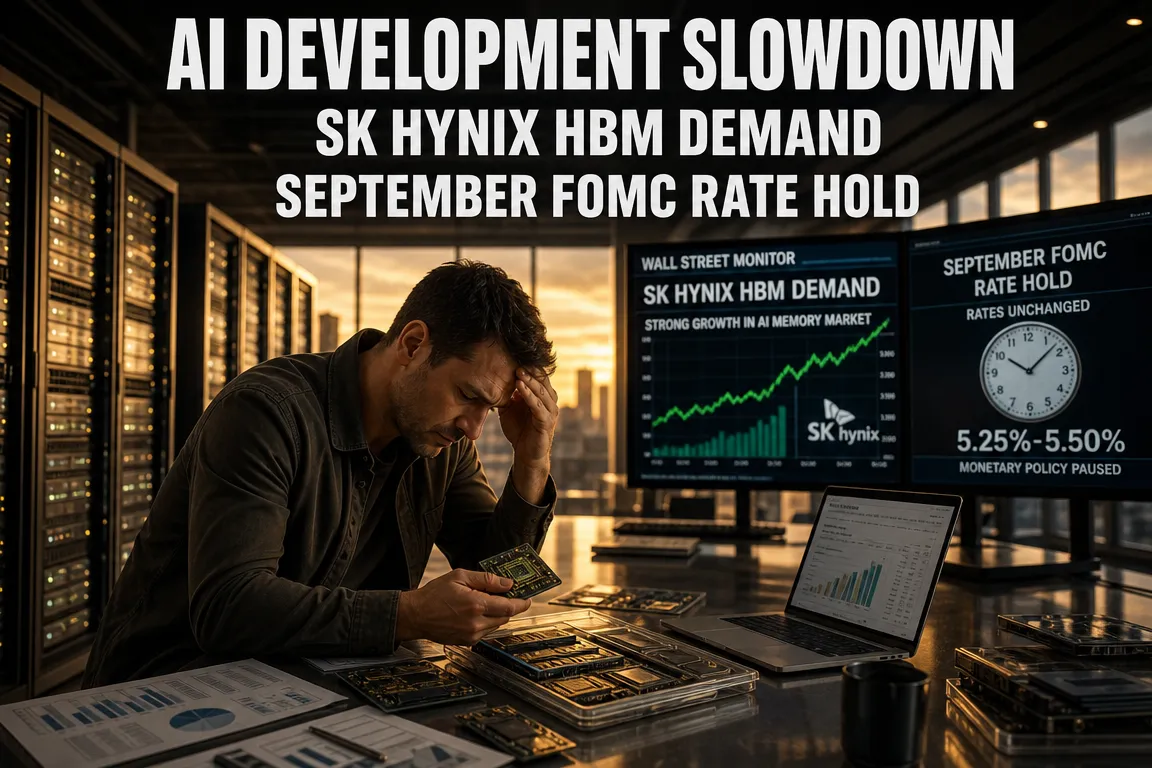
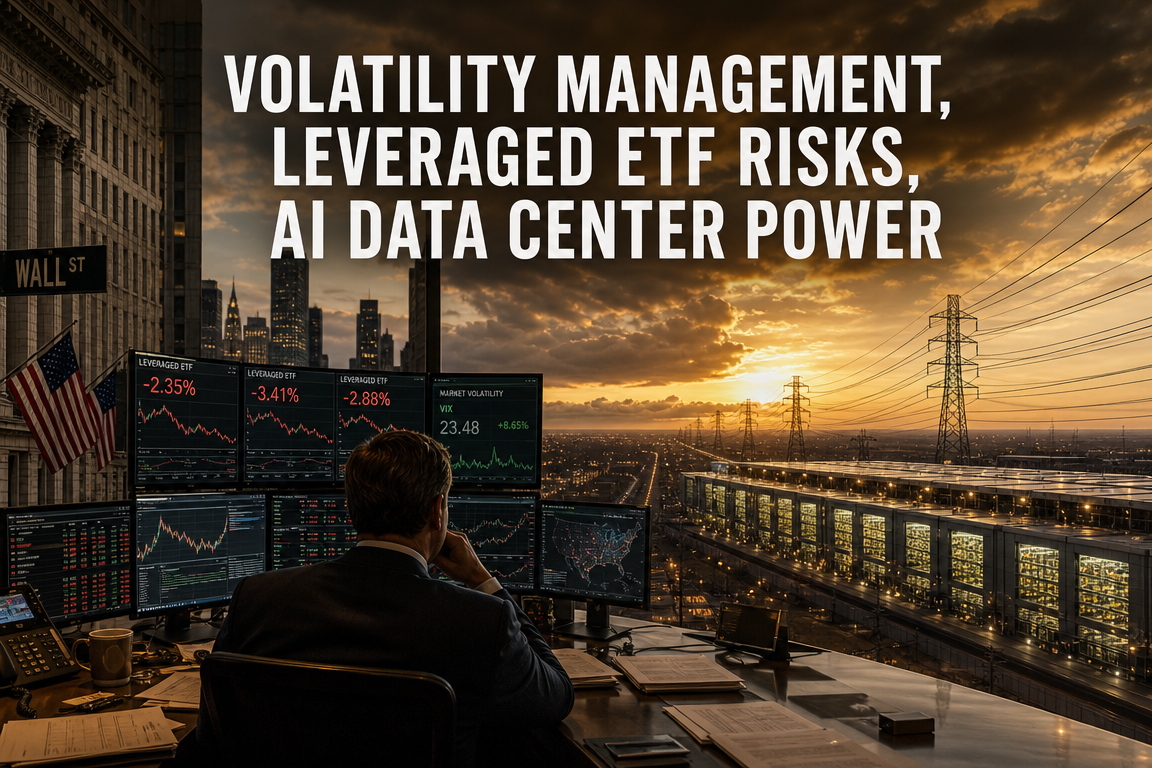
This is particularly relevant as semiconductor ETFs, leveraged ETFs, National Pension Service rebalancing, the Philadelphia Semiconductor Index, and the movements in Samsung Electronics and SK Hynix are all interacting at once, driving volatility significantly higher than in the past.
Although headlines emphasize “Samsung Electronics has strong earnings,” “SK Hynix is strong,” and “AI semiconductor demand remains firm,” the key macro drivers are global growth and the semiconductor cycle.
Accordingly, the central question for investors is not whether prices will rise or fall, but whether their portfolios are structured to withstand volatility.
1. The Nature of Volatile Markets: Investing Requires Correctly Assessing Both Direction and Volatility
Tax accountant Lee Jeong-yun described the stock market as a game with two dimensions.
The first is direction.
That is, determining whether the market or a specific stock will rise or fall.
The second is the ability to withstand volatility.
Most retail investors focus only on direction.
They buy when prices rise and sell when prices fall.
However, in a volatile market, even a broadly correct directional view is insufficient if portfolio swings are too large to endure.
Whereas a 100 million won investment might have moved only 2% to 3% over a week in the past, markets can now move 5% to 10% in a single day or week.
That implies a 100 million won portfolio can fluctuate by 10 million to 20 million won over a short period.
At that level of volatility, maintaining rational judgment becomes difficult even for experienced investors.
2. The First Survival Rule: Reduce the Size of the Investment
The basic response to a volatile market is simple.
Lee Jeong-yun emphasized that reducing invested capital is the most fundamental adjustment.
For example, if a 100 million won position once moved by about 2 million won, the same position in today’s market may fluctuate by more than 10 million won.
Reducing the investment to 50 million won cuts the impact of a 10% move in half.
In other words, reducing position size is not a sign of fear. It is a way to restore portfolio resilience when market volatility has increased.
If volatility has become three to four times larger, capital allocation should be adjusted accordingly to preserve a similar psychological state.
In the current macro environment, the key issue is not only interest rates or recession risk, but also whether capital allocation has been adjusted to match market volatility.
3. Upward and Downward Volatility Must Be Viewed Together
Many investors associate volatility only with falling markets.
When prices are rising, higher volatility is often tolerated because account values are increasing.
However, volatility refers to the degree of deviation from the average.
Therefore, sharp advances are also volatility, and sharp declines are also volatility.
The discussion noted that recent volatility became more visible during the decline, but volatility had already been extreme during the preceding rally.
If an index or a group of stocks rises severalfold in a short period, that is itself a record level of upward volatility.
Rising volatility feels acceptable during gains, but becomes fear during declines.
Investors should therefore avoid viewing markets as “safe when they rise, dangerous only when they fall.”
4. Managing Greed and Fear: 3M Matters More Than Trading Methods
Many investors search for trading systems.
They study chart patterns, flow-based strategies, earnings analysis, valuation, and growth investing.
However, the same method can produce different outcomes depending on the investor.
Lee Jeong-yun explained this through 3M.
The first M is Method.
This includes trading systems, chart analysis, fundamental analysis, and macro analysis.
The second M is Money.
This refers to capital management.
It includes how much to invest, how much cash to keep, and how much loss can be tolerated.
The third M is Mind.
This is psychological control.
It is the ability to manage greed and fear.
Most retail investors focus mainly on Method.
However, in a volatile market, even a good method is ineffective if Money and Mind are not managed properly.
Fear is reduced when the possibility of loss is accepted in advance.
Because equities are a probability-based investment, losses are always possible.
At the same time, greed should be controlled to a level consistent with the expectation of a risk premium over bank deposits.
The objective is not to outperform others at any cost, but to pursue rational returns relative to risk.
5. The Difference Between Bank Deposits and Equity Returns: Understanding the Risk Premium
Bank interest is paid at nearly the same rate to everyone.
It does not pay more to skilled investors or less to unskilled investors.
Equity returns are different.
Even in the same bull market, some investors lose money, while others are able to defend their capital more effectively in a bear market.
The difference comes from study, experience, capital management, and psychological discipline.
From a financial management perspective, equity returns are composed of the risk-free rate plus a risk premium.
Investors seeking returns above bank deposits must accept corresponding volatility and loss potential.
Without this understanding, investors tend to sell in panic during declines and enter too aggressively during rallies.
6. Drivers of Increased Volatility: National Pension Service Rebalancing and Leveraged ETFs
The discussion identified National Pension Service rebalancing and leveraged ETFs as domestic factors contributing to recent volatility.
Large-scale selling pressure may emerge as the National Pension Service adjusts its domestic equity allocation, which can weigh on the market.
Concerns were also raised about potential fund flows on the order of 55 trillion won, suggesting a period of market consolidation.
In addition, rising trading in single-stock leveraged and inverse ETFs has amplified volatility.
However, the key point is that leveraged ETFs do not create market direction.
They amplify the speed and magnitude of existing moves.
The underlying causes are separate, while leveraged ETFs act as a magnifier of the trend.
7. The True Higher-Level Variables: Global Growth and the Philadelphia Semiconductor Index
Lee Jeong-yun identified global growth and the Philadelphia Semiconductor Index as more important higher-level variables than domestic factors.
This means that Korean equities do not move solely on headlines such as strong earnings at Samsung Electronics or SK Hynix.
Because Korea has heavy exposure to semiconductors, the market is strongly influenced by the global semiconductor cycle.
If the Philadelphia Semiconductor Index moves by around 5% in a single day, Korean large-cap semiconductor stocks are unlikely to remain unaffected.
Samsung Electronics, SK Hynix, semiconductor ETFs, and AI semiconductor-related names are all connected to global capital flows.
To understand Korean market volatility, investors must monitor not only domestic supply and demand but also U.S. equities, the Philadelphia Semiconductor Index, the AI investment cycle, and capital expenditure trends among hyperscale companies.
8. Why AI Semiconductors Matter: Hyperscaler Profitability Is Driving Market Moves
AI is at the center of the semiconductor market.
NVIDIA GPUs, HBM, data center investment, cloud infrastructure, and AI server demand have supported semiconductor earnings.
However, the market does not focus only on current earnings.
It is also assessing whether hyperscale companies will continue to spend heavily on AI infrastructure over the next year.
If the profitability of AI investments by large technology companies is questioned, semiconductor stock prices may weaken first.
This is a key point often missed in general news coverage.
Strong AI demand does not necessarily mean that AI investment will continue to deliver strong returns.
The market is increasingly asking how quickly AI spending will translate into actual profits.
Accordingly, AI trend analysis should consider not only technological growth but also earnings, cash flow, capital expenditure burden, and the risk of a broader economic slowdown.
9. The Biggest Risk of Leveraged ETFs: Prices Can Erode Even When the Direction Is Correct
The strongest warning in the discussion concerned leveraged ETFs.
In particular, holding single-stock leveraged ETFs for the long term was described as highly risky.
The reason is the compounding effect.
Leveraged ETFs are designed to track two times or more of the underlying asset’s daily return.
The problem arises when prices move up and down repeatedly.
Even if the underlying asset eventually returns to the starting point, the leveraged ETF may not.
For example, if the underlying asset rises one day and falls the next, the leveraged ETF may gradually lose value over time.
This is often described as “melting like ice cream.”
The discussion also noted that certain single-stock leveraged ETFs have remained well below the level of the underlying stock since listing.
That is, the underlying stock may have returned to a similar price, while the leveraged ETF remains lower.
This is why leveraged ETFs are dangerous in a volatile market.
10. Leveraged ETFs Are Not Suitable for Most Investors
Leveraged ETFs should not be treated as long-term investment products.
The assumption that “if SK Hynix is strong, I should use 2x leverage” or “if Samsung Electronics is rising, I should hold a leveraged ETF long term” is risky.
The discussion limited appropriate use of leveraged ETFs to very short-term trading.
Examples included buying at the open and selling ten minutes later, or buying near the close and selling the next morning.
Even this approach requires a high level of execution skill.
It demands real-time decision-making, strict stop-loss rules, trading cost awareness, and psychological discipline.
For most retail investors, long-term holding of leveraged ETFs is not appropriate.
In a volatile market, leveraged products can amplify losses and psychological pressure rather than returns.
11. What Circuit Breakers and Sidecars Signal
The discussion cited the rising frequency of circuit breakers and sidecars as evidence of a volatile market.
These are safety mechanisms triggered when the market moves too sharply.
Their frequent activation indicates that price fluctuations are exceeding normal ranges.
It was also argued that the introduction of single-stock leveraged ETFs increased intraday volatility.
This does not mean that leveraged ETFs are the sole cause.
However, in an environment where global semiconductor volatility is already elevated, these products may have intensified the movement.
12. The Most Important Points That Are Often Missed in Other Coverage
First, the real driver of volatility is the semiconductor cycle, not leveraged ETFs.
Leveraged ETFs only magnify volatility; the top-level drivers are the global semiconductor industry and global growth.
Second, it is not enough to say AI semiconductor demand is strong.
The more important question is whether hyperscale companies can sustain profitable AI infrastructure investment.
Third, National Pension Service rebalancing affects short-term supply and demand, but it is not the core of the market.
Large-scale selling can trigger corrections, but long-term direction is determined by global growth and corporate earnings outlooks.
Fourth, leveraged ETFs can generate losses even when the direction is correct.
Due to compounding effects, the product may decline even if the underlying asset returns to its original level.
Fifth, the best strategy in a volatile market is not to be right more often, but to build a structure that swings less.
Reducing position size, increasing cash allocation, and accepting the possibility of losses in advance are central to survival.
13. A Checklist for Individual Investors
1. Check whether your position size is appropriate for current volatility.
If you are using the same capital as before, your risk may now be several times higher.
2. Review whether you are holding leveraged ETFs for the long term.
If the purpose is long-term investment, the product structure may be unsuitable.
3. Confirm whether your semiconductor view is based only on domestic headlines.
Samsung Electronics and SK Hynix are tied to the Philadelphia Semiconductor Index, U.S. technology capex, and AI data center demand.
4. Verify that you entered with an understanding of loss risk.
Investments made without acknowledging losses tend to lead to panic selling during declines.
5. Treat cash allocation as a strategy.
Cash is not idle capital; it is an option to capture future opportunities in a volatile market.
14. Reframing the Discussion from a Macro Perspective
This volatile market is not a simple equity correction.
It reflects a complex interaction of the AI semiconductor investment cycle, global growth concerns, National Pension Service rebalancing, greater use of leveraged ETFs, and retail investor concentration.
Looking ahead to the 2026 economic outlook, semiconductors and AI infrastructure investment remain central themes.
However, the market is increasingly focused not just on growth potential but on profitability and sustainability.
As a result, the more relevant question is no longer whether AI will grow, but how quickly AI investment will translate into corporate earnings.
From an equity investment perspective, reducing exposure, strengthening capital discipline, and limiting leverage are rational responses in the current environment.
Ultimately, the investors who survive in the market are not those who are correct most often, but those whose portfolios are designed not to break when they are wrong.
< Summary >
The most important strategy in a volatile market is to reduce position size.
Equities are a game of both direction and volatility management.
To control greed and fear, capital management and psychological discipline matter more than trading methods.
The main domestic drivers of recent volatility are National Pension Service rebalancing and leveraged ETFs, but the higher-level variables are global growth and the Philadelphia Semiconductor Index.
AI semiconductor investment remains a core trend, but hyperscaler profitability and investment sustainability are becoming more important.
Leveraged ETFs can erode in value over time due to compounding, making them unsuitable for most retail investors as long-term holdings.
In the current market, the priority is not what to buy, but how much to reduce and how to stay positioned to withstand volatility.
[Related Articles…]
Semiconductor Cycle and Global Growth Outlook: Key Takeaways
Leveraged ETF Risks Every Investor Should Know
*Source: [ 경제 읽어주는 남자(김광석TV) ]
– 슈퍼개미가 말하는 변동성 장세에서 살아남는 법 | 경읽남과 토론합시다 | 이정윤 세무사 [1편]
● Nvidia-Korea AI Boom, HBM, Power, Datacenters
Jensen Huang’s Real Reason for Prioritizing Korea: The Money Flow Behind the “U.S.-Korea AI Alliance” Built on AI Data Centers, HBM, and Power Infrastructure
The core of this issue is not a simple photo op over beer.
It is a flow that connects NVIDIA’s GPU revenue, SK Hynix’s HBM demand, SK Telecom’s AI data center plans, Hyundai Motor’s autonomous driving ambitions, Naver’s global infrastructure, and Brookfield’s energy investments.
On the surface, it may appear that Jensen Huang is simply maintaining close ties with Korean companies. In practice, the strategy is closer to using Korea and sovereign AI demand to offset concerns about a slowdown in U.S. AI investment.
For investors, the key is to look beyond semiconductors and also consider power, cooling, nuclear power, transmission networks, and data center operators.
The real bottleneck in the market is no longer a GPU alone, but whether AI data centers can actually be built.
1. Why the San Francisco AI meeting was not a routine event
The recently referenced San Francisco AI declaration and Jensen Huang’s meetings with Korean companies carry symbolic weight.
Such photos may sometimes serve as publicity, but in major global corporate partnerships, the composition of the attendees often provides a useful investment signal.
After the first meeting, Samsung Electronics and Hyundai Motor drew attention. In the second, SK Hynix and SK Telecom appeared.
SK Telecom was later identified as a key participant in a large-scale AI data center project, clarifying why a telecom company was present in the first place.
An AI data center is not simply a server installation.
It requires GPUs, HBM, electricity, cooling infrastructure, and long-term power contracts.
For that reason, Jensen Huang’s interest in Korea is not just about the market itself, but about the fact that Korean companies hold critical pieces of the AI infrastructure supply chain.
2. Why Jensen Huang and NVIDIA need Korea
For NVIDIA, the biggest risk is a delay in AI data center construction relative to plan.
Data center buildout drives GPU sales, and GPU sales support HBM demand.
However, in the United States, AI data center projects are increasingly delayed by local opposition, higher electricity costs, water constraints, transmission shortages, and rising construction expenses.
If this trend widens, it could weigh on NVIDIA’s revenue outlook.
By contrast, if sovereign AI investment expands in Korea, the Middle East, Japan, and Europe, NVIDIA can offset delays in U.S. demand with overseas orders.
This is the rationale behind Jensen Huang’s active engagement with Korea.
Korea has the HBM and memory supply chain through SK Hynix and Samsung Electronics.
Hyundai Motor has the ecosystem for autonomous driving and robotics hardware.
Naver has data center operating experience and cloud infrastructure capabilities.
SK Telecom is positioned to connect telecommunications, data centers, AI services, and energy partnerships.
In short, Korea is both a customer for NVIDIA’s GPUs and a partner capable of co-developing AI infrastructure.
3. Why SK Telecom and SK Hynix moved to the center
The most important point in the original text is that SK Telecom sits at the center of a mega-scale AI data center project.
It was noted that a significant portion of an 18.3GW AI data center plan is being led by SK Telecom.
The key issue is not the announcement of a data center, but who supplies the GPUs and HBM that go into it.
Using a simplified cost structure, GPUs may account for about 40% of AI data center investment, memory about 15%, and power and cooling infrastructure about 25%.
On a $50 billion data center investment, GPU-related revenue alone could reach roughly $20 billion.
HBM and memory demand could add another $7.5 billion.
This means that when NVIDIA participates in a major AI data center announcement, it is effectively announcing part of its own revenue pipeline.
For SK Hynix, this also increases the likelihood of sustained HBM demand.
Although there have been concerns about the semiconductor cycle, sovereign AI data center deployment could support HBM pricing and demand for a longer period.
That could have a direct effect on the valuation of Samsung Electronics and SK Hynix, which have large weights in the KOSPI.
4. Hyundai Motor and NVIDIA: autonomous driving is only the beginning
The Hyundai Motor-NVIDIA collaboration should be viewed through the lens of autonomous driving co-development.
Autonomous driving is not simply an automotive feature, but a core AI application that extends into robotics.
NVIDIA provides the AI compute platform and software stack.
Hyundai Motor brings vehicles, robotics, and manufacturing hardware capabilities.
As autonomous driving matures, Tesla will not be the only beneficiary.
Companies such as Hyundai Motor, with global production capacity and real hardware manufacturing capabilities, may also capture significant opportunities.
If this expands into robotics, logistics automation, and smart factories, Hyundai Motor Group’s value as an AI hardware platform could rise further.
5. Why Naver and Brookfield matter: the real money is in power infrastructure
The Naver-Brookfield-NVIDIA cooperation may appear to involve an investment of around $1 billion.
However, the more important name in this partnership is Brookfield.
Brookfield is a major global asset manager with strong capabilities in infrastructure and energy investment.
Its connection to Westinghouse, a nuclear technology company, is particularly relevant from the perspective of AI data center power supply.
AI data centers are highly electricity-intensive.
Going forward, investors should track not only cloud companies, semiconductor firms, and telecom operators, but also energy investors and power supply agreements.
Brookfield has signed renewable energy supply agreements with Microsoft and a hydropower-related agreement with Google.
This reflects a broader trend in which global big tech firms are securing power assets to support AI infrastructure.
Naver has data center operating experience in Korea and can potentially extend that into overseas infrastructure businesses.
Accordingly, Naver’s AI data center strategy should be viewed not only as a search or cloud story, but also as a potential global infrastructure export model.
6. Why U.S. big tech welcomes Korea-related announcements
The U.S. equity market has recently shown signs of AI investment fatigue.
Google’s announcement of higher AI spending was followed by significant share volatility, and free cash flow concerns became more visible.
Apple has remained relatively stable by avoiding aggressive AI capex and relying more on pricing strategy.
This indicates that the market is shifting from asking how much AI companies are doing to asking when those investments will generate returns.
For NVIDIA and semiconductor firms, weakening investor sentiment is a headwind.
That is why large AI data center plans in Korea, the Middle East, and Europe are important.
If overseas sovereign AI demand supports the market while U.S. demand weakens, revenue guidance can be defended.
For companies such as SK Hynix, which have already corrected significantly from their highs, the risk of forming a short-term bottom may depend on the earnings and AI capex outlook from major tech firms.
That said, this must still be assessed alongside earnings, liquidity, foreign exchange, and interest rate conditions.
7. What investors should watch: the quiet importance of power and cooling
Most investors first focus on NVIDIA, Samsung Electronics, and SK Hynix.
That is directionally correct.
However, stocks that the market already understands tend to price in expectations quickly.
The next phase requires attention to power equipment, transformers, transmission networks, cooling systems, distribution infrastructure, nuclear power, LNG, renewables, and ESS companies.
Power and cooling account for a significant share of AI data center construction costs.
If Korea proceeds with large-scale AI data centers, there may also be policy support in the form of higher domestic equipment usage, easier power grid regulation, subsidies, and tax incentives.
In that case, under-owned domestic names could gain attention before the market fully rerates them.
Power infrastructure, in particular, cannot be expanded quickly.
That constraint gives pricing power to suppliers.
As AI data center investment increases, the earnings outlook for the power value chain could improve alongside semiconductors.
8. Why U.S. AI data center projects are delayed and what that means for Korea
In the U.S. Northeast, AI data center construction is often delayed by community opposition and power shortages.
Higher electricity costs increase the burden on local residents.
By contrast, Texas and the U.S. South have benefited from relatively abundant solar, wind, and natural gas-based power, as well as lower electricity prices, allowing AI data centers to expand more quickly.
Reports that a large share of new data center capacity is concentrated in Texas and nearby regions reflect this background.
Ultimately, electricity prices determine where AI data centers are built.
Even with sufficient GPUs, servers cannot operate without power.
The same applies to Korea.
If an 18.3GW AI data center is actually developed, electricity demand would rise sharply.
The original text suggested that annual electricity costs could exceed 25 trillion won.
Compared with Korea Electric Power Corporation’s annual revenue base, that is a very large number.
When combined with demand from robotics, EVs, and semiconductor fab expansion, power shortages are likely to remain a long-term issue.
From a global macro perspective, AI investment should therefore be viewed not only as semiconductor investment, but also as energy investment.
9. The most important points that other coverage often misses
First, NVIDIA is looking at Korea not because Korea is attractive in isolation, but because U.S. AI data center delays need to be diversified.
If U.S. data centers are not built on schedule, NVIDIA’s GPU revenue outlook becomes less certain.
If Korea builds large AI data centers, NVIDIA can offset some of that delay.
Second, the real nature of the AI alliance is commercial, not merely technological.
NVIDIA needs to sell GPUs.
SK Hynix and Samsung Electronics need to sell HBM and memory.
Hyundai Motor needs to build competitiveness in autonomous driving and robotics.
Naver needs to expand data center and cloud infrastructure.
The government benefits from KOSPI gains, higher tax revenue, and AI sovereignty.
Because these incentives align, the partnership becomes structurally stronger.
Third, the most scarce asset going forward may not be GPUs, but the ability to supply electricity cheaply and reliably.
AI data centers are ultimately a power-cost competition.
Regions with secured power grids, companies with long-term power contracts, and firms with cooling technology may emerge as quiet winners.
Fourth, if a sovereign AI boom emerges, the semiconductor upcycle could last longer than the market expects.
U.S. big tech demand alone suggests some AI investment fatigue.
However, if national-level AI infrastructure competition intensifies, demand shifts from big tech to governments, telecom operators, cloud providers, and manufacturers.
In that case, the semiconductor cycle could extend, and HBM pricing may remain resilient.
10. Key indicators for investors to monitor
- Track whether AI data center construction begins and whether power permitting progresses.
- Monitor NVIDIA’s GPU supply agreements and revenue guidance.
- Check SK Hynix and Samsung Electronics’ HBM pricing, shipment volumes, and customer diversification.
- Review order flow for Korea Electric Power Corporation, power generators, power equipment firms, transformers, and cooling infrastructure companies.
- Assess whether Naver, SK Telecom, and Hyundai Motor convert AI-related capex and partnerships into revenue.
- Monitor free cash flow and AI capex sustainability among major U.S. tech firms.
- Also track interest rates and foreign exchange movements.
- In a high-rate environment, large-scale infrastructure investment becomes more expensive, and currency moves affect semiconductor and energy import costs.
11. The strategy is to wait for the bottlenecks, not chase the move immediately
Chasing stocks that have already risen sharply is risky.
These large industrial trends unfold over years, not days.
A more practical approach is to build positions gradually during periods of correction in core names.
In particular, AI data centers, HBM, power infrastructure, cooling, nuclear power, and transmission-related companies should be viewed with a long-term horizon.
What matters more than short-term price action is actual orders, earnings recognition, policy support, and power grid availability.
Investors should focus on the flow, not just the jargon.
Capital always moves toward bottlenecks.
At present, the bottlenecks in AI are GPUs, HBM, power, cooling, and permitting.
Viewing the U.S.-Korea AI cooperation through these five constraints makes its strategic meaning much clearer.
< Summary >
Jensen Huang’s focus on Korea reflects NVIDIA’s need to protect GPU revenue and global AI data center demand.
Korea is a critical partner because it combines HBM, memory semiconductors, autonomous driving hardware, data center operations, and telecommunications infrastructure.
SK Telecom and SK Hynix are central to AI data center buildout and HBM demand.
Hyundai Motor can generate synergy with NVIDIA in autonomous driving and robotics.
The Naver-Brookfield partnership highlights that power infrastructure is central to AI data center economics.
Investors should therefore track not only semiconductors, but also power, cooling, nuclear power, transmission, and energy infrastructure.
This is not merely a short-term event; it may represent a structural change that extends the semiconductor cycle through sovereign AI demand.
[Related Articles…]
- AI Data Center Power Race and Korea’s Semiconductor Investment Outlook
- HBM Cycle and NVIDIA Supply Chain Outlook
*Source: [ Jun’s economy lab ]
– 젠슨황이 한국에 목을 매는 이유(ft.샌프란 AI 진짜의도)