● Tesla-SpaceX Merger Shock, China Risk, RoboTaxi, Premium Fight
ARK’s Tesla-SpaceX Merger Scenario: China Risk, Robotaxi Value, and Share Exchange Ratio Are the Key Variables
The key issue is not simply whether Tesla and SpaceX will merge.
The main questions are how Tesla’s China business could be separated, whether such a structure would conflict with SpaceX’s U.S. national security contracts, and what premium could be offered to Tesla shareholders.
ARK has argued that Tesla’s future value is shifting away from EV manufacturing toward an AI-based platform model centered on autonomous driving, robotaxis, and Optimus.
If that view proves correct, the strategic importance of the Shanghai factory could decline, while Tesla’s share price may become more sensitive to AI monetization than to manufacturing results.
However, Tesla and SpaceX have not announced any merger, and the discussion below summarizes ARK’s analysis and market interpretation from the source material.
1. Market Snapshot: Tesla in the $330 Range, SpaceX-Related Pricing Also Higher
- Tesla share price: Tesla closed at $330.88 in the source material, up about 0.7% on the day.
- SpaceX-related pricing: The source material stated that SpaceX was trading around $138.74, up 4.23%.
- Musk’s message: Elon Musk did not directly address the merger speculation and instead posted a message to the effect that Chinese people are remarkable and worth visiting.
The market found this noteworthy because of the timing.
Musk discussed China at the same time merger speculation around Tesla and SpaceX resurfaced.
China is the most sensitive variable in the scenario.
2. Origin of the Merger Speculation: Reports on Separating Tesla’s China Business and Musk’s Denial
According to the source material, The Wall Street Journal reported that Tesla was considering options to sell or separate its China business.
Those options reportedly included a spin-off, sale, or shutdown, with no specific timing or structure decided.
The report also said Musk had previously directed that Tesla’s U.S. and China businesses be clearly separated to preserve resilience in the event of geopolitical conflict.
This led to the view that Tesla may have been designed in advance to withstand a deterioration in U.S.-China relations.
Musk strongly denied the report.
He said the idea had never been discussed and was “fake news” in substance.
The important point is that he denied the China business separation report, but did not explicitly deny the possibility of a Tesla-SpaceX merger.
That omission has been interpreted by the market as a signal.
3. ARK’s Core Argument: China Is the Problematic Piece of the Merger Puzzle
ARK Invest analysts said Tesla’s China business could become a barrier to a Tesla-SpaceX merger.
The reason is SpaceX’s business structure.
SpaceX is heavily exposed to rockets, satellites, Starlink, and defense-related contracts tied to U.S. national security.
Tesla, by contrast, is deeply connected to China through the Shanghai factory and its China sales and supply chain.
A merger would place a U.S. strategic and security business alongside a China-linked manufacturing and sales business.
That would be difficult for U.S. regulators.
Chinese regulators could also view a combined entity with exposure to SpaceX as problematic because of data, communications, and technology overlap.
4. Proposed Solution: Ring-Fencing China Risk
ARK’s proposed solution was ring-fencing.
Ring-fencing means legally, financially, and operationally separating a business or asset so that risk does not spread to the rest of the company.
In practice, this would mean isolating Tesla’s China business in a separate structure and preventing direct linkage to SpaceX’s security-sensitive operations.
This approach is broadly consistent with the separation scenario reported by The Wall Street Journal.
Although Musk denied the China-business report, ARK argued that some form of separation would likely be necessary for any merger to move forward.
For investors, the relevant issue is not simply whether a merger is possible, but what restructuring would be required to make it possible.
In the current environment, large technology M&A is not just a financial event; it is also a regulatory and geopolitical event.
5. Timeline: Separation and Merger Review Could Take 18 to 30 Months
Industry estimates cited in the source material suggest that separating or selling the China business alone could take 12 to 18 months.
That would require regulatory approval in both the U.S. and China.
A separate merger review would then follow.
- Stage 1: Design a separation or ring-fencing structure for Tesla’s China business
- Stage 2: Obtain approval from U.S. and Chinese regulators
- Stage 3: Complete foreign investment review and securities registration steps
- Stage 4: Secure Tesla shareholder approval and finalize the exchange ratio
The full process could take 18 to 30 months.
This is not an official schedule, but an industry estimate cited in the source material.
Accordingly, an announcement within the year appears more realistic than full completion within the year.
6. Why China Matters: 18% of Tesla Revenue and the Symbolism of Shanghai
According to the source material, China accounted for about 18% of Tesla’s total revenue in the first half of the year.
More than 2 million Tesla vehicles have reportedly passed through the Shanghai factory.
These figures show that China remains a highly important market for Tesla.
The Shanghai factory is especially significant because Tesla owns it outright.
Most global automakers operate in China through joint ventures.
Tesla is an exception, and the Shanghai plant became one of Musk’s most visible successes in navigating China’s regulatory environment.
Even so, ARK believes China’s role in Tesla’s enterprise value could decline over time.
That view is based on the thesis that Tesla is evolving from a vehicle manufacturer into an AI platform company.
7. ARK’s Tesla Phase Framework: From 2.5 to 3.0 and Then 3.5
ARK describes Tesla’s development in phases.
The period focused on lowering battery costs and scaling EV production is viewed as Tesla 2.5.
In that phase, the Shanghai factory was central.
Low production cost, rapid scaling, China demand, and export capability all mattered.
ARK now sees Tesla moving into Tesla 3.0.
The key drivers in this phase are FSD, autonomous driving data, robotaxis, AI computing, and Optimus robots.
In the next phase, Tesla 3.5, an American robotaxi network could become the main driver of enterprise value.
Under that framework, the China factory would remain an important manufacturing asset, but not the principal driver of long-term valuation.
Vehicle sales would matter less than robotaxi monetization, AI execution, and software margins.
8. Why China Is Less Attractive for the Robotaxi Thesis
ARK believes a large portion of Tesla’s future revenue could come from robotaxis.
However, it argues that China is a difficult market for meaningful robotaxi profitability.
There are three main reasons.
- First, regulatory pressure is high.
Autonomous driving data, mapping data, and vehicle operating data are tightly controlled by Chinese authorities. - Second, competition is already intense.
Domestic players such as Baidu, Pony.ai, and WeRide are already testing and commercializing autonomous driving technologies. - Third, pricing is low.
Competition in China’s mobility market is severe, making high margins difficult to sustain.
From ARK’s perspective, the robotaxi opportunity is more economically attractive in the U.S. market.
In that case, China’s strategic importance would remain tied to manufacturing and exports, but not to the center of Tesla’s future value creation.
9. SpaceX and U.S. Government Contracts: The Most Sensitive Part of Any Review
The source material said approximately 20.9% of SpaceX’s revenue last year came from the U.S. government.
SpaceX is closely tied to NASA, the Department of Defense, intelligence agencies, and satellite communications infrastructure.
It is therefore not a standard private space company, but a strategic technology company linked to U.S. national interests.
If SpaceX were combined with a company that has material exposure to China, U.S. regulators would scrutinize the structure closely.
The review could cover semiconductor supply chains, satellite communications, defense contracts, vehicle data, and AI training data.
Given the growing caution around large-cap technology M&A in the U.S., such a transaction would likely be treated as a national security issue as well as a corporate transaction.
10. Starlink and Tesla Vehicles in China: Attractive in Theory, Unlikely in Practice
ARK also raised Starlink as an example.
If Tesla vehicles sold in China were integrated with Starlink internet, the consumer proposition could be attractive.
It would add high-speed satellite connectivity and deepen the Tesla ecosystem.
However, China tightly controls internet access and information flow.
If Starlink could bypass domestic controls, Chinese authorities would be unlikely to permit it.
The source material also noted that Starlink antenna sales in China are already restricted.
The same logic could apply to Optimus robot sales in China.
Humanoid robots combine cameras, sensors, AI decision-making, and network connectivity.
Chinese authorities may view them as a data security risk, while U.S. authorities could also scrutinize operating data collected in China.
11. ARK’s View on a Potential Announcement Window
The source material said ARK analysts consider a merger announcement plausible.
However, the timing could depend on the release of SpaceX-related lockup restrictions, quarterly earnings, and shareholder preparation.
The discussion cited a possible window from late October through November, extending into early December.
The period after third-quarter earnings was highlighted as especially important.
The reason is that investors may reassess Tesla’s strategy for robotaxis, FSD, energy, and AI infrastructure after the earnings release.
That said, a possible announcement window does not imply a deal is imminent.
Any merger would still need board approval, shareholder approval, regulatory review, tax structuring, and national security clearance.
12. The Most Important Variable: The Premium Offered to Tesla Shareholders
ARK identified the exchange ratio as the most practical issue.
A Tesla-SpaceX merger would require terms that both sets of shareholders consider fair.
Because Tesla is public, shareholder approval would be critical.
Tesla shareholders would ask whether the combination creates enough value.
They would want to know whether Tesla’s robotaxi cash flow would be shared with SpaceX and whether the deal would justify a meaningful premium.
SpaceX shareholders would ask a similar question.
They would want to know whether combining a high-growth space and satellite company with Tesla’s exposure to the EV cycle and China risk makes sense.
If a merger were announced, market attention would likely focus first on the exchange ratio rather than the strategic vision.
That would also be the most immediate driver of Tesla’s share price reaction.
13. The Deeper Issue: This Is Not Just About Space and EVs, but About Reallocating AI Cash Flow
Most coverage describes a Tesla-SpaceX merger as a “Musk empire consolidation.”
The core issue is more specific.
The real question is how AI-era cash flow and computing resources should be allocated.
- Tesla: Can generate cash flow through EV sales, FSD subscriptions, robotaxis, Optimus, batteries, and energy storage.
- SpaceX: Provides long-term growth through launch systems, satellite networks, Starlink, defense contracts, and space infrastructure.
- Combined potential: AI data, communications networks, robotics, autonomous driving, and satellite infrastructure could form a broader platform.
At the same time, this combination would significantly increase regulatory risk.
The U.S. could draw boundaries on national security grounds, while China could resist on the basis of data and communications sovereignty.
For that reason, the merger story should be viewed as part of the wider competition over control of AI infrastructure, not simply as a corporate combination.
14. Key Items for Investors to Monitor
- First, whether Musk explicitly denies the merger speculation.
He denied the China-business report, but not the merger idea itself. - Second, further reporting on Tesla’s China business.
Terms such as sale, separation, ring-fencing, data isolation, or legal restructuring could indicate preparatory steps. - Third, Tesla’s third-quarter earnings commentary on robotaxis and FSD.
The stronger the case that Tesla is becoming an AI platform company, the stronger the merger rationale becomes. - Fourth, changes in the share of U.S. government contracts at SpaceX.
A larger government component would make any review more difficult. - Fifth, the exchange ratio and the premium for Tesla shareholders.
If a deal is announced, this will likely be the first number investors focus on.
15. Conclusion: The More Important Question Is Where Tesla’s Value Center Is Moving
ARK’s analysis is notable because it focuses less on the merger itself and more on Tesla’s changing value structure.
Historically, Tesla’s core drivers were battery cost, production scale, the Shanghai factory, and EV sales.
Going forward, the key drivers may be autonomous driving, robotaxis, AI software, Optimus, and energy infrastructure.
If that shift continues, the strategic importance of Tesla’s China business could decline.
At the same time, the rationale for a SpaceX combination could become stronger.
However, the transaction would still face major barriers: China risk, U.S. national security review, and shareholder exchange terms.
For investors, the main task is not to conclude whether a merger will or will not happen.
It is to track how Tesla is being revalued as it transitions from an EV manufacturer toward an AI platform company, and which assets gain or lose strategic importance in that process.
That transition may matter more for Tesla’s share price and for broader AI growth-stock valuation than any single merger headline.
< Summary >
ARK considers a Tesla-SpaceX merger announcement plausible, but no official announcement has been made.
The main obstacle is the conflict between Tesla’s China business and SpaceX’s U.S. national security exposure.
A ring-fencing structure for China has been discussed as a possible solution.
ARK believes Tesla’s future value may come more from robotaxis, autonomous driving, and AI platforms than from the Shanghai factory.
If a merger is announced, the exchange ratio and premium to Tesla shareholders will likely be the key market variables.
Investors should monitor reports on Tesla’s China business, Musk’s public comments, third-quarter earnings, robotaxi timing, and the regulatory process.
[Related Articles…]
- Tesla Robotaxi and the Shift Toward an AI Platform
- Autonomous Driving and Global AI Investment Trends
*Source: [ 오늘의 테슬라 뉴스 ]
– ARK “테슬라 연내 합병 발표 유력”, 머스크는 부인 대신 침묵을 택했다? — $330 테슬라 주주는?
● Dividend, Crash, AI, Korea, Fearless
Why an Investor Receiving 10 Million KRW in Monthly Dividends Remains Resilient During Market Crashes: Dividend Stocks, KOSPI Outlook, and AI Infrastructure Investment Strategy
The core message of this article is not simply that someone “retired on dividends.”
The more important issues are the psychological structure that enabled continued holding during crashes, the way dividend stocks create time for long-term investing, and why Korean equities and AI infrastructure should be reassessed now.
In particular, this review connects KOSPI volatility, the semiconductor cycle, currency risk, the limitations of U.S. equity investing, and the physical AI industry.
Many headlines focus only on whether an index rose or fell, but actual investment performance is driven by the ability to avoid panic selling and by the structure that generates cash flow.
1. Core Message from an Investor Receiving 10 Million KRW in Monthly Dividends
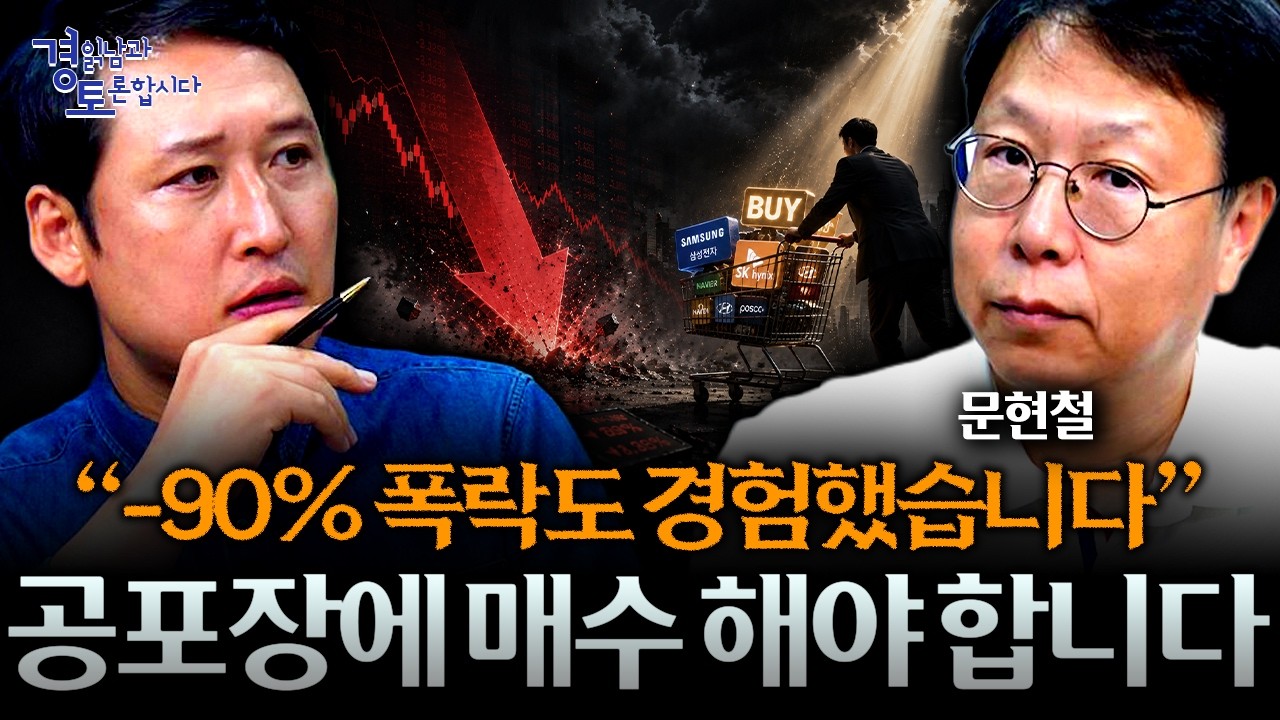
Writer Moon Hyun-cheol reportedly retired about three years ago on the basis of dividend income and currently receives approximately 10 million KRW per month in dividends.
At that level of cash flow, the income is broadly comparable to financial independence under ordinary living-expense assumptions.
The key driver of this result was not short-term trading skill, but a long period of remaining invested in the market.
- More than 25 years of stock market experience.
- A drawdown of roughly 90% in one portfolio.
- A change in investment principles after panic selling during crashes.
- The main reason for staying invested was consistent dividend income.
- He sees potential in Korean equities, especially AI infrastructure, semiconductors, power, and physical AI industries.
The main point is that dividends were viewed not only as a return metric, but as a psychological reward that helped the investor endure time.
2. Recent Volatility Described as an Extreme Market
Moon described the strong volatility seen from June through early August as an extreme market.
He said that intraday selloffs in large-cap stocks were unusually severe even by the standards of 25 years of investing experience.
In such conditions, constantly watching the market can impair judgment.
His response was straightforward.
In such markets, it may be better not to watch them at all.
Continuous monitoring of prices makes market volatility enter directly into an investor’s emotions.
As a result, fear, impatience, and regret can override the original investment framework.
- Watching prices continuously during crashes increases fear.
- Watching prices continuously during rallies increases fear of missing out.
- In volatile markets, more information can increase the risk of poor decisions.
- Long-term investors should focus on earnings trends rather than daily prices.
The conclusion is that investors who can hold strong businesses for extended periods are more likely to survive than those trying to predict every move.
3. The Real Reason for Not Selling During Crashes: Dividends
Moon said that one of his accounts once fell by as much as 90%.
At that point, he concluded that selling would not change much and decided that if a company’s fundamentals had not collapsed, it could be held through the downturn.
Here, fundamentals refer to earnings, financial health, competitive position, and long-term growth potential.
However, “just hold because it is a good company” is often not sufficient in a severe selloff.
Most investors struggle to remain rational once portfolio losses become large.
Moon said the reason he could hold was the steady dividend income that continued to arrive each year.
Dividends are the cash flow that helps investors stay invested during declines.
Even when prices are weak, dividends create the sense that the investor is not waiting without compensation.
That is one of the main advantages of dividend investing.
- Dividends compensate investors while they wait for capital appreciation.
- Cash flow reduces the likelihood of panic selling.
- Dividends help investors endure the time required for long-term investing.
- After retirement, dividends can function as living expenses.
Dividend investing is therefore not simply a search for high yields.
It is a process of selecting companies that can survive over time, generate earnings consistently, and maintain or grow payouts.
4. How Fear and FOMO Undermine Investors
Two recurring themes in the discussion were fear and FOMO.
When markets rise sharply, investors feel they are being left behind.
When markets fall sharply, regret and fear often take over.
Moon explained this through crowd psychology.
Just as one person running in a subway station causes others to run without knowing why, investors in markets often move together.
The problem is that this collective behavior leads to chasing prices at peaks and selling at lows.
- In strong rallies, investors buy aggressively out of fear of missing out.
- In declines, investors sell quickly out of fear of further losses.
- Leveraged ETFs intensify these psychological effects.
- As volatility rises, markets can feel more like gambling than investing.
Leveraged products can magnify returns in a rising market, but they also magnify losses and fear in a falling market.
For that reason, leveraged ETFs are risky for inexperienced investors who treat them as short-term profit tools.
5. The Panic-Selling Experience During the Yeonpyeong Shelling Incident
Moon said the Yeonpyeong shelling incident in 2010 was a major turning point.
At the time, North Korea’s artillery attack caused actual fatalities, and as a former Marine artillery soldier, he interpreted the event as a possible path to war.
Under extreme fear, he sold all of his stocks off-exchange at the limit down price.
However, the market recovered the next day and prices turned higher again.
He said this experience taught him that investors cannot survive if they fail to control fear in the stock market.
This is a highly relevant case for retail investors.
Most damaging sales are not the result of rational analysis, but of decisions made at moments of emotional extremes.
- War risk, financial crises, and pandemics can impair investor judgment.
- The point of maximum fear is often already reflected in prices to a significant degree.
- After panic selling, re-entering the market is often more difficult.
- Investment rules should therefore be established in advance.
Investment principles should not be created in the middle of a crisis.
They should be defined during calm periods and executed consistently when stress rises.
6. Why He Shifted Focus from U.S. Stocks to Korean Stocks
Moon said he previously invested in U.S. equities and made profits there as well.
However, he felt the market did not fully match his investment style.
The first reason was the barrier to fundamental analysis.
Although he had been an English teacher, he still found it difficult to deeply understand reports from global companies such as Apple and Microsoft.
Premium services such as Bloomberg are also costly for individual investors.
The second reason was currency risk.
Even if a U.S. stock gains 20%, an unfavorable exchange-rate move can materially reduce returns in KRW terms.
In periods when global rate-cut expectations and dollar movements diverge, currency becomes even more important.
The third reason was taxation.
For overseas stocks, capital gains above the 2.5 million KRW basic exemption are subject to tax.
Receiving a tax bill the following year can lower the perceived return.
- U.S. stock analysis involves language and information-access barriers.
- Currency fluctuations can significantly change KRW-based returns.
- Overseas capital gains tax affects investment strategy.
- Investing in markets that one understands well may be more practical.
For these reasons, he said he became more focused on Korean equities.
7. Why Korean Equities Should Be Reconsidered: AI Infrastructure and the Semiconductor Cycle
Moon argued that Korean equities should not be viewed negatively by default.
He sees Korean companies as potentially important in the AI infrastructure landscape.
AI is not only about chatbots or software.
As AI expands, it requires physical infrastructure such as semiconductors, data centers, power grids, cooling systems, robots, automobiles, and electronic components.
This is where Korean companies may have structural strengths.
- Semiconductors are a core foundation of AI infrastructure.
- The power sector becomes more important as data centers expand.
- Physical AI is connected to robotics, automobiles, home appliances, and factory automation.
- Companies such as Hyundai Motor and LG Electronics may benefit from the physical AI era.
- Government policies to activate capital markets may also affect the KOSPI outlook.
The key issue is not a simple comparison of “U.S. AI companies are strong, Korean companies are weak.”
As AI grows, countries and companies that provide equipment, components, power, and manufacturing capabilities may be re-rated.
The semiconductor cycle is also important.
If demand for AI servers, HBM, and memory continues to expand, earnings expectations for Korean semiconductor companies could change materially.
Ultimately, the KOSPI outlook should be assessed by combining the chart with the earnings cycle in semiconductors and AI infrastructure.
8. No One Knows Where the KOSPI Will Go, But He Can Wait
The host asked Moon how he viewed the KOSPI level at the end of 2026.
Moon replied that precise index forecasting was beyond his ability.
That answer is realistic.
Many investment programs offer target levels for the KOSPI.
However, long-term returns depend less on predicting the index and more on buying good companies at reasonable prices and holding them over time.
Moon compared stocks to dating and marriage.
At first, something may look attractive, but one does not marry immediately.
As in a relationship, investors should study, build trust, and confirm long-term potential before making a commitment.
- Do not allocate large capital simply because something looks attractive.
- Study the company and observe it over time.
- Once conviction is built, short-term volatility becomes less important.
- Focus on the company’s growth path rather than the stock price.
That said, conviction is not always correct.
Investors must therefore continuously ask whether the earnings model remains valid, whether the industry position is intact, and whether dividend capacity has been preserved.
9. The Most Important Points That Are Often Missing in Other Media
First, dividends are a psychological safety belt, not just a yield figure.
Most content focuses on how high the dividend yield is.
However, what matters more is that dividends stabilize investor behavior.
When dividends arrive during a downturn, investors have a reason to remain in the market despite losses.
Second, the key issue in Korean equities is not simply low valuation, but AI infrastructure re-rating.
Korean stocks have long been described through the lens of discount and undervaluation.
Going forward, however, AI semiconductors, power, robotics, automobiles, and manufacturing automation may become new valuation drivers.
Third, U.S. stocks are not automatically the correct answer.
The U.S. market is one of the strongest in the world.
However, for individual investors, information access, currency exposure, tax treatment, and emotional distance are all real costs.
Buying companies one does not understand simply because they are famous may be closer to news-driven speculation than long-term investing.
Fourth, leveraged ETFs amplify market volatility into investor emotion.
They can look powerful in rising markets, but in declines they can push investors out of the market.
For beginners, survival should take priority over return maximization.
Fifth, more important than forecasting the index is building a structure that can withstand declines.
What matters more than predicting the KOSPI level is constructing a portfolio that allows the investor not to sell during downturns.
That structure includes dividends, cash allocation, understanding of companies, investment horizon, and tax planning.
10. A Practical Checklist for Individual Investors
- Does the company I own have a long-term path to earnings growth?
- Have I confirmed that the dividend is sustainable rather than temporary?
- Have I calculated actual returns after currency and taxes?
- Is my leverage ETF exposure excessive relative to my risk tolerance and asset base?
- Am I tracking long-term themes such as AI infrastructure, semiconductors, and power demand?
- Have I defined in advance whether I will sell during a crash?
- Does my portfolio generate monthly or quarterly cash flow?
In the end, investing favors those who remain in the market for the long term.
To do that, investors must first design a way to control emotion rather than optimize return.
Dividend stocks and value investing can therefore function not only as styles, but as survival strategies in volatile markets.
11. Investment Conclusion from This Discussion
Moon’s approach is not a flashy trading method.
Its core is to study good companies, endure time through dividend income, and avoid being driven by fear or FOMO.
Even if the KOSPI outlook remains uncertain and the timing of global rate cuts shifts, earnings and cash flow remain the forces that ultimately support stock prices over the long term.
Korean equities should also not be dismissed as a market that simply lacks appeal.
AI infrastructure and the semiconductor cycle may lead to a reassessment of Korea’s market profile.
Not every stock will rise, however.
For that reason, investors should evaluate company fundamentals, dividend sustainability, industry trends, and currency risk together.
Investors must first control their emotions before trying to beat the market.
Dividend cash flow may be one of the most practical tools for doing so.
< Summary >
The core strategy behind Moon Hyun-cheol’s reported monthly dividend income of 10 million KRW is long-term investing and dividend cash flow, not short-term prediction.
The reason he could hold through crashes was confidence in fundamentals and consistent dividends.
Panic selling and FOMO buying are the behaviors individual investors must be most careful to avoid.
U.S. equities are a powerful market, but currency, taxes, and information access are meaningful constraints.
Korean equities may be re-rated around AI infrastructure, semiconductors, power, and physical AI industries.
Ultimately, the key is not to predict the KOSPI target, but to build a structure that allows holding through downturns.
[Related Articles…]
- AI Semiconductor Cycle and Physical AI Industry Outlook
- 2026 Economic Outlook and Key Variables for the Rate-Cut Cycle
*Source: [ 경제 읽어주는 남자(김광석TV) ]
– “월 배당 1,000만 원으로 은퇴했습니다” 문현철 작가의 절대 흔들리지 않는 투자법 | 경읽남과 토론합시다 | 문현철 작가 [1편]