● AI-Memory Shock, China Clampdown, Rally Reset
U.S. Pressure on Chinese Memory Intensifies: Could the AI Rally Resume?
The key issue in this market is not simply that semiconductors rose.
The U.S. stock market, led by the S&P 500, is quietly approaching new highs, while capital continues rotating across AI infrastructure, memory semiconductors, data centers, power, drones, and rare earths.
What matters most in this phase is that the United States has begun to apply more direct pressure on Chinese memory suppliers.
Reports indicate that Apple has been urged to avoid Chinese memory products, while the U.S. is also signaling to allies that they may need to choose between the U.S. AI ecosystem and the China AI ecosystem.
This is not a short-term equity issue. It connects to AI geopolitical competition, semiconductor supply chain restructuring, and U.S. equity sector rotation.
Another important point is that the memory cycle may no longer behave as a simple boom-bust cycle.
The message from SanDisk, SK Hynix, and Elon Musk is consistent:
In the AI agent era, the bottleneck is not only compute but also memory.
With interest rate expectations stabilizing, the market is again testing the possibility of an AI infrastructure rally.
1. Overall U.S. Market Trend: Easier Rate Expectations Supported Risk Assets
U.S. equities strengthened over the past week.
The S&P 500 continued to move toward record highs, while the Nasdaq also held up on the back of a rebound in AI infrastructure-related names.
The main driver was reduced concern over further rate hikes.
From May through July, the market was pressured by fears that the Federal Reserve could raise rates again.
At that time, investors worried that strong employment and renewed inflation pressure could reopen the door to additional tightening.
More recently, weaker-than-expected labor data and some easing in inflation pressure have shifted expectations toward the view that there may be no additional rate hike this year.
According to market pricing, expectations for year-end rate hikes have fallen to less than one additional move.
In practical terms, investors are increasingly pricing in a prolonged pause by the Fed.
This environment is constructive for U.S. equities.
It is particularly supportive for large-cap technology, semiconductors, AI infrastructure, growth stocks, and rate-sensitive assets such as gold and silver.
However, geopolitical risk, including Middle East sanctions issues, and a renewed dollar rally could still create short-term volatility.
For now, the market focus has shifted to whether AI infrastructure demand remains firm as rate pressure eases.
2. Strongest Sector This Week: Memory Semiconductors
Within the AI infrastructure complex, memory semiconductors were the strongest segment.
SanDisk rose more than 35% on a weekly basis, Micron gained more than 10%, and U.S.-listed SK Hynix-related instruments advanced more than 20%.
The rebound in memory was driven by four main factors.
- SanDisk’s investor day was viewed positively due to its long-term growth model and shareholder return policy.
- SK Hynix emphasized memory shortages and AI demand in an interview with foreign media.
- Elon Musk highlighted memory as a key bottleneck in the AI era.
- Reports indicated that the U.S. Department of Commerce pressured Apple to limit the use of Chinese memory.
These factors combined to reinforce the view that memory semiconductors may return to the center of the AI rally.
3. SanDisk Investor Day: Why the Market Reacted Positively
SanDisk’s investor day did not introduce an entirely new narrative, but it provided the answers the market wanted.
The company outlined, for the first time, a sustainable long-term growth model through 2030.
It also stated that it intends to return 100% of cash flow to shareholders.
That is the kind of message U.S. equity investors typically favor.
The company also emphasized long-term contracts.
SanDisk said it has signed long-term agreements with eight customers, including three large technology clients.
The average contract duration was described as approximately four years.
The fact that more than half of next year’s and the following year’s volume is already contracted also provided reassurance.
Historically, memory cycles were highly volatile because pricing and inventory conditions changed sharply each quarter.
However, the growing use of contract structures ranging from one to five years is creating expectations of lower cycle volatility than in the past.
Another important element is contract protection.
SanDisk said it has introduced safeguards through third-party financial institutions to reduce the risk of customer cancellations if conditions weaken.
In simple terms, this structure helps secure both payment and contract execution through an intermediary financial institution.
This point is often overlooked, but it is important.
In previous cycles, memory companies were hurt most by customer changes in demand and order cancellations.
The market welcomed signs that this risk is being addressed.
4. The Changing Role of Memory: From Supplier to Bottleneck Asset
The common message from SanDisk and SK Hynix was that memory is no longer a simple supply-chain component.
In the past, memory companies were often viewed as lower-tier suppliers to Nvidia, TSMC, or server vendors.
But with the expansion of AI agents, AI inference, autonomous driving, robotics, and on-device AI in smartphones, memory is becoming a core asset that resolves system-wide bottlenecks.
The more AI learns, remembers, and retrieves data, the greater the demand for memory.
SK Hynix compared AI to a four-year-old child.
Just as a child accumulates knowledge and memory while growing, AI is entering a phase in which the amount of data it learns, stores, and retrieves is rising rapidly.
It also noted that while human usage of AI is limited, AI agents could expand almost without bound.
That implies memory demand may shift from a function of human users to a function of AI agents.
From this perspective, memory semiconductors can be re-rated as a strategic bottleneck within AI infrastructure rather than as a simple cyclical industry.
5. Elon Musk’s Comments on Memory: Why the Market Is Paying Attention
Elon Musk has also repeatedly emphasized the importance of memory.
According to the source text, when one user said the true bottleneck in the AI agent era is memory rather than compute, Musk responded that very few people understand that point.
Musk matters because Tesla, xAI, and SpaceX are all making large investments in AI, robotics, autonomous driving, and data centers.
If a major AI customer directly identifies memory as a bottleneck, expectations for memory companies’ bargaining power and long-term demand naturally improve.
For Korean investors, this may not be a new idea.
What matters more is that the broader U.S. market is beginning to price in this logic.
6. U.S. Pressure on Chinese Memory: Supply Chain Reconfiguration Extends to Apple
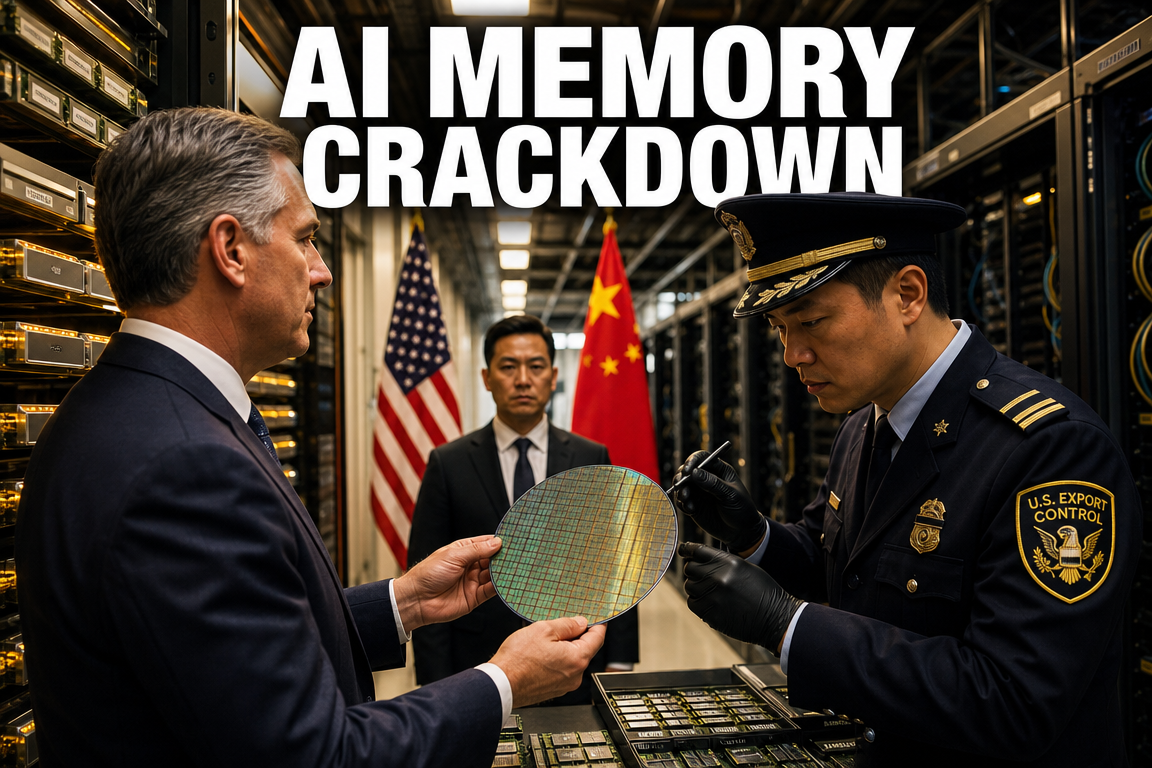
The most politically significant development this week was the report that the U.S. Department of Commerce urged Apple to restrict the use of Chinese memory products.
Based on the Wall Street Journal report, U.S. authorities appeared to oppose Apple’s use of Chinese-made memory amid escalating U.S.-China technology competition.
This is not simply a cost issue for Apple.
It may signal an effort by the United States to block Chinese memory suppliers from entering global supply chains.
If so, established memory players such as SK Hynix, Samsung Electronics, Micron, and SanDisk could benefit over the medium to long term.
Apple, however, may face higher costs.
If Chinese components cannot be used, alternative suppliers must be secured, which could raise input costs.
Apple’s shares were weak on the week amid concerns about margin pressure and potential price increases for future devices.
7. Data Centers and Neo-Clouds: This Is Not Demand Weakness, but a Pricing Phase
Memory was not the only strength.
Data center-related names also rallied strongly.
Neo-cloud companies such as Nebius and CoreWeave helped improve market sentiment with favorable commentary on demand and pricing.
Neo-clouds build GPU-based data center infrastructure and lease capacity to customers.
In simple terms, they are the rental business of the AI era.
Nebius said customers are willing to pay higher prices for data center capacity than before.
It said it raised pricing by around 15% while demand remained strong.
It also noted that short-term capacity is so scarce that clients are willing to accept margins more than double the previous level.
Using a real-estate analogy, this is a market where rents can rise and tenants still line up due to limited supply.
Nebius said around 70% of its contract value is paid upfront, which helps cover a significant portion of capital expenditures.
That reduced concerns about excessive leverage-driven expansion.
CoreWeave delivered a similar message.
The company said it was able to raise average prices by about 25% across its portfolio, including older Nvidia chips, and customers still accepted the terms.
It also indicated that even older Nvidia chips from the early 2020s are under contract through 2029, underscoring how tight AI infrastructure supply remains.
This reflects not just strong demand, but pricing power on the supply side.
8. Why Nebius and CoreWeave Matter in the Nvidia Ecosystem
Nebius and CoreWeave are attracting more attention because of their links to Nvidia.
Both are viewed as representative AI infrastructure companies supported by equity investment and access to the latest chips from Nvidia.
Nvidia is not only a GPU supplier. It is also helping build the broader AI ecosystem by supporting data center customers and cloud infrastructure providers.
In this structure, Nvidia GPUs, memory, servers, power, cooling, optical networking, and data center leasing are all connected.
As data center demand strengthens, server-related names such as Dell and Super Micro Computer also benefit.
When power becomes constrained, companies such as Bloom Energy can attract attention as power infrastructure plays.
Rising interconnection needs also support optical networking component suppliers.
In other words, the AI infrastructure cycle is not a single-stock story, but a broad investment cycle across the supply chain.
9. Intel and AMD Capital Needs: The Shadow of the AI Investment Race
Alongside constructive demand trends, capital-raising issues remain relevant.
Intel has been under pressure amid reports of possible equity financing and other funding needs to support large-scale investment.
However, the market drew some comfort from a filing showing that Intel’s CEO bought roughly $1 million of company stock with personal funds.
Insider buying is often interpreted as a signal that management has confidence in the company’s outlook.
AMD is also reportedly seeking financing through a large bond issuance to fund investment.
This underscores how capital-intensive the AI semiconductor race has become.
Not only the big tech companies but also semiconductor firms need more capital to expand output, increase manufacturing capacity, and secure more customers.
Investors need to consider two points at the same time.
Rising AI infrastructure investment creates growth opportunities.
At the same time, equity issuance, bond sales, and higher leverage can dilute shareholder value and increase financial risk.
10. The U.S. State Department’s Message: AI Alliances Leave Little Room for Neutrality
A weekend development tied to the U.S. State Department also mattered from a broader strategic perspective.
According to the source text, the United States is preparing a stronger message to allies that they may need to choose sides.
The core issue is that participation in both a U.S.-led AI and semiconductor alliance and a China-led AI framework may become increasingly difficult.
China is promoting a new global AI cooperation initiative to counter U.S. dominance in artificial intelligence.
The United States, in response, is treating AI technology, semiconductors, data centers, cloud services, and cybersecurity as a single strategic competition.
This means AI is no longer only an industry trend, but part of national security and military competition.
Military competition is not only about weapons production.
It also involves who can build better AI models, deploy more data centers, and secure more stable semiconductor supply chains.
From this perspective, the AI infrastructure cycle may last longer than a short-term thematic rally.
11. Big Tech Trend: Apple Pauses, Cloud Names Consolidate, Musk-Related Assets Rebound
Big Tech was generally in a consolidation phase.
Apple weakened due to the possibility of restrictions on Chinese memory, cost pressure, and concerns about future iPhone price increases.
Microsoft, Alphabet, and Amazon also showed a pause after recent gains.
By contrast, Tesla and other Musk-related private AI and space infrastructure assets saw some rebound interest after earlier weakness.
The source text said Musk has been emphasizing SpaceX, xAI, and Starlink as part of a broader AI infrastructure transition.
The key message is that AI traffic could grow far beyond human traffic, and Starlink may benefit from that shift.
Musk has been described as suggesting that AI traffic could eventually be as much as 1,000 times larger than human traffic.
In that case, telecommunications networks, satellite systems, data centers, and AI software would become one integrated ecosystem.
He also emphasized a plan to use the knowledge base of SpaceX and xAI talent to train Grok into a stronger AI model.
However, private assets linked to Musk carry significant risks, including insider supply, lockup expirations, and valuation changes in private transactions.
Investors should assess liquidity and potential selling pressure carefully, rather than focusing only on the positive narrative.
12. Trump-Linked Policy Sectors: Drones, Rare Earths, Nuclear, Defense, and Space Are Moving Again
Sectors associated with Trump-era policy themes are attracting renewed attention.
This week, U.S. drone-related names briefly surged after a signing event suggesting tariffs of up to 100% on drones and drone components.
The White House has emphasized that drones are becoming a core technology in modern warfare and U.S. operations.
The U.S. military is also moving toward a multi-national drone task force model.
The importance of drones has already been demonstrated by the war in Ukraine.
In a prolonged conflict with Russia, Ukraine has significantly advanced its drone operations, and the U.S. is taking that development seriously.
The United States is also moving toward formally excluding Chinese drones starting in December 2025.
Given China’s strong share in the global drone market, Washington is seeking to rebuild drone supply chains around domestic and allied suppliers.
However, most drone stocks are small-cap thematic names or unprofitable companies.
They can rise sharply on policy expectations, but volatility is also very high, so caution is warranted.
Rare earths are following a similar pattern.
As Trump continues to support U.S. mineral and rare earth supply chains, related names such as MP Materials and rare earth ETFs have gained attention.
In addition, lithium, nuclear, defense, space, and quantum computing are also being treated as policy beneficiaries, supporting rotation across the group.
13. Gold, Silver, and Commodities: Lower Rate Pressure Could Renew Interest
Gold and silver-related names have not surged decisively, but they are gradually attempting to move higher.
If rate hike fears continue to ease, conditions should become more favorable for non-yielding assets such as gold and silver.
Lower dollar strength or declining real yields would be supportive for gold prices.
Conversely, a stronger dollar or renewed rate pressure would weaken that thesis.
Commodity positioning therefore requires close attention to rates, the dollar, and geopolitical risk.
14. IPO Momentum: Why It Can Be a Late-Cycle Signal
One of the most important risk signals in the source text was the pickup in IPO activity.
When public markets strengthen and large offerings attract heavy demand, that pattern has often appeared near market peaks in past cycles.
Companies prefer to go public at high valuations when market sentiment is strong.
When investors are optimistic, more capital flows into IPOs.
At such times, markets can become overly focused on narratives such as “this company will definitely grow” or “AI will definitely create profits.”
The source text mentioned that listing expectations for space, memory, Chinese robotics, and major AI names are drawing capital away from other areas.
In particular, IPO expectations for major AI companies such as Anthropic and OpenAI could mark a later stage in the current AI cycle.
This does not mean the market has reached an immediate top.
But when major IPOs cluster, media coverage becomes more optimistic, and investors begin to believe that “this time is different,” risk management becomes more important.
Strong AI infrastructure prospects do not mean valuations are always cheap.
15. From an Individual Investor’s Perspective: Why Broad ETFs Still Matter
Individual investors may find the current market difficult to navigate.
One day memory semiconductors rally, the next day data center names lead, and then drones, rare earths, or nuclear names move.
The pace of rotation is fast, making timing difficult.
In that environment, one of the simplest but most effective strategies is still to accumulate S&P 500 or Nasdaq ETFs over time.
According to the source text, the Nasdaq’s year-to-date return has already risen above 19%.
Investors who accumulated steadily during the first-half correction may have realized even stronger returns.
The advantage of index investing in the U.S. market is that it is less exciting, but structurally more durable over the long term.
Although single stocks can deliver larger gains, it is difficult to preserve returns if volatility cannot be tolerated.
For that reason, a practical portfolio structure is to hold S&P 500 or Nasdaq ETFs as the core, with AI infrastructure or semiconductor ETFs as satellite positions.
16. Three Ways to Invest in AI Infrastructure
First is the semiconductor ETF approach.
If AI infrastructure continues to expand, a basket including Nvidia, AMD, Broadcom, Micron, and equipment names may be the most balanced approach.
Second is the memory-focused ETF approach.
If DRAM, NAND, and HBM demand continues to surge, investors may consider companies such as Samsung Electronics, SK Hynix, Micron, SanDisk, and Seagate.
However, memory is highly volatile, so position sizing matters.
Third is the data center and neo-cloud ETF approach.
This includes companies such as Nebius and CoreWeave that build data centers and lease GPU infrastructure.
The growth potential is strong, but capital needs and leverage risk must also be monitored.
17. Key Events to Watch Next Week
The market is likely to remain in a waiting pattern ahead of major late-August events.
- Nvidia’s earnings report is the most important event.
- The Jackson Hole meeting could include comments from the Fed Chair on rates.
- Earnings from Home Depot, Target, and Walmart are also scheduled.
- The U.S. Treasury may announce additional sanctions related to Iran’s financial network.
- The listing issue of Chinese robotics company Unitree may affect sentiment in robotics stocks.
- Options expiration may create short-term volatility.
- Reddit’s possible inclusion in the S&P 500 could affect individual stock flows.
Consumer-related earnings appear less influential than before.
The main market driver is now the AI infrastructure investment cycle rather than consumer demand.
Even so, Walmart and Target results remain useful as secondary indicators of U.S. consumer resilience.
18. The Most Important Points Often Missed in Other Coverage
First, the safety structure around long-term memory contracts is crucial.
Markets may focus on SanDisk’s stock surge, but the more important issue is the third-party financial structure designed to reduce customer cancellations and secure contract performance.
If this model becomes more common, memory cycles may become less volatile than in the past.
Second, pricing power matters more than demand growth for data centers.
The key takeaway from Nebius and CoreWeave is not simply that demand is strong, but that customers are still willing to accept higher prices.
That only happens in supply-constrained markets.
Third, U.S. pressure on Chinese memory could be a structural positive for Korean semiconductors.
If Chinese memory suppliers are blocked from major global customers such as Apple, the bargaining power of established Korean and U.S. memory firms may improve.
Fourth, the AI infrastructure rally is driven not only by corporate earnings but also by national security logic.
Once the United States and China frame AI as a strategic alliance competition, the sector becomes more than a growth theme.
Fifth, IPO momentum should be treated as a caution signal.
A good company going public is not the same as a good entry price.
When major AI IPOs drive market excitement to a peak, risk management becomes essential.
Sixth, the starting point of the entire thesis is still interest rates.
If rate expectations remain stable, AI infrastructure, semiconductors, large-cap technology, gold and silver, and policy-driven sectors can all benefit.
If rates rise again, the current rally thesis could weaken quickly.
< Summary >
U.S. equities are extending gains as rate hike concerns ease, with the S&P 500 leading the advance.
The key sector this week was memory semiconductors.
SanDisk, SK Hynix, and Elon Musk all highlighted memory as a bottleneck in the AI era.
U.S. pressure on Chinese memory usage at Apple could become a structural positive for Korean and U.S. memory companies.
Nebius and CoreWeave showed that data center demand remains firm and that pricing power is intact.
Trump-linked policy sectors such as drones, rare earths, nuclear, defense, space, and quantum computing remain active.
However, the buildup in IPO activity may signal overheating, making risk management important.
For investors who prefer lower volatility, broad exposure through S&P 500 ETFs, Nasdaq ETFs, semiconductor ETFs, memory ETFs, and data center ETFs remains a practical approach.
The next major catalysts are Nvidia’s earnings report and the Jackson Hole meeting.
Any investment decision should be aligned with individual risk tolerance and portfolio objectives.
[Related Articles…]
- AI Infrastructure Investment Cycle: The Next Rally Led by Data Centers and Semiconductors
- Semiconductor Supply Chain Restructuring and the Core Shift in U.S.-China Tech Competition
*Source: [ 소수몽키 ]
– 미국의 중국 메모리 때리기 본격 시작? AI랠리 다시 시작될까
● AI Chip Shock, FCF Crunch, Debt Lifeline
Can Hyperscalers Keep Buying AI Semiconductors? Key Cycle Variables Through FCF, Capex, and Corporate Bonds
The key issue is not simply whether AI semiconductor demand remains strong.
The real question is whether hyperscalers will still have the financial capacity to keep investing in data centers.
Major Big Tech companies such as Alphabet, Amazon, Microsoft, and Meta have so far driven AI semiconductor demand through substantial capital expenditure, or Capex.
However, markets have recently focused on the rapid decline in these companies’ free cash flow, or FCF.
As FCF declines, concerns rise over whether they can continue purchasing semiconductors, which can increase share-price volatility in AI-related names such as Samsung Electronics and SK Hynix.
However, there is a more important point.
AI investment by hyperscalers is not financed solely by cash flow; it can also be extended through corporate bond issuance.
In other words, semiconductor share prices may be volatile, but it is difficult to conclude that the semiconductor earnings cycle is about to turn sharply lower.
1. Why the Market Is Unsettled: The Core Question Behind the AI Semiconductor Bubble Debate
Concerns about an AI bubble and an AI semiconductor bubble have persisted.
When share prices rise, arguments against a bubble gain less traction; when prices correct, bubble concerns resurface.
But the issue is not valuation alone. It is payment capacity.
Investors should focus on who is financing the AI infrastructure buildout.
- Hyperscalers are the entities building AI data centers.
- They are major cloud and AI service providers.
- They purchase GPUs, HBM, DRAM, and server semiconductors at scale.
- As a result, the earnings of Samsung Electronics and SK Hynix are closely linked to hyperscaler Capex.
Accordingly, the market’s central question is whether hyperscalers can continue buying AI semiconductors.
2. Why the AI Value Chain Must Be Viewed First
The AI industry is broadly divided into three layers: infrastructure, models, and services.
This is also referred to as the AI full stack.
- Infrastructure: data centers, AI servers, GPUs, HBM, power grids, and communications networks.
- Models: large language models, multimodal models, and reasoning models.
- Services: chatbots, search, workflow automation, advertising, and cloud AI services.
End users consume AI services, but they do not directly purchase AI semiconductors.
The large-scale buyers of AI semiconductors are hyperscalers.
Therefore, when forecasting AI semiconductor demand, hyperscaler investment capacity should be assessed before end-user demand.
3. How Physical AI Could Further Expand Semiconductor Demand
AI demand does not end with software services such as ChatGPT.
Over time, AI adoption is likely to expand into physical products including automobiles, robots, home appliances, PCs, and smartphones.
- AI vehicles require autonomous driving and in-vehicle AI services.
- AI home appliances use both on-device AI and cloud AI.
- AI PCs and AI smartphones increase demand for high-performance memory and low-power semiconductors.
- Robotics and industrial automation expand demand for inference-oriented AI semiconductors.
If this structure materializes, more data centers will be required.
More data centers would also increase demand for HBM, DRAM, NAND, power semiconductors, and networking equipment.
This is a key reason the AI semiconductor cycle should be viewed as a medium- to long-term industrial cycle rather than a short-term theme.
4. Capex at Hyperscalers Is Still Rising
Consensus estimates indicate that capital expenditure at the four major hyperscalers continues to rise.
In particular, Capex is projected to increase significantly from Q1 2026 to Q2 2026.
Compared with 2025, the increase is even more pronounced.
Investment in AI infrastructure is also expected to continue through 2027.
An important point is that Capex estimates have been revised higher over time.
At the beginning of the year, only a limited level of investment was expected, but monthly updates have steadily lifted expectations for data center spending.
This suggests that hyperscalers have no intention of retreating from the AI competition.
5. The Issue Is FCF: Why Free Cash Flow Is Declining
FCF is the cash a company generates from operations after necessary capital investment.
In simple terms, it is the cash available for discretionary use.
The current market concern is the decline in hyperscaler FCF.
Free cash flow for major Big Tech companies, including Alphabet, has been falling, and some firms are reported to have turned negative.
Amazon and Alphabet have shown negative trends, while Microsoft and Meta remain positive but have also declined materially.
- AI data center construction costs are rising sharply.
- Spending on key semiconductors such as GPUs and HBM is high.
- Investment in power infrastructure and cooling systems is also increasing.
- Competitive pressure in cloud AI makes front-loaded investment difficult to avoid.
The market therefore asks a simple question.
If companies are generating substantial cash but reinvesting nearly all of it in AI infrastructure, can they keep investing at the same pace?
6. How FCF Declines Affect Semiconductor Share Prices
News of declining FCF can be reflected in semiconductor share prices before it appears in earnings.
Equity markets discount future developments in advance.
For example, if hyperscaler FCF contracts or turns negative, investors immediately begin to question whether:
“Data center spending will slow.”
“AI semiconductor orders will decelerate.”
“Samsung Electronics and SK Hynix are approaching peak earnings.”
When these concerns intensify, semiconductor shares can correct.
However, share-price corrections and earnings deterioration are not the same thing.
FCF pressure may weigh on valuations, but it does not necessarily imply an immediate halt in semiconductor orders.
7. The Key Point: Hyperscalers Do Not Rely on Cash Flow Alone
This is the point often missed by the market.
Hyperscaler AI investment is not financed solely through FCF.
These companies can issue corporate bonds to fund data center and AI infrastructure spending.
Alphabet, Amazon, Microsoft, and Meta are all investment-grade companies.
Investment-grade corporate bonds from these issuers generally attract strong demand in global credit markets.
From an institutional investor perspective, Big Tech bonds are often viewed as relatively stable credit exposure.
- Even if FCF declines, funding can be raised through bond issuance.
- The proceeds can be used for data centers, GPUs, HBM, and power infrastructure.
- As long as AI competition remains intense, spending cuts are difficult.
- Governments may also continue supporting AI infrastructure as a strategic industry.
In short, hyperscaler semiconductor purchasing power cannot be assessed using cash flow alone.
Access to capital markets, bond issuance capacity, credit ratings, and policy support must also be considered.
8. Why Corporate Bond Issuance Is Increasing
The share of bond financing used by AI companies has risen meaningfully.
In particular, issuance in the U.S. dollar investment-grade market has expanded among AI-related companies.
The structure is straightforward.
- AI competition intensifies.
- Delaying data center investment could mean losing competitive ground.
- FCF alone is insufficient to keep pace with spending.
- Companies therefore issue corporate bonds.
- The proceeds are used to execute Capex.
Hyperscalers can tap bond markets not only in the U.S. but also in Europe, the U.K., Japan, and Canada.
This means they are not dependent on a single region’s interest-rate environment or liquidity conditions and can access global capital markets.
9. When Semiconductor Shares Could Come Under Pressure
Weakness in semiconductor share prices does not necessarily imply a collapse in semiconductor demand.
There are identifiable points at which share prices may come under pressure.
- First, when hyperscaler FCF falls sharply.
- Second, when indicators show FCF turning negative.
- Third, when large bond maturities approach.
- Fourth, when bond yields rise and funding costs increase.
- Fifth, when AI data center spending forecasts are revised lower.
When these events occur, the market is likely to revisit the AI bubble narrative.
At such times, semiconductor names across the value chain, including Samsung Electronics, SK Hynix, Nvidia, and TSMC, may experience elevated volatility.
10. Why Bond Maturities Matter
Bond financing is effective, but it also carries risk.
Eventually, maturities come due.
When a large maturity schedule approaches, the market again asks:
“Can these companies repay bonds on time?”
“Can they refinance through new issuance?”
“Will higher rates make AI investment too expensive?”
However, leading Big Tech companies can often refinance by issuing new bonds to repay existing ones.
This is a common practice even among large corporates.
Accordingly, bond maturities alone should not be interpreted as a crisis.
The key risk is refinancing cost.
If rates remain high and credit spreads widen, the burden of AI infrastructure investment could increase materially.
11. The Most Important Point Often Overlooked in Market Coverage
Most reports focus on declining FCF or excessive AI spending.
However, the more important issue is the change in funding structure.
The AI investment cycle is shifting from operating cash flow to capital markets.
In other words, the current phase is no longer one in which hyperscalers buy AI semiconductors only with internally generated cash; they are expanding AI infrastructure through bond market access.
This shift is highly relevant for semiconductor investors.
- FCF alone may suggest that AI semiconductor demand will soon weaken.
- But once bond issuance is included, investment capacity may persist longer.
- Conversely, if the bond market becomes less accessible, the semiconductor cycle could weaken sooner than expected.
- Accordingly, investors should monitor not only semiconductor prices but also the U.S. corporate bond market and global interest-rate trends.
This is the key point often missing from standard semiconductor outlook coverage.
The next inflection point for AI semiconductor shares may come not only from memory pricing, but from hyperscaler access to credit markets.
12. What Samsung Electronics and SK Hynix Investors Should Monitor
Samsung Electronics and SK Hynix are core suppliers within the AI semiconductor value chain.
SK Hynix has a strong position in HBM, while Samsung Electronics is a diversified semiconductor company spanning memory, foundry, and advanced packaging.
Investors should focus on the following indicators:
- Hyperscaler Capex outlook: whether data center investment continues to rise.
- FCF trends: how quickly free cash flow is deteriorating.
- Bond issuance volumes: how easily AI companies can raise capital.
- Bond yields and credit spreads: higher funding costs could slow investment.
- HBM pricing and supply contracts: a key determinant of actual earnings.
- U.S. fiscal policy and liquidity: important for equity valuations and technology stocks.
- AI monetization: how effectively Big Tech converts AI services into revenue and profit.
13. Share Prices and Earnings Must Be Assessed Separately
The conclusion is clear.
Semiconductor share prices can correct.
But semiconductor earnings are not necessarily about to turn down immediately.
FCF pressure and bond maturity concerns are valuation headwinds.
However, if hyperscalers continue funding Capex through corporate bond issuance, semiconductor orders may remain intact.
In the near term, equity-market volatility may increase, but the medium-term AI infrastructure investment cycle may remain in place.
AI competition makes it difficult for major U.S. tech companies to reduce investment materially.
That is because the competition involves China, cloud market share, and AI service leadership.
14. The Bigger Picture for the Economic Outlook
AI semiconductor investment is not simply a corporate earnings issue.
It is a large investment cycle linked to the global economic outlook, interest rates, liquidity, the bond market, and industrial policy.
If U.S. fiscal policy and liquidity support expand, technology and semiconductor equities could benefit.
By contrast, if rates remain elevated and bond funding costs rise, hyperscaler Capex could face greater pressure.
Accordingly, investors should not view the semiconductor market only through HBM demand.
The following broader trends also matter:
- Whether AI data center investment continues to expand.
- How sharply Big Tech FCF deteriorates.
- Whether the corporate bond market remains functional.
- Whether U.S. rates and global liquidity remain supportive of technology equities.
- Whether AI services move meaningfully toward monetization.
Ultimately, the key variable in the AI semiconductor cycle is not only demand, but whether the financial structure that pays for that demand remains intact.
15. Investment Conclusion: Semiconductors Have Not Turned Yet, But Share Prices Can Be Volatile
Hyperscaler AI investment remains strong.
Capex expectations continue to be revised higher.
With the expansion of physical AI, medium- to long-term semiconductor demand is unlikely to disappear quickly.
However, FCF decline is a clear risk.
Whenever free cash flow narrows or turns negative, concerns about an AI bubble are likely to reemerge.
The market may also become uneasy as large bond maturities approach.
Investors may summarize the situation as follows:
- The structural direction for semiconductors remains toward AI infrastructure expansion.
- Near-term share prices may fluctuate based on FCF and bond-market conditions.
- Earnings deterioration should be assessed through actual Capex execution and semiconductor order data.
- Hyperscaler bond issuance capacity is the hidden key variable in the AI semiconductor cycle.
- Samsung Electronics and SK Hynix are not merely cyclical stocks; they are central to the global AI infrastructure investment cycle.
< Summary >
Declining FCF at hyperscalers is a key factor behind potential AI semiconductor share-price corrections.
However, these companies do not invest solely with cash flow; they can continue data center Capex through corporate bond issuance.
Accordingly, semiconductor share prices may be volatile, but it is difficult to conclude that the earnings cycle is about to turn decisively lower.
Investors should monitor not only AI semiconductor demand, but also hyperscaler FCF, bond issuance, bond maturities, and interest-rate trends.
For Samsung Electronics and SK Hynix investors, global bond markets and Big Tech Capex outlook are as important as HBM pricing.
[Related Articles…]
- AI semiconductor cycle and HBM demand outlook
- AI infrastructure investment and the global economic outlook
*Source: [ 경제 읽어주는 남자(김광석TV) ]
– 하이퍼스케일러, 반도체 계속 살수 있나? 잉여현금흐름(FCF)과 자본지출(Capex) 분석 [경읽남 258화]