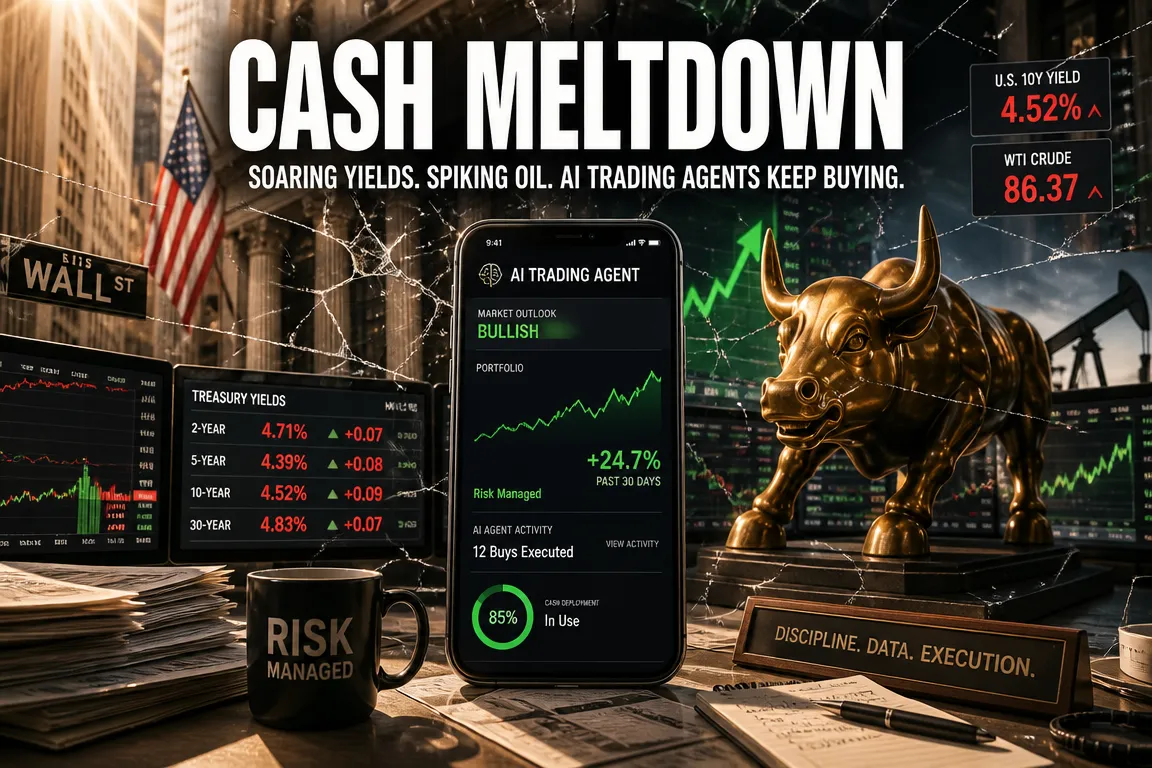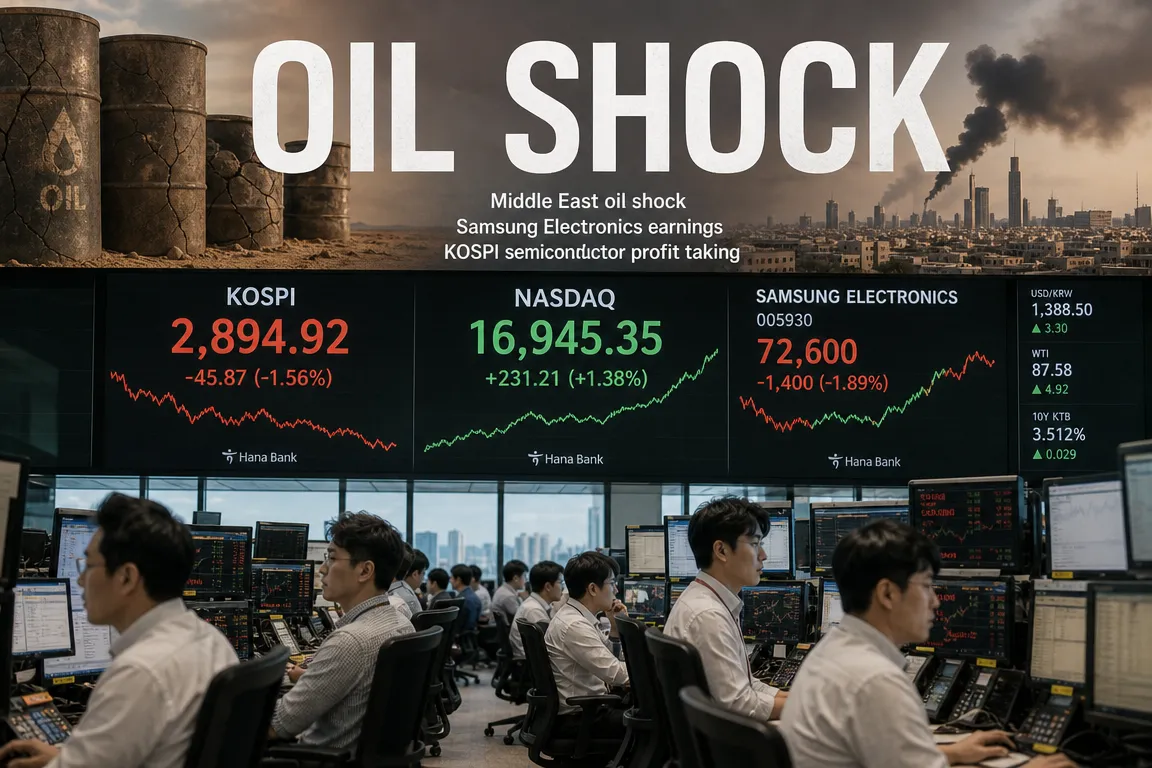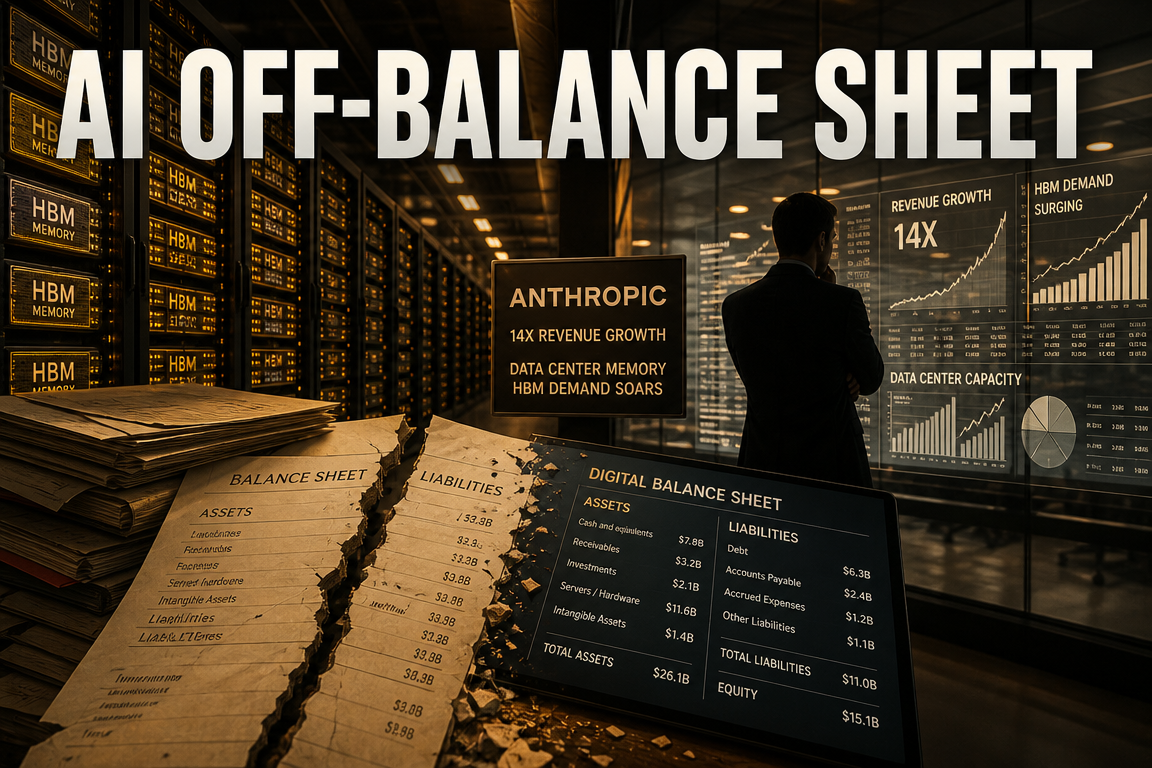
● AI Debt Shock, Chip Surge
The controversy over Big Tech’s hidden $3 trillion AI liabilities — why did semiconductor stocks rise anyway?
The key issue in this market is not simply that Big Tech is spending heavily.
The more important point is that AI-related capital commitments are materially larger than what appears on the balance sheet, and this burden may affect the corporate bond market, semiconductor equities, and the data center infrastructure cycle simultaneously.
On the surface, U.S. equities were quiet.
But beneath the surface, AI data centers, memory semiconductors, Big Tech debt, corporate bond issuance, and Middle East risk were all interacting at the same time.
In particular, the Wall Street Journal’s reporting on an estimated $3 trillion in off-balance-sheet commitments by Big Tech is a variable that must be monitored when assessing the global outlook and the AI investment cycle.
1. U.S. equities were stable, but semiconductors were strong
Based on the major U.S. indices, the market appeared largely unchanged.
The Dow Jones Industrial Average fell 0.33%.
The S&P 500 declined 0.19%.
The Nasdaq closed essentially flat.
Semiconductors, however, showed a different pattern.
The Philadelphia Semiconductor Index rose about 2.6%.
Micron gained more than 6%.
SanDisk surged more than 9%.
SK Hynix ADR also rose more than 6%.
This matters because the market has recently pressured semiconductor stocks amid concerns over AI spending excess and Big Tech funding needs.
Despite several negative headlines, memory semiconductor stocks rebounded sharply on the day.
This was more than a technical bounce and may indicate that sentiment had reached a bottom and started to recover.
2. Four negative headlines that hit the market that day
There was no shortage of adverse news.
That semiconductor stocks still held up made the reaction more notable.
-
First, geopolitical risk in the Middle East resurfaced.
Markets interpreted that Trump may not be inclined to end the conflict quickly, while fighting related to Lebanon also intensified.
This could affect oil prices, inflation, and safe-haven demand.
-
Second, the Wall Street Journal reported on hidden debt-like commitments at Big Tech.
The core message was that AI data centers and semiconductor procurement may generate future contractual obligations estimated at around $3 trillion.
These are not recorded as debt immediately, but they may still weigh heavily on future cash flow.
-
Third, Nvidia reportedly plans a $105 billion investment in OpenAI-related data center infrastructure.
That is an enormous amount, equivalent to roughly KRW 140 trillion.
Whereas such announcements had recently weighed on sentiment, the market did not react strongly this time.
-
Fourth, Alphabet was also reported to be moving ahead with a corporate bond issuance.
Markets have been increasingly concerned that Big Tech will need to rely on debt markets to sustain AI investment.
Even so, the reaction this time was relatively restrained.
3. The market also found support from positive developments
The day was not defined only by negative headlines.
There were also factors supporting AI and memory semiconductor sentiment.
-
First, expectations around Anthropic’s results improved.
According to the source material, Anthropic’s second-quarter revenue reportedly exceeded $11.5 billion.
That implies roughly 14x year-over-year growth.
Reports also indicated adjusted operating profit on an adjusted basis.
This matters because investors have been questioning whether AI companies can eventually generate real profits.
If Anthropic is demonstrating a viable path to profitability, confidence in the AI investment cycle may improve.
-
Second, the possibility of an Anthropic IPO also supported sentiment.
Reports suggest preparations for an October IPO and discussions with investors.
A public listing would give the market a new valuation reference point for AI companies.
That could support broader AI valuations.
-
Third, SanDisk’s capital return policy drew attention.
At its investor day, SanDisk indicated a plan to return 100% of free cash flow to shareholders.
That was followed by additional positive research commentary.
The combination of a memory upcycle and shareholder returns supported the stock.
-
Fourth, the 13F filing from a fund previously hit by margin calls also influenced the market.
The filing showed that the fund held significant positions in Micron and SanDisk at the end of the second quarter.
After the reported transfer of listed holdings to Citadel, the market appears to have interpreted that forced selling pressure may have eased.
That may have contributed to the relative strength in Micron and SanDisk.
-
Fifth, remarks from the U.S. Commerce Secretary regarding Chinese memory products were also relevant.
The comments were interpreted as a negative signal for Apple’s potential procurement of Chinese-made memory chips.
This is supportive for U.S. and allied memory semiconductor suppliers.
It also reinforces policy barriers against Chinese penetration of the U.S. supply chain.
4. The core of the WSJ report: Big Tech’s AI spending may be far larger than what appears in financial statements
The most important development was the Wall Street Journal report.
The WSJ argued that major Big Tech firms may not be fully reflecting their future AI-related obligations on their financial statements.
In practical terms, a large portion of future spending is already committed, even if it is not yet recognized as debt.
The key figure cited was approximately $3 trillion.
That represents the scale of future off-balance-sheet commitments that major Big Tech firms may face.
For context, the combined capex of the nine largest relevant companies over the past year was roughly $600 billion, making $3 trillion nearly five times larger.
Importantly, this does not mean the entire amount is immediate or fixed debt.
However, because these commitments may translate into data center rent, semiconductor purchases, and power procurement costs, the market cannot dismiss them lightly.
5. Off-balance-sheet commitments largely fall into two categories: uncommenced leases and purchase obligations
The WSJ’s discussion of off-balance-sheet commitments can be divided into two main categories.
-
First, uncommenced leases.
These are lease contracts that have been signed but not yet started.
Data centers are a common example.
If a Big Tech company has committed to lease a data center, but the facility is not yet completed or in use, the obligation may not yet appear as debt.
The reported scale of uncommenced leases was about $1.2 trillion.
That is roughly four times the level disclosed a year earlier.
-
Second, purchase obligations.
These are contracts to buy semiconductors, servers, network equipment, or power-related services that have been signed but not yet delivered.
Because the goods or services have not yet been received, they may not be recognized as debt.
However, as AI data center buildouts proceed, they are likely to become real cash outflows.
This structure matters because Big Tech’s AI burden may be much larger than the capex numbers visible in quarterly reporting.
Investors who focus only on reported capex may underestimate the longer-term obligation profile.
6. The Meta example shows that even without building the data center directly, the economic burden remains
One of the most understandable examples in the WSJ report was Meta.
Meta reportedly used a structure involving Blue Owl, an asset manager, for a data center project.
Blue Owl’s fund reportedly owns 80% of the data center, while Meta owns 20%.
However, Meta is the primary tenant of the facility.
The lease was described as beginning in 2029.
Because the lease has not yet started, it may not currently be recognized as a liability on the balance sheet.
Still, Meta reportedly provides a guarantee for losses if lease revenues are insufficient over a 20-year period.
For investors, this distinction is important.
Something may not be classified as debt, yet still represent a meaningful economic obligation.
In other words, “not recorded as debt” does not mean “no burden.”
7. Why Alphabet was identified as the largest variable
According to the report, Alphabet had the largest off-balance-sheet commitment among the major firms.
Meta and Microsoft were also cited, but Alphabet appeared to be the most significant variable.
Alphabet’s purchase obligations reportedly increased by about $50 billion within the last three months.
That is a very large increase.
However, the report noted that the company did not fully explain the drivers of that increase, which added to market concern.
Alphabet reportedly described the obligations as related to infrastructure, inventory, and power procurement for data centers.
Even so, that explanation does not make it easy for investors to estimate the future cash flow impact.
Ultimately, the pace at which AI infrastructure spending converts into revenue may become a key driver for Alphabet’s stock and credit profile.
8. Why the corporate bond market matters
A central market concern has been that Big Tech may need to raise debt to continue AI investment.
AI data centers require substantial spending on GPUs, HBM, servers, cooling systems, power infrastructure, land, and leases.
If operating cash flow cannot fully cover these costs, corporate bond issuance may increase.
The risk is that a sustained increase in issuance can pressure yields and credit spreads.
Even if Big Tech remains highly rated, a larger supply of bonds may lead investors to demand higher returns.
That would raise the cost of AI investment itself.
Alphabet’s bond issuance announcement did not trigger a major market reaction.
This may suggest either that investors still trust Big Tech credit quality, or that the market is temporarily discounting the risk.
9. Nvidia’s $105 billion investment: supportive or concerning?
Another major headline was Nvidia’s reported $105 billion investment in OpenAI-related data center infrastructure.
That is a sizable commitment for a single transaction.
In local currency terms, it is roughly KRW 140 trillion.
The market did not react as negatively as it might have in the past because investors may have viewed it as evidence that AI demand remains strong.
For Nvidia, a direct investment increases near-term funding needs.
However, it may also deepen the company’s strategic lock-in within the AI ecosystem.
There is, however, a latent risk.
If the AI ecosystem increasingly involves suppliers, customers, and investors recycling capital among themselves, it becomes harder to assess the strength of end demand.
That remains an underappreciated risk in the market.
10. The most important point that is often overlooked
The key issue is not the accounting debate over whether these commitments are technically debt.
The central point is that the AI investment cycle is shifting from earnings statements to cash flow and credit markets.
-
First, Big Tech’s AI competition is increasingly a capital-raising competition.
Model quality alone is no longer sufficient.
Access to cheap power, stable GPU supply, and low-cost funding has become critical.
-
Second, data center leases are not simple rentals; they are long-term fixed costs.
Once leases begin, costs continue even if revenue growth slows.
If AI demand grows more slowly than expected, fixed-cost pressure may emerge quickly.
-
Third, power procurement is becoming a new bottleneck.
For AI data centers, electricity may become a larger constraint than GPUs.
The inclusion of power procurement in Alphabet’s reported obligation increase is highly significant.
-
Fourth, this is supportive in the near term for memory semiconductor companies, but not without risk.
Big Tech purchase commitments improve demand visibility for companies such as Micron, SK Hynix, and Samsung Electronics.
However, if Big Tech later slows capex due to funding pressure, demand expectations could weaken quickly.
-
Fifth, if the corporate bond market weakens, AI equity valuations may also come under pressure.
Investors are currently focusing on AI growth rates, but they will increasingly need to consider the cost of capital and the cost of funding AI investments.
Persistently high rates reduce the present value of long-duration cash flows and can pressure valuations across both Big Tech and semiconductors.
11. Why semiconductor stocks were strong
Semiconductor stocks did not rally because of a single catalyst.
Several positive factors aligned at the same time.
-
AI companies continue to show revenue growth and potential profitability.
-
Anthropic’s IPO prospects improved sentiment across the AI sector.
-
SanDisk’s shareholder return policy supported the memory cycle narrative.
-
The possibility that forced selling pressure had eased helped Micron and SanDisk.
-
U.S. policy pressure on Chinese memory suppliers supported U.S. and allied semiconductor firms.
-
Most importantly, the market no longer sold off aggressively in response to negative headlines.
In markets, reaction often matters more than the news itself.
When negative headlines fail to push stocks lower, investors begin to conclude that much of the bad news is already priced in.
That was the pattern observed in semiconductors on the day in question.
12. Key variables to watch going forward
-
Big Tech’s next-quarter capex guidance should be monitored.
Whether AI investment continues to accelerate or begins to moderate will be critical.
-
The pace of growth in off-balance-sheet commitments should also be tracked.
Footnotes, lease obligations, and purchase commitments may matter more than headline financial statements.
-
Corporate bond issuance volumes and pricing are another key factor.
If Big Tech can continue raising funds at low rates, the AI investment cycle may last longer.
-
Memory semiconductor pricing and HBM demand remain central to the outlook.
These are directly tied to earnings expectations for Micron, SK Hynix, and Samsung Electronics.
-
Actual revenue and margin performance among AI companies must be watched closely.
If more companies like Anthropic demonstrate profitability, investor confidence in AI spending may strengthen.
-
Power infrastructure constraints also remain important.
Data center expansion will slow if grid capacity, cooling systems, and land availability do not keep pace.
13. Investment conclusion
This market session reflected the collision between AI bubble concerns and the AI growth narrative.
The WSJ report on approximately $3 trillion in off-balance-sheet commitments is clearly a serious development.
It showed that Big Tech’s AI obligations may be much larger than what is visible on the balance sheet.
Even so, the market did not price in the risk aggressively.
Instead, memory semiconductor and AI-related stocks rebounded strongly.
This suggests that investors still believe AI demand remains intact in the near term.
Going forward, AI should not be assessed only through revenue growth.
Off-balance-sheet commitments, data center leases, power contracts, corporate bond issuance, and cash flow will become increasingly important.
AI remains a powerful growth theme, but the market may increasingly focus on how efficiently that spending can be converted back into returns.
< Summary >
U.S. equities were stable, while semiconductor stocks rebounded strongly.
The WSJ reported that Big Tech’s AI-related off-balance-sheet commitments could total about $3 trillion.
These commitments are driven mainly by uncommenced data center leases and semiconductor purchase obligations.
Alphabet, Meta, and Microsoft were identified as key names, with Alphabet’s increase standing out in particular.
Nvidia’s large data center investment and Alphabet’s bond issuance raised funding concerns.
By contrast, Anthropic’s revenue growth, IPO expectations, SanDisk’s shareholder return policy, and the possibility of reduced forced selling supported sentiment.
The main takeaway is that the AI investment cycle is shifting from a pure technology competition to a contest over capital access, power procurement, and cash flow generation.
[Related Articles…]
*Source: [ 내일은 투자왕 – 김단테 ]
– 빅테크의 숨겨진 부채 3조달러? WSJ 충격의 보도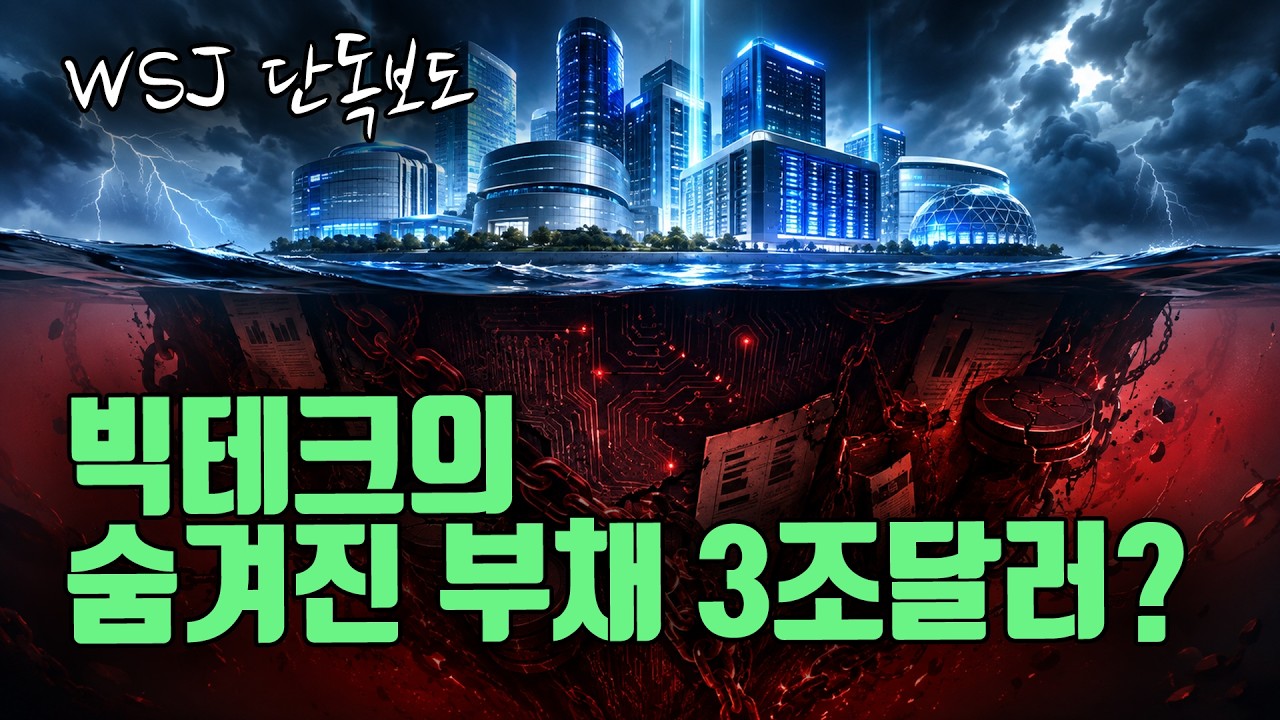
● AI-Driven-Rally,Rate-Cut-Bets,Oil-Shock-Fears
Anthropic’s 14x revenue surge drives the AI semiconductor rally, Goldman Sachs’ view that a September rate hike is unlikely, and the Horn of Africa risk all at once
Today’s key market issue is not simply that “AI is strong.”
The focus should be on why Anthropic’s sharp revenue growth is lifting SK Hynix, Micron, and semiconductor equipment stocks.
At the same time, Goldman Sachs’ view on why the Federal Reserve is unlikely to raise rates in September, AI investment direction seen in institutional 13F filings, and the potential impact of Trump’s remarks on bombing Oman on oil prices and inflation should also be considered.
In short, U.S. equities are currently in a phase where expectations for AI growth are colliding directly with long-term rates and Middle East risk.
1. Early trading in New York: Nasdaq holds up, while the Dow and Russell weaken
Early U.S. trading showed clear divergence across indices.
The Nasdaq 100 futures rose about 0.2%, extending buying interest in technology stocks.
S&P 500 futures were flat, while Dow futures fell about 0.3%.
Russell 2000 futures, which track small-cap stocks, also declined by nearly 0.4%.
- Nasdaq 100: Relative strength on AI and semiconductor expectations
- S&P 500: Limited directional movement
- Dow: Pressure from cyclical names
- Russell 2000: Weakness under high-rate conditions
This suggests the market is not broadly strong, but rather rotating into AI infrastructure and semiconductor investment names.
With rate and oil concerns still present, small caps and cyclical sectors did not participate broadly.
2. Commodities, FX, and bonds: oil and long-term yields remain a burden
In commodities, oil moved higher again amid Middle East tensions.
WTI rose about 0.5% to around $32.86 per barrel based on the original source.
Brent crude climbed about 0.68% to above $89 per barrel.
Gold also held elevated levels near $4,440 per ounce.
Silver and copper also rose modestly, indicating strength in both safe-haven assets and industrial metals.
In foreign exchange, the U.S. dollar was weaker.
The dollar index fell about 0.23% to around 99.33.
This reflected softer inflation data last week, including CPI and PPI, which reduced expectations for additional Fed tightening.
In the bond market, prices of the 10-year and 30-year Treasuries fell slightly.
Since bond prices move inversely to yields, long-term yields remain elevated.
This point is important.
While near-term expectations for a Fed rate hike have eased, long-term yields have not declined materially.
That is supportive for growth stocks in the short term, but not necessarily a broad positive for the entire high-valuation technology segment.
3. Anthropic’s 14x revenue growth: a key signal in the AI investment cycle
The biggest market news today came from Anthropic.
Anthropic, the developer of Claude, reportedly posted second-quarter revenue more than 14 times higher than a year earlier.
Based on the original source, second-quarter revenue exceeded $11.5 billion, compared with about $787 million in the same period last year.
Given that first-quarter revenue was about $4.3 billion, revenue more than doubled in just one quarter.
More important is the possibility of adjusted operating profit turning positive.
So far, generative AI companies have been criticized for rapid revenue growth but weak profitability due to GPU, data center, and model training costs.
If Anthropic has reached operating profitability, it would indicate that AI is moving from a narrative-driven sector to a business that is generating actual earnings.
- Rising enterprise and developer usage of Claude
- Broader adoption of AI models in coding
- Rapid expansion of annualized revenue
- Possible IPO in the fall
- Greater ability to fund GPU and data center investment
This news matters for semiconductors because higher AI usage does not just require GPUs.
It also increases demand for server DRAM, HBM, NAND, SSDs, networking equipment, power infrastructure, and semiconductor tools.
That is why expectations for AI investment are spreading beyond Nvidia to SK Hynix, Micron, ASML, Applied Materials, and Lam Research.
4. Semiconductor market reaction: memory and equipment stocks led the move
Following the Anthropic news, memory semiconductors reacted most strongly.
SK Hynix rose more than 3% in early trading, and Micron advanced by as much as the mid-4% range.
This followed the strong rebound in Micron and SanDisk last week.
- SK Hynix: Reflected expectations for HBM and server memory
- Micron: AI data center memory demand expectations
- SanDisk: Storage demand expansion expectations
- ASML: Expectations for semiconductor equipment investment
- Applied Materials, Lam Research, KLA: Broad strength in equipment stocks
However, not all semiconductor names advanced.
AMD was slightly weaker, and Intel posted only limited gains.
This indicates that the market is not buying semiconductors broadly, but selectively favoring names directly tied to AI infrastructure demand.
For Korean investors, SK Hynix is particularly important.
If AI data center investment continues, demand should extend beyond HBM to server DRAM and NAND as well.
This is an important signal that the rebound in Korea’s semiconductor cycle may be gaining traction.
5. Anthropic IPO valuation: being priced on 2028 revenue rather than current earnings
Anthropic is drawing additional attention because of its potential listing.
The market is already beginning to estimate Anthropic’s IPO valuation.
According to Reuters, Anthropic expects revenue in 2028 to expand significantly.
Based on the original source, Wall Street is increasingly valuing the company on expected 2028 revenue rather than current earnings.
This matters because AI company valuation methods differ from those of traditional companies.
GPU, data center, model training, and inference costs remain very high today.
As a result, valuing AI companies purely on current net income does not fully capture their growth potential.
Instead, the market is pricing in the possibility that revenue growth will continue and fixed-cost leverage will improve profitability over time.
Comparable names mentioned include Palantir, Cloudflare, and SpaceX.
Ultimately, the key issue for Anthropic’s IPO is not current earnings, but whether the company can sustain its growth rate through 2028.
The key question is how much the market is willing to pay for that assumption.
6. Goldman Sachs outlook: a September rate hike looks difficult
Goldman Sachs chief economist Jan Hatzius said the market is still pricing in too high a probability of a Fed rate hike.
In other words, the actual likelihood of a hike may be lower than the market currently assumes.
The reasons are threefold.
- Slower U.S. retail sales
- Weak labor data
- Stable inflation trends
Last week’s CPI and PPI figures did not materially worsen inflation concerns.
As a result, a rate hike at the September FOMC meeting appears unlikely.
The market previously priced in nearly a 0.25 percentage point hike by December, but expectations have now shifted toward January next year.
Goldman Sachs noted that even this outlook may still be somewhat hawkish.
Its view is that inflation is more likely to continue improving rather than reaccelerating sharply in the remainder of the year.
7. Why short-term and long-term rates are moving differently
Goldman Sachs emphasized the yield curve.
The 2-year yield is highly sensitive to Fed policy.
Therefore, when rate hike expectations fall, the 2-year yield can decline.
By contrast, 10-year and 30-year yields behave differently.
Long-term yields may remain elevated because of fiscal deficits and the heavy supply of Treasury issuance.
This is known as yield curve steepening.
In simple terms, short-term rates fall while long-term rates decline less or remain elevated.
The implications vary by sector.
- Technology and growth stocks: Lower short-term rates are supportive
- High-valuation growth stocks: Elevated long-term yields remain a headwind
- Real estate and REITs: Higher or sticky long-term yields are negative
- Banks: A wider yield spread can support net interest margins
That means a lower probability of a rate hike should not be interpreted as a reason to aggressively buy all growth stocks.
Long-term yields remain a key constraint on U.S. equity valuations.
8. Institutional 13F filings: investors favored AI infrastructure over megacap tech
Second-quarter 13F filings also provided an important signal.
13F filings show the U.S. equity holdings of large institutional investors as of the end of each quarter and are disclosed to the SEC.
However, the data are as of June 30 and therefore lag current positioning by roughly two months.
According to Reuters’ analysis of 6,371 institutions, buying and selling of the Magnificent Seven was roughly balanced.
- Institutions increasing Magnificent Seven holdings: about 42%
- Institutions reducing Magnificent Seven holdings: about 44%
This suggests institutions are not aggressively adding to megacap tech, but are instead managing risk and rebalancing positions.
By contrast, semiconductor and AI infrastructure holdings saw stronger buying interest.
- Institutions increasing semiconductor holdings: about 48%
- Institutions reducing semiconductor holdings: about 34.5%
- Selective buying in AI themes such as CoreWeave, Arista Networks, and Broadcom
- Data center-related names showed near balance between buying and selling
The main message is that AI investment continues, but not all AI stocks are moving together.
Institutions already have large exposure to megacap tech, limiting further aggressive buying.
Capital is therefore shifting within AI toward semiconductors, networking, memory, and equipment.
9. This week’s U.S. economic calendar: FOMC minutes and labor data are key
This week does not include major blockbuster data releases, but it does contain events relevant to the Fed’s September decision.
The most important items are the FOMC minutes and initial jobless claims.
| Date | Indicator | Market focus |
|---|---|---|
| Tuesday | Housing starts and building permits | Assessment of whether housing is holding up under high rates |
| Tuesday | Industrial production | Whether consumer weakness is spreading into manufacturing and output |
| Wednesday | FOMC minutes | Insight into the Fed’s views on inflation and employment |
| Thursday | Initial jobless claims | Assessment of labor market softening |
| Thursday | Philadelphia Fed manufacturing index | Assessment of manufacturing conditions |
If the FOMC minutes emphasize inflation concerns and the need for higher rates, the market may interpret them as hawkish.
Conversely, if they highlight labor market weakness and growth concerns, expectations for a September pause could strengthen.
Last week focused on inflation through CPI and PPI.
This week focuses on the Fed path through the minutes, labor data, and production indicators.
10. This week’s earnings: a test of whether U.S. consumption is holding up
The core theme of this week’s earnings season is U.S. consumer spending.
Walmart, Target, Home Depot, Lowe’s, and TJX are scheduled to report.
These companies serve as indicators of where U.S. households are spending.
- Home Depot: Impact of higher rates and weaker housing turnover on remodeling demand
- Lowe’s: Home improvement spending trends
- Target: Middle-income consumption and price sensitivity
- TJX: Consumer trade-down behavior through discount retail
- Walmart: Broadest view of spending on food, essentials, and consumer goods
In semiconductors and manufacturing, Analog Devices’ results are also important.
Because it supplies semiconductors used in autos and industrial equipment, its results offer insight into both manufacturing conditions and semiconductor demand.
Among Chinese companies, Baidu and Alibaba are also set to report.
Baidu will provide insight into China’s AI investment and advertising market, while Alibaba will offer clues on Chinese consumer demand and cloud growth.
11. Japan’s economy: why the yen is stronger despite weak growth
Japan’s second-quarter GDP growth was weaker than expected.
On an annualized basis, growth reached only 1.1%, well below the market estimate of 2%.
Private consumption and capital spending were weak, while lower imports helped support the headline growth rate.
Normally, weaker Japanese growth would make it harder for the Bank of Japan to raise rates, which would pressure the yen.
However, the yen strengthened slightly against the dollar this time.
The reason lies in U.S. factors.
Soft U.S. CPI and PPI data weakened the dollar, while Japan still faces inflation and potential BOJ tightening pressure from persistent yen weakness.
The combination of a weaker dollar and stronger yen offset the weak GDP release.
For Korea, continued dollar weakness could support KRW strength and improve foreign inflows.
A stronger yen may also be relatively favorable for Korean exporters competing with Japan.
12. China: exports remain strong, but domestic demand remains weak
China’s industrial production rose 4.5% year over year in July, but came in below expectations.
Retail sales rose only 0.6%, underscoring the weakness in consumer recovery.
The key feature of China’s economy is the clear divergence between exports and domestic demand.
Exports remain strong, while consumption and investment are weak.
- Industrial production: Weaker than expected
- Retail sales: Weak consumer recovery
- Exports: Still firm
- Domestic auto sales: Down for 10 consecutive months
- Auto exports: Continued to rise
For Korea, weak Chinese domestic demand may pressure cyclical sectors such as chemicals, steel, and machinery.
By contrast, semiconductors are more influenced by global data center investment and AI spending, so the Chinese domestic slowdown should not be interpreted as a simple negative.
The fact that Chinese auto domestic sales are weak while exports continue to grow also matters.
For Hyundai Motor and Kia, competition with Chinese EV makers such as BYD in global markets may be a bigger issue than China’s domestic market weakness.
13. Middle East risk: Trump’s bombing remarks and concerns over a full shutdown of the Strait of Hormuz
In a phone interview with Fox News, President Trump said the U.S. could bomb if Oman interfered with efforts to block Iranian shipping.
The United States is pressuring Iranian vessels in the Strait of Hormuz, and Trump said this pressure is having a major impact on Iran.
He also said he is not rushing to end the conflict.
The issue is that Oman has long played a mediating role between the U.S. and Iran.
Threatening Oman directly suggests that Middle East tensions have escalated further.
Shipping traffic through the Strait of Hormuz has also fallen sharply.
Based on the original source, only five commodity vessels passed through on Saturday, and none passed on Sunday.
Compared with 31 vessels the previous weekend and more than 130 per day before the conflict, this is close to a shutdown.
The Strait of Hormuz is a critical route for global oil and LNG transport.
If it is blocked, oil prices, freight costs, and inflation could all move higher.
That could revive expectations for Fed tightening and weigh heavily on U.S. equities.
14. The most important point not fully highlighted elsewhere
First, the real significance of the Anthropic news is not just AI app growth, but the confirmation of infrastructure demand.
What matters more than higher Claude usage is the need for more GPUs, HBM, server memory, networking equipment, and data center power to support that usage.
Second, institutions are not simply buying megacap tech indiscriminately.
13F data show that Magnificent Seven holdings were roughly balanced between buying and selling, while semiconductor and AI infrastructure positions saw stronger accumulation.
This indicates that AI investment is expanding from Nvidia alone to the broader infrastructure value chain.
Third, Goldman Sachs’ rate outlook is not a straightforward positive.
Short-term yields may decline, but long-term yields could remain elevated because of fiscal deficits and Treasury issuance.
That is supportive for growth stocks, but it also leaves valuation pressure in place.
Fourth, the Strait of Hormuz risk may not yet be fully priced in.
If shipping activity remains nearly halted and oil prices spike, recently easing inflation expectations could reverse.
That would pressure both Fed pause expectations and the AI rally.
Fifth, China’s domestic weakness should be viewed in a sector-specific way for Korean markets.
It is a headwind for chemicals, steel, and machinery, but AI semiconductors are more dependent on global data center spending.
In other words, China’s slowdown should not be treated as a blanket negative for Korean equities.
15. Key investment framework
The market should currently be viewed through three major themes.
- AI growth: Anthropic, Claude, generative AI, data centers, and semiconductor investment
- Rates: Fed policy, FOMC minutes, labor data, and long-term yields
- Risk: Middle East tensions, oil prices, inflation, and weak Chinese domestic demand
AI-related stocks still have a strong growth narrative.
However, investors should pay closer attention to names such as memory, equipment, networking, and power infrastructure that benefit from broadening demand, rather than to megacap tech names that have already rallied substantially.
On rates, a lower probability of a September hike is supportive.
However, if long-term yields do not decline, valuation pressure on growth stocks will remain.
Middle East risk may appear event-driven in the short term, but if disruption in the Strait of Hormuz persists, oil and inflation could rise again.
Accordingly, this week should be viewed with attention to both AI semiconductor strength and the direction of oil and 10-year Treasury yields.
< Summary >
Anthropic’s second-quarter revenue reportedly rose more than 14 times year over year, renewing expectations for AI investment.
This supported gains in AI infrastructure names such as SK Hynix, Micron, and semiconductor equipment stocks.
Goldman Sachs said a September Fed rate hike looks unlikely, although long-term yields may remain elevated.
Institutional 13F filings showed stronger selective buying in semiconductors and AI infrastructure than in megacap tech.
This week’s key events are the FOMC minutes, initial jobless claims, and earnings from Walmart, Target, and Home Depot.
China remains strong in exports but weak in domestic demand, while Japan’s weaker growth did not prevent the yen from strengthening amid a softer dollar.
Trump’s remarks on bombing Oman and the sharp drop in traffic through the Strait of Hormuz are key risks that could reaccelerate oil prices and inflation.
[Related Articles…]
- AI Infrastructure Investment Cycle and the Semiconductor Value Chain
- Fed Rate Outlook and U.S. Equity Strategy
*Source: [ Maeil Business Newspaper ]
– 앤트로픽 매출 14배, 2년 뒤 매출로 몸값ㅣ골드만 “9월 인상 어렵다”ㅣ기관 13Fㅣ트럼프 “오만 방해하면 폭격”ㅣ美경제일정ㅣ홍혜진의 뉴욕브리핑