● Moderna Explodes, Treasury Buyback Calm, AI Crackdown Hits Markets
Moderna cancer vaccine Phase 3 success, expanded U.S. Treasury buybacks, and AI data center regulation: key market developments driving today’s session
Today’s market catalyst was not simply that Moderna surged.
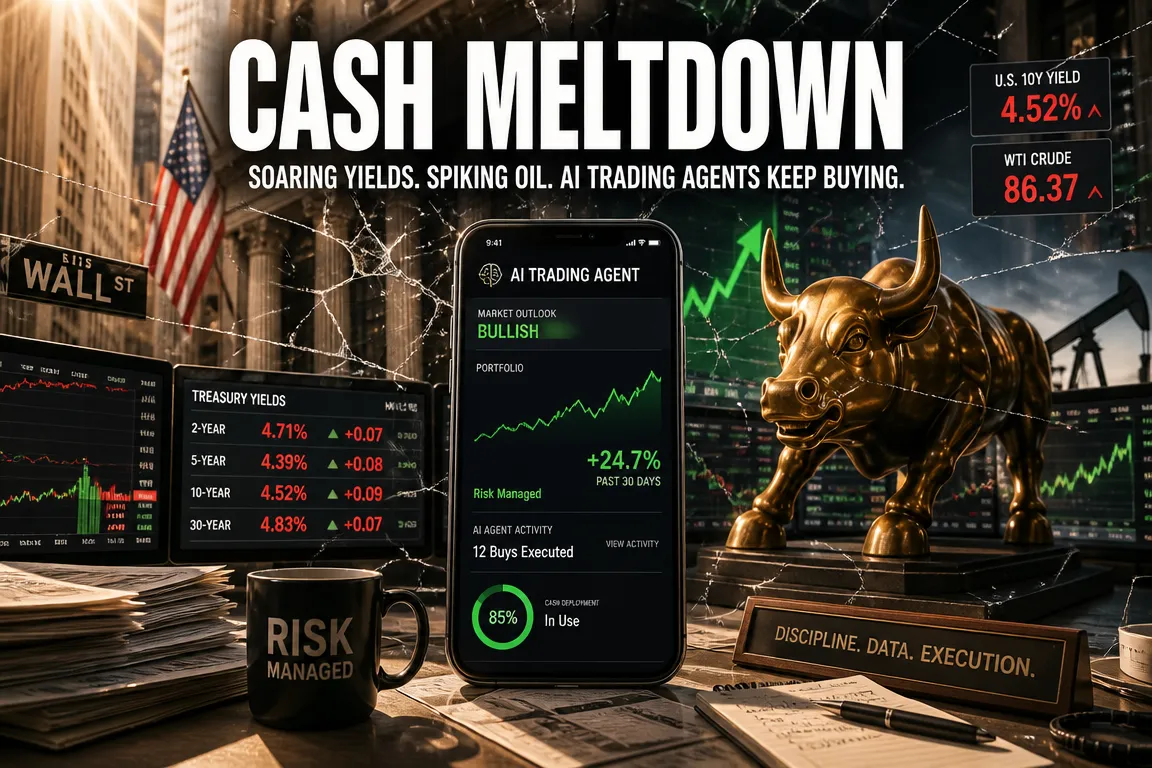
The U.S. Treasury expanded buybacks of long-dated Treasury securities, triggering volatility in bond yields and prompting a rapid reaction in U.S. equity futures and technology sentiment.
At the same time, Moderna’s Phase 3 success for its personalized cancer vaccine signaled that mRNA technology may extend beyond COVID-19 vaccines into oncology.
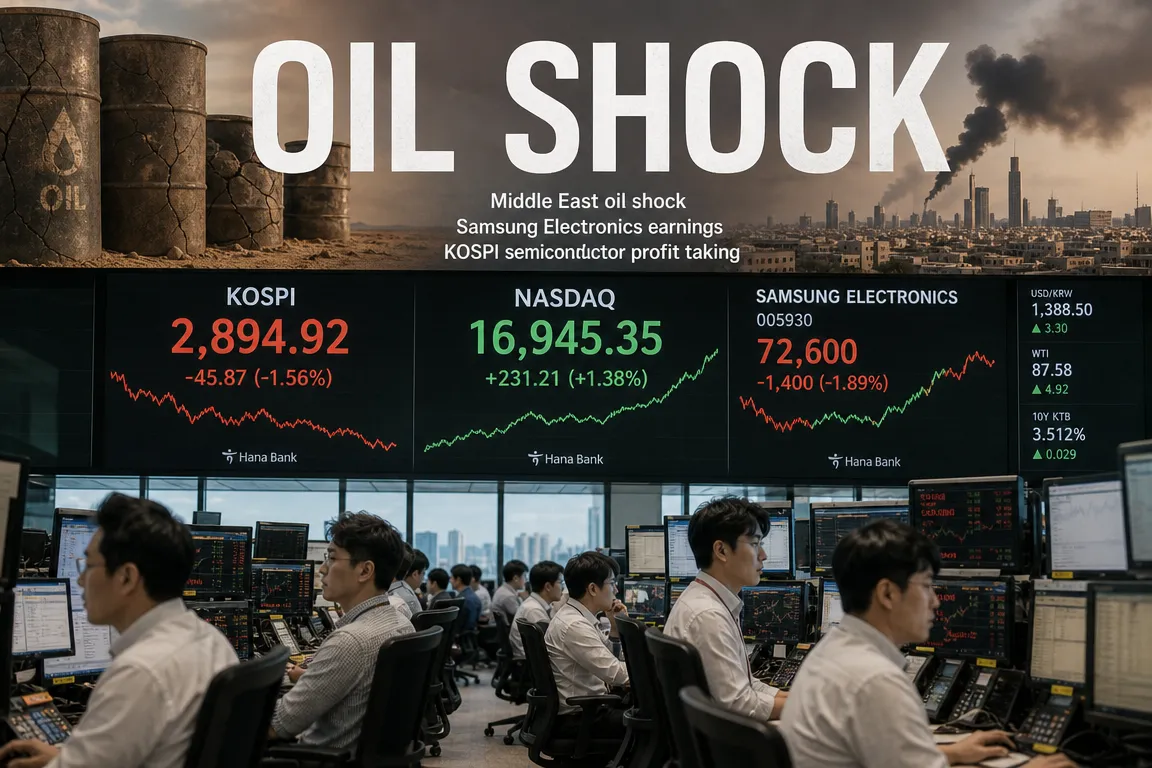
In Korea, the KOSPI fell sharply even as the won strengthened below 1,400 per dollar, an unusual combination.
Additional pressure came from tighter AI data center regulation, a 20-year Treasury auction, the FOMC minutes, and Tesla’s slowing growth narrative, leaving investors with multiple variables to monitor within a single trading day.
1. Pre-market U.S. equities: expanded Treasury buybacks stabilized sentiment
U.S. equity futures opened higher across major indices.
Dow futures rose about 0.4%, S&P 500 futures gained about 0.37%, and Nasdaq 100 futures rose about 0.3%.
Russell 2000 futures also advanced 0.67%, indicating broader participation in the rebound.
The main driver was the U.S. Treasury’s announcement to expand buybacks of long-dated Treasuries.
The Treasury said it would increase repurchases of securities in the 10-year to 30-year maturity range from roughly $2 billion to at least $4 billion, more than doubling the prior scale.
Recently, the 30-year Treasury yield moved above 5.3%, reaching its highest level in nearly 19 years.
The 10-year yield also approached 4.7%, placing significant pressure on equities, especially technology and growth stocks.
After the Treasury signaled direct support for long-duration bonds, bond prices rose and yields fell.
The 30-year yield eased to the low 5.2% range, while the 10-year yield moved back into the 4.6% range.
The most sensitive market variable at present is Treasury yields rather than corporate earnings.
Higher yields weigh on technology valuations because future earnings are discounted at a higher rate, while lower yields reduce that pressure.
In that sense, today’s equity rebound reflected a temporary easing in bond market stress rather than a sudden improvement in risk appetite.
2. Why expanded long-bond buybacks matter
Treasury buybacks involve the government repurchasing outstanding long-dated bonds from the market.
Reduced supply supports bond prices and pushes yields lower.
The long-end market had recently faced a lack of demand.
Despite higher yields, buying interest in long Treasuries remained limited.
Supply concerns linked to widening fiscal deficits, inflation risks, and geopolitical tensions had weakened demand for duration.
In that environment, the Treasury’s return as a buyer provided a psychological stabilizer.
However, it remains unclear whether the measure can fully reverse the broader upward trend in long-term yields.
Today also includes a 20-year Treasury auction and the release of the FOMC minutes.
If the auction draws weak demand or the minutes reveal a more hawkish tone, yields could rise again.
For now, the buyback announcement has reduced immediate stress, but the direction of rates will likely be determined by the auction and the Fed messaging later in the day.
3. Moderna’s Phase 3 cancer vaccine success: why the stock surged more than 100%
Moderna was the day’s most notable single-stock story.
Shares jumped more than 100% at one point pre-market and remained up roughly 80% to 120% at various stages.
Merck, its co-developer, also rose by about 10%.
The rally followed positive Phase 3 results for the personalized mRNA cancer vaccine being developed by Moderna and Merck.
The therapy targets high-risk melanoma patients.
After surgical removal of the tumor, each patient’s tumor mutations are analyzed.
A customized mRNA vaccine is then designed based on those mutations.
In simple terms, the vaccine trains the immune system to recognize and attack cancer cells with a specific mutation profile.
It is administered together with Merck’s Keytruda, which helps immune cells mount a stronger attack on the cancer.
The Phase 3 trial included 1,137 high-risk melanoma patients who had undergone surgery.
One group received Keytruda alone, while the other received Keytruda plus the Moderna vaccine.
Interim results showed that the combination therapy achieved the primary endpoint by significantly extending recurrence-free survival.
However, the exact percentage reduction in recurrence risk has not yet been disclosed.
In the earlier Phase 2 study, five-year follow-up data showed a 49% reduction in recurrence or death risk versus Keytruda alone.
This Phase 3 update confirms success on the primary endpoint, with detailed data expected later at a major medical conference.
It is also important to note that the therapy has not yet received FDA approval.
Further data disclosure, regulatory review, and a formal submission process remain ahead.
4. Why this matters to Moderna beyond a single drug headline
Moderna’s stock reaction reflected more than a product-specific news event.
The result could reshape the company’s long-term business model.
Moderna achieved explosive growth during the COVID-19 vaccine cycle.
As demand declined, its financial performance weakened materially.
Second-quarter revenue was about $145 million, while net loss reached about $782 million.
The market’s central question has been straightforward:
What can mRNA technology sell after COVID-19?
This cancer vaccine result is the first strong answer to that question.
It suggests that mRNA may expand from infectious disease vaccines into oncology.
More importantly, the platform is not limited to melanoma.
Moderna and Merck are also running trials in non-small cell lung cancer, bladder cancer, and kidney cancer.
Investors are viewing the melanoma result as evidence that similar treatment strategies could work in other tumor types.
Barclays estimated that the melanoma program alone could generate about $3 billion in annual sales by 2035.
From that perspective, Moderna’s surge reflects platform revaluation rather than a short-term trading event.
5. Potential implications for biotech and Korean equities
The news should support sentiment across U.S. biotech.
In the current biotech market, late-stage clinical success, especially Phase 3 data, carries much more weight than early-stage results.
It is a clearer indicator of commercial viability.
The development is positive for mRNA, oncology, personalized medicine, and immuno-oncology themes.
However, Moderna’s market capitalization is not large enough to drive the broader S&P 500 or Nasdaq by itself.
As a result, the effect is more likely to be concentrated within biotech than across the main equity indices.
Korean biotech stocks may also see thematic interest.
Companies tied to mRNA inputs, delivery technologies, vaccine CDMO capacity, and biologics manufacturing could draw attention.
That said, the connection should be assessed carefully.
Positive Phase 3 data for Moderna’s vaccine does not immediately translate into earnings for domestic firms.
Approval is still pending, and commercialization will take time.
For Korean biotech investors, the distinction between short-term thematic trading and actual earnings linkage remains important.
6. Why the won strengthened despite a sharp KOSPI decline
The KOSPI fell sharply today, with broad pressure on semiconductors.
Samsung Electronics and SK hynix declined, and foreign selling was strong.
Yet the won moved in the opposite direction.
The dollar-won exchange rate fell below 1,400 to close around 1,391.
Normally, heavy foreign equity selling would weaken the won, as investors often convert proceeds back into dollars.
Today, however, offsetting forces were stronger.
-
First, the U.S. dollar weakened.
-
Slower U.S. inflation and consumption data increased expectations that the Fed is less likely to raise rates further.
-
When rate-hike expectations decline, the dollar becomes less attractive to hold.
-
Second, export-oriented companies sold dollars for won.
-
Strong semiconductor exports generated significant foreign currency inflows.
-
Companies converted dollars into won to fund domestic payroll, capex, and operating expenses.
-
Third, end-of-August corporate tax payments added demand for won.
-
December-year-end firms must make interim corporate tax payments by the end of August.
-
Large exporters often sell dollars and acquire won to meet tax obligations.
-
Fourth, overseas financing flows also supported won demand.
-
Capital raised in dollars for domestic investment must eventually be converted into won.
-
That conversion also supports the local currency.
As a result, the foreign exchange market moved differently from the equity market today.
Foreign investors sold Korean stocks, but export-related dollar selling and tax-related demand for won dominated FX flows.
That explains the unusual combination of a weaker equity market and a stronger currency.
7. Dollar-won outlook: can the exchange rate remain below 1,400?
In the near term, the won may still face some support.
The dollar remains under pressure, and export-related dollar selling and tax-payment demand could continue through month-end.
However, the recent pace of appreciation has been rapid.
After moving from the 1,500 range to the 1,390 range, the market may consolidate around the 1,400 level rather than extend the move sharply lower.
For investors, the key question is whether currency strength translates into foreign equity inflows.
Foreign investors consider both stock valuations and exchange rates.
A stable and stronger won reduces currency risk for later profit repatriation.
If won strength is sustained and foreign net buying resumes, Korean equity flows could improve.
Conversely, if long-term U.S. Treasury yields rebound sharply or geopolitical risks push oil higher, the dollar could strengthen again.
In that case, the dollar-won rate could move back higher.
Korean investors should monitor the 1,400 level, foreign buying trends, U.S. Treasury yields, and crude oil movements together.
8. FOMC minutes: what the market is trying to confirm
Another key U.S. event today is the release of the July FOMC minutes.
The release is scheduled for 3:00 a.m. Korea time on August 20.
The most important question is how strong the internal case for further rate increases was.
At the July FOMC meeting, Cleveland Fed President Beth Hammack, Minneapolis Fed President Neel Kashkari, and Dallas Fed President Lorie Logan voted against the decision to hold rates and instead supported a 25 basis point hike.
The final vote was 9-3 in favor of holding rates, but the presence of three formal dissenters was enough to concern the market.
Their argument was that inflation remains above the Fed’s 2% target.
In their view, delaying action could force the Fed to tighten more aggressively later.
The key risk is that other participants may have raised similar concerns in the meeting even if they did not vote against the decision.
If the minutes show more widespread concern about inflation and a stronger bias toward further tightening, the market may raise the probability of a September hike.
That would likely push Treasury yields higher, strengthen the dollar, and weigh on Nasdaq and other growth stocks.
By contrast, if the minutes show that hawkish support was limited to a few officials, the market may further reinforce expectations for a hold.
9. 20-year Treasury auction: today’s real test for the bond market
A 20-year Treasury auction is scheduled for 1:00 p.m. Eastern Time today.
That is 2:00 a.m. Korea time on August 20.
Recent 20-year yields have been around 5.2%, broadly in line with the elevated 30-year rate.
After recent 10-year and 30-year auctions, the market has been closely watching whether long-duration demand remains resilient.
Although the Treasury’s buyback announcement helped sentiment, weak bidding could still push yields higher again.
Conversely, solid demand would support expectations for stabilization in long rates.
Equity direction today may ultimately be determined more by the bond market than by the stock market itself.
10. AI data center regulation: the bottleneck is shifting from GPUs to power and permitting
Pennsylvania has tightened approval requirements for new data centers.
This development is highly relevant to AI infrastructure and big tech capital spending.
The state said data centers must satisfy standards for power use and water consumption.
It also stated that developers must directly bear the cost of the power infrastructure needed for their projects.
Data centers require substantial electricity.
Training and running AI models requires GPUs, servers, and cooling systems, all of which consume large amounts of power.
Until recently, the main bottleneck in AI infrastructure was seen as GPU supply.
Now, however, grid capacity, substations, cooling water, land, and community opposition are becoming additional constraints.
Pennsylvania is one of the regions where Amazon previously announced a roughly $20 billion AI cloud infrastructure investment plan.
Tighter regulation in such areas suggests that the pace of AI infrastructure expansion may not remain as fast as investors had expected.
The new rules also require a portion of electricity to come from clean energy and increase local approval requirements before state review can proceed.
They also restrict broad nondisclosure agreements and remove data centers from certain fast-track processes.
This trend is not limited to Pennsylvania.
Other regions, including New York, are also seeing pushback and tighter regulation on data center development.
Korea faces similar issues, including concentration in the Seoul metropolitan area, power grid constraints, and local opposition.
AI data centers are likely to become a major investment theme linked to semiconductors, power equipment, nuclear generation, renewables, transmission infrastructure, and real estate permitting.
11. Tesla: the focus has shifted from vehicle sales to Cybercab and Optimus
Tesla shares are down about 25% year to date.
Over the past year, the stock has also struggled to establish a clear upward trend.
The weakness cannot be explained solely by vehicle sales.
The market no longer views Tesla only as an EV manufacturer.
Investors are waiting for tangible progress in Cybercab, robotaxi services, Optimus, autonomous driving, and AI-related initiatives.
Tesla continues to present robotaxi services as a future growth driver.
In particular, the key question is whether Cybercab, the dedicated driverless robotaxi without a steering wheel or pedals, can move into real-world deployment.
If Cybercab becomes commercially available, it could mark a transition from expectations to execution in Tesla’s autonomy strategy.
For now, however, the pace of rollout remains slower than the market had hoped.
The same applies to Optimus, Tesla’s humanoid robot program.
Expectations are high, but measurable commercial results remain limited.
As a result, Tesla’s stock direction is increasingly tied to the commercialization of its AI businesses rather than vehicle deliveries alone.
The key re-rating event may come when Cybercab and Optimus begin contributing to revenue and earnings.
12. Intraday action: buyback effects faded while healthcare led the market
Early in the session, Treasury buybacks lifted equity futures.
As trading progressed, however, the Nasdaq 100 gave back gains and at times moved close to flat.
Semiconductor names also opened stronger pre-market, including Nvidia, AMD, TSMC, and Micron.
Most of those gains faded after the open.
Broadcom remained weak pre-market, while AMD, Intel, and Micron also turned lower again.
By contrast, healthcare and pharmaceutical stocks were strong.
Moderna’s cancer vaccine results extended into names such as Merck, Eli Lilly, Johnson & Johnson, and AbbVie.
WTI crude held near $84 per barrel and Brent remained near $91 per barrel.
While not surging, oil prices remain high enough to influence inflation and long-term yields.
The dollar index weakened, the yen strengthened, and the VIX fell, indicating some easing in near-term market stress.
13. The most important point investors may miss
The key takeaway today is that bottlenecks in the AI era are shifting simultaneously from semiconductors to financial markets and infrastructure.
Many investors still view AI beneficiaries mainly through the lens of Nvidia, semiconductors, and data center equipment.
But when the day’s developments are connected, a broader picture emerges.
First, AI and technology stocks remain highly sensitive to Treasury yields.
The fact that Treasury buybacks could lift futures temporarily and then fade shows how closely markets are watching rates.
Second, AI data centers are no longer a business that only requires GPUs.
Power grids, water, land, local acceptance, permitting, and clean energy sourcing are all becoming essential.
That shift may create more opportunity for power equipment, transmission, generation, and cooling infrastructure than for semiconductors alone.
Third, the dollar-won exchange rate is driven not only by foreign equity flows but also by real money movement.
Dollar sales by exporters, tax payments, and foreign funding conversions can all move the currency materially.
Fourth, biotech is also being repriced around late-stage clinical success rather than broad optimism.
Moderna’s rally reflects platform revaluation, not just a thematic trade.
In short, AI, biotech, currencies, rates, and energy infrastructure are no longer moving independently.
They are interacting to shape global capital flows.
14. Key variables to monitor
-
U.S. 10-year, 20-year, and 30-year Treasury yields
-
A renewed rise in long yields would remain a headwind for technology and growth stocks.
-
Results of the 20-year Treasury auction
-
Weak demand could revive long-end rate volatility.
-
Degree of hawkishness in the FOMC minutes
-
Stronger-than-expected rate-hike language could push up both the dollar and Treasury yields.
-
Whether the dollar-won rate holds below 1,400
-
Stable won strength could improve foreign investor sentiment toward Korean equities.
-
Crude oil prices
-
Another sharp rise in oil would increase inflation and yield pressure.
-
Further expansion of AI data center regulation
-
This could affect the pace of big tech AI investment and related infrastructure sectors.
-
Release of detailed Moderna data
-
The Phase 3 specifics and FDA pathway will shape biotech sentiment.
< Summary >
The U.S. Treasury’s decision to expand long-dated bond buybacks temporarily lowered long yields and supported U.S. equity futures.
Moderna surged more than 100% after positive Phase 3 results for its personalized mRNA cancer vaccine developed with Merck.
The KOSPI fell on semiconductor selling, but the dollar-won rate moved below 1,400 as the dollar weakened and export-related dollar sales and tax-related demand for won increased.
AI data centers are now facing bottlenecks not only in GPUs but also in power, water, land, local opposition, and regulation.
Today’s market reflects the interaction of Treasury yields, inflation, currency movement, AI infrastructure, and biotech platform revaluation.
[Related Articles…]
- U.S. Treasury Yields and Global Investment Strategy
- AI Data Center Power Infrastructure Investment Trends
*Source: [ Maeil Business Newspaper ]
– 모더나 암백신 3상 성공 장전 100% 폭등ㅣ美 재무부 장기채 바이백 2배 확대ㅣAI 데이터센터 규제 강화ㅣ코스피 급락에도 원화값 왜 올랐나ㅣ홍혜진의 뉴욕브리핑