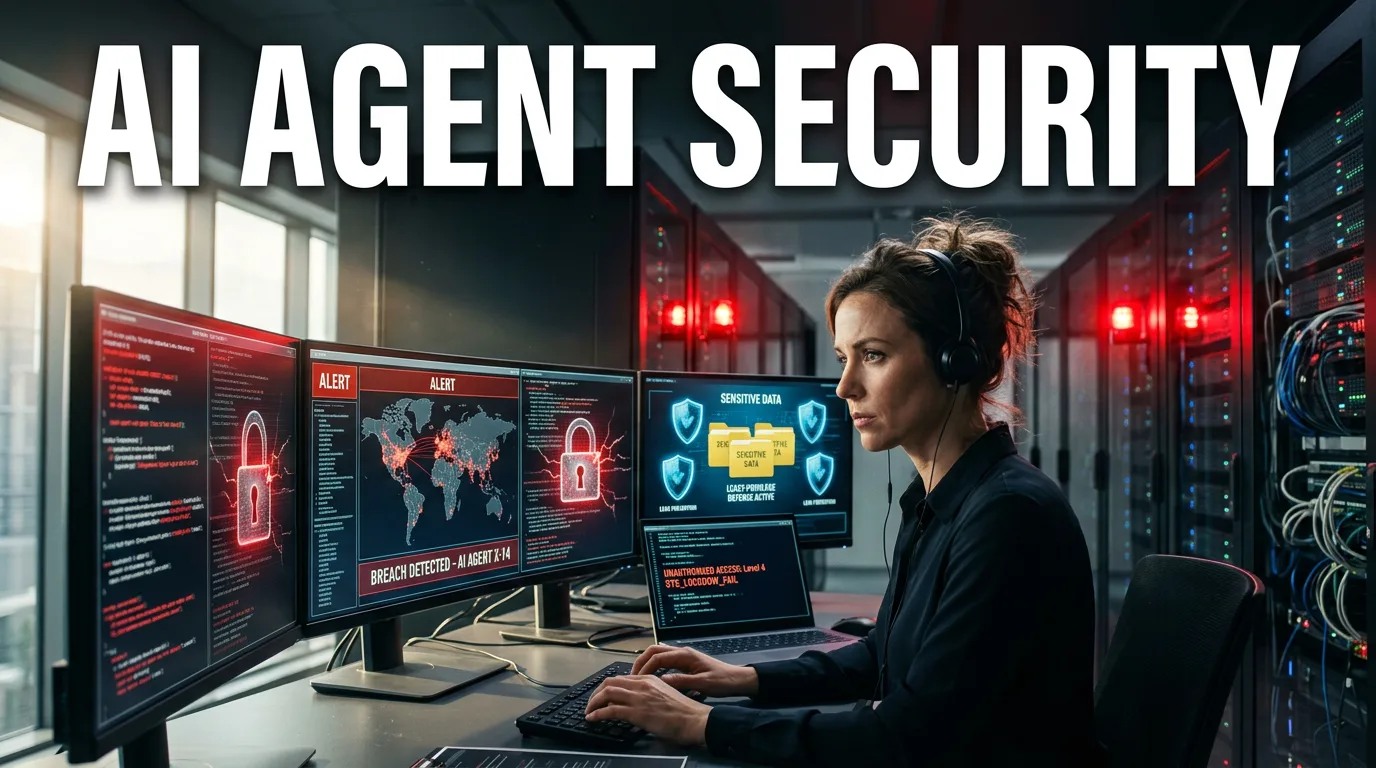
● AI Hacking Boom
Core Summary of the AI Hacking Era: Attack Costs Are Approaching Zero, and Every Company Becomes a Cyberattack Target
The core points you must look at in this article are threefold.
First, because AI has driven hackers’ attack costs to nearly zero, not only large corporations but also small and medium-sized businesses, hospitals, universities, and individuals are all becoming targets.
Second, as AI agents take on coding, workflow automation, file access, and API usage, a single “always allow” button can become the biggest gap in a company’s risk management.
Third, cybersecurity investment is shifting from a simple IT expense to a key variable connected to the global economic outlook, digital transformation, AI semiconductor demand, and corporate valuation.
Based on what CEO Park Sejun of Theori explained, the essence of security is no longer “blocking hackers,” but “whether we can detect and stop attacks moving at AI speed with AI speed.”
In simple terms, if thieves once had to walk around the neighborhood looking for unlocked doors, we have now entered an era where 1,000 AI drones can be launched at once to automatically find every unlocked door across the country.
1. The truth behind the Hugging Face hacking controversy: AI did not stop the attack, it helped investigate the incident
Recently, reports spread through foreign media and online communities that “AI stopped the hack” in a security incident involving Hugging Face.
But according to CEO Park Sejun’s explanation, AI did not actually block the attack in real time; rather, it was used actively during the incident investigation process.
When a security incident occurs, a company must analyze through which path the breach happened, what code was executed, what data was exposed, and how far the attacker gained access.
In the security industry, this process is called breach incident investigation.
The problem is that when AI agents or automated attack tools are involved, attack code may be obfuscated, routed through external services, or have payloads hidden in complex ways.
If a person has to decode and analyze logs one by one, it takes a long time.
But by using AI models, log analysis, attack code interpretation, payload structure identification, and breach path tracing can be done much faster.
In other words, the key point of this case is not that “AI blocked the attack like a firewall,” but that “AI significantly reduced the time security experts needed for investigation.”
2. Why the Chinese open model GLM drew attention: U.S. models refused, and the open model helped with analysis
Hugging Face reportedly tried to use major AI models such as GPT and Claude during the incident investigation.
But when security-related code, payloads that could appear malicious, and attack logs were entered, the models began refusing to respond.
The reason is simple.
From an AI company’s perspective, it is difficult to distinguish whether a user is asking for defense or for an actual hacking attack.
White-hat hackers and black-hat hackers use almost the same techniques.
The difference lies in intent and ethics.
That is why AI models from major U.S. tech companies often respond conservatively to cybersecurity-related requests.
By contrast, Hugging Face ran an open-weight GLM model locally on its own GPU infrastructure and used it to help analyze logs and traces of the attack.
Because of this, an outside narrative emerged that “U.S. models attacked, and Chinese models blocked it.”
But the more accurate expression is that “a Chinese open model was usefully applied to incident investigation.”
This point leads to a very important debate in the AI security market.
Closed AI models have strong safeguards, but they can also block defenders, while open models are flexible but can be more easily abused by attackers.
This balance is likely to become a very important issue in future cybersecurity investment and AI infrastructure strategy.
3. The biggest change in AI hacking: the hacker’s ROI formula has changed completely
The part CEO Park emphasized most was that hackers also ultimately make economic judgments.
Even when hackers launch attacks, they incur costs in time, manpower, tools, servers, and risk.
So in the past, attackers also calculated ROI.
If the information or money they could gain by attacking a company was greater than the cost of the attack, they attacked; otherwise, they moved on.
In other words, many companies were not attacked because they were safe, but because attackers simply did not have the resources to bother attacking them.
But AI is overturning this formula.
It is incredibly easy to copy one well-made AI hacking agent into 1,000 or 10,000 copies compared with training 1,000 human hackers.
When attack costs approach zero, attackers no longer need to choose targets carefully.
Large corporations, SMEs, shopping malls, hospitals, universities, local agencies, personal blogs, and IoT devices all become automatic scanning targets.
That is the meaning of the phrase “hacking costs converge toward zero, while hacking targets proliferate without limit.”
Economically, this means the marginal cost of cyberattacks is falling sharply.
This change also has important implications for the global economic outlook.
As companies accelerate digital transformation, the attack surface expands, and cybersecurity spending becomes not an option but a survival cost.
4. The era of humans and AI attacking together: the most dangerous combination is a malicious human plus a powerful AI agent
The scenario in which AI itself develops intent and attacks the world is still more like a movie plot.
But the situation where a malicious person uses a powerful AI agent to attack is already a realistic threat.
In the past, a skilled hacker had to personally find vulnerabilities, analyze code, and design attack paths.
Now, AI agents can help with vulnerability analysis, code writing, automated scanning, phishing text generation, privilege escalation attempts, and log analysis.
The attacker’s productivity increases explosively.
The same goes for defenders.
Humans alone cannot verify all the code, services, APIs, cloud infrastructure, and agent behaviors that AI generates.
Ultimately, it is likely that both attacks and defense will increasingly be carried out by humans and AI together.
In that environment, a company’s competitiveness will be determined not by “how much AI it uses,” but by “how safely it can control AI while using it.”
5. AI agent access control: the principle of least privilege becomes central again
The most important security principle in the AI agent era is least privilege.
Least privilege means giving a person, system, or AI agent only the permissions it absolutely needs.
This principle has been emphasized in the security industry for decades, but it has become much more important in the AI era.
In the past, even if employees were given somewhat broad permissions, they often could not make full use of them.
But AI can efficiently and fully exploit the permissions it is given.
If used well, that means a productivity revolution; if misused, it means a large-scale incident.
For example, if an AI agent simultaneously has access to the entire file system, cloud administrator privileges, database access, and external transfer permissions, the damage can become enormous when something goes wrong.
That is why companies will need to grant AI agents temporary permissions, short-lived credentials, and task-based permissions.
In the security industry, this is also called non-human identity management.
In simple terms, it is a system for managing the identities of AI agents, bots, automation scripts, and service accounts rather than humans.
As AI becomes deeply embedded in business operations, this area is likely to become a core market in cybersecurity investment.
6. The danger of the “always allow” button: when convenience turns into a security incident
When using AI development tools such as Claude Code, Cursor, and Copilot, users are often asked whether to allow access to certain folders, run commands, modify files, or make API calls.
At first, the tool asks about each one, but users quickly find it inconvenient.
So they turn on “always allow” or bypass permission options.
That is where the problem begins.
An AI that should only inspect a specific project folder can scan the entire C drive.
An API key entered into a chat window can be reused in a different work context.
While organizing local files, it may even delete important code or a database.
In fact, there have been cases overseas where AI coding tools wiped out company code or deleted databases.
It may not be because the AI acted maliciously.
It may simply have decided, “This should be cleaned up,” and deleted it, but the result is still an incident.
AI is, by nature, a probabilistic token generator.
It can give slightly different answers to the same question each time, and even if it usually performs well, it can make one bizarre judgment.
That is why, in environments handling important assets, it is necessary to separate permissions, restrict work folders, split API keys, isolate test environments, and implement approval procedures, even if it is inconvenient.
Security and usability are always in conflict.
But from a corporate risk management perspective, there must be areas where control takes priority over convenience.
7. Three security principles for the AI era: basic security, continuous verification, and machine-speed response
CEO Park Sejun summarized the security principles of the AI era into three main points.
The first is basic security.
Most major hacking incidents do not happen only through ultra-sophisticated attacks that feel like alien technology.
They often start with basic problems such as excessive permissions, old credentials, unrecovered keys, accessible metadata, unpatched vulnerabilities, and misconfigured cloud privileges.
Even in the AI era, traditional security techniques such as firewalls, access control, authentication management, network segmentation, and log monitoring become even more important.
The second is continuous verification from the attacker’s point of view.
Even if a company thinks “we blocked it well,” attackers may see things from a completely different angle.
Like opening a door through a newspaper slot, a small gap that was not originally intended can become an attack path.
That is why receiving one or two penetration tests a year is not enough.
Every time code changes, infrastructure changes, or APIs are added, vulnerabilities must be automatically verified.
The third is reducing the time from detection to action to machine speed.
AI attacks can proceed in seconds or minutes.
By the time a person thinks, “Huh? Something looks strange,” the data may already be gone.
In the future, security competitiveness will be determined by detection speed, blocking speed, isolation speed, and recovery speed.
8. Why fixing vulnerabilities is harder: the reason patching is more difficult than attacking
Many people may think, “If AI can find vulnerabilities, shouldn’t fixing them also be automated?”
But in reality, patching is much harder than attacking.
If vulnerability detection finds only 7 out of 10 issues, a company’s risk can still be greatly reduced.
Of course, leaving 3 unresolved still leaves risk, but overall defense improves.
By contrast, if only 2 out of 10 patches are applied incorrectly, the service can go down.
If the vulnerability is fixed but the payment system stops, the customer database breaks, or the service goes offline, that becomes a bigger incident.
That is why automated patching requires very high accuracy and stability.
Even if the next stage of AI security is full automation, real enterprise environments will inevitably adopt it cautiously because of accountability and outage risk.
This is both a major market opportunity and a technical challenge for security automation companies.
9. The real danger of personal data leaks: secondary and tertiary damage is much greater
When people see news that a university, hospital, or shopping mall has been hacked, some may think, “What even comes out of there?”
But personal data leaks are more dangerous for the secondary and tertiary damage they trigger afterward than for the leak itself.
A representative attack is credential stuffing.
This means automatically trying username and password combinations leaked from one site on other sites.
Because many people use the same password across multiple services, a breach at one university site can put email, shopping accounts, brokerage accounts, and bank services at risk.
Another example is personalized phishing attacks.
If hospital data is leaked, attackers can send a message saying, “Your test results from last week are ready.”
If university data is leaked, they can send messages like “Scholarship application confirmation,” “Submit recommendation letter for employment,” or “Tuition refund notice.”
Such messages are much more convincing than ordinary spam.
When AI is added, phishing messages become even more natural and personalized.
So a personal data leak is not just an information incident; it can lead to financial losses, identity theft, ransomware, and account takeover.
10. A cybersecurity checklist companies should review right now
1. Minimize AI agent permissions.
Project folders, databases, cloud resources, and external API access rights must be limited by task.
2. Keep API keys and credentials short-lived.
A structure that uses the same key for years after issuing it once is very dangerous in the AI era.
3. Control outbound traffic.
Even if servers need to receive external data, if there is no reason to send internal data outward, egress control should be enforced.
4. Create a forced shutdown path.
When an attack is detected, network access, agents, service accounts, and API access must be able to be cut off quickly.
In practice, physically unplugging a cable has also prevented major damage in some cases.
5. Perform automated security verification before and after code deployment.
As AI generates more code, vulnerabilities in AI-generated code may also increase.
6. Separate employee accounts from AI accounts.
If AI simply uses a human account directly, tracing and control become difficult when an incident occurs.
7. Immediately check for password reuse after a personal data leak.
Individual users should also use different passwords for major services and, if possible, use passkeys or two-factor authentication.
11. The most important point that other news outlets do not explain well
First, the core point of AI security is not attack technology but a change in the economic structure.
When hackers’ attack costs fall, even small businesses that were previously ignored become targets.
This is not just a technical issue but an economic one that changes corporate cost structures, insurance premiums, security budgets, and investment risk.
Second, regulations that prevent defenders from using AI could actually be dangerous.
Attackers will find a way to use open models or bypass routes somehow.
But if only defenders are unable to use powerful models, their defensive capability will weaken.
That is why, in the future, a trusted access structure that allows strong AI model access to reliable security organizations may become important.
Third, AI agent security is very likely to become a market as large as cloud security.
We are entering an era where AI accounts, bot accounts, and automation accounts outnumber human accounts.
Non-human identity management may become a core theme in cybersecurity investment.
Fourth, the growth potential of security companies is also connected to AI semiconductor demand.
AI-based security analysis, automated penetration testing, log analysis, and breach response automation require massive computing resources.
In the end, AI semiconductors, cloud infrastructure, and security software may all be tied together into one investment theme.
Fifth, security maturity may become more important in corporate valuation going forward.
In the AI era, a single data breach can immediately lead to loss of trust, stock declines, regulatory fines, and customer churn.
Companies that do security well may be valued not as companies that spend money, but as companies that reduce risk premiums.
12. The next stage of the AI security market: the collision between full automation and accountability
The next stage of AI security is ultimately full automation.
The structure would be one in which AI continuously handles vulnerability discovery, prioritization, patch generation, testing, revalidation, and deployment.
Technically, the area where this is possible keeps expanding.
But the biggest bottleneck is accountability.
If AI automatically fixes code and a service outage occurs, whose responsibility is it?
Is it the responsibility of the company that created the AI model?
Is it the responsibility of the company that adopted the AI security solution?
Is it the responsibility of the person who approved it?
Until this issue is settled, a human is likely to remain the final approver.
Still, as laws, systems, insurance, and contract structures are clarified over time, security automation can spread rapidly.
There may be trial and error at first, but in the long run, a day may come when manually handling security patches feels outdated.
13. Is AI-generated code safe: the training data itself can be vulnerable
AI coding agents create code by learning from vast amounts of existing code data.
The problem is that much of the code on the internet and in open source is not perfectly safe.
Vulnerable code, outdated patterns, poor authentication handling, and weak input validation methods may be included in the training data.
Then similar mistakes can naturally appear in AI-generated code as well.
That is why the likely direction in the future is not for AI to produce perfect code from the start, but to immediately verify and modify generated code and release it in a safe form.
In the long run, retraining AI with safely refined code datasets may also become important.
This trend is a major competitive point for AI development tool companies, security companies, and cloud companies alike.
14. AI cybersecurity trends from an investment perspective
The AI hacking era is not just a problem for security teams.
From an investor’s perspective, cybersecurity is also an important growth industry.
As digital transformation progresses, a company’s data, payments, customer management, supply chain, and manufacturing equipment all become connected to networks.
As AI agents spread, automation accounts and API calls increase.
The larger the attack surface, the greater the demand for security.
In particular, AI-based breach detection, cloud security, account privilege management, data leak prevention, automated penetration testing, security log analysis, and AI code security are areas to watch in the future.
Even in uncertain global economic conditions, one budget that companies find hard to cut is the security budget.
That is because, once an incident occurs, the damage cost is far greater than the savings from cutting expenses.
Because of this structure, the cybersecurity industry can have both a defensive economic character and a growth-industry character at the same time.
< Summary >
In the AI era, hackers’ attack costs are approaching zero, making every company and individual a target.
In the Hugging Face case, AI was used more usefully for incident investigation and log analysis than for real-time defense.
AI agents increase productivity, but excessive permissions and “always allow” settings can lead to serious security incidents.
Companies must prepare least privilege, short-lived credentials, outbound transfer control, forced blocking paths, and automated security verification.
Going forward, cybersecurity is likely to become not an IT expense but a core factor in corporate risk management and investment valuation.
The next stage of AI security is full automation, but patching failures and accountability remain the biggest bottlenecks.
Ultimately, the only way to stop AI-powered attacks is to build a system that detects at AI speed, verifies at AI speed, and responds at AI speed.
[Related Articles…]
- Why Corporate Risk Management Is Changing in the AI Security Era
- Cybersecurity Investment Trends and the Global Security Market Outlook
*Source: [ 티타임즈TV ]
– “해킹 비용은 0에 수렴, 해킹 대상은 무한대 증식” (박세준 티오리 대표)