1. Background of the Trade Dispute
- US President Trump signed an executive order imposing a 25% tariff on several countries, including Canada and Mexico.
- This measure significantly impacted Canadian and Mexican products, with a 10% tariff on Canadian energy and a 25% tariff on Mexican energy.
- The US claimed the tariffs were to protect domestic industries and boost the US economy, but this has led to increased global trade conflict.
2. National Responses
Canada
- Imposition of retaliatory tariffs: Canada announced it would impose a 25% tariff on CAD 155 billion worth of US products.
- Phase 1 implementation: February 4, 2025, CAD 30 billion.
- Phase 2 implementation: February 21, 2025, the remaining CAD 1,250 billion.
- Review of additional non-tariff measures: Examining non-tariff barriers in key mineral and energy sectors.
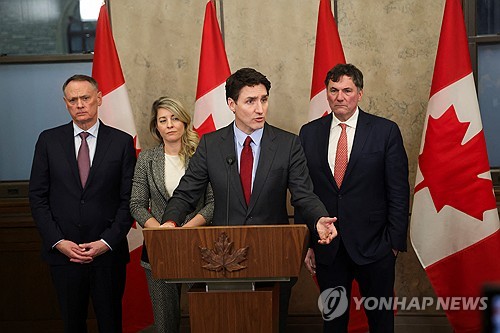
- Prime Minister Trudeau's statement:
- Mentioned that US tariff measures are expected to cause price increases and have negative economic impacts on citizens of both countries.
- Encouraged consumers to buy more Canadian products and engage in domestic travel.
Mexico
- Tariff and non-tariff measures: Mexico also imposed tariffs on US imports and ordered the introduction of additional non-tariff barriers as a countermeasure.
- Presidential response: President Claudia Sheinbaum strongly criticized the US's statements on drug trafficking as "baseless slander" and firmly rejected US intervention attempts.
3. US Tariff Policy
- President Trump's tariff policy targets Canada, Mexico, and China, with all tariffs being added to existing tariffs.
- Main tariff rates:
- Canadian/Mexican products: 25%
- Chinese products: 10%
- Possibility of further increases: President Trump also stated plans to further increase tariffs depending on retaliatory tariffs from other countries.
4. Prospects and Concerns
- Economic repercussions:
- Price increases in the US: A potential increase in the prices of food and essential goods.
- Reduced trade: The possibility of reduced trade volume due to tariffs imposed by each country.
- Exacerbation of trade conflict:
- A significant increase in conflict and economic pressure compared to cooperation between countries.
- Potential instability in the global supply chain.
5. Impact on Consumers
- Price fluctuations: Expected price increases for imported goods due to tariff measures.
- Changes in consumption patterns: Canadian and Mexican consumers are likely to favor domestic products.
- Expected revitalization of US manufacturing: However, short-term cost increases are a concern.
6. Key Message
- To reduce economic losses and trade tensions, it is crucial for each country to seek solutions through negotiation.
- The greater the uncertainty caused by the trade war, the greater the economic burden on citizens, and the greater the potential for long-term negative impacts on the global economy.
This situation is more than just a policy issue related to tariffs; it is also an issue concerning the restructuring of global trade relations. The response and cooperation of each country will be the key factor determining the direction of the conflict.
*Source URL:
https://news.einfomax.co.kr/news/articleView.html?idxno=4341650