● Rivian Self-Driving Price-Cut Backfires, Lidar Cost-Bomb Sparks Selloff, Tesla FSD Insurance Edge Surges
A one-stop breakdown of how Tesla FSD ‘really’ lowers insurance premiums, the trap behind Rivian’s half-price autonomy, and why LiDAR is ultimately disadvantaged
This article includes content like this.
“Why Rivian said it would sell FSD at half price, yet the stock crashed”
“Why LiDAR is disadvantaged not technically but ‘economically’ (from the perspectives of data, cost, and latency)”
“Why insurers (Lemonade) jumped on Tesla FSD first, and how this connects to Tesla’s robotaxi/subscription model”
“Why AI5·AI6 chips imply even bigger money ‘after’ autonomy (economies of scale)”
And at the end, I’ll separately pull out and summarize the ‘key points’ that other news/YouTube channels often miss.
1) Today’s news briefing (only the essentials)
Rivian benchmarked a Tesla-style “Autonomy Day,” and right after the announcement the stock slid as much as -9% intraday before closing down in the -6% range.
The point is that the market read “adding LiDAR” as a risk more than “half-price autonomy.”
Rivian proposed cutting the subscription fee versus Tesla FSD from $100/month → $50/month, and the one-time purchase from $8,000 → $2,500.
On price alone it looks attractive, but the market first focused on whether “that pricing can be made sustainable as a structure.”
At the same time, Lemonade officially formalized insurance in California that leverages Tesla FSD driving data (effectively an FSD-friendly product), and its stock rose.
It’s meaningful because it implies insurers are starting to reprice (premiums) based on the assumption that “FSD could be safer.”
2) Why Rivian’s ‘half-price autonomy’ was doubted by the market
The core of Rivian’s announcement was the message that it would “add LiDAR to the sensor stack,” and it’s symbolic that applause broke out at that moment while the stock turned downward.
From an investor’s perspective, adding LiDAR is immediately interpreted as higher unit cost + higher integration complexity + higher scalability (scale) risk.
2-1. Lowering the sticker price is easy; lowering ‘cost per mile’ is hard
Once autonomy passes a certain level and enters the zone of being “safer than humans,” the next battleground is not performance but cost.
In other words, “autonomous cost per mile” becomes the real game.
Adding LiDAR usually raises these costs.
Higher hardware BOM (bill of materials).
Higher sensor fusion development/validation costs.
More failure points → higher maintenance/after-sales costs.
In the end, even if you cut the subscription price in half, if the P&L doesn’t work, it’s not sustainable.
At this point, investors recall “why Tesla’s obsession with a ‘minimal parts (optimized)’ philosophy actually makes money.”
2-2. ‘Announcements that the public loves’ and ‘products that can scale’ are different
Points that draw applause at events are usually instantly understandable items like “we added more sensors,” “it looks safer,” or “we lowered the price.”
But to go big with robotaxis, insurance, and subscription services, you need a structure where economies of scale actually work.
This is where investors get uncomfortable.
LiDAR-based stacks tend to become simultaneously heavier in cost/data/validation as they enter the scaling phase.
3) The claim that “LiDAR must fail” is easier to understand not as a technical debate, but from a ‘data economics’ perspective
If you reinterpret the original argument economically, the core comes down to three things.
3-1. The absolute volume gap in data: cameras (video) vs. LiDAR
Camera-based AI has an explosively large amount of training data.
YouTube/dashcams/all kinds of videos pour in every day, and the ecosystems for labeling/synthetic data/foundation models are already large.
By contrast, LiDAR data has an extremely limited set of “producers.”
Only some autonomous-driving companies possess it, and formats/environments vary, so scaling learning is inevitably slow.
As a result, it’s easy for bottlenecks to emerge in the speed of AI progress.
This is not simply “LiDAR is bad,” but rather:
in the AI era, the most important factor of production is data, and on the LiDAR side, supply is structurally insufficient.
3-2. Sensor decision-conflict problem: it may not become more accurate; it can become more complex
What if the camera judges “you can go,” but LiDAR judges “there’s an obstacle”?
At that moment, the system must perform additional arbitration, and that leads to latency.
In driving, 0.1–1 second of delay is not about perception; it affects accident probability.
The point is that as sensors increase, you don’t get more “correct answers”; you can get more “conflict cases.”
3-3. The benchmark for human driving: the camera-based path has a clear route to “human level”
Humans drive with their eyes (vision).
So with a camera-based approach, you can logically posit a destination called “human level.”
A LiDAR-based approach uses a “sensory system different from humans,” so
it could get very good, but there is more uncertainty about “how far it can go.”
Markets usually apply a large discount rate (risk premium) to that kind of uncertainty.
This also naturally connects at the macro level.
In a high-interest-rate environment like today (SEO keyword: interest rate hikes), the market tends to be more unforgiving about future uncertainty.
4) Why ‘autonomy that promises the future’ keeps increasing (and why the market believes it less and less)
As in the original case, announcements like “introducing half-price autonomy in 2028” sound enticing if you look only at the numbers.
But in autonomy, “it works” comes before the “price tag.”
If operation isn’t validated, half price or one-tenth price is meaningless.
The reason the market reaction is cold is simple.
Promises are not cash flow, and because autonomy is bundled with regulation/liability/insurance, “real driving data” is everything.
This flow is similar in the U.S. stock market too.
Tech ultimately comes back to results and data (SEO keyword: U.S. stock market), and slogans alone can’t earn a multiple in this phase.
5) Why the ‘sensible driving’ shown by Tesla FSD matters
A striking point in the original is that beyond “doing normal driving well,”
behaviors like preemptively changing lanes by noticing subtle cues far ahead—i.e., “driving sense”—are being observed.
Why this matters is that
robotaxis/insurance/regulation are ultimately decided by judgment in “rare but fatal situations.”
And with examples like smooth driving in fog,
if a narrative accumulates that cameras alone can drive like humans,
it creates a framing advantage for “training + inference + productization” over adding more sensors.
6) Robotaxi hint: expanding validation from Model Y → Cybertruck → Model S
Scenes where the validation vehicles broaden from being centered on the Model Y to include the Model S send a simple message.
“It’s not just one model; Tesla’s entire vehicle lineup can become robotaxi assets.”
If that’s true, Tesla’s value could be re-rated from car sales (manufacturing) to platform/network (services),
and at that moment the market’s valuation method could change.
Here too, macro keywords come in.
Even if there are recession fears (SEO keyword: recession), platform-type subscription/service revenue is expected to be more defensive.
7) Why Lemonade jumped on ‘Tesla FSD insurance’ first
This part is truly important.
Insurance prices risk not with “talk,” but with probabilities and data.
Lemonade’s move to price premiums by recalculating accident probability based on Tesla FSD driving data
is a signal that, at least under certain conditions, the premise that FSD can “reduce risk” is starting to work within the insurance business.
What happens when premiums go down?
From the consumer’s perspective, total cost of ownership (TCO) falls.
Then the pace of EV adoption can pick up (SEO keyword: EV market outlook),
and FSD subscription retention can rise.
Ultimately, for Tesla, the flywheel of “autonomy → lower premiums → higher demand → more data → better performance” becomes stronger.
This is a complete network effect.
8) Why AI5·AI6 chips matter: “economies of scale after autonomy”
The original interprets Elon Musk spending a lot of time on AI5/AI6 as meaning “the autonomy problem is already in a solved phase.”
From an investment perspective, translating it like this is more accurate.
AI5/AI6 are not just about improving FSD performance;
they are weapons for lowering compute unit costs across vertical integration that extends from autonomy (vehicles) + Optimus (robots) + data centers (inference/training).
What Tesla is aiming at here is not “a car company’s chip,” but
a position within a larger AI supply chain that includes the economics of inference infrastructure.
In other words, rather than immediately replacing NVIDIA,
it’s better seen as a scenario where Tesla scales internally around its own demand in specific workloads (autonomy/robotics), drives down unit costs, and builds competitiveness.
If this becomes reality, the market may view Tesla not through a pure manufacturing PER lens, but as AI infrastructure/platform.
(And this is exactly the “multi-year option” investors talk about.)
9) Reinterpreting the 3 elements of successful investing (principles·patience·optimism) for today’s market
Principles: If “why I’m buying this company” is clear, you won’t be shaken by volatility.
Patience: Autonomy/robotaxis/robots move not by quarterly earnings but by the timeline of “system completion.”
Optimism about the future: Optimism alone isn’t enough; data/product progress must ‘validate’ that optimism.
Especially these days, FX volatility (SEO keyword: FX outlook) is layered on,
so U.S. tech investment performance can swing as a composite of “company performance + dollar moves.”
That’s why principles and patience matter even more in reality.
10) The ‘single most important point’ other YouTube/news rarely spell out (separate summary)
First, “insurers moved first” is a signal that the next battleground for autonomy is not technology but “financial pricing (premiums).”
In other words, whether FSD truly lowers accident rates or not, the key is that enough data credibility has accumulated for someone to price it that way.
Second, the essence of the LiDAR debate is not performance but “the speed of the learning ecosystem.”
The camera-based side already has exploding foundation-model momentum and data supply, while the LiDAR side has a weak data supply chain.
This is a structural difference that can widen further over time.
Third, “half-price autonomy” is marketing, but “cost per mile” is the business model.
Rivian lowering the price tag is meaningful, but adding LiDAR is a choice that raises costs for unit economics/validation/scaling, so the market reacted conservatively.
Fourth, AI5·AI6 are not an ‘FSD upgrade’ but devices that lower costs across Tesla’s vertical integration (vehicles–robots–data centers).
In the end, Tesla’s long-term value is more likely to be decided by “inference unit cost” and “service scalability” than by car sales volume.
< Summary >
Rivian proposed half-price autonomy versus FSD, but its stock fell as adding LiDAR highlighted risks around unit cost/complexity/scalability.
LiDAR’s weakness lies less in performance than in data supply and learning-ecosystem speed, and in increased latency/complexity from sensor conflicts.
Tesla FSD is accumulating a narrative of “human-like judgment and driving sense” through real-world driving examples, and hints of robotaxi expansion are increasing.
Lemonade is attempting to price insurance premiums based on FSD driving data, showing that the next battleground for autonomy is “premium reduction.”
AI5·AI6 are long-term variables that strengthen Tesla-style economies of scale that bundle robots/data centers beyond autonomy.
[Related posts…]
- How changes in autonomous-driving regulation impact the U.S. stock market (updated)
- The new revenue structure created by Tesla robotaxi·insurance models
*Source: [ 허니잼의 테슬라와 일론 ]
– [테슬라] 자율주행 덕분에 보험료 대폭 하락한다! 폭등한 보험회사 레모네이드, 그 이유가 테슬라! / 라이다는 ‘반드시 실패’한다! 그 이유는?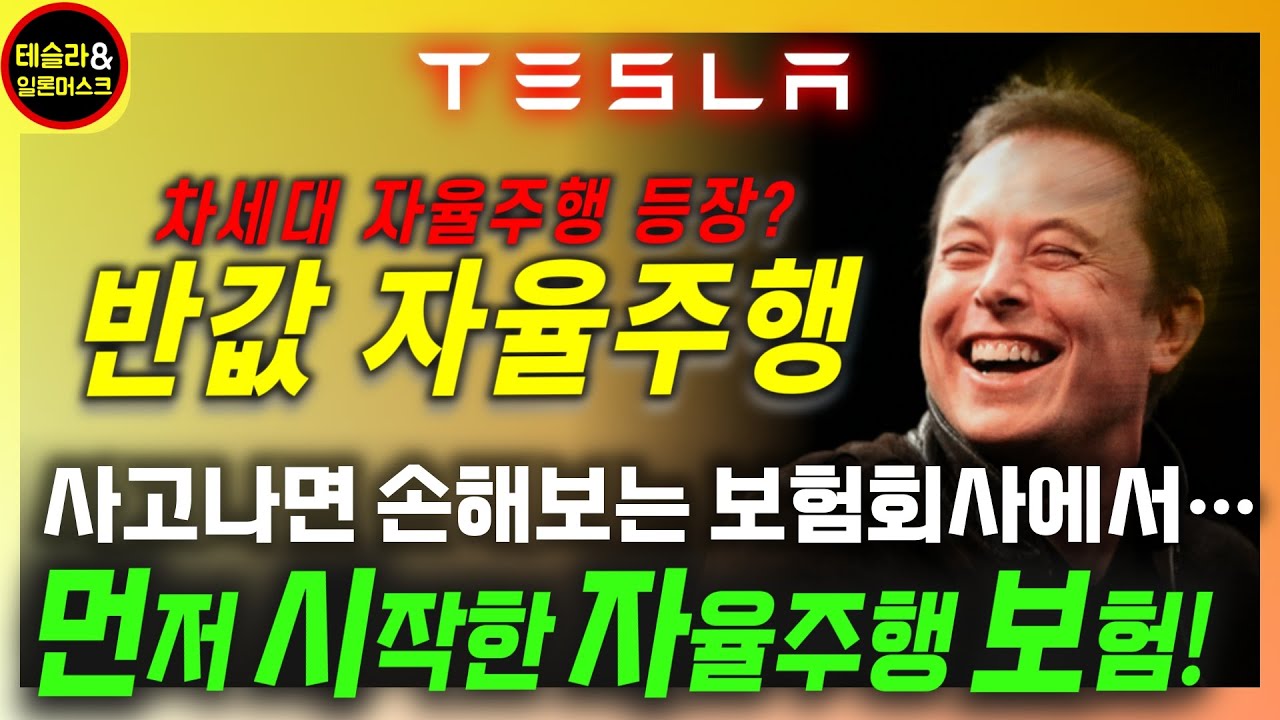
● China H200 greenlight sparks HBM frenzy, data-center glut, GPU to TPU shakeup, TSMC flashpoint
China’s H200 Approval, Data Center Oversupply, the Shift to TPUs, and Even TSMC Risk… The Key Scenarios to Read the 2025–2026 Semiconductor Game “All at Once”
This post contains exactly four major pillars.
First, why whether China is allowed to buy the H200 can shake Samsung Electronics, NVIDIA, and even the KOSPI.
Second, a warning that the current semiconductor boom may be an illusion caused by “supply restraint + exchange rates,” not real demand.
Third, how data center (DC) oversupply could flip prices and earnings 1–2 years from now.
Fourth, the structure in which GPU vs. TPU (NPU) competition and TSMC–Taiwan Strait risk turn “a semiconductor issue” into a global economic crisis.
1) [Breaking Point] Whether China’s H200 Sales Are Allowed: The “Switch” for 1H 2025 Earnings
Key news-style summary
Analysts suggest that how far the U.S. allows NVIDIA’s H200 to be sold to China could serve as a “card” that delays the slowdown in NVIDIA’s revenue growth rate.
If volumes to China reopen, demand for HBM3E used in the H200 would also jump.
Why Samsung Electronics could be on the “additional beneficiary” side
In the current setup, HBM (especially for NVIDIA) is heavily weighted toward SK hynix, but the issue is capacity (production headroom).
If China-bound volume suddenly increases, hynix has limited ability to respond additionally, and by this logic there is a higher chance that volume shifts toward Samsung Electronics, which has relatively more remaining headroom.
Investment/industry checkpoints
This issue is not simply about “higher China revenue,” but from a supply-chain perspective it can trigger a reallocation of volumes across the HBM value chain (memory–packaging–module).
In other words, even within the same AI boom, the fork in the road is not “who sells more,” but “who can produce more, faster.”
2) [Warning Light] The Semiconductor Boom May Be an Illusion of “Supply Restraint,” Not “Demand”
Key news-style summary
One view is that the reason memory prices are rising and earnings look strong right now is less about explosive demand and more about the impact of conservative capex, production cuts, and supply control by Korean companies.
When the KRW–USD exchange rate effect is added on top, the “period that looks like a boom” becomes even more reinforced.
Why this is risky
Supply restraint can quickly break prices once supply normalization arrives.
In particular, semiconductors are a textbook cyclical industry, where the investing instinct of “build more when things are good” can easily turn into oversupply.
Connecting SEO core keywords here
This section is a representative case showing how semiconductor earnings connect with macro variables from the Korean economy’s perspective, such as interest rate hikes, inflation, exchange rates, economic recession, and the global supply chain.
3) [Data Center Oversupply] The Ending of the DC Investment Race That “Builds Another Highway Next Door”
Key news-style summary
As the AI boom makes data centers look profitable, a situation has formed where telcos, construction firms, heavy industry, and platform companies alike all jump into “DCs, you too, me too.”
But the problem is that there are many investments with unclear business models.
The most important logic (the analogy hits reality)
If you complete one highway, you normally first recoup the investment through traffic and tolls.
But right now, the trend can overheat into “building another highway next door,” and in that case, even if some see traffic, many may see traffic far below expectations.
A scenario that could unfold 1–2 years from now
1) Winners (big tech giants) have less need to keep building
2) Losers (DC investors without business models) see financial burdens surge
3) As a result, the question of “who keeps buying semiconductors?” weakens
4) DC order declines → AI server investment slows → memory/GPU pricing pressure
Additional real-world constraints you must not miss
A DC does not end with servers alone; power grids, substations, cooling, and telecom infrastructure must follow.
If infrastructure cannot keep up, then even if supply increases, utilization may not reach expectations, and “oversupply + inefficiency” can arrive together.
4) [GPU vs. TPU (NPU)] The Real Economy Moves Slowly, Stock Prices Move First
Key news-style summary
TPU is close to being Google’s product name, and in a broader category you can view it as part of the NPU/ASIC family.
In the short term, GPUs are not easily replaced, but in the mid-to-long term, as things move toward inference-centered workloads, “lightweight, power-efficient specialized chips” become attractive.
The point where the “CUDA barrier” logic weakens
CUDA is certainly powerful, but the important perspective is that “a barrier is something you cross once, and then it’s done.”
The fact that many big tech firms have already begun making their own chips means that for new workloads/new teams, development is proceeding in ways with weaker dependence on CUDA.
The point that matters more to investors
The impact on real-world revenue comes slowly, but capital markets price expectations first.
So when TPU news appears, scenes where NVIDIA wobbles and Google reacts strongly can come “first.”
5) [Hegemony Risk] If the “TSMC Strait” Is Blocked, It’s Not Semiconductors—The World Economy Stops
Key news-style summary
If TSMC supply is shaken by escalating Taiwan Strait tensions, that is not an issue of the semiconductor cycle, but a shock on the order of stopping global IT, platforms, and commerce altogether.
Why it is not a “semiconductor crisis” but a “global economic crisis”
Even if U.S. big tech controls design (fabless), dependence on TSMC is high for manufacturing (foundry).
If produced chips are blocked by logistics/political/military risk, then both data center expansion and service launches become a “plan-level halt.”
A realistic interpretation
From the view that the U.S. cannot fail to recognize this risk, there is an incentive to manage the level rather than “push tensions to the very end.”
6) [Korea’s Semiconductor Strategy] Not “Reinvesting in HBM,” but Toward the Next-Generation Growth Engine
Key news-style summary
It is argued that pouring the money earned from HBM back only into expanding HBM capacity could be risky.
The reason is simple.
As the future shifts toward inference and power efficiency, HBM’s high-performance/high-power/high-cost structure could become a burden.
Important point: It may actually be better for HBM to “stay in shortage”
The more scarce HBM is, the more pricing power it gains.
Over-aggressive expansion can create the segment where margins “collapse first” when the cycle turns down.
So where should investment go?
1) Next-generation memory (evolution from the perspective of power, cost, and modules)
2) Module/packaging/system-level integration capability
3) Above all, design capability
4) To fill gaps quickly, M&A is a realistic option
7) [Only the “Truly Important Points” That Other News/YouTube Often Don’t Say, Summarized Separately
Point A. The paradox where “Korea’s supply restraint” increases China’s memory market share
While Korea invests conservatively and cuts production, China can do the opposite—invest aggressively, ramp output, and gain share.
It means a structure can form where, for short-term profit (price defense), long-term share is “unintentionally” given up.
Point B. DC oversupply arrives as a “collapse in pricing power” before a “decline in chip demand”
If data centers are left in surplus, reduced new purchases are a problem, but the bigger problem is that “buyers don’t feel urgency.”
From this moment, the supplier side’s (chips/memory) price negotiating power can weaken.
Point C. CUDA is not an eternal moat, but a “mountain you cross once”
It’s not about players who can’t cross CUDA; once the number of big tech firms that have already moved to their own chips increases, the nature of the moat changes.
This change often appears first in stock prices and valuations, before earnings.
Point D. “TSMC risk” is not a semiconductor sector risk but a global macro risk
You must not view this with a single line like “Samsung foundry benefits.”
You should view it as an event that changes the risk premium of the entire financial market.
< Summary >
Allowing China to buy the H200 is a key variable that can change NVIDIA’s 1H 2025 revenue and Korea’s HBM supply structure.
The current semiconductor boom may be an illusion created by supply restraint and exchange-rate effects rather than demand, and there is a risk of a sharp price drop when normalization arrives.
Data centers show clear signs of overinvestment, and in 1–2 years the question of “who keeps buying chips” may become real.
GPUs have a short-term advantage, but as things shift toward inference, the transition to TPUs/NPUs/ASICs could accelerate, and stock prices react before the real economy.
TSMC–Taiwan Strait risk can spread not as a semiconductor cycle issue but into a global economic crisis.
Korea’s strategy should focus not on going all-in on HBM, but on building next-generation memory, modules, and design capability (including M&A in particular).
[Related posts…]
- Why expanding HBM investment may not be the “right answer”: The next fight in AI memory
- What happens as TSMC risk grows: Global supply chain and financial market shock scenarios
*Source: [ 경제 읽어주는 남자(김광석TV) ]
– 중국 H200 허용 여부로 삼성전자 수혜받나? 한국 반도체가 풀어준 틈, 패권 지형을 뒤흔든다 | 경읽남과 토론합시다 | 이주완 박사 3편
● Cement Slump Hits 34 Year Low Yet Green Spending Surges, Asia Cement Bets Big On Waste Fuel And SCR
Why Cement Industry Conditions Are “the Worst,” Yet Green Investment Doesn’t Stop: Key News Summarized from the Original Text After Visiting an Asia Cement Plant (2025.11.26)
Today’s post contains exactly four things.
① The reality of the cement industry, which has fallen to “the lowest domestic demand in 34 years,” and investment points for KOSPI cement stocks.
② The mechanism of cement kilns that use waste plastic and waste tires as “fuel” (and why harmful substances are unlikely to remain).
③ Why the SCR (nitrogen oxides reduction) facility, first introduced in Korea by Asia Cement, is “truly highly difficult.”
④ The “hidden cash-flow structure of the cement industry” and policy variables (interest rates, regulation, carbon) that other news/YouTube rarely point out.
1) One-line Headline (News-style Summary)
– Domestic cement demand has fallen to “the lowest level in 34 years,” reverting to 1990s levels.
– As the construction downturn becomes prolonged, the cement industry as a whole is experiencing a demand shock.
– Even so, the industry continues eco-friendly facility investment as a ‘must’ to respond to greenhouse-gas and air-pollution regulations.
– Asia Cement’s Jecheon plant uses waste plastics and the like as a substitute fuel for bituminous coal (substitution rate about 55%).
– It introduced Korea’s first SCR (Selective Catalytic Reduction), explaining that it overcame the high-difficulty application in a high-dust process through technology.
2) Industry Diagnosis: What “Lowest Domestic Cement Demand in 34 Years” Means
① The essence of the demand cycle is the ‘construction economy’
Cement is directly linked to housing, SOC, reconstruction/redevelopment, and private civil engineering.
So it’s no exaggeration to say, “If construction stops, cement stops too.”
② The message of the numbers: Reverting to 1990s levels
In the original text, an industry official says, “This year’s domestic demand is the lowest in 34 years, reverting to the 1990s level.”
This can be read not as simply “this year is bad,” but as a signal that the industry’s utilization rate/price negotiating power/volume leverage itself has weakened.
③ Three things to check when looking at KOSPI cement stocks (e.g., Asia Cement)
– Confirming a bottom in construction orders/starts indicators (whether it leads the cycle).
– Costs (power/fuel) and the ability to pass them through to selling prices (pricing policy).
– The CAPEX burden for carbon/air regulations and the direction of government policy.
※ This post is not investment advice; it is content that organizes the industry structure based on facts from the original text.
3) “Is a cement plant acting like a waste disposal site?”: The core logic of waste-plastic fuelization
① Why the cement process is advantageous for ‘thermal recycling’
According to the original text, the inside of the kiln is a sealed structure, gas-phase temperatures can reach up to about 2,000°C, and the raw-material surface temperature is about 1,450°C.
It explains that to decompose harmful substances, a residence time of 2 seconds at 850°C is sufficient,
and argues that a cement kiln must achieve complete decomposition because it has a “12 seconds or more” residence time at much higher temperatures.
② The reality of “If you don’t use it, where does it go?”
If waste synthetic resin (waste plastic) cannot be used as fuel, it goes to landfill/incineration,
and in that process, the burden on soil, oceans, and the atmosphere can increase.
In other words, the cement process performs a dual function: “fuel substitution + waste treatment.”
③ Why Asia Cement’s 55% substitution rate matters
The original text mentions the industry average as 30–40%, and evaluates 55% as a “considerably high level.”
This also means there is room to reduce both costs and carbon burdens by lowering dependence on bituminous coal.
(Of course, costs for pretreatment, quality, and facility stability also come along.)
4) Why ‘green investment’ is not a choice but survival: 2035 NDC and the reality of regulation
① Regulations are “strict now, and will become even stricter”
The original text includes the phrase “among the strictest environmental regulations in the world.”
Because cement is classified as a representative high-emissions industry,
failure to comply with regulations = a logic that production activity itself can become unstable.
② Therefore CAPEX (facility investment) is essential
The key point is that not investing does not reduce costs; rather, it raises operational risk.
Here, macro variables such as “carbon neutrality,” “carbon credits,” and “interest rates” are directly connected to corporate cash flow.
(SEO keywords: interest rates, exchange rates, inflation, GDP growth rate, carbon credits)
5) Technology Point: The real reason SCR (Selective Catalytic Reduction) is difficult to implement
① SCR is a familiar technology, but in cement, ‘dust’ is the problem
SCR is also used in automobiles/power generation/steel, etc., but
the cement process is a “powder (dust)-handling industry,” so the dust concentration in process gas is said to be very high.
When there is a lot of dust, the catalyst layer gets clogged and the reaction doesn’t work properly—this is the key challenge.
② In Europe, ‘catalyst-layer dust removal technology’ has advanced recently → applied domestically
The original text says they studied the “technology trend being introduced in Europe over the past few years,”
and as a result, Asia installed it proactively as a leader and explains that the effect is currently coming out well.
This part is not simple ESG promotion; it is a point that “solving process difficulty” can translate into competitiveness.
6) Cement Price Debate: What “Korea is still cheap” implies as a policy risk
① Cost shock: Bituminous coal and electricity costs surged
According to the original text, over two years after the pandemic, bituminous coal prices surged by up to 6x,
and in the last two years, electricity costs also increased by about 30%.
With this structure, price increases are closer to survival-type price adjustments than “greed.”
② Still, it’s low in international comparisons
It mentions about 112,000 won per ton.
It says Europe is in the high 200,000-won range, and in the 2050 carbon-neutral stage, it may even be projected to reach the high 400,000-won range.
What investors need to see here is the policy constraint that “in Korea, it’s a price-sensitive item.”
Prices need to rise to make investment possible, but society and the government remain sensitive to hikes—this structure keeps colliding.
7) Safety/Controversy Issues: Organizing the heavy metal/hazardous substance debate based on the original text
① Mention of a 2008 standard experiment for ‘concrete in contact with drinking water’
The original text explains that through a public-private joint consultation hosted by the Ministry of Environment, they conducted heavy-metal leaching tests,
and in specimen tests under the same conditions as concrete products that contact drinking water—such as water tanks and water pipes—it came out within the standard limits.
② Why the “targeting” was severe compared to other industries
A problem at a specific plant 22 years ago became a trigger that amplified anxiety over dust emissions issues,
and the narrative says that misunderstanding spread by oversimplifying waste-to-fuel as “incineration = health risk.”
The key point is that the industry also reflected that it was “late on fact-checking and communication.”
8) From a “key industry” perspective: Why ‘maintaining domestic production’ is more important than exports
① Cement is heavy, so logistics costs dominate the game
Even if demand for Ukraine reconstruction emerges, it gives a realistic answer that “product exports are not easy because of logistics costs.”
Instead, it says technology/engineering/know-how expansion has potential.
② Europe also mostly maintains domestic production
Even within the EU single economic zone, in response to “Why import it?”
it mentions a European case that “as a key industry, it is produced domestically.”
This is a hint that Korea, too, may find it difficult to fully externalize cement in the long run from a supply-chain perspective.
9) The “most important point” that other news/YouTube doesn’t talk about much (blog-style reinterpretation)
Point A) Cement companies are ‘manufacturing,’ yet also close to ‘environmental infrastructure’
The moment they treat waste (especially combustibles) and substitute it for bituminous coal,
a cement plant becomes not just a plant but infrastructure that absorbs part of a city’s waste/energy/carbon problems.
This role is not something society can easily cut off even when the economy is bad.
Point B) CAPEX is not a cost, but money spent to buy a ‘license to operate’
Facilities like SCR raise profits immediately less so,
and are closer to investment that secures the “right to keep producing without stopping” in a tightening regulatory phase.
So it’s risky if an analyst concludes, “Investment is over.”
As the original text puts it, it’s an industry like a swan that keeps paddling underwater.
Point C) The true macro variable is not the rate cut itself, but the ‘resumption of starts’
What the industry ultimately wants from the government is an incentive that gets construction moving again (interest rates, deregulation, restoration of project feasibility).
Investors shouldn’t look only at the Bank of Korea’s base rate;
they should also watch “volume recovery triggers” such as starts/sales normalization/PF normalization/public orders.
10) Checklist: 10 key variables to watch when looking at the KOSPI cement sector
1) Direction of domestic starts/sales indicators.
2) Whether PF/construction company liquidity risk is spreading.
3) Power tariffs and fuel (bituminous coal) price trends.
4) The possibility of increasing the share of waste-derived alternative fuels (including pretreatment infrastructure).
5) Carbon credit costs and the size of emissions-reduction CAPEX.
6) The pace of tightening air-pollution regulations (SCR/SNCR, etc.).
7) Pricing power for cement price increases (government/public sensitivity).
8) Local resident acceptance (dust/complaint risk).
9) Product mix (expanding high value-added customized cement such as GPC).
10) Long-term policy direction of ‘maintaining domestic production’ (key-industry perspective).
< Summary >
Domestic cement demand has plunged to the lowest level in 34 years, and the industry is in a difficult phase without a recovery in construction activity.
Nevertheless, due to carbon and air regulations, eco-friendly facility investment has become not a “choice” but a “survival condition for operation.”
Asia Cement ranks near the top of the industry with a 55% waste-plastic fuel substitution rate, and is leading regulatory 대응 with Korea’s first SCR introduction.
The real core is that cement companies take on the character of environmental infrastructure beyond manufacturing, and CAPEX is a cost of buying the right to operate.
[Related posts…]
Cement industry conditions and the eco-friendly transition, variables investors are likely to miss
How carbon credit prices affect KOSPI manufacturing earnings
*Source: [ Jun’s economy lab ]
– 저는 이 주식으로 첫 대박을 이뤘습니다