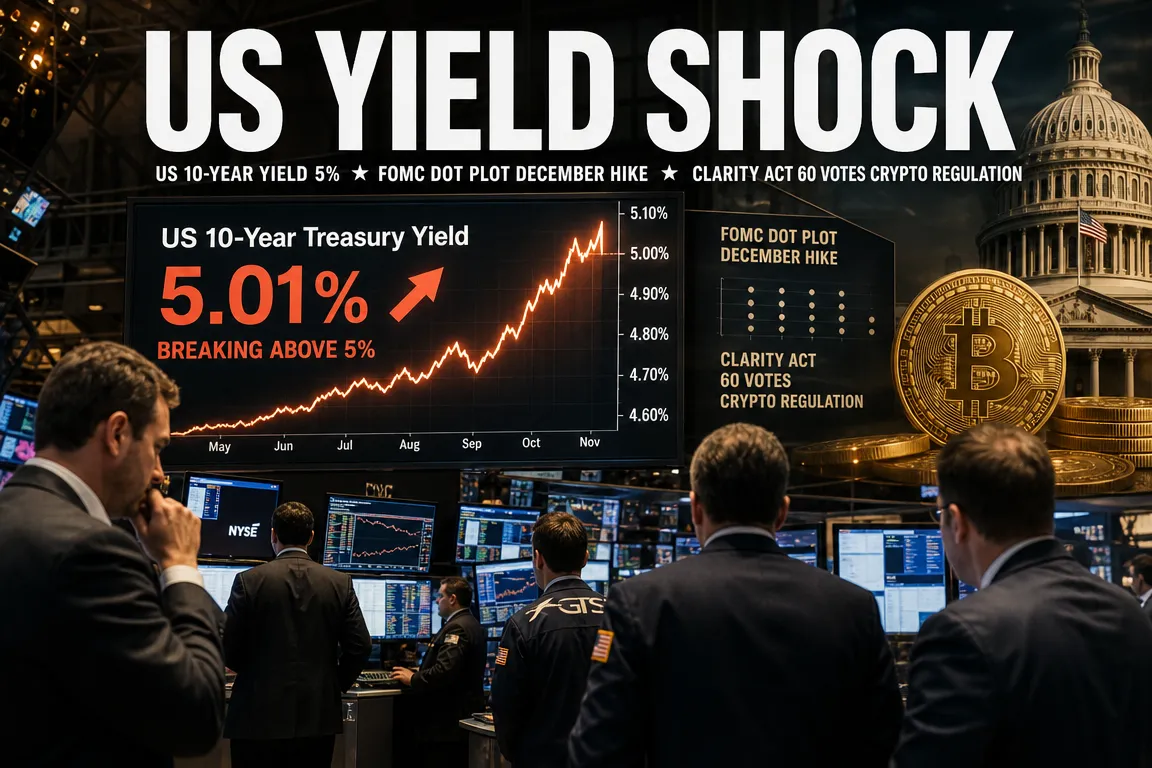
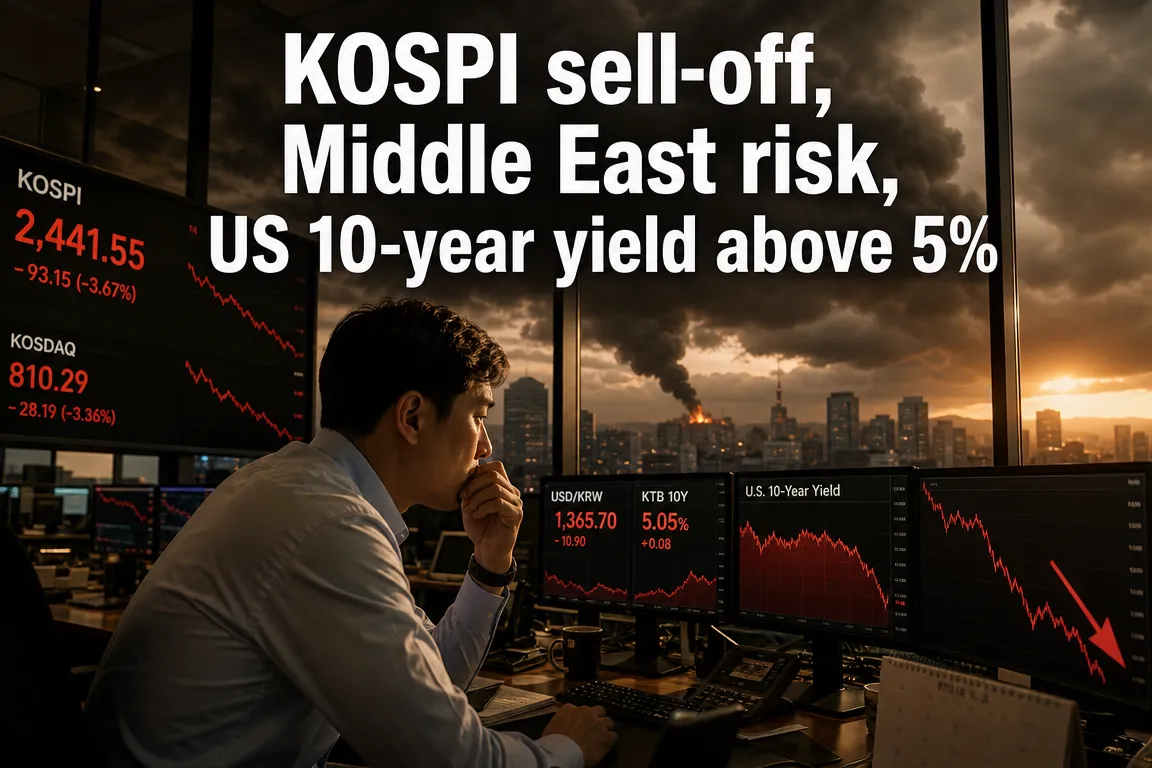
● Gold Margin-Call Shock Crushes Korea First
Why the KOSPI Fell More Than Other Asian Markets: Gold/Silver Margin Calls → Asia Open → Korea as the First Source of Liquidity
This report covers:
1) How the sell-off originated in gold and silver (commodities), not equities
2) Why CME margin hikes amplify forced selling (margin calls), and why liquidations hit Korean equities first
3) The three-layer drivers behind the KOSPI’s outsized decline (FX, profit-taking, leverage)
4) The single key event to monitor: remarks/hearing risk tied to the next Fed Chair nominee (Kevin Warsh)
5) The structural reasons Korea is repeatedly among the first markets sold during global liquidity shocks
1) One-line market summary (news format)
A sharp drop in gold and silver, combined with CME margin increases, triggered margin calls in leveraged positions. Global investors seeking immediate cash sold highly liquid equities at the Asia open, widening declines. The KOSPI underperformed due to the combined impact of KRW weakness, recent gains prompting profit-taking, and domestic leverage-driven forced selling.
2) The starting point: a liquidity shock from gold/silver, not an equity-specific catalyst
2-1. Why gold and silver weakened abruptly
Gold and silver had shown signs of overheating amid safe-haven inflows linked to geopolitical risk, declining confidence in fiat currency, and controversy around central bank/Fed independence. In such conditions, any shift toward a more hawkish Fed interpretation can create acute short-term downside in precious metals.
2-2. How CME margin hikes mechanically amplify downside
A CME margin increase effectively requires additional cash collateral to maintain leveraged positions. When prices fall simultaneously, collateral values decline while required margin rises, forcing rapid cash sourcing. This produces margin calls and broad “sell whatever is liquid” behavior, increasing cross-asset liquidation pressure.
3) Why Korea fell more: it moved up the global “cash-raising priority list”
3-1. Asia open effect: first-open markets are sold first
Margin calls are time-sensitive. Investors needing immediate liquidity tend to sell the earliest-open, most liquid, and sufficiently large markets. Asian cash equities often become the first venue for forced cash-raising.
3-2. KRW weakness (FX pressure): Korea becomes structurally less attractive during USD strength
A more hawkish Fed repricing typically supports USD strength and pressures KRW. For foreign investors, the combination of potential equity losses and FX losses increases the incentive to reduce exposure quickly. This is a recurring pattern in Korea during global volatility spikes.
3-3. Large recent gains: profit-taking concentrates in prior winners
If the KOSPI has risen materially into the event, profit-taking tends to add to liquidation flows. In cash-raising regimes, positions with accumulated gains are often sold first.
3-4. Domestic leverage: forced liquidation and sell cascades
Markets with elevated retail leverage (margin financing and related products) are prone to automatic sell programs during drawdowns. The sequence can become self-reinforcing: foreign selling → index decline → leveraged liquidation/forced sales → further index decline.
4) Why comparisons to the prior “carry unwind” episode matter
The relevant similarity is a cross-asset liquidity event: stress in another asset class created a cash need, which was met by selling liquid equities, producing an equity drawdown. Such moves can be liquidity-driven rather than a durable trend reversal, provided the shock does not propagate into broader financial-system stress.
5) Key forward risk: Kevin Warsh impact is more likely from remarks than from nomination headlines
5-1. Markets price the expected policy path
The principal risk is not the nomination itself but statements during hearings or interviews that imply a tighter policy stance. Even modestly hawkish language can trigger a renewed repricing of rates.
5-2. Political process risk: timing and Senate dynamics raise uncertainty premia
Delays or political friction around hearings can increase uncertainty and elevate volatility, shifting markets from trading confirmed policy to trading probabilities.
6) Core point often underemphasized: Korea as a structural “first-to-sell” liquidity source
The episode is better characterized as confirmation of Korea’s positioning in global risk-off mechanics than as a Korea-specific fundamental shock. Korea is often sold early because:
- High foreign ownership
- High FX sensitivity
- Index concentration in large exporters tied to global growth and USD cycles
- High usage of derivatives/leverage, increasing volatility under stress
This combination increases the probability that Korea becomes a primary source of liquidity during global deleveraging events.
7) Investor checklist (applicable in both exuberance and panic regimes)
1) Confirm whether the USD index and KRW/USD trend reverses
2) Assess whether gold/silver and broader commodities volatility is stabilizing (residual margin-call risk)
3) Monitor foreign futures positioning to gauge whether liquidity-driven selling is ending
4) Track forced-selling indicators tied to margin balances and liquidation activity
5) Maintain an event calendar for hearings/remarks that can trigger volatility repricing
8) SEO keyword set (economics)
Global recession
Exchange rate
Inflation
Rate hikes
Liquidity
< Summary >
The initial shock was driven less by equities and more by a gold/silver sell-off compounded by CME margin increases and margin-call dynamics. Global investors raised cash by selling liquid equities at the Asia open. The KOSPI’s larger decline reflected KRW weakness (FX drag), profit-taking after prior gains, and leverage-related forced selling. The primary near-term event risk is hawkish signaling during remarks/hearings associated with Kevin Warsh. If the liquidity event does not evolve into systemic risk, the move may remain a short-term liquidity shock rather than a persistent breakdown.
[Related Articles…]
- https://NextGenInsight.net?s=exchange%20rate
- https://NextGenInsight.net?s=liquidity
*Source: [ 내일은 투자왕 – 김단테 ]
– 아시아 증시 대폭락 속 코스피만 유독 더 빠진 이유는?
● Powell Out, Warsh In, Rate Cuts Talk, QT Crackdown, Independence Premium Shock
Fed Chair Transition (Powell → Kevin Warsh) Appears Increasingly Likely: The Key Variable Is Not “Rate Cuts,” but “Balance Sheet Policy (QT) and Trump–Treasury–Fed Coordination”
This note consolidates four items:
1) Why market rates (U.S. 10-year Treasury yields) tend to become more volatile during a Fed chair transition.
2) Why Kevin Warsh can signal “lower policy rates may be possible” while also advocating “a smaller Fed balance sheet (tighter QT),” and how this mix can affect equities.
3) How the balance among the U.S. dollar, Treasuries, and equities could shift if Trump–Treasury–Fed policy coordination materializes.
4) A commonly underemphasized issue: markets may reprice the “cost of Fed independence” via a higher risk premium.
1) News Briefing: Timeline for a Fed Chair Change and the Market’s Early Reaction Window
Key schedule (summary)
– March: Confirmation hearing
– April: Vote
– May: Expected inauguration
– From June onward: The new chair’s influence may be more fully reflected in FOMC decisions
What matters more for investors
– Volatility often concentrates not on the inauguration date, but during the 6–12 months around the transition as markets “test” the new chair.
– In such periods, market rates—particularly the U.S. 10-year Treasury yield—often move first, ahead of changes in the policy rate.
2) Three Recurring “Equity Market Patterns” During Fed Chair Transitions (Facts + Interpretation)
(1) “Fed Chair Height Rule”
– A non-rigorous market anecdote suggesting taller chairs coincided with higher average rates.
– Warsh is reported at 186 cm, prompting informal commentary that rates could be higher.
– This is not a decision-useful signal; its visibility mainly reflects the market’s demand for simple heuristics to classify the incoming chair as hawkish or dovish.
(2) “Wall Street Stress Test” Hypothesis: Long Rates Rise Early in a New Chair’s Tenure
– The mechanism: markets probe how the new chair reacts to tightening financial conditions by pushing long yields higher and increasing volatility.
– If realized, equities can face valuation pressure via higher U.S. 10-year yields, even if the policy rate is unchanged (or cut).
(3) “New Chair Curse” (Adverse Shocks Early in the Term)
– The narrative is prone to selection bias.
– However, once a narrative becomes consensus, it can contribute to higher realized volatility.
3) Kevin Warsh Profile Reframed as Investable Variables
Background keywords
– Stanford; Harvard Law School
– Morgan Stanley (Wall Street)
– Fed Governor (2006–2011), including the Global Financial Crisis period
– Viewed as critical of QE; this stance is often cited in discussions of his departure
– Long-standing association with a family office linked to Stanley Druckenmiller
– Board roles including UPS and Coupang
Conflict-of-interest (equity holdings) considerations
– Upon appointment, personal equity holdings (e.g., UPS, Coupang) would likely be divested or placed into a blind trust under applicable rules.
– Spousal/family assets can be managed within disclosure and compliance requirements; markets may still react to governance details.
4) Policy Read-Through: “Rate Cuts” vs “QT (Balance Sheet Reduction)” Pursued Concurrently
Point 1) AI-driven productivity → lower inflation pressure → room for rate cuts
– Warsh has indicated openness to the view that AI-driven productivity gains could reduce inflation pressures.
– If this framing dominates, markets may reprice toward a “soft landing plus rate cuts” narrative.
Point 2) Regime change emphasis + the need to shrink the Fed balance sheet
– The more consequential signal is a strong preference for reducing the Fed’s large balance sheet.
– This can be a headwind for equities via tighter liquidity conditions.
Implication: a potentially challenging mix
– Policy rate: could decline
– Liquidity via QT: could tighten
– This is “easier price (rates), tighter quantity (liquidity).”
– Historically, this mix has not been uniformly supportive, particularly for growth equities and mega-cap technology valuations.
5) Trump–Treasury–Fed Coordination Scenario: A Shift in the “Fed Independence” Regime
Proposed linkage
– Kevin Warsh ↔ Stanley Druckenmiller (close relationship)
– Treasury Secretary Bessent ↔ Druckenmiller (reported mentor relationship)
– Resulting claim: Warsh and Bessent may share a common macro framework and network
Potential positives
– A more unified policy direction could reduce perceived policy uncertainty in the near term, supporting risk assets.
– If pro-growth fiscal/industrial policy (tax cuts, deregulation, industrial initiatives) aligns with monetary messaging, equities could receive a “policy premium.”
Potential negatives (medium-to-long-term risk)
– Reduced perceived Fed independence may weaken rule-based confidence in U.S. Treasuries for foreign investors.
– This could affect the U.S. dollar, Treasury term premium, and the discount-rate structure applied across U.S. assets.
6) Investor Checklist: How to Identify “Real Change”
A. FOMC watchlist beyond the policy rate
– QT pace (acceleration vs deceleration of balance sheet runoff)
– Coordination with Treasury issuance strategy (maturity profile; bill vs coupon mix)
– Long-run inflation expectations (breakevens) and the direction of real yields
B. Priority market signals (3)
– U.S. 10-year Treasury yield: direct proxy for the “testing window”
– Liquidity/financial conditions indices: rising sensitivity of risk assets under QT
– S&P 500 earnings revisions vs discount rate (yields): valuation reset monitoring
C. Positioning framework (non-directional)
– Avoid simplifying “rate cuts = unequivocal bullish.”
– Even with rate cuts, aggressive QT can destabilize liquidity-sensitive sectors.
– Conversely, if policy coordination reinforces growth momentum, real-economy/industrial/logistics exposures may be re-rated.
7) The Core Issue Often Undercovered: Repricing the “Cost of Fed Independence”
The critical question is less “who leads the Fed,” and more “how the U.S. policy regime is priced.”
– Markets have historically assigned a premium to U.S. assets based on the assumption that, even amid inflation shocks, the Fed preserves rule-based credibility.
– Under a Warsh-led Fed with visible Trump–Treasury–Fed coordination, near-term policy execution may be viewed positively, while the “rules-based independence premium” may compress.
– The structural implication extends beyond near-term equity moves: potential upward pressure on Treasury term premium, a new equilibrium for USD strength/weakness, and broader global portfolio rebalancing.
This episode is therefore not limited to “Will rates be cut?” but may represent a repricing of policy credibility.
< Summary >
– During a Warsh transition, the dominant variables may be the U.S. 10-year yield and QT (Fed balance sheet policy), more than the policy rate.
– Warsh’s messaging implies potential rate cuts alongside balance sheet reduction, creating a simultaneous “easing + tightening” mix.
– Stronger Trump–Treasury–Fed coordination may reduce near-term uncertainty but could raise medium-term risk via a reassessment of Fed independence and the associated risk premium.
– Key monitoring items: QT decisions, Treasury issuance strategy, and long-rate dynamics (10-year yield).
[Related…]
- How Fed (QT and rate) shifts affect U.S. equities
- Signals for growth-equity valuations from rising U.S. 10-year yields
*Source: [ 소수몽키 ]
– 연준의장 바뀔 때마다 큰 충격? 증시 징크스 이번에도 반복될까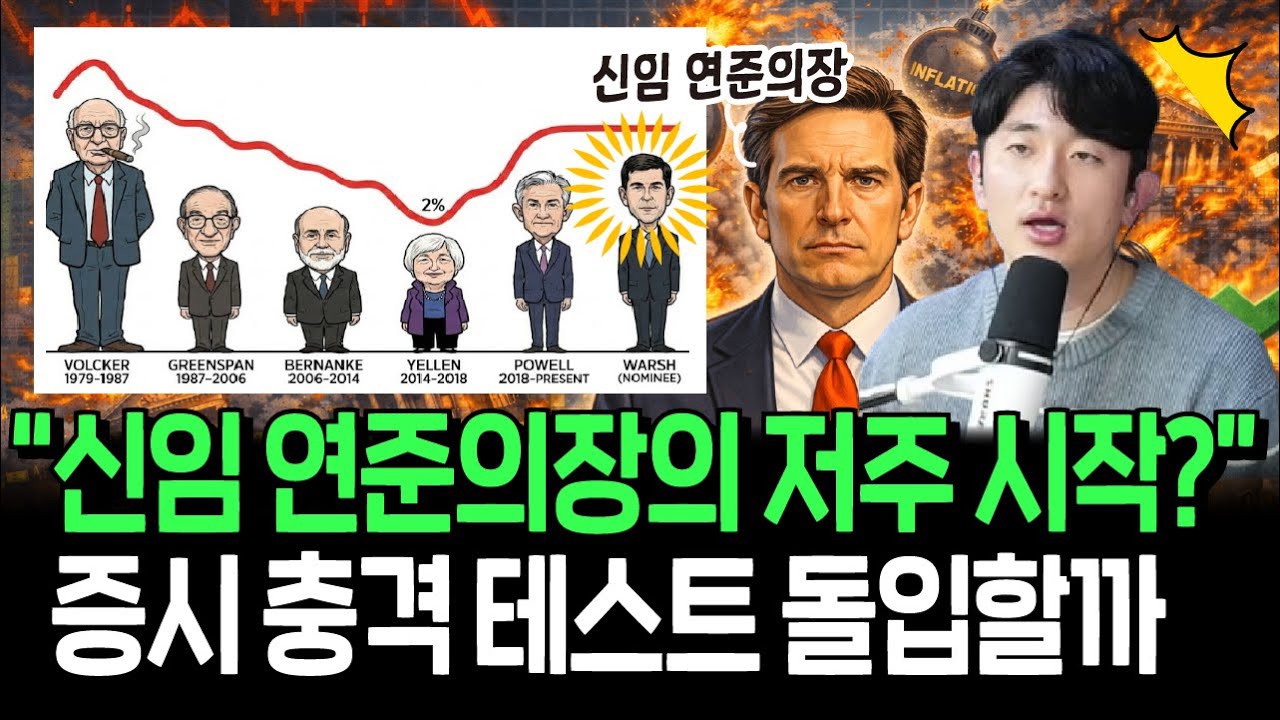
● Xi Unleashes Yuan Power Play, Dollar Order Shaken
2026 China Economic Outlook: The Real Meaning of the “Strong Renminbi” Statement and 5 Actions for Korea and Investors
Why China has now raised the topic of “renminbi as a reserve currency” publicly.
How a single sentence reported by the FT could translate into a policy package.
If the dollar-centric order shifts, the likely sequence of shocks to Korean exports, FX, rates, and asset markets.
A key lens often missed in mainstream coverage: reserve-currency ambition is not primarily a monetary-policy issue; it is a combined package spanning financial industry capability, data infrastructure, and regulatory competitiveness.
(Key themes integrated: global macro outlook, FX, inflation, rate cuts, and supply-chain reconfiguration.)
1) News Brief: Why Xi Jinping Publicly Emphasized a “Strong Renminbi” Now
Core development
Qiushi, the Chinese Communist Party’s academic journal, released excerpts of a 2024 Xi Jinping speech. The excerpt included a statement that the renminbi should become a “strong currency” widely used across international trade, investment, and FX markets, and be able to attain reserve-currency status.
Why it matters
Beyond general “RMB internationalization” messaging, the language specifies policy prerequisites, indicating movement toward an execution-oriented national roadmap rather than a slogan.
Stated direction (summary)
A stronger central bank and more efficient monetary management.
Development of globally competitive financial institutions.
Attraction of foreign capital.
Building financial hubs with influence over international price formation.
2) Why the “RMB Variable” Gains Importance in 2026 Global Macro Scenarios
Why 2026 is repeatedly cited
Policy typically moves through declaration → institutional build-out → credibility → higher transaction share. China appears positioned to move into a phase where reforms and infrastructure become more visible to markets. This shift often becomes measurable on a 1–3 year horizon, making 2026 a frequent reference point.
Dollar-system change is more likely “multipolarization,” not collapse
A rapid displacement of the dollar is unlikely. A more plausible path is a gradual increase in RMB share in selected trade settlement, commodity transactions, and certain financial flows. PBOC Governor Pan Gongsheng has referenced competition within a “multipolar international monetary system.”
Implications for the global outlook
The US is likely to reinforce dollar primacy via financial regulation, sanctions capacity, and allied settlement networks.
China is likely to expand transaction networks that reduce reliance on the dollar to mitigate exposure to sanctions and dollar-liquidity shocks.
This dynamic represents a “currency dimension” of US–China strategic competition.
3) “Strong Renminbi” Does Not Mean Simple FX Appreciation
A “strong currency” has three functional layers:
(1) Renminbi as a settlement currency
Expand RMB use in trade settlement (notably energy, commodities, and intermediate goods). The larger China’s trade footprint, the more counterparties may require RMB access for transaction continuity.
(2) Renminbi as an investment/asset currency
Reserve-currency characteristics require not only transactional use but also savings and portfolio demand. This implies foreign institutional willingness to hold RMB-denominated bonds and equities based on market confidence.
(3) A crisis-resilient currency (ultimate credibility test)
Reserve currencies typically attract inflows during stress. This requires transparency, predictable capital-mobility rules, and policy credibility—areas where China retains material constraints.
4) China’s Vulnerabilities Through 2026 That Could Constrain RMB Ambitions
(1) Property downturn and local-government debt
Property weakness limits household wealth effects and consumption recovery. Local fiscal stress reduces traditional infrastructure-led stimulus capacity. Currency internationalization presupposes domestic financial-system resilience; these issues remain a core risk.
(2) The capital-control dilemma
Reserve-currency appeal increases with capital mobility, while domestic stability incentives favor continued controls. The central issue is how China designs partial liberalization with selective controls.
(3) Credibility and regulatory risk
Foreign capital is often more sensitive to rule unpredictability than to losses. Advancing RMB internationalization likely requires greater predictability in legal, accounting, disclosure, and listing frameworks for foreign investors.
5) China’s Structural Strengths That Could Still Expand RMB Influence
(1) Scale in manufacturing and trade networks
China remains a supply-chain hub. Even with reconfiguration, outcomes often resemble “China+1” rather than full exit, supporting RMB settlement expansion.
(2) State-driven financial infrastructure execution
Once priorities are set, China can accelerate implementation across payment rails, regulation, and infrastructure. Trade finance and settlement options in RMB can scale relatively quickly.
(3) Presence of countries seeking to reduce dollar exposure
After experiencing sanctions risk, dollar-liquidity tightening, or rapid US rate increases, some countries pursue diversification away from exclusive dollar dependence, creating space for RMB as one alternative.
6) Three RMB Scenarios into 2026 (Ranked by Plausibility)
Scenario A: Gradual multipolarization (most plausible)
Dollar dominance persists, while RMB share rises in selected trade settlement and bilateral corridors. Korean corporates may face more frequent RMB settlement requests with certain counterparties.
Scenario B: RMB “bloc formation”
RMB use intensifies among economies more closely tied to China. A clearer separation between dollar-oriented and RMB-oriented networks emerges, requiring dual settlement and hedging frameworks.
Scenario C: RMB credibility event (lower probability, high impact)
A strong signal on market opening and/or foreign-investor protections could accelerate RMB’s role as an investment currency. Probability is constrained by domestic political and stability considerations; impact would be substantial if realized.
7) Readiness Checklist for Korea (Individuals, Corporates, Investors)
(1) Corporates: Diversify settlement currencies and recalibrate FX risk management
Contract structures assuming exclusive USD settlement may become more exposed. Firms should model counterparty-specific RMB settlement scenarios and update hedging tools (forwards/options) accordingly.
(2) Investors: Avoid the simplistic view that “a stronger China implies rising China assets”
Expanded RMB influence depends on financial-market credibility and policy execution, both subject to material policy variability. China exposure should be evaluated through a policy/regulatory/capital-flow framework rather than a pure growth narrative.
(3) Policy and macro: Korea may face higher volatility between USD and RMB forces
KRW is structurally sensitive to trade and capital flows. Increased US–China friction can raise FX volatility. Even in a rate-cut environment, FX instability can narrow policy flexibility.
(4) Industry: Cross-border digital payment infrastructure is the central battleground
RMB internationalization extends beyond currency to settlement, clearing, identity, and compliance infrastructure. Korean firms may find opportunities in cross-border payments, trade-finance automation, and B2B risk-management SaaS.
8) Key Point Often Missed: The Primary Objective Is Price-Setting Power, Not the FX Level
A more material objective than “beating the dollar” is reshaping the architecture of international price formation. Xi’s remarks explicitly referenced influence over international price-setting.
Strategic intent
Shift parts of commodities, energy, and critical intermediate-goods trade away from a structure where prices are set and settled exclusively in USD.
Why this is higher impact
Price-setting power changes terms of trade, corporate margins, and bargaining leverage. FX moves often follow these structural shifts. The relevant monitoring variable is where RMB-denominated pricing begins to appear by product category and corridor, not only spot FX levels.
Intersection with AI trends
Competition over price-setting increasingly involves data and models. As AI penetrates commodity-demand forecasting, logistics optimization, and trade-finance risk scoring, the owner of transaction platforms, payment rails, and financial hubs captures more data and influence—consistent with China’s emphasis on financial centers and globally competitive financial institutions.
9) Conclusion: For 2026, Focus More on Financial/Monetary System Experiments Than Headline Growth
RMB internationalization is a long-duration project. However, the articulation of explicit conditions for a “strong currency” increases the likelihood of higher policy execution intensity. For Korea, export dynamics, FX volatility, and capital-market spillovers may become more intertwined, strengthening the case for contingency planning.
< Summary >
Xi’s “strong renminbi” statement signals a shift from rhetoric to a more execution-oriented pathway for RMB internationalization.
A realistic 2026 baseline is dollar persistence with increasing USD–RMB multipolarization, not a dollar collapse.
China’s constraints include property/local-debt stress, capital-control tradeoffs, and regulatory credibility; strengths include manufacturing scale and accelerated settlement-infrastructure execution.
The core contest is price-setting and payment-network influence; Korea should prepare across settlement practices, hedging, and macro-volatility management.
[Related]
Comprehensive Guide: How RMB Internationalization Impacts the Korean Economy
2026 FX Outlook: Scenarios After the Strong-Dollar Phase
*Source: [ 경제 읽어주는 남자(김광석TV) ]
– 2026년 중국경제 전망 : 중국 위안화 초강세, 시진핑의 ‘기축통화’ 야심…’강력한 위안화’ 선포 [경읽남 230화]