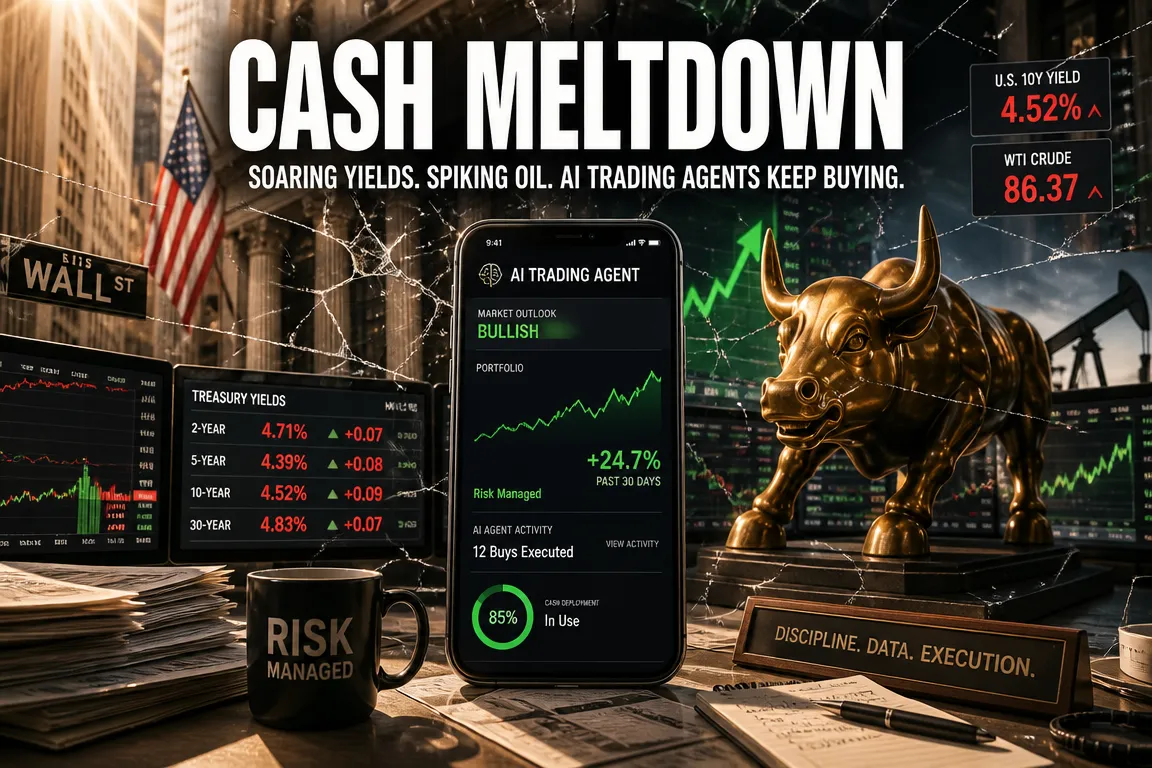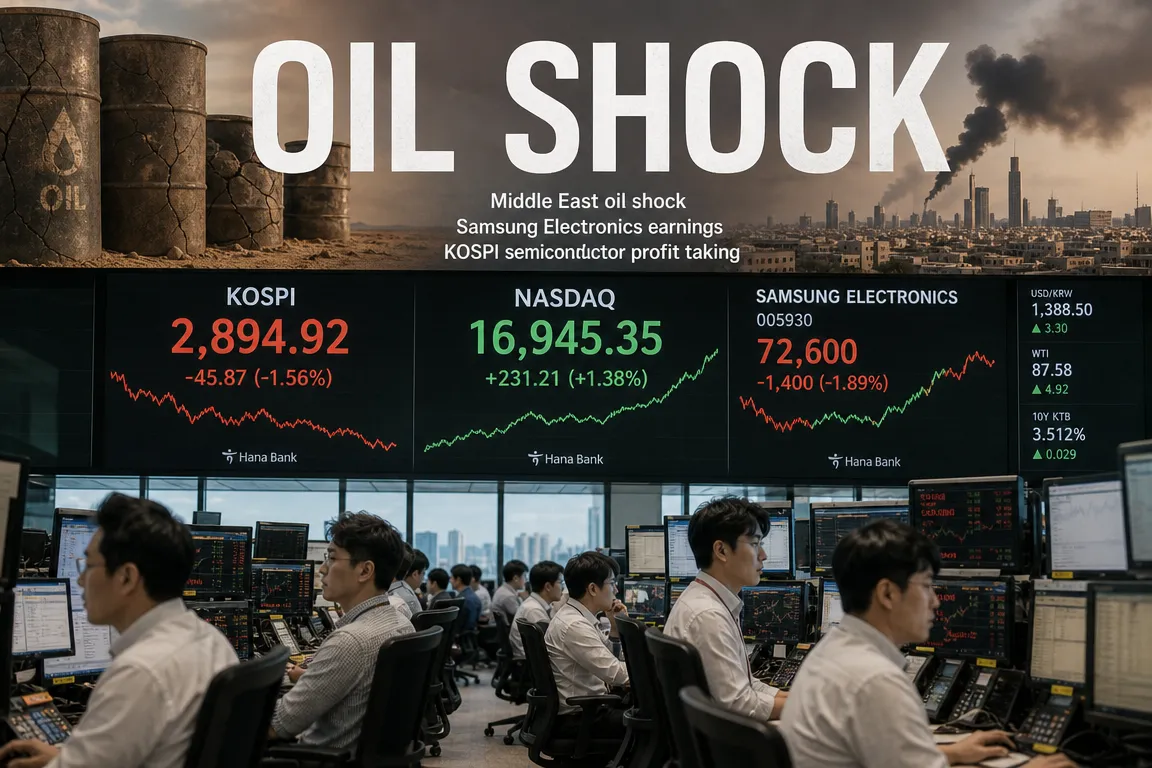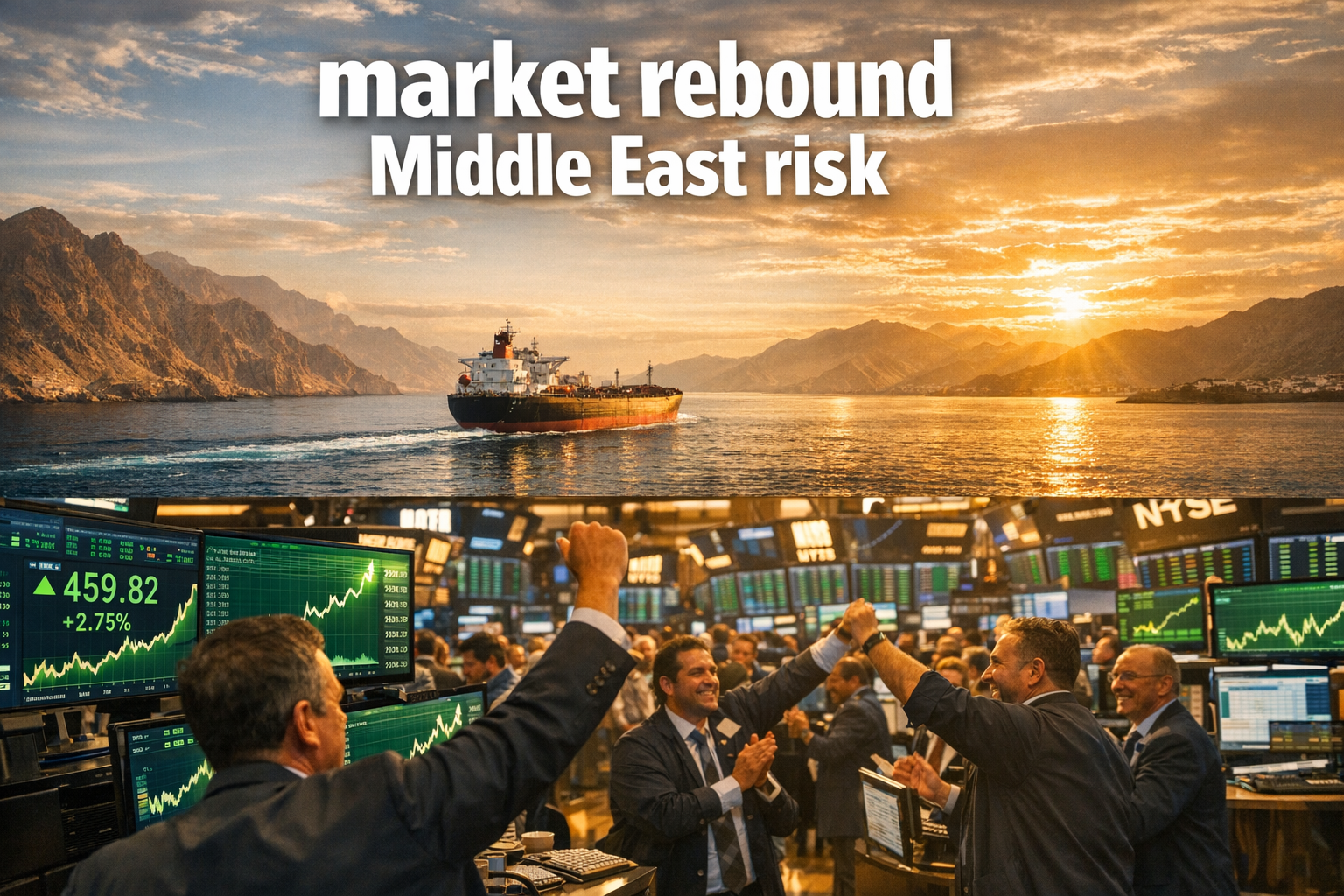
● Middle East Shock, Markets Rebound
Potential Direct Israel-Lebanon Talks and Signs of Easing Tensions in the Strait of Hormuz: Why Markets Are Rebounding
This is not a standalone Middle East headline. The market is linking multiple developments into a single risk framework:
- Potential direct Israel-Lebanon talks
- Strait of Hormuz interdiction and maritime control dynamics
- Escalatory rhetoric from Donald Trump
- Indications of European multinational involvement
- The rationale behind the rebound in global equities
This report connects geopolitical risk to crude oil, inflation, rate expectations, global supply chains, and U.S. equity risk appetite.
1. Current Situation: Key Developments
Markets are focused on three primary factors:
- U.S.-led tightening of control in the Strait of Hormuz
- Potential direct Israel-Lebanon negotiations
- France-UK initiatives toward a multinational maritime protection mission
Based on the referenced content, the U.S. is interpreted as having moved into active enforcement regarding blockade/control conditions in the Strait of Hormuz.
Donald Trump publicly used highly forceful language regarding Iran’s naval capabilities, signaling intent to assert maritime dominance and enforcement posture.
In isolation, this implies higher geopolitical risk. However, after an initial decline, markets rebounded.
The market reaction suggests investors are prioritizing whether the conflict can be contained and operationally managed, rather than extrapolating immediate escalation.
2. First Market Signal: Potential Formal Israel-Lebanon Talks
A key shift is the prospect that Israel and Lebanon may enter direct talks.
Previously, even where U.S.-Iran de-escalation narratives emerged, the Israel-Lebanon front, particularly Hezbollah-related risk, remained structurally separate.
- The U.S. and Israel treated the Lebanon theater as a distinct issue.
- Iran’s position implied Lebanon should be included within any broader ceasefire framework.
As a result, a critical component of any comprehensive de-escalation was missing.
If Israel and Lebanon move into an official negotiating format, the probability of multi-front regional escalation could decline, which markets typically price aggressively.
Financial markets are generally more sensitive to whether a conflict expands across theaters than to day-to-day tactical developments.
3. Second Market Signal: France-UK Push to Restore Freedom of Navigation
France and the UK stated they plan to convene a meeting within days to discuss participation in a peaceful multinational mission aimed at restoring freedom of navigation in the Strait of Hormuz.
The key variable is Europe’s positioning.
Europe has often taken a comparatively more moderate stance than the U.S. on Iran-related issues. This time, while not necessarily endorsing unilateral U.S. blockade tactics, Europe signaled it is unlikely to accept Iranian interference with maritime transit.
For markets, a multinational approach can be interpreted as a shift toward a managed, rules-based stabilization path rather than a higher-probability surprise military escalation.
This supports:
- Expectations of crude oil price stabilization
- Reduced probability of sustained shipping disruption
- Lower supply-chain risk premia
4. Why Global Equities Rose: Structure of the Rebound Under Negative Headlines
At face value, the rebound appears inconsistent with heightened Middle East risk and Strait of Hormuz disruption concerns. The explanation lies in how markets discount risk.
4-1. Markets Shifted From “Worst Case” to “Containment Probability”
Equities typically discount direction and duration more than the headline event.
The market focus has shifted from:
- “Will the Strait of Hormuz be shut for an extended period?”
to:
- “Will forceful enforcement increase bargaining leverage and accelerate a restoration of predictable transit?”
Duration risk is being weighted more heavily than absolute risk.
4-2. Higher Vessel Transit Counts Supported Risk Sentiment
According to the referenced content, Trump stated on Truth Social that the number of vessels transiting the Strait of Hormuz reached the highest level since the blockade began.
If accurate, this reduces the probability of full paralysis and supports a “partial control with gradual normalization” interpretation.
Energy markets often embed a fear premium that can exceed realized supply disruption. Transit data can reduce that premium.
4-3. Expectations That an Oil Spike May Not Become Structural
The Strait of Hormuz is a critical corridor for global oil flows. Disruption typically transmits immediately into:
- Crude oil spikes
- Higher freight rates
- Renewed inflation risk
A rebound in risk assets implies markets currently assign a lower probability that the oil shock becomes persistent enough to produce stagflation-like conditions.
This feeds into rate expectations:
- A sustained oil shock can delay rate cuts via inflation persistence.
- A short-lived shock is less likely to alter the baseline policy path materially.
The equity rebound therefore reflects a reassessment of macro spillovers (inflation and rates), not a conclusion that geopolitical risk has resolved.
5. How Markets Interpret Trump’s Escalatory Messaging
Trump’s language was notably aggressive, emphasizing overwhelming naval advantage and immediate responses.
Markets do not necessarily interpret this solely as a signal of imminent escalation.
5-1. Strong Rhetoric as Negotiation Leverage
A recurring pattern in Trump-style diplomacy is to narrow the counterpart’s action set through maximalist messaging, then pursue transactional negotiation.
Investors often treat such rhetoric as a pressure tactic rather than a direct forecast of full-scale conflict.
5-2. Domestic U.S. Political Incentives Matter
Drivers can include:
- Domestic political positioning
- Sensitivity to energy prices
- Leadership signaling
- Coalition management and voter alignment
Therefore, investors should emphasize observable indicators such as force posture, enforcement scope, and activation of diplomatic channels rather than headlines alone.
6. Why Europe’s Positioning May Be the Key Variable
France-UK signaling may be more consequential than it appears.
6-1. From Unilateral Action to an International Order Framework
If the U.S. acts alone, Iran can frame the situation as a bilateral confrontation.
If Europe participates under “freedom of navigation” and “maritime protection,” the narrative shifts toward restoration of international maritime order, increasing the risk of diplomatic isolation for Iran.
6-2. Energy Stability Requires Legitimacy and Durability
Energy markets price not only force capacity but also legitimacy and sustainability.
A multinational mission can reduce uncertainty for:
- Insurance pricing
- Shipping schedules
- Physical crude trade confidence
This can lower oil volatility and support broader risk assets.
7. Investor Checklist: What to Monitor Now
7-1. Geopolitical Risk
- Potential Israel-Lebanon talks are constructive for limiting escalation risk.
- Even if U.S.-Iran tensions persist, the key issue is whether the conflict widens to additional fronts.
- Monitor whether Hezbollah-related risk remains a separate, active theater.
7-2. Energy Markets
- Track vessel transit volume through the Strait of Hormuz.
- Distinguish between a short-term oil shock and a persistent trend.
- Assess whether shipping disruption translates into sustained physical supply tightness.
7-3. Financial Markets
- The U.S. equity rebound reflects perceived manageability of risk, not resolution.
- The key macro variable is whether inflation re-accelerates enough to alter rate expectations.
- Monitor sector dispersion: defense, energy, shipping, and safe-haven assets.
7-4. Diplomatic Variables
- France-UK multinational meeting plans may represent an inflection point.
- Watch for a shift from unilateral U.S. pressure to broader international coordination.
- The central variable is whether Iran moves toward negotiation channels.
8. Under-Discussed but Material Point
Many summaries stop at “escalation vs. de-escalation” or “oil up vs. oil down.” The market is focused on a deeper structure.
8-1. The Core Issue Is Maritime Order and Rules Enforcement
This is less about localized fighting and more about who sets and enforces the rules governing maritime energy logistics.
The Strait of Hormuz functions as global infrastructure for energy pricing and trade stability. The relevant frame is supply-chain and financial system resilience, not only regional conflict.
8-2. Markets Prefer Predictable Policy Paths
Markets do not always price “peace” alone; they often price predictability.
The rebound suggests clearer revealed preferences and constraints among the U.S., Europe, Israel, and Lebanon, reducing scenario uncertainty.
8-3. The Key Tail Risk Is a Prolonged, Inconclusive Conflict
A larger risk than short-term strikes is a drawn-out cycle of partial ceasefires and recurrent clashes, which can:
- Keep crude prices elevated
- Embed inflation stickiness
- Push rate-cut expectations outward
- Pressure both real activity and valuations
Investors should monitor whether transit conditions and negotiations remain intact over 2–4 weeks, not only same-day headlines.
9. Why This Matters for the Economy, AI, and Fourth Industrial Trends
Despite being framed as geopolitics, the issue has direct relevance to AI-era investment dynamics.
9-1. AI Infrastructure and Energy Demand Are Becoming More Interlinked
As data centers expand, power demand rises. Energy supply instability (including oil and LNG) can influence tech valuations indirectly via energy and operating cost assumptions.
Electricity and industrial energy prices can affect cost structures across:
- Cloud providers
- Semiconductor supply chains
- Industrial automation
9-2. Supply-Chain Risk Management Becomes a Core Enterprise AI Use Case
Recurring geopolitical disruptions accelerate adoption of AI for:
- Logistics forecasting
- Maritime risk analytics
- Commodity sourcing optimization
Near-term, geopolitical risk can raise volatility; medium-term, it can support enterprise AI demand.
9-3. Defense AI, Surveillance, and Maritime Data May Gain Attention
Strait control and maritime security elevate relevance of:
- Vessel tracking
- Drone and satellite monitoring
- Route anomaly detection
- Cyber and infrastructure security
This extends beyond energy into defense-adjacent AI, satellite data, and maritime security technology.
10. Scenarios and Near-Term Watch Items
10-1. Constructive Scenario
- Israel-Lebanon talks progress materially
- Strait of Hormuz transit normalizes
- France-UK-led multinational protection framework becomes operational
- Crude stabilizes; U.S. equities extend gains
10-2. Base/Neutral Scenario
- Limited clashes persist without broad escalation
- Oil volatility remains but no sustained supply shock
- Equity performance becomes more sector-differentiated
10-3. Adverse Scenario
- Israel-Lebanon talks fail
- Hezbollah-related attacks expand
- Maritime disruption in the Strait intensifies
- Crude spikes; inflation concerns re-emerge
- Rate-cut expectations retreat; global equities reprice lower
11. Conclusion: Markets Are Pricing “Peak Risk Probability,” Not “War End”
The equity rebound does not indicate conditions have improved materially. It reflects a shift in perceived probability away from the most disruptive tail scenario and toward a more manageable containment path.
The alignment of:
- Potential Israel-Lebanon talks
- European participation in restoring maritime order
- Signs of improving transit conditions
supports a market view that the worst-case macro spillover (sustained oil-driven inflation and disrupted rate expectations) has become less likely.
Priority indicators: actual shipping/transit data, diplomatic timelines, crude price behavior, and changes in rate expectations.
< Summary >
- Potential direct Israel-Lebanon talks are a key variable for limiting regional escalation risk.
- France-UK multinational maritime protection discussions support normalization expectations for the Strait of Hormuz.
- The U.S. equity rebound reflects reduced odds of a sustained oil/inflation shock rather than resolution of geopolitical risk.
- The core issue is maritime order and global supply-chain stability.
- Monitor negotiation progress, vessel transit volumes, oil trends, and rate expectations.
[Related Posts…]
- U.S. rate outlook shifts and core global equity allocation implications: https://NextGenInsight.net?s=rate
- AI infrastructure expansion, power demand growth, and the next semiconductor opportunity set: https://NextGenInsight.net?s=AI
*Source: [ Maeil Business Newspaper ]
– [홍장원의 불앤베어] 이스라엘과 레바논, 드디어 만난다. 근본적 휴전은 이뤄질까