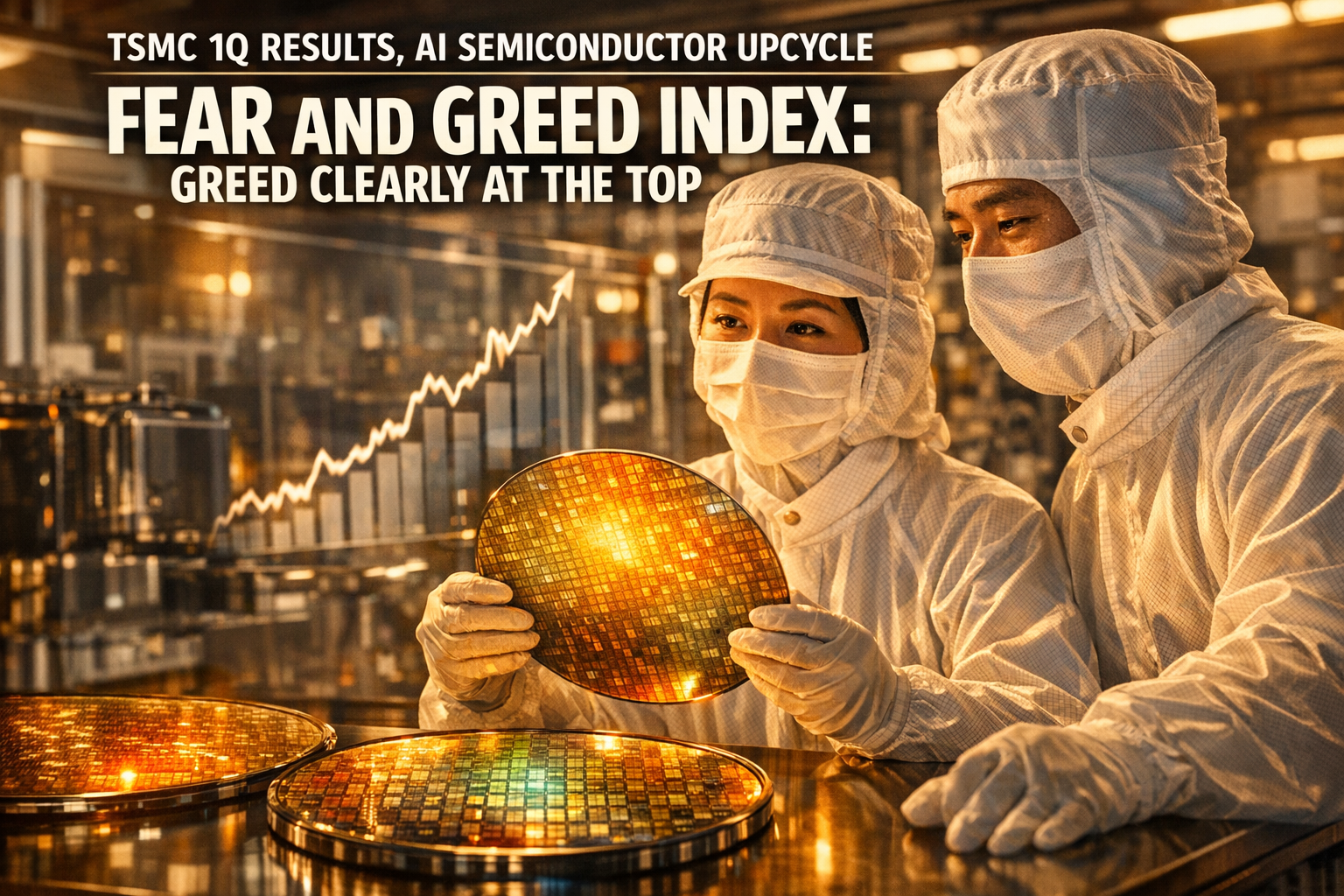
● AI Supercycle, Fearless Rally, Pepsi Beat
TSMC Record Results, US Equities Back in “Greed,” PepsiCo Holds Up: Integrated Market Brief
Today’s market move is not adequately explained by “indices rose.” Key drivers include the semiconductor upcycle, AI infrastructure capex, US equity highs, a prolonged high-rate regime, and renewed geopolitical risk.
This report explains why TSMC’s 58% YoY surge in 1Q net income is a structural signal for the AI cycle, why US equities remain resilient despite war headlines and higher oil, why PepsiCo’s results reflect consumer bifurcation, and highlights under-discussed points that matter for positioning.
In summary, the market is being supported by a combination of AI-driven productivity, earnings strength, constrained expectations for rate cuts, and supply-chain reconfiguration.
1. Market Snapshot: Headline Drivers
- TSMC reported 1Q net income up 58% YoY, setting another record.
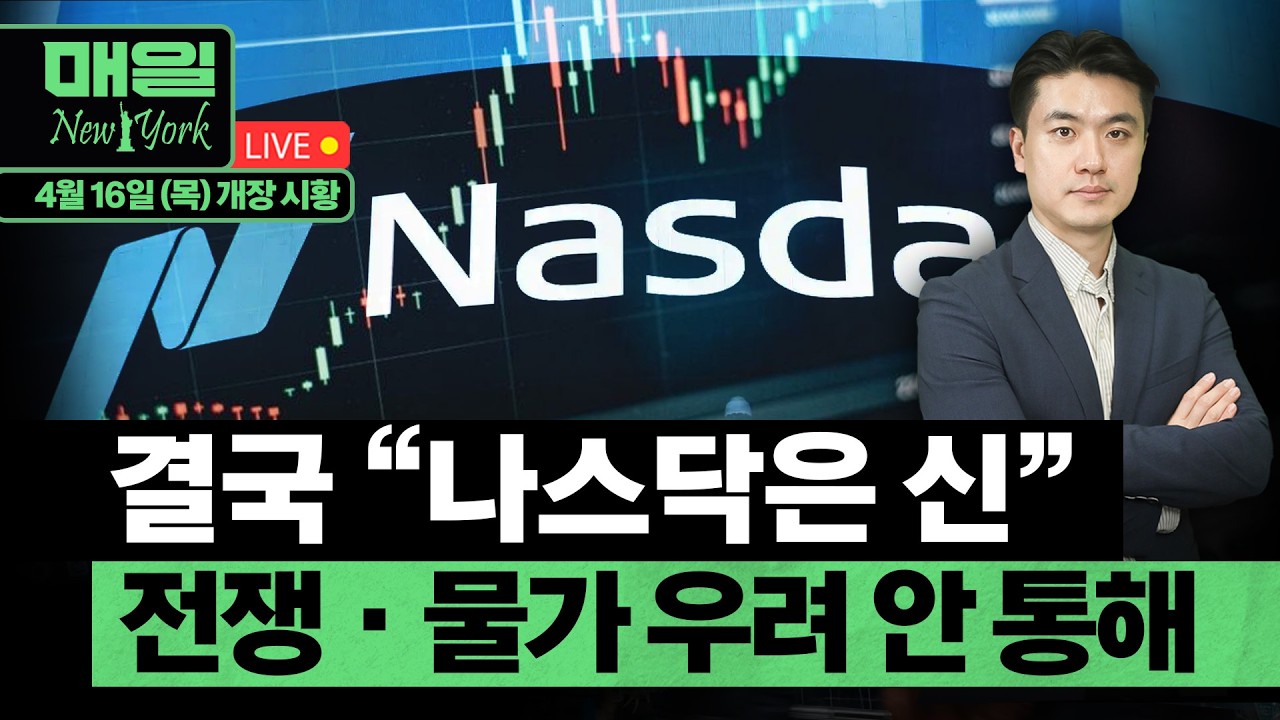
- The Nasdaq and S&P 500 extended record-level trading; the Fear & Greed Index moved back into “Greed.”
- PepsiCo delivered results better than expected; the stock rose.
- Strong US labor and manufacturing data pushed expectations for Fed rate cuts further out.
- Middle East risk and rising oil remain headwinds, but the uptrend led by AI mega-caps has been resilient.
2. Why TSMC’s Results Matter: The Message Beyond the Numbers
TSMC 1Q Performance Summary
TSMC reported approximately KRW 47 trillion in revenue and KRW 24 trillion in net income for 1Q 2026. Net income rose 58% YoY and exceeded consensus expectations. Record earnings have been sustained for four consecutive quarters.
Key Drivers
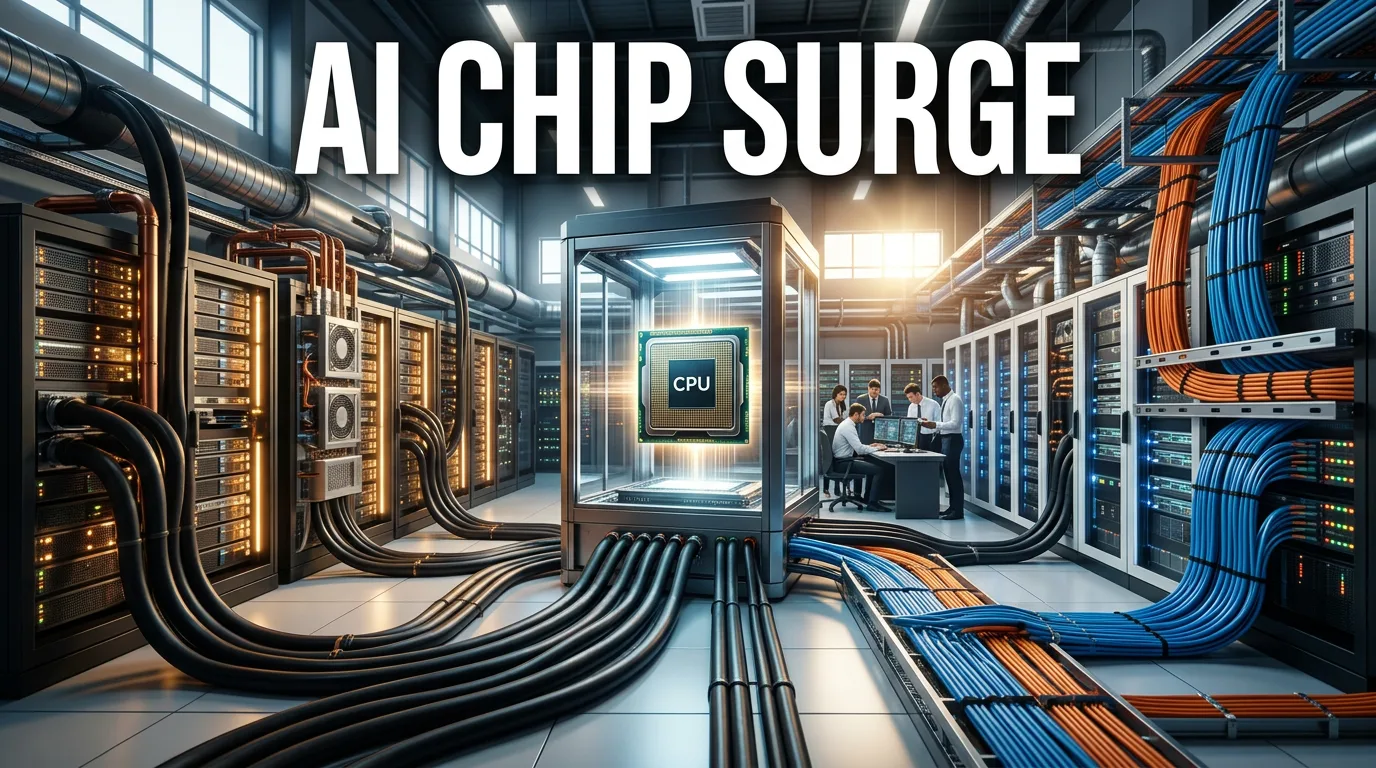
Demand from AI servers, data centers, and high-performance computing (HPC) remains elevated. Management characterized AI demand as “extremely strong.”
HPC accounted for 61% of total revenue, indicating a shift in the company’s profit center from smartphone/PC chips toward AI data-center-grade semiconductors.
What Advanced-Node Mix Indicates
Sub-7nm nodes represented 74% of wafer revenue; 3nm represented 25%. This supports the view that industry profit pools are increasingly concentrated in leading-edge manufacturing.
For major customers such as Nvidia, Apple, and AMD, next-generation chip roadmaps depend materially on TSMC’s advanced-node capacity and execution. TSMC functions as core infrastructure for the AI compute stack.
Investor Implications
- Supports the view that AI-related demand is currently earnings-backed rather than purely sentiment-driven.
- Suggests a structural AI-led growth phase rather than a broad cyclical rebound.
- Positive read-through across the value chain: Nvidia/AMD, servers, HBM, advanced packaging, and power infrastructure.
3. Why US Equities Remain Strong: Resilience Despite War, Oil, and Rates
Why the Nasdaq Keeps Advancing
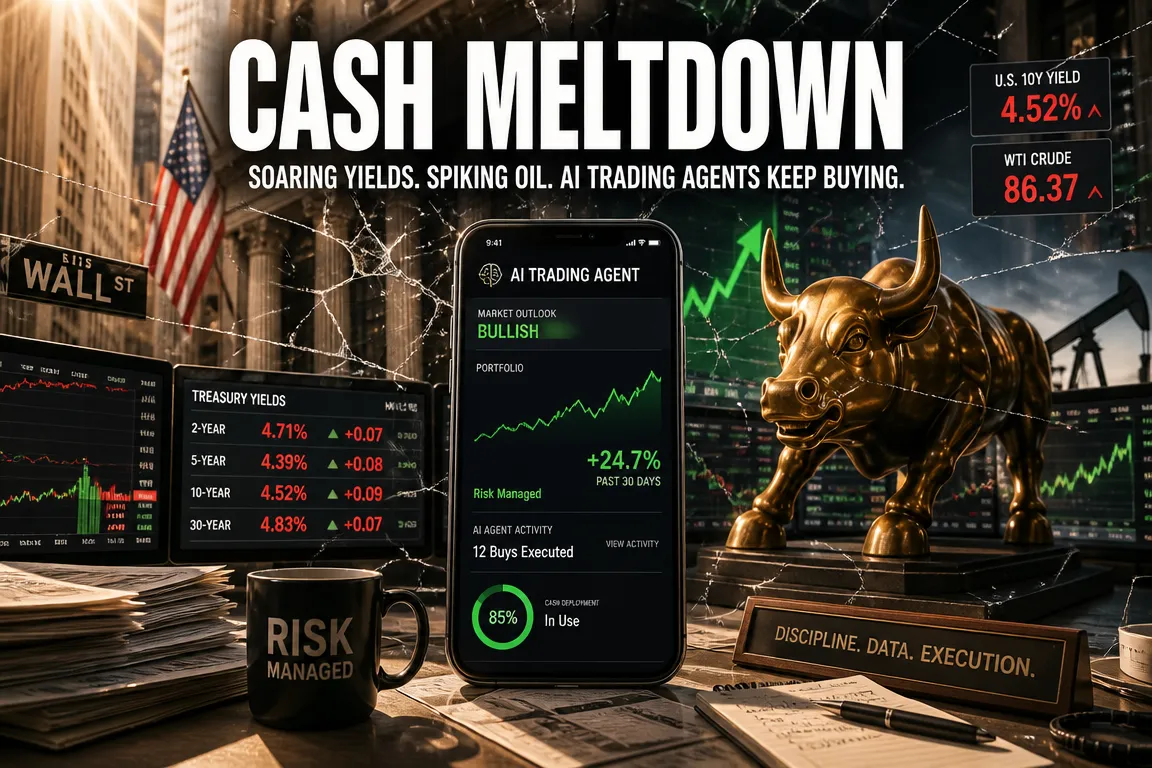
At face value, the setup appears contradictory: elevated geopolitical risk, WTI approaching the USD 90 area, strong manufacturing data, and reduced near-term odds of rate cuts. Yet major indices remain near highs.
The market’s logic has shifted: higher costs can accelerate enterprise automation, AI adoption, and cloud migration. Rising labor and operating costs can improve the ROI case for software and AI infrastructure spending, supporting select AI beneficiaries even in a higher-rate, higher-energy environment.
Why “Greed” Returned
Price action remains supported by earnings and AI-driven productivity expectations. Over the past year, the S&P 500 gained more than 30% and the Nasdaq more than 40%, a move not fully attributable to liquidity alone.
While “Greed” can signal near-term overheating, labeling the move as a bubble without distinguishing earnings-backed winners from speculative narratives risks misclassification.
4. Macro: Why Rate Cuts Were Pushed Out
Strong Jobless Claims and Manufacturing
Weekly initial jobless claims printed near 200k, below expectations. The Philadelphia Fed manufacturing index surprised to the upside at 26.7.
These readings indicate ongoing economic momentum, reducing the urgency for the Fed to cut.
Market Interpretation
- A “hard-landing-led cuts” scenario has weakened.
- The more probable mix is “solid growth + sticky inflation + delayed cuts.”
- In this regime, performance dispersion tends to widen, with capital concentrating in demonstrable earnings growers.
5. PepsiCo: What “Better-Than-Feared” Signals About US Consumption
PepsiCo 1Q Summary
PepsiCo reported revenue growth of 8.5% YoY, outperforming expectations. Concerns that anti-obesity drug adoption would depress snack and beverage demand were not dominant in the quarter’s results.
Core Driver: Pricing and Mix Management
The company defended demand by adjusting pricing on select key products rather than relying solely on price increases. This indicates higher consumer price sensitivity rather than a broad collapse in demand.
Why It Matters
The results are consistent with a bifurcating consumer landscape: higher-income cohorts sustain spending, while middle- and lower-income cohorts respond more sharply to price levels. For consumer equities, pricing architecture and customer segmentation may matter more than brand strength alone.
6. Deepening K-Shaped Consumption: Why “Strong” US Data Can Be Misleading
Evidence from Bank of America Payment Data
Payment data suggest the K-shaped split in consumption intensified from mid-2025: higher-income spending increased while lower-income and lower-middle spending softened.
Structural Drivers
- Pandemic-era excess savings have been depleted.
- High rates increased revolving credit costs.
- Essentials (food, rent, utilities) remain elevated.
- Asset holders benefited from equity gains and higher deposit yields.
The aggregate picture can appear resilient while underlying distributional stress rises, with implications for retail, dining, travel, and consumer discretionary analysis.
7. Middle East Risk and Oil: Not Resolved
Current Situation
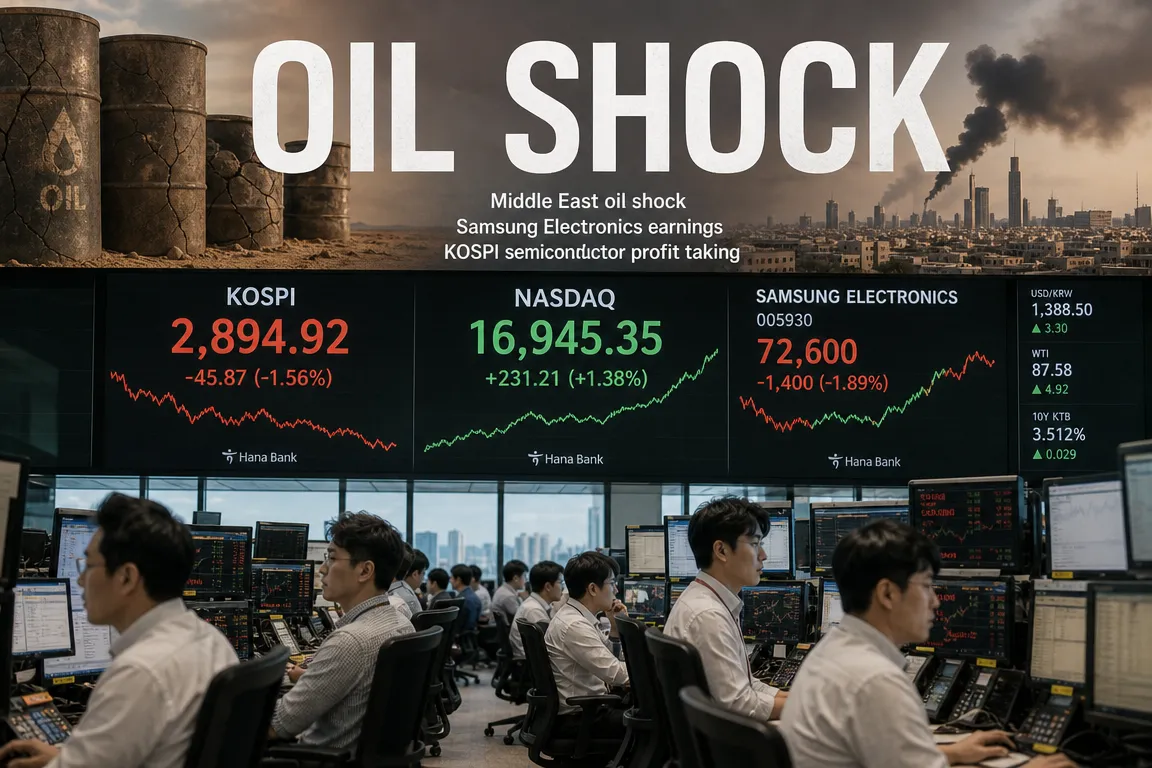
Tensions involving Israel, Lebanon, and Iran remain elevated, with continued hawkish messaging from US defense leadership. Markets remain vulnerable to headline-driven volatility.
Why Oil Matters
WTI near the USD 90 area affects freight, production costs, inflation expectations, consumer sentiment, and corporate margins, and can weaken expectations for rate cuts.
Second-Order Effects
Energy and logistics cost increases can transmit into global food prices, reinforcing the view that geopolitical risk is increasingly a structural inflation input rather than a temporary shock.
8. Nuclear/SMR Surge: High Expectations, Still Policy-Dependent
Drivers
Mentions of lunar surface reactor plans helped lift SMR-related names such as Oklo and NuScale Power, alongside renewed focus on power constraints from AI data centers.
Key Caution
Many companies in this segment have limited commercial revenue today; price moves can be more sensitive to policy headlines and positioning than to fundamentals.
Investment Checklist
- Monitor concrete orders and commercial operation timelines.
- Expect elevated volatility after policy-driven spikes.
- The AI power narrative is supportive, but quality dispersion across “nuclear” equities is significant.
9. Rare Earth Supply-Chain Tensions: Rising Strategic Relevance
Why It Matters
A sharp price increase by a major Chinese rare earth producer is not merely a commodities story. Rare earths are critical inputs for EVs, semiconductors, defense, and advanced electronics; price moves affect strategic cost structures.
Why the US Faces Constraints
Processing and refining are harder than mining, with environmental and cost barriers reinforcing China’s long-standing dominance. Diversification efforts are structurally slow.
Implications for Korea
Korea’s exposure through semiconductors, batteries, EVs, and defense increases sensitivity. Medium-term priorities include supply-chain resilience, localization, and substitute-material technologies.
10. Under-Discussed Points with High Relevance
(1) This looks more like a “productivity/earnings” market than a pure liquidity rally
AI is increasingly reflected in cost reduction and productivity gains, with benefits visible in results from companies such as TSMC, Nvidia, and Oracle.
(2) Higher inflation can accelerate AI adoption
As labor and operating costs rise, the economic case for automation and AI strengthens, potentially extending infrastructure demand.
(3) Consumption is not uniformly weakening; it is separating by income cohort
For consumer exposure, the key question is which cohort is driving demand.
(4) Geopolitics is becoming a structural inflation variable
Energy, logistics, and food price transmission links make geopolitical risk a persistent factor in rates, margins, and demand.
11. Positioning Considerations
- AI semiconductors and leading-edge manufacturing value chains retain strong earnings momentum.
- Prefer earnings-supported businesses over assets dependent primarily on rate-cut narratives.
- For consumer names, evaluate pricing strategy and customer cohort exposure.
- Nuclear, rare earths, and energy security remain long-duration themes with high near-term volatility.
- Elevated geopolitical risk increases the value of liquidity and diversification.
12. One-Line Take
This is not a market rising because risks disappeared; it is a market where AI-linked earnings strength is currently outweighing ongoing risks.
< Summary >
TSMC’s 1Q net income rose 58%, reinforcing that AI semiconductor demand remains strong. US equities held near highs despite war risk, higher oil, and delayed rate-cut expectations, supported by earnings and AI-driven productivity themes. PepsiCo’s results indicate not a consumption collapse, but rising price sensitivity and intensifying income-based divergence. With rate cuts likely delayed, AI infrastructure, advanced semiconductors, supply-chain security, and energy security remain central investment themes.
[Related Articles…]
- https://NextGenInsight.net?s=TSMC
- https://NextGenInsight.net?s=AI
*Source: [ Maeil Business Newspaper ]
– TSMC 1분기 순이익 58% 사상 최고치 경신ㅣ뉴욕증시 공탐지수 다시 ‘탐욕’ 구간ㅣ펩시코 예상보다 양호한 실적, 주가상승ㅣ홍키자의 매일뉴욕