● Hormuz Shock, Oil Spikes, Markets Slammed, Crypto Sinks
Escalating Tensions in the Strait of Hormuz: Has U.S.–Iran Diplomacy Actually Broken Down? Key Variables Driving Crude Oil, U.S. Equities, and Bitcoin
Based on the latest sequence of events, this is not a routine Middle East headline. Expectations for the resumption of commercial passage through the Strait of Hormuz reversed within a day, transmitting simultaneously into crude oil pricing, U.S. equity index futures, Bitcoin, risk-off positioning, and Federal Reserve rate expectations.
This report focuses on:1) Why messaging from the foreign ministry and the Supreme Leader-aligned camp diverged materially
2) What gunfire targeting oil tankers signals to markets
3) Potential implications for Monday’s New York session and global positioning
4) Underappreciated geopolitical and supply-chain transmission channels
1. What happened: Strait of Hormuz expectations reversed within 24 hours
Markets initially responded to relatively moderated messaging from Iran. Remarks attributed to the foreign minister fueled expectations that commercial shipping could proceed during a ceasefire window. A confirming signal from the Trump side reinforced risk relief: crude sold off and markets leaned toward a “worst-case avoided” interpretation.
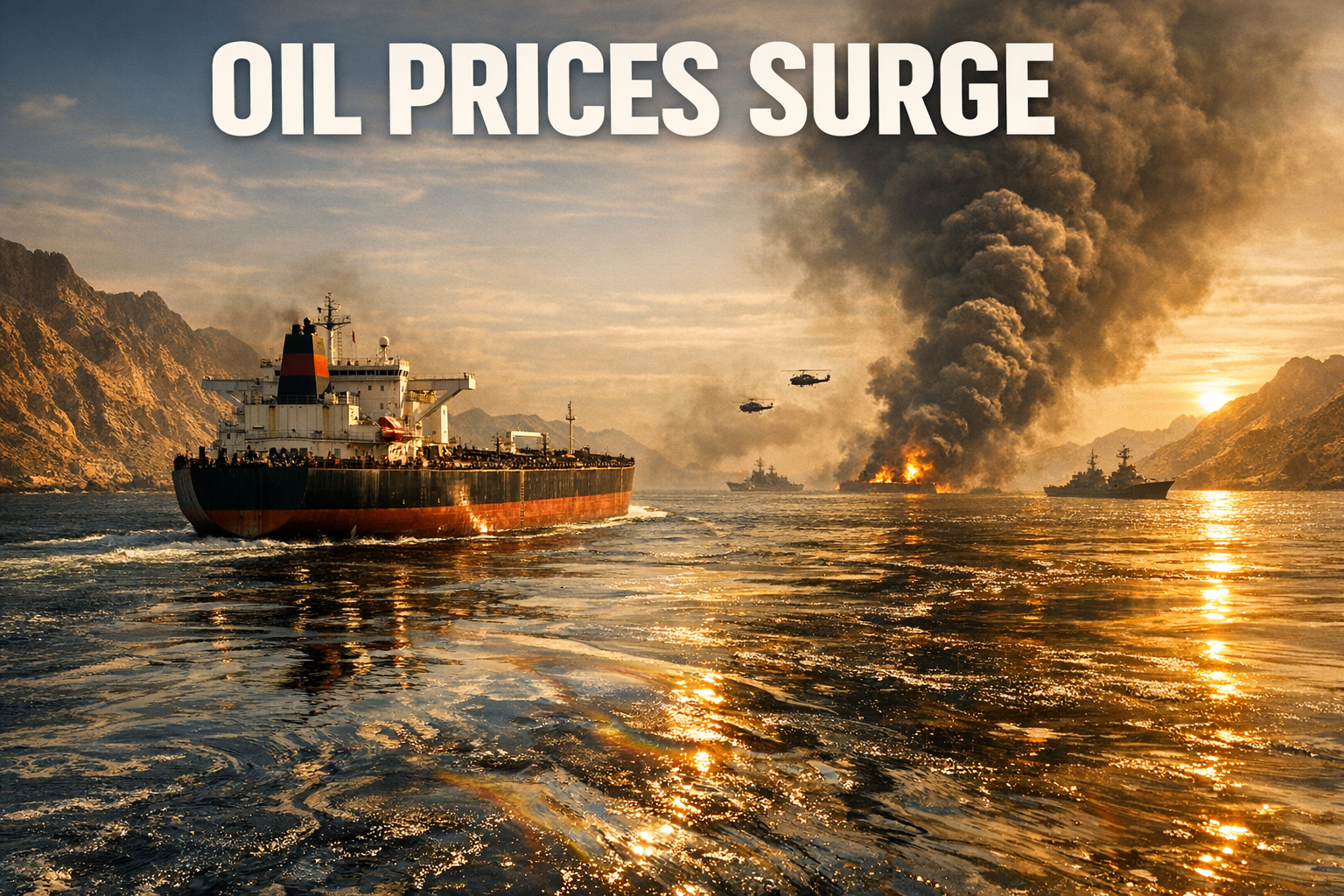
The tone shifted sharply the next day. A hardline statement attributed to the Supreme Leader-aligned camp reversed sentiment, followed by reports that IRGC fast boats approached at least two tankers attempting passage and opened fire without radio communication.
For markets, this is material because it moves from rhetoric to observable maritime action, converting diplomatic uncertainty into near-term operational risk.
2. Key news points: investor-facing summary
2-1. Why markets relaxed the prior day
- Foreign-ministry remarks supported expectations of normalized commercial transit through the strait.
- Trump-side messaging appeared to validate that interpretation.
- Markets priced reduced Middle East risk, lower probability of supply disruption, and diminished near-term inflation re-acceleration.
- Outcome: crude prices faced sharp downside pressure and risk appetite partially recovered.
2-2. Why sentiment reversed today
- The Supreme Leader-aligned message was interpreted as reaffirming confrontation readiness against both the U.S. and Israel.
- Language indicating naval readiness implied renewed risk of blockade scenarios or limited maritime clashes.
- Reports of actual gunfire against tankers forced markets to reassess whether this is negotiation leverage or a resumption of kinetic escalation.
2-3. Immediate cross-asset reactions
- Crude prices attempted to rebound.
- Bitcoin weakened amid heightened geopolitical stress and de-risking.
- With U.S. cash equities closed, the primary near-term adjustment is expected via futures and related volatility measures.
3. Why this matters: not a localized story
3-1. The Strait of Hormuz is a critical global energy chokepoint
The strait is a high-sensitivity bottleneck for crude oil and LNG logistics. Any credible signal of restriction or conflict tends to be rapidly reflected in energy risk premia. This is a supply-chain and inflation-expectations shock channel, not merely a regional security update.
3-2. Higher crude transmits into inflation and rate expectations
Rising crude can lift transportation and production costs, reintroducing consumer inflation pressure. Markets may reprice the Fed path, including potential delays to anticipated easing. The typical transmission framework is:Geopolitical risk → crude risk premium → inflation expectations → rate-path repricing → higher equity volatility
3-3. Elevated U.S. equity levels increase sensitivity to exogenous shocks
With major indices near record levels, “unexpected” risk factors can catalyze profit-taking. The issue may function less as a standalone driver and more as a trigger in a valuation-sensitive environment.
4. Core interpretation frame: breakdown vs. coercive bargaining
4-1. Why it may be premature to call a full breakdown
Middle East diplomacy often features divergence between public messaging and private channels. Hardline rhetoric and limited force demonstration can be used to improve negotiating leverage. Iran’s internal political structure and IRGC incentives can also generate non-unified signaling.
4-2. Why it is difficult to treat this as purely performative
Gunfire against commercial shipping introduces immediate real-economy costs: higher maritime insurance, higher freight rates, rerouting, and logistics delays. Markets typically treat actions as more durable than statements.
4-3. Signals to monitor
1) Whether Iran’s foreign minister reaffirms or revises the prior “opening” posture
2) Response intensity from Trump or the U.S. administration
3) Recurrence of attacks or formal transit restrictions
4) Observable repricing by shipping firms and insurers (risk premia)
5) Whether Brent/WTI shift from a tactical bounce to a sustained uptrend
5. Asset-market implications: probable fault lines
5-1. Crude oil
Crude is the most direct transmission channel. Hormuz risk can reprice through probability-weighted disruption, even absent an actual blockade. Near-term: higher geopolitical premium; medium-term: direction depends on whether transit normalizes.
5-2. U.S. equities
Likely sector dispersion:
- Relative beneficiaries: Energy
- Relative pressure: Airlines, transport, consumer-facing sectors, and duration-sensitive growth/tech if rate-cut expectations weaken
Nasdaq sensitivity may rise if inflation-linked repricing pushes yields higher.
5-3. Bitcoin and cryptoassets
Despite the “digital gold” narrative, crypto often trades as a risk asset in short horizons. Elevated geopolitical stress can trigger faster deleveraging and selling pressure than safe-haven inflows.
5-4. USD and traditional safe havens
Risk-off dynamics can support USD, gold, and U.S. Treasuries. However, if crude drives renewed inflation concerns, long-end yields may react in a more complex manner. The market can face simultaneous safe-haven demand and inflation repricing.
6. What matters most economically: beyond headline oil moves
6-1. The key issue is repricing of risk, not only physical supply
Many reports focus narrowly on whether oil rises or falls. The more important variable is the market’s durable risk premium for Middle East exposure. Confirmed maritime attacks force investors to re-evaluate “tail” probabilities and can destabilize cross-asset correlations.
6-2. Iran’s multi-layer governance structure is a core variable
Foreign-ministry signals can be undermined by independent or semi-independent actions by military organizations. When diplomacy and on-the-water behavior diverge, markets discount official reassurance and demand a higher uncertainty premium.
6-3. Insurance and freight can transmit inflation faster than crude benchmarks
Maritime insurance and freight rates can reprice immediately. Rerouting and risk premia can lift costs across energy, chemicals, manufacturing, and consumer goods before official inflation data prints, potentially appearing earlier in corporate guidance and margin commentary.
7. Why this matters for the AI and “fourth industrial revolution” theme
7-1. Energy risk is more consequential in an AI-infrastructure cycle
AI growth increases power demand and heightens sensitivity to energy volatility. Crude and LNG instability can affect data-center operating costs, power procurement plans, and national energy-security strategies.
7-2. Supply-chain risk management can accelerate AI adoption
Recurring geopolitical shocks increase demand for real-time logistics routing, inventory visibility, and commodity-risk forecasting. This supports industrial AI, predictive analytics, digital twins, and supply-chain automation over the medium term.
7-3. Defense, cybersecurity, and satellite-data demand may rise
Sustained tension can expand demand for drones, ISR capabilities, satellite imagery, maritime tracking, and cybersecurity. AI-enabled video analytics, autonomous navigation, and anomaly detection are likely beneficiaries if security budgets and monitoring intensity increase.
8. Monday market checklist: 7 items
1) Official message intensity from Trump or the U.S. administration
2) Whether Iran’s foreign minister maintains or revises prior remarks
3) Any additional tanker attacks or new transit restrictions
4) Whether Brent/WTI gaps and holds strength
5) Whether Bitcoin and U.S. equity futures extend joint weakness
6) Directional confirmation in gold and the DXY
7) Early flow and relative performance across airlines/transport/energy/defense
9. Most underemphasized point
The central issue is less whether negotiations have “failed” and more that inconsistency between diplomatic messaging and military actions has materially reduced predictability. Markets typically penalize uncertainty more than confrontational rhetoric itself. If this persists, the structural risk premium can rise even without a full-scale conflict, pressuring equity valuations, supply-chain stability, corporate margins, and central-bank reaction functions over time.
10. Conclusion: prioritize structure over speed
It is premature to conclude a definitive collapse in negotiations, but it is also difficult to classify the event as a transient headline given confirmed action at sea. Markets are likely to prioritize repeat behavior over statements. The key determination for the week is whether Hormuz risk is contained as a brief news shock or evolves into a sustained driver of crude pricing and inflation expectations. The decisive variable is the next 24–48 hours of observable military and diplomatic actions.
< Summary >
- Expectations for eased Hormuz transit reversed within a day amid hardline Supreme Leader-aligned messaging and reports of tanker gunfire.
- The episode links directly to crude risk premia, inflation expectations, rate-path repricing, U.S. equity volatility, and Bitcoin weakness.
- The critical factor is not merely negotiation status but the credibility gap between diplomatic statements and operational maritime actions, which elevates uncertainty premia.
- This week’s focus: recurrence of attacks, U.S. response, crude futures behavior, and safe-haven confirmation.
[Related Links…]
- https://NextGenInsight.net?s=international%20crude%20oil
- https://NextGenInsight.net?s=AI
*Source: [ Maeil Business Newspaper ]
– [속보] 미-이란 협상, 완전히 엎어진 것인가. 혁명수비대, 유조선에 총격 I 홍장원의 불앤베어