● War, Oil, AI, Stocks
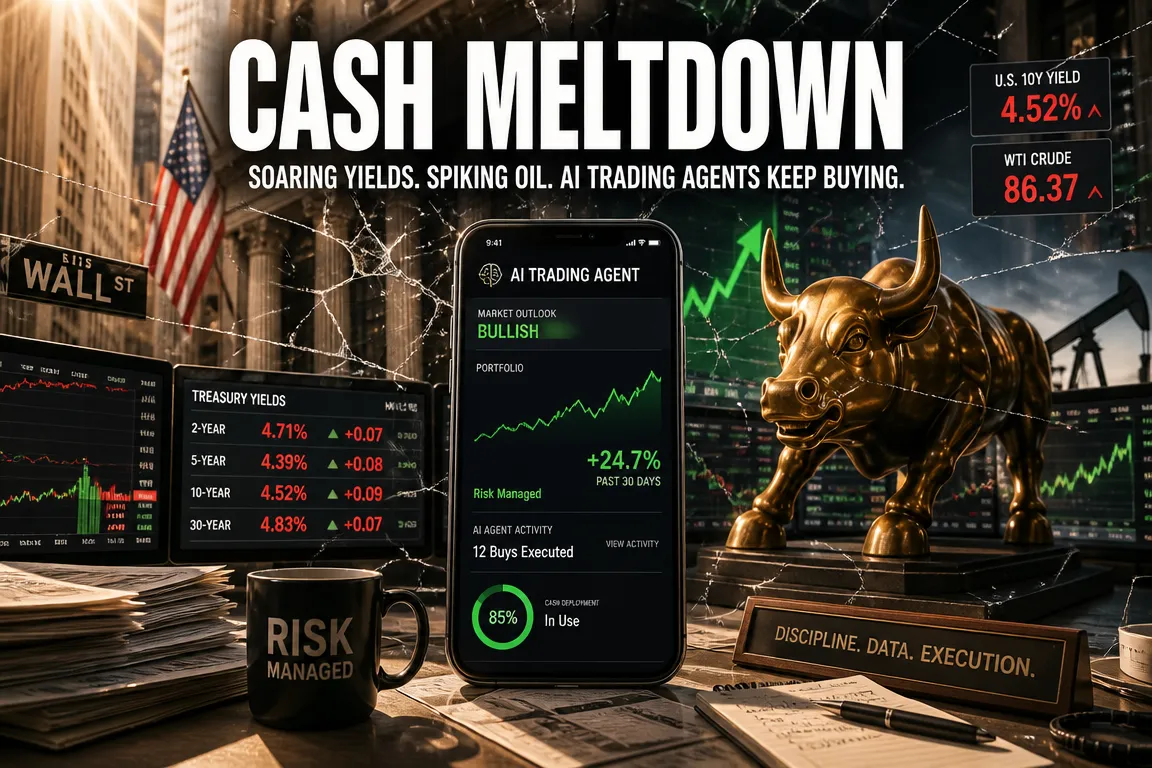
Why Are US Equities Rising Amid a War Zone, and Why Focusing Only on Samsung Electronics and SK Hynix May Be Riskier for Korean Investors Right Now
The market is currently driven by three variables:
1) Why US equities remain resilient despite unresolved Middle East risk.
2) Why markets are reacting more to AI, earnings, and the semiconductor supply chain than to oil headlines and war news.
3) Why misreading this dynamic can increase concentration risk and create a “false rally” in Korean equities.
This report consolidates key points on the Strait of Hormuz, ceasefire signaling from Trump, Ken Fisher’s interpretation of wartime markets, the rallies in GE Vernova and Micron, and Anthropic’s computing bottlenecks.
A central focus is why markets are not “ignoring” negative news, but repricing the sustainability and duration of worst-case scenarios.
It also explains why a Korea strategy centered on Samsung Electronics and SK Hynix warrants additional discipline at this stage.
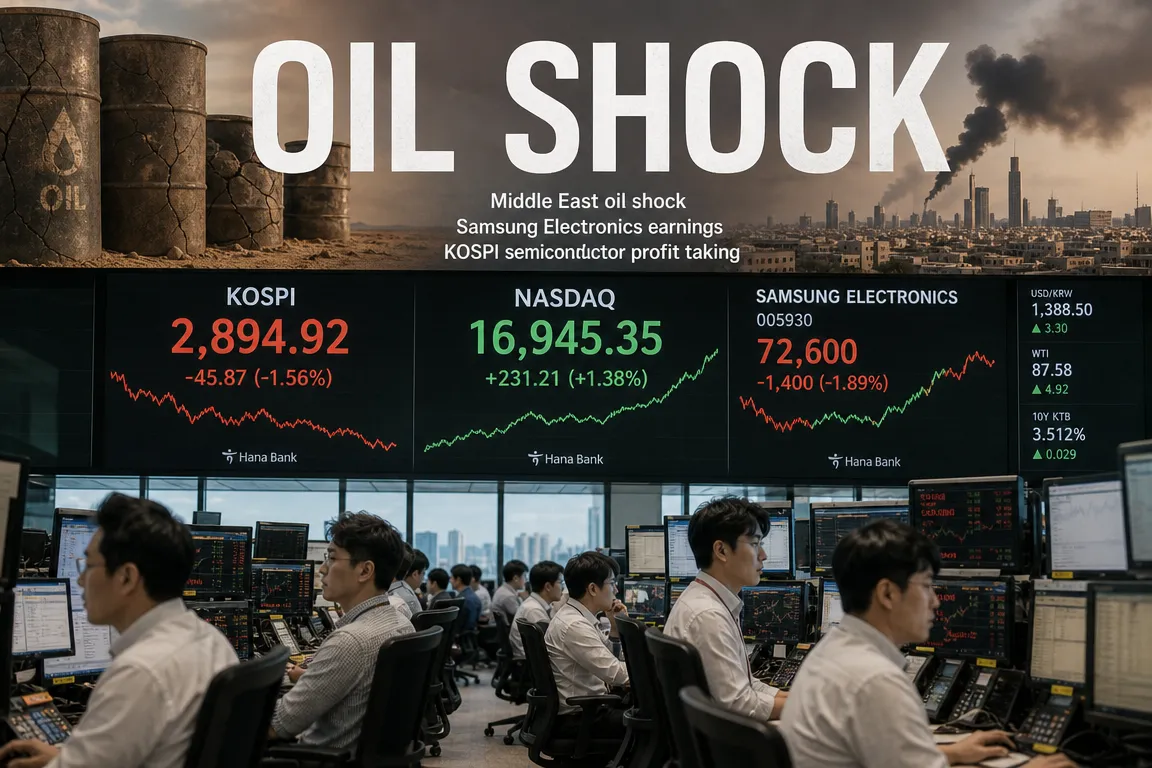
1. Market Snapshot: Oil Uncertainty, Equity Relief
Headline risk remained elevated:
- WTI up ~3%
- Brent up ~3%
- Brent above $100
- Renewed focus on vessel attacks in/near the Strait of Hormuz
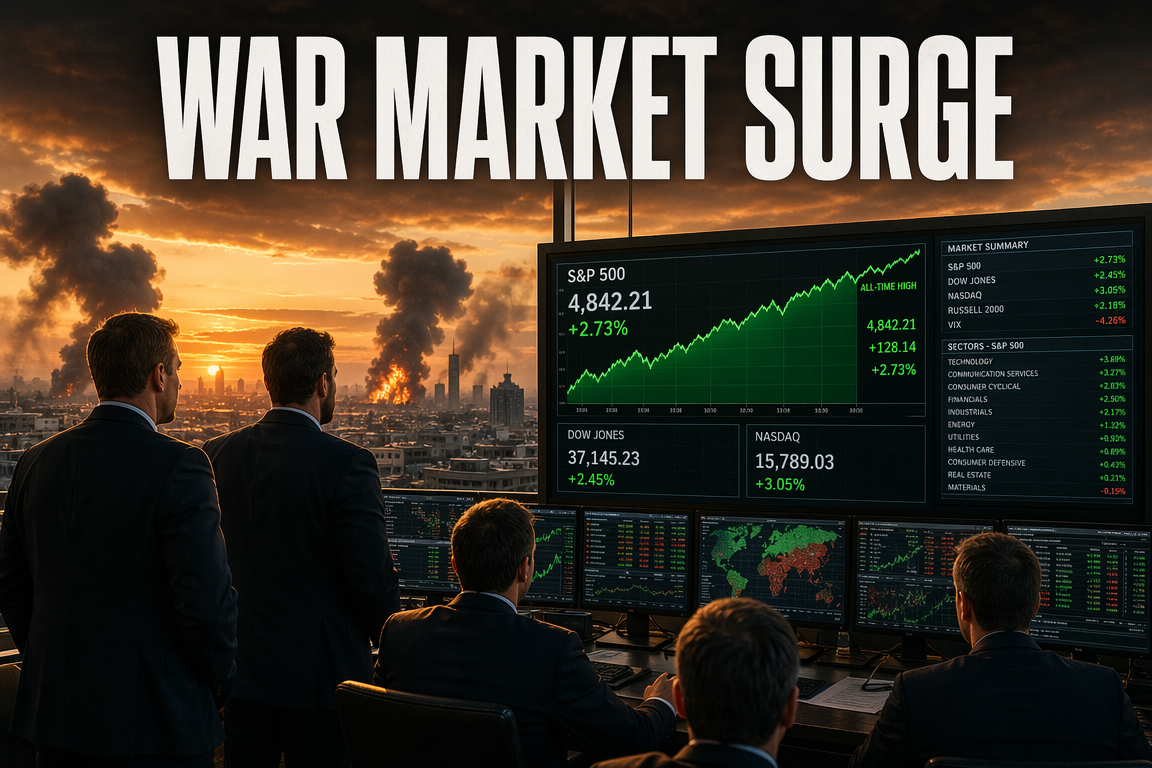
Under typical conditions, this mix would be equity-negative. US markets moved in the opposite direction:
- Nasdaq up ~1%
- S&P 500 higher
- Dow in positive territory
This indicates markets are not trading solely on war headlines. Instead, they are recalculating:
- conflict duration,
- the persistence of any oil shock into the real economy and earnings, and
- the probability of worst-case outcomes.
2. Why Equities Can Rise During Conflict: Markets Discount Forward
Equity markets generally price the future rather than the present, particularly during geopolitical events:
- Initial escalation triggers rapid fear-pricing.
- Once conflict begins, markets often price in worst-case scenarios quickly.
- Subsequent pricing may shift toward “less-bad” outcomes, supporting rebounds.
In this episode, the market responded to signals consistent with “managed tension” rather than sustained escalation:
- indications of a two-week ceasefire window between the US and Iran,
- Trump signaling an extension of ceasefire messaging,
- reporting suggesting additional time for Iran to consider peace proposals.
The implication is not that markets view the situation as benign, but that they began to assign a lower probability to a prolonged, full-scale escalation.
3. The Trump Variable: Market Recall of the “TACO Trade”
A key behavioral input is the market’s learned interpretation of Trump’s pattern:
- strong initial pressure,
- time extensions,
- preserved negotiation optionality,
- avoidance of maximum market disruption.
The tariff episodes reinforced this pattern through repeated cycles of escalation, delays, negotiations, and diluted outcomes. Current pricing suggests investors interpret statements more as bargaining leverage than immediate escalation, supporting risk appetite.
4. Why Complacency Is Premature: Hormuz and the Structural Oil Risk
Risk has not disappeared; the relevant issue is persistence rather than headlines.
The Strait of Hormuz is a critical global energy chokepoint. Recurrent stress can raise more than spot crude prices; it can increase:
- logistics costs,
- insurance premiums,
- shipping risk, and
- inflation expectations.
Potential macro transmission includes:
- higher freight costs,
- refining margin volatility,
- rising corporate input costs,
- renewed consumer inflation pressure,
- reduced confidence in rate-cut trajectories.
Markets are not signaling “no problem,” but rather “no immediate systemic spillover.” If Brent sustains levels above $100, inflation and policy uncertainty could reassert as dominant drivers.
5. Ken Fisher’s Framework: Wars Shock Markets, But Often Do Not Impair Them for Long
Ken Fisher’s view can be summarized as:
1) Fear is priced during escalation.
2) When conflict begins, oil spikes and worst-case scenarios are discounted rapidly.
3) Over time, recognition that extremes are unlikely can normalize pricing.
In cases with significant military asymmetry, prolonged closures such as a sustained Strait of Hormuz blockade are often viewed as difficult to maintain. This aligns with the market’s focus on whether disruption is transient or structurally durable.
6. What the Market Is Refocusing On: Earnings Regain Priority
Despite persistent geopolitical noise, market attention is rotating back toward earnings.
War headlines are emotionally salient, but longer-duration equity moves are typically earnings-driven. Recent resilience in US equities reflects the view that earnings are holding up better than feared, particularly in technology and AI-linked sectors.
Large-cap S&P 500 constituents generally have stronger cash flow resilience, pricing power, and supply-chain adaptability than in prior cycles. Therefore, the market focus is shifting from the existence of conflict to the duration and magnitude of earnings impairment.
7. What GE Vernova Signals: In the AI Era, Power Is a Bottleneck
GE Vernova outperformance was supported by strong results. The broader implication is that the AI buildout is constrained not only by semiconductors but also by power.
Scaling AI data centers requires more than GPUs:
- generation capacity,
- grid expansion,
- gas turbines,
- transformers and transmission equipment,
- cooling infrastructure.
AI capex therefore propagates across the power and grid value chain, not solely within a single semiconductor equity narrative.
8. Micron Strength and Memory Supply-Chain Reordering: Not Negative for Korean Semis
Micron’s move reflected policy-related expectations:
- Chinese memory producers may face tighter access to advanced Western semiconductor equipment.
If Chinese suppliers struggle to compress the technology gap quickly, incumbent leaders may retain stronger pricing power and supply advantage. This can be constructive for Samsung Electronics and SK Hynix over the medium term.
However, “semiconductors are strong” is not sufficient. Memory cycles are shaped by policy, equipment access, process capability, and demand. The current setup includes:
- strong AI server demand,
- HBM-led high-value mix,
- geopolitical constraints limiting competitive supply response.
This combination is supportive, but sector strength and timing are not equivalent.
9. “Without Samsung Electronics and SK Hynix, the Market Is Dead”: Why Korea Requires More Caution
Korean indices have been increasingly supported by a small set of semiconductor large caps. Index strength can mask weak breadth.
This is characteristic of a concentration-driven market:
- Samsung Electronics
- SK Hynix
- select power and AI infrastructure names
- policy-sensitive semiconductor equipment names
Such leadership can stabilize the index while the broader market remains fragile. Investors should evaluate:
1) whether the number of advancing stocks is rising,
2) whether performance broadens beyond mega-caps into mid/small caps,
3) whether earnings fundamentals confirm price action,
4) whether foreign flows concentrate into a single sector,
5) whether profit improvement appears outside semiconductors.
Absent breadth expansion, upside may reflect leadership dependence rather than a healthy bull phase, increasing the risk of momentum-driven chasing.
10. What the Anthropic Episode Indicates: Demand Is Surging, Compute Is Scarce
Recent controversy around Anthropic appears on the surface as user dissatisfaction:
- perceived degradation in model performance,
- feature limitations,
- restrictions on third-party tool usage,
- stronger steering toward API usage,
- weaker professional user experience.
The underlying driver is capacity: demand growth outpacing available compute. When inference capacity is constrained, platforms typically choose among:
1) raising prices,
2) limiting usage,
3) reducing compute per query (lowering perceived performance).
This underscores a shift in AI competition: beyond model quality, advantage depends on securing sufficient:
- power,
- GPUs,
- data centers,
- networking,
- memory bandwidth.
The strategic edge increasingly accrues to operators able to deliver AI services at scale with infrastructure reliability.
11. The Undercovered Core: Markets Price the Limits of “Sustainability,” Not the Absence of Risk
A common framing is: “Why are equities rising during war?” The more relevant framing is:
Markets are not ignoring risk. They are repricing:
- how long negative shocks can persist,
- who can bear the costs,
- where political actors are likely to de-escalate,
- whether conflict can transmit into systemic economic disruption.
The current rally is better interpreted as a reassessment of the durability of worst-case scenarios rather than unconditional optimism.
This framework generalizes across war, tariffs, supply-chain shocks, and AI bubble narratives: markets tend to focus first on duration, diffusion, and earnings transmission.
12. Positioning Considerations
Current conditions do not support either extreme risk aversion or indiscriminate optimism. Practical monitoring priorities include:
- whether oil sustains above $100,
- whether Hormuz risk remains episodic or trends toward durable disruption,
- whether US earnings resilience persists,
- whether AI infrastructure benefits broaden beyond semiconductors into power and networks,
- whether Korea’s semiconductor concentration begins to ease via breadth improvement.
Maintaining a modest cash buffer may improve flexibility. Risk should increase if oil persistence undermines rate-cut expectations and large-cap technology earnings begin to deteriorate.
13. Key Watchlist: Upcoming Variables Most Likely to Drive Direction
Five variables are likely to dominate:
1) whether Brent stabilizes above $100,
2) whether additional Hormuz-related incidents occur,
3) whether Trump messaging remains negotiation leverage or converts into concrete hardline action,
4) whether US mega-cap tech and semiconductor results exceed expectations,
5) whether AI service bottlenecks intensify and extend the infrastructure capex cycle.
Together, these variables provide an integrated framework for US equities, Korean equities, semiconductors, energy, and AI infrastructure.
14. Conclusion: Markets Are Pricing “After the War” More Than the War Itself
While counterintuitive, the current equity advance is not inherently irrational under market discounting:
- constraints on escalation,
- negotiation optionality,
- oil-price persistence, and
- earnings durability
are being weighted more than headlines.
AI capex momentum and semiconductor supply-chain reordering further support risk assets.
For Korean investors, index gains should not be equated with broad market health. Concentration in Samsung Electronics and SK Hynix can create opportunity but also distort market signals. The required approach is balance: simultaneously track geopolitical risk, oil/inflation transmission, earnings resilience, and AI infrastructure bottlenecks, with emphasis on identifying which drivers can persist.
< Summary >
US equities rose despite Middle East tensions and higher oil because markets prioritized the probability and durability of escalation and the scope for negotiation over headline risk.
Trump’s ceasefire signaling, Ken Fisher’s limited-duration shock framework, earnings expectations, and AI/semiconductor demand supported risk assets.
GE Vernova highlighted the importance of power infrastructure in the AI cycle, while Micron reflected expectations of memory supply-chain reordering under tighter equipment constraints.
The Anthropic episode indicates that compute scarcity is already a binding constraint amid surging AI demand.
Korean investors should monitor index concentration risk and confirm whether gains broaden beyond Samsung Electronics and SK Hynix; the core variables are oil persistence, earnings durability, and the longevity of AI infrastructure investment.
[Related Articles…]
AI infrastructure bottlenecks and the impact of data center capex on equities
https://NextGenInsight.net?s=AI
Key Korean beneficiaries after semiconductor supply-chain reordering
https://NextGenInsight.net?s=semiconductors
*Source: [ 내일은 투자왕 – 김단테 ]
– 말도 안되는 주식 상승
● AI Agent Shock, Meta CEO Clone, Semiconductor Surge
The AI Agent Era That Can Replicate Even a Meta CEO: Identifying the Primary Beneficiaries
This is not a conventional AI theme.The market is moving beyond chatbots toward AI agents that can replicate an individual’s communication style, decision logic, and work patterns, with implications for corporate operating models.This report summarizes: (i) why Meta’s Zuckerberg-avatar experiment matters, (ii) how “ex-employee workflow replication” may affect the labor market, and (iii) which segments across U.S. equities, semiconductors, data centers, and broader AI-linked equities may be positioned to benefit.It also clarifies why the next phase extends beyond GPUs to include CPUs, memory, and custom silicon.
1. Key Development: AI Is Moving Beyond “Answering” Toward Role Execution
A notable development is Meta’s reported experimentation with an AI avatar reflecting the CEO’s thinking framework and communication style.
In practical terms, the system is intended to learn the CEO’s tone, management philosophy, and decision criteria, enabling it to engage with employees at scale.
The significance is structural: internal communication and decision propagation can become partially replicable through AI.
Where early generative AI primarily delivered responses, the current phase introduces digital proxies shaped by a specific individual’s perspective and decision rules.
AI is evolving from a summarization and drafting tool into an entity that can perform organizational functions.
2. Why the Zuckerberg Avatar Matters
At face value, the use case is scalable leadership communication.In global organizations, time zones, geography, and language often dilute message consistency; an AI avatar can provide on-demand responses aligned with the CEO’s stated principles.
The broader implications extend further:
- Leadership bandwidth constraints can be materially reduced.
- Employees may experience interactions that resemble direct executive engagement.
- Leadership becomes more systematized and potentially replicable.
- Executive presence can be “scaled” via AI-mediated interfaces.
This is primarily an operating-model change rather than a standalone technology demonstration.Organizations may seek to replicate high-performing decision frameworks to improve speed and consistency.
3. A More Material Shift: Replicating Ex-Employees via AI
A related trend is the emergence of projects in which AI learns from an employee’s work artifacts to reproduce reporting formats, messaging tone, email patterns, and workflow execution.
This implies that a worker can exit while aspects of their operational know-how remain inside the firm in digital form.
From a corporate perspective, preserving workflows through AI agents may reduce replacement and training costs versus hiring and ramping successors.
Representative use cases include:
- Operational coverage during employee leave
- Reducing handover gaps after departures
- Automating repetitive internal reporting
- Maintaining consistency in customer responses
- Converting internal know-how into data assets
Key labor-market and governance questions include:
- Ownership and control of work-product data
- Permissibility of retaining an individual’s work style post-departure
- Re-definition of individual value as replicable tasks migrate to AI
Workplace differentiation may shift toward judgment, cross-functional coordination, and higher-order problem solving that are less easily replicated.
4. Why This Should Be Read Alongside Meta Layoff Headlines
Meta’s restructuring should not be viewed solely as cost control. As AI agents enter real operational workflows, companies are increasingly evaluating where AI execution can outperform human labor on cost, speed, and consistency.
Not all headcount actions are attributable to AI. However, the direction is increasingly visible: AI is being assessed not only as a productivity tool but also as an input to workforce design.
This may influence global macro dynamics, corporate margins, labor-market structure, and measured productivity.
5. Investment Implication: Why AI Agents Expand the Semiconductor Opportunity Set
AI exposure is often framed primarily through NVIDIA and GPUs. GPUs remain foundational.
However, the AI agent phase differs from early generative AI, which was dominated by large-model training.AI agents emphasize continuous inference, workflow orchestration, and enterprise-system integration at scale.
As concurrent “digital workers” multiply, demand increases not only for GPUs but also for CPUs, memory, storage, networking, power, and end-to-end data center infrastructure.
The beneficiary set broadens across the compute stack.
6. Semiconductor Beneficiaries by Segment
6-1. Core GPU Exposure: NVIDIA Remains Central
NVIDIA remains a primary supplier for both training and inference infrastructure.Enterprise adoption of proprietary agents, customized models, and multimodal services supports sustained demand for high-performance accelerators.
The key shift is that market attention is increasingly spreading beyond a single name and into adjacent bottlenecks.
6-2. CPU Re-Rating: Why Intel and AMD Are Regaining Attention
AI agents are not single-turn Q&A. They require orchestration of many concurrent tasks, persistent system connections, and continuous inference requests.
This increases the importance of server CPUs as the control plane for enterprise workloads and data center operations.Intel and AMD are positioned within this layer and are being re-evaluated as AI infrastructure becomes more heterogeneous than “GPU-only.”
6-3. Custom Silicon: Broadcom and Marvell
Large technology firms are expanding custom silicon initiatives rather than relying solely on off-the-shelf accelerators.
Broadcom and Marvell are frequently cited beneficiaries as demand grows for purpose-built AI and data center silicon aligned to specific customer requirements.
The central point is that higher AI demand may simultaneously expand both general-purpose and customer-specific chip markets.
6-4. Memory: Samsung Electronics, SK Hynix, Micron
As AI agents scale, data throughput and storage needs increase materially.Memory should be treated as a core AI infrastructure constraint rather than an ancillary component.
High-bandwidth memory (HBM), server DRAM, high-capacity SSDs, and storage systems are leveraged directly by AI infrastructure expansion.
For Korea-focused exposure, Samsung Electronics and SK Hynix are primary names; for U.S. exposure, Micron represents a comparable memory lever.
6-5. Semiconductor Equipment: ASML, Applied Materials, Lam Research
A sustained semiconductor upcycle typically transmits to equipment suppliers through capacity expansion and technology transitions.
ASML is critical in advanced lithography; Applied Materials and Lam Research remain essential across key manufacturing steps.If foundries and integrated manufacturers expand capex, equipment suppliers are positioned for multi-year demand visibility.
7. Earnings Signal: Supply Constraints May Persist Longer Than Expected
Recent industry earnings have conveyed a consistent message: AI-driven demand remains strong relative to prior expectations.
TSMC has indicated robust AI-related demand and has suggested supply tightness could persist at least into next year, reflecting observable order and investment trends rather than sentiment.
ASML has remained resilient despite reduced China exposure, supported by investment momentum from customers in Korea, Taiwan, and the U.S.
- AI semiconductor demand continues to show expansion signals.
- Capex activity is broadening across memory and logic.
- Benefits are extending across equipment, materials, and storage.
8. Data Centers and Power: Required Co-Beneficiaries
AI agents scale through data centers as the delivery mechanism.Growth in agent workloads requires not only compute but also physical space, power delivery, cooling, networking, storage, and optical interconnects.
As a result, beneficiaries may increasingly include the full AI infrastructure chain, not a single chip category.This also implies recurring sector rotation within equities may still repeatedly re-rate AI infrastructure assets.
9. Frequently Missed Point: Why AI Agents Can Alter Cost and Control Structures
Most coverage focuses on “which stocks rise.” The more material question is how AI agents can shift corporate cost structure and internal control dynamics.
9-1. Not Full Job Replacement First, but Extraction of Replicable Components
Immediate elimination of entire roles is not the base case in the near term.More likely is task-level migration: repetitive, documentable work; rules-based decisions; and text-centric communication are the first components to be replicated and automated.
9-2. Advantage May Shift from Hiring Talent to Accumulating Decision Models
Competitive advantage may increasingly depend on the ability to convert human know-how into structured data and deployable AI agents, not simply headcount quality or quantity.
This creates potential opportunity across SaaS, cloud, ERP, and collaboration platforms that capture and standardize enterprise workflow data used for training and deployment.
9-3. Long-Run Bottlenecks May Be Power and Enterprise Data, Not Only Chips
While markets currently emphasize semiconductors, longer-run constraints may include access to power and the availability of clean, well-structured enterprise workflow data.
Organizations that outperform may be those that can operationalize their internal data into agent workflows, rather than those that merely procure models.
10. Portfolio Positioning Considerations
- For names that have experienced sharp near-term rallies, consider staged entry on pullbacks.
- If single-name risk is not preferred, consider semiconductor ETFs or AI infrastructure ETFs.
- Maintain diversified exposure across GPUs, CPUs, memory, equipment, and data center infrastructure.
For longer-horizon investors, AI agent adoption appears structural rather than episodic and may influence productivity and macro outlook.
11. Conclusion: Market Focus Is Shifting From “What AI Can Do” to “Whom AI Can Substitute”
Meta’s case is a signal that AI is moving beyond search assistance and document drafting toward replicating human roles and perspectives within organizations.
For companies, this is a productivity lever; for labor markets, it may increase restructuring pressure; for investors, it reframes where durable beneficiaries may emerge.
Over time, attention may shift from models alone to the infrastructure required to run agents at scale: semiconductors, memory, data centers, power, networks, and storage.
< Summary >
Meta’s Zuckerberg AI avatar illustrates a shift from AI as a support tool to AI that can replicate aspects of human roles and decision frameworks.
The rise of AI agents that replicate ex-employee workflows suggests concurrent changes in corporate productivity structures and labor-market dynamics.
From an investment perspective, the opportunity set extends beyond GPUs (e.g., NVIDIA) to CPUs (Intel, AMD), custom silicon (Broadcom, Marvell), memory (Samsung Electronics, SK Hynix, Micron), and equipment (ASML, Applied Materials, Lam Research).
As AI agents scale, beneficiaries may increasingly include the broader AI infrastructure stack, including data centers, power, and storage systems.
[Related Articles…]
Key Structural Shifts and Corporate Strategy in the AI Agent Era
Semiconductor Supercycle and Data Center Beneficiary Trends
*Source: [ 소수몽키 ]
– 메타 CEO까지 복제한다? 섬뜩한 AI에이전트 시대 수혜주들