● Tesla-Spacex Shock, Qualcomm AI Surge, Nvidia ATH, Oil Risk Warns Markets
Key Takeaways from the New York Market: From Wedbush’s Tesla–SpaceX Merger Thesis to Qualcomm–OpenAI Smartphone Chips and Nvidia’s Record Highs (April 27, 2026)
Today’s session was driven more by single-name catalysts than by index-level direction.
This report consolidates: the practical implications of the Tesla–SpaceX merger narrative, why the Qualcomm–OpenAI storyline may reshape the AI semiconductor landscape, why Nvidia’s new highs may not be solely momentum-driven, and how oil, inflation, and Federal Reserve messaging may increasingly differentiate equity performance.
The market is increasingly being repriced around five pillars: AI infrastructure, governance risk, energy prices, rates, and earnings revisions.
1. Market Snapshot: Indices Flat-to-Down; Stock-Specific Dispersion Dominates
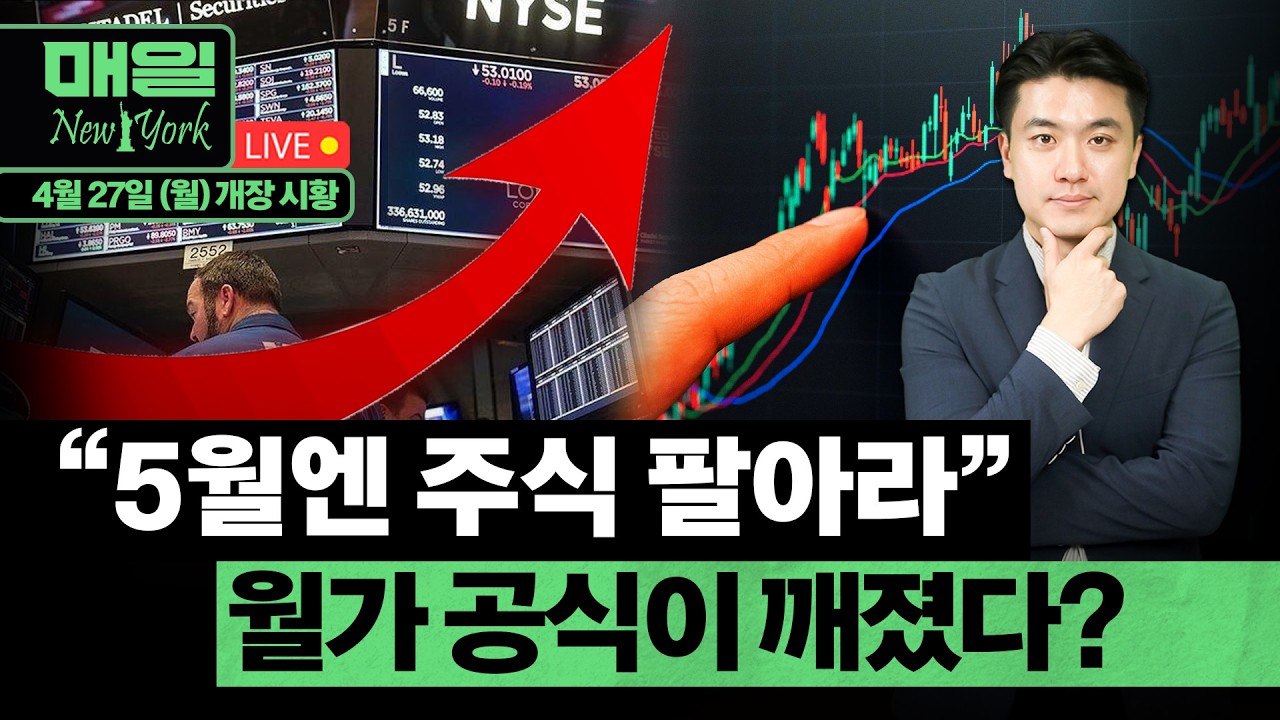
On April 27, U.S. equities opened with modest strength in the Dow, while the Nasdaq and S&P 500 traded slightly lower early.
The tape resembled a pre-event consolidation phase ahead of the FOMC decision and major technology earnings.
Key characteristics:
- Macro headwinds persist, but idiosyncratic company news is the primary driver
- Strength concentrated in AI semiconductors and connectivity-related chip names
- Tesla traded weaker despite renewed merger speculation
- Nvidia set a new all-time high
- Equities remained resilient even as oil prices rose, reinforcing a regime in which earnings and AI expectations offset macro pressure
2. Primary Macro Variable: Oil Is Reasserting Influence
2-1. Brent at ~$107; WTI at ~$95–96: A More Constraining Zone
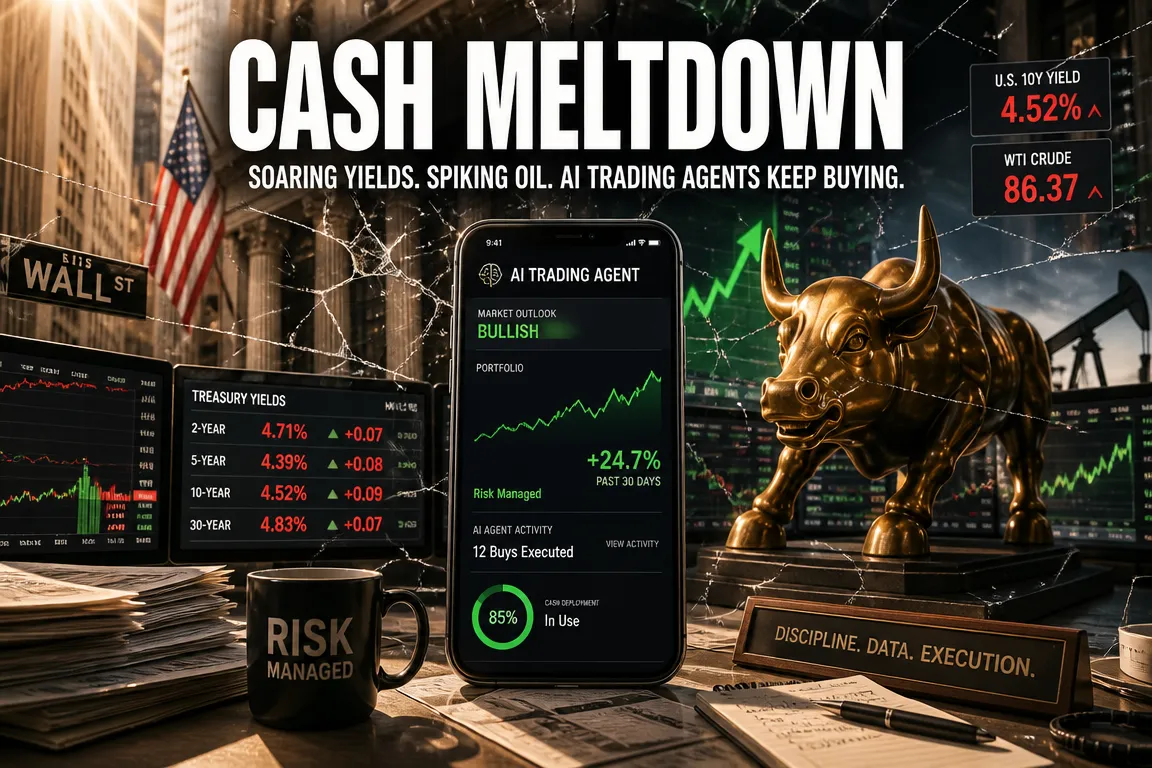
Crude prices moved higher, with Brent near $107 and WTI in the $95–96 range, reviving concerns about inflation re-acceleration.
The key issue is second-order effects on:
- gasoline and household energy costs
- logistics and distribution costs
- downstream impacts on food and consumer staples pricing
2-2. Middle East Risk Remains Unresolved
Tensions involving Iran and Israel have not fully de-escalated. The market may have reduced the immediate equity risk premium, but the underlying conflict remains a structural uncertainty.
Critical channel: the Strait of Hormuz, with direct implications for global energy supply.
If the situation persists:
- sustained upward pressure on oil
- higher logistics and input costs
- reduced Fed flexibility to cut rates
2-3. The Market’s Reference Threshold: WTI at $120
A frequently cited risk level is WTI $120. A move above this level would likely be interpreted as a macro regime shift with valuation implications, potentially triggering:
- inflation re-acceleration
- delayed or reduced rate-cut expectations
- weaker consumer sentiment
- margin compression risk
- higher probability of broader S&P 500 drawdowns
Conversely, stabilization near current levels would leave room for continued tech-led strength.
3. The Fed and the FOMC: Messaging Matters More Than the Hold
A policy hold is broadly priced in. The incremental driver is how the Fed frames the inflation trajectory and the balance of risks.
Current market tension reflects:
- elevated household cost pressure (food/energy)
- yet still-resilient headline economic data
- corporate earnings exceeding expectations
- equity indices supported by concentrated leadership rather than broad-based strength
If the Fed emphasizes “sticky” inflation more forcefully, high-multiple growth equities could face renewed valuation pressure.
4. This Week’s Event Calendar: Mega-Cap Earnings as a Directional Catalyst
This is effectively a technology “super-week,” with multiple macro and earnings catalysts clustered:
- Consumer Confidence release
- Earnings: Starbucks, Visa, Coca-Cola, GM, Cisco
- FOMC decision
- Earnings: Meta, Amazon, Microsoft, Alphabet, Apple
- Advance estimate of Q1 GDP growth
The current index-level stasis is better characterized as pre-decision positioning than as a definitive bearish signal.
5. Wedbush: “90% Probability” of a Tesla–SpaceX Merger — What It Signals
5-1. Why the Topic Resurfaced
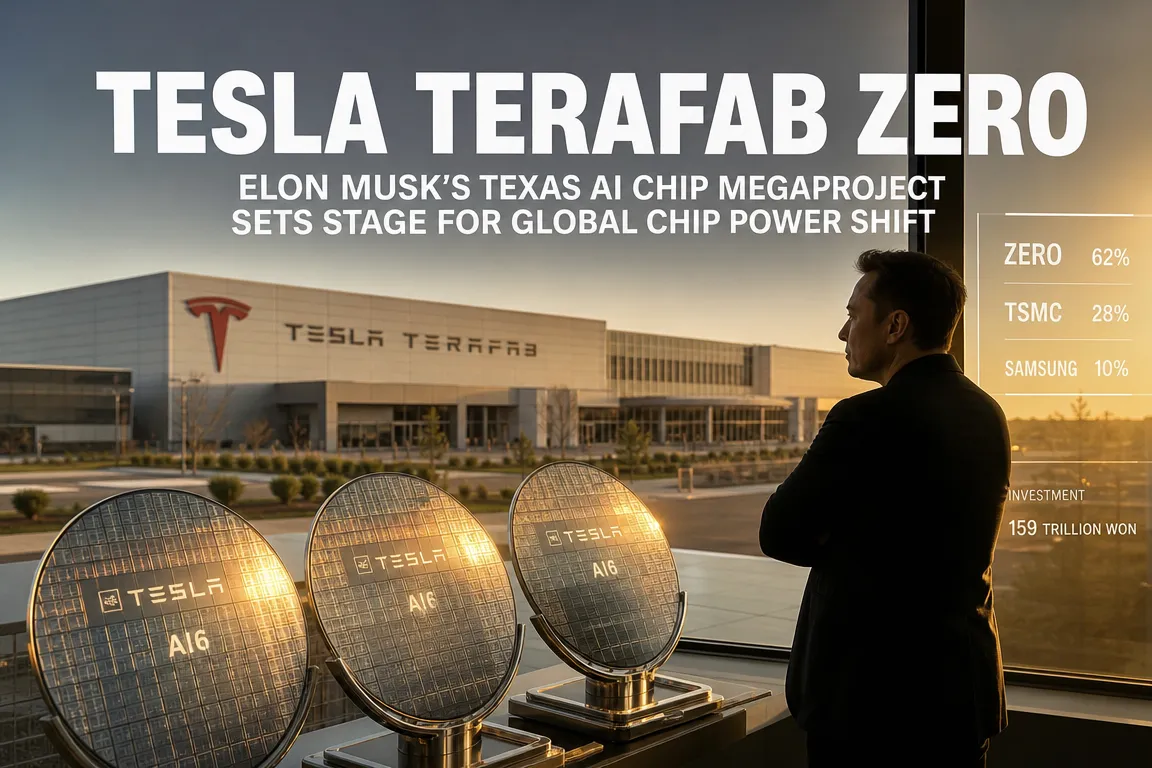
Renewed attention followed commentary suggesting a high likelihood of a Tesla–SpaceX combination, shifting investor focus toward Elon Musk’s broader governance structure.
The central issue is governance risk management, not expansion optics. Reports revisiting alleged intercompany funding and liquidity support practices heightened scrutiny, particularly as they intersect with potential SpaceX IPO considerations.
5-2. Who Benefits If It Occurs
Under the thesis, a merger would function as a structural reorganization across the Musk ecosystem.
Potential beneficiaries:
- Elon Musk: clearer legal and governance framework for capital and talent flows
- SpaceX investors: potential de-risking around IPO pathways
- Tesla shareholders: possible reframing from an EV manufacturer to a broader space/communications/AI-infrastructure exposure via Starlink, launch infrastructure, defense/communications networks, and adjacency to AI/robotics narratives
5-3. Why Tesla Traded Lower Despite the Narrative
Two practical interpretations:
- low near-term visibility on actual execution
- the merger narrative may be viewed as implicitly acknowledging deceleration in Tesla’s core EV growth
Near-term volatility risk remains elevated.
6. Qualcomm Surge: Why the OpenAI Smartphone-Chip Report Mattered
6-1. Not a Simple Partnership: Control of the On-Device AI Stack
Qualcomm’s move reflected more than headline-driven trading. The underlying signal is that AI competition is extending from data centers into on-device AI.
To date, AI semiconductors have been dominated by Nvidia-led data-center buildouts. The next battleground may be consumer devices, where performance-per-watt and local inference matter.
Qualcomm’s positioning:
- deep mobile SoC/AP design experience
- power-efficiency optimization
- established OEM distribution relationships
- increasing demand for edge inference
OpenAI’s involvement would imply a tighter integration of model capability with the device execution layer, potentially shifting value capture closer to the hardware/software boundary.
6-2. Why Platform Owners May Need to Reassess
If a Qualcomm–OpenAI stack gains traction, it may affect not only chip competitors but also platform companies (Apple, Google, Samsung) because the key lever becomes who controls the default AI experience on-device.
In this framework, chip vendors can become ecosystem gatekeepers rather than commodity suppliers.
7. Nvidia at New Highs: Why Some Sell-Side Views Still See Support
7-1. ~$210–211 Record Levels: The Driver Is Earnings Velocity
Nvidia reached approximately $210–211, setting another all-time high. Despite valuation concerns, the bullish framing emphasizes that earnings and revenue growth have accelerated alongside price appreciation.
Some analyses suggest forward valuation metrics remain supportable relative to the rate of earnings expansion.
7-2. Three Drivers Cited for Continued Strength
Key pillars:
- AI infrastructure capex continuity: data-center buildouts remain in early-to-mid phases
- next-generation roadmap: anticipation for Rubin-family and subsequent platforms
- capital return optionality: increased scope for buybacks and/or dividends
The capital return dimension is increasingly relevant because it could broaden the shareholder base from pure growth capital to large-scale quality and income-oriented mandates, potentially supporting a re-rating toward a durable cash-generation profile.
8. Broader Semiconductor Tone: Strength Beyond Nvidia
The session saw strength across Micron, AMD, Intel, Qualcomm, and other semiconductor-linked names.
This appears less like a short-term rotation and more like continued market positioning across the AI semiconductor supply chain, extending beyond GPUs into memory, CPUs, connectivity, foundry exposure, power semiconductors, and infrastructure enablers.
9. “Sell in May” Seasonality: BofA’s Counterpoint
While 5–10 month seasonality is historically weaker, BofA’s framing suggests the soft patch may concentrate more in August–October. June–August has been comparatively less negative on average, and AI-driven Nasdaq leadership may deviate from traditional patterns.
In the current regime, earnings revisions, liquidity, and oil may be more decisive than seasonal heuristics.
10. Why Equities Look Stronger Than the Real Economy: Earnings Revisions
The gap between soft consumer sentiment and resilient equities is largely explained by upward earnings estimate revisions in index leadership.
Rather than the typical pattern of forecasts declining through the year, consensus S&P 500 earnings expectations have been revised higher over time, indicating that corporate fundamentals are currently absorbing macro uncertainty more effectively than expected.
11. Underappreciated Points That May Matter Most
11-1. Tesla–SpaceX: More “Structural Defense” Than “Growth Story”
While coverage often frames this as a long-term expansion narrative, the more material angle may be formalizing and stabilizing cross-entity governance and funding structures amid Tesla core-growth concerns and SpaceX listing complexity.
11-2. Qualcomm: A Signal of “AI Round Two,” Not a Smartphone Cycle Call
The more significant implication is a shift of AI monetization from servers into consumer endpoints via on-device inference, potentially reshaping where platform power and economics accrue.
11-3. Nvidia’s Next Potential Catalyst: Capital Return, Not Only Earnings
Incremental upside may increasingly depend on how Nvidia allocates expanding free cash flow to shareholders, which could alter the investor base and reinforce a quality mega-cap profile.
11-4. The Dominant Macro Risk: Oil More Than Rates
Oil links directly to inflation, consumer demand, rate expectations, and corporate margins. The most actionable macro threshold may be the trajectory of WTI relative to the $120 reference level.
12. Investor Checklist (Near-Term)
- Fed messaging on inflation may matter more than the rate decision itself
- Mega-cap earnings (Meta, Microsoft, Apple, Amazon) likely drive near-term Nasdaq direction
- Further oil upside increases valuation pressure on high-multiple growth equities
- AI semiconductor strength is broadening across the supply chain
- For Tesla, focus on tangible governance and structural changes, not headlines
- Qualcomm may warrant reassessment as an on-device AI beneficiary
13. Conclusion: “Earnings vs. Oil” as the Current Market Fault Line
A concise framing of the session:AI and earnings momentum remain supportive, while oil-driven inflation risk remains unresolved.
Near-term direction depends on the combined outcome of mega-cap earnings, the FOMC communication, and crude price dynamics.
< Summary >
U.S. equities were characterized by dispersion, with single-name catalysts dominating index performance.
Wedbush’s Tesla–SpaceX merger thesis is more relevant as a governance and structural-risk narrative than as a straightforward growth catalyst.
Qualcomm’s rally followed reports of potential OpenAI collaboration on smartphone chips, reinforcing the shift toward on-device AI.
Nvidia set a new high; sell-side support remains anchored in earnings growth and growing optionality for shareholder returns.
The primary macro swing factor is oil rather than rates; WTI $120 is a key threshold for inflation expectations and U.S. equity valuation sensitivity.
This week’s FOMC decision and mega-cap technology earnings are likely to set near-term direction for the Nasdaq and S&P 500.
[Related Articles…]
- Nvidia After New Highs: Why AI Semiconductor Portfolio Strategy May Need Recalibration (https://NextGenInsight.net?s=Nvidia)
- Tesla and U.S. Equities: Key Variables for 2H 2026 (https://NextGenInsight.net?s=Tesla)
*Source: [ Maeil Business Newspaper ]
– 웨드부시 “테슬라-스페이스X 합병 가능성 90%”ㅣ퀄컴, 오픈AI와 스마트폰칩 개발 보도에 급등ㅣ피츠제럴드, 샌디스크 목표주가 $1400로 상향ㅣ홍키자의 매일뉴욕