● Musk AI Empire, Tesla Risk, xAI Shakeup, GPU Landlord, Chip Power Play, SpaceX IPO Wildcard
Musk’s AI Infrastructure Empire: Opportunity or Risk for Tesla Shareholders — xAI Restructuring, Leasing 220,000 GPUs, the “TerraFab” Semiconductor Plant, and the SpaceX IPO Variable
Key points to monitor (4):
1) xAI may be reorganized into a broader corporate structure rather than remaining a standalone entity.
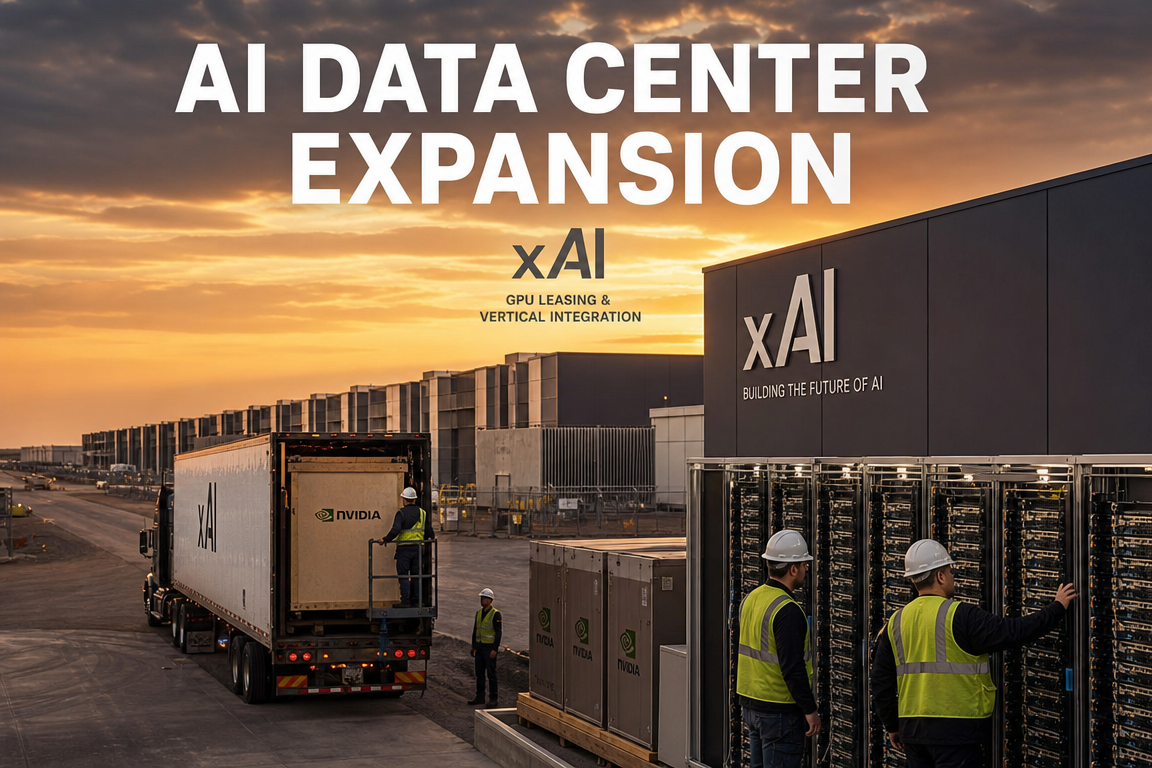
2) Leasing a 220,000-GPU-scale compute cluster signals a shift toward becoming an AI infrastructure supplier (“compute landlord”), not merely an AI model developer.
3) If the “TerraFab” semiconductor manufacturing initiative is credible, it could complete a vertical integration strategy linking autonomy, Optimus, and AI data centers.
4) The investment conclusion depends on whether value accrues primarily to Tesla (the public company) or is dispersed across Musk-controlled entities.
This report summarizes not only the headlines but also the macro context, the implications for the AI semiconductor/data-center competitive landscape, and the principal upside and risks for Tesla shareholders.
1. Market context: Why Tesla approached the $400 level
Tesla closed at $398.53, up ~2.35%.
The move is best explained by a combination of (i) temporary macro easing expectations and (ii) Tesla-specific momentum.
1-1. Macro drivers: Oil and inflation pressures eased temporarily
A key tailwind was expectations of reduced Middle East-related risk.
If tensions around the Strait of Hormuz drive crude prices higher, US CPI and inflation expectations tend to rise, weakening rate-cut expectations and pressuring growth/tech valuations.
Renewed emphasis on negotiations reduced near-term oil concerns, supported Nasdaq strength, and improved risk appetite—an important setup for high-growth technology equities such as Tesla.
The chain of causality is: oil stabilization → lower inflation concern → reduced rate pressure → stronger tech multiples.
1-2. Not resolved
This remains fluid. If negotiations deteriorate and oil rebounds, volatility could return across US equities and Tesla.
Near-term support should not be over-weighted in long-horizon positioning.
2. Signals of xAI dissolution or restructuring: Why reduce standalone AI-company status
A central development is the indication that xAI may not remain an independent corporate entity and could be absorbed into a larger structure.
If confirmed, this implies a shift from “AI as a product” to “AI as an infrastructure system.”
2-1. Implications of xAI not remaining independent
Typical AI companies focus on model development and commercialization via products/APIs.
The indicated approach is broader: build supercomputers, procure GPUs at scale, operate data centers, potentially manufacture semiconductors, and integrate outputs into Tesla autonomy and humanoid robotics.
Under this framework, a standalone xAI corporate boundary becomes less economically necessary. Competitive advantage shifts toward controlling compute, power, cooling, data-center operations, supply chain, and high-volume real-world deployment endpoints.
2-2. The industry’s center of gravity is moving from models to infrastructure
The competitive frontier is increasingly defined by reliable access to GPUs, large-scale data-center operations, and lower-cost training/inference.
This is a capital-intensive competition across AI chips, cloud/data centers, power, and supply chains. The implied strategy is to consolidate xAI, SpaceX-linked infrastructure, Tesla demand, and chip manufacturing into a unified platform.
3. The real meaning of the 220,000-GPU lease: Positioning as an AI infrastructure provider
On the surface, the arrangement could be interpreted as monetizing spare capacity. At 220,000 GPUs, the strategic implication is broader: control of scarce compute at scale and the ability to supply it externally.
3-1. Why it matters
In the current AI cycle, the binding constraint is not model ideas but compute capacity—GPUs plus power, cooling, networking, and operational expertise.
Model-centric firms still face scale constraints if they cannot secure compute. Conversely, infrastructure holders can benefit as AI demand expands.
3-2. Monetization characteristics of the “compute landlord” strategy
Leasing at this scale suggests an emerging infrastructure revenue model beyond internal use, creating two potential economic levers:
- Higher internal AI capability for Musk-controlled products
- Compute-leasing revenue from external customers
This structure can offer relative resilience if AI demand remains structurally strong, as compute supply remains scarce.
3-3. Relative positioning versus Big Tech
Amazon, Microsoft, Google, and Meta already operate mature cloud/data-center platforms. The distinguishing element here is the tight coupling of (i) large-scale compute, (ii) AI development, and (iii) guaranteed internal demand via Tesla applications, implying an “industrial AI infrastructure” profile rather than a pure cloud model.
4. The “TerraFab” semiconductor plant: The most consequential potential move
The semiconductor manufacturing initiative is the clearest signal of a push toward end-to-end vertical integration.
4-1. TerraFab outline
Reported figures suggest an initial investment of ~$55 billion, with a long-run expansion potentially reaching ~$119 billion. The location cited is a Texas site (Grimes County). The framing suggests a manufacturing-scale program rather than a research-only facility.
Potential end uses include Tesla autonomy compute, Optimus, and AI data-center workloads.
4-2. Why semiconductor internalization matters
If Tesla’s long-term value thesis is autonomy/robotics, chips become as strategic as batteries.
As FSD, robotaxi, and humanoid deployments scale, chip demand could grow materially. Exclusive reliance on third-party foundries can constrain cost, allocation priority, and iteration speed.
Internal manufacturing—if executed—could provide cost control, supply security, and system-level optimization.
4-3. Potential shareholder benefits if executed
If realized, Tesla could gain:
- Greater supply stability for autonomy compute
- Improved chip optimization for Optimus
- Improved data-center unit economics and potential long-term margin support
This could add an “AI infrastructure and semiconductor verticalization” premium to Tesla’s valuation framework beyond EV growth.
4-4. Execution risk is substantial
Semiconductor fabs are multi-year builds and typically require extended process ramp and yield stabilization.
Manufacturing capability, workforce, and process learning curves introduce high execution uncertainty. Even with references to leading-edge nodes (e.g., Intel 14A), yield, throughput, and customization remain non-trivial hurdles.
Market validation is likely to depend on observable milestones (e.g., 2026–2027 pilot and transition-to-volume indicators).
5. Is the structure designed to maximize Tesla shareholder value
This is the central question. The investment impact differs materially depending on whether cash flows and assets sit within Tesla or within other Musk-controlled, potentially non-public entities.
5-1. Upside case: Tesla as primary beneficiary
Tesla is a high-consumption endpoint for AI infrastructure: autonomy fleets, robotaxi, and humanoid robotics.
If infrastructure is built within the broader ecosystem and Tesla receives preferential access and economics, Tesla could be the largest operational beneficiary, particularly where chips, data centers, and models must co-evolve.
5-2. Downside case: Tesla as a customer, not the value-capture vehicle
If compute assets, semiconductor production, and related economics are concentrated outside Tesla, Tesla may participate primarily as a customer while economic rents accrue elsewhere.
For public shareholders, this “value allocation” risk can be more material than the technological narrative.
6. SpaceX IPO and the “long-term Tesla shareholder preference” comments: Expectations versus enforceability
A frequently cited point is Musk’s prior suggestion that long-term shareholders could receive preferential treatment if another affiliated company lists publicly (often discussed in a SpaceX IPO context).
6-1. Not a binding policy
There is no disclosed, enforceable framework covering:
- Required holding period
- Eligibility standards
- Retail investor participation feasibility
- Jurisdictional/regulatory constraints
This should not be treated as an investable commitment.
6-2. Why markets still monitor it
If such mechanisms were formalized, they could strengthen shareholder alignment and ecosystem participation. If not, the gap between expectations and implementation could amplify governance and value-allocation concerns.
7. Tesla recall headline: Practical impact assessment
A reported recall of ~220,000 vehicles appears primarily tied to a rear-camera display latency issue.
The issue is characterized as software-related, reportedly addressed via OTA updates, with no injuries or crashes cited. The event appears closer to a regulatory/administrative recall disclosure than a fundamental demand or safety shock.
8. Why this matters from a global macro perspective
This is not solely a corporate expansion narrative; it highlights the “industrialization of AI infrastructure” as a macro-relevant theme.
8-1. AI is increasingly an energy, semiconductor, real-estate, and manufacturing problem
While AI is delivered as software, scaling requires substantial power, cooling, land, data centers, and chips. Competitive advantage is likely to be increasingly determined by the speed and scale of physical infrastructure procurement and deployment.
This interacts with US industrial policy, energy strategy, and capital-market conditions.
8-2. Potential alignment with US supply-chain re-shoring
A Texas-based semiconductor manufacturing program would align with broader US efforts to rebuild domestic advanced manufacturing capacity. AI semiconductors sit at the center of this policy direction.
8-3. Implications for tech valuation frameworks
Companies that convert AI infrastructure into monetizable services may sustain valuation premiums. If Tesla is re-framed by markets as a platform-plus-infrastructure beneficiary (rather than a pure auto OEM), multiple support could strengthen—subject to demonstrated economics and governance clarity.
9. Under-discussed core point
9-1. The strategic axis is shifting toward capital-intensive infrastructure concentration
Model innovation is increasingly commoditized relative to the capital and operational capability needed to deploy compute at scale. Few actors can operate 220,000 GPUs, build data centers, and pursue semiconductor manufacturing simultaneously.
This suggests a more concentrated competitive structure dominated by balance sheets, supply-chain control, and infrastructure execution.
9-2. Positioning toward “AI toll collection,” not only AI usage
The strategic objective may extend beyond using AI internally to becoming an essential infrastructure provider that other AI firms must rent from—analogous to owning the road and the tollgate, not only manufacturing the vehicles.
9-3. The key variable for Tesla shareholders is value-accrual structure
The decisive question is where economic value accumulates:
- Within Tesla’s financial statements
- Within SpaceX or other non-public entities
- Across separate entities with transfer-pricing and governance implications
This can dominate the investment outcome even if the technological roadmap succeeds.
10. Investor checklist
10-1. Near-term
- Official SpaceX IPO timing and structure (if any)
- Specific form of xAI restructuring/merger
- Additional customers and economics for the GPU leasing model
- Disclosure of intercompany transaction structures between Tesla and infrastructure entities
10-2. Medium-term
- TerraFab permitting milestones and groundbreaking evidence
- Validation of leading-edge manufacturing feasibility (including Intel 14A references)
- Pace of chip internalization for Tesla FSD and Optimus
- Evidence that AI data-center capex converts into recurring revenue and/or margin expansion
10-3. Long-term
- Sustained market re-rating of Tesla as an AI company
- Chip supply advantage during robotaxi and Optimus commercialization
- Long-run governance and value-allocation outcomes across public vs. non-public entities
11. Bottom line: Narrative strength versus proof through financial outcomes
The integrated strategy—supercomputing, compute leasing, semiconductor manufacturing, and Tesla application—could materially strengthen Tesla’s autonomy and robotics competitiveness if executed.
The principal risk is uncertainty over value capture by Tesla shareholders. Investment decisions should emphasize governance structure, intercompany economics, and observable execution milestones rather than narrative alone.
12. News-style key takeaways
- xAI may be reorganized into an integrated infrastructure structure rather than remaining independent.
- The 220,000-GPU lease indicates a move into AI infrastructure supply.
- The TerraFab semiconductor plan could link directly to Tesla FSD, Optimus, and AI data centers.
- If executed, Tesla could capture a vertical integration premium in chips and data centers.
- Semiconductor manufacturing execution and value-accrual structure remain highly uncertain.
- The linkage between a SpaceX IPO and preferential access for long-term Tesla shareholders is unconfirmed.
- The core issue is AI infrastructure concentration, not model competition.
< Summary >
Musk appears to be shifting from building a standalone AI startup toward an integrated AI infrastructure system spanning supercomputing, compute leasing, semiconductor manufacturing, and deployment via Tesla.
Leasing 220,000 GPUs supports a thesis of infrastructure monetization, and the TerraFab concept—if validated—could reinforce Tesla’s autonomy and robotics roadmap.
The controlling question for investors is whether these assets and economics accrue to Tesla shareholders. The narrative is strong, but investment conclusions require clearer structure, governance, and execution evidence.
[Related links…]
- https://NextGenInsight.net?s=Tesla
- https://NextGenInsight.net?s=AI
*Source: [ 오늘의 테슬라 뉴스 ]
– 머스크가 AI 집주인이 된 날! xAI 사라지고 GPU 22만 개 임대, $398 테슬라 주주가 받는 건?
● AI-Defense-Shift
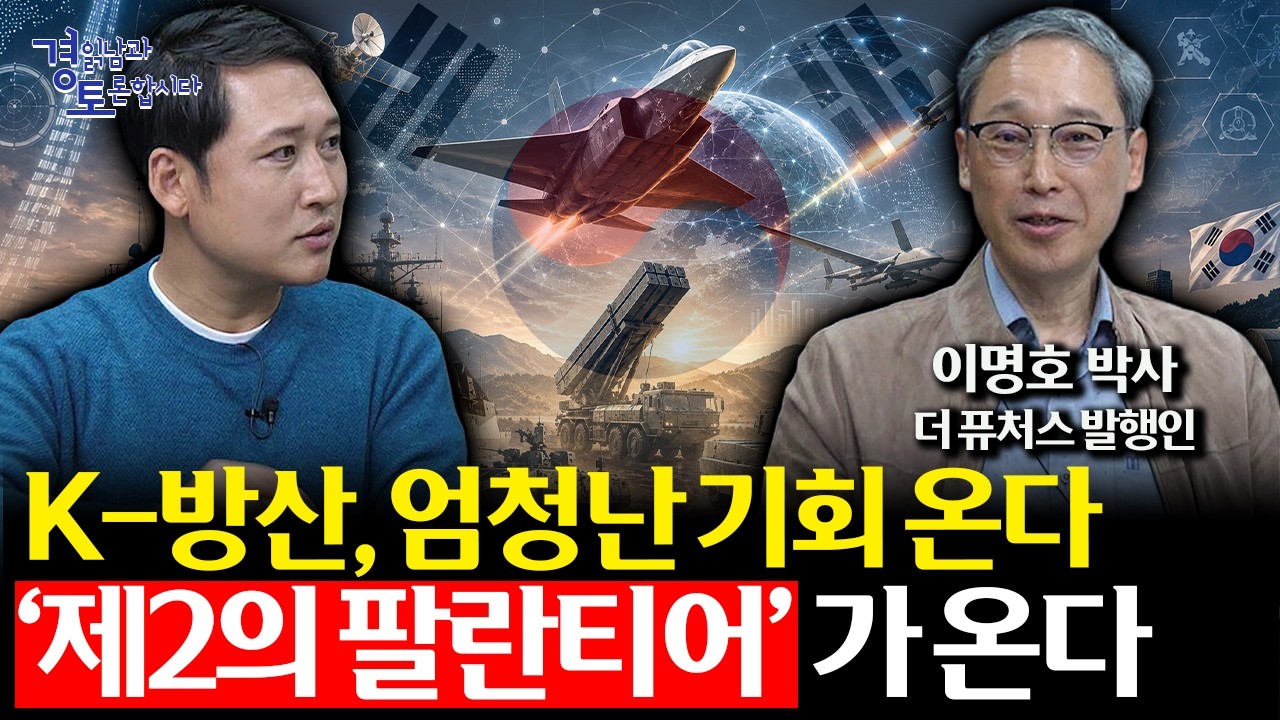
Could a “Second Palantir” Emerge in Korea? Why the AI Defense Market Is Opening Now
The defense industry is shifting from incremental weapons production to an integrated sector combining AI, software, drones, and data analytics.
This report consolidates: (i) why a Korea-based Palantir analogue is plausible, (ii) why software startups may become more critical than incumbent prime contractors in specific segments, (iii) why rising defense outlays amid supply-chain and geopolitical risk create investable demand, and (iv) why this trend matters for Korea’s broader economic and industrial structure.
A key underappreciated shift is the move from “fully integrated weapons competition” to “modular composition competition,” alongside accelerating dual-use conversion of civilian technologies as a potential inflection point for defense exports and AI industry growth.
1. Core message: Defense is shifting from hardware to AI-enabled software
Modern conflict is moving away from reliance on a small number of expensive platforms toward scalable, rapidly deployable systems optimized for speed of iteration and mass deployment.
Where tanks, artillery, missiles, and fighters historically dominated value capture, future differentiation increasingly centers on drone operations software, target-recognition AI, data-fusion platforms, and real-time decision-support systems.
This is an industrial restructuring: capabilities once concentrated in large prime contractors are increasingly accessible to AI startups, telecom operators, software vendors, sensor manufacturers, and robotics firms.
2. Why the AI defense market is opening now
2-1. Defense spending growth is becoming structurally persistent
Even in a slowing global economy, defense budgets are trending upward as multiple security risks intensify, including the Russia-Ukraine war, instability in the Middle East, US-China technological rivalry, and maritime security pressures.
From an investment perspective, defense demand is more policy-driven and less sensitive to consumer cycles and interest-rate-driven volatility than many civilian sectors, supporting a medium- to long-term growth profile rather than a short-lived theme.
2-2. The cost-effectiveness equation of warfare has changed
Using USD 1–4 million interceptors to defeat drones costing roughly USD 20,000 is structurally difficult to sustain.
This implies that high-cost precision munitions alone are insufficient for future defense. Priority shifts to low-cost mass production, rapid modification, field testing, and software-centric upgrades.
The transition connects defense to broader manufacturing innovation and adjacent industries including automation, semiconductors, communications equipment, and robotics.
2-3. Civilian-to-military technology conversion is accelerating
Drones illustrate rapid dual-use conversion: consumer, imaging, and industrial inspection platforms have evolved into reconnaissance, strike, loitering, and swarm-capable systems.
AI materially expands capability. Computer vision, route optimization, autonomy, object detection, and anomaly detection—originally developed for commercial applications—are increasingly deployable in defense contexts.
This reinforces the strategic relevance of dual-use technology.
3. What “a Korea-based Palantir” implies
3-1. Palantir is closer to a data-warfare company than a weapons manufacturer
Palantir’s core value proposition is information processing and decision support: counterterrorism analytics, pattern detection, fraud detection, battlefield data integration, and target identification.
Its essence is converting data into operational capability via software.
Accordingly, a Korea-based analogue would likely be an AI platform company that integrates sensor, reconnaissance, communications, imagery, and battlefield data to accelerate command decisions—rather than a platform manufacturer.
3-2. Korea has enabling conditions
Key foundations include:
- Heavy manufacturing capabilities
- Competitive components and materials supply chains
- Strong ICT and telecom infrastructure
- A growing AI startup ecosystem
- Semiconductor and sensor expertise
- Existing defense export experience
While Korea’s defense innovation model differs from a fully private-led system, it has structural advantages in rapidly combining manufacturing with applied digital technologies.
3-3. The decisive factor is open innovation, not single-firm integration
If incumbents attempt to develop all capabilities internally, iteration speed may lag.
Competitive execution increasingly depends on collaboration across primes and specialists: M&A, strategic partnerships, joint development, and access to testbeds for operational validation.
Capital markets may re-rate not only traditional defense primes but also firms in AI security, computer vision, autonomy, sensor fusion, and defense-oriented SaaS.
4. News-style highlights: key takeaways
4-1. Drones are no longer auxiliary systems
Drones have moved beyond reconnaissance add-ons to become core platforms that reshape the cost structure of warfare.
Expansion across air, ground, surface, and underwater domains enables multi-layer asymmetric capability.
Critical infrastructure defense—sea lanes, ports, power facilities, storage sites, and logistics corridors—raises the strategic value of drone resilience and counter-drone capability.
4-2. Rapid modular recombination is becoming more important than perfect end-to-end systems
Historically, defense emphasized long-cycle development of fully integrated systems and large-scale deployment.
Given faster-changing battlefield dynamics, modular architectures are gaining priority: sensors, communications, batteries, navigation, AI models, and control systems can be swapped and recomposed quickly.
This supports an “agile defense” model.
4-3. Weak software reduces overall defense competitiveness
Korea’s traditional hardware competitiveness is strong; however, operational software and AI platforms require accelerated capability-building.
Future advantage depends less on armor strength and more on rapid data interpretation, threat classification, resource allocation, and automated response.
The boundary between software and defense is therefore eroding.
4-4. A new addressable market is opening for Korean software companies
AI startups, security firms, cloud vendors, and analytics providers can expand beyond conventional enterprise SaaS into defense and national security opportunities.
Representative dual-use areas include intrusion detection, anomalous behavior detection, digital twins, real-time video interpretation, route optimization, and cybersecurity.
5. Most overlooked point: the decisive variable is conversion speed
5-1. The core issue is not “drones,” but transition velocity
Many discussions stop at drone proliferation and AI weaponization.
More material is which countries and firms can convert civilian technologies into military systems fastest—measured by adaptation speed, experimentation cadence, and deployment velocity.
Korea’s manufacturing base, telecom infrastructure, and expanding software workforce support a credible opportunity set under this lens.
5-2. Future value capture may shift from manufacturers to operational platform providers
Higher value may accrue to companies that connect systems and data rather than those that deliver single platforms.
A firm that integrates and controls 100 drones—prioritizing threats and automating mission assignment—may become strategically more important than a firm that solely manufactures the drones.
This underpins interest in a Korea-based Palantir analogue.
5-3. Defense export competitiveness will increasingly be driven by “code,” not “steel”
Korea’s existing platforms are competitive, but next-stage export differentiation may depend on software upgrades, automated tracking, AI accuracy, unmanned interoperability, and predictive maintenance analytics.
Defense premiums may increasingly arise from AI-enabled capabilities.
6. Why this matters for Korea’s economy
6-1. Potential expansion into a larger export industry
Korea remains export-led, and defense has already become a meaningful export category.
AI and software integration can shift exports from one-off equipment sales toward higher-margin recurring models that include services, maintenance, analytics platforms, and continuous data/model updates.
6-2. A potential commercialization pathway for startups
Many AI startups face monetization constraints in crowded consumer and general SaaS markets.
Defense and security are harder to enter, but successful validation can lead to long-duration contracts and high switching costs, supporting more stable revenue profiles.
6-3. Direct linkage to strategic industries in an era of technological rivalry
AI defense intersects with semiconductors, cloud, satellite communications, security, robotics, quantum technologies, and autonomous systems.
In a technology-sovereignty environment, AI defense is among the sectors most directly tied to national strategic capability.
7. Sub-sectors to monitor
7-1. Counter-drone systems
Markets focused on detecting and neutralizing drones, integrating radar, electronic warfare, laser intercept, computer vision AI, and acoustic detection.
Demand may expand from military sites to airports, ports, power plants, and large public events.
7-2. Battlefield data-fusion platforms
Platforms that integrate sensor feeds, reconnaissance video, satellite data, communications logs, and location data to enable real-time decisions.
This is a primary candidate domain for a Korea-based Palantir analogue.
7-3. Autonomous unmanned systems
Unmanned systems across air, ground, surface, and underwater domains.
Primary differentiation is increasingly in swarm control, collision avoidance, task allocation, and target-tracking algorithms rather than airframe design.
7-4. Defense cybersecurity
In AI-enabled warfare, adversaries may prefer sensor spoofing and data-layer deception over physical capture.
This supports growth in defense cybersecurity, encryption, authentication, and quantum-resilient security architectures.
7-5. Dual-use AI solutions
Fraud detection, anomaly detection, intrusion detection, vision-based recognition, and logistics optimization can serve both civilian and defense customers.
These areas offer scalable market expansion and may represent practical entry points for startups.
8. Execution priorities for companies and policymakers
8-1. Make defense procurement more accessible to startups
Without testbeds and manageable procurement thresholds, market entry remains constrained.
Priorities include pilot programs, small-volume trial purchases, and faster certification pathways.
8-2. Institutionalize prime–startup collaboration
Primes bring customer access and production expertise; startups bring agility and algorithmic differentiation.
Structured collaboration is required to realize combined capability.
8-3. Treat software talent as a strategic asset
Key roles include AI model developers, computer vision researchers, embedded software engineers, and defense security specialists.
This is a national competitiveness issue, not only a hiring issue.
8-4. Upgrade exports toward platform packages
Exports should bundle equipment with operating software, predictive maintenance AI, training systems, and analytics services.
This increases margins and strengthens customer lock-in.
9. One-line conclusion
The AI defense market reflects a structural convergence of rising defense budgets, geopolitical technology rivalry, accelerating dual-use conversion, and industrial upgrading—where competitive advantage is increasingly defined by transition speed and data-driven operational capability.
< Summary >
The AI defense market is expanding due to higher defense spending, asymmetric warfare dynamics, and faster conversion of civilian technologies into military applications.
The central shift is from expensive integrated weapons to low-cost, modular, software-centric systems.
Korea combines manufacturing, semiconductors, ICT, and an AI startup base, supporting the emergence of a Korea-based Palantir analogue.
Key areas include counter-drone systems, battlefield data-fusion platforms, autonomous unmanned systems, defense cybersecurity, and dual-use AI solutions.
The core driver of competitiveness is moving from hardware to conversion speed and data-operational capability.
[Related Articles…]
-
https://NextGenInsight.net?s=palantir
Why Korea’s AI defense platform companies are drawing attention after Palantir -
https://NextGenInsight.net?s=drone
Investment focus areas in counter-drone industries and Korea’s defense export cycle
*Source: [ 경제 읽어주는 남자(김광석TV) ]
– 제2의 팔란티어가 한국에서? AI 방산 시장이 열리고 있다 | 경읽남과 토론합시다 | 이명호박사 [3편]