● SpaceX Valuation Under Fire
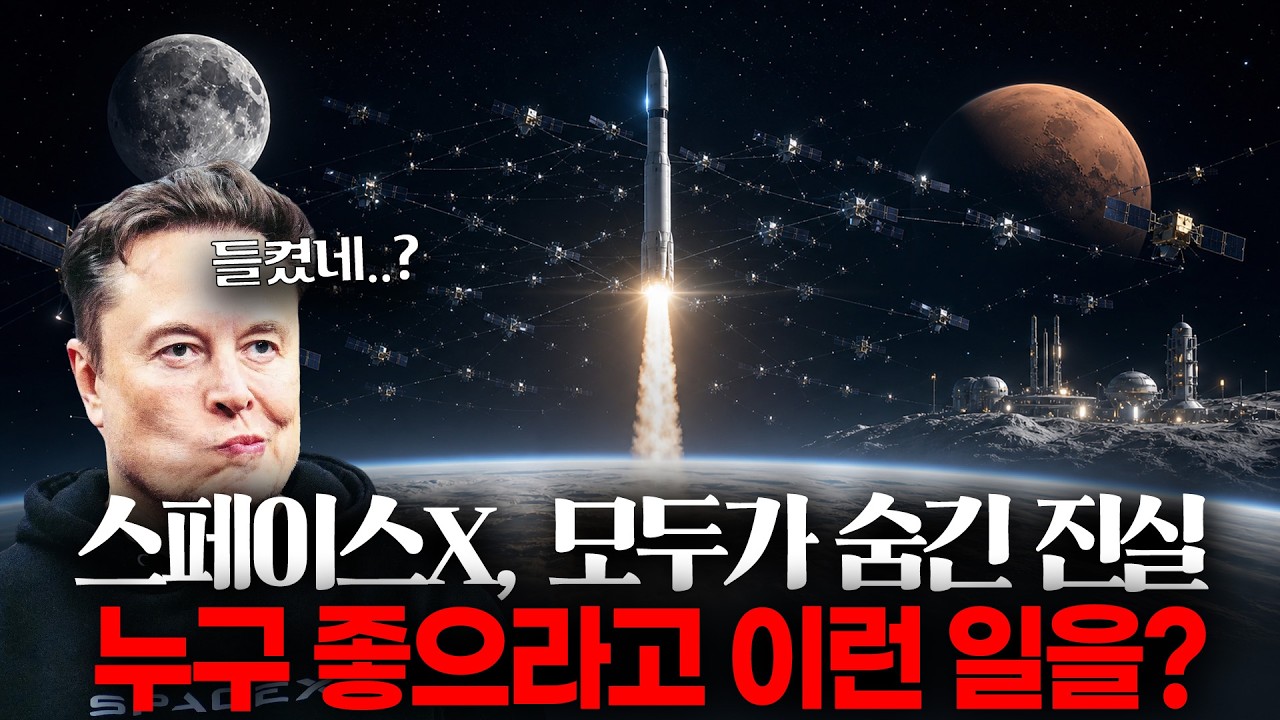
SpaceX’s $2.1T Market Cap…A Core Point of the Debate That It Could Get Even Worse: AI and Data Centers Must Prove It
One-line Summary of Why the Market Is Overheated Right Now
“A claim has been made that SpaceX is being valued not as a rocket company, but as an AI-and-data-center company, and that the assumptions have already been priced in too far ahead.”
In other words, to back up the figure of $2.1 trillion, it’s argued that future cash flows and economics must “truly” be proven.
Here, the points this blog post focuses on especially are three.
- There is an “exit (a place where supply can come out)” in the IPO lock-up (sales restriction) structure
- Relative valuation based on the PSR could already be in an overheated section
- Possibility that the economics of a space data center, the chip bottleneck, and the CAPEX timeline may turn slower than optimistic expectations
If these three factors align, the conclusion is that even if it’s a “great company,” the “current price” can carry higher risk.
Also, the keyword flow in this post is very clearly set.
- SpaceX valuation
- Economics of a space data center
- The terascale semiconductor (terafab) debate
- Competition in AI infrastructure (models and enterprise apps)
- Timing from an investment perspective
This is the backbone of today’s post.
1) Is the “$2.1 trillion” figure justified? The Crux That Splits the Valuation Method
① Relative Valuation: The PSR 70x Debate
When looking at stock value, the commonly used method is PER (earnings-based), but for companies whose profits are not yet large (or are unprofitable), instead PSR (revenue-based) is used.
The core claim here is this.
- SpaceX’s market cap relative to revenue is being discussed at roughly around 70x PSR
- Even though space sectors are generally valued expensively, there’s a viewpoint that 70x PSR is a “really expensive” range
In other words, the argument is that it’s already priced in too much to just stop at “it’s expensive because it’s space.”
② When you look at comparable companies, it gets even more complicated: AI companies vs. space companies
Another point comes up here.
If you view SpaceX like an “AI company,” the comparison set changes—and then the attractiveness of the price could drop.
- The PSRs of AI-leading companies such as OpenAI and Anthropic are presented as lower than SpaceX in the discussion
- If so, then SpaceX could end up being even more expensive
This flow ultimately turns into a fight over whether it’s a rocket company or an AI infrastructure company.
2) In the IPO lock-up (sales restriction), there is still “a hole for supply to come out”
In SpaceX’s path to going public, what’s commonly seen is a structure where a lock-up (sales restriction) applies for a certain period after the IPO.
Typically, around a 180-day lock-up applies, and during this period it’s understood as a mechanism intended to restrict selling by early investors and institutions, thereby reducing shock to the market.
However, the “more serious part” being discussed is that the lock-up is not a structure that blocks everything 100%.
- The lock-up doesn’t apply to everything, and there’s a claim that certain equity (e.g., parts held by family) can be sold right away
- There’s a viewpoint that additional sale options could open up depending on earnings announcements and stock price conditions
So it’s not “worry is over because there’s a lock-up,” but rather that there is still partial potential for supply (selling) to exist.
3) Even from the absolute value perspective (Damodaran), “now could be expensive”
When relative valuation wobbles, then the next step is to look at absolute value.
What’s referenced here are the valuation conclusions of Professor Damodaran.
- Fair value is roughly $1.3 trillion
- As a stock price, around $100 is being discussed as a reasonable range
Putting it together, the frame is this.
- Relative value: possibility of PSR overheating
- Absolute value: even in Damodaran’s model, more weight is placed on the view that “the current price is high”
Ultimately, the conclusion converges to one thing.
Even if SpaceX could be excellent, it’s hard to say that this price is “cheap.”
4) The biggest controversy: The economics of “space data centers” could be more expensive than expected
The strongest push of this post is right here.
In Elon Musk’s long-term vision, “space data centers” are included—and there’s an expectation that they will dramatically reduce the costs of AI infrastructure.
But the counter-argument is fairly solid.
① Space data centers are about 4x more expensive than on the ground (claim)
This was the conventional wisdom.
- Secure solar power 24 hours a day in space
- Cooling could be handled more cheaply (or for free)
But the calculation results are claimed to come out the other way.
- From an operating cost perspective, space data centers are discussed as being around about 4x higher than on the ground
- The key point is that economics are not determined by “cooling/energy” alone
② CAPEX (the cost to launch) is the variable: Does the reversal only happen by 2040?
The conclusion of the counter-logic is even more direct.
- The cost to build data centers in space is currently too high
- Even if the unit cost drops by 10x or more, the reversal (space becomes cheaper) could be delayed due to the cost of launching into space
- In a certain analysis, the conclusion is that it may only become more favorable around 2040
③ Musk talks about 2034, but it may be an optimistic timeline
The claim on Musk’s side points in the direction that by 2034, space could become cheaper than on the ground.
But this post’s viewpoint diverges like this.
- Musk’s timeline is likely optimistic
- Therefore, a more realistic interpretation is presented as 2040
- Then the risk shifts to “having to keep investing until 2040”
In other words, during that period, R&D + CAPEX burdens could persist, and the method of funding those expenses becomes the variable.
5) Funding risk: If money keeps going in, the structure could eventually change
The longer it takes for space data centers to secure economic viability, the more the company ultimately has to keep spending money.
Then one question gathers into a single point.
“Where does that cash come from?”
The scenario raised in this post is as follows.
- Possibility of issuing debt
- Possibility of issuing new shares (dilution)
- A structure in which creditors/shareholders must continue providing funds
Of course, the worst case might be avoided if other businesses, such as Starlink, support cash flows—but it’s a warning that when that assumption wobbles, the risk can grow.
6) Because of the “chip bottleneck,” a terafab (large-scale semiconductor) plan appears… but there’s debate over feasibility
The reason Musk is fixated on space data centers is identified as “power/chip shortages on the ground.”
The real big problem mentioned here is the chip bottleneck.
That’s why a terascale semiconductor factory project (terafab) came up.
① If a terafab is to be realistic: it needs a scale larger than TSMC
Even just looking at the claimed level, if the factory is to be “terascale,” the scale has to be enormous.
- The logic is that the factory scale must be larger than TSMC
- While an investment scale of around $20B–$25B is discussed, from a calculation perspective there are projections that it could be even larger
② The key is the required number of EUV equipment: 375 ASML machines mentioned
EUV equipment is needed for large-scale wafer production.
- If the target is around 1.0 million wafers per month, calculations suggest that hundreds of EUV machines would be needed
- Even if that’s the case, the criticism is that it would be necessary for “one specific place/person” to secure that entire quantity, which is realistically not easy
③ Conclusion: A terafab may be a far-future ambition rather than a concrete execution plan
The core judgment of this post is this.
- At this stage, a terafab is viewed as closer to a “vision/ambition” than a “plan”
- Even compared with models where actual production explodes in the short term, like Optimus, the judgment is that there’s still a big time lag
So there’s a concern that once the chip bottleneck must be solved to enable space data centers and AI expansion, the solution could arrive late.
7) But the “market SpaceX is actually going after” ends up being AI: enterprise apps are the biggest
Even if there’s criticism, it’s also important to consider the counter view that “SpaceX is really hungry for something else.”
The frame described in this post is this.
SpaceX is valued like an AI infrastructure company rather than a space industry company, and it is actually looking at that side as the larger market.
① TAM (total addressable market) is far bigger for AI than for space
The structure being discussed is as follows.
- The market size for space launch vehicles/space business is set relatively small (e.g., around $370B is mentioned)
- Starlink is bigger
- An even larger area is AI (with a market size far larger)
- Especially, the “enterprise application market” shown as the blue bar is presented as the most attractive target (discussed in the scale of tens of trillions to hundreds of trillions of won)
In other words, SpaceX’s ultimate goal may be a scenario where it expands not to “space,” but to “enterprise software/services in the AI ecosystem.”
② Competition among the AI “top 3”: Claude, OpenAI, and Google lead, while China’s models are quickly catching up
And the writer also sets the competitive landscape alongside current AI trends.
- A flow where Claude rapidly gains traction
- OpenAI catching up and expanding
- An observation that Google’s Gemini feels relatively more stagnant
- China’s models are also rapidly improving in performance, and are being rated as “surprisingly good”
- Meanwhile, there’s a description that Grok 4.3, Muses (Meta), and others looked disappointing compared to expectations
This section then leads to: “Why, for SpaceX’s AI value to be proven, model competition ultimately becomes important.”
8) Investment conclusion: The greatness of the company and the risk of today’s price are separate
Here, the conclusion of the post becomes firm.
- SpaceX must prove its value in “AI, data centers, and full-stack infrastructure,” not rockets
- But the economics of a space data center (the 2040/2034 debate)
- The chip bottleneck (the terafab feasibility debate)
- IPO supply (the lock-up’s exit)
- And the funding risk of having to endure all of that time
Because these variables could all exist at once,
even if it’s a “too-good-to-be-true company,” buying at the current price can be risky—that’s the investor perspective that emerges.
So the tone is to look for the long-term scenario at a “further lowered price.”
Only the “most important points” that aren’t often covered well elsewhere
Core point 1: SpaceX’s valuation is overly dependent on the “AI infrastructure” assumption.
It’s not rocket performance, but AI and data center economics that must be proven—yet there’s a debate that this economics could shift from 2034 to 2040.
Core point 2: “There is a lock-up” isn’t the end; the possibility of partial selling structurally remains.
If there are gaps in the lock-up, stock price volatility could increase right after the listing.
Core point 3: Solving the chip bottleneck (terafab) may be categorized as a far-future item rather than near-term execution.
If the chip can’t keep up with the pace of AI infrastructure expansion, the data center/AI expansion story itself could be delayed.
Five SEO keywords naturally included in this article
- SpaceX valuation
- AI data center
- Outlook for the space industry
- Valuation PSR
- Semiconductor bottleneck
(These keywords naturally connect around the article’s argument—“win with AI infrastructure” versus “economics, funding, and the chip bottleneck could be delayed.”)
< Summary >
Criticism has been raised from two directions over whether SpaceX’s $2.1T market cap is truly reasonable.
Both relative value (around 70x PSR) and absolute value (Damodaran’s fair value of around $1.3T) lean toward the view that “the current price could be expensive.”
The post also mentions that the IPO lock-up may have partial selling escape routes, and that the economics of a space data center could reverse around 2040 rather than 2034.
The conclusion is that funding risks for the required CAPEX/R&D during that period (debt, new shares, etc.) should also be considered.
Meanwhile, while the AI expansion story is appealing, the core variable is summarized as the terafab plan to solve the chip bottleneck being subject to an execution-feasibility debate and potentially being a far-future ambition.
[Related Articles…]
- Market signals that appear when PSR-based valuation wobbles
- When the cost structure of AI data centers changes, valuation changes too
*Source: [ 월텍남 – 월스트리트 테크남 ]
– “알고보면 더 심각합니다”.. 10년은 더 걸릴 계획?