● SpaceX, Soars 50 Percent, AI Boom, Index Frenzy, Supply Squeeze
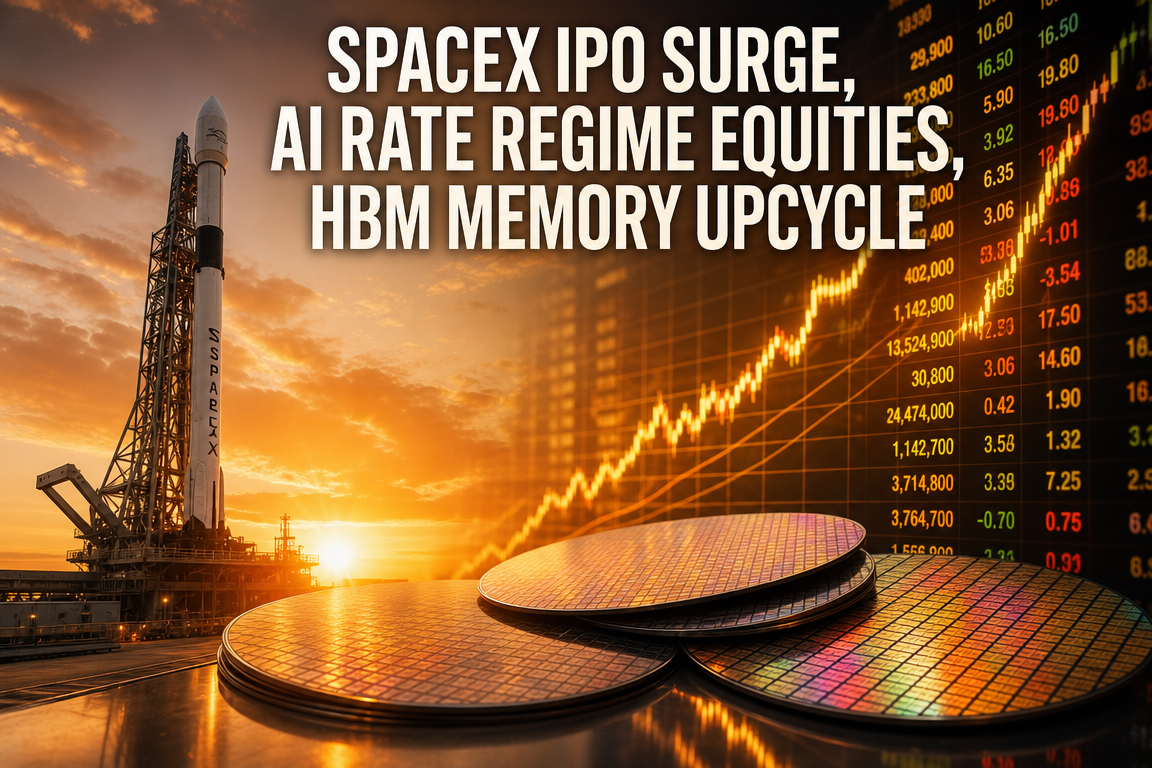
SpaceX Surges Nearly 50% Post-IPO: Why Markets Are Re-Rating the Stock — Key Drivers From Near-Term Flows to Long-Term AI and Space Infrastructure
A near-50% move immediately after listing is uncommon. SpaceX is being priced not merely as a high-profile IPO, but as a company with multiple concurrent catalysts: near-term passive inflows linked to index inclusion, medium-term expectations for operating improvement, and a long-duration growth narrative spanning Starlink, space-based data centers, and AI infrastructure. This report summarizes the key drivers, durability of the rally thesis, and the underappreciated variables.
1. Most Material News Points Today
The current strength reflects three factors being priced simultaneously:
- Extremely limited post-IPO free float
- Mechanical demand from inclusion in major indices (e.g., Nasdaq-100)
- Expectations of accelerated revenue growth from expanding AI data center contracts
Net effect: substantial demand against constrained tradable supply, with improving fundamentals as an additional support.
2. How to Frame SpaceX Today
2-1. Historical SpaceX: Launch Services Provider
SpaceX began as a launch company—transporting payloads from Earth to orbit. Its key differentiation is commercializing reusability to materially reduce launch costs. In space economics, sustained cost reduction functions as a structural entry barrier and underpins long-term enterprise value.
2-2. Current SpaceX: Global Communications Infrastructure
A launch-only framework is insufficient. Through Starlink, SpaceX is evolving into a satellite broadband operator. After constellation deployment, incremental subscribers can scale with relatively lower marginal cost, enabling both network effects and operating leverage. While capex intensity is high, profitability can improve rapidly beyond a scale threshold—an attribute the market is rewarding.
2-3. Future SpaceX: AI Infrastructure Platform
Recent re-rating reflects a shift in framing toward a space-enabled AI infrastructure platform: data centers, GPU/compute provisioning, large-scale computing services, and longer-term optionality around space-based data centers. This aligns with where U.S. equity markets have been assigning the highest multiples.
3. Direct Near-Term Driver (1): Earnings and Monetization Expectations
3-1. Why the Google and Anthropic Agreements Matter
Pre-IPO disclosures around AI compute contracts were a key incremental positive. Market interpretation: faster-than-expected monetization and an accelerated growth trajectory. While contract values require confirmation via future filings, the message priced in is that revenue ramp may occur sooner and at larger scale than previously assumed.
3-2. Why Break-Even/Profitability Inflection Moves the Stock
Equities often respond more strongly to acceleration and margin inflection than to growth alone. For large U.S. IPOs, a credible path from loss-making expansion to profit generation can trigger a valuation regime shift. If upcoming quarterly results corroborate improving profitability, the stock may be reclassified from thematic growth to earnings-driven growth, affecting multiples.
4. Direct Near-Term Driver (2): Index Inclusion and Passive Inflows
4-1. The Rally Is Primarily Flow-Driven
In the near term, flows may dominate fundamentals. Low free float combined with large-index inclusion can create a temporary supply shortage. The narrative circulating is that only ~4% of shares are freely tradable, with ~96% subject to lock-up constraints—effectively a scarcity setup.
4-2. Why Index Inclusion Supports Price
Inclusion in Nasdaq-100, Russell indices, MSCI-related indices, and growth benchmarks forces index-tracking ETFs and funds to buy the stock in proportion to index weight. This is non-discretionary demand: price-insensitive purchases executed to meet mandate requirements. With constrained float, price impact can be amplified.
4-3. Why This Inclusion Could Have Outsized Impact
The potential impact increases with market capitalization: larger companies require larger absolute dollar allocations from passive vehicles. Commentary has referenced potential mechanical inflows of $30B+ through early July; realized flows may differ, but the market’s responsiveness to the estimate is itself meaningful. The operative condition remains: limited supply versus mandated buying.
5. Key Risks for Short-Term Participants
5-1. Index Inclusion Is a Finite Event
Flow-driven catalysts have an endpoint. Once inclusion is completed, incremental forced buying fades. Markets may pre-position ahead of completion, increasing the probability of late-stage volatility and tactical profit-taking around key dates.
5-2. Lock-Up Expiration Can Shift the Supply/Demand Balance
If scarcity is a core driver, lock-up releases are the opposing catalyst. Supply expansion can materially change trading dynamics. Commentary suggests partial releases may occur after quarterly results, with additional tranches tied to conditions. With significant gains versus the offering price, insider selling incentives can increase, raising volatility risk.
6. Long-Term Investment Framework: Four Pillars
6-1. Starlink: Potentially Still Early in the Adoption Curve
Starlink has established meaningful scale, yet global under-connectivity remains large. Demand extends beyond consumer broadband into finance, education, telemedicine, defense, logistics, and disaster response—positioning Starlink as foundational digital infrastructure. Subscription-like revenue improves cash-flow visibility and can command higher valuations in easing-rate environments.
6-2. Reusable Launch Systems: Primarily a Cost Structure Advantage
The core advantage is not “access to space” but “lower cost per delivered kilogram.” If Starship progresses into commercial operations, the cost of deploying large payloads and building space infrastructure could decline materially, altering the total cost structure of the broader space economy.
6-3. Space-Based Data Centers: The Most Underpriced Optionality
AI’s binding constraints are increasingly physical: power availability, cooling, land, permitting, and water. The competition is shifting toward stable access to compute capacity. Space-based data centers represent a differentiated approach: potentially stronger solar energy utilization and reduced exposure to terrestrial grid constraints and local permitting friction. Technical difficulty remains high; however, viability depends on ultra-low launch cost—where SpaceX is structurally advantaged relative to potential entrants.
6-4. Infrastructure Control May Matter More Than Model Leadership
Model performance can converge over time. In contrast, compute supply, power access, chip procurement, data center supply chains, and space logistics are more durable and harder to replicate. Even if model leadership fluctuates, sustained infrastructure advantage can define long-term competitive positioning.
7. Is the Musk Execution Premium Still Applicable?
A material portion of perceived value is tied to execution capability: cost control, vertical integration, internalized manufacturing, and engineering-led operating cadence. This model can impose organizational strain but can also create manufacturing and operational compounding that competitors struggle to match. The premium is therefore linked less to narrative and more to demonstrated speed and cost discipline.
8. Underappreciated Core Thesis: SpaceX as a “Constraint-Removal” Company
The company can be framed as a platform that removes bottlenecks across adjacent industries:
- Connectivity constraints addressed via Starlink
- Launch-cost constraints addressed via reusability
- Compute constraints addressed via data center capacity
- Terrestrial infrastructure constraints addressed via potential space-based alternatives
This is not diversification for its own sake; it is an approach that targets binding constraints, enabling new markets to scale.
9. Principal Risks to Monitor
9-1. Valuation Risk
At large scale, sustaining outsized returns requires exceptional execution and long-duration growth. Strong narratives can be over-discounted into price, compressing forward returns even if the company performs.
9-2. Post-IPO Large-Cap Pattern Risk
Historically, high-profile technology IPOs have often transitioned from liquidity-driven appreciation to evidence-based performance assessment over 6–12 months. The distinction between “high-quality business” and “attractive entry price” remains relevant.
9-3. Key-Person Risk
Dependence on a single leader is a structural consideration. While internal mission culture and talent depth may partially mitigate this, the market’s premium remains meaningfully associated with leadership continuity.
10. Near-Term Calendar: Key Dates and Disclosures
- Completion timing of major index inclusions
- Q2 earnings release date
- Satisfaction of lock-up release conditions
- Additional AI compute contract disclosures
- Starlink subscriber and profitability updates
- Progress toward Starship commercialization
Price drivers may rotate by event; investment horizon should be defined explicitly to avoid mixing tactical and strategic theses.
11. Executive Summary (News-Style)
First, the post-IPO rally reflects constrained float and index-inclusion flows rather than sentiment alone.
Second, AI compute agreements (including Google and Anthropic) underpin expectations for faster revenue growth and a profitability inflection.
Third, Starlink supports a long-duration infrastructure narrative with recurring revenue potential.
Fourth, space-based data centers represent underpriced optionality that could alter AI infrastructure constraints.
Fifth, flow catalysts can fade; index completion and lock-up releases are credible volatility triggers.
Sixth, the company is best framed as an infrastructure platform addressing structural bottlenecks across communications, compute, logistics, and energy constraints.
12. Most Important Point Often Missed in Media Coverage
The critical value proposition is not that SpaceX is “becoming an AI company,” but that it could address the highest-cost constraints in the AI economy: power, cooling, land, regulatory friction, and launch economics. If this framework holds, the company may evolve toward a next-generation global infrastructure control point rather than a conventional growth equity.
< Summary >
The rally is driven by limited free float, large passive demand from index inclusion, and expanding AI data center/compute contracts.
Near-term, passive inflows are supportive; index completion and lock-up releases increase volatility risk.
Long-term, Starlink, reusable launch economics, space-based data centers, and AI infrastructure positioning are the core pillars.
SpaceX is more accurately assessed as a platform targeting infrastructure bottlenecks across communications and compute rather than as a pure-play space company.
[Related Articles…]
*Source: [ 내일은 투자왕 – 김단테 ]
– 상장후 50% 나 올랐다고? 스페이스엑스 급등의 비밀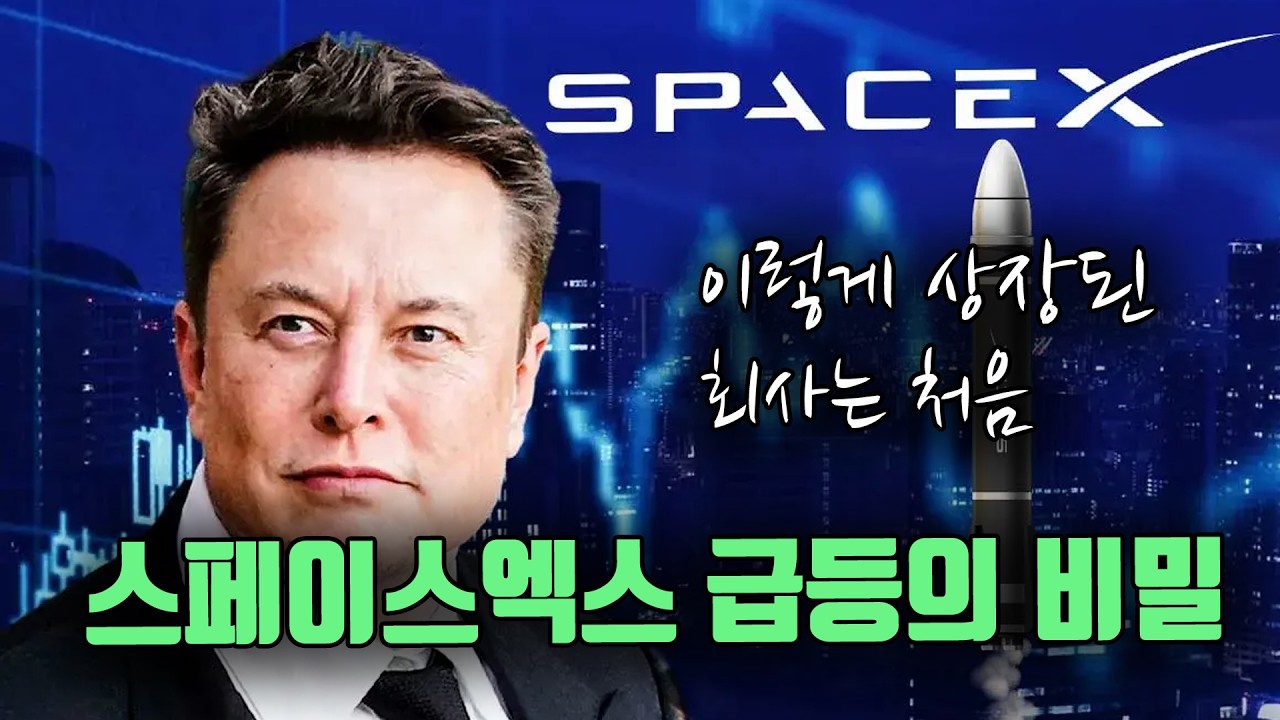
● Market Shakeup, AI Surge, Profit Boom
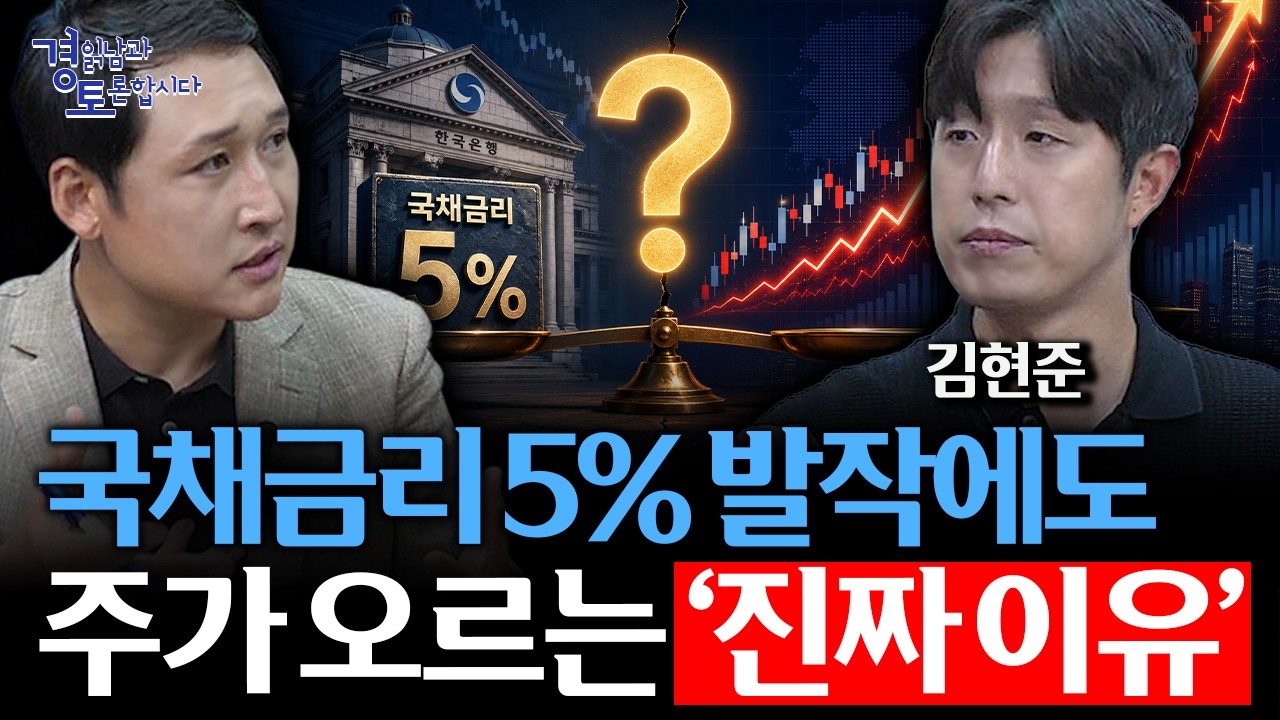
Why Equities Can Rise in a 5% Rate Regime: The Core Drivers Are Earnings and the AI Investment Cycle, Not “Liquidity”
Despite policy rates and sovereign yields near 5%, global equities and the Korean market have remained resilient, with select names continuing to outperform. The key question is not simply whether high rates “should” pressure stocks, but why capital continues to allocate into equities and why semiconductors remain central—while investors increasingly need to look beyond AI hardware to the next phase of the cycle.
This report summarizes:
- the practical relationship between rates and equity prices,
- the “Treasury issuance vs. liquidity” paradox,
- the memory cycle and DRAM pricing dynamics,
- the potential rotation from AI infrastructure to software/platform monetization,
- and the most material market interpretation often underemphasized in mainstream coverage.
1. One-line takeaway: Do not analyze rates in isolation; focus on the pace of earnings growth and the direction of capital rotation
Higher interest rates typically pressure equities because the risk-free return rises and equity valuations usually compress. However, the current regime is being driven less by the absolute level of rates and more by:
- whether corporate earnings are accelerating fast enough to offset valuation headwinds, and
- whether equities remain the superior relative option versus other asset classes.
The market is effectively pricing the question: “Are earnings and investment expectations strong enough to dominate the high-rate environment?”
2. Why equities usually fall when rates rise
Rates function as the baseline for asset pricing. As government bond yields increase, investors naturally reassess whether equity risk is adequately compensated.
When risk-free assets offer approximately 5%, equities must justify incremental risk via higher expected returns. Higher rates therefore act as a valuation “gravity,” with long-duration growth equities typically the most sensitive.
3. Why equities are rising anyway: Earnings-driven markets can offset rate pressure
It is critical to distinguish:
- Liquidity-driven rallies (broad asset inflation from abundant money), vs.
- Earnings-driven rallies (price appreciation supported by realized and improving profitability).
The current market—particularly in select leaders—resembles an earnings-driven phase, most visibly in AI semiconductors, memory, and data-center-linked supply chains.
A simplified equity framework:
- Price ≈ Earnings × P/E × Sentiment
Rates generally compress P/E and sentiment, but rapid earnings expansion can still lift prices. Capital is concentrating in segments where earnings upgrades are credible and observable.
4. Why late March mattered: The rate shock was largely absorbed
In late March, multiple risks converged—geopolitics, commodities, and inflation expectations—pushing sovereign yields sharply higher. That period broadly coincided with:
- a rapid bond-yield spike,
- equity lows,
- a peak in USD exchange strength,
- and synchronized lows across multiple equity markets.
This suggests the initial “shock” of higher yields has already been discounted, and markets have shifted from reacting to accelerating yields toward operating within a “high-yield, stable” regime. The level matters, but the speed of change often matters more for risk assets.
5. A second reason equities are holding up: Treasury issuance can translate into private-sector earnings
Higher yields are not driven only by inflation risk; increased government bond issuance has been a significant factor.
While issuance is often framed purely as a debt overhang, from a market perspective the more relevant variable is fiscal deployment. When funds are directed into defense, energy transition, infrastructure, nuclear and renewables, and industrial policy, they can feed into private-sector orders, revenues, and earnings.
This creates a paradox:
- issuance can lift yields (a valuation headwind),
- yet fiscal spending can support growth and corporate cash flows (an earnings tailwind).
In a world of supply-chain reshoring, geopolitical risk, and strategic industrial investment, fiscal channels may be more consequential than in prior cycles.
6. Why capital is favoring equities over bonds, gold, and crypto
6-1. Bonds
When yields rise, bond prices typically weaken. In a rising-rate environment, fixed-income investors may experience mark-to-market pressure despite higher coupons.
6-2. Gold and crypto
These assets do not generate operating cash flows and do not provide recurring, verifiable earnings reports. In high-rate regimes, the opportunity cost of holding non-yielding assets increases.
6-3. Equities
Equities can reprice on confirmed earnings, demand visibility, and guidance revisions. In the current regime, capital is concentrating in companies where performance is measurable and improving.
7. Why Samsung Electronics and SK Hynix remain market anchors
Semiconductors—especially memory—remain central due to concurrent tailwinds from a cyclical recovery and structural AI-driven demand.
7-1. DRAM and NAND recovery
Memory upcycles often deliver steep earnings inflection once pricing turns and inventories normalize. As DRAM prices rise and NAND supply-demand stabilizes, margins can improve rapidly as the industry moves past inventory write-down phases.
Equities frequently move ahead of reported earnings, with results confirming the trend later.
7-2. HBM and AI demand
The differentiator in this cycle is HBM (high-bandwidth memory), a critical input for AI training and inference.
Unlike prior memory cycles dominated by PCs, smartphones, and conventional server refreshes, this cycle is increasingly driven by GPU-centric data-center buildouts. SK Hynix has established a strong position in HBM, while Samsung Electronics is pursuing capacity and technology catch-up.
The key variable is not only “memory prices,” but whether AI infrastructure investment sustains high-value memory demand.
7-3. Similarities and differences versus prior cycles
- Similarities: supply discipline followed by demand recovery can drive sharp rebounds.
- Differences: AI infrastructure investment adds a structural demand component, potentially extending the cycle beyond a standard inventory normalization.
8. Critical point: A good company is not always a good stock at every price
High-quality companies can still deliver suboptimal equity returns if future improvement is already priced in. Equities discount forward expectations, and once a favorable outlook is broadly reflected, incremental upside may moderate even if fundamentals remain strong.
As semiconductor earnings visibility improves, market attention can begin shifting toward the next beneficiaries.
9. The next phase of the AI investment cycle: Potential rotation from hardware to software and platforms
Early-stage technology cycles typically reward infrastructure first. Over time, profit pools often migrate from buildout to monetization layers—services, platforms, and software.
AI is currently led by infrastructure exposure:
- servers
- GPUs
- memory
- power equipment
- cabling
- data centers
Over the medium to longer term, focus may broaden toward companies that convert AI adoption into recurring revenue and margin expansion, including:
- software vendors,
- internet platforms,
- productivity tools,
- and vertical AI service providers.
10. Portfolio implication: Rotation within the market may matter more than exiting the market
Perfect market timing is structurally difficult. A more robust approach is to remain invested while reallocating toward segments with improving risk-reward.
In practical terms:
- acknowledge current AI semiconductor leadership,
- while progressively expanding exposure toward AI monetization beneficiaries (software/platform/services) as the cycle evolves.
11. Key risks: Strength can persist, but volatility can rise if a trigger emerges
A high-yield environment can accelerate risk-off flows when shocks occur. The relative equity preference can reverse quickly if a catalyst changes growth or inflation expectations.
11-1. Primary potential triggers
- escalation in Middle East conflict
- oil spikes and renewed inflation expectations
- re-acceleration in US inflation data
- further long-end yield surges
- increased Treasury issuance stress
- delayed monetization versus AI capex intensity
If markets increasingly question whether AI spending converts into profit within a reasonable horizon, valuations and forward assumptions may require recalibration.
12. The most important interpretation often underemphasized
12-1. The absolute level of 5% matters less than whether markets have adapted
Asset prices often react more to the pace of rate changes than to the level itself. If the market accepts high rates as the operating baseline, incremental valuation damage may be reduced.
12-2. Treasury issuance is both a headwind and a liquidity transmission channel
The market impact depends on where fiscal outlays land. Defense, energy, infrastructure, and semiconductor support can directly raise private-sector revenues.
12-3. This is not a broad “everything rally”
Strength is concentrated in assets with earnings visibility and sector narratives supported by demand. Security selection has become more important than index exposure.
12-4. Preparing for “post-semiconductor AI” may come sooner than expected
As HBM, DRAM pricing, and memory earnings become consensus, capital may gradually rotate toward the next AI profit pool.
13. Practical synthesis for investors
13-1. Macro view
High rates persist, but an immediate recession call is not definitive. Fiscal spending, AI capex, and industrial restructuring continue to support parts of growth.
13-2. Equity market view
This is a selective leadership market rather than broad-based beta. Index-level forecasts are less informative than sector and security dispersion.
13-3. Semiconductor view
Near-term earnings momentum for memory-centric leaders remains supported by pricing recovery and AI-linked demand, with HBM acting as a structural differentiator.
13-4. Medium-to-long-term AI trend view
Infrastructure leads early; monetization layers often lead later. Incrementally shifting focus toward companies that translate AI adoption into revenue and operating leverage is increasingly relevant.
14. Core conclusions for publication
Equities can rise in a 5% rate regime because the market is prioritizing earnings acceleration and AI-cycle investment visibility over rate level alone.
Key points:1) markets have partially normalized to high rates,2) increased issuance can support private earnings through fiscal deployment,3) equities retain an advantage as a verifiable earnings asset relative to non-cash-flow assets,4) memory and AI-linked semiconductors remain central via DRAM recovery and HBM demand,5) attention is gradually extending toward the next AI phase: software, platforms, and services.
The central question is not “high rates imply universal weakness,” but “which segments can deliver earnings now, and which can capture the next stage of AI monetization.”
< Summary >
Equities are rising in a 5% rate environment primarily because earnings expectations in select sectors are strong enough to offset valuation headwinds.
While higher yields remain a constraint, markets have partially adapted. Treasury issuance is a headwind through higher rates, but fiscal spending can support private-sector revenues and earnings.
The market exhibits earnings-led, selective leadership. Memory and AI-linked semiconductors remain key due to DRAM recovery, HBM demand, and data-center investment. Over time, leadership may broaden from AI infrastructure to software, platforms, and services, making intra-market rotation more relevant than full risk exit.
[Related Articles…]
- AI Semiconductor: HBM and the Next Profit Pool
- High Rates: Implications for Global Markets and Asset Allocation
*Source: [ 경제 읽어주는 남자(김광석TV) ]
– 금리 5% 시대에도 주식이 오르는 진짜 이유 | 경읽남과 토론합시다 | 김현준 대표님 [2편]