● Yen-Plunge, AI-Power Bottleneck, Nvidia-Rally
Yen Breaks Above 162 and AI Data Center Power Bottlenecks: The Real Investment Themes for the Second Half of 2026 in U.S. Equities
The key issue today is not simply that the yen is weak or that semiconductors are rising again.
The move in USD/JPY above 162 is not only a Japan-specific issue; it is a broader signal of dollar strength that is affecting the won, Asian equities, and foreign capital flows.
At the same time, the AI investment cycle is expanding beyond GPUs and HBM into data center power infrastructure, cooling systems, ESS, and transmission and distribution networks.
In addition, Tenstorrent’s denial of discussions regarding a Qualcomm acquisition reinforces a shift in the AI semiconductor market away from simple M&A headlines toward competition over which companies can reduce AI compute and power costs.
The most important market point today is that U.S. equities continue to be driven by AI and semiconductors, but the leadership theme in the second half of the year may broaden from semiconductors themselves to the power, memory, cooling, and infrastructure companies required to operate them.
1. New York Market Action: Nasdaq Remains Strong as the Market Refocuses on AI Semiconductors
On June 30, 2026, U.S. equities showed strong stock-specific trading on the final session of the first half.
The Nasdaq rose by around 0.7% intraday and maintained a relatively firm tone.
The S&P 500 also remained slightly positive, while the Dow Jones Industrial Average and the Russell 2000 recovered from early losses to trade in positive territory.
Overall, the market placed more weight on AI investment, semiconductor demand, and data center infrastructure expansion than on recession concerns.
-
Nasdaq: Continued strength led by AI semiconductors and mega-cap technology.
-
S&P 500: Held in positive territory after trading near unchanged.
-
Dow Jones Industrial Average: Rebounded after an early decline.
-
Russell 2000: Small caps remained volatile but recovered intraday.
Market participants also cited the impact of Google’s Dow inclusion and expectations for potential Nasdaq-100 inclusion.
Index inclusion does not change fundamentals, but it can generate ETF and passive inflows, which can materially affect near-term supply and demand.
2. Key Stock Movers: SanDisk, AMD, Nvidia, and Micron
Among individual names, semiconductors and memory stood out again today.
SanDisk advanced on upgraded price targets and expectations for higher memory prices.
AMD rose by more than 3%, reflecting renewed optimism for AI accelerators and server semiconductors.
Nvidia continues to trade around the $5 trillion market capitalization level, but it remains the central company in the AI ecosystem.
-
SanDisk: Strength driven by memory price recovery and expectations for long-term contracts.
-
AMD: Higher on expectations for AI servers and data center semiconductors.
-
Nvidia: Continues to serve as the core of the AI semiconductor ecosystem.
-
Micron: Near-term consolidation persists, but the market continues to focus on structural growth potential.
The important point is that the market is no longer limited to a single-name rally in Nvidia.
As the AI cycle matures, the entire supply chain tied to GPUs, HBM, DDR5, SSDs, power equipment, and cooling systems is moving together.
This is likely to remain one of the most important investment themes in U.S. equities in the second half of 2026.
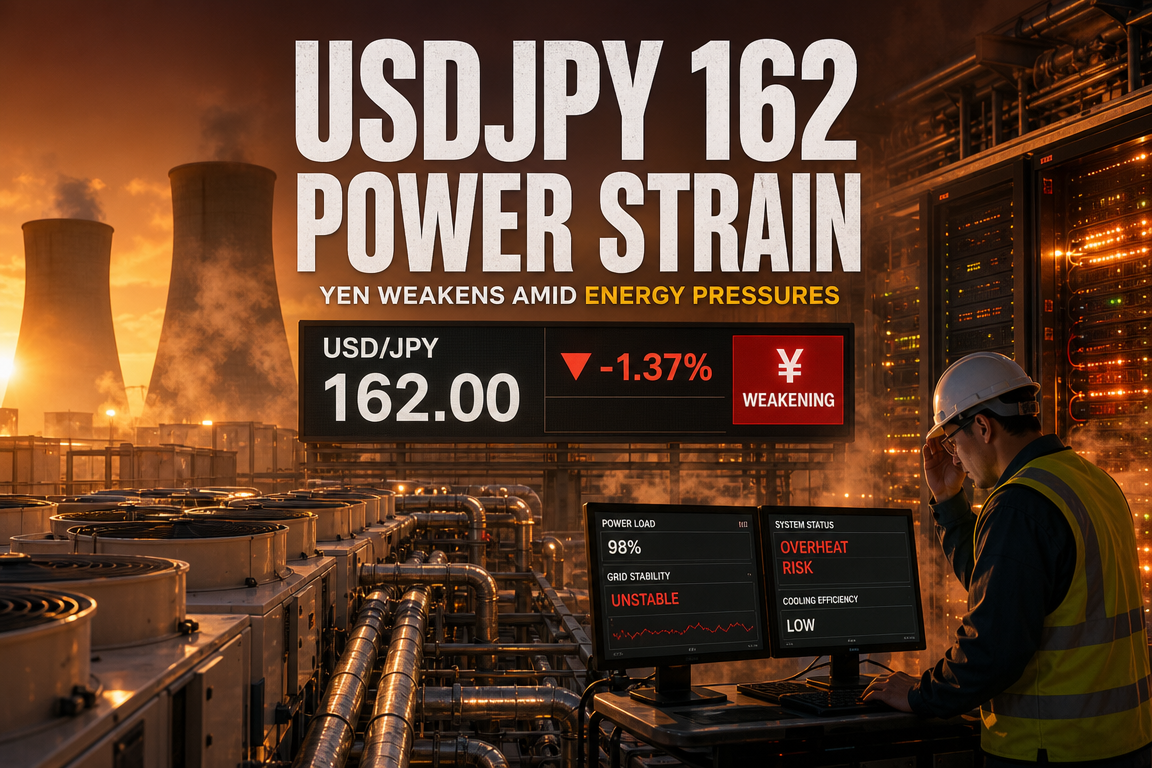
3. USD/JPY Breaks Above 162: A 40-Year Yen Weakness Warning
The USD/JPY exchange rate has broken above 162.
This is not merely a currency move; it is a historically weak yen level not seen in roughly 40 years since the Plaza Accord era.
Japan’s Ministry of Finance and the Bank of Japan have already used intervention and rate hikes as policy tools.
However, the wide gap between U.S. and Japanese interest rates continues to favor dollar holdings in the market.
-
The Ministry of Finance has conducted large-scale dollar-selling intervention to defend the yen.
-
The Bank of Japan has ended negative rates and raised its policy rate.
-
Even so, the yen remains under pressure because the U.S.-Japan rate differential remains wide.
The issue is not limited to Japan.
Global hedge funds often treat the yen and the won as part of the same East Asian currency basket.
As a result, yen weakness tends to pressure the won as well.
In practice, KRW/USD has also moved toward the 1,550 level, reaching a highly burdensome range not seen since the global financial crisis.
4. Won Weakness and Foreign Flows: Why Korean Equities Are Under Pressure
Won weakness is a major variable for Korean investors.
For foreign investors, gains in Korean equities can be offset by currency losses if the won continues to depreciate.
As a result, sustained dollar strength can increase the likelihood of foreign outflows from Korean equities.
-
KRW depreciation increases foreign investors’ currency-loss concerns.
-
Large foreign selling tends to increase volatility in the KOSPI and KOSDAQ.
-
The Bank of Korea has continued dollar-selling intervention, but it is difficult to fully offset a strong dollar trend.
Ultimately, the main driver of won stabilization is not domestic conditions but the direction of U.S. rates and the dollar.
This week’s key employment data, comments from Fed officials, and signals from the European Central Bank are likely to determine the next move in the currency market.
5. U.S. Rates and Employment Data: The Market Still Cannot Ignore the Fed
U.S. macro data remains mixed.
Consumer confidence came in weaker than expected, while job openings remained relatively firm.
In other words, consumer sentiment is softening, but the labor market has not yet broken down.
-
Consumer confidence: Below expectations, reinforcing concerns about slower consumption.
-
JOLTS job openings: Signaled that the labor market remains resilient.
-
Employment report: The key event for market direction this week.
From the Fed’s perspective, inflation has not fully returned to target and labor conditions remain solid, which makes it difficult to justify early rate cuts.
On the other hand, a sharper slowdown in consumption could raise recession concerns.
As a result, the market remains caught between expectations for rate cuts and the possibility of a prolonged policy hold.
6. European Heat Wave and Power Bottlenecks: The Real Weak Link in the AI Era
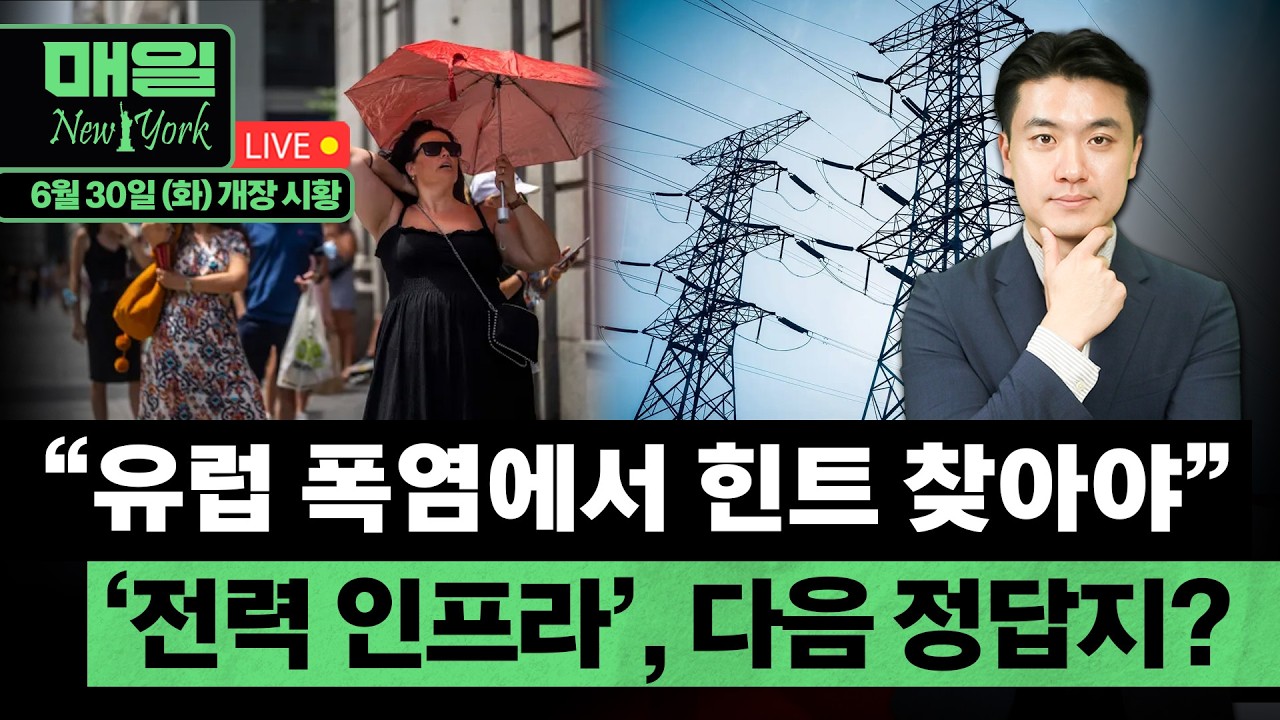
The most important issue today is the European heat wave.
While it may appear to be a climate story, from an investment standpoint it directly relates to AI data centers and power infrastructure.
Europe’s air conditioning penetration rate is much lower than that of the U.S. or Korea.
U.S. air conditioning penetration is estimated at around 90%, while Europe’s is closer to 20%.
As heat waves intensify, cooling-related electricity demand is rising sharply.
-
Europe’s transmission and distribution networks are older and less digitalized.
-
Rising cooling demand is increasing pressure on the power grid.
-
French nuclear plants have faced cooling constraints as river temperatures rise.
-
The UK has reportedly had to import power from neighboring countries at elevated prices to offset shortages.
The key point is that the issue is not simply about generating more electricity.
Equally important is the ability to transmit, store, and use power efficiently for cooling and computing.
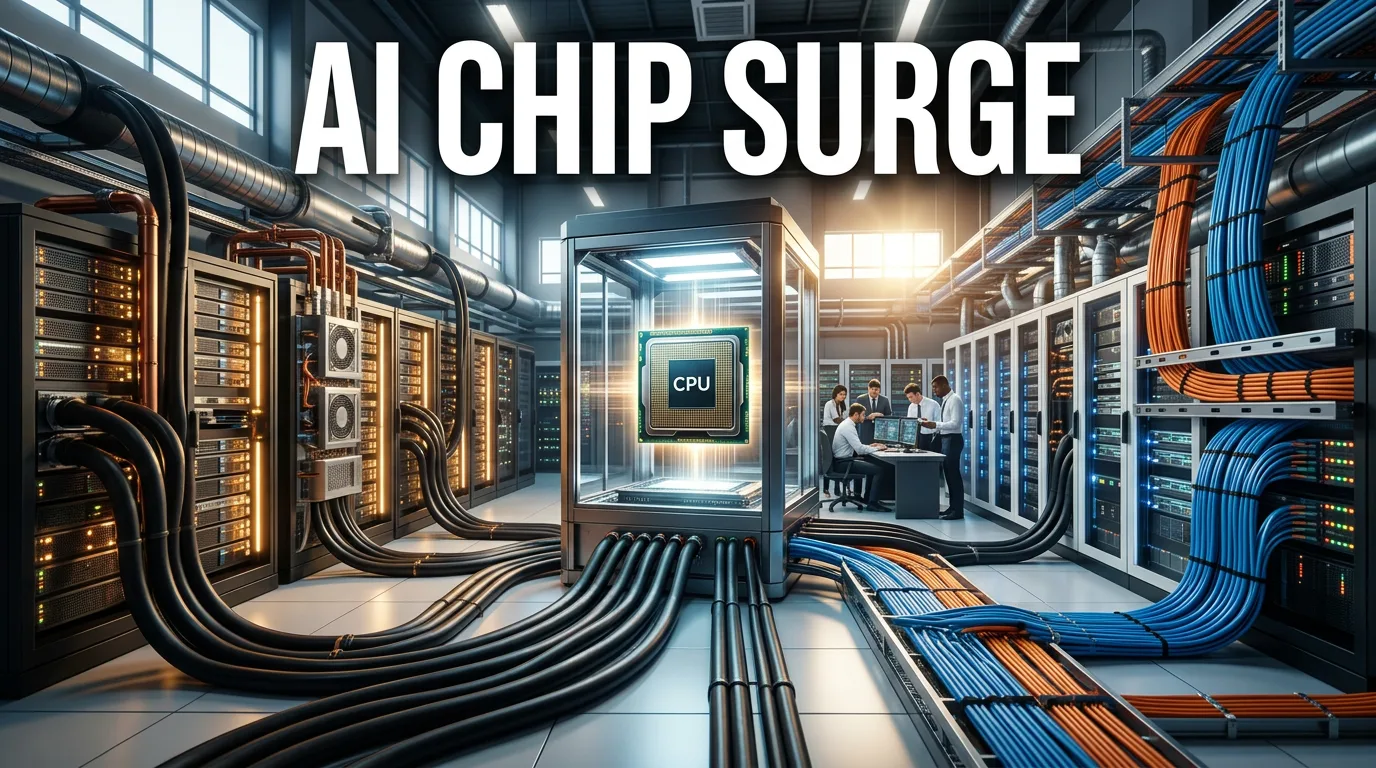
AI data centers consume enormous amounts of electricity and generate significant heat.
Without adequate grids and cooling systems, even the best AI semiconductors cannot operate at scale.
7. Core Themes for the Second Half: Power Infrastructure, ESS, HVAC, and Liquid Cooling
If AI semiconductors led the market in the first half, power infrastructure may become a more important theme in the second half.
Companies building AI data centers now need more than chips.
They need power contracts, grid access, transformers, distribution equipment, ESS, and cooling systems.
-
Grid modernization: Upgrading aging transmission and distribution infrastructure to higher-efficiency systems.
-
ESS: Energy storage systems that retain electricity for use during peak demand.
-
HVAC: Heating, ventilation, and air conditioning systems for data centers and industrial facilities.
-
Liquid cooling: A key technology for reducing heat in high-performance AI servers.
-
SMR: A longer-term theme tied to small modular reactors that can support data center power demand.
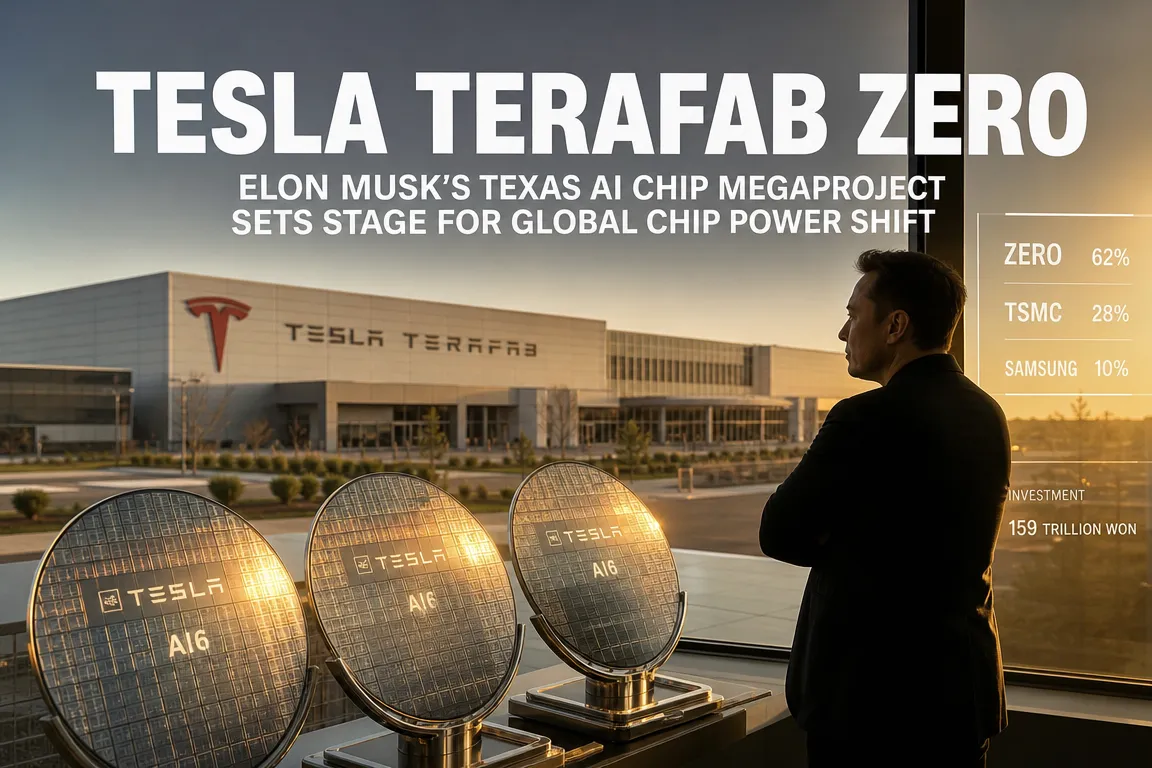
Tesla’s ESS business may also regain attention within this trend.
Tesla can no longer be viewed solely as an automotive company; it is increasingly an energy storage and power platform company as well.
NuScale Power and Oklo may also draw renewed interest in the power bottleneck theme.
That said, nuclear and SMR projects involve regulation, long construction periods, and high capital costs, so investors should distinguish between short-term themes and long-term structural growth.
8. AI Labor Bottlenecks: Why Some Companies Are Rehiring After Cutting Staff
The narrative that AI will replace labor remains directionally valid.
However, a more nuanced reality is emerging in practice.
Some companies are rehiring workers in roles they previously reduced after adopting AI.
-
According to a Robert Half survey, 32% of hiring managers at large companies said they had rehired positions previously reduced due to AI adoption.
-
Some companies expect a meaningful share of those roles to return to prior levels by 2027.
-
The reason is that AI maintenance, API costs, and error handling have been more expensive than expected.
This is a practical point.
AI response systems are effective for simple inquiries, but they remain weak in complex service cases and exceptions.
Corporate culture, customer service processes, and tacit knowledge still take time to encode into AI systems.
The issue is no longer whether AI will completely replace people, but how AI costs compare with labor costs in specific functions.
9. AI Compute Costs Are Falling, but Memory Prices Are Rising
One of the most important shifts in the AI industry is the cost structure.
As Nvidia and major technology companies improve hardware architecture and model optimization, AI compute costs and token costs are gradually declining.
That is making AI more affordable and more widely deployable for enterprises.
At the same time, DDR5 and high-performance memory prices are rising.
-
AI compute costs: Declining due to hardware innovation and model optimization.
-
Token costs: Under downward pressure as AI services scale and competition intensifies.
-
Memory prices: Rising on stronger demand from advanced AI models.
The reason this matters is clear.
As AI models become larger, they need to store and retrieve more data at higher speed.
As a result, not only GPUs but also HBM, DDR5, and high-capacity SSDs are becoming more important.
In effect, continued AI investment is likely to support a structural tailwind for memory semiconductor companies.
10. Micron’s “Nvidia Moment”: Is the Memory Cycle Becoming Structural Growth?
Some Wall Street research notes have described Micron as entering a so-called “Nvidia moment.”
In this context, the phrase refers not to a short-term spike, but to a structural shift in which both demand and pricing rise together.
As AI data centers expand, memory demand is accelerating while supply is not keeping pace.
-
Micron is viewed as a direct beneficiary of rising AI memory demand.
-
HBM and DDR5 price increases could translate into stronger earnings.
-
Unlike prior memory cycles, long-term contract coverage is increasing, which changes the industry structure.
-
SanDisk is also drawing renewed attention as a beneficiary of stronger memory and storage demand.
Micron has already appreciated significantly, so near-term consolidation remains possible.
However, the more important question is whether the memory pricing framework is changing structurally.
If long-term contracts expand and AI data center demand continues to grow, valuation methods for memory companies may also evolve.
11. Tenstorrent Denies Qualcomm Acquisition Talks: The Real Signal Is the AI Chip Ecosystem
Tenstorrent denied reports that it was in acquisition discussions with Qualcomm.
At first glance, this may appear to be a simple M&A rumor.
However, the real significance is not whether Qualcomm would acquire Tenstorrent, but how important RISC-V, edge AI, and low-power inference chips have become in the AI semiconductor market.
-
Tenstorrent is known for AI chips and RISC-V-based design.
-
Qualcomm has strengths in smartphones, edge devices, and automotive semiconductors.
-
Even without a transaction, the news highlights growing strategic interest in AI inference chips and low-power computing.
The AI market does not end with high-performance training GPUs.
Over time, AI will increasingly run directly on smartphones, PCs, automobiles, robots, and industrial equipment, expanding the edge AI market.
That shift increases the importance of energy-efficient chips, low-cost inference processors, and custom AI semiconductors.
For that reason, the Tenstorrent news should be read as a signal of where the next competitive front in AI semiconductors may be, rather than as an isolated acquisition story.
12. Bitcoin and MSTR: Signs of Capital Rotating Toward AI Equities
Bitcoin fell by around 3% intraday, weakening to the $58,000 level.
News involving MSTR also attracted market attention.
MSTR has long been associated with continued Bitcoin accumulation, but comments about possible Bitcoin sales through a program have complicated investor interpretation.
-
Bitcoin weakness can translate into balance sheet pressure for MSTR.
-
If AI semiconductors and U.S. equities continue to outperform, some capital that previously flowed into Bitcoin ETFs may rotate into equities.
-
In a constrained liquidity environment, investors tend to shift toward assets with stronger growth narratives.
Current capital flows appear to favor AI infrastructure growth over decentralized assets.
Bitcoin still has its own long-term investment case, but in the near term the AI semiconductor theme has much stronger momentum.
13. Oil Prices and Trump’s Pressure on Gasoline Retailers
WTI crude is trading around the $70 level.
President Trump has urged gasoline retailers to cut prices immediately.
This can be viewed as a political message tied to the midterm cycle and Independence Day seasonality.
-
Although crude prices have eased, retail gasoline prices have not declined as quickly, which is creating public frustration.
-
Some regions, including California, continue to see gasoline prices well above the national average.
-
Stable energy prices are an important factor for easing inflation and supporting consumer sentiment.
For U.S. consumers, gasoline prices are a direct measure of inflation.
For Trump, lowering fuel prices is closely linked to approval management.
For investors, weaker energy prices could reduce inflation pressure and ease some of the burden on the Fed.
14. Axon Controversy: The Intersection of Policy and Investment
There were also comments regarding a possible conflict of interest involving President Trump’s reported ownership of Axon Enterprise shares and the timing of policy announcements.
Axon Enterprise is tied to police equipment, body cameras, Tasers, and public safety software.
When government policy can affect a specific industry and related shares are held by policymakers, controversy is difficult to avoid.
-
The key issue is whether the shares were purchased before the policy announcement.
-
U.S. politics has repeatedly faced similar trading ethics debates, including cases involving Nancy Pelosi.
-
When evaluating policy beneficiaries, investors should also consider political and reputational risk.
Policy beneficiaries can generate strong stock momentum, but they can also face regulatory and public scrutiny.
As a result, investors should not rely solely on the assumption that government support will continue without friction.
15. The Key Point Missing From Most Coverage: AI’s Bottleneck Is Not the Chip, but the Physical World
The core issue today is that although AI is a digital technology, its expansion is constrained by the physical world.
Many headlines focus only on stock gains in Nvidia, Micron, and SanDisk.
But the real bottlenecks are the power required to run the hardware, the cooling systems needed to remove heat, the memory required to store data, and the transmission networks needed to connect everything.
-
AI models run in the cloud, but they require physical data centers.
-
Data centers require substantial power and cooling infrastructure.
-
Heat waves and weather disruptions can delay construction and raise operating costs.
-
Regions with outdated grids, such as parts of Europe, may fall behind in AI competition.
-
Even the U.S. cannot expand AI data centers indefinitely without grid modernization.
In the end, the next phase of AI investing is about infrastructure rather than software.
Investors who missed the semiconductor rally should look again at power infrastructure, ESS, transformers, cooling systems, and the memory supply chain in the second half of the year.
These are not secondary beneficiaries; they are required enablers of AI deployment at scale.
16. Second-Half Investment Strategy: The Combination of Semiconductors and Power Infrastructure
A simple approach to AI leadership in the second half of 2026 is no longer sufficient.
Investors now need to analyze the AI ecosystem by layers.
-
Level 1: AI compute semiconductors such as Nvidia and AMD.
-
Level 2: Memory and storage companies such as Micron, SK Hynix, Samsung Electronics, and SanDisk.
-
Level 3: Power grids, transformers, distribution equipment, utilities, and ESS.
-
Level 4: HVAC, liquid cooling, and data center thermal management systems.
-
Level 5: SMRs, nuclear power, and long-term power supply infrastructure.
If semiconductors led the market in the first half, the key question in the second half is whether the rally extends into power infrastructure and cooling systems.
As summer heat intensifies, investor focus on power bottlenecks is likely to increase.
For AI-led U.S. equities to remain supported, power and cooling constraints must be addressed.
< Summary >
The move in USD/JPY above 162 is not only a Japan-specific issue; it is a global dollar-strength signal that also affects KRW weakness and foreign flows into Asian equities.
U.S. rates and labor data remain the key market variables, and the Fed’s messaging is likely to determine the next move in currencies and equities.
The AI semiconductor rally is broadening beyond Nvidia to Micron, SanDisk, AMD, and the memory supply chain.
AI compute costs are declining, but DDR5 and high-performance memory prices are rising, supporting the case for structural growth in memory companies.
The European heat wave is not just a climate story; it is a reminder of the importance of data center power infrastructure and cooling systems.
The main investment theme for the second half may shift from AI semiconductors to physical infrastructure, including grid modernization, ESS, HVAC, liquid cooling, and SMRs.
Tenstorrent’s denial of Qualcomm acquisition talks should be viewed as a signal that competition in edge AI and low-power AI chips is accelerating.
[Related Articles…]
*Source: [ Maeil Business Newspaper ]
– 엔·달러환율 162엔 돌파, 40년만에 최저가치ㅣ텐스토렌트, 퀄컴 인수 논의 부인ㅣ홍키자의 매일뉴욕