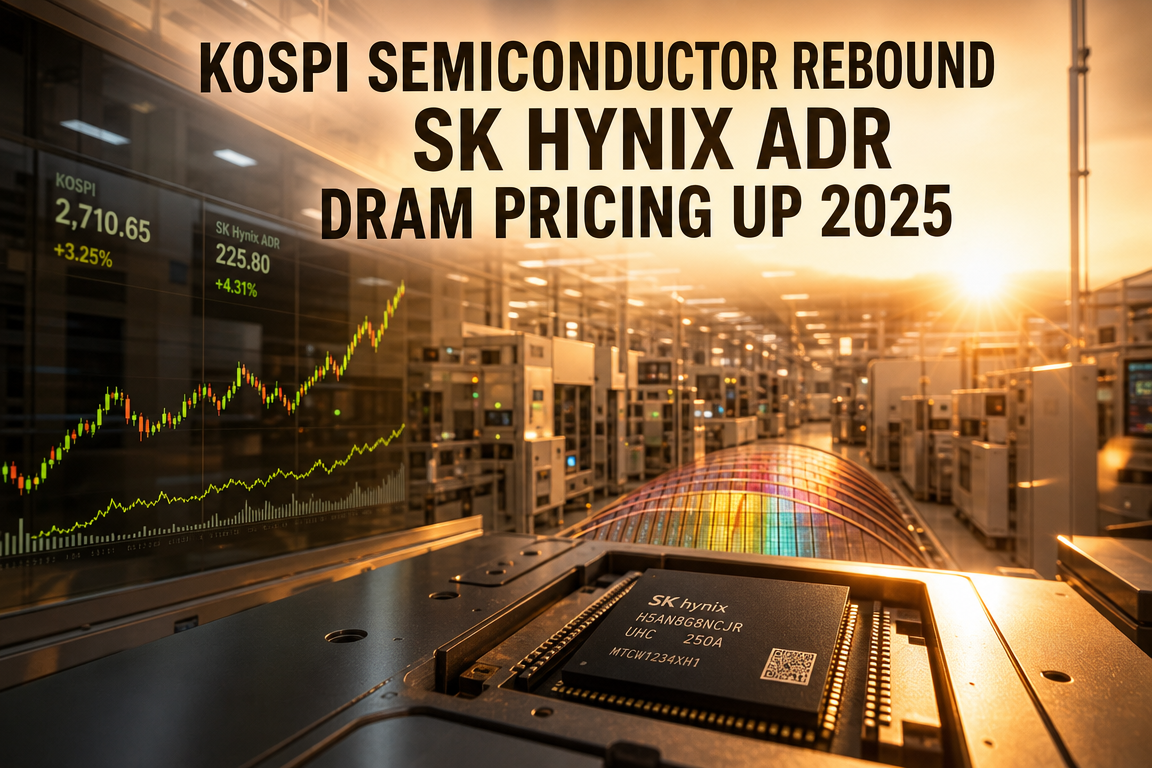
● KOSPI, Rebound, AI, Fears, Fade
Kospi Rebounds Sharply: The Key Drivers Behind the Renewed Gains in Samsung Electronics and SK Hynix Despite Meta AI Investment Concerns
The key driver behind this Kospi rebound was not simply that semiconductors turned favorable again.
The market initially treated concerns over a slowdown in Meta’s AI investment as negative, but sentiment quickly reversed after Wall Street research and reports of Samsung Electronics raising DRAM prices.
In particular, reports that Samsung Electronics plans to increase 3Q DRAM prices by at least 20% sent a strong signal to the market.
If AI investment were truly weakening, it would be difficult to raise memory prices this aggressively.
In the end, this move forced investors to reassess the Kospi outlook, Samsung Electronics share price, SK Hynix share price, the semiconductor supercycle, and the AI investment cycle at the same time.
1. Why Sentiment Deteriorated in the Previous U.S. Session
The starting point was the U.S. equity market.
Concerns that Meta could slow the pace of its AI investment weighed on the market, triggering a sharp pullback in some U.S. semiconductor stocks.
In particular, memory and storage names such as Micron and SanDisk came under significant pressure.
Based on that move alone, Samsung Electronics and SK Hynix could have faced weakness in the Korean market the following day.
This is because Samsung Electronics and SK Hynix are directly tied to the global memory semiconductor cycle.
When U.S.-listed memory stocks sell off sharply, domestic investors naturally begin to question whether the Kospi is also at risk.
Given that a large share of recent Kospi gains has come from semiconductors, concerns about an AI investment slowdown inevitably created pressure on the broader market.
2. Why the Kospi Rebounded Sharply After 10:00 a.m.
The market initially reacted defensively, but then quickly reassessed the information available.
Two factors supported the strong intraday rebound in Samsung Electronics and SK Hynix.
First, Wall Street research.
Several global investment banks and brokerages reportedly argued that the interpretation of weakening memory demand was excessive.
In other words, Meta’s AI investment issue was not necessarily a signal of a broad-based slowdown in AI server spending or a collapse in memory demand.
As multiple firms delivered a similar message, the market gained confidence.
Institutional and foreign investors in particular tend to place greater weight on the direction of research coverage than on isolated headlines.
When Wall Street signals that the memory cycle has not turned decisively weaker, short-term sell positions can be reversed quickly.
Second, reports of Samsung Electronics raising DRAM prices.
The market shifted further when reports emerged that Samsung Electronics plans to raise 3Q DRAM prices by at least 20%.
In the semiconductor cycle, price increases are not ordinary news.
They typically indicate that demand is stronger than supply, or at minimum that customers are willing to accept higher pricing.
In practical terms, a company can only announce price increases when it has regained pricing power.
If AI investment were truly deteriorating sharply, customers would find it difficult to accept higher prices.
The report of a potential 20% DRAM price increase therefore suggested that memory demand remains relatively firm.
3. The Main Point Is Not an “AI Investment Cut,” but a Change in AI Investment Structure
The most important point in this episode is that Meta’s AI investment concern should not be interpreted too narrowly.
The market initially reacted as if “Meta cuts AI spending → AI server demand declines → HBM and DRAM demand also weaken.”
However, the more likely interpretation is that the AI investment cycle is not ending, but rather entering a phase of shifting priorities and slower execution.
Large technology companies are already making substantial investments in AI infrastructure.
However, bottlenecks differ across GPUs, servers, power capacity, data centers, networking equipment, and memory semiconductors.
As a result, a change in one company’s investment plan does not necessarily translate into a broad collapse in AI semiconductor demand.
HBM and high-performance DRAM in particular have a much tighter supply structure than consumer memory products.
AI server memory demand is linked to Nvidia GPUs, cloud data centers, and the training and inference needs of large language models.
Accordingly, even if AI investment temporarily slows, demand for high-value memory is unlikely to weaken quickly.
4. Why Samsung Electronics and SK Hynix May Move Differently
Samsung Electronics and SK Hynix are both representative memory semiconductor companies, but the market evaluates them through different lenses.
SK Hynix is the name most leveraged to HBM expectations.
In the AI semiconductor supply chain, SK Hynix is viewed as a leader in the HBM market.
If Nvidia-led AI GPU demand remains strong, SK Hynix’s earnings outlook can stay constructive.
As a result, SK Hynix share price tends to be more sensitive to the AI investment cycle.
Samsung Electronics is influenced by DRAM price increases and HBM recovery expectations.
Samsung Electronics has a broader business portfolio spanning DRAM, NAND, foundry, mobile, and display operations.
The market is currently assessing both Samsung’s HBM competitiveness and the benefits of rising DRAM prices.
If DRAM prices continue to rise and HBM supply expands, Samsung Electronics may face a meaningful valuation re-rating.
In short, SK Hynix is more exposed to the high-performance memory momentum tied to AI, while Samsung Electronics reflects both memory price improvement and turnaround expectations.
5. Why the Kospi Is So Sensitive to Small Moves
The reason the Kospi is swinging sharply on relatively small headlines is that market leadership is concentrated.
Because semiconductors dominate the sectors that drive the index, news on Samsung Electronics and SK Hynix can move the entire market.
Foreign flows also matter.
When assessing Korean equities, foreign investors typically consider the semiconductor cycle, USD/KRW moves, expectations for U.S. rate cuts, and trends in U.S. technology stocks.
When semiconductors weaken in the U.S. market, they may sell Korean stocks first and buy back quickly once the outlook is seen as too pessimistic.
The Kospi is also highly sensitive to global growth and export conditions.
A recovery in semiconductor exports improves earnings visibility for Korean companies and supports a higher valuation for the Kospi.
Conversely, any sign that the semiconductor cycle is turning down tends to pressure the index as a whole.
6. The Most Important Point That Is Often Missed
The key issue in this rebound is not merely a headline reversal, but a recovery in pricing power.
Many reports stop at saying that Wall Street released research and that Samsung Electronics plans to raise DRAM prices.
However, the more important point is that memory suppliers are beginning to regain pricing power.
When the semiconductor cycle is truly weak, suppliers cannot raise prices.
If anything, they often need to discount products to move inventory when customer stocks are high and demand is soft.
Yet DRAM price increases are now being reported.
That points not only to better earnings prospects, but also to a shift in bargaining power back toward suppliers.
Memory semiconductors are especially sensitive to pricing changes in terms of earnings.
Even with the same shipment volume, higher pricing can quickly improve operating margins.
For that reason, a possible 20% increase in DRAM prices is a highly important variable for Samsung Electronics and SK Hynix earnings.
Another important point is that concerns about AI investment slowdown and memory price increases emerged at the same time.
At first glance, the two signals appear contradictory.
If AI investment were weakening, memory prices would be unlikely to rise.
Yet the appearance of price-increase reports suggests that demand is still being viewed as resilient within the market.
This is the real core of the Kospi rebound.
The market did not simply ignore bad news; it reassessed the credibility of the negative narrative.
7. Key Points Investors Should Monitor Going Forward
First, confirm whether the actual DRAM price increase is implemented.
Reports alone are not sufficient.
The actual 3Q contract pricing and customer acceptance will be critical.
Second, monitor HBM supply and customer qualification progress.
SK Hynix has a strong position in the HBM market, while Samsung Electronics’ key issue is whether its competitiveness in HBM continues to improve.
In AI semiconductors, HBM is not just memory; it is a critical component that affects GPU performance.
Third, continue to track AI investment plans among major U.S. technology companies.
Meta is only one part of the picture; Microsoft, Google, Amazon, and Nvidia-related demand trends are also important.
If the AI investment cycle remains intact, expectations for the semiconductor supercycle may not weaken quickly.
Fourth, monitor USD/KRW and foreign investor flows.
Because Korean semiconductor stocks are export-oriented, exchange-rate trends affect both earnings and sentiment.
If the won stabilizes and foreign buying continues, the Kospi outlook may improve further.
Fifth, investors should expect elevated volatility after sharp short-term gains.
The market has become highly sensitive to both positive and negative headlines.
Intraday swings may continue, so investors should focus on the direction of the cycle and the pace of earnings improvement rather than reacting only to short-term news.
8. One-Sentence Summary of the Kospi Rebound
Although concerns over a possible slowdown in Meta’s AI investment initially raised fears of a weaker semiconductor cycle, Wall Street research and reports that Samsung Electronics plans to raise DRAM prices led the market to conclude that memory demand remains intact.
That view supported rebounds in Samsung Electronics and SK Hynix and helped the Kospi recover.
However, this rebound does not necessarily mean a one-way move into a sustained bull market.
The key variables ahead are actual memory prices, the durability of AI server spending, HBM supply competitiveness, and foreign investor flows.
If these four factors remain constructive, the semiconductor-led rally in the Kospi could extend further.
< Summary >
The main drivers of the Kospi’s sharp rebound were Wall Street research arguing that concerns over Meta’s AI spending slowdown were overstated and reports that Samsung Electronics plans to raise DRAM prices by 20%.
Because it would be difficult to raise memory prices if AI investment were truly weakening, the market interpreted the move as evidence that semiconductor demand remains firm.
Samsung Electronics share price is being driven by DRAM price gains and HBM recovery expectations, while SK Hynix remains most sensitive to HBM demand and AI server spending.
Going forward, investors should monitor DRAM contract prices, HBM supply, AI investment by major U.S. technology firms, USD/KRW, and foreign flows.
The key implication of this rebound is not simply the easing of a negative headline, but the possibility that memory semiconductor vendors are regaining pricing power.
[Related Articles…]
- Semiconductor Cycle and Investment Considerations for Samsung Electronics and SK Hynix
- How AI Capital Spending Influences Global Equities and the Kospi
*Source: [ 내일은 투자왕 – 김단테 ]
– 코스피 개같이 부활한 이유 #코스피 #삼성전자 #하이닉스
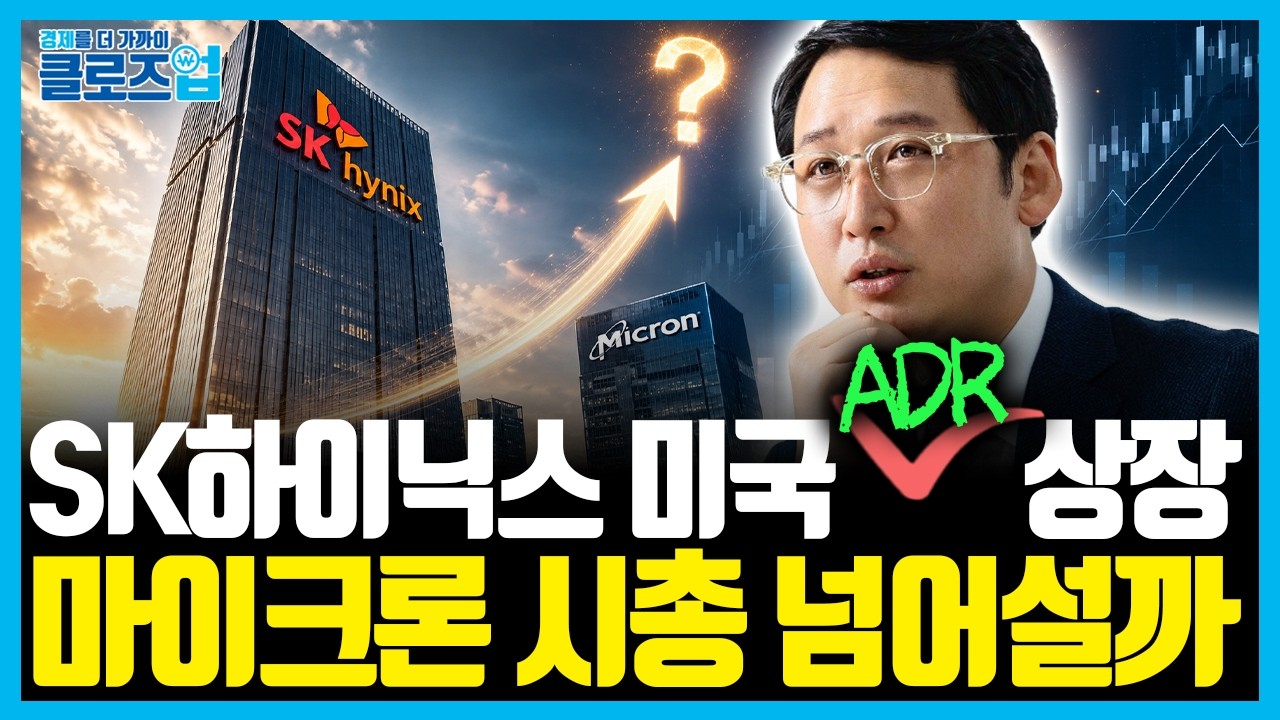
● SK Hynix ADR Shock, Korea Chip Repricing, Wall Street Surge
SK Hynix ADR U.S. Listing Scenario: Key Implications for Korean Semiconductor Stocks
The key issue here is not simply that “SK Hynix will trade in the U.S.”
The more important point is that SK Hynix would enter the comparison set of U.S. investors and be evaluated directly against global semiconductor companies such as Micron, Nvidia, and TSMC.
As a result, not only SK Hynix’s common shares but also Samsung Electronics, semiconductor equipment stocks, the HBM value chain, and semiconductor ETFs could be subject to revaluation.
In the short term, however, share-price volatility may increase depending on new share issuance, treasury share sales, shareholder return policy, exchange rates, and tax treatment.
In other words, this event may reduce the discount applied to Korean semiconductor stocks, or it may create temporary supply pressure in the market.
1. What an ADR Is: A Structure That Makes SK Hynix Easier for U.S. Investors to Buy
ADR stands for American Depositary Receipt.
It is a certificate that allows U.S. investors to trade foreign company shares in dollars on the U.S. market.
For U.S. investors, SK Hynix is originally a foreign stock.
Buying the common shares listed on the Korea Exchange requires currency conversion, a foreign stock account, Korean market trading hours, and tax considerations.
By contrast, if an ADR is listed in the U.S., investors can access SK Hynix in their domestic market using dollars.
This significantly improves accessibility.
2. A Simplified Explanation of the ADR Structure
A foreign company enters into a depositary agreement based on existing shares or newly issued shares.
A U.S. depositary bank holds the underlying shares and issues ADRs against them.
These ADRs are then listed on a U.S. exchange such as Nasdaq or the NYSE.
U.S. investors trade the ADR listed in the U.S. market rather than the underlying Korean shares directly.
TSMC is also traded in the U.S. in ADR form rather than as the underlying common share.
Accordingly, if SK Hynix is listed as an ADR, U.S. investors will be able to access it like a U.S.-listed stock.
3. ADR vs. Korean Common Shares: Dollar Trading, Taxes, and Exchange Rates Are the Key Variables
SK Hynix common shares trade in won on the Korea Exchange.
SK Hynix ADRs would trade in dollars on the U.S. market.
The key difference lies in taxes and exchange rates.
ADRs are affected by U.S. tax rules.
Common shares are affected by Korean tax rules.
For U.S. investors, the decision between the common shares and the ADR may differ depending on the structure.
Exchange rate conditions, dividend taxation, and trading costs are all part of the investment decision.
Ultimately, capital flows to the option that is more convenient, more tax-efficient, and more liquid.
4. Market View on the SK Hynix ADR Listing Schedule
The original report referred to a roadshow, pricing, the Nasdaq listing and trading launch, and the possibility of additional share issuance.
These matters should be verified through the company’s filings and exchange announcements before making any investment decision.
In the market, the listing structure matters more than the timing itself.
Whether the listing is based on existing shares held in depositary form or on newly issued shares will determine the impact on shareholder value.
In particular, a large new issuance could raise dilution concerns for existing shareholders.
By contrast, if the company announces treasury share cancellation or a stronger shareholder return policy, the short-term burden may ease.
5. Impact on SK Square: Dilution Risk in Ownership Percentage
If new shares are issued in the ADR listing process, the total number of listed shares may increase.
In that case, even if SK Square’s absolute holding in SK Hynix remains unchanged, its ownership percentage would decline.
As a result, SK Hynix may benefit from a positive market reaction, while SK Square could face a more negative assessment in the short term.
The market tends to price in such dilution effects quickly.
The relative weakness in SK Square while SK Hynix has been strong can also be understood in this context.
6. The Biggest Positive: Potential Inclusion in the Philadelphia Semiconductor Index
One of the most important upside factors is the potential inclusion of SK Hynix ADR in the Philadelphia Semiconductor Index.
This index is a key benchmark for global semiconductor equities.
Nvidia, AMD, Broadcom, Micron, ASML, and TSMC ADR are among the names associated with it.
If SK Hynix ADR is added to the index, passive capital from index-tracking ETFs could enter mechanically.
This would translate into actual buying demand, not merely increased attention.
Global capital often moves through indices and ETFs rather than through bottom-up analysis of individual stocks.
Therefore, index inclusion would be significant not only for SK Hynix but also for the broader Korean semiconductor sector.
7. Expanded Access: Comparable to Putting a Strong Product on More Store Shelves
The essence of an ADR listing is expansion of the investment channel.
When a strong product goes from being sold in one store to being distributed through Amazon, offline retailers, and multiple platforms, the customer base can grow.
The same applies to SK Hynix.
If a company that was previously accessible only in Korea becomes easily tradable in the U.S., global investor access improves.
In particular, U.S. institutions, pension funds, ETF managers, and AI semiconductor thematic investors may find it easier to include SK Hynix in portfolios.
Over the medium to long term, this can support a higher valuation.
8. TSMC ADR as a Reference: The Common Trend Between the Underlying Share and ADR
TSMC listed in the U.S. through an ADR in 1997.
There were periods of correction in the underlying shares immediately after the listing.
Over the long term, however, TSMC ADR and the Taiwan-listed shares moved in the same direction because they reflect the same corporate value.
This example cannot be applied directly to SK Hynix.
At that time, the semiconductor cycle, Taiwan’s market conditions, global rates, exchange rates, and company fundamentals were all different.
Still, the case shows that an ADR listing can bring a company into the valuation framework of global investors.
9. Why SK Hynix Could Be Re-rated: Stronger Earnings Than Micron, Yet Lower Valuation
The central comparison in the original text is between SK Hynix and Micron.
In the memory semiconductor market, Micron is the leading U.S. name.
However, on net income, revenue, and operating profit outlook, SK Hynix may be assessed as a larger company.
Even so, capital markets often assign Micron a higher valuation multiple.
This gap is closely linked to the Korea discount applied to Korean equities.
An ADR listing could help reduce that discount.
Once U.S. investors begin comparing SK Hynix directly with Micron, the question arises: why is the market valuation lower if the earnings profile is stronger?
As that question gains traction, re-rating potential increases.
10. ROE, PBR, and PER Indicate Undervaluation in Korean Semiconductors
ROE is return on equity.
The higher it is, the more efficiently a company generates profit from equity capital.
PBR is price-to-book ratio.
The lower it is, the more undervalued the stock may be relative to book value.
PER is price-to-earnings ratio.
The lower it is, the cheaper the stock is relative to earnings.
The original text notes that Samsung Electronics and SK Hynix show relatively high ROE but lower PBR and PER compared with global semiconductor peers.
This means profitability is strong while market valuation remains subdued.
If SK Hynix is delivering stronger results than Micron while trading at a lower valuation, the case for re-rating becomes stronger.
11. Operating Profit Growth Matters: Sustained Growth Supports Faster Re-rating
The market does not look only at current earnings.
Future earnings growth matters more.
Even if Hyundai Motor generates much higher revenue than Tesla, its market capitalization can still be lower because markets price future expectations more aggressively.
The same logic applies to SK Hynix.
Current earnings matter, but the key issue is how much growth HBM and AI server demand can support going forward.
If operating profit growth remains strong, the pace of re-rating could accelerate.
12. DRAM Market Position: Samsung Electronics and SK Hynix Remain Core Players
In the DRAM market, Samsung Electronics and SK Hynix remain the two leading global players.
Micron is also a major competitor, but Samsung and SK Hynix remain the core pillars of the memory semiconductor market.
It is true that Chinese firms such as CXMT and Taiwan’s Nanya are increasing their presence.
However, Korean companies still retain a strong advantage in high-value-added memory, advanced process capabilities, and customer trust.
In particular, demand for high-performance DRAM and HBM is rising rapidly as AI data center investment expands.
13. HBM Market Position: The Core Source of SK Hynix’s Premium
HBM is a core memory product in the AI semiconductor era.
As demand for Nvidia GPUs and AI accelerators rises, HBM demand increases as well.
SK Hynix has established a strong position in the HBM market.
It once held a dominant share and remains an important supplier within the global AI semiconductor ecosystem.
That said, Micron and Samsung Electronics are also advancing quickly in HBM.
To sustain its premium, SK Hynix must maintain technology leadership, yield, supply stability, and customer relationships.
14. Inventory Reduction and Supply Bottlenecks: Factors Supporting Higher Semiconductor Prices
The original text highlighted inventory levels and inventory days as important fundamentals.
A decline in SK Hynix inventory and shorter inventory days indicate that demand is stronger than supply.
In HBM and high-performance DRAM, supply bottlenecks can strengthen pricing power.
If semiconductor prices recover, earnings expectations for SK Hynix and Samsung Electronics improve as well.
This is also important from a macroeconomic perspective.
The semiconductor cycle directly affects Korean exports, the won, KOSPI earnings expectations, and corporate investment activity.
15. Short-Term Risks: New Share Issuance and Shareholder Return Policy Matter
An ADR listing does not automatically lead to a higher share price.
In the short term, the listing structure matters more.
A large new issuance may create dilution concerns for existing shareholders.
If treasury shares are sold into the market, it may create supply pressure.
By contrast, treasury share cancellation, higher dividends, or a clear shareholder return policy would likely be viewed positively.
Ultimately, short-term price direction depends less on the ADR itself than on whether shareholder value is preserved.
16. Medium- to Long-Term Effect: Potential Revaluation of SK Hynix and the Broader Korean Semiconductor Sector
If SK Hynix ADR is re-rated in the U.S. market, the Korean common shares are likely to be affected as well.
The same company cannot easily trade at a much higher valuation in the U.S. while remaining discounted in Korea.
When the valuation gap widens, arbitrage and portfolio rebalancing by institutional investors can occur.
In that process, not only SK Hynix but also Samsung Electronics, semiconductor materials stocks, equipment names, testing companies, and packaging firms could be re-rated.
If the AI trend and HBM demand remain intact, the broader Korean semiconductor value chain could benefit.
17. The Most Important Point Often Missed in Other Reports
First, the essence of an ADR listing is not the event itself, but the change in the comparison set.
In Korea, SK Hynix is compared with Samsung Electronics.
In the U.S., it would be compared with Micron, Nvidia, TSMC ADR, and Broadcom.
When the comparison set changes, the valuation multiple applied to the stock can also change.
Second, an ADR can create a liquidity premium.
Trading in the U.S. broadens access for institutions and ETF capital.
The stock may rise not only because the company is stronger, but because more investors can buy it.
Third, exchange rates and taxes can drive valuation differences.
Even for the same company, the after-tax return on the Korean common shares and the U.S.-listed ADR may differ.
This can create temporary price discrepancies.
Fourth, SK Square may move differently from SK Hynix.
Even if SK Hynix ADR is positive, SK Square could underperform in the short term due to dilution concerns.
This should not be interpreted as “if Hynix rises, Square must also rise.”
Fifth, if semiconductor prices weaken, the re-rating case also weakens.
Even with ADR-related expectations, a decline in DRAM and HBM prices would slow operating profit growth.
In the end, stock prices follow earnings direction longer than event-driven headlines.
18. Key Indicators Investors Should Monitor
1. SK Hynix ADR listing structure
Investors should determine whether the structure involves new share issuance, depositary of existing shares, or treasury share usage.
2. Shareholder return policy
Monitor whether the company announces treasury share cancellation, higher dividends, or a broader shareholder value plan.
3. Inclusion in the Philadelphia Semiconductor Index
If inclusion becomes likely, ETF-driven demand for semiconductors could increase.
4. HBM pricing and supply contracts
Investors should confirm whether AI server demand translates into long-term contracts and earnings.
5. DRAM spot prices and contract prices
The upward trend in semiconductor prices must continue for earnings momentum to be sustained.
6. Inventory days and inventory balance
Falling inventories can be interpreted as a sign of supply tightness.
7. Valuation gap versus Micron
Investors should compare PER, PBR, ROE, and operating profit growth to assess re-rating potential.
19. Conclusion: Positive in the Medium to Long Term, but Short-Term Volatility Remains
The SK Hynix ADR U.S. listing scenario can be viewed as a positive event for Korean semiconductor stocks over the medium to long term.
The main reason is that it expands access for global investors, places SK Hynix in direct comparison with Micron, and creates potential for inclusion in the Philadelphia Semiconductor Index and semiconductor ETFs.
If SK Hynix maintains a strong position in HBM and DRAM and semiconductor prices continue to rise, re-rating potential becomes stronger.
At the same time, in the short term, new share issuance, dilution risk, treasury share sales, and an insufficient shareholder return policy could act as negative factors.
Accordingly, the correct investment framework is not “an ADR means the stock must rise,” but rather “is the listing structure positive and is the earnings trajectory supportive?”
The semiconductor market is currently shaped by AI infrastructure investment, HBM supply constraints, rising memory prices, global liquidity, and exchange-rate trends.
If this combination holds, SK Hynix and the broader Korean semiconductor value chain could once again be revalued in global capital markets.
< Summary >
The SK Hynix ADR U.S. listing scenario could improve access for U.S. investors and place the company in direct comparison with global semiconductor peers.
Potential inclusion in the Philadelphia Semiconductor Index and related ETF inflows are the main upside factors.
If earnings are stronger than Micron’s but the valuation remains lower, there is room for re-rating.
HBM and DRAM price increases, along with inventory reduction, support SK Hynix’s earnings outlook.
However, new share issuance, dilution, and a weak shareholder return policy may create short-term pressure.
The key variables are not the ADR listing itself, but the listing structure, semiconductor prices, HBM demand, and global capital inflows.
[Related Articles…]
Korean Semiconductor Re-rating and Global Capital Flow Outlook
AI Infrastructure Expansion and Its Impact on the HBM Market
*Source: [ 경제 읽어주는 남자(김광석TV) ]
– SK하이닉스 ADR 미국 상장, 한국 반도체에 미칠 영향 | 경제학교 월간특강 [4편]