● Tesla Recall Shock, FSD Risks, Market Jitters
Tesla’s 19,917-Unit Physical Recall: Why a Company Known for Software Fixes Must Now Visit Service Centers
The key issue in this case is not simply that “Tesla has another recall.”
The more important question is why Tesla’s self-reported headlight brightness issue could not be resolved through a software update, and how this may affect Tesla’s share price, second-quarter results, FSD autonomy, and EV market confidence.
Although the recall involves only 19,917 vehicles and is therefore limited in scale, markets are paying attention because Tesla and SpaceX both command elevated valuations as growth assets.
This comes at a sensitive time for U.S. equities, with Tesla’s earnings release, the broader Big Tech earnings season, and the FOMC blackout period all overlapping.
1. Tesla Stock and U.S. Market Trends: Expectations Matter More Than the Recall
According to the original report, Tesla closed last Friday at $380.84, down 2.61% on the day.
On the same day, the S&P 500 fell 1.01%, the Nasdaq declined 1.4%, and the Dow Jones dropped 0.77%, indicating broad weakness across U.S. equities.
In other words, Tesla did not underperform in isolation; the broader market environment was already unfavorable to growth and technology stocks.
That said, Tesla is not a conventional automaker. It is priced as a company spanning EVs, autonomy, AI robotics, energy, and robotaxis.
As a result, even relatively small negative developments can have an outsized impact on its share price.
This recall is unlikely to materially affect earnings.
However, markets are focused less on recall cost than on whether this reflects recurring quality control or regulatory risk at Tesla.
That concern is particularly relevant ahead of the company’s second-quarter earnings release, when even modest headlines can influence investor sentiment.
2. Elon Musk’s Asset Decline: High Valuations at Tesla and SpaceX Drive Volatility
The original article cites Bloomberg in reporting that Elon Musk’s net worth declined from a peak of $1.32 trillion one month ago to approximately $792 billion.
That implies a decline of roughly $528 billion in one month, a scale comparable to the annual budgets of major countries.
In practice, this is not a cash loss but a change in the market value of equity holdings.
Musk’s wealth is tied to equity stakes in Tesla, SpaceX, Neuralink, and The Boring Company.
As with Tesla, assets that are marked to market daily can experience large swings in net worth based on share price movements.
The key point is that Tesla and SpaceX are priced primarily on future growth expectations rather than current earnings.
Companies with this profile are highly sensitive to interest rates, recession risk, regulation, execution delays, and changes in forward guidance.
When growth valuations are elevated, even modest disappointments can trigger sharp corrections.
3. Core Details of Tesla’s 19,917-Unit Recall: Headlight Brightness Exceeded Legal Limits
The recall applies to certain Tesla vehicles registered in the United States.
It covers 일부 2017-2023 Model 3 vehicles and 일부 2020-2023 Model Y vehicles.
The total affected volume is 19,917 units.
The National Highway Traffic Safety Administration rejected Tesla’s exemption petition.
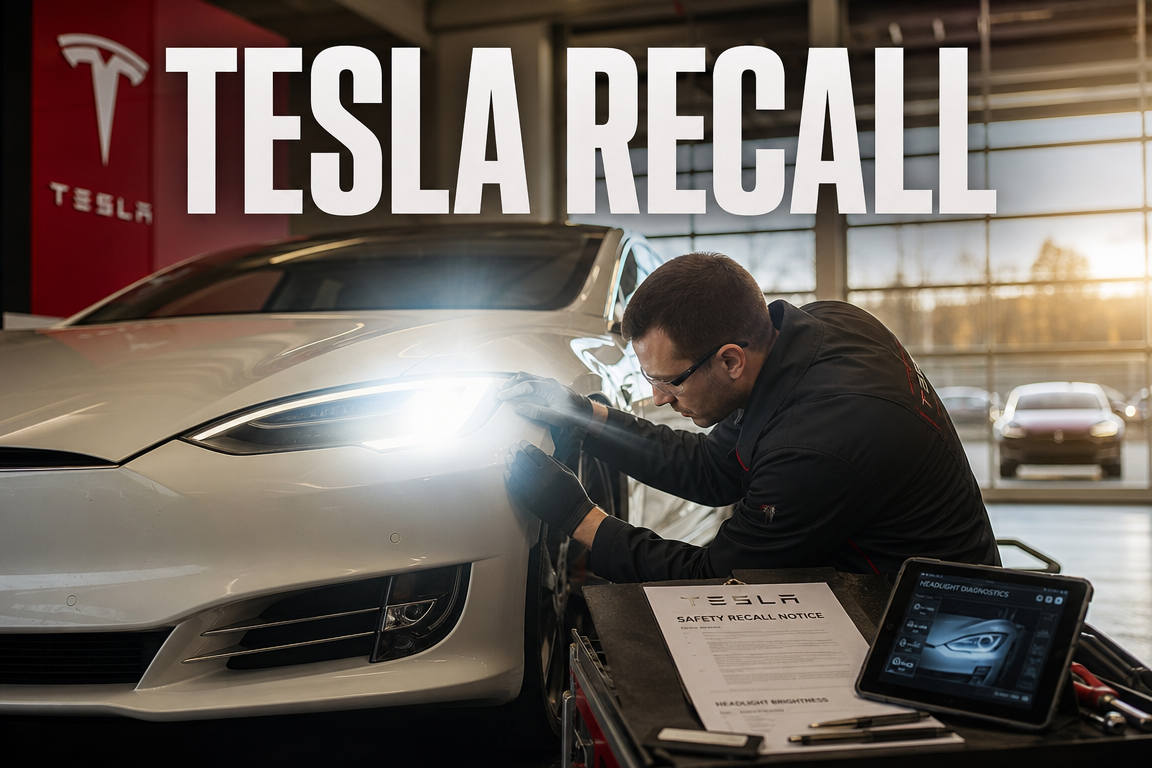
The issue centers on headlight brightness.
According to Tesla’s own testing, some zones recorded up to 230.1 candela.
The U.S. federal standard is 125 candela.
In practical terms, the headlight brightness in certain areas was nearly twice the legal limit.
Importantly, this issue was not triggered by external complaints.
Tesla identified it through internal testing and self-reported it to NHTSA in March 2024.
Tesla later petitioned for an exemption, arguing that a recall was unnecessary because the issue did not present a material safety risk.
NHTSA rejected that request, resulting in a formal recall.
4. Why a Software Update Is Not Enough
When Tesla recalls are discussed, many investors immediately think of OTA software updates.
Indeed, Tesla has historically resolved many vehicle issues remotely.
That capability has been one of its key advantages over legacy automakers.
This case is different.
The affected vehicles may not use the latest matrix LED headlights.
Those systems have more fixed physical limitations in terms of beam angle and brightness distribution.
As a result, software alone is unlikely to provide precise correction.
Service center intervention, including physical adjustment or inspection of components, is likely required.
This is the central significance of the recall.
Even for a software-centric automaker, not every issue can be solved through code if the hardware design itself creates a constraint.
The case underscores that physical safety standards remain relevant in the era of AI vehicles.
5. GM Faced a Similar Issue: This Is Not Unique to Tesla
This headlight recall is not an isolated or unprecedented event for Tesla.
In 2022, GM faced a large-scale recall issue related to headlights.
At the time, GM reportedly sought to avoid a recall involving approximately 820,000 vehicles through a similar petition, which was rejected.
There have also been petitions in the past concerning LED headlight systems used in vehicles such as the Model 3, the Ford Bronco, and the Rivian R1T.
NHTSA rejected those petitions, and although the Model 3 was included, they did not result in a recall.
The notable aspect of the current case is that a matter not resolved through consumer complaints became a recall after Tesla submitted its own test data.
In other words, this recall is driven more by a conflict between internal measurements and regulatory standards than by a surge in customer complaints.
6. Could This Expand Beyond the United States?
As of the original report, the recall is limited to 19,917 vehicles registered in the United States.
There is no indication yet that it has expanded to other countries.
That said, expansion cannot be ruled out entirely.
Headlight brightness, glare angle, and inspection criteria vary by jurisdiction.
A brightness distribution that violates U.S. standards may be interpreted differently elsewhere.
Tesla’s argument is that the excess light is directed outside the driver’s normal field of vision and that evidence of actual glare risk is insufficient.
NHTSA did not accept that position.
For U.S. regulators, a breach of the legal standard appears to have outweighed the absence of confirmed accident data.
7. FSD Learns Driver Habits, Yet Older Headlights Must Be Fixed Manually
The most notable contrast in this story is between FSD and the recall.
Elon Musk said on X that FSD can learn driver intervention patterns and eventually better reflect individual driving preferences.
For example, if a driver prefers faster lanes or frequently intervenes during certain maneuvers, FSD may learn that behavior.
This is a meaningful step in autonomy.
It moves beyond basic road recognition toward personalized AI that reflects user preferences and habits.
In the future, even parking preferences may become personalized.
In Korea, many drivers prefer reverse parking, while front-in parking is more common in some other regions.
If FSD learns such preferences, the user experience for robotaxis and private vehicles could diverge significantly.
At the same time, even basic headlight brightness issues in older hardware cannot be fully resolved through software.
That contrast illustrates Tesla’s current position.
AI and autonomy software are advancing quickly, but earlier vehicle hardware may not keep pace.
8. Potential Impact on Tesla’s Second-Quarter Results
The recall is unlikely to create a major direct hit to Tesla’s second-quarter earnings.
The affected volume is limited to 19,917 vehicles.
Relative to Tesla’s total sales and global fleet, the financial burden should remain manageable.
However, investors are likely to focus on several questions during earnings.
First, whether the recall could extend to other model years or other countries.
Second, whether hardware limitations in older vehicles could constrain future FSD expansion.
Third, how Tesla is improving quality control and regulatory compliance.
More important than the recall itself are the broader topics Tesla is expected to address this week.
These include the FSD commercialization timeline, robotaxi strategy, Cybercab deployment timing, vehicle deliveries, margin trends, and growth in the energy business.
In particular, the key issue in a more competitive EV market is whether Tesla can sustain demand without relying on further price reductions.
9. This Week’s Market Calendar: Big Tech Earnings and the FOMC Also Matter
According to the original report, Tesla’s second-quarter earnings are scheduled for Wednesday this week.
Alphabet, Intel, IBM, T-Mobile, and other major companies are also set to report this week.
In other words, this is not only Tesla’s week; it is also an important test of sentiment toward Big Tech and growth stocks more broadly.
The FOMC meeting is scheduled for July 28 and 29.
Before the meeting, Fed officials are subject to the blackout period.
With fewer new policy signals, markets may react more strongly to corporate earnings and guidance.
If expectations for rate cuts weaken or recession concerns increase, high-growth stocks such as Tesla could face greater volatility.
Conversely, if Tesla provides a clear roadmap for FSD, robotaxis, and the energy business, sentiment could recover quickly.
10. Tesla’s Sales Strategy: Why Expansion in Latvia and Uruguay Matters
The original report notes that Tesla is expanding its presence in Latvia and Uruguay and becoming more aggressive in vehicle sales.
While this may appear to be a routine retail expansion story, it is strategically relevant.
Tesla’s long-term strategy extends beyond vehicle sales.
As the installed base grows, Tesla can expand FSD subscriptions, software features, energy products, insurance, and charging network usage.
In that sense, each vehicle is both a hardware sale and an installed base for a software platform.
Expansion into smaller and emerging markets is also meaningful for Tesla’s long-term EV share and data collection.
Autonomy systems require diverse driving data from a wide range of road conditions.
Global expansion therefore supports not only revenue growth but also FSD development.
11. The Core Point Often Missed in Other Coverage
The essence of this recall is not simply that Tesla issued a recall.
The real issue is that Tesla’s software-centric strategy cannot solve every problem.
Tesla has changed the concept of automotive recalls through OTA updates.
But when beam angle, luminous intensity, and hardware architecture are involved, service center visits remain necessary.
This is less a failure of Tesla than a reminder that the auto industry is still constrained by physical safety requirements during its AI transition.
Regulation for EVs and autonomous vehicles is likely to become more granular over time.
Cameras, lidar, radar, headlights, driver monitoring, and in-vehicle AI decision-making may all come under stricter scrutiny.
Companies that deploy technology quickly, such as Tesla, are also more likely to face friction with regulators.
From an investor perspective, the key question is not recall cost.
It is how Tesla will manage hardware-generation differences over time.
As FSD evolves, the gap between older and newer vehicles may widen.
How effectively Tesla narrows that gap through software will remain a key determinant of its long-term competitiveness.
12. Key Investor Takeaways
First, monitor whether the recall expands.
The current issue is limited to 19,917 vehicles in the U.S., but investors should watch for similar reviews by other regulators.
Second, watch Tesla’s FSD roadmap in the earnings call.
How specifically Elon Musk addresses FSD personalization, robotaxis, and Cybercab timing will matter.
Third, focus on automotive margins.
In a highly competitive EV market, Tesla’s ability to defend margins is critical.
Fourth, track the energy business.
Tesla’s energy storage segment may help offset volatility in the vehicle business.
Fifth, consider the broader U.S. market and interest-rate environment.
Ahead of the FOMC meeting, growth-stock valuations may remain highly sensitive to rate expectations.
13. One-Sentence Summary of the Recall
This Tesla recall is less a major earnings threat than a reminder that even a company built around software must still operate within physical safety regulations and hardware constraints.
Tesla’s short-term share price volatility is likely to be driven more by second-quarter earnings, FSD strategy, robotaxi timing, and the U.S. rate backdrop than by the recall itself.
< Summary >
Tesla is conducting a physical recall of 19,917 Model 3 and Model Y vehicles in the United States due to a headlight brightness issue.
The problem is that brightness in certain areas exceeded the U.S. federal standard.
The affected vehicles include older hardware without the latest matrix LED system, making a software-only fix impractical.
The recall is small enough that the direct impact on Tesla’s second-quarter results should be limited.
However, investors should also assess recall expansion risk, the FSD roadmap, robotaxi timing, automotive margins, and the post-FOMC interest-rate environment.
The broader takeaway is that Tesla’s AI and software strategy remains powerful, but physical safety regulation and hardware limitations continue to matter.
[Related Articles…]
Tesla Stock Outlook and EV Market Trends
AI Autonomy and Robotaxi Industry Trends
*Source: [ 오늘의 테슬라 뉴스 ]
– 소프트웨어로 다 고치는 테슬라, 이번엔 못 고친다? — 19,917대 물리적 리콜의 이유는?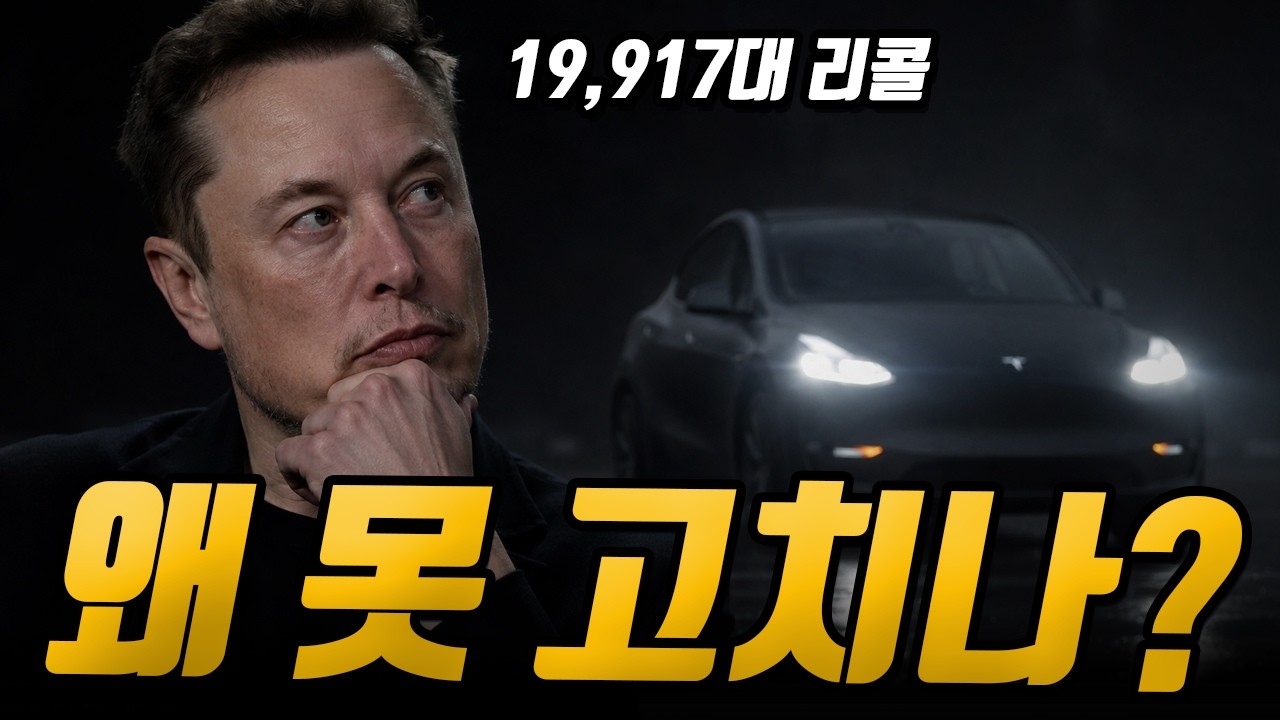
● AI-Bubble,HBM-Surge,Data-Center-Play
“AI Has Not Really Started Yet”: The 2026 AI Inflection Point, Bubble Risk, and Korea’s Semiconductor Opportunity
The core theme of the 2026 AI market is no longer simply using ChatGPT more effectively.
If generative AI was the era of producing information, the next phase is agentic AI, in which AI can judge and execute tasks directly.
Three points matter most in this shift.
First, AI technology itself is still using only a very small fraction of its potential.
Second, any AI bubble is more likely to burst because of macro variables such as interest rates, liquidity, inflation, and geopolitical conflict rather than because of the technology itself.
Third, while Korea lags the United States and China in foundation model competition, it has a meaningful opportunity in AI semiconductors, HBM, data centers, and full-stack infrastructure.
1. Why the Real AI Cycle Begins in 2026
Over the past three years, most of what we have experienced has been generative AI.
This has mainly included AI that writes text, creates images, edits video, and generates code.
However, this stage is closer to an appetizer than the main course.
The real AI cycle from 2026 onward begins with agentic AI.
Generative AI responds to user prompts by producing output.
By contrast, agentic AI can collect information, make choices, and execute actions on its own.
The difference is substantial.
Until now, humans have needed to instruct AI to “find the data,” “organize it,” or “write the report.”
Agentic AI is moving toward handling work such as analyzing quarterly sales declines, formulating response strategies, and sending draft reports to relevant departments.
For that reason, AI in the 2026 macro outlook should be viewed not as a simple technology theme but as a key variable affecting employment, corporate investment, industrial structure, and global power dynamics.
2. Is Generative AI Over? In Fact, It Is Still Early
Some argue that generative AI has already peaked.
In practice, AI output in writing, image generation, video production, and coding is now often difficult to distinguish from human work.
At a superficial level, the market may appear mature.
From an industry perspective, however, AI adoption remains low.
In the United States, corporate AI adoption is often estimated at around 20%.
More conservatively, AI embedded deeply into real business workflows may still account for less than 1%.
Using ChatGPT or Gemini as an individual is fundamentally different from deploying AI across an enterprise.
Individuals use AI for summarization or idea generation.
Enterprises must address security, data integration, internal systems, accountability, cost structure, and productivity validation.
In the end, the most valuable market is B2B, not B2C.
The market in which firms pay subscription fees is much smaller than the market in which enterprises redesign entire workflows around AI.
Accordingly, AI service providers are likely to focus more on enterprise AI models, AI infrastructure, and vertical AI solutions than on consumer-facing services in 2026.
3. Why Manufacturing AI Transformation Remains Early-Stage
In manufacturing, AI transformation is not limited to office workers using AI tools.
It encompasses Manufacturing AI Transformation, or MAX.
MAX includes factory automation, quality inspection, supply chain forecasting, equipment failure prediction, production optimization, and energy efficiency management.
For manufacturing-heavy economies such as Korea, missing this transition could weaken industrial competitiveness quickly.
At the same time, the opportunity is significant.
Korean companies already have strengths in semiconductors, batteries, shipbuilding, automobiles, displays, and smart factories.
Combining these with AI can improve productivity and create exportable infrastructure models.
In particular, as demand for AI semiconductors and data centers rises sharply, Korean manufacturing can evolve from a component supplier into a partner in AI infrastructure deployment.
4. Why an AI Bubble Is More Likely to Be Driven by Capital Conditions Than by Technology
One of the main investor questions is whether AI is in a bubble.
The key point is that AI technology and the AI investment cycle must be viewed separately.
AI technology is still early-stage.
The situation resembles the early internet.
The dot-com bubble burst in the early 2000s, but the internet itself did not disappear.
On the contrary, companies such as Amazon, Google, and Meta later expanded, and the internet became core economic infrastructure.
AI is similar.
The risk is not that AI is fake.
The issue is the mismatch between investment pace and the pace at which returns are realized.
Companies are investing enormous sums in data centers, GPUs, HBM, power grids, and cloud infrastructure.
However, it remains unclear how quickly that spending will translate into revenue and profit.
If the gap becomes too wide, financial markets may become unstable.
In other words, the central risk is not the technology itself but the flow of capital.
5. The Real Risk Is Liquidity Tightening
The most important point is that an AI bubble may not burst within AI itself.
Capital could leave unrelated sectors first, and the shock could then spread across financial markets.
Large technology companies are planning AI investments worth hundreds of billions of dollars, and in some cases, trillions, through 2030 or 2035.
Companies such as Google and Meta are issuing debt to finance this spending.
IPO prospects for firms such as OpenAI, Anthropic, and SpaceX are also being discussed.
The problem is that global capital is not unlimited.
As money flows into AI, it must come out of other industries, assets, and companies.
Firms with weaker access to capital may be the first to come under pressure.
What may appear as an “AI bubble burst” could in practice reflect a broader liquidity shortage rather than a failure of AI itself.
If expectations for rate cuts weaken, if inflation reaccelerates, or if geopolitical risks such as conflict in the Middle East intensify, the situation could change quickly.
6. How Interest Rates, Inflation, and Conflict Affect the AI Cycle
AI companies are raising substantial capital for infrastructure investment.
Low interest rates reduce the burden.
But if inflation rises again, central banks are more likely to keep policy tighter or raise rates.
For example, broader conflict in the Middle East could push up crude oil prices.
Higher oil prices increase logistics and production costs, which then feed inflation.
In that case, the Federal Reserve and other central banks would find it harder to ease policy.
AI companies would then face higher funding costs.
Bond issuance would become more expensive, and investors would shift toward safe-haven assets rather than growth stocks.
AI sentiment could weaken, and equity volatility could rise.
Accordingly, AI investment decisions should not be based on technology headlines alone.
Interest rates, inflation, oil prices, U.S.-China competition, and global liquidity must all be monitored together.
7. Earnings Are Real, But Equity Volatility Has Increased
The earnings of AI semiconductor companies are genuinely strong.
Rising HBM demand means that Korean companies such as SK Hynix and Samsung Electronics are direct beneficiaries of the AI investment cycle.
If Nvidia GPUs are central to AI training and inference, HBM is the key bottleneck component that allows that performance to be fully realized.
The key question is whether earnings are real or whether the stock price is real.
The answer is that earnings are real.
Stock prices can move much more sharply as they adjust to those earnings.
Even when profit forecasts are strong, AI semiconductor stocks can still be volatile in the near term.
That is more likely to reflect investor sentiment, interest-rate expectations, global capital flows, and profit-taking than a deterioration in fundamentals.
Investors should therefore avoid both extremes: the view that AI is over and the view that AI can only go up.
The correct approach is to distinguish firms with real earnings growth from those driven primarily by expectations.
8. Who Makes Money in the AI Gold Rush
The AI market is often compared to a gold rush.
During the California gold rush, only a small number of people became rich by mining gold.
By contrast, Levi Strauss made steady money selling workwear to miners.
The same structure is emerging in AI.
AI service companies must purchase large amounts of infrastructure to develop models and deliver services.
AI infrastructure companies, on the other hand, generate revenue by selling GPUs, HBM, servers, networking equipment, data centers, and power systems.
The ultimate winners remain uncertain, but the firms selling shovels and workwear are already earning money.
From this perspective, the attention given to Nvidia, SK Hynix, Samsung Electronics, TSMC, data center operators, and power infrastructure firms is understandable.
9. Korea May Trail in AI Models, But It Is Strong in Infrastructure
Korea is not leading the world in foundation models in the way the United States and China are.
Compared with OpenAI, Anthropic, Google, Meta, and major Chinese AI firms, its software and model capabilities lag.
However, the economic opportunity is different.
Korea may be one of the countries that benefits most from the AI era.
The reason is memory semiconductors and HBM.
Korean firms have spent decades concentrating on memory semiconductors.
While many firms in the United States, Europe, and Japan exited or weakened their memory businesses, Korean firms stayed through intense competition.
The AI boom has made that decision highly valuable.
As AI models scale, memory bandwidth becomes as important as compute.
HBM has therefore emerged as a key bottleneck in the AI semiconductor ecosystem.
This explains the importance of SK Hynix and Samsung Electronics in the global AI supply chain.
10. Why SK Group’s Full-Stack Strategy Matters
Delivering AI services requires more than a chatbot app.
Below the service layer is the AI model.
Below the model layer are the data center, semiconductors, servers, power, and networks.
This entire structure can be understood as a full stack.
The ability to connect AI services, AI models, and AI infrastructure is becoming increasingly important.
SK Group has drawn attention because it can connect SK Hynix’s HBM, SK Telecom’s AI services and data center project capabilities, and the group’s broader infrastructure assets.
Nvidia supplies GPUs, but it does not itself operate a full telecom infrastructure or manage the entire data center stack.
By contrast, Korean companies can combine semiconductors, telecom, construction, power, and systems integration into overseas data center projects.
This could become an important growth path for Korea’s slow-growing economy.
11. Data Centers May Become a New Infrastructure Export Industry
One of the main bottlenecks in the AI era is data centers.
As models grow larger, they require more GPUs and HBM, more power, more cooling, and more stable networks.
Global data center capacity is expanding rapidly.
The United States accounts for the largest share, followed by China and other advanced economies.
Many emerging markets still lack sufficient capacity.
This implies that demand for data center construction in emerging markets may increase materially.
Just as Korean firms once exported plants, shipbuilding projects, smart farms, and urban development, they may be able to export AI data center projects.
A model such as a “K-AI Highway” could package data centers, telecom networks, cloud infrastructure, and AI service platforms together.
This would be a much larger industrial strategy than simply selling semiconductors.
12. AI Is a Central Front in the U.S.-China Power Competition
AI is not merely an industrial technology.
It affects defense, finance, manufacturing, education, healthcare, administration, surveillance, and information operations.
For that reason, the United States and China are engaged in a global competition centered on AI.
The United States is leading the AI ecosystem through companies such as Nvidia, OpenAI, Google, Microsoft, Amazon, and Meta.
China is pursuing catch-up through domestic AI models, semiconductor self-sufficiency, data assets, and state-directed infrastructure investment.
Korea is therefore positioned under strategic pressure.
It is deeply integrated into the U.S.-centered AI supply chain while remaining unable to fully sever ties with the Chinese market.
Accordingly, Korean firms must manage geopolitical risk as carefully as they manage technology competitiveness.
13. Employment Disruption Could Arrive Faster Than Expected
Agentic AI matters because it enters the execution layer of work.
Generative AI mainly acted as a supplement to human labor.
Agentic AI, by contrast, is moving toward completing work in place of humans.
The first jobs likely to be affected are repetitive knowledge-work functions.
Examples include data research, draft report preparation, customer support, legal document review, accounting processing, marketing content production, data analysis, and schedule management.
This does not mean all jobs will disappear.
It means that job design will change.
People are likely to move toward verifying AI output, making strategic judgments, assuming responsibility, and handling relationships and negotiation.
The main issue is the speed of transition.
Companies can adopt AI quickly if productivity gains are clear.
Workers may not be able to retrain and transition at the same pace.
As a result, AI-related employment issues are likely to become a major policy agenda item after 2026.
14. The Less Discussed Issue: More Important Than an AI Bubble Is Capital Reallocation
Most coverage explains the AI bubble through share-price gains or Nvidia’s valuation.
But the more important issue is the direction of capital.
Today, AI is absorbing capital as a dominant theme.
As in the IMF’s “crosscurrents” description of the global economy, powerful flows can still generate countercurrents.
AI investment may lift growth while also creating funding shortages elsewhere.
If the investment environment deteriorates, companies and investors will move back toward cash.
That could drain capital from equities, venture capital, corporate bonds, real estate finance, and emerging-market assets.
The resulting stress could then raise AI financing costs and slow investment further.
In that sense, the real risk is not that AI is useless.
The risk is that AI is so important that it absorbs too much capital.
15. Key Checkpoints for Investors
First, assess whether AI companies are seeing real revenue growth.
What matters is whether customers are actually paying for the service, not just the narrative.
Second, monitor the profitability of AI infrastructure companies.
It is important to confirm that demand for GPUs, HBM, data centers, and power infrastructure is translating into contracts and earnings.
Third, watch interest rates and the corporate bond market.
How easily large technology companies and AI startups can raise capital is central to the AI investment cycle.
Fourth, track oil prices and inflation.
Higher oil prices can raise inflation, inflation can pressure interest rates higher, and higher rates can compress growth-stock valuations.
Fifth, monitor U.S. and Chinese technology regulation.
Export controls on AI semiconductors, restrictions on HBM supply chains, and cloud-access limitations can directly affect Korean firms.
16. Korea Faces Both Risk and Opportunity
Korea is not the global leader in AI software.
But it occupies a highly important position in the AI infrastructure supply chain.
In particular, SK Hynix and Samsung Electronics are widely seen as key beneficiaries of the AI cycle through HBM and memory semiconductors.
If data center construction, telecom infrastructure, systems integration, power solutions, and construction capabilities are combined, Korea could develop into an exporter of AI infrastructure.
For an economy constrained by slow growth, this may be a more realistic path than building consumer AI apps alone.
The risks are also clear.
If the AI investment boom weakens, the semiconductor cycle will be affected.
As U.S.-China technology rivalry intensifies, Korean firms may face increasing pressure to choose between supply chains.
Ultimately, the key variable for Korea in 2026 will be how long the AI semiconductor boom can be converted into earnings.
The next stage will depend on how effectively data centers and AI full-stack infrastructure are expanded into global business lines.
17. In One Sentence
AI is not a bubble in the sense of being a false industry; it is still an early-stage industry, but the capital flowing into it can unbalance financial markets.
The technology is likely to continue growing over the long term, but investment is highly sensitive in the short term to interest rates and liquidity.
Korea is not a leader in the AI model race, but it has one of the most realistic opportunities in 2026 through HBM and data center infrastructure.
< Summary >
The key theme for 2026 AI is the transition from generative AI to agentic AI.
AI technology is still using only a small portion of its potential, leaving substantial long-term growth room.
However, AI bubble risk is more likely to arise from interest rates, inflation, liquidity shortages, and geopolitical risk than from the technology itself.
Korea is weaker than the United States and China in AI models, but has significant opportunity in HBM, AI semiconductors, data centers, and full-stack infrastructure.
Investors should focus on real earnings, financing conditions, semiconductor demand, and data center investment trends rather than on AI expectations alone.
[Related Articles…]
- 2026 AI Investment Cycle and Global Macro Outlook
- HBM and the Next Growth Engine for the Korean Economy
*Source: [ 경제 읽어주는 남자(김광석TV) ]
– “AI는 아직 시작도 안 했다” 2026년 진짜 본게임이 시작되는 이유 | 50만 특집 경읽남과 토론합시다 | 김대식x이광용 [1편]