● Kimi K3 Memory Boom Signals Broader AI Infastructure Demand
Kimi K3 Shock Key Takeaway: What matters more than saying Chinese AI has overtaken the U.S. is ‘AI investment and memory semiconductor demand’
The real point to watch in this issue is not simply that “a Chinese AI model beat the U.S.”
The news that Kimi K3 outperformed Claude and the GPT family in some benchmarks is sensational, but the key takeaway the market should focus on is elsewhere.
First, Chinese AI is now moving beyond low-cost, high-value models and into high-performance frontier models.
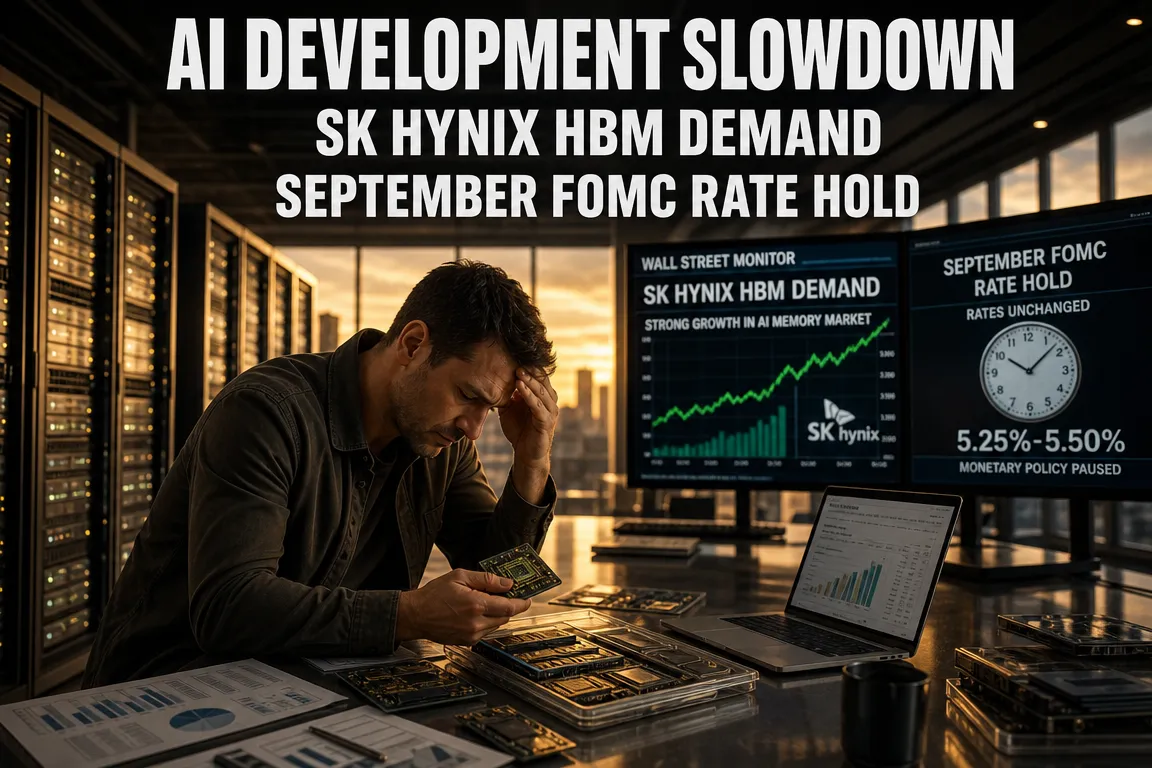
Second, as AI models get larger, demand for memory semiconductors is likely to grow not only for Nvidia GPUs, but also for HBM, DRAM, NAND, and SSDs.
Third, if AI model prices fall, AI investment demand may not shrink; instead, a Jevons effect could emerge, where usage explodes.
Fourth, the U.S.-China race for AI supremacy is likely to push up global forecasts for data center investment, semiconductor supply chains, and growth in the artificial intelligence industry.
1. The core of the event: China’s open-source AI model ‘Kimi K3’ shook the market
The market reacted strongly to claims that Kimi K3, the open-source AI model developed by China’s Moonshot AI, outperformed major U.S. AI models in some performance evaluations.
In particular, the original article explains that Kimi K3 surpassed Claude Fable 5 and the GPT 5.6 family in the frontend code arena.
Because of this, the interpretation that “Chinese AI has finally overtaken U.S. AI” spread quickly.
However, taking this at face value can cause you to miss the real point.
What matters is not that Kimi K3 ranked number one across every category, but that it showed strong performance in specific task areas.
By overall performance standards, Claude and the GPT family still remain at the top, and Kimi K3 is being viewed as a very strong model in the third-place tier.
In other words, this event is less about “China completely winning” and more about “China catching up to right behind U.S. frontier AI models.”
2. What the market misunderstands: Chinese AI is no longer just ‘cheap value-for-money’
When DeepSeek first shocked the market, the interpretation was relatively simple.
“Much cheaper than U.S. models, and pretty good performance.”
That was the core of the DeepSeek shock.
But recent Chinese models such as Kimi K3 and GLM 5.2 are moving in a slightly different direction.
Chinese AI companies are no longer just pursuing lower prices; they are shifting toward a strategy of raising performance itself to the level of U.S. frontier models.
This shift is important.
In the past, Chinese products carried an image of “cheap, but somewhat questionable quality,” but recently they have shown competitiveness in high-performance product categories such as electric vehicles, robot vacuums, drones, batteries, and AI models.
The same trend is appearing in the AI industry.
China is no longer just a low-cost alternative; it is becoming a technological competitor that U.S. big tech must take seriously.
3. Cost analysis: A low token price does not mean low actual work cost
One of the most important points in the original article is that when evaluating AI model costs, you should not look only at the price per token.
For example, even if a model’s output price per 1 million tokens appears low, the actual cost can be similar if more tokens are required to complete the same task.
The original article explains that although Kimi K3 looks much cheaper than Claude on a per-token basis, its total cost per task is not very different from the GPT family.
There is an even more important issue here.
If AI does not produce the right answer in one shot, a human must review it again.
If review time increases, rework occurs, and prompts must be submitted again, total costs rise.
In the end, for companies, the far more important question is not “Is the token price cheap?” but “How much does it reduce work time?”
That is why top-performing frontier models may seem expensive but still be more economical in terms of real work efficiency.
4. Why Kimi K3 is impressive: China has entered the race for ultra-large agent models
Even so, Kimi K3 is not a model to dismiss lightly.
According to the original article, Kimi K3 is described as a large model with roughly 2.8 trillion parameters.
This is far larger than the DeepSeek family, and Alibaba’s Qwen family is also said to be competing with models of more than 2 trillion parameters.
At this scale, this is no longer just a chatbot competition; it should be seen as an agentic AI competition.
Agentic AI goes beyond simple answers and performs coding, search, workflow automation, data analysis, design, document writing, and decision support.
Because it is directly tied to enterprise productivity improvements, it is highly likely to become a core part of the next AI investment cycle.
China’s rapid rise in this area puts significant pressure on U.S. big tech.
As a result, U.S. companies are more likely to increase AI investment aggressively rather than reduce it.
5. User experience still favors U.S. AI: ecosystem matters more than model performance
The original article also clearly points out Kimi K3’s limitations.
Kimi K3 is indeed a competitive model, but in actual user experience it is still seen as having a gap compared with Claude and the GPT family.
Especially in the developer ecosystem, tools and workflows matter more than raw model performance.
For example, factors such as Claude Code, Codex, developer APIs, IDE integration, enterprise security features, and workspace integration create a developer lock-in effect.
No matter how good an AI model is, if it cannot deeply penetrate real work environments, its market dominance can remain limited.
In this area, U.S. AI labs and the big tech ecosystem are still strong.
In other words, China is rapidly catching up in model performance, but the U.S. still holds a strong position in productization, developer tools, cloud infrastructure, payment ecosystems, and enterprise customer bases.
6. The real investment point: Kimi K3 signals rising demand for memory semiconductors
The most important part of this issue, which many news reports miss, is memory semiconductors.
Ultra-large AI models like Kimi K3 do not just use a lot of GPUs.
As model parameters increase, more memory layers are needed, including HBM, DRAM, NAND, and SSDs.
The original article explains that Kimi K3’s parameter scale is so large that even with NVFP4 quantization, more than 1.5TB of capacity is required.
At this scale, it is difficult to fit all data into HBM.
So some data must move down to DRAM, and larger datasets must be handled by SSD or NAND flash layers.
In this process, technologies such as KV cache offloading become important.
As AI inference expands, the core bottleneck is not just compute equipment, but the memory infrastructure needed to store and retrieve data quickly.
That is why memory semiconductor companies, SSD companies, and data center storage companies may regain attention in the AI infrastructure investment cycle.
7. Why looking only at HBM is not enough: AI infrastructure depends on the entire memory hierarchy
Recently, when the market talks about AI semiconductors, it mainly focuses on Nvidia GPUs and HBM.
Of course, HBM is a critical component in AI training and inference.
But as ultra-large models grow, HBM alone becomes insufficient.
Inside AI data centers, multiple storage layers operate together, including HBM, GPU memory, server DRAM, high-performance SSDs, and large-capacity HDDs.
As models get larger, context windows get longer, and agent tasks become more complex, the amount of KV cache and intermediate data storage increases.
At that point, the bottleneck is not only compute speed, but also data movement speed and storage capacity.
So when evaluating AI infrastructure investment, you should look not only at GPU companies, but also at memory semiconductors, storage, networking, and power infrastructure.
From a global economic outlook perspective, this trend means a structural change in the semiconductor cycle.
In the past, memory semiconductors were viewed as a cyclical industry sensitive to smartphone and PC demand.
But as AI data center demand grows, the growth engine of the memory industry is shifting toward servers and the AI industry.
8. Stock market reaction: Why memory held up even when Nasdaq and semiconductors weakened
The original article explains that even on days when the Nasdaq and semiconductor indexes fell, some memory-related companies showed strong performance.
Generally, when the Nasdaq sold off sharply, memory stocks like Micron tended to weaken even more.
But this time, memory and storage-related companies such as Seagate, Western Digital, and SK Hynix were interpreted as showing relative strength.
This trend can be seen in two ways.
First, the market has begun to reflect the possibility that ultra-large AI model expansion will further increase memory demand.
Second, memory-related stocks have already corrected significantly, which may have lowered valuation pressure.
Of course, it is not possible to declare a bottom based on short-term stock movement alone.
But if AI infrastructure investment expands while memory demand rises at the same time, memory semiconductors may return as a major investment theme.
9. The Jevons effect: As AI gets cheaper, demand may not fall but instead explode
Many investors think that if AI model prices fall, AI companies’ profitability will worsen and infrastructure investment will decline.
But the original article takes the opposite view.
If the cost of using AI falls, companies and individuals will use AI much more.
Even if unit prices fall, if usage grows faster, total revenue and infrastructure demand can actually increase.
This is the Jevons effect.
Similar logic appeared during the DeepSeek shock as well.
The idea is that if AI models become more efficient, GPU demand will not fall; instead, more companies adopting AI could increase total data center demand.
The Kimi K3 issue can also be interpreted in the same way.
As Chinese AI becomes stronger, U.S. AI companies will have to invest even faster, and governments and companies in other countries are also likely to secure their own AI infrastructure.
10. Geopolitical perspective: AI is now a strategic asset, not just software
AI is no longer just an internet service.
It has become a strategic asset that affects national security, industrial competitiveness, military technology, financial systems, manufacturing automation, education, healthcare, and public administration.
This is why the U.S. is tightening AI semiconductor export controls and China is trying to grow its own AI model and semiconductor ecosystem.
In the future, many countries are likely to avoid relying only on U.S. AI.
Europe, the Middle East, Japan, Korea, India, and Southeast Asian countries may also expand efforts to build their own data centers and national AI models.
This trend creates long-term demand for data center investment, power grid investment, cooling infrastructure, semiconductor supply chains, and the cloud industry.
In the end, the Kimi K3 issue should be seen not as a performance issue for one Chinese AI model, but as a signal that the global AI supremacy race is becoming more intense.
11. The most important point that other YouTube channels or news outlets rarely emphasize
The most important thing in this issue is not “China beat the U.S.”
The real key takeaway is that as the competition among ultra-large AI models grows, the bottleneck expands from GPUs to memory and storage.
Many news reports focus only on benchmark rankings.
But from an investment perspective, where the bottleneck occurs matters far more than whether something ranks first on a benchmark.
As AI models get larger, not only training costs but also inference costs rise.
As inference expands, KV cache, context storage, agent task history, and multimodal data processing volumes increase.
This data is difficult to handle with HBM alone and must move down into DRAM and SSDs.
In other words, the more intense AI competition becomes, the greater the structural demand for memory semiconductors and storage companies may be.
This is exactly the core point the market is likely to miss.
To properly understand the AI investment cycle, you should look not only at Nvidia, but also at the memory and storage value chain, including SK Hynix, Micron, Samsung Electronics, Western Digital, and Seagate.
12. Investment takeaway: AI investment is more likely to broaden rather than shrink
Looking at the Kimi K3 shock only as a short-term negative could lead to a wrong conclusion.
Chinese AI becoming stronger gives U.S. big tech more reason to increase investment, not less.
The U.S. is highly unlikely to give up AI supremacy easily.
China is also likely to move more aggressively to build its own AI ecosystem and semiconductor self-sufficiency.
Governments around the world are also likely to build their own data centers and national AI models.
As a result, the AI investment theme is expanding from simple software competition into infrastructure competition.
The core beneficiary areas may widen to include AI semiconductors, memory semiconductors, data centers, power infrastructure, cooling systems, networking equipment, and high-performance storage.
However, in the short term, valuation pressure, interest rate direction, the pace of big tech capex, and U.S.-China regulatory risks should also be monitored.
The AI industry has strong long-term growth potential, but stock prices can always swing based on the gap between expectations and actual earnings.
13. Core checklist
- Kimi K3 is a powerful signal that Chinese AI has moved up to just behind U.S. frontier models.
- However, benchmark leadership in a specific test should be distinguished from overall AI market dominance.
- Chinese AI is shifting from a value-for-money strategy to a performance-first strategy.
- Even if the token price is low, the total actual work cost can be similar or even higher.
- Frontier models can be more efficient in practice because they reduce review time and rework.
- Ultra-large AI models increase demand not only for GPUs, but also for HBM, DRAM, NAND, and SSDs.
- The expansion of AI inference makes KV cache offloading and storage bottlenecks important investment points.
- AI model efficiency gains may lead not to lower infrastructure demand, but to higher usage.
- The U.S.-China AI competition is highly likely to accelerate global data center investment and the restructuring of semiconductor supply chains.
< Summary >
The essence of the Kimi K3 issue is that Chinese AI has grown enough to threaten U.S. models in some benchmarks.
But the more important key takeaway is not a reduction in AI investment, but the possibility of expansion.
As Chinese AI becomes stronger, the U.S. and other governments are likely to build more data centers and AI infrastructure.
Also, ultra-large AI models can structurally increase demand for memory semiconductors such as HBM, DRAM, NAND, and SSDs, not just Nvidia GPUs.
In the end, the Kimi K3 shock is more reasonably interpreted not as a sign of AI industry slowdown, but as a signal that the AI industry and the memory semiconductor investment cycle are broadening.
[Related Articles…]
- AI Investment Cycle and Global Big Tech Capex Outlook
- Memory Semiconductors and Data Center Demand Shift Analysis
*Source: [ 월텍남 – 월스트리트 테크남 ]
– 모두가 속고있습니다… “오히려 메모리, AI 투자 더해야합니다”