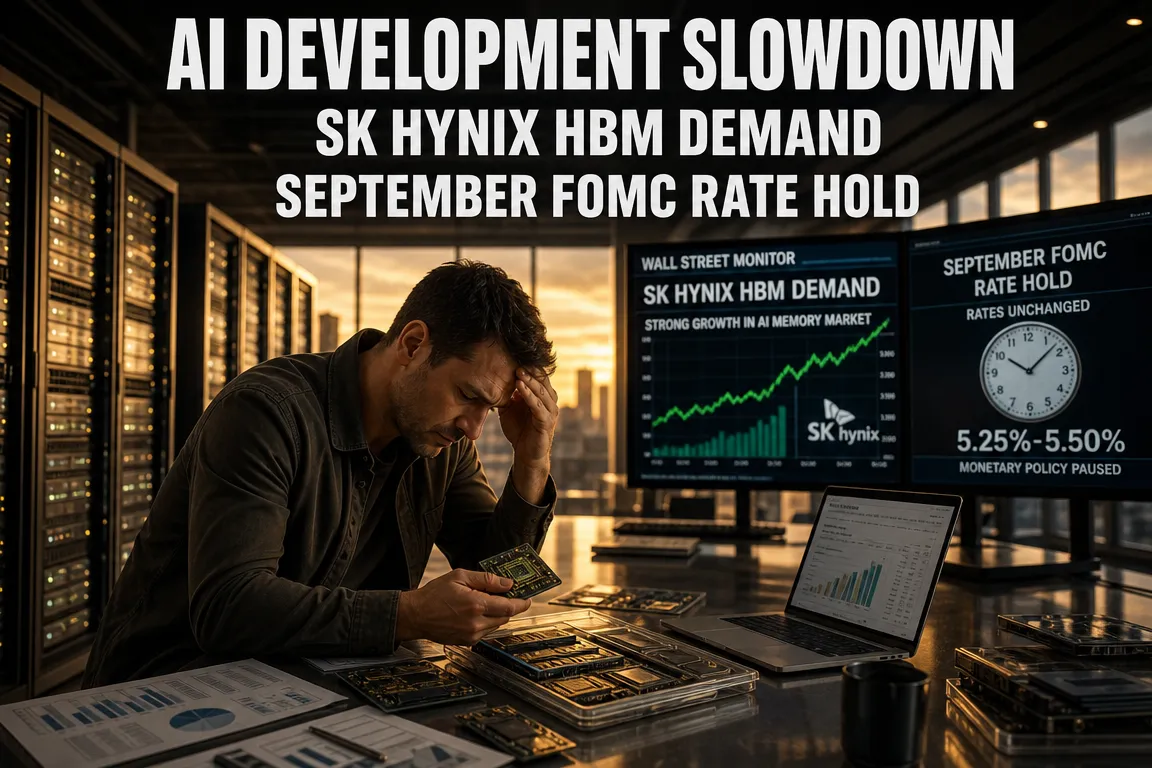
● MEMORY-CHIP SURGE, HBM FRENZY, AI DEMAND SPIKE
The Real Drivers Behind the Surge in Memory Semiconductors: SK Hynix, Micron, Kimi K3, HBM Demand, and Apple’s Leasing Strategy
The key issue today is not simply that memory semiconductor stocks rose.
The sharp gains in SK Hynix ADR, Micron, and SanDisk in the U.S. market reflect a combination of improving AI risk sentiment, a reassessment of memory demand following Kimi K3, easing concerns over HBM supply, post-options-expiry position unwinding, and renewed attention to U.S. semiconductor supply-chain reconfiguration.
Additional attention has been drawn by reports on SK Hynix’s possible acquisition of Intel’s Ohio plant, progress on Nvidia’s Vera Rubin platform, the launch of Google’s Gemini 3.6 Flash, and Apple’s new hardware leasing program, all of which have redirected market focus toward AI infrastructure and memory semiconductors.
1. Why Memory Semiconductor Stocks Surged in the U.S. Market
Memory-related semiconductor stocks posted strong gains in U.S. trading.
SK Hynix ADR rose about 11% intraday, Micron about 12%, and SanDisk about 13%.
Compared with the Nasdaq’s gain of roughly 1.3% on the same day, the sector’s performance was clearly outsized.
- SK Hynix ADR: up about 11%
- Micron: up about 12%
- SanDisk: up about 13%
- Nasdaq: up about 1.3%
Market commentary has pointed to several factors behind the move.
First, much of the speculative positioning appears to have been cleared out.
In other words, short-term capital that had entered for tactical gains likely exited during the recent correction, reducing selling pressure and making a rebound easier.
Second, the correction has been interpreted as a healthy reset after excess enthusiasm in the AI investment theme, rather than a breakdown in the theme itself.
Long-term demand for AI semiconductors, HBM, and data center investment remains intact, while valuations had run ahead too quickly and required consolidation.
2. Why Kimi K3 Was Interpreted as Positive for Memory Semiconductors
The most notable aspect of the rebound was the market’s changing interpretation of the Chinese AI model Kimi K3.
At first, Kimi K3 raised concerns that another Chinese AI model could pressure U.S. AI infrastructure companies.
However, the market later shifted toward the opposite view.
The new interpretation was that Kimi K3 could increase demand for memory semiconductors.
During the DeepSeek shock, smaller and more efficient AI models unsettled the market.
If smaller models could deliver strong performance at lower cost, demand for GPUs and HBM could weaken.
By contrast, Kimi K3 is viewed as a comparatively heavier large model.
Larger AI models require more GPUs, more HBM, and more server memory for both training and inference.
As demand for Kimi K3 surged, reports emerged that new subscriptions were temporarily suspended and computing resources were being prioritized for existing users.
That was interpreted as a strong signal by the market.
The logic is that as AI models gain traction, the bottleneck becomes compute capacity, with memory semiconductors and HBM at the center of that constraint.
3. Why Bank of America Turned Positive on Micron
Bank of America issued a constructive view on Micron.
Market participants also noted an upward revision in the target price, reinforcing optimism about the memory semiconductor cycle.
The bank’s key arguments were as follows:
- Limited threat from CXMT: China’s CXMT has not yet developed meaningful HBM supply capabilities and remains focused primarily on lower-end consumer DRAM.
- Potential share buybacks from late 2026: Companies that received CHIPS Act subsidies in the U.S. are subject to stock buyback restrictions, but those limits may begin to ease from late 2026.
- Kimi K3 does not reduce memory demand: As a large open model, it may create more distributed memory demand rather than reducing centralized HBM requirements.
Investor sensitivity to CXMT remains high.
The concern is that rising supply from Chinese memory makers could pressure prices in the commodity DRAM market.
HBM, however, is structurally different from standard DRAM.
It is a high-performance memory used in AI servers and requires validation with Nvidia GPUs, advanced packaging, yield consistency, and customer qualification.
For that reason, CXMT is not expected to challenge the HBM positions of SK Hynix, Samsung Electronics, or Micron in the near term.
4. The “Real Reason” Cannot Be Reduced to a Single Factor
The recent surge in memory semiconductors cannot be explained solely by Kimi K3.
Markets often appear to move on a single headline, but in practice the move reflects a mix of positioning, options expiry, liquidity, news flow, sentiment, and rate expectations.
U.S. equities have recently shown large moves in response to relatively small headlines.
While positive news was present, it is difficult to conclude that a single item alone justified double-digit gains in SK Hynix ADR and Micron.
The rally is better understood as a case where the market had already sold off excessively, and then reacted sharply to a relatively modest positive catalyst.
What matters is that the market remains highly sensitive to AI infrastructure, data centers, HBM, and memory semiconductor demand.
5. The Significance of Reports on SK Hynix’s Intel Ohio Plant Acquisition
Another important development was a report that SK Hynix may acquire Intel’s Ohio plant.
The Ohio facility was originally intended for Intel’s own semiconductor manufacturing and foundry expansion.
However, Intel’s foundry business has not scaled as quickly as expected, and completion of the plant has reportedly been pushed back to 2030 or 2031.
At present, the site is said to be only at the basic construction stage.
For SK Hynix, there is pressure to secure U.S.-based production capacity.
The U.S. government is pushing for a more domestic semiconductor supply chain and expects major chipmakers to invest in the United States.
In that context, a purchase of an underutilized facility from Intel could benefit both sides.
Intel could reduce the burden of idle assets, while SK Hynix could accelerate its U.S. manufacturing presence.
The acquisition price and timing remain under discussion, but the issue could become a meaningful variable in SK Hynix’s long-term U.S. supply-chain strategy.
6. Market Reaction to Google’s Gemini 3.6 Flash Was Mixed
Google launched Gemini 3.6 Flash.
However, market reaction was limited.
The reason is that Flash is a lightweight AI model.
Lightweight models offer speed and cost efficiency, but they generally do not dominate benchmark rankings against top-tier frontier models.
Available performance evaluations suggest that Gemini 3.6 Flash was not viewed as a market-leading model that could reshape the competitive landscape.
This is also relevant for memory semiconductor investors.
If lightweight models become dominant, concerns about memory demand could increase.
At present, however, the market continues to respond more strongly to large models and high-performance inference infrastructure.
7. Nvidia’s Vera Rubin Platform Continues to Progress Through Customer Testing
Nvidia said its next-generation AI platform, Vera Rubin, is progressing smoothly in customer testing.
Although some semiconductor research firms had raised concerns about the timeline, Nvidia’s message was relatively constructive.
The Vera Rubin platform is expected to be one of the key drivers of future demand for AI semiconductors and HBM.
If Nvidia’s next-generation GPU platform proceeds on schedule, HBM suppliers such as SK Hynix and Micron should benefit.
Ultimately, the AI investment cycle is not only about GPUs, but about the broader value chain, including HBM, packaging, servers, power, cooling, and data centers.
8. AI Model Competition: Why Claude-Related Results Attracted Attention
In addition to Kimi K3, recent comparisons have also focused on Anthropic’s Claude models and OpenAI’s next-generation models.
The source text noted that several AI models achieved very strong results on problems at the International Mathematical Olympiad level.
In particular, Claude-related models were highlighted for solving a problem on the first attempt and doing so relatively quickly.
By comparison, Kimi K3 reportedly used more attempts and more tokens, which was seen as weaker from an efficiency standpoint.
The key point is straightforward.
AI competition is no longer only about raw intelligence.
Economic efficiency increasingly depends on how many tokens, how much compute, and how much memory are required to achieve a given level of performance.
That is where AI service costs begin to diverge.
9. Apple’s Leasing Program: Hardware Is Moving Toward Subscription Economics
Apple has launched a new leasing program.
The structure is similar to automotive leasing, allowing consumers to use Apple devices through monthly payments rather than an upfront purchase.
iPhone and Apple Watch devices use a 24-month leasing structure, while Mac and iPad devices use a 36-month structure.
At the end of the lease term, customers may:
- Pay the remaining balance and take full ownership
- Upgrade early to a new model
- Return the device
Notably, Apple is not directly bearing the financing risk.
The company partnered with Klarna, which assumes the financial risk.
The announcement also increased interest in Klarna.
The program drew additional attention because it followed Apple’s recent price increases.
As component costs and memory prices rise, Apple is using monthly payment structures to reduce the perceived burden on consumers.
In effect, the company is offsetting higher device prices through a subscription-style payment model.
10. The Most Important Point the Market May Be Overlooking
First, Kimi K3 has been reinterpreted not as a Chinese AI threat, but as a source of additional memory demand.
Many headlines frame Chinese AI models only as a competitive threat to U.S. AI companies.
In this case, the market’s key takeaway is that large open AI models may generate more distributed memory demand.
Second, the real strength of the HBM market lies not in volume alone, but in proven supply capability.
Expanding commodity DRAM output is not the same as supplying HBM for Nvidia’s AI platforms.
HBM requires yield, customer qualification, packaging, thermal management, and power efficiency.
Third, Micron’s potential buyback capacity after 2026 may be a larger factor than it appears.
If the AI memory cycle remains firm and cash flow stays strong, the easing of buyback restrictions could add another layer of support to the stock.
Fourth, Apple’s leasing program is not just a sales strategy, but also an inflation response strategy.
As component and memory costs push device prices higher, Apple is lowering consumer resistance through monthly payment terms.
This suggests that hardware markets are also moving toward subscription economics.
Fifth, the market is being driven more by volatility than by headlines alone.
In the U.S. market, even modest positive news can move large-cap stocks by nearly 10%.
In such conditions, it is better to assess positioning, options expiry, liquidity, rate expectations, and geopolitical risk together.
11. U.S.-Iran Risk and Macro Variables
Although semiconductor stocks rebounded, macro risk has not disappeared.
Geopolitical tensions involving the U.S. and Iran remain a market concern.
If energy prices become more volatile, inflationary pressure could rise again, affecting rate expectations and the broader U.S. equity market.
Accordingly, even if the AI and memory semiconductor cycle remains strong, short-term analysis should incorporate geopolitical and macro variables.
The semiconductor supply chain is linked to the U.S., Korea, Taiwan, China, Japan, and Middle East energy markets, making simple earnings-based valuation insufficient.
12. Key Investment Takeaways
- Memory pricing: Monitor whether DRAM and HBM price strength continues.
- HBM supply contracts: Track Nvidia-related supply positions for SK Hynix, Micron, and Samsung Electronics.
- AI model trends: Assess whether demand remains concentrated in large models rather than lightweight alternatives.
- U.S. market volatility: Watch whether post-options-expiry positioning stabilizes.
- Supply-chain reconfiguration: Follow SK Hynix’s U.S. investment plans and Intel asset sale developments.
- Apple pricing strategy: Evaluate how rising memory prices affect device pricing and consumer demand.
< Summary >
SK Hynix ADR, Micron, and SanDisk posted double-digit gains in U.S. trading.
The immediate catalyst was the market’s view that Kimi K3, as a large AI model, could increase demand for memory semiconductors and HBM.
However, the move is more plausibly explained by speculative position unwinding, options expiry, improving AI sentiment, and Bank of America’s constructive view on Micron.
Concerns over CXMT are considered limited in the near term for the HBM market, and Micron’s potential share buybacks from 2026 onward have also attracted attention.
Reports on SK Hynix’s possible acquisition of Intel’s Ohio plant highlight the strategic importance of U.S. semiconductor supply-chain rebalancing.
Apple has launched a hardware leasing program with Klarna, further signaling a move toward subscription-based consumption in premium hardware.
Overall, the market remains highly sensitive to memory semiconductor demand, but given elevated volatility, investors should assess AI infrastructure, HBM, rate expectations, and geopolitical risk together rather than rely on a single headline.
[Related Articles…]
- HBM Demand and the Memory Semiconductor Cycle
- AI Investment Cycle and the Semiconductor Rally in U.S. Markets
*Source: [ 내일은 투자왕 – 김단테 ]
– 메모리 반도체 폭등의 비밀
● AI-Cost Shock, TSMC Price Hike, Oil Spike, Market Rally at Risk
The real driver behind the U.S. stock rebound is not semiconductors, but the AI cost bill
What stands out most in today’s market is the rebound in the Nasdaq and the sharp gains in semiconductor stocks, but the real issue is elsewhere.
Potential TSMC price increases in 2027, the capex burden on big tech from AI, U.S.-China AI talks, the spread of China’s Kimi model, and Brent crude’s return above $90 are all increasingly linked.
On the surface, U.S. equities appear to be rising strongly again. Beneath that, however, a structure is forming that could simultaneously pressure the AI semiconductor supply chain, big tech profitability, inflation, the rate path, and FX trends.
This move is not a simple “semiconductor rally” story.
The key question for second-half 2026 investment strategy is whether the AI investment cycle can remain intact, and who will ultimately bear its cost.
1. All four major Wall Street indices rose, led by semiconductors
U.S. equities closed higher across all four major indices.
-
The Nasdaq rose about 0.78%.
-
The S&P 500 gained about 0.47%.
-
The Dow Jones Industrial Average rose about 0.41%.
-
The Russell 2000 also advanced about 0.63%, indicating improved sentiment in small caps as well.
The market center of gravity shifted back to semiconductors.
Micron rose as much as nearly 7% intraday, while Nvidia, Broadcom, AMD, Intel, and Texas Instruments also posted strong gains.
SanDisk extended its advance from the previous session and rose by around 7%, suggesting improving investor sentiment toward memory and storage names.
Because large-cap semiconductor stocks carry heavy index weight, moves of more than 5% in a single day indicate a meaningful shift in market positioning.
AI infrastructure names also advanced.
-
GE Vernova rose about 3.89%.
-
Vertiv Holdings gained in the 3% range.
-
Eaton also extended its advance.
-
Constellation Energy and Vistra were also firm.
AI data center expansion depends not only on semiconductors, but also on power, cooling, grid capacity, nuclear, and gas-fired generation.
As a result, AI semiconductors and power infrastructure are increasingly moving as part of the same thematic trade in U.S. markets.
2. Brent crude back above $90 is the market’s least favorite variable
Brent crude moved above $90 and reached around $91, while WTI climbed to roughly $84.
This is not just an increase in commodity prices; it is a variable that could pressure both U.S. equities and global FX markets.
The latest rise in oil is tied to geopolitical risks in the Middle East.
Although there had been reports that the U.S. and Iran exchanged a draft related to a ceasefire, the conflict has not been resolved.
The U.S. Treasury also reportedly froze about $130 million in crypto wallets linked to Iran’s Revolutionary Guard.
With continued U.S. pressure on Iran and warning comments about the possibility of U.S. military casualties, markets are again pricing in risk around the Strait of Hormuz.
Some reports have suggested that if tensions in the Strait of Hormuz persist, Brent could rise as high as $120.
Higher oil prices first translate into inflation pressure.
If inflation rises again, expectations for Fed rate cuts could weaken.
If rate-cut expectations fade, growth stocks and high-valuation AI names come under pressure.
For Korean investors, FX is also important.
The won-dollar exchange rate briefly reached the 1,550 level at the end of June before falling back to the 1,470 range, but further oil gains could renew upward pressure.
Korea’s high dependence on energy imports means higher oil prices can increase dollar demand and weaken the won.
3. Bitcoin back above $66,000, with risk appetite gradually recovering
Bitcoin moved back above $66,000, marking a meaningful recovery after about a month.
That said, it is still too early to conclude that a strong upward momentum has fully returned.
The rebound in U.S. equities and strength in semiconductors suggest that risk appetite has partially recovered.
However, with rising oil prices, Middle East risks, U.S.-China tensions, and questions about AI investment returns all still present, Bitcoin is likely to remain volatile.
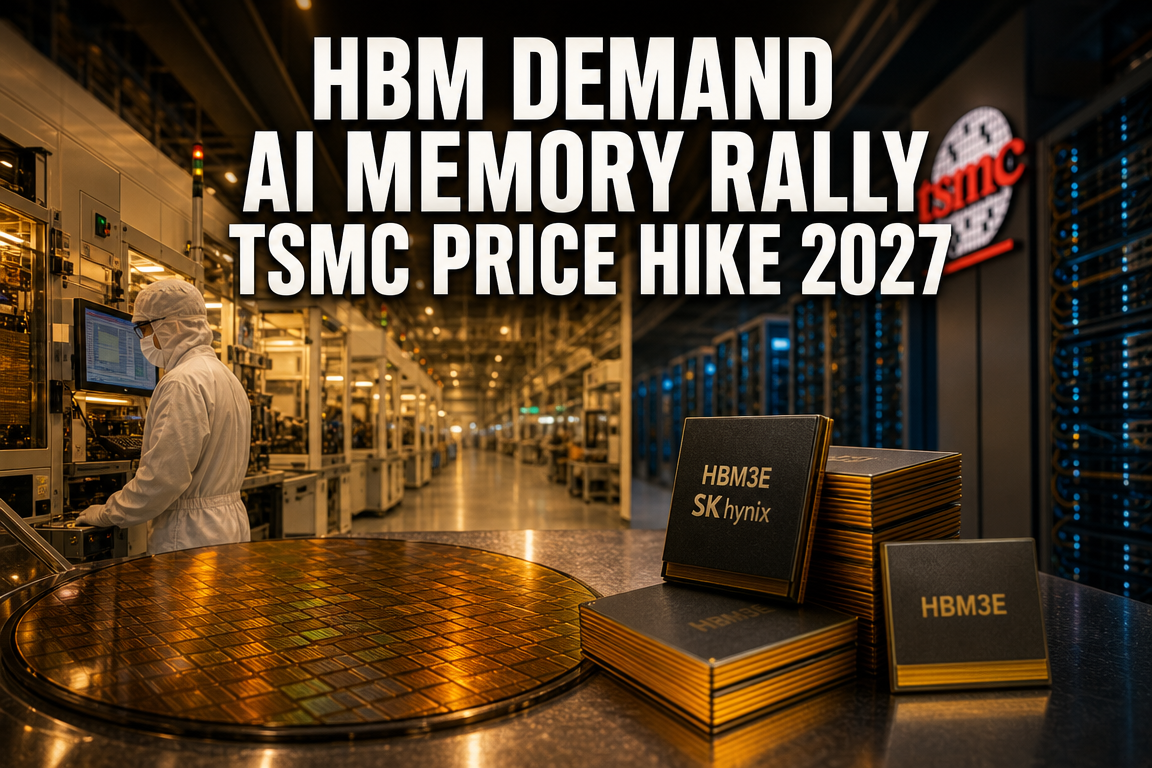
4. Potential TSMC price increases in 2027 are a 2026 market variable, not a distant headline
The most important market development is the possibility of TSMC raising semiconductor prices.
After posting record results in Q2 2026, TSMC has been reported to be considering a 5% to 10% increase in chip production costs starting in 2027.
The scope could include not only leading-edge nodes but also legacy processes such as 12nm and 28nm.
TSMC’s Q2 2026 gross margin reached the high 60% range, underscoring its already exceptional profitability.
Even so, the company’s incentive to raise prices is clear.
Costs have risen materially due to supply chain restructuring tied to geopolitics, including its Arizona plant, Japan plant, and broader U.S. investment expansion.
Production in the U.S. is far more expensive than in Taiwan.
TSMC is effectively passing on the cost of supply chain stability to customers such as Nvidia, Apple, Microsoft, and AMD.
The key issue is that there is effectively no direct substitute for TSMC.
In leading-edge AI semiconductor manufacturing, TSMC’s position is close to monopoly-like.
Samsung Electronics and Intel Foundry are catching up, but TSMC remains by far the dominant supplier of the advanced chips demanded by big tech.
5. Why can a TSMC price increase move big tech stocks?
A TSMC price increase is not simply a story of more expensive semiconductors.
It directly affects big tech’s AI investment returns and equity valuation multiples.
First, AI chips are not products that arrive the day after ordering
AI data center chips require at least 12 to 18 months from design to production, packaging, and delivery.
In other words, 2027 volumes and prices will already be negotiated and reflected in 2026.
Therefore, a 2027 price increase is not a distant event; it affects big tech capex plans in the second half of 2026.
Second, pre-buying may occur ahead of price increases
If chip prices rise 10% in 2027, big tech may seek to pull forward as much supply as possible in the second half of 2026.
In that case, actual capex in the second half of 2026 could overshoot market expectations temporarily.
The market may interpret this as stronger AI demand, or alternatively as costs being brought forward.
Third, equity markets discount 12 to 24 months ahead
Equities do not trade only on current earnings.
Big tech valuations already reflect expectations for AI profitability in 2027 and 2028.
If TSMC prices rise 10%, AI server build-out costs increase.
That could reduce big tech’s AI ROI.
The market will then ask whether the current AI premium embedded in large-cap technology stocks is still justified.
As that question grows, valuation pressure on the Nasdaq and the S&P 500 may re-emerge.
6. Are Micron, SK Hynix, and Samsung’s long-term HBM contracts really a safety net?
In the memory semiconductor market, long-term HBM supply contracts have become a key part of the investment case.
Micron, SK Hynix, and Samsung Electronics are expected to have a substantial portion of HBM and other AI memory volumes locked in under long-term contracts through 2028.
Micron, in particular, has signaled that a significant share of future revenue will come through take-or-pay agreements.
Take-or-pay contracts require customers to pay even if they do not take delivery of the product.
On paper, this is a very favorable structure for suppliers.
In practice, the situation is more complicated.
The end customers are hyperscale big tech firms such as Microsoft, Google, Amazon, and Meta.
If they decide they need to slow AI server deployment and cannot take the full amount this quarter, it is difficult for memory suppliers to simply enforce the contract without compromise.
Breaking a long-term relationship with a major customer could be costly.
During the post-pandemic semiconductor shortage, many long-term supply agreements were signed, but when the macro environment weakened and oversupply emerged, customers often delayed intake or renegotiated terms.
Micron has also previously stated that it would not force customers to buy products they do not need.
Accordingly, long-term contracts are a safety net, but not an absolute shield.
If AI profitability weakens, even long-term contracts may face renegotiation risk.
7. The real AI downturn comes not from recession, but from doubt over ROI
The most important word in AI today is no longer growth rate, but ROI.
So far, big tech’s AI spending has been driven by FOMO, or the fear of being left behind.
Companies have been buying Nvidia chips, building data centers, and signing power contracts because they believe failure to build AI infrastructure now could mean falling behind in the future.
Eventually, however, the market will ask:
“How much profit can all this spending actually generate?”
“Can investment be recovered before Nvidia chips become obsolete?”
“Can companies absorb data center power costs and depreciation while still preserving margins?”
If these questions intensify, big tech may slow the pace of AI infrastructure investment.
That could mark the start of an AI downturn.
This downturn would not resemble a conventional GDP slowdown or an unemployment shock.
It would be a slowdown in the investment cycle driven by skepticism about AI returns.
8. Nvidia’s equity investment in Nebius should not be viewed as a simple financial stake
Reports also indicated that Nvidia acquired about a 9.3% stake in Nebius, a neocloud company.
Neocloud firms buy Nvidia chips and provide them to other companies in cloud format.
Nvidia’s investment in such a company should be viewed as more than a financial placement.
It suggests an effort to manage the ecosystem that buys its chips and stabilize demand.
Despite the market view that AI semiconductor demand is strong enough not to be a concern, Nvidia is also tightening its control over its demand and customer network.
9. Microsoft’s testing of China’s Kimi model is a negative for OpenAI and Anthropic
Microsoft has reportedly been testing Moonshot AI’s Kimi K3 model from China.
The goal is cost reduction.
According to reports, Microsoft is reviewing Kimi K3 and similar models to lower inference costs for Copilot and related products.
The potential savings are said to be around $600 million.
Microsoft has previously tested DeepSeek as well.
This suggests Microsoft no longer intends to rely exclusively on a single model provider.
For OpenAI and Anthropic, this is an unwelcome development.
Listed AI model companies need to be seen as technologically differentiated in order to command high valuations.
But when Microsoft, the key distribution channel and major customer, signals that Chinese models are sufficient for some use cases, that premium weakens.
Microsoft’s effort to save $600 million in inference costs also implies potential lost revenue for OpenAI and Anthropic.
This could also weigh on the AI IPO market.
OpenAI and Anthropic need strong IPO reception to sustain AI investment sentiment in the second half of the year, but broader adoption of low-cost Chinese models could force investors to reassess valuations.
10. Wider adoption of Chinese AI models could benefit cybersecurity firms
If high-performance, low-cost Chinese models such as Kimi K3 spread further, AI adoption could accelerate.
At the same time, a surge in AI usage would also mean greater data movement and more security exposure.
U.S. investment bank Stifel has argued that broader adoption of advanced Chinese AI models could increase global cybersecurity spending.
The reason is straightforward.
In the past, hackers had to manually analyze code to find vulnerabilities in corporate servers or software.
Now, large language models can act as an assistant to attackers.
If prompted to find the most vulnerable part of a codebase, AI can quickly identify potential attack points.
As offensive tools become more capable, defensive systems must strengthen accordingly.
As a result, cybersecurity firms such as CrowdStrike, Palo Alto Networks, and Cloudflare may attract renewed interest.
In particular, as U.S.-China tensions intensify, restrictions on Chinese AI models, stronger data security requirements, and higher demand for enterprise security solutions could all rise together.
11. Reuters: U.S.-China AI talks expected in September — the real issue is control, not technology
Reuters reported that the U.S. and China are expected to hold AI-related talks in September.
On the surface, this appears to be a discussion on AI technology, regulation, and safety.
In reality, the core issue is management of the AI power struggle.
The U.S. is concerned about the spread of advanced Chinese AI models.
China is closely monitoring U.S. semiconductor export controls and AI chip restrictions.
Both sides understand that AI is directly linked to military, cybersecurity, financial, manufacturing, and surveillance applications.
Accordingly, the September talks are more likely about managing conflict than about true cooperation.
Given the U.S. political calendar ahead of the midterm elections, the Trump administration is likely to maintain a hard line on China while trying to limit market disruption.
12. Trump’s critical minerals executive order has revived supply chain restructuring
President Trump has moved to advance an executive order removing Chinese and Russian materials from defense supply chains.
The objective is to reduce dependence on Chinese and Russian inputs across the defense supply chain, from raw materials to finished weapons systems.
Although existing law already restricted some Chinese content, defense contractors had often received exemptions on the grounds that Chinese materials were cheaper and easier to source.
This new order appears intended to narrow those exemptions.
A representative example is the F-35 stealth fighter.
Its motor is believed to use Chinese-sourced samarium and other rare earth inputs.
The U.S. is now trying to reduce reliance on China even for such critical materials.
Companies in focus include MP Materials, Australia’s Lynas, and Korea’s Korea Zinc.
Korea Zinc has been mentioned as a company with strong refining capabilities that may benefit from U.S. efforts to diversify away from China.
AI semiconductors, defense, EVs, batteries, and power grids are all linked to critical minerals.
Accordingly, rare earths and critical mineral supply chains should be viewed as a long-term industrial restructuring theme rather than a short-term trade.
13. Intel’s share price rose as reports of expanded layoffs supported cost-cutting expectations
Intel’s share price rose following reports of expanded layoffs.
The market interpreted this as a sign of improved cost structure and potential margin recovery.
Intel faces several difficult challenges at once: rebuilding its foundry business, improving competitiveness in AI semiconductors, and expanding manufacturing investment.
In that context, layoffs can provide near-term cost savings.
However, technological competitiveness remains the more important long-term issue.
Investors should therefore look beyond restructuring headlines and focus on whether Intel can secure foundry orders and improve process competitiveness.
14. Intuitive Surgical faced caution on slower procedure growth
Intuitive Surgical is a leading company in robotic surgery.
However, the market has recently become more cautious due to the possibility of slowing procedure growth.
The company’s core business depends less on equipment sales and more on recurring revenue from consumables and services.
Accordingly, any slowdown in procedure volume could weigh on future revenue growth and margin expectations.
Growth stocks in healthcare are also sensitive to interest rates and valuation pressure.
Even in a market dominated by AI, high-valuation growth names such as Intuitive Surgical can see sharp volatility if operating momentum softens even slightly.
15. GM’s results point to the real shape of U.S. consumption: a K-shaped soft landing
General Motors reported better-than-expected results.
The company delivered an earnings beat and raised its full-year guidance.
GM’s North American operating margin reached the mid-8% range, indicating resilience.
The key driver was strong demand for higher-priced pickup trucks and premium SUVs.
This suggests that consumption among middle- and higher-income U.S. households remains firm.
GM Financial also sent an important signal.
Even with high auto loan rates, borrowers in the middle and upper-middle income brackets have remained relatively stable in repayment.
GM Financial’s pretax profit was also solid.
By contrast, lower-income consumers are under pressure.
As seen in weak same-store sales at Domino’s Pizza, delivery fees, tips, and accumulated inflation are causing lower-income households to reduce even small discretionary spending.
The U.S. economy is therefore proceeding through a K-shaped soft landing, with widening divergence between income groups.
As long as middle- and higher-income households continue to spend, which represent the larger share of total consumption dollars, the downside in U.S. equities may remain limited.
16. Wall Street’s view of Oracle remains split: AI infrastructure growth story or credit risk?
Wall Street’s assessment of Oracle is sharply divided.
One camp is concerned about the scale of debt being used to fund AI data center investment.
Oracle’s widening 5-year CDS spread has also fueled concerns about rising credit risk.
AI infrastructure requires substantial capital.
Data centers, servers, power contracts, cooling systems, and network infrastructure all require major capex.
If that spending is financed through bond issuance, it raises interest burden and downgrade risk.
On the other hand, another camp argues that Oracle is undervalued.
They point to its secured cloud contracts and AI infrastructure demand as evidence that the stock is overly depressed.
Some analysts on Wall Street maintain outperform ratings and high target prices.
The key question is how quickly Oracle can convert debt-funded infrastructure into cash flow.
Oracle is a microcosm of the broader AI investment cycle.
If AI infrastructure companies continue to execute, the market can remain supported. If credit stress emerges at even one major player, the entire AI rally could be affected.
17. The most important point that is often missed in other coverage
The most important issue in this market is not the semiconductor rally itself.
The real issue is that the cost structure of AI is changing.
-
TSMC’s price increase is not a 2027 story; it is a 2026 variable that could reduce big tech valuation multiples.
-
HBM long-term contracts are a strong safety net, but they can be renegotiated if big tech slows investment.
-
If Microsoft tests low-cost Chinese models such as Kimi, the IPO premium for OpenAI and Anthropic could weaken.
-
The spread of low-cost AI models is negative for AI model developers, but positive for cybersecurity demand.
-
Brent crude above $90 is a macro risk that could simultaneously affect inflation, rates, FX, and consumer sentiment.
-
GM’s earnings show that the U.S. economy is being supported more by middle- and upper-income consumers than by broad-based strength.
-
Rare earths and critical mineral supply chains are a long-term investment theme linking AI, defense, semiconductors, and EVs.
In short, the market is moving beyond the simple view that “AI is growing” and entering a phase of testing whether AI can generate profits.
That shift could become the most important inflection point for U.S. equities in the second half of 2026.
18. Key checkpoints for investment strategy
-
First, monitor big tech earnings for AI capex levels and forward guidance.
-
Second, assess how TSMC’s pricing impacts margin outlooks for Nvidia, AMD, Apple, and Microsoft.
-
Third, verify whether Micron’s and SK Hynix’s HBM contracts translate into actual revenue and cash flow.
-
Fourth, watch the reception to potential IPOs from OpenAI and Anthropic as a gauge of AI sentiment.
-
Fifth, track whether oil remains above $90 or reverses lower under pressure from the Trump administration.
-
Sixth, monitor whether the won-dollar exchange rate rises again in response to oil and foreign selling.
-
Seventh, consider second-order beneficiaries of AI, including cybersecurity, power infrastructure, and critical minerals.
At this stage, investors should focus less on buying all AI growth stocks indiscriminately and more on selecting companies that can pass through rising AI costs.
AI semiconductors, power infrastructure, cybersecurity, and critical minerals remain attractive themes, but leverage and valuation differ significantly by company.
Accordingly, the second-half 2026 strategy should be less about “buying all AI growth names” and more about selecting firms capable of passing through higher AI costs.
< Summary >
U.S. equities rebounded strongly, led by the Nasdaq and semiconductor stocks.
However, the key variable is the possibility of a 2027 semiconductor price increase by TSMC.
This could affect big tech’s AI capex, margins, and valuation multiples as early as 2026.
Micron and HBM long-term contracts are constructive, but they could face renegotiation risk if AI ROI weakens.
Microsoft’s testing of China’s Kimi model could weigh on OpenAI and Anthropic IPO expectations.
Broader adoption of Chinese AI models may increase demand for cybersecurity.
The planned September U.S.-China AI talks are more likely about managing strategic competition than about cooperation.
Trump’s critical minerals order is again highlighting rare earth and critical mineral supply chain restructuring.
GM’s results show that U.S. middle- and upper-income consumption remains resilient, and the economy continues to follow a K-shaped soft landing path.
Brent crude above $90 remains a key variable to monitor for inflation, rates, and FX.
[Related Articles…]
-
AI Semiconductor Supercycle and the Outlook for TSMC Pricing
-
Rare Earth Supply Chain Restructuring Amid U.S.-China Tensions
*Source: [ Maeil Business Newspaper ]
– 로이터 “美-中, 9월 AI 회담 개최 예정”ㅣ인텔, ‘인력감축 확대’ 보도에 주가상승ㅣ인튜이티브서지컬, 시술 증가 둔화에 신중론ㅣ홍키자의 매일뉴욕