● M7 Bloodbath, Oil Shock, AI Cost Explosion
Worst Day for Big Tech M7: Brent Crude at $100, Rising Rates, and AI Infrastructure Spending Pressures Hit All at Once
This decline was more than a routine Nasdaq correction.
It reflected a simultaneous hit from surging crude oil prices, Middle East shipping risk, rising U.S. Treasury yields, and the growing cost burden of AI infrastructure investment across M7 stocks.
The market’s core concern was not that AI growth is slowing, but that the capital required to sustain that growth is becoming increasingly large.
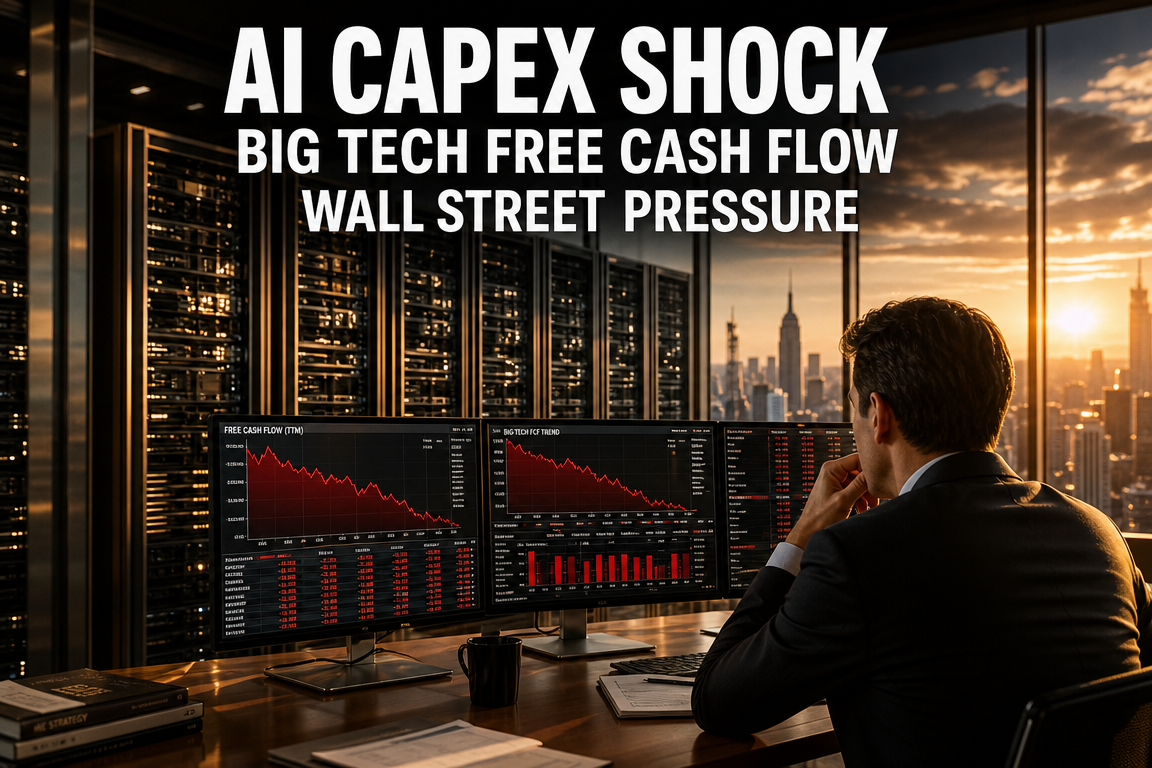
Weaker free cash flow at Alphabet and Tesla was the key trigger that led investors to question other large-cap tech names as well.
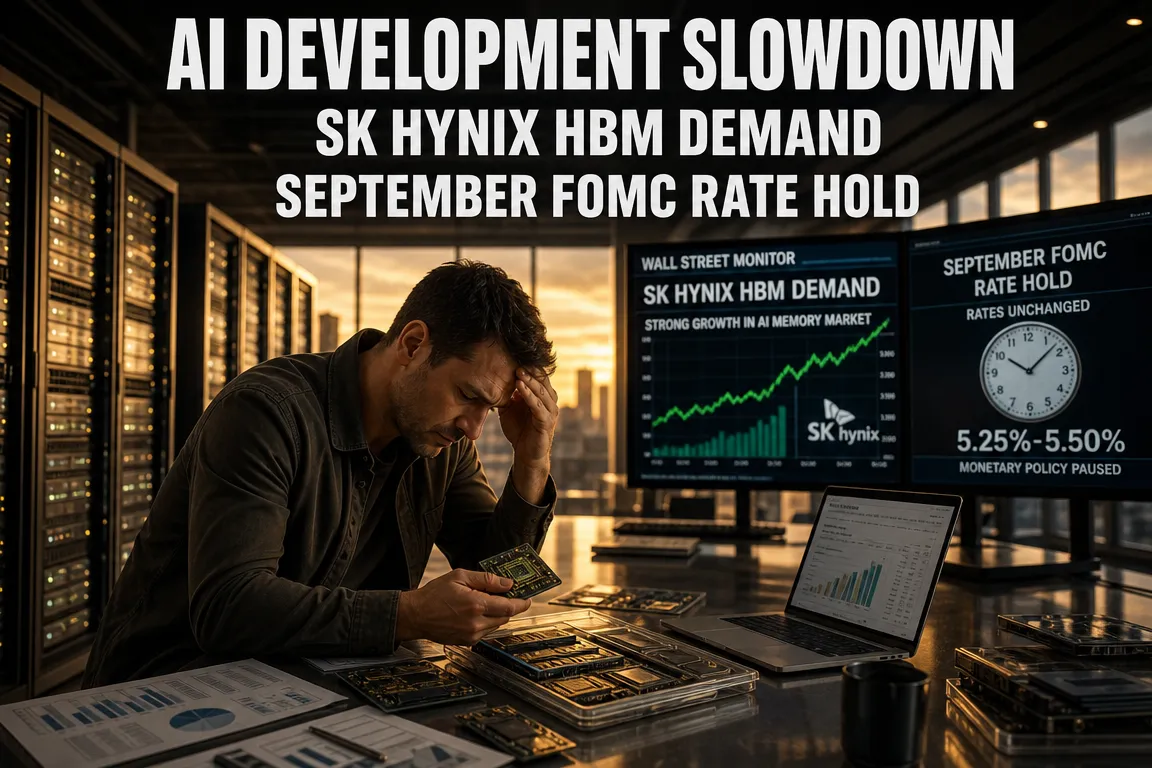
By contrast, semiconductor names such as Micron and SK Hynix held up relatively well because Big Tech signaled that it would not reduce AI investment.
In other words, the key dynamic in this session was that Big Tech valuations weakened, while expectations for AI semiconductor demand remained intact.
1. U.S. Equities Slump: Roughly $800 Billion in M7 Market Value Erased in One Day
The most significant shock in U.S. equities came from the broad decline across M7 stocks.
Based on the original report, the M7’s one-day move was approximately 6%, with market capitalization falling by about $767 billion to $800 billion.
In won terms, that translates to roughly KRW 1,000 trillion to KRW 1,200 trillion in value lost in a single day.
- Nasdaq: down approximately 2%
- S&P 500: down approximately 1%
- Dow Jones: down approximately 0.85%
- M7 market capitalization: down approximately $800 billion in one day
This was less a routine growth-stock correction than a broader repricing of global economic risk and reduced appetite for risk assets.
U.S. equities had already been trading at elevated valuations driven by AI enthusiasm, making them especially sensitive to shocks from rates and oil prices.
2. Brent Crude Above $100: Why the Market Reacted First
The starting point of the selloff was the oil market.
Brent crude rose above $100 per barrel, breaking a key psychological threshold, while WTI also moved sharply higher.
Oil at $100 is not just a round number.
It directly affects corporate costs, transportation expenses, consumer inflation, and central bank policy.
- Brent above $100 increases concerns about renewed inflation pressure
- Higher oil prices directly raise costs for airlines, logistics, and manufacturing
- If inflation rises again, expectations for Fed rate cuts may weaken
- Lower rate-cut expectations weigh on growth stocks and Big Tech valuations
The market was especially sensitive because the oil move was driven by supply disruption risk rather than stronger demand.
Markets interpret demand-driven oil gains and supply-driven oil gains very differently.
The latter can be a particularly negative combination, pressuring growth while lifting inflation.
3. From the Strait of Hormuz to the Red Sea: Middle East Risk Broadens
The original focus was on the risk around the Strait of Hormuz.
Rising military tensions between Iran and the United States increased concern over a possible Iranian move to restrict the strait, adding to worries about Middle Eastern crude flows.
The Strait of Hormuz is a critical corridor for global oil transport.
If disrupted, a substantial share of Middle Eastern oil shipments would be affected.
The problem did not stop there.
As vessels sought alternative routes via the Red Sea, risk from Houthi forces increased as well.
The Houthis control parts of Yemen and are widely viewed as aligned with Iran.
Their threats to shipping near the Red Sea and the Bab el-Mandeb Strait added another layer of logistical risk.
- Strait of Hormuz: a key bottleneck for Middle Eastern oil transport
- Red Sea: a major shipping route linking Asia and Europe
- Bab el-Mandeb Strait: a critical entry point into the Red Sea
- Houthi attacks: a driver of higher shipping costs and route diversions
If the Red Sea route becomes unsafe, carriers may need to reroute around southern Africa.
That would lengthen transit times and increase insurance and fuel costs.
As a result, not only energy prices but also broader global supply-chain costs could rise.
4. Russia Black Sea and Caspian Pipeline Risks Added to the Pressure
In addition to Middle East shipping risks, reports also referenced security concerns around Russia’s Black Sea area and an attack on a Caspian Pipeline Consortium terminal.
From an energy-market perspective, the worst-case scenario is when multiple transport routes and terminals become unstable at the same time.
Oil prices depend not only on production but also on transport infrastructure.
Even if output remains stable, attacks on terminals, ports, or pipelines are interpreted by the market as supply disruption risks.
Some analysts said that if hostile activity continues, crude could move above $120 per barrel by year-end.
That would be a level capable of materially altering global growth expectations.
It could undermine the disinflation trend while increasing pressure on consumer spending and corporate margins.
5. U.S. Strategic Petroleum Reserve: Less Room to Absorb a Shock
Historically, the United States has offset oil spikes by releasing crude from the Strategic Petroleum Reserve.
The SPR is emergency oil storage intended for use in supply disruptions.
However, the original text noted that the reserve has already declined significantly, which is a key constraint.
This matters because markets once assumed the U.S. would always have room to release oil in a price spike.
With less spare capacity, policy response becomes more limited.
In other words, the buffer that previously helped stabilize energy shocks is weaker than before.
6. Why Higher Oil Prices Quickly Fed into Higher U.S. Treasury Yields
When oil prices rise, markets immediately start to worry about inflation.
If inflation reaccelerates, the Federal Reserve may find it harder to cut rates.
That creates upward pressure on U.S. Treasury yields.
The original report noted that the 10-year and 30-year Treasury yields had risen back toward their year-to-date highs.
Higher long-term yields are especially negative for Big Tech.
That is because Big Tech stocks are valued on expectations of future earnings and cash flows.
When rates rise, the present value of those future earnings falls, which pressures valuations.
- Higher oil prices lead to higher inflation concerns
- Higher inflation concerns reduce expectations for rate cuts
- Weaker rate-cut expectations push Treasury yields higher
- Higher Treasury yields pressure growth stocks and AI-related names
Comments from Michael Burry about focusing on long-duration bonds were consistent with this framework.
If AI companies increase leverage to finance large-scale investment, bond supply may rise.
Combined with inflation concerns, that could push long-term yields even higher.
7. The Core Shift: M7 Is Being Repriced as an AI Investment Burden, Not Just a Cash Machine
The most important change in this move was the market’s reassessment of M7.
Historically, Big Tech companies were seen as strong cash generators that did not need significant borrowing.
That has changed as the AI race has intensified.
AI infrastructure requires data centers, GPUs, power, networking, cooling systems, and cloud equipment.
That creates a large near-term capital expenditure burden.
To remain competitive, M7 companies must continue spending aggressively on AI.
This is where investors became concerned.
The market already understands that AI is strategically important.
The concern is whether the spending required to support AI will reduce cash left for shareholders.
8. Why Alphabet’s Results Moved the Market: Strong Cloud Growth, but Weak Free Cash Flow
Alphabet was one of the first major M7 companies to report earnings.
Google Cloud revenue growth reached 82% year over year, a very strong result by any standard.
Under normal circumstances, the market would have welcomed that number.
Instead, the stock fell about 6%.
The reason was that free cash flow turned negative.
Investors focused more on the cash outflow than on the revenue growth.
- Google Cloud revenue growth: approximately 82% year over year
- Continued increase in AI-related capital expenditures
- Free cash flow turned negative
- Investors questioned whether AI spending had become excessive
This also affected other large-cap tech names.
If Alphabet faced this level of pressure, the market began to question whether Microsoft, Amazon, Meta, Apple, Nvidia, and Tesla could face similar spending burdens in the AI race.
The report also noted that Alphabet holds roughly a 6% stake in SpaceX, valued at about $94 billion.
That is positive from a portfolio value perspective, but the market’s focus that day was on cash flow deterioration rather than asset value.
9. Tesla Falls Sharply: Cash Flow Deficit Outweighed AI and Robotics Optimism
Tesla also declined sharply.
According to the original report, the stock fell about 12%.
Negative cash flow was cited as one of the main factors unsettling investors.
Tesla is viewed not only as an EV company but also as an AI, autonomous driving, and robotics company.
However, investors are no longer pricing only vision and optionality.
Even with a large long-term story, weak cash flow can trigger a rapid revaluation.
In a rising-rate environment, current cash generation matters more than distant future potential.
This decline reflected that shift clearly.
10. Why Micron and SK Hynix Held Up
One notable point was that Micron and SK Hynix remained relatively strong even as the Nasdaq weakened.
According to the original report, Micron rose about 3.77%, while SK Hynix ADR gained about 4.92%.
The reason is straightforward.
If Big Tech says it will continue investing in AI infrastructure, that spending ultimately flows into semiconductor revenue.
High-bandwidth memory, server DRAM, and AI accelerator-related memory are direct beneficiaries.
- For Big Tech shareholders: higher AI spending is a burden
- For semiconductor companies: higher AI spending is a revenue opportunity
- Market interpretation: Big Tech margins are under pressure, but AI semiconductor demand remains intact
That is the key divide in this session.
The AI theme has not ended; rather, the market has begun separating firms that bear AI investment costs from those that monetize those costs.
11. Microsoft’s Move Away from OpenAI: The AI Cost-Cutting Race Has Begun
News around Microsoft was also important.
The company is reportedly replacing OpenAI image models with its own AI models in products such as PowerPoint and Bing.
Microsoft appears to believe that its own models are faster, cheaper, and more attractive from both quality and user-retention perspectives.
The original report also said Microsoft’s AI model costs are roughly 85% lower than OpenAI’s in operation.
- Microsoft is replacing some OpenAI image models with its own models
- Its in-house MAI models are viewed as cheaper and faster
- More than half of Microsoft’s AI features reportedly use MAI models
- The company is testing its own AI models across all products
- This is a negative signal for OpenAI
This is more than a model substitution.
It suggests that the next stage of AI competition is shifting from who builds the best model to who can operate AI at the lowest cost.
Token-cost reduction, inference optimization, and in-house model integration are likely to become central themes.
12. SK Hynix ADR Premium: Arbitrage Is Less Straightforward Than It Appears
The SK Hynix ADR also raised an interesting market issue.
According to Bloomberg, SK Hynix ADRs listed in the U.S. are limited relative to the total number of shares issued in Korea.
The original text referred to a limit of approximately 2.5% to 5%.
The key point is that unless existing ADR holders convert their positions back into Korean shares, it is not easy to create new ADR supply from the local market for arbitrage.
As a result, the ADR can trade at a premium to the Korean listing.
The original report said the premium exceeded 20%.
- SK Hynix ADR supply is limited
- Price gaps can emerge between the Korean listing and the U.S. ADR
- If arbitrage is constrained, the premium may persist
- This raises broader questions about foreign access and won liquidity
This matters for Korean investors as well.
For the Korean market to reflect global AI semiconductor demand efficiently, foreign capital must be able to move in and out of the market smoothly.
As the ADR premium widens, questions may grow around price discovery in the Korean market.
13. Impact on Korea: Kospi Night Futures Fall and Leveraged ETF Risks Rise
According to the original report, Kospi night futures fell about 1.67%.
That is less severe than the Nasdaq decline, but it is not a reason for complacency.
Korea’s market has a high concentration in semiconductors, so strength in Micron and SK Hynix provides some support.
Still, if risk aversion rises across U.S. equities, Korea will not be insulated.
In particular, leveraged ETF positioning and margin-related selling can amplify losses in a downturn.
Once the Kospi starts to weaken, funding flows can accelerate the move lower.
14. Trump Factor: Hawkish Rhetoric and the TACO Trade Coexist
The original report said President Trump made hawkish comments about the Houthis and Middle East risks, including the possibility of major attacks.
The market typically interprets such comments as a sign of rising geopolitical tension in the short term.
That can move oil, defense stocks, yields, the dollar, and risk assets at the same time.
At the same time, some investors refer to TACO, short for “Trump Always Chickens Out.”
The phrase reflects the view that Trump may eventually move back toward negotiation after initial pressure tactics.
In other words, some market participants believe a full-scale escalation may be less likely than the rhetoric suggests.
The issue is timing.
Markets want quick de-escalation, but if political pressure persists, oil and rate volatility can remain elevated.
15. The Most Important Point Not Always Highlighted Elsewhere
The real story is not simply that higher oil prices caused Big Tech to sell off.
The deeper issue is that Big Tech’s business model is becoming more capital intensive because of AI.
Traditional software businesses had low incremental costs once products were built, which supported strong cash flow.
That model is different in the generative AI era.
Running AI at scale requires ongoing spending on GPUs, power, data centers, cooling, and networking.
In other words, AI services may grow revenue while also growing operating costs.
That changes the valuation framework for Big Tech.
The market is no longer focused only on AI revenue growth.
It is increasingly asking how much was spent to generate that revenue and how much cash remains afterward.
From that perspective, Alphabet’s negative free cash flow mattered more than its 82% cloud growth rate.
Tesla’s cash flow deficit mattered more than its future story.
Microsoft’s move toward in-house AI models is consistent with the same trend.
Going forward, the winners in AI may not simply be the firms with the best models.
The likely winners may be those that can deliver AI services at the lowest cost while preserving cash flow.
16. Key Watch Points for Investors
- Whether Brent crude stays above $100 and for how long
- Whether risks in the Strait of Hormuz and the Red Sea translate into actual supply disruptions
- Whether 10-year and 30-year U.S. Treasury yields break above year-to-date highs
- Changes in M7 AI infrastructure spending and free cash flow
- Whether demand for AI semiconductors from Micron, SK Hynix, and Nvidia translates into actual earnings
- Whether in-house AI model adoption by companies such as Microsoft continues to expand
- In Korea, both semiconductor flows and leveraged ETF liquidation pressure
This is not a market where a simple “buy the dip” or “sell everything” approach is appropriate.
Crude oil, inflation, rate expectations, AI infrastructure spending, and U.S. equity positioning are all moving together.
In this environment, sector differentiation matters more than the index level.
Investors need to distinguish between companies that bear AI spending costs and those that capture the revenue from that spending.
< Summary >
M7 stocks lost roughly $800 billion in market value in one day as Brent crude moved above $100, U.S. Treasury yields rose, and AI infrastructure spending pressures intensified.
Risk widened as the Strait of Hormuz, the Red Sea, Houthi attacks, and Russia-related energy terminal risks all came into focus.
Alphabet fell despite 82% cloud growth because free cash flow turned negative.
Tesla also declined sharply on cash flow concerns.
By contrast, Micron and SK Hynix held up relatively well as Big Tech continued to signal support for AI investment.
Microsoft’s move toward in-house AI models suggests that AI competition is shifting toward cost reduction.
Going forward, the key question is not only AI growth, but also which companies can operate AI efficiently while preserving cash flow.
[Related Articles…]
- Oil Above $100 and the Impact on Global Growth Expectations
- AI Infrastructure Spending and the Repricing of Big Tech
*Source: [ 내일은 투자왕 – 김단테 ]
– 빅테크 최악의 날
● Tech-Selloff, Oil-Spike, Defense-Boom
U.S. Equities Weakened by Big Tech Cost Pressure, While Oil Briefly Touched $100 and Lockheed Martin Surged
Today’s market was driven by three key developments.
First, Alphabet and Tesla fell sharply after earnings, weighing on the broader U.S. equity market.
Second, Brent crude briefly touched $100 following an attack on a Saudi oil tanker, reviving inflation and interest-rate concerns.
Third, Lockheed Martin rallied after raising its full-year guidance, while the semiconductor sector remained relatively resilient despite the selloff in large-cap technology stocks.
At first glance, this may appear to be a simple post-earnings decline, but the more important issue is that the business model of Big Tech is shifting from a light platform model to a more capital-intensive infrastructure model.
This transition is now a key variable for AI investment strategy, semiconductor demand, interest-rate sensitivity, and equity valuation.
1. U.S. Market Performance: Big Tech Cost Pressure Weighed on Indexes
U.S. equities opened lower and remained under pressure throughout the session.
The Nasdaq fell nearly 2%, while the S&P 500 declined more than 1%.
The Dow Jones also weakened on Alphabet’s decline.
The Russell 2000 fell as well, indicating broader risk aversion beyond large-cap stocks.
Alphabet, Tesla, Amazon, and Meta were at the center of the selloff.
Alphabet fell about 6%, while Tesla dropped more than 10% intraday.
The VIX rose to around 19, reflecting higher investor caution.
Bitcoin also declined toward $65,000, signaling pressure across risk assets.
Not all sectors weakened.
Some semiconductor names, including Micron and SanDisk, rose and showed relative strength.
Energy stocks advanced on the surge in crude prices, while defense names benefited from Lockheed Martin’s strong results.
2. Alphabet’s Decline: Strong Earnings, but the Market Focused on Cash Flow
Alphabet’s second-quarter results were strong on the surface.
Revenue reached $119.8 billion, up 24% from a year earlier.
This marked 12 consecutive quarters of double-digit growth.
Google Cloud revenue rose to $24.8 billion, up 82%.
Remaining performance obligations reached $514 billion.
Under normal circumstances, this would have been viewed as an exceptionally strong report.
However, the stock fell sharply.
The key reason was that rapid AI infrastructure spending pushed free cash flow into negative territory for the first time in 10 years.
Alphabet generated $39.1 billion in operating cash flow in the quarter.
Capital expenditures, however, reached $44.9 billion over the same period.
In other words, operating cash flow alone was insufficient to cover data center and AI chip investment.
Alphabet also tapped capital markets and issued debt to support spending.
This is an important shift.
Google was previously viewed as a capital-light platform company supported by search advertising, YouTube, and cloud services.
It is now evolving into a more capital-intensive infrastructure company that must invest heavily in data centers, power, chips, and servers.
The market reacted negatively to that transition.
3. Alphabet’s Core Issue: AI Demand Is Rising Faster Than Capacity
Alphabet’s margin compression was not simply the result of higher AI development costs.
The key issue is that Google appears to be facing shortages in its own data center and power capacity.
As cloud and AI demand accelerate, Google has had to rely on external computing resources.
In practical terms, demand is arriving faster than internal infrastructure can support it.
Alphabet’s CFO said on the earnings call that external computing usage would expand further in the third quarter.
This suggests that margin pressure may continue in the second half of the year.
There is also a positive development.
Google has begun recognizing revenue from renting out its proprietary TPU AI chips to cloud customers.
TPUs were previously used primarily internally to improve efficiency in search, YouTube, and Gemini operations.
They are now being monetized externally.
If TPU adoption grows as an alternative to Nvidia GPUs, Alphabet could become a major player not only in cloud services but also in the AI chip ecosystem.
As a result, the stock should not be viewed purely as a negative story.
Near term, capital spending and cash flow pressure remain significant, but over the longer term, TPU monetization could become a new growth driver.
4. Tesla’s Decline: Vehicle Sales Were Strong, but Margins and Cash Flow Weakened
Tesla also fell sharply after earnings.
Second-quarter revenue reached $28.24 billion, well above the Wall Street estimate of $25.55 billion.
Vehicle deliveries were also strong at roughly 480,000 units.
Despite concerns about slowing EV demand, Tesla’s vehicle sales exceeded expectations.
The problem was profitability.
Adjusted EPS came in at $0.33, below the consensus estimate of $0.49.
Automotive gross margin also missed expectations, coming in at the mid-teens rather than around 19%.
Free cash flow was negative by $1.1 billion.
Like Alphabet, Tesla is facing rising investment requirements tied to AI and hardware infrastructure.
Capital expenditures were about $5.8 billion in the quarter, while full-year capex is expected to exceed $25 billion.
Tesla is increasingly being valued not only as an electric vehicle company, but also as a company involved in autonomous driving, robotaxis, humanoid robots, and physical AI infrastructure.
That transition requires substantial capital.
This is where investors became more cautious.
5. Tesla’s Key Variables: FSD and the SpaceX Merger Speculation
Elon Musk remained confident.
He made a strong case for FSD, or Full Self-Driving software.
Musk suggested that customers are effectively buying a car with FSD included, rather than simply buying a vehicle.
Active FSD subscribers reached 1.48 million, up 56% from a year earlier.
As FSD approval expands across more countries, Tesla could evolve from an automaker into a higher-margin software company.
For now, however, the market is assigning more weight to current margin pressure and weakening cash flow than to future monetization potential.
Another variable is speculation around a Tesla-SpaceX merger.
Some market participants have raised the probability of such a merger from 80% to 90%.
The fact that the issue was raised on an earnings call is unusual.
Musk also acknowledged that cooperation between the two companies is increasing.
If Tesla focuses on vehicles, batteries, robots, and AI, while SpaceX handles satellites, communications, and space infrastructure, the long-term vision could be a large physical AI platform.
In the near term, however, equity markets are more focused on margins and cash flow than on strategic optionality.
6. Lockheed Martin Surged: Defense Remains a Beneficiary of Geopolitical Risk
Lockheed Martin stood out in the session.
The stock rose nearly 10% intraday after management raised full-year guidance.
Revenue increased 10.5% year over year and exceeded expectations.
EPS also came in above consensus.
Defense stocks continue to benefit from sustained demand tied to the war in Ukraine, Middle East tensions, Taiwan Strait risks, and rising defense budgets globally.
There has been some concern that drone warfare could undermine the growth profile of traditional defense contractors.
However, Lockheed Martin’s results showed that large defense companies still have strong order books and pricing power.
Missile defense, aerospace, advanced weapons systems, and satellite and space defense remain difficult to replace in the near term.
As geopolitical uncertainty increases, defense stocks may function as a structural hedge rather than a simple cyclical trade.
7. Oil Briefly Touched $100: Inflation and Rate Concerns Returned
Another source of market shock was crude oil.
Brent crude briefly moved above $100 per barrel.
WTI also rose to around $91.
The move followed reports that Houthi forces attacked two Saudi oil tankers in the Red Sea with missiles and drones.
The Red Sea is a critical route for global oil logistics and shipping.
Rising tensions in this region tend to increase insurance costs, freight rates, and supply disruption risks.
When crude oil rises above $100, markets begin to worry about renewed inflation.
Reaccelerating inflation would reduce expectations for Federal Reserve rate cuts and could reinforce the view that rates will remain elevated for longer.
U.S. 10-year Treasury yields were discussed around 4.6%, while 30-year yields were around 5.1%.
Growth stocks are particularly sensitive to interest rates.
Companies whose valuations rely on future cash flows, such as AI, EV, and cloud names, are more vulnerable when long-term rates rise.
In that context, higher oil prices are supportive for energy stocks but negative for Big Tech and growth equities.
8. FX and Korea Market Implications: A Strong-Dollar Risk Has Returned
Higher oil prices and rising U.S. long-term yields also affect foreign exchange.
As rate-cut expectations fade and Treasury yields rise, the dollar tends to strengthen.
The won recently appreciated to the 1,470 range, but it remains vulnerable if external risks intensify again.
A weaker won raises import-cost pressures and can feed domestic inflation.
It also creates concerns about currency losses for foreign investors, which can weigh on Korean equity flows.
If U.S. equities weaken on Big Tech pressure after a recent rally in the KOSPI, Korean markets may also face short-term pressure in the next session.
That said, the relative resilience of semiconductors in the U.S. market is a constructive signal for Korean semiconductor investors.
9. Semiconductor Sector: Big Tech Fell, but Memory Stocks Held Up
One notable feature of the session was that some semiconductor names held up even as Big Tech sold off sharply.
Micron rose, and SanDisk also posted a relatively firm performance.
Nvidia was modestly lower but remained resilient around $209.
As AI infrastructure spending rises, Big Tech margins come under pressure.
At the same time, demand for data centers, memory, high-performance servers, and storage continues to increase.
The market is increasingly distinguishing between the cost burden on Big Tech and the benefits accruing to semiconductor suppliers.
This is important.
If AI investment were to slow meaningfully, semiconductors would also face risk. For now, however, the issue is less about lower AI investment and more about who can absorb the cost.
In other words, semiconductor demand has not necessarily weakened; rather, Big Tech’s margin structure is under pressure.
For Korean investors, SK hynix earnings will be a key checkpoint.
HBM, high-value DRAM, and AI server memory demand will be central to the next phase of the semiconductor investment cycle.
10. Intel and AMD’s Long-Term CPU Contracts in China: More Than a Revenue Story
Another issue highlighted in the session was the long-term CPU contract news involving Intel and AMD and Chinese buyers.
This should not be viewed simply as a demand-positive headline.
As export controls on high-end AI GPUs tighten amid U.S.-China technology tensions, Chinese companies have strong incentives to secure alternative computing resources.
In that context, long-term CPU contracts reflect demand visibility and supply-chain positioning.
For Intel and AMD, these deals improve revenue visibility in the Chinese market.
At the same time, they increase policy risk.
If U.S. regulators extend restrictions beyond AI semiconductors to high-performance server CPUs and data center infrastructure, such contracts could become more exposed to geopolitical intervention.
Investors should view Intel and AMD not simply as PC CPU vendors, but as critical suppliers in the broader AI computing stack.
Intel, in particular, is scheduled to report after the close, making data center CPU demand and China-related commentary especially important.
11. Apple’s Paradox: Less AI Spending Makes It Look More Defensive
Apple occupies a different position in this market.
While Alphabet, Meta, Amazon, and Tesla are under pressure from AI infrastructure spending, Apple is being viewed as relatively stable.
Apple has not aggressively increased data center capex in the same way as other large-cap technology companies.
That had previously led to criticism that the company might be falling behind in AI.
However, it now looks more like a company with better cost control.
Apple continues to generate steady service revenue from more than 2 billion active devices worldwide, and iPhone sales remain stable.
The stock has risen about 20% this year, significantly outperforming the S&P 500.
However, valuation has become more demanding.
Apple’s forward P/E is around 30.6x, above its 10-year average of 24x.
EV/EBITDA is also around 24.5x, above the 10-year average of 18x.
Apple is stable, but a significant amount of optimism is already reflected in the share price.
Whether Apple Intelligence and the next iPhone cycle can support a stronger AI upgrade cycle in the second half of the year will be important.
At current levels, even a modest earnings disappointment or delay in AI feature rollout could pressure the stock.
12. Where the Money Rotated: From Big Tech to Defense, Energy, and Semiconductors
Institutional flows were relatively clear in today’s session.
Companies with heavy AI capex exposure, such as Google, Amazon, Meta, and Tesla, saw selling pressure.
By contrast, defense names, energy stocks, select semiconductor companies, and some utility-related names attracted capital.
This appears to be a short-term rotation rather than a wholesale exit from AI-related equities.
Investors are increasingly distinguishing between companies that spend on AI and companies that monetize AI infrastructure.
In the past, simply announcing an AI strategy was enough to support valuations.
Now the market is asking a more specific question.
Is the company paying for AI, or is it generating profits because of AI?
That question is likely to remain central to U.S. equity strategy in the second half of the year.
13. The Most Important Point Rarely Emphasized Elsewhere
First, AI competition is shifting from a technology contest to a financial statement contest.
The market is now paying more attention to capital expenditures, free cash flow, power access, and data center utilization than to model performance alone.
The companies most likely to survive this phase are those that can afford the cost of AI, not necessarily those that build the best models.
Second, Alphabet’s increased use of external computing resources is a real signal of AI bottlenecks.
Even a hyperscale company like Google is having to rent external capacity.
This suggests that power, cooling, data center land, and server supply chains will become critical investment themes in AI.
Third, TPU revenue recognition may be an early challenge to Nvidia’s dominance.
Alphabet’s move to monetize TPUs externally is more than a cloud revenue story.
It signals that large tech companies are trying to reduce dependence on Nvidia GPUs by developing their own chips.
Fourth, $100 oil is not just an energy story; it is a valuation risk for growth stocks.
Higher oil prices can reignite inflation expectations and push long-term yields higher.
When that happens, the present value of AI, EV, and cloud companies falls.
Fifth, Intel and AMD’s China CPU contracts should be interpreted as supply pre-positioning ahead of regulation, not merely demand recovery.
The move by Chinese firms to secure long-term CPU supply reflects the likelihood of broader U.S.-China restrictions.
It is positive for semiconductor demand, but it also increases policy risk.
14. Key Variables Investors Should Monitor Now
1. Big Tech capital expenditure guidance
Investors should watch whether AI spending continues to rise or begins to moderate.
Higher capex is manageable if revenue and margins follow, but persistent free cash flow pressure will weigh on valuations.
2. Free cash flow recovery
Negative free cash flow at Alphabet and Tesla was central to the market reaction.
Going forward, free cash flow improvement may matter more than revenue growth alone.
3. Whether Brent crude remains above $100
If Brent stabilizes above $100, inflation and rate concerns are likely to intensify again.
In that environment, energy, defense, and select value names may outperform growth stocks.
4. The U.S. 10-year Treasury yield
If the 10-year yield stays above 4.5%, that would remain a headwind for Nasdaq and high-valuation names.
AI stocks with weaker cash flow profiles would likely be hit harder.
5. Semiconductor earnings and HBM demand
Commentary from Micron, SK hynix, Nvidia, AMD, and Intel will be important.
If AI server memory and data center CPU demand remain firm, semiconductors may continue to differentiate themselves even as Big Tech consolidates.
15. Investor Takeaways from the Q&A Segment
The latter part of the broadcast included commentary on closing a New York correspondent assignment as well as on investment and research methods.
One notable point was continued confidence in the U.S. equity market over the long term.
Even if Big Tech weakens in the short term and oil and rates become more volatile, the U.S. remains the center of global finance.
An index ETF approach was also referenced as an investment style.
This included using funds such as VOO and QQQ when the CNN Fear & Greed Index falls below 50.
That said, this is a personal approach and should be adjusted to individual cash levels, time horizon, and risk tolerance.
On the research side, the discussion referenced Telegram economic channels, brokerage analyst reports, and global news flow as fast sources of information.
Because markets are reacting more quickly than before, access to information and the ability to interpret it can materially affect performance.
However, speed is less important than understanding how new information affects cash flow and valuation.
16. The Forward View: U.S. Markets Remain the Core, but Selection Matters More
This session should be read not as a signal that U.S. equities are finished, but as a sign that investors can no longer buy any Big Tech name indiscriminately.
AI investment will continue.
Semiconductor demand will continue.
Cloud and data center spending is likely to remain elevated.
What the market is now pricing is not just AI growth, but also the cost of achieving that growth.
Going forward, revenue growth, capex, free cash flow, leverage, shareholder returns, and margin durability will all be evaluated together.
As a result, even within AI-related stocks, performance may diverge sharply.
Investors should differentiate between companies that buy AI infrastructure, companies that sell AI infrastructure, and companies that improve margins through AI software.
That distinction is likely to define the investment framework for the second half of the year.
< Summary >
U.S. equities weakened as Alphabet and Tesla fell sharply after earnings.
Alphabet reported strong revenue and cloud growth, but higher AI capex and negative free cash flow weighed on the stock.
Tesla posted solid vehicle sales but missed on EPS, margins, and cash flow, while merger speculation involving SpaceX also drew attention.
Lockheed Martin rallied after raising guidance, underscoring continued defense demand.
Houthi attacks on Saudi oil tankers pushed Brent crude briefly to $100, reviving inflation and rate concerns.
Semiconductors held up relatively well, and Intel and AMD’s long-term CPU contracts in China highlight both demand and regulatory risk.
The most important shift is that AI competition is moving from technology leadership to the ability to fund and absorb infrastructure costs.
[Related Articles…]
AI Capex Pressure and the New Market Leaders
Oil at $100 and the Return of Inflation Risk
*Source: [ Maeil Business Newspaper ]
– [고별 라이브 방송] 록히드마틴, 연간 가이던스 상향에 주가↑ㅣ사우디 유조선 피습, 유가 $100 터치ㅣ인텔&AMD, 중국 업체와 장기 CPU 계약ㅣ홍키자의 매일뉴욕