● AI Datacenter Power Moves
Why AMD Helios and the Anthropic Deal Matter: The Battleground in the AI Semiconductor Market Is Shifting from “GPU Performance” to “Data Center Systems”
The core point of this issue is not simply, “Can AMD beat Nvidia?”
The real key takeaway is that AMD is evolving from a company that sells a single GPU into an AI data center company that bundles CPUs, GPUs, networking, and rack-scale systems together.
The Anthropic 2GW-scale deal mentioned in the original, the large-scale data center demand related to OpenAI and Meta, and AMD Helios rack-scale systems all point in the same direction.
This means the bottleneck in the AI semiconductor market is now shifting from GPUs themselves to power, HBM memory, advanced packaging, networking, and the software ecosystem.
In particular, when looking at AMD’s stock, the market is becoming more interested not in simple optimism, but in the fact that expanded TSMC packaging volume and hyperscaler contract flows are being confirmed together.
1. The core of this news: AMD is securing Anthropic too, and AI data center demand is growing
According to the original, AMD is said to have recently secured an additional 2GW-scale data center-related contract with Anthropic.
If you add the large-scale demand related to OpenAI and Meta, the total AI data center scale AMD is estimated to have secured is presented at around 14GW.
If the cost of GPUs and related systems for a 1GW-scale AI data center is assumed to be about $25 billion, then a simple calculation puts 14GW at roughly $350 billion.
Converted to Korean won, this could be interpreted as a potential revenue opportunity exceeding 500 trillion won.
However, the important point here is that this number does not mean confirmed revenue right away.
For data center contracts, the timing of revenue recognition can vary depending on actual construction schedules, power 확보, semiconductor supply, customer investment pace, and software validation.
Still, the reason the market is taking AMD seriously again is clear.
AMD is now moving beyond being a “Nvidia alternative candidate” and is emerging as “the second pillar that must be compared in the AI infrastructure investment cycle.”
2. What AMD Helios is: it is an “AI supercomputer rack,” not just a GPU
AMD Helios is not simply the name of a GPU product.
Based on the original, it is described as a system that combines AMD’s next-generation MI455X-class GPU, CPU, and networking equipment into a single rack unit.
Similar to Nvidia’s NVL72, it is easy to understand as a structure that places 72 GPUs and 18 CPUs into one server rack.
In the past, training a large AI model required hundreds of servers to be connected to one another.
But rack-scale systems like Helios concentrate ultra-high-performance computing equipment into a single refrigerator-sized rack, allowing it to function like one massive AI computer.
This matters because the true bottleneck in AI model training is not determined by GPU compute performance alone.
No matter how fast the GPUs are, if data exchange between GPUs is slow, overall training speed slows down.
In other words, the essence of AI semiconductor competition is shifting from “who built the faster GPU?” to “who built the faster system?”
3. Why rack-scale matters: the bottleneck in AI training is data movement between GPUs
When training an AI model, a single GPU does not work alone.
Dozens, hundreds, or even tens of thousands of GPUs train one model simultaneously.
During this process, the GPUs must constantly exchange data.
The problem is that if GPUs are scattered across different servers or different racks, network latency occurs.
When this latency grows, even if the GPU itself is powerful, overall system performance becomes bottlenecked.
Helios seeks to reduce this problem by physically placing 72 GPUs in one rack and connecting them with ultra-fast interconnects.
In simple terms, the strategy is not to have 72 GPUs work separately, but to make them move like one giant GPU.
In AI data center investment, what will matter more going forward is rack-level performance, power efficiency, network bandwidth, and cooling efficiency rather than the price of an individual GPU.
This is exactly the market AMD is targeting with Helios.
4. MI455X-class GPU and HBM memory: the area where AMD is catching up to Nvidia
The original mentions an MI455X-class chip as the core GPU in AMD Helios.
This GPU is described as using 432GB-class high-bandwidth memory, presumed to be based on HBM4.
By comparison, Nvidia’s Vera Rubin 200 is presented as having 288GB-class HBM.
In terms of compute performance, AMD and Nvidia appear to be approaching similar levels, and in memory capacity, AMD can be interpreted as offering a more aggressive configuration.
HBM memory capacity is extremely important for large AI models.
The more model parameters and inference data can be loaded into GPU memory, the less frequently the system needs to communicate with external memory or other servers.
In other words, larger HBM capacity allows large models to be processed more efficiently.
That is why HBM memory is considered one of the most important bottlenecks in the AI semiconductor market.
If AMD presents strong specs in this area, hyperscalers will have a clear reason to test it.
5. Can AMD break Nvidia’s CUDA ecosystem?
This is the most important question when evaluating AMD.
If you look only at hardware specs, AMD appears to have caught up with Nvidia to a certain extent.
But Nvidia’s true moat is not the GPU itself; it is the CUDA ecosystem.
CUDA is a software platform that allows developers to train and infer AI models using Nvidia GPUs.
AI researchers and companies have long written code based on CUDA, and countless libraries and tools are built around CUDA.
So even if AMD GPUs are attractive in terms of price or memory, customers will not move easily if the process of porting existing CUDA code to AMD is difficult.
AMD is trying to solve this problem through the ROCm ecosystem.
The original mentions AI-based kernel optimization technologies such as ROCm.ai, and suggests a direction in which AI automatically tunes or converts code that would otherwise rely on CUDA.
In particular, it also includes content claiming that AI replaced kernel optimization and achieved performance gains of around 16x.
Of course, this needs to be validated in real customer environments.
Benchmark performance and real large-scale operational performance can differ.
In conclusion, it is hard to say AMD will immediately break Nvidia’s CUDA.
However, if AI lowers the cost of software migration, the strength of CUDA’s monopoly could weaken compared to the past.
6. The real signal: AMD’s growth rate looks 4x in TSMC packaging volume
The most important part of the original is not the contract news itself, but TSMC packaging volume.
AI semiconductors are not a market where you can sell a lot just by designing a good GPU.
To actually ship products, you must secure advanced TSMC packaging, HBM supply, substrates, power components, and cooling systems.
The original cites Morgan Stanley data regarding the allocation volume of TSMC’s main packaging lines.
Nvidia still takes the overwhelming majority of volume, but AMD’s growth rate is presented as extremely steep.
AMD is mentioned as increasing from around 130,000 units to around 530,000 units, which is about 4x growth.
By contrast, Nvidia is described as increasing by about 50% year over year, and Broadcom by about 40%.
Nvidia is much larger in absolute scale, but in terms of growth rate, AMD stands out the most.
The meaning of this is simple.
It suggests that AMD is not merely “announcing contracts,” but is actually reserving volume at TSMC for production.
In the AI infrastructure market, production capacity matters more than words.
This is the key point many news reports miss.
7. Why AMD’s identity as a CPU company is actually an advantage
If you look at AMD only as a GPU company, you are only seeing half of it.
AMD’s real strength is that it does both CPUs and GPUs.
In the early days of AI, GPUs were overwhelmingly important.
That was because demand for GPUs that could handle parallel computation in large model training and inference exploded.
But in the AI agent era, CPU importance is rising again.
AI agents do not just generate answers; they search, calculate, execute code, call external tools, and handle multiple tasks sequentially.
Many of these tool calls and system control functions are more CPU-intensive than GPU-intensive.
The original suggests that where the past structure was one CPU paired with eight GPUs, the future ratio could move closer to one-to-one.
The exact ratio will vary by workload, but the direction is understandable.
As AI expands from simple model training to agentic AI, demand for CPUs is likely to rise alongside it.
In this respect, AMD has a different kind of competitiveness from Nvidia.
That is because it can pursue the data center investment cycle by bundling not only GPUs but also EPYC CPUs, Instinct GPUs, and networking.
8. AMD stock and valuation: expectations have grown, but verification is still needed
The original presents the view that AMD’s forward P/E could fall to around 40x.
By comparison, ARM and Intel are described as having much higher valuations.
It also includes the content that AMD’s earnings growth rate year over year is expected to be around 84%.
Just from these numbers, AMD may look like a stock with attractive valuation among high-growth U.S. tech names.
From an investment standpoint, however, several things must be checked.
First, whether Helios can show stability and performance close to Nvidia systems in real customer environments.
Second, whether the ROCm ecosystem can approach CUDA in developer productivity.
Third, whether advanced TSMC packaging and HBM supply are secured as planned.
Fourth, whether hyperscalers’ AI data center investment pace is maintained.
Fifth, whether large contracts translate into actual revenue and profit with healthy margins.
The reason AMD stock is strong is that expectations for future growth have risen.
But going forward, execution speed and supply chain performance may matter more than expectations.
9. This is not the end of Nvidia; it is a market where AMD and Nvidia grow together
When many investors see the AMD story, they immediately ask, “Is Nvidia in danger?”
But the current AI semiconductor market is less about one company fully pushing another out and more about the entire market growing extremely quickly.
Nvidia still holds an overwhelming position in the CUDA ecosystem, GPU performance, networking, customer lock-in, and full-stack AI platforms.
AMD is trying to become the second major supplier by improving areas where it has historically been weaker, such as software and system integration.
From the hyperscaler perspective as well, relying only on Nvidia is burdensome.
Adequate alternative suppliers like AMD are needed for pricing leverage, supply stability, and technological diversification.
That is why partnerships between companies like OpenAI, Meta, and Anthropic and AMD are a natural flow.
Ultimately, even if Nvidia’s dominance continues, the AI infrastructure market is likely to become a structure in which AMD also takes meaningful share.
In that case, it is not a matter of Nvidia collapsing and AMD rising; both can grow as the overall AI infrastructure market expands.
10. Key points that are not well covered in other news reports
① What matters more than deal size is “orders and production capacity”
Large AI contract news appears often.
But in actual investment decisions, what matters more is whether the contract leads to secured production capacity.
If AMD’s increase in TSMC packaging volume is real, that is a much stronger signal than a simple MOU or expectation.
This is because the AI semiconductor market is bottlenecked more by manufacturing than by design.
② Rack-scale systems determine profitability more than GPUs
Customers are no longer buying a single GPU; they are buying AI systems at the data center level.
GPU, CPU, networking, cooling, power, and software all have to be optimized at once.
The meaning of Helios is that AMD is trying to become not just a component supplier, but a system supplier in this market.
③ AI could lower the CUDA barrier
CUDA is Nvidia’s strongest moat.
But ironically, if AI takes over code conversion and kernel optimization, the cost of software migration could fall.
If this change accelerates, the competitiveness of AMD ROCm could rise faster than expected.
④ Agentic AI could increase CPU demand again
Many people view AI only through a GPU-centric lens.
But if AI agents spread, CPU demand could grow as well.
That is because CPU roles increase in tool calls, task management, system control, and data processing.
The fact that AMD has both CPUs and GPUs is very important in this trend.
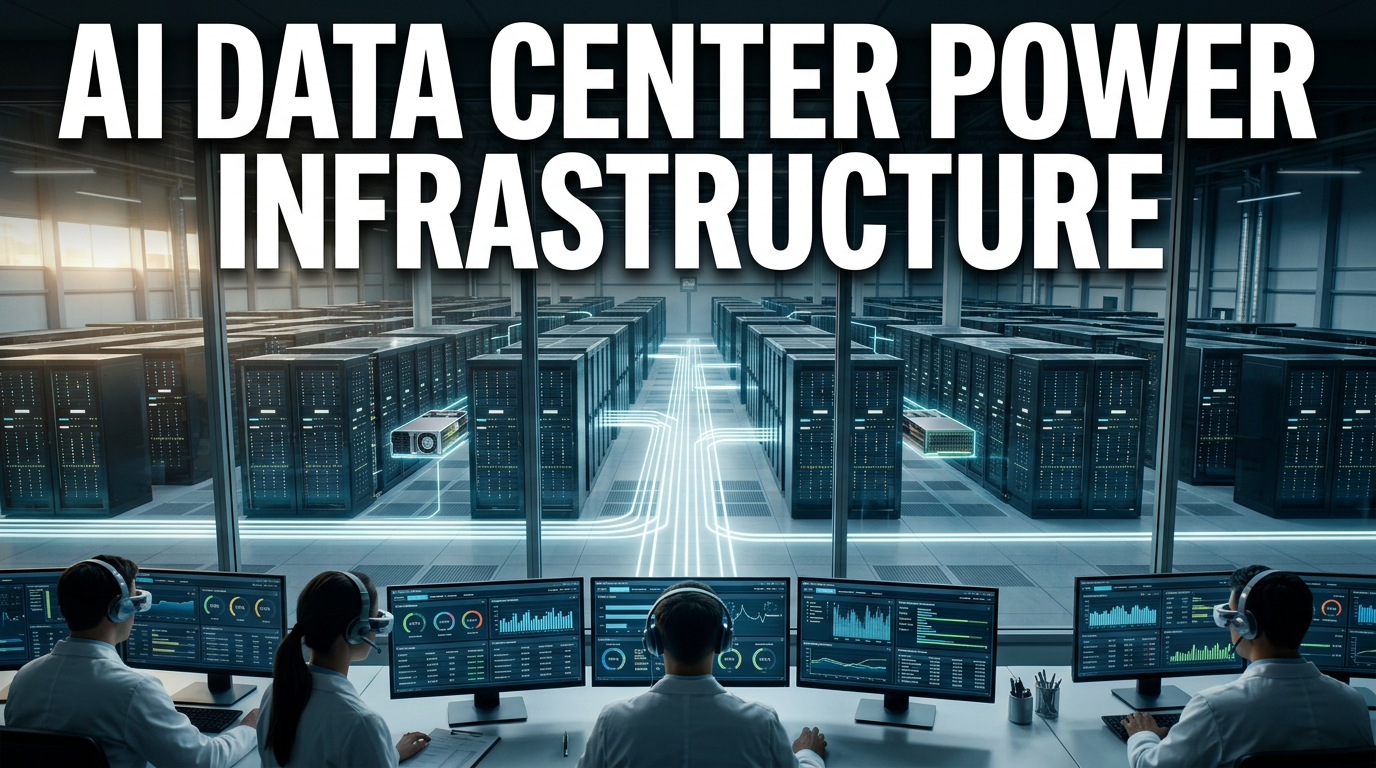
⑤ The next bottlenecks in AI infrastructure investment are power and networking
To make 14GW-scale data center demand a reality, securing power is essential.
Also, to connect countless GPUs, networking and optical communication infrastructure are needed.
Therefore, rather than looking only at AI semiconductors, one must also watch the data center investment, power infrastructure, HBM memory, advanced packaging, and optical communication value chain together.
11. Key variables investors should check
-
Check whether AMD Helios operates stably in real commercial data centers.
-
See whether the next-generation MI455X-class GPU is competitive not only in benchmarks but also in real AI training and inference environments.
-
Check how much the ROCm ecosystem is catching up to Nvidia CUDA in developer productivity.
-
Confirm whether advanced TSMC packaging and HBM supply volumes are expanding as planned.
-
Watch the pace at which AI data center investments by hyperscalers such as OpenAI, Meta, and Anthropic convert into actual revenue.
-
Check whether AMD’s revenue growth is accompanied by rising operating margins and EPS growth.
-
Also monitor the interest rate environment across U.S. tech stocks and the tone of big tech earnings season.
12. Conclusion: AMD’s core point is not “replacing Nvidia,” but becoming the number two AI infrastructure supplier
AMD has now moved beyond simply making a good GPU.
Through its Helios rack-scale system, it is entering the AI data center market by bundling CPUs, GPUs, networking, and software.
Partnerships with customers such as Anthropic, OpenAI, and Meta mean AMD is now becoming a real option for hyperscalers.
In particular, if the increase in TSMC packaging volume is real, that is strong evidence that AMD’s revenue visibility is improving.
That said, Nvidia’s CUDA ecosystem remains powerful, and the real stability of Helios still needs validation.
So the core perspective right now is not “AMD completely beats Nvidia.”
A more realistic view is “the AI infrastructure market is becoming so large that AMD can also grow significantly.”
For investors looking at AI semiconductors, data center investment, HBM memory, power infrastructure, and U.S. tech stocks together, AMD is a company that must continue to be tracked.
< Summary >
AMD is building its presence in the AI data center market through a 2GW-scale Anthropic deal and large-scale demand related to OpenAI and Meta.
The core product is not a simple GPU, but the Helios rack-scale system that combines CPUs, GPUs, and networking into one.
The bottlenecks in AI training are not only GPU performance, but also data movement between GPUs, HBM memory, advanced packaging, and power infrastructure.
AMD is trying to lower the barrier of Nvidia’s CUDA ecosystem through ROCm and AI-based optimization.
A 4x increase in TSMC packaging volume is a more important signal of execution visibility than simple optimism.
AMD is unlikely to topple Nvidia immediately, but as the AI infrastructure market expands, both companies are likely to grow together.
[Related Articles…]
- New Investment Opportunities Created by AI Semiconductor Bottlenecks
- Data Center Power Infrastructure and the Outlook for U.S. Tech Stocks
*Source: [ 월텍남 – 월스트리트 테크남 ]
– 앤트로픽이 AMD 헬리오스 주문, 내년 4배 성장하는 AMD