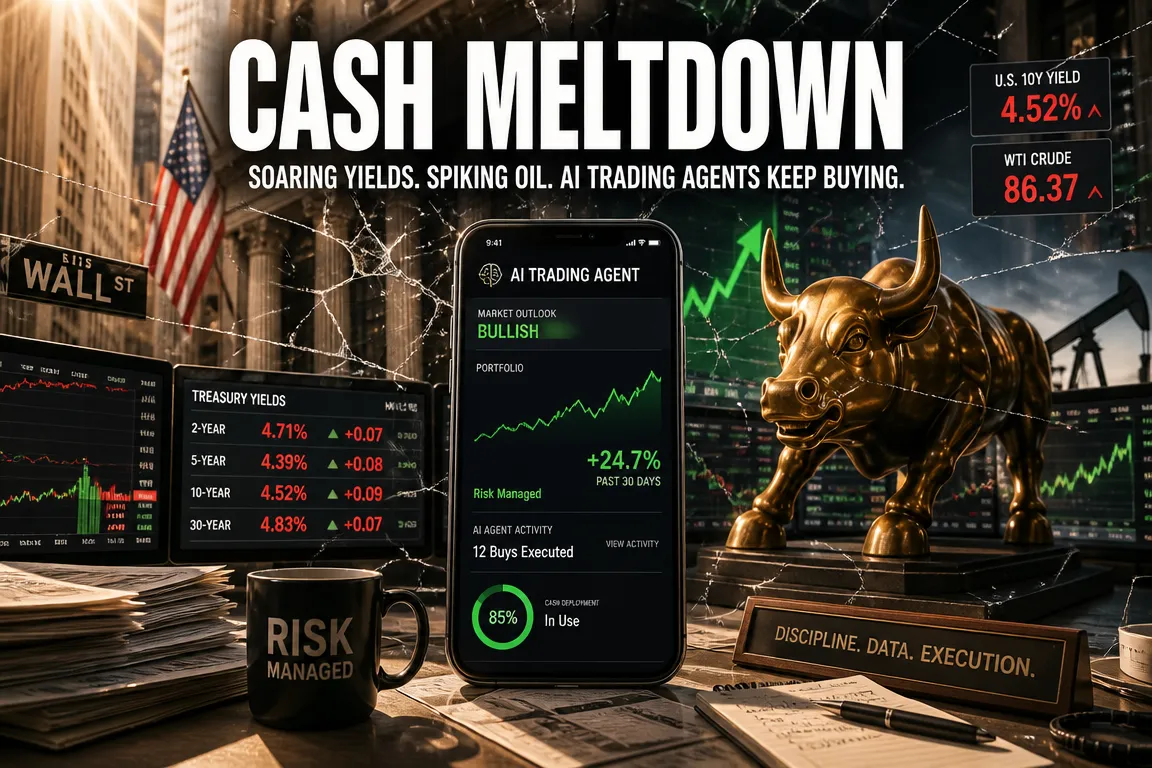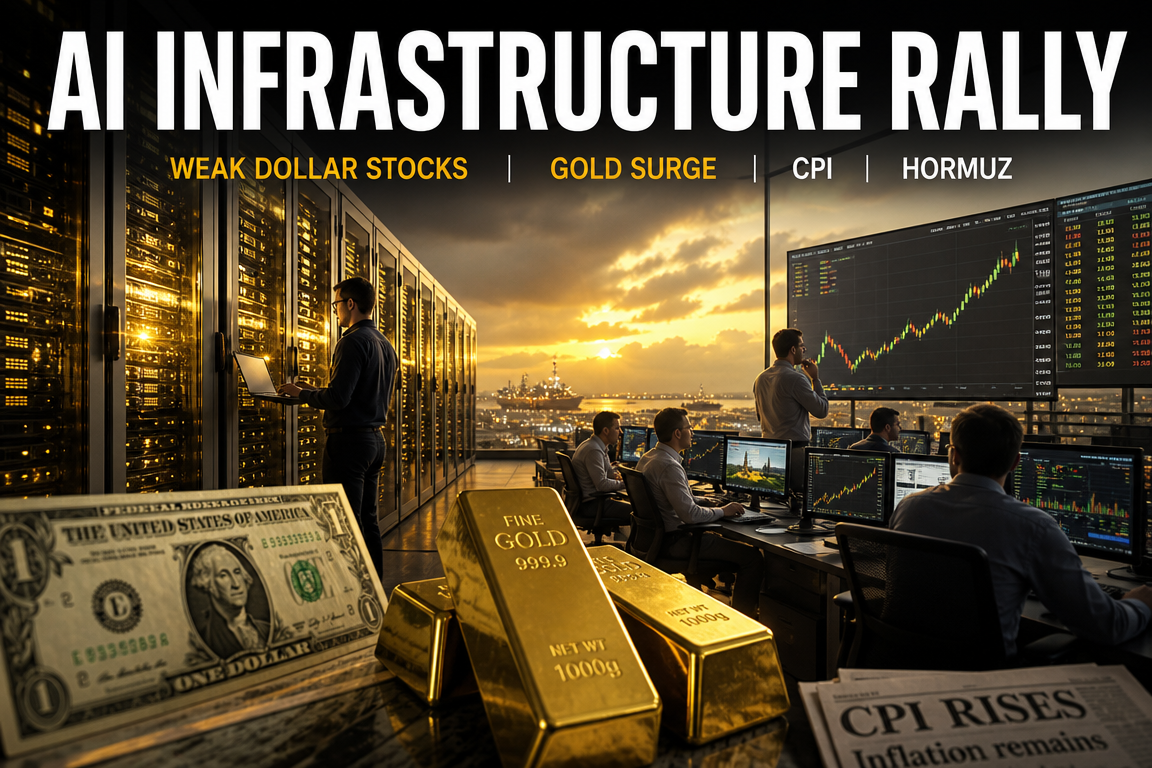
● AI-Driven Rally, Dollar Reversal, Megacap Surge
U.S. equities are rebounding as tightening fears ease; the key drivers of the August rally are AI infrastructure rotation and a weaker dollar.
The key issue this week is not simply that the Nasdaq advanced.
A negative labor shock has reduced expectations for further rate hikes, while a weaker dollar is reviving liquidity support across risk assets.
At the same time, strong earnings from Nvidia, Palantir, Microsoft, and other large-cap software companies are broadening market strength beyond a narrow group of AI semiconductor leaders.
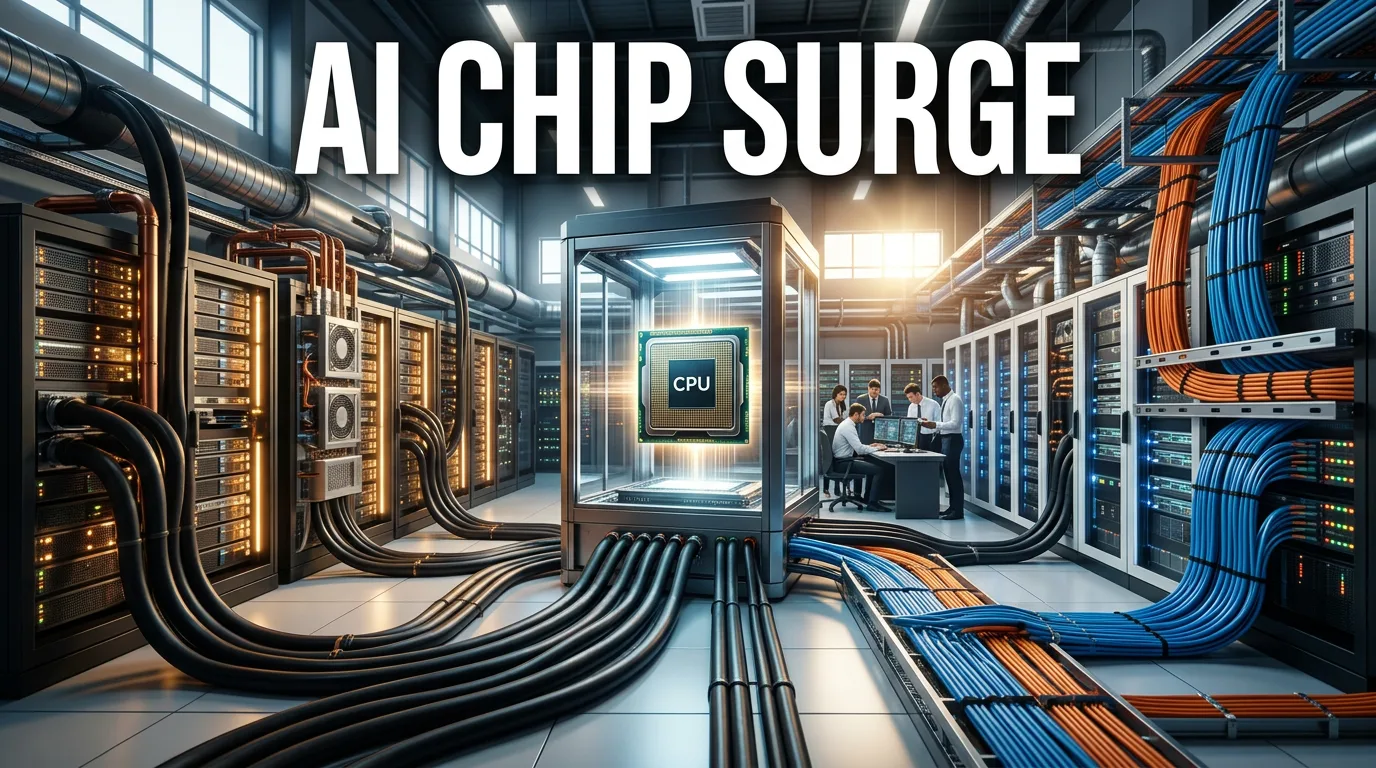
For August, the rally may expand beyond core AI chips into optical communications, data centers, software, cybersecurity, and semiconductor equipment.
The central point that is not being emphasized enough elsewhere is that the AI infrastructure cycle has not ended; capital is rotating from memory toward software and optical communications.
1. U.S. market backdrop: new highs, but leadership continues to rotate
U.S. equities have returned to record highs and continue to grind higher.
However, the character of the rally has changed somewhat.
In the first half of the year, capital was concentrated in memory semiconductors and selected AI infrastructure names. More recently, strength has expanded into large-cap technology, software, cloud, cybersecurity, and optical communications.
- The Nasdaq and S&P 500 remain strong.
- AI semiconductor leaders such as Nvidia are consolidating after earlier gains.
- Previously lagging names such as Microsoft, Palantir, and software ETF holdings are rebounding.
- Trump-related policy themes and AI infrastructure names tied to U.S.-China tensions are attracting renewed attention.
In short, the market is in a rotation phase.
This is not a broad breakdown in leadership; rather, stocks that moved first are pausing while laggards catch up.
2. Macro driver: why weak labor data became constructive for equities
The most important market catalyst this week was labor data.
Consensus had expected around 80,000 new jobs, but the actual reading showed a decline, and prior employment figures were revised sharply lower.
Under normal conditions, weak labor data would be negative for the economy.
In the current market environment, however, it is being interpreted as “bad news is good news.”
- Strong labor data would give the Federal Reserve more room to tighten further.
- Weaker labor data reduces the pressure for additional hikes.
- As a result, the labor shock has eased rate-hike concerns.
- Lower rate pressure is supportive for growth stocks, large-cap technology, and AI-related names.
As recently as last week, markets were pricing in the possibility of additional rate hikes this year.
Some investors were even considering the risk of two hikes.
Following the weak labor data, expectations shifted quickly.
Markets are now beginning to reprice toward the possibility of unchanged policy rates.
For U.S. equities, rate stability alone is a meaningful tailwind.
This is especially relevant for Nasdaq names, AI infrastructure, semiconductors, and software, which are sensitive to discount-rate assumptions.
3. Dollar weakness: the most important hidden variable in this rally
The dollar is one of the most important variables in the current tape.
Until recently, dollar strength had been a headwind for risk assets.
A stronger dollar absorbs global liquidity and tends to pressure emerging markets and other risk-sensitive assets.
Recently, however, the U.S. Treasury has signaled a willingness to support yen stability and ease dollar strength.
In the source material, this was framed as the first clear sign since 1998 that the U.S. Treasury secretary was openly leaning toward yen defense and Japanese market stabilization.
- A weaker dollar tends to improve global liquidity conditions.
- Yen stabilization reduces the risk of Japan-linked financial stress.
- The Treasury signal suggests that policymakers do not want to allow instability to build.
- When rates and the dollar both stabilize, the environment is typically constructive for equities.
In practical terms, the U.S. government appears to be signaling that it wants both interest rates and the dollar to avoid excessive volatility.
This is a key factor in assessing the durability of the current rally.
4. Large-cap technology: Nvidia is reasserting its leadership
Large-cap technology stocks have resumed their upward trend after earnings.
Nvidia has been a particular focus following supportive comments from Elon Musk.
Musk reiterated that Nvidia GPUs are best-in-class and indicated that future systems would be designed around Nvidia hardware.
Expectations that SpaceX and Musk’s broader ecosystem will rely on Nvidia chips as core infrastructure have supported the stock.
- Nvidia rose approximately 12% on a weekly basis after Musk’s remarks.
- Demand for both legacy and next-generation GPUs remains strong.
- Prices for older chips have also held up, reinforcing the view that AI demand remains elevated.
- Nvidia’s earnings report is scheduled for August 26, keeping expectations elevated.
Beyond Nvidia, the cloud leaders Microsoft, Amazon, and Alphabet have also improved.
Apple has shown its own rebound, while Meta and Tesla have attracted dip-buying interest.
Overall, large-cap technology is recovering from earlier weakness and contributing again to index performance.
5. SpaceX and Starlink: data transmission demand in the AI era
Musk also highlighted Starlink’s growth potential in the aftermath of SpaceX’s earnings release.
Starlink is a satellite internet service and is described as accounting for more than half of SpaceX revenue.
The key point is that Starlink is increasingly being viewed not just as an internet business, but as data transmission infrastructure for AI and robotics.
- AI and robotics require substantially more data transmission than traditional systems.
- Global, always-on connectivity could see stronger demand.
- Cash generated by Starlink can be reinvested into AI and space initiatives.
- Musk suggested that Starlink could handle a significant share of global internet traffic.
From this perspective, SpaceX is more than a space company.
It is increasingly being positioned as a platform linking AI infrastructure, data centers, satellite communications, robotics, and space computing.
6. Palantir’s surge: a possible re-rating of software stocks
One of the most notable names this week was Palantir.
The stock rose nearly 40% on a weekly basis.
Despite that move, the source material noted that year-to-date performance remained negative.
This reflects a name that was heavily out of favor in the first half of the year and significantly below prior highs.
Following earnings, however, investor perception appears to be shifting.
- Revenue growth reaccelerated.
- Operating margin above 60% was highlighted.
- Government and commercial revenue appear to be growing in balance.
- U.S. growth remains particularly strong.
- Cash flow has improved materially.
Palantir’s core message is “AI sovereignty.”
The CEO criticized general-purpose AI services such as OpenAI and Anthropic.
The argument is that enterprises may pay significant token and subscription costs while exposing proprietary data and sensitive information to external platforms.
Palantir is emphasizing enterprise and government systems that allow organizations to build proprietary AI environments.
That positioning, combined with results, has led the market to reconsider Palantir as a potential AI beneficiary rather than an AI casualty.
7. Software and cybersecurity: another beneficiary of AI adoption
Earlier in the year, software stocks were viewed as potential losers from OpenAI and Anthropic adoption.
Recent results suggest the picture is more nuanced.
- Microsoft delivered strong performance in cloud, AI, and cybersecurity.
- Palantir continues to demonstrate strong growth in enterprise and government AI.
- Cybersecurity names are regaining attention as AI-related threats increase.
- Software ETF products such as IGV are also seeing renewed interest.
As AI adoption broadens, security risks become more important.
AI deployment increases exposure to data leakage, access control, internal governance, and model security issues.
As a result, the next phase of the AI infrastructure cycle may extend into software and cybersecurity.
8. Investor psychology: the common mistake of selling at break-even
Palantir also illustrated an important behavioral pattern.
Some investors bought near the highs, endured a prolonged decline, and sold as soon as the stock returned to break-even.
This is a common mistake.
- Investors buy at high prices due to FOMO.
- The stock then declines.
- They initially hold, then average down.
- The drawdown lasts longer than expected.
- They sell once they recover their capital.
- The stock then continues higher.
- They deny the move initially, then chase it later at higher levels.
This pattern applies not only to individual stocks but also to index ETFs.
The issue is often investor discipline, not the underlying company.
Even strong businesses can be exited too early if investors focus only on break-even levels rather than the broader cycle.
This does not mean Palantir must continue rising.
But after a long correction, improving fundamentals and a change in ownership can lead to a new trend.
9. The AI infrastructure cycle is not ending; capital is rotating within the theme
Recent weakness in memory semiconductor names has raised questions about whether the AI infrastructure cycle is over.
The source material argues that this is better understood as rotation rather than termination.
Since June, memory ETFs have underperformed for roughly two months.
By contrast, software and large-cap technology ETFs that had lagged earlier have gradually improved.
This suggests that capital is not leaving AI; it is moving from crowded segments into other beneficiaries.
- Nvidia GPUs led first.
- HBM and memory semiconductors led next.
- Power infrastructure and data centers gained attention afterward.
- Now, optical communications, software, cybersecurity, and semiconductor equipment are drawing interest.
The AI infrastructure cycle is not a single-stock or single-industry theme.
It spans semiconductors, memory, networking, power, cooling, servers, data centers, cloud, security, and software.
10. Trump policy themes: optical communications may emerge as an August beneficiary
Trump-related policy names are becoming more active in August.
In particular, reports that the administration is considering restrictions on Chinese data center components have drawn attention.
Data centers require optical communication components for high-speed data transfer.
Because Chinese companies have meaningful exposure in this area, the U.S. may treat it as a national security issue.
- Potential restrictions on Chinese optical communication components are gaining attention.
- U.S. optical communication companies may benefit on a relative basis.
- Names such as Lumentum and Coherent have attracted interest.
- An optical communications ETF has also listed recently, increasing investor focus.
This is not just a trade policy issue.
It reflects an effort to restructure AI data center supply chains away from China and toward U.S.-centric infrastructure.
These themes may remain volatile ahead of the U.S.-China summit.
11. Musk’s large-scale computing plans: memory constraints remain relevant
Musk has again highlighted plans for a very large AI computing and manufacturing buildout.
The source material compared the scale to something far larger than Gigafactory Texas and even described it as dwarfing the Pentagon.
Capital requirements were framed as rising from roughly $55 billion in May to as much as $168 billion by August.
If such a project progresses, it would require substantial investment across multiple layers.
- Nvidia GPUs and AI accelerators
- HBM and DRAM memory
- Power infrastructure
- Cooling systems
- Semiconductor equipment
- Optical networks
- Data center construction inputs
Musk also reiterated concerns about memory bottlenecks.
The argument is that demand is accelerating faster than supply can expand.
The source material cited demand growth of 200% versus supply growth of only around 20%.
From this perspective, concerns about a near-term memory peak may be overstated.
While prices and stocks can pause in the short term, long-term demand does not appear to be fading.
12. Semiconductor equipment: the next potential beneficiary of AI infrastructure
Another important area is semiconductor equipment.
If AI infrastructure spending continues, fabrication capacity will need to expand, and that requires equipment.
The source material noted that a prominent investor bought a large stake in a private semiconductor equipment company positioned as a competitor to ASML.
This should be interpreted as a directional signal rather than a direct public-market recommendation.
- AI infrastructure spending implies the need for additional production capacity.
- Capacity expansion ultimately translates into equipment demand.
- ASML, Applied Materials, and Lam Research may remain relevant beneficiaries.
- Private-equity activity underscores the strategic value of equipment technology.
If GPUs and memory led the first phase, equipment and supply-chain firms may be re-rated in the next phase.
13. Potential August leaders: which groups matter now
Group-level exposure matters more than single-name concentration in the current market.
Capital is rotating rather than staying in one place.
① Large-cap technology and cloud
- Nvidia
- Microsoft
- Amazon
- Alphabet
- Apple
- Meta
- Tesla
Large-cap technology remains central to index performance.
Microsoft, Amazon, and Alphabet in particular can translate AI demand into revenue growth through their cloud platforms.
② Software and AI sovereignty
- Palantir
- Microsoft
- Cybersecurity companies
- IGV ETF
As AI adoption increases, demand for internal data protection and proprietary AI deployment may rise.
Palantir’s earnings were a clear example of this trend.
③ AI infrastructure and optical communications
- Lumentum
- Coherent
- Optical communications ETF
- Data center networking companies
Potential restrictions on Chinese data center components may benefit U.S. optical communication suppliers.
As AI data centers expand, demand for high-speed data transmission equipment should also rise.
④ Data centers and neoclouds
- CoreWeave
- Nebius
- Iren
- NCLD ETF
The competition to secure AI compute continues to support data center and neocloud names.
Products such as the NCLD ETF, which bundle data center and AI compute companies, are also drawing attention.
⑤ Semiconductors and semiconductor equipment
- Nvidia
- Memory semiconductor companies
- Semiconductor equipment companies
- Semiconductor ETFs
- DRAM ETFs
Even if memory stocks pause in the near term, the AI infrastructure cycle itself does not appear to be over.
Over the long term, memory, equipment, packaging, power, and cooling should all remain relevant.
14. ETF strategy: index and sector funds remain the most practical approach
If single-name selection is difficult, accumulating Nasdaq or S&P 500 ETFs remains a practical approach.
U.S. equities are structured so that strong companies are continually added and weaker ones removed over time.
For that reason, broad index accumulation can reduce investment stress versus chasing thematic rotations.
- Nasdaq ETFs have heavier exposure to large-cap growth and technology.
- S&P 500 ETFs offer broad exposure to U.S. large-cap leaders.
- Semiconductor ETFs provide diversified exposure to the AI infrastructure cycle.
- DRAM ETFs offer more targeted memory-cycle exposure.
- IGV ETFs provide exposure to software re-rating.
- NCLD ETFs offer exposure to data center and neocloud themes.
The key is not to chase every rotation.
Buying whichever theme is already moving higher increases the risk of entering late.
A smaller number of preferred sectors, or a broader ETF-based strategy, is usually more sustainable.
15. Cash management: SGOV may be a useful alternative for dollar cash
Even in a strong market, risk management remains important.
If rate and dollar stability fail, the tape can weaken quickly.
Maintaining a reasonable cash allocation remains prudent.
If dollar cash is sitting idle, short-duration U.S. Treasury ETFs such as SGOV may provide a practical alternative.
Investors should still consider currency, rate, tax, and product structure risks.
16. Key upcoming events: inflation, earnings, and U.S.-China diplomacy
The following events will be important in the near term:
- U.S. inflation data
- Nvidia earnings
- Rocket Lab earnings
- Lumentum earnings
- Coherent earnings
- CoreWeave earnings
- Nebius earnings
- U.S.-China summit-related developments around September 24
Policy-related themes may remain active ahead of the U.S.-China summit.
AI, data centers, tariffs, China restrictions, and supply-chain restructuring could all drive volatility.
17. Key risks: conditions that could undermine the current bullish case
The current constructive view depends primarily on stable rates and a weaker dollar.
If those assumptions change, the rally could lose momentum.
- U.S. interest rates rising sharply again
- The dollar reversing back to strength
- Renewed yen weakness leading to Japan-linked stress
- Inflation data coming in hotter than expected
- Large-cap technology earnings missing expectations
- U.S.-China tensions intensifying more than anticipated
The market tone is constructive, but it can change quickly.
In an advancing market, staggered entries and cash discipline are generally preferable to chasing strength.
The most important point not being emphasized elsewhere
The key issue is not whether the AI infrastructure cycle is ending.
The more important issue is how capital is rotating within the AI infrastructure complex.
Many market commentaries interpret weakness in memory semiconductors as a sign that AI is over.
In reality, capital is moving from memory into software, optical communications, data centers, cybersecurity, and semiconductor equipment.
In other words, the AI cycle is not shutting down; it is broadening.
GPU led the first phase, HBM and memory led the second, and data transmission, enterprise AI, security, and equipment are now emerging as the next phase.
The second important point is the policy shift in the U.S.
The Treasury’s signal on dollar and yen stability, combined with Trump-aligned emphasis on AI data centers and Chinese component restrictions, points to a single theme.
The U.S. does not want financial instability, and it also does not want to lose ground in the AI competition with China.
As a result, the August rally should be viewed not as a simple earnings-driven move, but as a combination of policy support, liquidity conditions, and AI strategic competition.
The third important point is investor behavior.
When a long-held stock finally returns to break-even, many investors want to sell.
However, the most meaningful upside often begins after ownership changes hands.
If fundamentals are improving, the story remains intact, and the macro backdrop is supportive, a mechanical sale at break-even may be premature.
< Summary >
U.S. equities are strengthening as weak labor data reduces the likelihood of additional rate hikes.
A weaker dollar and yen stabilization are creating a more favorable liquidity backdrop for risk assets.
Nvidia is back in focus on the back of strong AI GPU demand and support from Elon Musk.
Palantir is driving a re-rating in software stocks through strong earnings and its AI sovereignty narrative.
The AI infrastructure cycle is not over; capital is rotating from memory into optical communications, data centers, software, and semiconductor equipment.
In August, Trump-related policy themes, Chinese data center component restrictions, and U.S.-China summit expectations may increase volatility in related names.
For most investors, broad exposure through Nasdaq ETFs, S&P 500 ETFs, semiconductor ETFs, or software ETFs remains the most practical approach.
Key risks include a sharp rise in rates, renewed dollar strength, an inflation surprise, and renewed yen instability.
[Related Articles…]
- AI Infrastructure Cycle and Data Center Market Outlook
- U.S. Interest Rate Outlook and Global Equity Market Trends
*Source: [ 소수몽키 ]
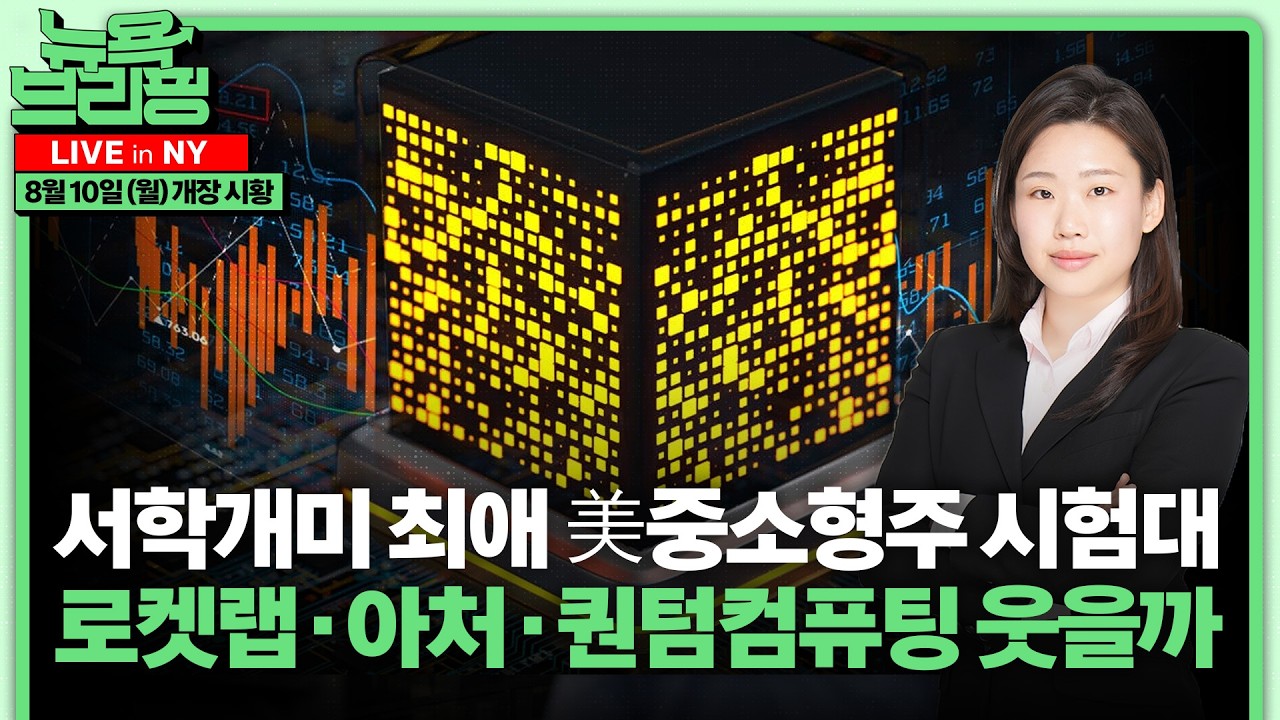
– 긴축 우려 완화에 다시 들썩이는 증시, 8월 랠리 주인공이 될 주식들
● Market Turmoil, Gold Surge, CPI Shock, Hormuz Risk
Gold Surges, Hormuz Talks, and CPI: Key Variables Moving U.S. Markets This Week
Investors should look beyond the simple narrative that U.S. equities are at record highs.
The renewed strength in gold reflects not only demand for safe havens, but also a broader effort by China and other emerging-market central banks to reduce dependence on the U.S. dollar.
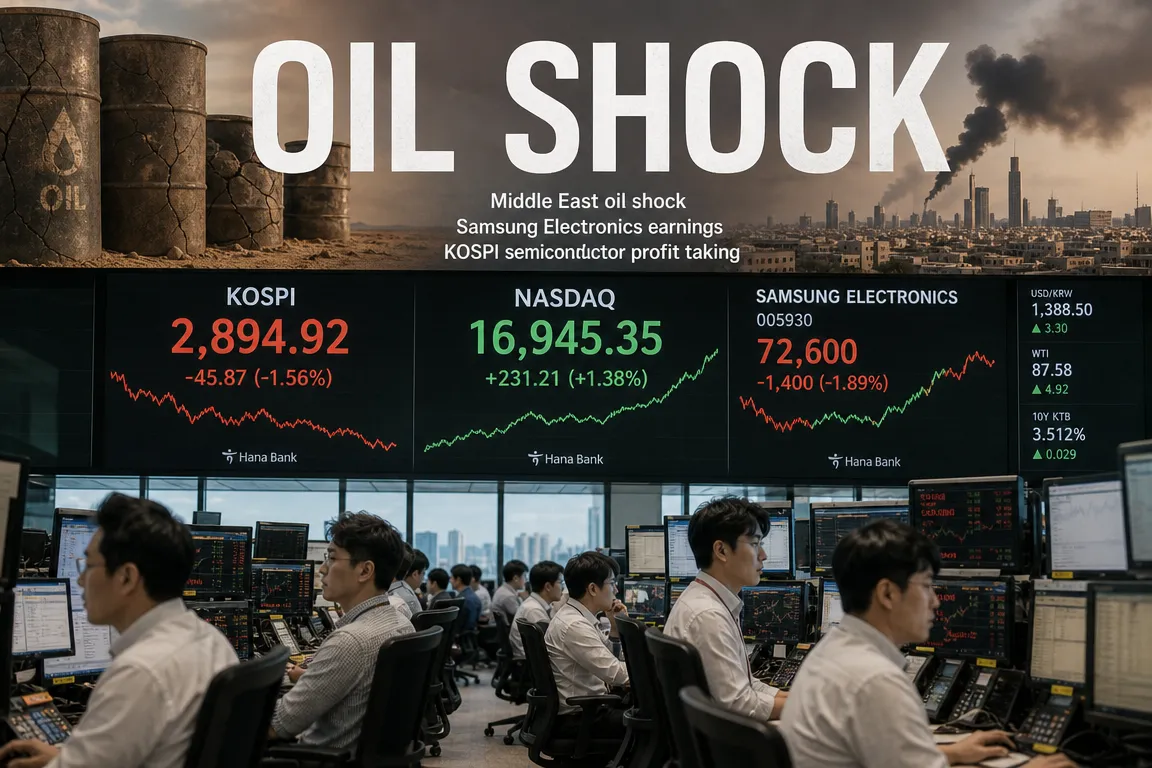
Talks on the Strait of Hormuz appear to be progressing, but Iran’s demands for sanctions relief and compensation could keep oil volatility elevated.
U.S. equities remain near record levels, yet this week brings CPI, PPI, Treasury auctions, and Federal Reserve speeches, all of which could shift interest-rate expectations.
In addition, earnings from Rocket Lab, Archer Aviation, Quantum Computing, and other AI infrastructure companies may make this a consequential week for growth-oriented investors.
1. Key Global Market Trends Last Week
Global markets were generally in risk-on mode last week.
U.S. equities were led by technology shares, while Japanese stocks also rebounded strongly.
Energy prices weakened on expectations of easing Middle East risk.
Weekly Performance of Major Equity Indices
The Nasdaq 100 rose 3.25% for the week.
The Dow Jones Industrial Average gained 2.82%.
The S&P 500 advanced 1.84% and finished near record highs.
Japan’s Nikkei 225 climbed 4.49%, the strongest performance among major markets.
U.S. equities were supported by two factors.
First, optimism around U.S.-Iran negotiations eased concerns over supply disruptions in the Strait of Hormuz.
Second, U.S. Treasury yields edged lower, reducing valuation pressure on technology stocks.
Earnings releases from AI-related companies also supported sentiment.
As a result, the Nasdaq, AI semiconductors, cloud, and data center-related names outperformed traditional cyclicals.
2. Why Gold Is Rising Again
Precious metals were among the strongest performers last week.
Gold rose 7.54%.
Silver surged 10.31%.
Platinum gained 8.12%, and palladium advanced 9.90%.
The move was too large to explain solely by inflation concerns or safe-haven demand.
The main driver is central bank gold buying.
People’s Bank of China Buys Gold for the 20th Straight Month
The People’s Bank of China has been buying gold for 20 consecutive months.
Other emerging-market central banks have also continued to accumulate gold.
The Bank of Korea has previously indicated the possibility of resuming gold purchases after 13 years.
China’s gold buying is not merely portfolio diversification.
The broader objective is to reduce reliance on dollar assets.
It also reflects a strategic response to the risk of U.S. financial sanctions.
China is expanding gold trading in Shanghai and Hong Kong.
Over the long term, the goal is to build a system in which gold can be traded more easily in renminbi rather than dollars.
This is closely linked to renminbi internationalization.
Accordingly, the most important factor in the outlook for gold is not only expectations for rate cuts.
Central banks are increasingly treating gold as a strategic asset in response to the dollar-centric financial system.
3. Dollar Weakness and Lower Yields Also Support Gold
Last week, the U.S. Dollar Index fell 0.27%.
U.S. Treasury yields also edged lower.
Because gold does not pay interest, lower rates improve its relative appeal.
In other words, structural demand from central bank purchases was reinforced by near-term support from dollar weakness and lower rate pressure.
This combination pushed gold and silver higher than equities.
4. Sugar Prices Jump 12%, an Overlooked Inflation Signal
The biggest weekly gainer across major assets was sugar.
Sugar prices jumped 12.21% last week.
Although it may seem minor, the move is relevant for food inflation and broader inflation trends.
Why Sugar Prices Rose
Sugar production in Brazil’s south-central region fell 26% year over year.
In India, lower rainfall has increased concerns over production declines.
Brazil also uses sugarcane not only for sugar but for ethanol production.
Higher ethanol demand can reduce the supply of sugarcane available for sugar production.
Prices rose as supply losses and potential demand shifts were priced in simultaneously.
Such agricultural price increases can later feed into processed food costs and consumer inflation.
5. Energy Was Weak, But Hormuz Remains a Variable
Energy prices were generally weaker last week.
WTI crude fell 1.9%.
Natural gas declined 2.3%.
Brent crude rose 0.8%, showing a mixed pattern across energy benchmarks.
Expectations of normalization in the Strait of Hormuz reduced supply disruption concerns and weighed on oil prices.
However, sentiment shifted again in Monday premarket trading.
Iran: No Hormuz Reopening Without U.S. Concessions
Iran said talks on reopening the Strait of Hormuz had entered a final stage.
Both sides reportedly agreed on new routing maps for vessels.
Remaining issues were described as technical, including safe navigation and maritime services.
However, the real issue remains political conditions.
Iran is demanding several concessions from the United States.
Sanctions relief.
Compensation for damage caused by U.S. attacks.
Return of frozen assets.
Lifting of restrictions on Iranian ships in the Gulf region.
Halting additional military threats from the United States.
Stopping air attacks on pro-Iran forces.
The U.S. position is different.
Washington wants Iran to first guarantee free passage for commercial vessels and implement the agreement.
Only then would restrictions on Iranian ports and ships be lifted.
At present, the two sides are mainly exchanging messages through intermediaries rather than direct negotiations.
President Trump described the issue as being handled at a “low intensity” and said the sides are “half negotiating.”
The Strait of Hormuz is a critical transit route for roughly 20% of global crude oil and LNG flows before the conflict.
As a result, delays in the talks could again increase volatility in crude oil and energy-related stocks.
6. Monday Premarket Market Tone
U.S. equity futures traded slightly lower on Monday.
Dow futures fell 0.18%.
S&P 500 futures declined 0.04%.
Nasdaq 100 futures were down 0.10%.
With the S&P 500 having closed at record highs last week, Monday premarket trading showed consolidation rather than follow-through buying.
Premarket Moves in Commodities and Major Stocks
Gold edged down 0.12% after last week’s rally.
Silver rose 1.01%.
Copper gained 0.21%.
WTI rose 1.89% to $79.63 per barrel.
Brent crude traded around $85.11 per barrel, up 1.88%.
Energy stocks were firm in premarket trading as oil prices rebounded.
Exxon Mobil rose 1.13%.
Chevron gained 1.14%.
Technology stocks were mixed.
Nvidia fell 0.19%.
Broadcom rose 0.27%.
Micron declined 1.23%.
AMD fell 1.21%.
Intel dropped 3.68%.
Microsoft rose 0.04%.
Apple fell 1.35%.
Alphabet gained 0.38%.
Amazon declined 0.25%.
7. Key Single-Stock Moves Last Week
Equity performance last week was highly differentiated around earnings announcements.
Strong results alone were not sufficient; stocks had to exceed elevated expectations.
Strength in AI-Related Stocks
Palantir surged 39.78% for the week.
Revenue rose more than 90% year over year, and full-year guidance was raised.
The market responded positively to evidence that AI demand is translating into actual results.
Nvidia rose 11.56%.
Broadcom gained 9.88%.
Microsoft advanced 7.59%.
Meta rose 6.36%.
AMD gained only 1.51%.
Although results were solid, expectations for AI GPU business were already very high.
The stock reaction was limited because guidance did not materially exceed forecasts.
Stocks That Disappointed
Western Digital fell 20.29% last week.
While the memory cycle remains supportive, the company’s outlook failed to meet elevated expectations.
This highlights an important lesson from the current earnings season.
The market is no longer rewarding companies merely for delivering good results; it requires performance well above expectations.
Energy Stocks Weakened
Exxon Mobil fell 1.54%.
Chevron declined 5.2%.
The weakness reflected expectations of progress in U.S.-Iran talks and the resulting pressure on oil prices.
8. This Week’s Key Economic Event: CPI
Investor attention is shifting from earnings to economic data this week.
The main events are U.S. CPI, PPI, retail sales, Treasury auctions, and Federal Reserve speeches.
Monday to Thursday: U.S. Treasury Auctions
This week includes auctions of 3-month, 6-month, 3-year, 10-year, and 30-year Treasuries.
Treasury auctions are the process through which the U.S. government borrows by selling new debt in the market.
Strong demand can help stabilize yields.
Weak demand may require higher yields to clear the auction, pushing market rates higher.
The Wednesday 10-year auction and Thursday 30-year auction are especially important.
Higher long-term yields could weigh on technology and growth stocks.
Tuesday: July Existing Home Sales
Consensus for July existing home sales is 4.07 million units.
That would be a modest decline from 4.09 million previously.
Mortgage rates remain elevated in the U.S.
Housing activity provides a useful read on how interest rates are affecting the real economy.
Wednesday: July CPI
The most important event this week is the July Consumer Price Index, due on Wednesday.
Market expectations call for headline CPI to rise 3.4% year over year.
Core CPI is expected to rise 2.5%.
Both readings are projected to be 0.1 percentage point lower than before.
CPI measures how much consumers are actually paying for goods and services.
If the data comes in hotter than expected, markets may conclude that inflation remains sticky.
That could renew concerns about further rate hikes or prolonged high rates from the Federal Reserve.
If CPI comes in softer, the prospect of lower rate pressure could support U.S. equities.
Thursday: PPI and Initial Jobless Claims
Producer Price Index data will be released on Thursday.
While CPI measures prices paid by consumers, PPI tracks prices earlier in the production chain.
Higher prices at the producer level can eventually be passed through to consumers.
July PPI is expected to rise 0.1% month over month.
Core PPI is expected to increase 0.2%.
Initial jobless claims will also be released that day.
Consensus is 198,000.
This measure shows how many people recently lost jobs and applied for unemployment benefits.
A sharp increase can indicate rising layoffs.
Thursday: Federal Reserve Commentary
Several Federal Reserve officials are scheduled to speak on Thursday.
Cleveland Fed President Beth Hammack and Richmond Fed President Tom Barkin are among the speakers.
The timing matters.
CPI is released the day before, and PPI is released Thursday morning.
Fed officials will therefore comment immediately after the latest inflation data.
If they view inflation as still too high, market yields could rise again.
If they suggest that disinflation is continuing, the tone would be more favorable for technology and growth stocks.
Friday: Retail Sales and Consumer Sentiment
July retail sales will be released on Friday.
Consensus is for a 0.1% month-over-month increase.
That would be slower than the previous 0.2% gain.
The University of Michigan consumer sentiment index will also be released.
Consensus is 54.0, down from 55.2.
Retail sales show actual consumer spending.
Consumer sentiment reflects how households view the economy and their own finances.
Because consumption is central to the U.S. economy, both indicators are important for assessing recession risk and the equity outlook.
9. Key Earnings to Watch This Week
Earnings season is in its later stage.
Reports from Microsoft, Meta, Amazon, and Alphabet have already passed.
However, this week includes earnings from several popular thematic small-cap names.
Monday: Aerospace, Quantum, and Gold-Related Names
Rocket Lab.
Archer Aviation.
Quantum Computing.
AST SpaceMobile.
Barrick Mining.
Simon Property.
Ferguson.
Hims & Hers.
Alcon.
Embraer.
Barrick Mining may draw attention as gold prices have surged.
Rocket Lab, Archer Aviation, and Quantum Computing are also widely followed by Korean retail investors.
Tuesday: AI Infrastructure Focus
CoreWeave.
Super Micro Computer.
Confluent.
Lumentum.
CoreWeave, in particular, offers insight into how AI data center demand is translating into actual revenue.
It is a key indicator for the strength of the AI infrastructure investment cycle.
Wednesday: Networking, AI Chips, and AI Cloud
Cisco.
Coherent.
Cerebras.
Nebius.
This group provides a view into infrastructure spending across networking, optical communications, AI chips, and AI cloud services.
Thursday: Semiconductor Equipment Leaders
Applied Materials is the most notable name.
As a leading semiconductor equipment company, it provides a read on whether AI semiconductor demand is translating into actual tool orders.
Other reports include Brookfield, JD.com, X-Energy, and Intuitive Machines.
Friday: Small-Cap Focus
Friday features fewer earnings reports.
The lineup is concentrated in smaller names such as Xinda, RLX Technology, DigiPowerX, and LanzaTech.
10. What to Watch in Rocket Lab’s Earnings
Rocket Lab is one of the most closely followed aerospace stocks among Korean retail investors.
The stock has rebounded about 27% from recent lows ahead of earnings.
The move was supported by a major U.S. Space Force contract.
Rocket Lab won a $397 million contract.
The agreement covers the construction, launch, and operation of satellites used to track threats such as aircraft or missiles in space.
It also secured a separate $266 million launch contract with the U.S. Space Force.
Together, the two contracts total about $663 million.
Neutron Is Rocket Lab’s Key Catalyst
Rocket Lab is more than a launch provider.
It builds satellites, launches them, and provides broader space systems.
Its current small rocket is Electron.
The key factor that could transform the business is the next-generation Neutron rocket.
Neutron is designed to carry larger and heavier payloads.
It is also intended to be reusable.
If successful, Rocket Lab could enter a much larger launch market.
The company is targeting a first launch in the fourth quarter this year.
For this earnings report, the development schedule for Neutron matters more than current profitability.
Whether the company maintains its Q4 first-launch target and whether there are any delays will likely matter more for the stock.
Rocket Lab Earnings Checkpoints
First, backlog.
Backlog at the end of Q1 was $2.2 billion.
Investors should see how much it has increased after the recent Space Force contract.
Second, revenue growth.
The speed at which orders convert into revenue remains critical.
Third, gross margin.
Q1 gross margin was 38.2%.
The company’s Q2 guidance was 33% to 35%.
If revenue rises but margins fall, concerns about profitability may increase.
Fourth, cash flow.
Neutron development and large acquisitions require significant capital.
For growth companies, cash burn is as important as revenue expansion.
Why Rocket Lab’s Share Price Matters for Its Acquisition Strategy
Rocket Lab could structure part of its payment in shares in connection with the proposed Iridium acquisition.
The higher the share price, the fewer new shares would be needed to pay the same amount.
That reduces dilution for existing shareholders.
In other words, Rocket Lab’s stock performance is not only relevant to investors.
It also has strategic importance because the company can use its shares as a more valuable acquisition currency.
11. Broad-Based Rebound in Aerospace Names
Over the last five trading days, Rocket Lab rose 27.5%.
Redwire gained 57%.
Intuitive Machines advanced 32.9%.
Firefly rose 31.4%.
Aerospace stocks experienced a sharp correction in May and July, followed by a rebound in August.
The move reflected expectations for U.S. government space and defense contracts, lunar exploration, and other company-specific catalysts.
12. Archer Aviation and the Key Question of Commercialization
Archer Aviation is a leading name in the air-taxi segment.
Air taxis are electric aircraft designed to take off and land vertically without a runway, enabling short-distance transport between urban centers and airports.
Archer’s aircraft is called Midnight.
It is an eVTOL, or electric vertical takeoff and landing aircraft.
The goal is to reduce noise and operating costs relative to helicopters.
However, the company is not yet generating meaningful commercial revenue.
First-quarter revenue was only $1.6 million.
For this earnings report, commercialization timing matters more than profitability.
FAA Certification Is the Key Issue for Archer
Passing test flights does not mean an air taxi can immediately carry passengers.
The company must obtain commercial certification from the U.S. Federal Aviation Administration.
Archer said in its last quarterly report that it had completed Stage 3 of FAA certification and was progressing through the final Stage 4.
The company aims to begin initial U.S. operations in 2026.
This earnings release should clarify how much progress has been made on Stage 4.
Specific timelines and flight-test data will matter more than general statements that progress is ongoing.
Patent and Short-Report Risk Should Also Be Monitored
Archer has faced recurring short-selling scrutiny.
Short seller Culper Research previously argued that Archer had overstated progress on Midnight development and test flights.
In February this year, Culper again referenced a short position in Archer on X.
Culper has questioned the limited number of test flights and the possibility of FAA certification delays.
That said, these are allegations from a short seller and should be viewed accordingly.
Archer said in its Q1 results that test flights are expanding and that its 2026 initial operations plan remains in place.
This earnings report may serve as a test of whether the company can maintain the schedule it has outlined.
Archer’s Cash Position Also Matters
Archer held $1.776 billion in cash and cash equivalents at the end of Q1.
It is not a company facing an immediate funding shortage.
However, aircraft development, testing, certification, and manufacturing build-out require substantial capital.
Cash and investments declined by $188.8 million over the quarter.
Investors should track how much cash was used this quarter and whether the company can sustain operations until commercialization.
13. Joby vs. Archer in the Air-Taxi Market
Joby Aviation and Archer Aviation are the two leading names in the air-taxi market.
At present, Joby is generally considered more advanced in both technology and scale.
Joby’s Strengths
Joby’s aircraft is the S4.
Its strategy is vertically integrated, covering aircraft development through air-taxi operations.
Joby recently acquired Blade’s passenger business, securing customers and routes.
It intends to replace helicopter routes such as Manhattan and JFK airport services with Joby aircraft over time.
In Dubai, the company also secured a six-year exclusive air-taxi operating contract.
Archer’s Strengths
Archer is more of an aircraft manufacturer.
United Airlines has ordered 200 Archer aircraft.
The company was also selected as the official exclusive air-taxi provider for the 2028 Los Angeles Olympics and Paralympics.
That gives Archer a major commercial showcase already in place.
In performance terms, Joby has an edge in range and speed.
Archer emphasizes faster charging and manufacturing efficiency.
14. Quantum Computing Stocks: The Market Is Starting to Differentiate
Quantum Computing will report earnings this week.
Quantum stocks such as IonQ, Rigetti, D-Wave, and Quantum Computing often trade in tandem.
However, differentiation among individual names has recently increased.
Why IonQ Received the Strongest Response
IonQ reported Q2 revenue of $81 million.
That was up 287% year over year.
The result also beat market expectations.
Full-year revenue guidance was raised.
Most notably, 60% of revenue came from commercial customers rather than government clients.
This suggests that quantum computing is moving beyond research contracts and into actual corporate spending.
IonQ shares have risen about 19% over the last five trading days as a result.
Rigetti Grew, But the Market Reaction Was Limited
Rigetti’s revenue increased from $1.8 million last year to $5.1 million.
Gross margin also improved from 31% to 43%.
However, the revenue base remains much smaller than IonQ’s, and operating expenses remained high.
As a result, the post-earnings stock reaction was weaker than IonQ’s.
The market is no longer treating all quantum names the same.
It is now weighing revenue scale, commercial customer mix, cash position, technology approach, and commercialization potential.
Quantum Computing Earnings Checkpoints
Quantum Computing uses a photonic architecture.
IonQ uses trapped-ion technology.
Rigetti uses superconducting technology.
Quantum Computing reported Q1 revenue of $3.7 million.
That was up from $39,000 a year earlier.
However, much of the increase reflected acquisitions of LSI and Nuclypt rather than organic growth alone.
Investors should determine where the revenue growth came from.
The key question is whether it reflects acquisitions, new customer wins, or actual product demand.
Quantum Computing raised $1.25 billion through share issuance in September and October last year.
As of the end of Q1, cash and investments were about $1.4 billion.
The near-term issue is not dilution risk, but how effectively the company deploys capital to scale the business.
15. The Most Important Point Not Emphasized Elsewhere
The key issue this week is not simply that there is plenty of good news.
The real point is that different asset classes are moving for very different reasons.
First, Gold’s Rise May Reflect a Structural Shift in the Dollar System, Not Just a Safe-Haven Rally
Gold buying by China and other emerging-market central banks is not just portfolio rebalancing.
It is a long-term strategy to reduce dependence on dollar assets and prepare for U.S. financial sanctions risk.
If this trend continues, the outlook for gold may become less dependent on interest rates and dollar moves alone.
Second, Hormuz Talks Are About Political Sequencing, Not Only Reopening
Agreement on routing maps is a positive step.
However, Iran is also demanding sanctions relief, compensation, and the return of frozen assets.
The U.S. position is that Iran must first guarantee free transit.
The talks are therefore less about technical issues than about who moves first politically.
Third, CPI Matters, But the Fed’s Interpretation Matters More
The CPI print itself is important.
However, markets already expect some degree of disinflation.
The real volatility may come from how Federal Reserve officials interpret CPI and PPI after the release.
The same numbers can lead to higher yields if the Fed says they remain insufficient.
Conversely, a message that disinflation is taking hold would support growth stocks.
Fourth, AI and Growth Stocks Are Entering the Earnings Validation Phase
Palantir rallied sharply because it beat expectations by a wide margin.
AMD reacted only modestly despite solid results because expectations were already very high.
Western Digital sold off when its guidance fell short.
AI-related and other growth stocks are moving beyond a phase where the theme alone was enough to drive gains.
Revenue growth, margins, cash flow, and guidance now matter more.
16. Key Checklist for Investors This Week
Monitor whether CPI comes in hotter than expected.
Assess whether PPI signals renewed inflation pressure.
Track demand at the 10-year and 30-year Treasury auctions.
Watch how Federal Reserve officials frame the rate outlook.
Check whether the Strait of Hormuz talks narrow the gap between U.S. and Iranian demands.
See whether WTI moves back above $80 with conviction.
Determine whether gold continues higher on central bank demand.
Review Rocket Lab’s Neutron timeline and backlog.
Monitor Archer’s FAA certification progress and cash burn.
Separate Quantum Computing’s revenue growth from acquisition effects and underlying demand.
< Summary >
U.S. equities rose last week on easing rate pressure and strong AI earnings expectations.
The Nasdaq 100 gained 3.25%, the S&P 500 rose 1.84%, and Japan’s Nikkei 225 climbed 4.49%.
Gold advanced 7.54% and silver surged 10.31%, underscoring the strength in precious metals.
Gold’s rally is being driven mainly by continued central bank purchases, especially from China and other emerging markets.
Talks on the Strait of Hormuz have progressed, but the gap between U.S. and Iranian demands leaves room for continued delays.
This week’s main variables are Wednesday’s CPI, Thursday’s PPI, long-dated Treasury auctions, and Federal Reserve commentary.
The late-stage earnings season still includes thematic small-cap names such as Rocket Lab, Archer Aviation, and Quantum Computing.
AI, aerospace, and quantum computing stocks are now being judged more on revenue, margins, cash flow, and commercialization timelines than on narrative alone.
[Related Articles…]
Gold Price Outlook and Central Bank Buying Strategy
AI Semiconductors and U.S. Equity Investment Strategy
*Source: [ Maeil Business Newspaper ]
– 금값 다시 뛴다, 중국이 사들이는 이유ㅣ이란 “美 양보 없인 호르무즈 안 연다”ㅣ사상 최고치 뉴욕증시, CPI 시험대ㅣ홍혜진의 뉴욕브리핑