● Tesla-XAI Clash, AI Power Play, Musk Control Shock
Tesla’s Stock Breaks Above $339, but the More Important Question Is Why AI Data Centers Are Being Built by SpaceX and xAI Instead of Tesla
The key issue in this episode is not simply that Tesla shares rose 3.8% to $339.96.
The more important point is that, although Tesla is the fastest company in the world at building factories, the core infrastructure of the AI era — data centers — is being expanded primarily by SpaceX and xAI rather than Tesla.
This also connects to the approval of robotaxi regulation, the easing of Swedish labor risk, lower inflation, interest rate expectations, AI data center investment, and Elon Musk’s voting control issue.
At first glance, the market appears supportive of Tesla. However, beneath the surface, two issues matter most for Tesla shareholders: governance risk and control over AI-related business strategy.
This report summarizes Tesla’s share price move, the Nasdaq trend, robotaxi development, AI data centers, and the relationship between SpaceX and xAI.
1. Market Conditions: Easing Inflation Pressure and a More Supportive Environment for Technology Stocks
In the source material, Tesla closed at $339.96, up 3.8%.
SpaceX-related pricing was also mentioned at $141.29, down 3.33%.
Overall U.S. equity market conditions were constructive.
The S&P 500 rose 0.65%, the Nasdaq gained 0.81%, and the Dow Jones also closed modestly higher, with all three major indices finishing in positive territory.
The biggest market driver was the July CPI release.
July CPI came in at 3.34%, in line with expectations, which eased concerns about reaccelerating inflation.
This supported technology and growth stocks.
Tesla, whose valuation is highly sensitive to long-term growth expectations, also benefited from shifting rate expectations.
The market is increasingly pricing in the possibility of no rate cuts this year, and this has brought renewed buying interest into electric vehicles, autonomous driving, and AI robotics names.
At the same time, gold prices remain elevated, and the source also noted the need to monitor Federal Reserve policy and geopolitical risks in the Strait of Hormuz.
In other words, risk appetite has improved, but geopolitical and commodity-related pressures remain relevant.
2. Near-Term Tesla Catalysts: Robotaxi Progress and the Resolution of Swedish Labor Risk
Two positive developments were highlighted for Tesla.
The first was related to Cybercab, Tesla’s robotaxi program.
According to the source, Florida Governor Ron DeSantis personally rode in a Cybercab at an autonomous driving test facility in Florida.
The testing scenario reportedly included a child running into the road, police-related incidents, and sudden cut-ins by other vehicles.
The source stated that the vehicle passed the test.
This matters because robotaxi deployment depends on more than technical capability.
Autonomous driving and robotaxi commercialization require not only federal-level approval but also trust from state governments and regulators.
When a political decision-maker personally experiences the system, it can send a stronger signal than formal documentation alone.
For other state governments, the fact that the Florida governor rode in the vehicle may lower psychological barriers.
This suggests Tesla’s robotaxi initiative is moving beyond a promotional event and toward a more substantive regulatory phase.
3. Swedish Strike Ends: European Labor Risk Appears to Be Easing
The second positive development involved IF Metall, the Swedish metalworkers’ union.
The source said the Tesla strike, which had been ongoing since October 2023, was officially ended.
The dispute began with collective bargaining demands from service center workers.
When Tesla refused, postal workers, port workers, and electricians joined the action, turning it into one of the most visible labor risks in Europe.
Sweden has strong union influence.
Against that backdrop, Tesla’s refusal to concede quickly and its ability to withstand a prolonged dispute carried symbolic significance.
According to the source, the union concluded that the strike was “no longer effective” and announced its end.
If accurate, this means Tesla has passed one of the most difficult labor challenges in Europe through a firm stance.
In a setting of slowing EV demand, competition from Chinese automakers, and regulatory pressure in Europe, lower labor risk is supportive for margin stability.
4. But the Real Debate Is Taking Place Outside Tesla
The real issue is not Tesla’s internal progress, but competition over AI infrastructure outside the company.
One of the most frequently asked questions among investors is this:
“Tesla builds factories faster than almost anyone else. So why are AI data centers being built by SpaceX and xAI instead of Tesla?”
This is a meaningful question.
Tesla revived an aging auto plant in Fremont and turned it into a symbol of U.S. manufacturing revival.
Its Shanghai Gigafactory moved from permitting to first vehicle production in less than a year.
Gigafactories in Texas and Berlin were also completed quickly.
In other words, Tesla has demonstrated world-class execution in large-scale plant construction, supply chain deployment, power systems, and manufacturing automation.
Yet in the AI era, the critical asset — data center infrastructure — is being associated with xAI and SpaceX rather than Tesla.
That is understandably frustrating for Tesla shareholders.
AI data centers may become central to autonomous driving, robotics, generative AI, and cloud-based revenue.
If those projects are led by another Musk company rather than Tesla, shareholders may question whether value is being shifted away from Tesla.
5. The xAI Colossus Case: The Data Center Race Is Already Underway
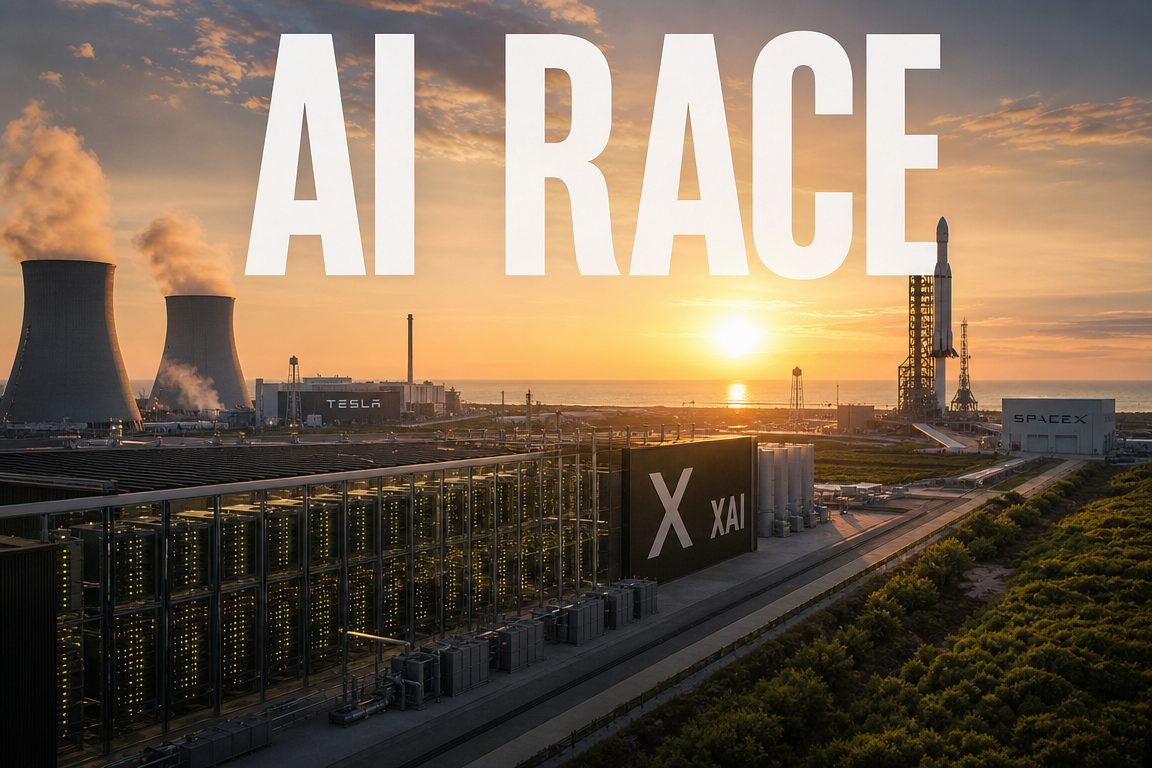
The source cited xAI’s Colossus data center as a key example.
Colossus 1 was described as a 200,000-GPU data center built in 122 days.
That pace is far faster than what large platform companies such as Microsoft or Meta typically require.
Reusing an existing factory site in Memphis was also cited as a factor that accelerated deployment.
The facility was then expanded to 400,000 GPUs within 90 days, and Colossus 2 is now being presented as a first-of-its-kind gigawatt-scale AI data center.
One important detail is that Tesla Megapacks were used to stabilize power for the data center.
According to the source, Tesla Megapacks were deployed for 150MW of power stabilization.
In other words, Tesla technology is already embedded in AI data center infrastructure.
However, the entity building and controlling the data center is xAI, not Tesla.
That is the central concern for investors.
Tesla provides the technology, while the operating control and revenue model appear to sit with other Musk-controlled entities.
6. SpaceX’s AI Data Center Ambition: A 20GW Target by 2027
The source stated that SpaceX has set a target of expanding data center power and cooling capacity to 20GW by the end of 2027.
20GW is not a standard server expansion plan.
It requires national-scale power infrastructure, energy storage, cooling systems, semiconductor supply, and telecommunications networks.
If SpaceX approaches this target, its identity could expand beyond satellite internet and rocket launches into AI infrastructure.
A business model that rents AI data center capacity to other AI companies would also be possible.
In practical terms, that would position SpaceX as an AI-era infrastructure provider.
In that scenario, Tesla shareholders may increasingly question whether Tesla is missing an opportunity to directly capture value from AI data center investment.
This concern becomes stronger given Tesla’s exposure to FSD, Optimus, vehicle data, and energy storage systems.
Tesla is one of the companies that should benefit most from AI, yet the capital allocation appears to be shifting toward SpaceX and xAI.
7. The Answer Was Already Implicit in Elon Musk’s Statement Two Years Ago
The source argues that the answer was already visible in Elon Musk’s January 15, 2024 statement.
At the time, Musk wrote on X that it was “uncomfortable” not to have roughly 25% voting control at Tesla to guide the company as an AI and robotics leader.
He added that otherwise he would prefer to build products outside Tesla.
This was a direct statement.
Musk was indicating that stronger voting control is necessary if he is to push Tesla aggressively into AI.
The threshold he cited was approximately 25%.
That is not full control, but it is enough to strongly influence strategic direction.
From Musk’s perspective, AI and robotics are strategic battles with long-term consequences, and he may not want to pursue them within a company where he lacks sufficient control.
For Tesla shareholders, the statement is sensitive because the CEO effectively said that AI business development might move outside Tesla if control is insufficient.
8. Tesla’s Voting Structure: Does Shareholder Democracy Slow Execution?
According to the source, Musk’s Tesla voting power once fell to about 13%, later recovering to around 19.9% through compensation-related changes and equity movement.
If the new compensation package is fully realized, his stake could rise to about 26%.
That would exceed the 25% level Musk said he wanted.
The issue is that the process takes time and depends on milestone achievement.
Tesla is fundamentally structured as a one-share, one-vote public company.
That is normal from a shareholder-democracy perspective.
However, in areas such as AI data centers, autonomous driving, and humanoid robotics, the pace of decision-making may be slower than required.
Musk appears to view AI competition as a war-like environment.
In that framing, strategic decisions should be made quickly by a single commander rather than repeatedly filtered through shareholder approval.
By that logic, Tesla’s governance structure can look slow and cumbersome.
By contrast, Musk’s influence at SpaceX is much stronger.
That gives SpaceX greater flexibility to move quickly on large AI-related decisions.
9. The xAI Investment Vote: Tesla Shareholders Supported AI, but Not Capital Transfers to Another Musk Company
One of the most important moments in the source was Tesla’s xAI investment vote.
Tesla submitted an xAI investment proposal to shareholders.
The source said the company requested approval for a roughly $5 billion investment in xAI.
There were 1.06 billion votes in favor and 473 million abstentions.
At first glance, the vote appeared to have strong support.
However, under Tesla’s bylaws, abstentions were treated like votes against, and the proposal was therefore deemed invalid.
This illustrates shareholder sentiment clearly.
Shareholders are constructive on Musk’s long-term vision and Tesla’s growth potential.
Large compensation packages also received strong support.
But they were cautious about Tesla capital being directed to xAI, another Musk-controlled company.
In other words, “AI matters” does not mean “Tesla should finance another Musk business.”
This is one of the most important issues for Tesla shareholders to evaluate carefully.
Tesla-xAI collaboration could create long-term synergies, but it also creates persistent conflict-of-interest risk.
10. Board Discretionary Investment and the SpaceX-xAI Combination Debate
After the shareholder vote was invalidated, the source said Tesla’s board invested $2 billion into xAI through discretionary authority.
This reportedly did not require a new shareholder vote because it remained within a board-approved threshold.
xAI was said to have been valued at $230 billion in that round.
Subsequently, discussions emerged around SpaceX acquiring or combining with xAI, with a combined valuation of $1.25 trillion cited in the source.
If accurate, that would create a complex situation for Tesla shareholders.
The shareholder vote had blocked direct xAI investment, but the board still authorized some capital deployment, and that stake then became linked to SpaceX.
The source noted that some media outlets compared this to the SolarCity and Twitter transactions and criticized it as self-dealing.
The core concern is the transfer of assets and value across companies controlled by Elon Musk.
Tesla shareholders want confidence that Tesla’s interests remain protected as the top priority.
Musk’s counterargument is that a combined ecosystem of Tesla, xAI, SpaceX, X, and Neuralink could create far greater AI value.
Ultimately, this is a debate between synergy and conflict of interest.
11. Why SpaceX Can Become an AI Company Faster Than Tesla
The most important difference in the source is voting control.
Musk was said to hold about 42% of SpaceX equity and 82.4% of the voting power.
At Tesla, his influence is closer to 20%, but at SpaceX he can determine strategic direction much more freely.
That difference helps explain why AI data center expansion is gravitating toward SpaceX.
If Musk tries to pursue large AI infrastructure investment through Tesla, he faces shareholder engagement, board review, conflict-of-interest scrutiny, and litigation risk.
At SpaceX, he can more easily declare that the company is becoming an AI platform.
The source said Musk believes AI could account for 99% of SpaceX’s total value within 4 to 5 years.
It also noted comments suggesting that AI revenue could exceed the combined revenue of all other SpaceX businesses.
If that proves accurate, SpaceX could be revalued as an AI infrastructure company rather than only a space business.
Starlink provides global connectivity, rockets provide satellite deployment infrastructure, and data centers provide the compute base for AI training and inference.
Together, these elements could turn SpaceX into a global AI compute infrastructure company.
12. The Core Issue Is Not Technology, but Authority Allocation
Many observers miss the central point: Tesla is not unable to build data centers.
Tesla absolutely has the capability.
It has expertise in factory construction, power management, battery storage, thermal control, and automation.
In fact, Tesla is highly suitable for building AI data centers.
The reason Tesla is not at the center of this effort is not a lack of technical capability, but rather governance and legal risk.
Tesla is a public company with many outside shareholders, so related-party transactions with Musk’s other companies create greater conflict-of-interest concerns.
SpaceX, by comparison, gives Musk greater control and faces less shareholder pressure than Tesla.
For that reason, SpaceX is the more efficient platform for extremely fast capital deployment in AI infrastructure.
From this perspective, the answer to “why doesn’t Tesla build the data centers?” is not that Tesla cannot do it, but that doing it inside Tesla would be slower and more complicated.
That answer is not fully satisfactory to Tesla shareholders.
They may see Tesla’s AI potential flowing to the valuation of other companies.
13. Five Key Investment Takeaways for Tesla Shareholders
First, do not judge Tesla only by its share price.
In the short term, Tesla can benefit from robotaxi optimism, easing rate expectations, and a stronger Nasdaq.
But long-term value will depend on where AI business control ultimately sits.
Second, robotaxi regulatory progress is an important pre-commercial milestone.
A test ride by the Florida governor is more than a publicity event.
State-level trust is essential for robotaxi commercialization.
Third, the easing of Swedish labor risk is positive for Europe.
Holding firm against strong union pressure may affect production costs and operating strategy over time.
Fourth, AI data centers are both an opportunity and a governance risk for Tesla.
Use of Tesla Megapacks for power stabilization is positive.
But if revenue from the data center ecosystem accrues mainly to SpaceX and xAI, the debate over shareholder value will continue.
Fifth, governance risk remains a central variable in Tesla’s valuation.
Musk’s voting control, compensation structure, xAI investment, and relationship with SpaceX will continue to affect Tesla’s risk premium.
14. Should Tesla and SpaceX Be Combined? Is It Realistic?
Under Musk’s logic, Tesla, SpaceX, and xAI could generate powerful synergies.
Tesla has vehicle data, robotics, energy storage, and manufacturing capabilities.
SpaceX has satellite internet, rocket launches, global connectivity, and a stronger decision-making structure.
xAI has large-scale AI models and data center buildout experience.
Together, these could link autonomous vehicles, humanoid robots, satellite communications, and AI data centers into one ecosystem.
However, a full combination of these businesses would be extremely difficult in practice.
Tesla is public, SpaceX is private, and each company has different shareholders and incentives.
Any merger or major asset transfer would likely face fairness concerns, lawsuits, and shareholder resistance.
For Tesla shareholders in particular, the question will remain: why should Tesla’s assets be used to raise the value of another company?
For now, cooperation, investment, technology sharing, and infrastructure integration are more realistic than a full merger.
15. One-Sentence Summary
Tesla has the capabilities needed for the AI era, but the platform that can move fastest in the AI race under Elon Musk’s control is currently closer to SpaceX than Tesla.
That is the issue Tesla shareholders find most uncomfortable.
There is no doubt that Tesla can build factories quickly.
The real question is how much of the value created by AI data centers will remain within Tesla’s shareholder base.
Going forward, Tesla investors must look beyond vehicle deliveries and EV margins and also monitor AI data centers, robotaxi development, Optimus, xAI collaboration, and the company’s relationship with SpaceX.
Tesla is no longer simply an electric vehicle stock.
It should be viewed as one of the most complex growth stories in U.S. equities, combining AI infrastructure, autonomy, energy, and governance risk.
< Summary >
Tesla rose 3.8% to $339.96, while U.S. equities rebounded on easing inflation concerns and stronger expectations for rate stability, supporting technology stocks.
Robotaxi progress is moving into a state-level trust phase, and the end of the Swedish union strike reduces European operational risk.
However, the central issue is that SpaceX and xAI are taking the lead in AI data center development rather than Tesla.
Tesla has sufficient capability to build such infrastructure, but its public-company structure and conflict-of-interest risk make rapid execution more difficult.
Musk has said he wants voting control near 25% to push Tesla’s AI strategy, while his control at SpaceX is materially stronger.
For Tesla shareholders, the key question is how much of the value from AI data centers and xAI collaboration can ultimately be reflected in Tesla’s stock.
[Related Articles…]
Tesla AI Strategy and Share Price Outlook
AI Data Center Investment Cycle and Global Economic Outlook
*Source: [ 오늘의 테슬라 뉴스 ]
– 공장은 다 지어봤는데, 왜 데이터센터는 안 짓나 — $339 테슬라 주주는?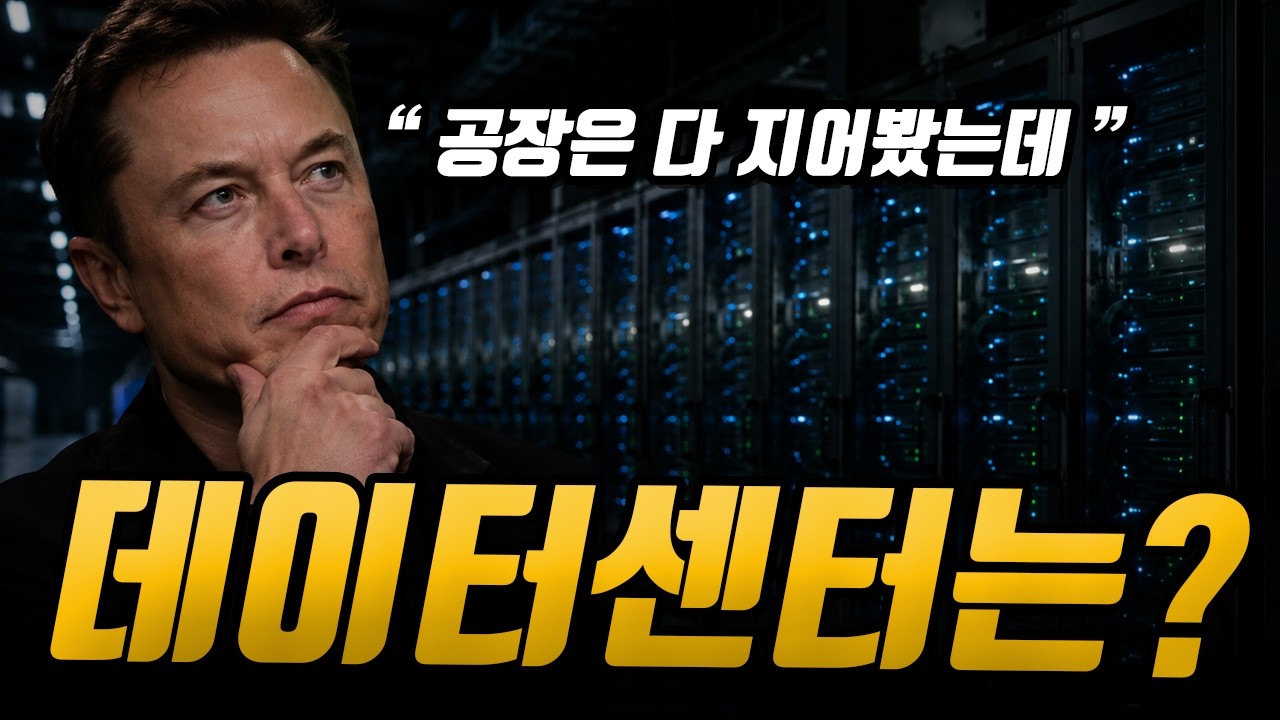
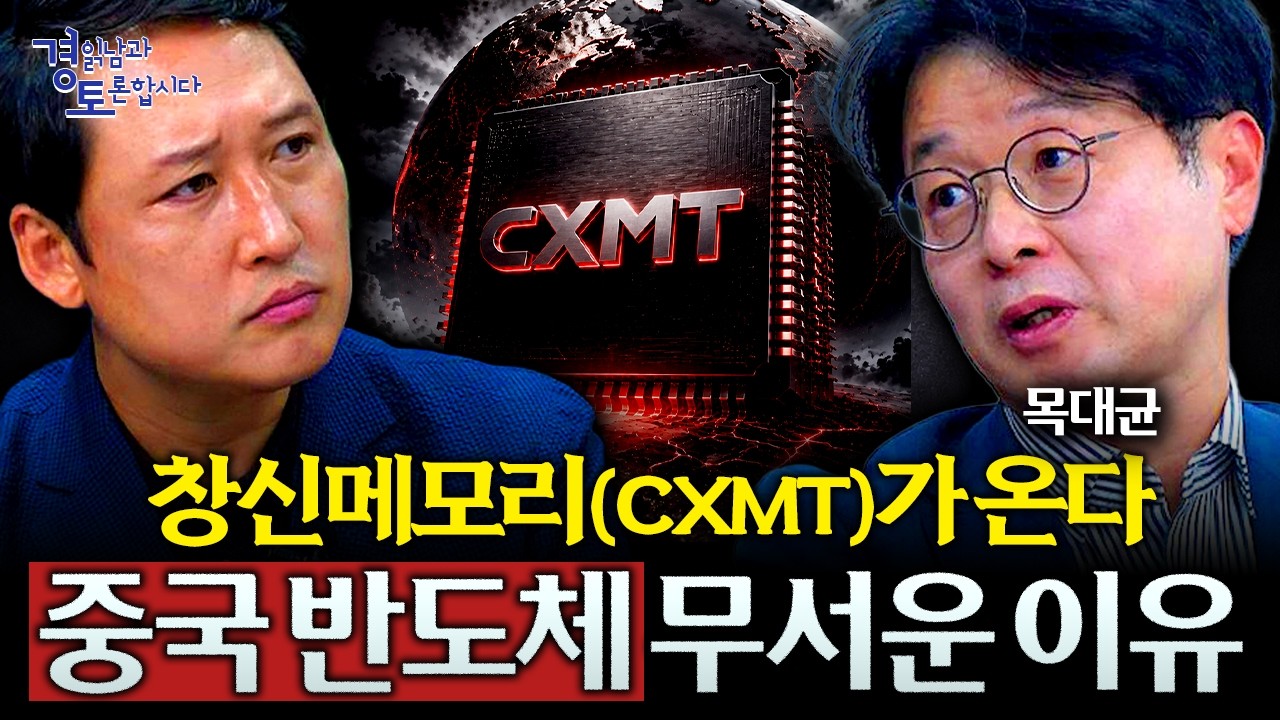
● Apple-CXMT-Shock,China-AI-Rattle,HBM-Pressure
Apple’s CXMT Signal: What China’s Semiconductor and AI Rise Means for Samsung, SK hynix, and Nvidia
The key issue is not simply that Chinese semiconductors are cheaper.
Apple’s reported willingness to consider CXMT products signals a potential shift in the balance among price, supply chains, and technological leadership in the global semiconductor market.
In particular, the question is whether HBM prices can keep rising, how long the memory premium of Samsung Electronics and SK hynix can last, and how China’s AI ecosystem differs from the U.S. model.
This report summarizes CXMT’s rapid growth, China’s low-price strategy, the Apple-related impact, changes in the HBM cycle, China’s manufacturing-led AI adoption, and the key issues investors should monitor.
1. Why Apple Mentioned CXMT: The Market’s Real Concern
The most significant point was Apple’s reported communication to the U.S. government that it could use CXMT products.
The market interpretation is substantial.
If U.S. policy continues to constrain Chinese semiconductors, Samsung Electronics, SK hynix, and Micron can maintain a defensive position.
However, if a global major such as Apple begins to view Chinese memory as a cost-efficiency option, the outlook changes.
- This can be read as evidence that Chinese memory quality has reached a meaningful level.
- Global customers may use CXMT as leverage in price negotiations.
- It reinforces the view that HBM and DRAM price increases cannot continue indefinitely.
- U.S. restrictions on China may be accelerating China’s technological self-reliance.
The implication is not that CXMT is already technologically superior to Samsung Electronics or SK hynix.
The more important signal is that global customers may now treat Chinese memory as a pricing benchmark.
2. How CXMT Is Disrupting the Market: Lower Prices, Higher Share, Broader Ecosystem
CXMT is one of China’s leading DRAM companies.
It still lags Samsung Electronics, SK hynix, and Micron in advanced process technology and HBM.
However, the market is more concerned about the pace of growth than the current technology gap.
The video cited CXMT’s first-half revenue growth at roughly 700%, although the exact figure should be independently verified.
The key point is that Chinese semiconductor firms are rapidly expanding their revenue base.
From a Chinese investor perspective, CXMT’s valuation may appear expensive on current earnings alone.
But if market share in DRAM rises from 8% to 15%, 20%, or even 30%, future growth can justify higher pricing.
- Current earnings remain limited, but revenue growth is strong.
- Domestic substitution remains a major policy direction in China.
- U.S. restrictions are pushing Chinese firms to accelerate ecosystem building.
- China’s large manufacturing base provides a structural demand outlet.
In other words, CXMT’s main value lies not in present profitability but in how quickly it can absorb domestic demand.
3. China’s Aggressive Pricing Strategy: Overcapacity or Scale Efficiency
China’s industrial strategy is often defined by a familiar set of terms.
Large-scale production, low-price competition, and share expansion.
In the West, this is often criticized as overcapacity.
The argument is that Chinese firms use subsidies and mass production to flood markets with low-cost products, weaken foreign value chains, and secure market dominance.
This pattern has already appeared in multiple industries.
- China has gained significant global share in shipbuilding.
- Steel and petrochemicals have also been affected by China’s mass-production strategy.
- Display panels and rechargeable batteries have put strong pressure on Korean firms.
- Electric vehicles and renewable energy have challenged European companies.
From China’s perspective, this is not overcapacity but efficiency.
The strategy lowers unit costs through scale economies and captures markets through price competitiveness.
The concern is that the same approach may be applied to semiconductors.
Memory semiconductors are inherently cyclical.
If low-cost DRAM from China scales up materially, the pricing cycle may become more complex than in the past.
4. Will the HBM Premium Continue? The Market’s Most Important Question
In the AI investment cycle, HBM has been a core growth driver for Samsung Electronics and SK hynix.
Explosive demand for Nvidia GPUs has lifted both pricing and profitability for high-bandwidth memory.
However, the video raised an important concern.
If HBM becomes too expensive, major buyers may respond by developing their own chips or seeking alternative architectures.
- Excessive HBM price increases create cost pressure for customers.
- Hyperscalers such as Amazon, Google, Microsoft, and Meta may expand in-house AI chip development.
- As memory accounts for a larger share of AI data center costs, pricing negotiations become more intense.
- Even if CXMT is not a direct HBM competitor, low-cost memory supply can pressure pricing sentiment across the market.
The market is therefore asking whether the HBM super cycle will last more than five years or end sooner than expected.
This is a key reason for recent volatility in Korean semiconductor stocks.
5. Samsung Electronics, SK hynix, and Micron’s Response: Extending the Cycle Through Long-Term Supply Contracts
Memory semiconductor companies have changed their approach compared with the past.
Samsung Electronics, SK hynix, and Micron are expanding long-term supply agreements to reduce exposure to pure cyclicality.
Five-year or longer contracts with AI data center customers can improve revenue stability.
Reduced price volatility can also support higher valuation multiples.
However, the market has not yet fully validated these benefits in the numbers.
The video suggested that the impact of long-term contracts and revenue stability may become more visible from 2027 onward.
- Investors should verify whether long-term supply contracts are reducing memory-cycle volatility.
- HBM demand should be monitored for diversification beyond Nvidia.
- CXMT’s DRAM share gains may affect overall memory pricing.
- AI data center investment growth remains a key variable.
In short, semiconductor equities are pricing in both optimism and skepticism.
As a result, sharp rallies and corrections may continue.
6. Why China’s Semiconductor Push Should Not Be Underestimated
The message was that Korean firms should not behave like a sleeping rabbit.
Samsung Electronics and SK hynix remain ahead.
HBM in particular requires more than design capability.
It requires yield management, mass-production know-how, packaging, customer qualification, and stable long-term supply capacity.
Samsung Electronics and SK hynix have also survived decades of industry competition.
However, China should be viewed not as a slow-moving turtle, but as one supported by state strategy and domestic demand.
Policy, corporate strategy, and capital markets all need to reflect this shift.
7. The Real Risk in Chinese AI: It Is Not a Simple Copy of the U.S. Model
Chinese AI should not be viewed only as a follower of the U.S. model.
The U.S. has built its AI ecosystem around OpenAI, Google, Anthropic, and Meta.
Its consumer AI model is centered on subscription services such as ChatGPT, Gemini, and Claude.
China, by contrast, is moving faster in applying AI to manufacturing and urban infrastructure.
The focus is less on model prestige and more on industrial deployment speed.
- The U.S. AI model is centered on large models, cloud services, and consumer applications.
- China is deploying AI more quickly across manufacturing, factory automation, smart cities, and administrative systems.
- While the U.S. emphasizes closed models, China is using open models more aggressively.
- China’s integration of AI with manufacturing supply chains supports physical AI adoption.
The key difference is that the U.S. seeks monetization through consumer services first.
China is seeking productivity gains and cost reductions through industrial deployment first.
8. Nvidia’s Five-Layer AI Stack and the U.S.-China AI Rivalry
The video also referred to Nvidia’s five-layer AI framework presented at GTC.
AI is not limited to the model layer.
- The application layer exists.
- The AI model layer exists.
- The semiconductor chip layer exists.
- The server and data center infrastructure layer exists.
- The physical infrastructure layer, including power, cooling, and networks, also exists.
The U.S. is very strong in applications, models, GPUs, and cloud infrastructure.
However, HBM, power equipment, and certain infrastructure segments depend on Korea and allied countries.
China still faces major constraints due to U.S. sanctions.
It lacks advanced semiconductor equipment, HBM, and leading-edge process capabilities.
Yet the more restrictions increase, the more China is pushed to build a vertically integrated domestic system.
That is the core risk.
China remains incomplete, but it is working to fill each AI layer internally as much as possible.
9. Physical AI and Humanoids: China’s Manufacturing Base Can Support AI Scale-Up
Agentic AI and physical AI are increasingly discussed as the next stage of AI development.
Physical AI refers to AI operating in the real world.
Examples include humanoid robots, autonomous driving, smart factories, and logistics automation.
The U.S. has companies such as Tesla, Boston Dynamics, and Figure AI.
China, however, has a much larger manufacturing base.
That creates more room for large-scale AI robot deployment and productivity testing.
The video cited Hangzhou as an example of an AI city.
AI is being integrated into transportation, urban administration, and industrial systems.
These changes may not be highly visible to external consumers.
But they can materially affect productivity and cost structures.
This is the core of China’s AI strategy.
Industrial deployment may matter more than visible chatbot competition.
10. The Key Point Often Missed in Other Coverage: China’s Goal Is a Cheaper Production System, Not Just a Better AI Service
Many reports describe Chinese AI only as a catch-up effort versus the U.S.
The more important issue is that China is using AI to reduce manufacturing costs.
China has already demonstrated price-disruption strategies in electric vehicles, batteries, solar, and displays.
When AI automation and humanoid robotics are added, Chinese manufacturing cost competitiveness could improve further.
If that happens, the impact will extend across global supply chains.
- Chinese product prices may fall further.
- Margin pressure on Korean manufacturers may increase.
- The U.S. and Europe may strengthen protectionist policies.
- Value chains in semiconductors, batteries, EVs, and robotics may be reshaped.
- AI monetization metrics may shift from consumer subscriptions to industrial productivity.
In this framework, China’s real AI advantage may emerge inside factories rather than in model rankings.
11. Why Korean Semiconductor Stocks Fell: China, HBM, and Big Tech’s Own Chips
The recent correction in Korean semiconductor stocks cannot be explained by a single factor.
Several pressures are acting at the same time.
- CXMT’s rapid growth has raised concerns about DRAM pricing competition.
- Apple’s reported CXMT review has weakened pricing power expectations.
- If HBM prices rise too quickly, major technology firms may accelerate in-house AI chip development.
- There is growing uncertainty about how long the AI data center investment cycle will last.
- China’s AI ecosystem is expanding rapidly through manufacturing, affecting the long-term competitive structure.
This does not mean Korean semiconductors are in structural decline.
HBM still requires a high technological barrier and extensive manufacturing know-how.
Samsung Electronics and SK hynix remain major survivors of intense memory industry competition.
China’s advance should be monitored carefully, but Korean competitiveness should not be underestimated.
12. Investment Strategy: Buy, Sell, or Hold
The final question is the most practical one for investors.
Should semiconductor stocks be bought, sold, or held?
The cautious view is that the cycle is not yet over and that investors already facing losses may consider holding, depending on their circumstances.
However, this does not mean passive holding is always appropriate.
The key is alignment with personal capital conditions and investment horizon.
- The memory cycle cannot yet be declared finished.
- Price recovery may take time.
- Significant volatility should be expected.
- Using leverage for a long-cycle thematic trade is highly risky.
- Maintaining cash reserves and managing average cost during corrections remains important.
The main warning concerns leverage.
Using leveraged products for a 3- to 10-year AI semiconductor cycle creates a major mismatch.
A one-day drawdown can force liquidation or collateral pressure even when the long-term thesis is correct.
13. Long-Term Investing: Survival Comes Before Compounding
Compounding requires time.
To earn that time, investors must first survive.
Global financial crises, COVID-19, rate-hike cycles, and recession fears recur.
At such times, markets can fall 30% to 50%.
The key is to remain invested and avoid being forced out of the market.
- Leverage should be reduced for long-term investing.
- Cash reserves should be maintained.
- Portfolio positioning should come before conviction.
- Investors should avoid chasing rallies and panic-selling on declines.
- AI semiconductors should be analyzed together with the broader economic cycle.
Investing is not completed in a single decision.
It requires surviving repeated volatility and being positioned to seize the next opportunity.
14. Key Indicators to Watch Going Forward
Investors should continue monitoring the following indicators in semiconductors and AI.
- How quickly CXMT’s DRAM market share rises.
- Whether global major technology firms, including Apple, actually adopt Chinese memory products.
- HBM pricing trends and the structure of long-term supply contracts.
- How much AI investment remains concentrated in Nvidia versus diversified into in-house chips.
- HBM yield improvement and customer diversification at Samsung Electronics and SK hynix.
- How quickly China deploys AI in manufacturing, smart cities, and humanoid robotics.
- Whether U.S. semiconductor restrictions accelerate China’s technological self-reliance.
- The impact of supply-chain restructuring and protectionism on Korean companies.
Semiconductors and AI cannot be analyzed separately.
AI data centers create semiconductor demand, semiconductor pricing determines AI infrastructure costs, and manufacturing AI in turn creates new semiconductor demand.
< Summary >
Apple’s reported consideration of CXMT is a signal that Chinese semiconductors are becoming a pricing reference in global negotiations.
CXMT still lags in leading-edge HBM technology, but it is growing rapidly on the back of domestic demand and policy support.
China’s low-price mass-production strategy has already affected shipbuilding, steel, batteries, and EVs, and may also influence semiconductors.
If HBM prices rise too far, major technology firms may accelerate their search for in-house AI chips and alternative architectures.
The core of Chinese AI is not chatbot competition, but the use of AI to improve manufacturing productivity and reduce costs.
Korean semiconductor firms still have HBM manufacturing know-how and technological barriers, but China’s advance should not be dismissed.
Investors should reduce leverage, maintain liquidity, and position portfolios in line with the long-cycle nature of the sector.
[Related Articles…]
- AI Semiconductor Supercycle and the Opportunity for Korean Memory Companies
- How China’s AI Strategy Is Reshaping Global Manufacturing
*Source: [ 경제 읽어주는 남자(김광석TV) ]
– 애플도 선택했습니다… CXMT가 반도체 시장을 흔드는 이유 | 경읽남과 토론합시다 | 목대균 대표님 [3편]