● AI, Tech, Selloff, Warning
SK Hynix, Samsung Electronics, Tesla, Micron, and SpaceX: The key issue in the market is not “news” but “flow”
This report consolidates the issues that U.S. equity investors are finding most difficult to interpret at present.
It connects Warren Buffett’s purchase of Alphabet, Michael Burry’s put position on Palantir, yen carry-trade concerns, rising U.S. Treasury yields, semiconductor volatility, oil and gold trends, and the ongoing uptrend in the Nasdaq.
The core points that are often omitted in other news coverage and video commentary are also highlighted.
The conclusion is that the current market is neither in a “must rise” phase nor on the verge of an imminent collapse.
The key is to understand the sequence in which the Nasdaq, interest rates, inflation, the semiconductor cycle, and AI capital spending are influencing markets.
1. The first habit individual investors should abandon: trading based on short-form content
In the current environment, even when investors accumulate KRW 100 million, it does not feel sufficient to generate rapid asset growth.
Inflation continues to erode cash purchasing power, while the gap between wealthy and middle-income households keeps widening.
In the past, accumulating KRW 100 million was often seen as a relatively easier path toward KRW 200 million or KRW 300 million.
Today, even after reaching KRW 200 million, asset growth can be slow once housing costs, education, living expenses, taxes, and exchange-rate pressure are considered.
In this environment, for both U.S. and Korean equities, the issue is less about how quickly information is accessed and more about how it is interpreted.
In particular, buying SK Hynix, Samsung Electronics, Tesla, Nvidia, or Micron based only on short-form videos is highly risky.
Short-form content presents conclusions without adequately explaining the rationale, associated risks, or the price levels at which action should be taken.
Ultimately, investors need to focus on market structure rather than headline news.
2. Warren Buffett’s Alphabet purchase is not simply a signal to buy Google
Recently, Berkshire Hathaway’s purchase of Alphabet, or Google, attracted significant market attention.
Many investors immediately ask whether they should buy as well because Warren Buffett bought Google.
However, the more important issue is Berkshire’s investment philosophy rather than the stock itself.
Berkshire generally prefers companies with strong cash flow, proven profitability, and long-term value creation tied to economic growth.
Examples include Coca-Cola, Bank of America, and Apple.
These companies are not primarily characterized by short-term doubling or tripling potential; rather, their value tends to be re-rated over time alongside inflation and economic expansion.
In other words, Warren Buffett’s core strategy is investing in companies that can withstand time.
That said, it is difficult for individual investors to replicate Buffett’s approach directly.
Berkshire invests on a multi-decade horizon, holds substantial cash, and can utilize insurance float and scale.
Individual investors face very different constraints in retirement timing, living expenses, portfolio size, and risk tolerance.
For that reason, buying solely because Buffett bought is not an effective strategy.
3. Why stocks may move more slowly after entering the Dow
One of the more notable observations in the original text is that stocks may move more slowly after joining the Dow.
Nvidia, for example, used to exhibit much greater volatility, but after becoming a large-cap blue-chip name and entering the Dow, its price action became relatively more stable.
This does not mean that every stock will necessarily behave this way.
However, inclusion in the Dow Jones Industrial Average signals that the market no longer views the company as a pure high-growth theme stock, but rather as a representative blue-chip name.
In such cases, short-term spikes and drawdowns may become less pronounced as institutional, pension, and passive capital exert greater influence.
Alphabet can be viewed from a similar perspective: not merely as an AI growth stock, but as a large platform company with stable cash generation.
Accordingly, the key factor in Google’s purchase case is not only AI expectations, but also long-term cash flow and stability.
4. The idea that big tech is over and investors should rotate into value stocks is too simplistic
Markets periodically produce the claim that big tech has peaked.
At such times, arguments reappear that investors should rotate into value stocks, dividend stocks, or financials.
However, big tech and value stocks are not substitutes in a strict sense.
A well-constructed portfolio does not concentrate in a single sector; it balances exposure according to the market cycle.
Microsoft, Apple, Nvidia, Meta, and Alphabet remain linked to AI capital spending, cloud services, semiconductor demand, advertising, and data center expansion.
By contrast, value stocks are more closely tied to interest rates, defensive positioning, dividends, and cyclical activity.
Therefore, the key question is not whether to own big tech or value stocks, but how to allocate between them.
5. Michael Burry’s put position on Palantir should not be interpreted as pure fear
Recently, reports indicated that Michael Burry took a bearish position in Palantir and certain AI-related stocks.
When such news appears, investors often immediately conclude that the AI bubble is about to burst.
However, a proper understanding of options leads to a different interpretation.
Buying a put option does not necessarily mean the investor expects the stock to collapse to a specific level.
For example, if a stock is trading at $190 and a $100 put is purchased, that does not imply a firm expectation that it will fall to $100.
A put option can generate profits from a relatively modest decline because of changes in premium value.
In other words, Burry’s put position can be viewed as a short-term bearish bet, but it should not be overstated as evidence that the company’s value is collapsing.
Palantir remains linked to AI software, government contracts, and data analytics demand, so interpreting it as a company worth less than $1 in the long run would be excessively extreme.
Investors should rely on their own framework rather than the positioning of a well-known manager.
6. A critical point in options news: the strike price is not a target price
Without understanding options, it is easy to misread the positions of well-known investors such as Michael Burry.
If a put option has a strike price of $100, that does not mean the investor believes the stock will necessarily fall to $100.
Option prices move based on delta, gamma, theta, and vega.
In practical terms, even a $1 move in the stock can cause a substantial change in the option price.
In particular, theta, or time decay, reduces value as time passes.
As a result, a put buyer may incur losses if the stock does not decline quickly enough.
News coverage often emphasizes only the fact that a put was bought, while in reality entry timing, expiration, premium, volatility, and time value are far more important.
Without this understanding, investors are easily influenced by market fear.
7. Intel’s equity offering should not automatically be viewed as negative
When Intel announces a large equity offering, many investors immediately think about dilution.
To be sure, an equity offering can create short-term pressure for existing shareholders.
However, not every equity issuance is negative.
Companies typically raise capital when market conditions are supportive, investor interest is strong, and there is an investment rationale tied to industry development.
In the current environment, the semiconductor industry is connected to AI chips, foundry investment, data centers, and U.S. reshoring.
Accordingly, Intel’s equity offering can also be seen as a means of securing capital for AI semiconductors and manufacturing investment.
More important than the news itself is whether the stock is holding key price levels.
Even if positive news is announced, failure to break through resistance suggests that the market is not yet convinced.
8. Yen carry-trade fears are often overstated
Many market commentary pieces currently attribute Bitcoin weakness, U.S. equity volatility, and technology stock corrections to carry-trade unwinding.
The yen carry trade involves borrowing yen at low interest rates and investing in higher-yielding assets.
If the yen strengthens, repayment becomes more expensive, and some capital may exit positions.
However, it is excessive to treat this as the sole driver of all market declines.
The yen was weak for an extended period.
Recent yen strength appears less like an unlimited trend and more like normalization.
Exchange rates do not move in a single direction forever.
The USD/KRW exchange rate is not destined to keep rising to 1,700 or 1,800 just because it once reached 1,600, nor can it be assumed to fall immediately below 1,200.
In broad terms, the 1,300 to 1,400 range remains an important reference zone for the USD/KRW rate.
The key is not to forecast the exchange rate precisely, but to determine at which levels U.S. dollar exposure should be accumulated in stages.
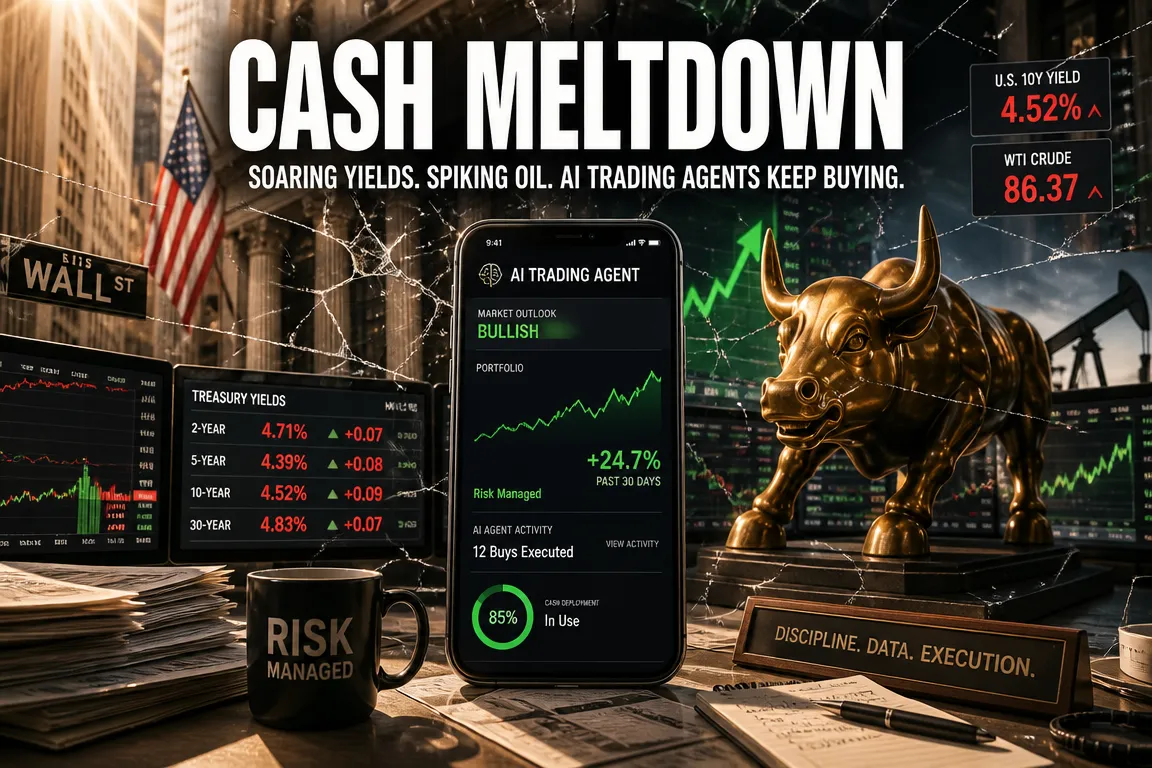
9. The real risk in the current market is U.S. Treasury yields, not oil
One of the most important macro points in the original text is interest rates.
Recently, elevated 10-year and 30-year U.S. Treasury yields have weighed on growth stocks and semiconductor shares.
When rates rise, the discount rate applied to future corporate cash flows increases.
This is especially relevant for industries with long-duration growth expectations such as AI investment, data centers, and semiconductor capital expenditures.
Nvidia, Micron, Broadcom, Lam Research, SK Hynix, and Samsung Electronics may all experience higher volatility when rate pressures increase, even if earnings expectations remain favorable.
At present, the more relevant issue is not whether AI is over, but whether yields rise again.
U.S. concern over potential Japanese Treasury sales can also be interpreted in the context of preventing further upward pressure on yields.
If Japan were to sell a large amount of U.S. Treasuries, bond prices would fall and yields could rise.
As a result, U.S.-Japan dynamics involving exchange rates, the yen, and Treasury flows are not merely foreign-exchange issues; they are linked to the broader U.S. equity market.
10. Investors should avoid assuming that the Federal Reserve can solve everything
Many investors believe that if the Federal Reserve cuts rates, the market will immediately improve.
However, the Fed cannot fully control every interest rate in the market.
The Fed can adjust the policy rate, but long-term Treasury yields are driven by supply and demand, inflation expectations, fiscal deficits, Treasury issuance, and global capital flows.
When uncertainty is limited and markets are calm, the Fed’s messaging can have a major effect.
But in an environment with rising AI investment, fiscal spending, geopolitical risk, higher logistics costs, and substantial Treasury issuance, the Fed’s influence can be constrained.
Therefore, investors who focus only on FOMC meetings are viewing only part of the picture.
11. The surge in Sandisk and Micron should not be surprising
Semiconductor stocks differ significantly in character.
Some stocks can move only 2% to 3% in a day, while others can rise or fall 10% to 15% without being unusual.
Memory semiconductor names such as Sandisk and Micron are cyclical and highly volatile.
When HBM, NAND, DRAM, data center demand, and AI server investment expectations strengthen, these stocks can rise sharply.
Conversely, they can fall quickly if demand softens or pricing concerns emerge.
Accordingly, the issue is not the fact that a stock rose 15% in a day, but rather the inherent volatility profile of the company.
Each stock has its own market behavior.
Without understanding that, investors tend to chase rallies and panic-sell during declines.
12. SpaceX-related issues and short covering should also not be overstated
Because SpaceX is a private company, it is not traded directly like a listed stock.
However, aerospace and space industry names, related ETFs, and affiliated companies can be influenced by SpaceX-related news.
Recently, some space-themed stocks were described as rising due to short covering.
Short covering occurs when investors with short positions buy back shares to reduce losses as prices rise.
However, a rise in price should not automatically be attributed to short covering.
Short selling tends to build in stocks that have risen sharply, attract heavy market attention, or show high volatility.
When prices rise again, short covering can amplify the advance.
The important factor is not the label of short covering, but whether the stock has held a key support level and normalized relative to prior price ranges.
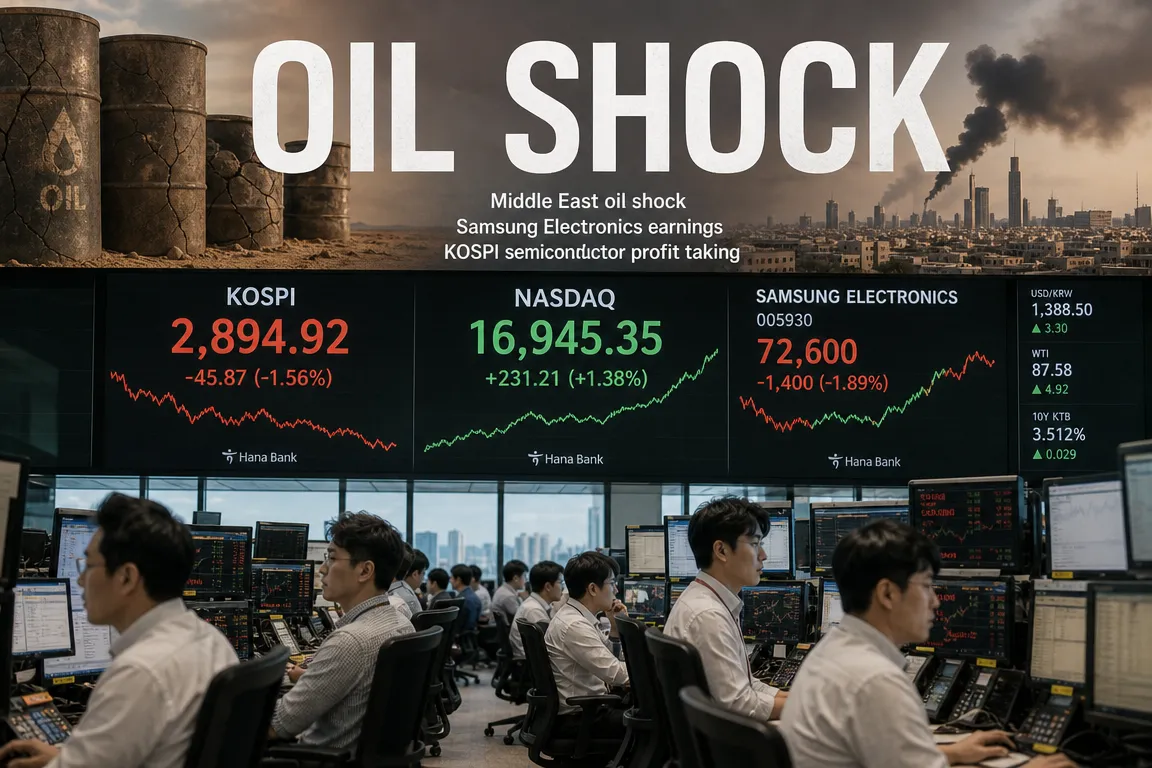
13. Oil and Iran sanctions are not driving market reactions as strongly as before
When Iran sanctions, the Strait of Hormuz, or Middle East risk are discussed, many investors immediately worry about a sharp rise in oil prices.
Geopolitical risks can certainly affect oil.
However, current oil prices are not necessarily in a range that would destabilize the market.
Oil prices must be balanced: if they rise too much, inflation becomes a problem; if they fall too much, recession concerns increase.
In other words, oil also has a reasonable trading range.
The original text highlighted the mid-$90s as an important threshold for assessing whether oil is strengthening too aggressively.
At present, a more important issue than oil may be internal U.S. logistics and transportation costs.
The United States is geographically large and highly dependent on logistics.
When trucking costs, labor costs, insurance costs, warehouse costs, and energy costs rise, inflation can be generated domestically.
Accordingly, focusing only on crude oil can miss important inflation dynamics.
14. Gold and silver: the focus should be on cycles, not chasing moves
When gold prices rise, the question immediately becomes whether a major breakout is beginning.
However, gold and silver are highly cyclical assets.
Although gold is classified as a safe-haven asset, it does not always move inversely to equities.
There are periods when both stocks and gold rise together initially.
That said, if gold rises too quickly, the market may interpret it as a sign of underlying stress.
Because gold and the U.S. dollar often move inversely, investors should also assess whether the dollar can continue weakening.
Gold can serve as a portfolio defense tool over the long term.
However, it is difficult to justify chasing it based solely on a short-term rally.
Silver is more volatile than gold and has a stronger industrial component, so novice investors do not need to hold large allocations to both metals.
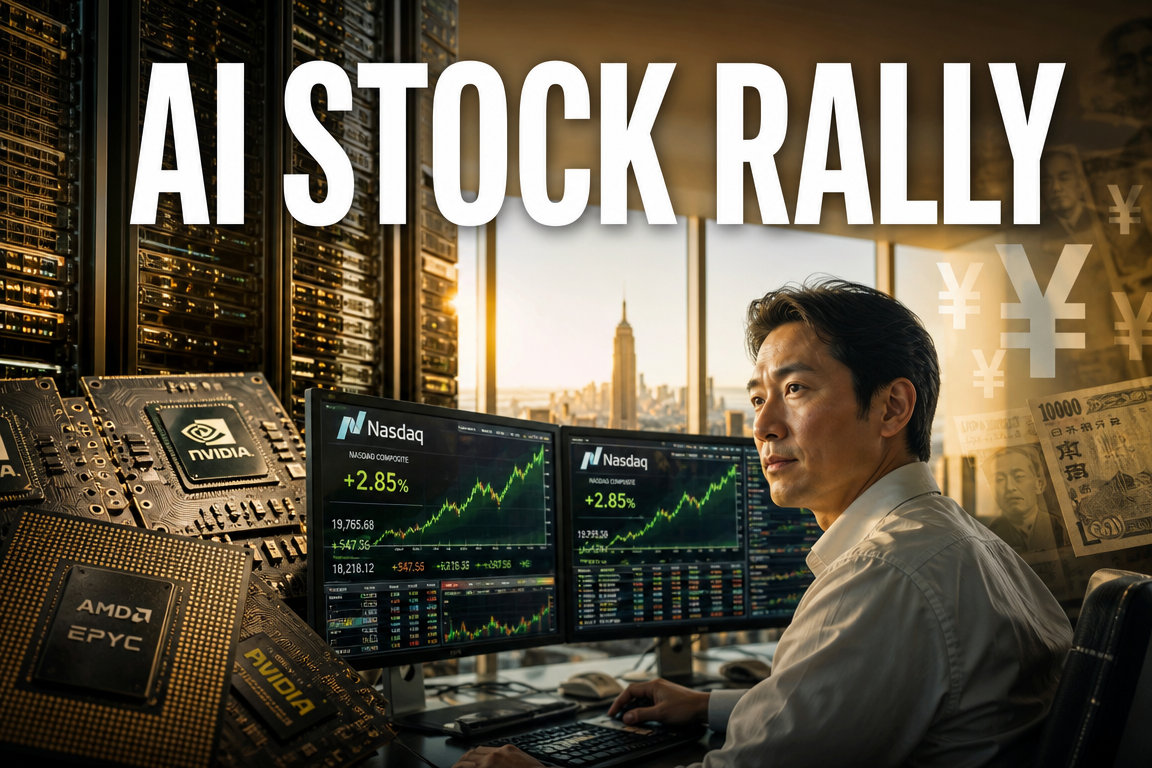
15. The Nasdaq uptrend is the central market reference point
The most important message in the original text is whether the Nasdaq has re-entered an uptrend.
If Nasdaq futures reclaim a key reference level, market buying sentiment can recover.
This does not mean that prices will rise without interruption.
Rather, it suggests that the market may be moving out of a one-way decline and back into a phase where upside potential is again open.
Equity investing is not about prediction; it is about response.
If the market is in an uptrend, the stance should be constructive; if the key level is lost again, risk management should take priority.
The critical issue is not whether prices rise or fall, but where investor sentiment changes.
16. For SK Hynix and Samsung Electronics, support levels matter more than fear
SK Hynix and Samsung Electronics remain central beneficiaries of the AI semiconductor cycle.
SK Hynix, in particular, continues to draw global attention because of its HBM competitiveness.
For Samsung Electronics, the key issues are memory recovery, foundry competitiveness, response to AI semiconductors, and valuation re-rating.
However, short-term weakness should not automatically be interpreted as the end of the cycle.
Semiconductor stocks are inherently cyclical and volatile.
The key question is whether major support levels are maintained and whether rebounds can break through resistance.
SK Hynix and Samsung Electronics often move in line with U.S. semiconductor stocks, the Nasdaq, interest rates, and AI sentiment.
Accordingly, investors should also monitor U.S. semiconductor names such as Micron, Nvidia, Broadcom, AMD, and Lam Research.
17. For Tesla, market sentiment matters more than short-term price action
Tesla remains one of the most closely watched U.S. stocks among individual investors.
Demand trends in electric vehicles, robotaxi development, autonomous driving, energy services, and Elon Musk-related issues all influence the stock.
For a high-volatility stock such as Tesla, focusing only on short-term price movement can be psychologically destabilizing.
If the Nasdaq returns to an uptrend, buying sentiment can also return to high-beta growth stocks such as Tesla.
However, if rates rise sharply again, growth stocks like Tesla can come under renewed pressure.
Ultimately, Tesla should be assessed together with company-specific news, the Nasdaq trend, interest-rate direction, and broader risk appetite.
18. The most important points rarely emphasized in other news or video commentary
-
First, buying a put option is not a prediction of collapse.
Burry’s put position should be understood as a short-term bearish trade, not as proof that a company is headed for failure.
-
Second, fears around yen carry-trade unwinding are often overstated.
Yen strength may reflect normalization rather than crisis, and capital does not exit positions all at once on a large scale.
-
Third, the real driver in the market is U.S. Treasury yields, not oil.
The volatility of AI investment and semiconductor stocks is closely tied to upward pressure on rates.
-
Fourth, each stock has a distinct behavioral profile.
Micron and Sandisk, which can move more than 10% in a day, should not be treated like Coca-Cola.
-
Fifth, an uptrend is a response framework, not a prediction.
If the Nasdaq has reclaimed a key level, the outlook can be constructive; if it breaks down again, the strategy should change.
19. The practical framework investors should adopt now
The current market contains both AI bubble concerns and an ongoing recovery in trend strength.
In this environment, the most dangerous behavior is reacting to extreme headlines.
Investors should avoid both the claim that semiconductors are finished and the claim that AI can only go higher.
Warren Buffett’s Alphabet purchase should be understood as a view on long-term cash flow and stability.
Michael Burry’s put position should be interpreted as a short-term bearish expression, not as a broad market-collapse signal.
Carry-trade concerns are only one variable and not the sole explanation for market declines.
Oil remains more of a range indicator than the central driver of a market breakdown.
The key variables are interest rates, the Nasdaq trend, semiconductor demand, the durability of AI investment, and corporate earnings.
Ultimately, investors should be interpreters of market flow, not followers of headlines.
< Summary >
The key issue in the current market is not AI bubble fear, but the Nasdaq uptrend and U.S. Treasury yields.
Warren Buffett’s purchase of Alphabet should be viewed through the lens of stable cash flow and long-term value investing, not as a simple buy signal.
Michael Burry’s put position should be understood as a short-term bearish bet rather than a forecast of collapse.
Fears surrounding yen carry-trade unwinding appear overstated, and yen strength may reflect normalization.
Semiconductor stocks are highly volatile, so investors should focus on each stock’s behavior, support levels, and resistance levels.
For SK Hynix, Samsung Electronics, Micron, Tesla, and SpaceX-related themes, interest rates and market sentiment matter more than headlines.
The current environment calls for disciplined response rather than extreme optimism or pessimism.
[Related Articles…]
AI Semiconductor Cycle and Investment Strategy for SK Hynix and Samsung Electronics
U.S. Treasury Yields and the Trend in Growth Stocks on the Nasdaq
*Source: [ 미국주식은 훌륭하다-미국주식대장 ]
– 지금 놓치면 따라가기 어려울 겁니다. SK 하이닉스 삼성전자 테슬라 마이크론 스페이스X