● IMF-OECD Clash, Korea’s Semiconductor Boom, Won-Dollar Shock, AI Bubble Risk
2026 Korea Economic Outlook: IMF and OECD Flag a Crossroads Driven by Semiconductor Exports, KRW-USD Exchange Rate, and the AI Investment Cycle
The key issue is not simply that the Korean economy has improved.
The IMF economic outlook raised Korea’s growth forecast materially, but the more important point is that the revision is largely concentrated in semiconductor exports and the AI semiconductor value chain.
The OECD Korea Economic Survey simultaneously highlighted a sharp rise in the KRW-USD exchange rate, deteriorating fiscal sustainability, and the need for tax reform, raising the question of whether the current recovery is structurally sound.
The government has also announced its 2026 growth strategy, but the central issue remains whether Korea can build an industrial portfolio resilient enough to withstand a downturn in the semiconductor cycle.
Beyond headline growth figures, the more important point is that the AI investment cycle is supporting the economy while also amplifying risks to the exchange rate, inflation, public finances, and employment polarization.
1. IMF Outlook: A Low-Growth Global Economy, with Korea an Outlier on Semiconductor Strength
The IMF lowered its 2026 global growth forecast from 3.1% to 3.0%.
Given that the long-term average is around 3.7%, the global economy remains in a prolonged low-growth environment.
The IMF’s key framing is “Cross Currents.”
In practical terms, this reflects downward pressure from conflict and upward pressure from AI-related capital spending.
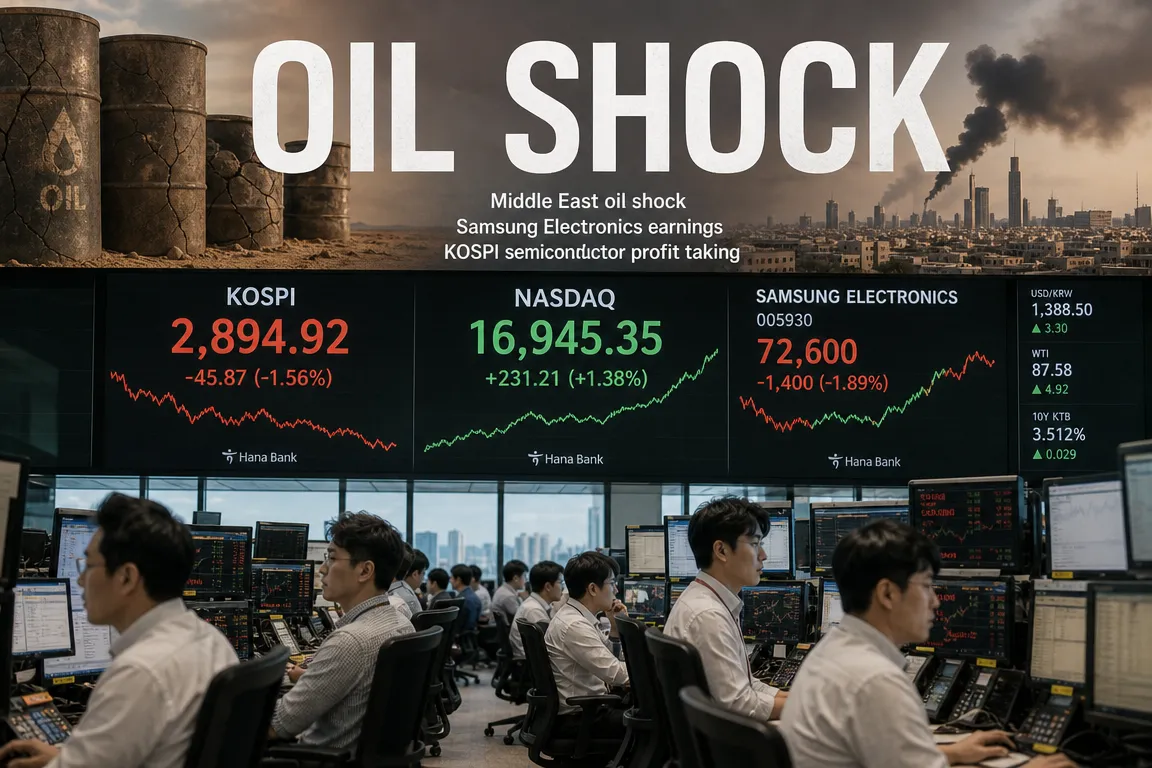
Middle East conflict, energy supply risks, and the possibility of an oil shock continue to weigh on growth.
At the same time, investment in AI data centers, GPUs, HBM, memory semiconductors, and semiconductor equipment is lifting growth in selected economies.
- The global economy remains generally weak.
- Middle East conflict is adding pressure to oil supply and inflation.
- AI infrastructure investment is driving strong demand for semiconductors.
- Korea, Taiwan, Malaysia, and Thailand are benefiting as AI hardware exporters.
- Korea’s growth forecast was revised up significantly on the back of semiconductor exports.
The IMF raised Korea’s 2026 growth forecast from 1.9% to 2.6%.
The 2027 forecast was also increased from 2.1% to 2.5%.
Among countries covered, Korea saw one of the largest upward revisions.
This indicates that the main support for Korea’s recovery is semiconductor exports and AI-related demand.
2. Why Korea Appears Strong: A Concentrated Recovery Rather Than a Broad-Based One
The key distinction in assessing Korea is between aggregate improvement and broad-based improvement.
On the surface, exports, growth, and the current account appear stronger.
However, the underlying composition is increasingly concentrated in semiconductors.
As of the first half of 2026, semiconductors accounted for about 38.7% of Korea’s total exports.
Semiconductor export growth was exceptionally strong, driven by AI server investment and higher memory prices.
On a revised basis, non-semiconductor exports grew 16.4% in the first half of 2026.
That means non-semiconductor exports also expanded, but the dominant contribution still came from semiconductors.
- Semiconductor exports are the core driver of Korea’s growth.
- AI data center investment is boosting demand for HBM, DRAM, SSDs, and server semiconductors.
- Improved earnings at Samsung Electronics and SK hynix are directly reflected in export data.
- If semiconductor prices weaken, export growth and GDP growth may both slow.
- China’s growing AI semiconductor value chain is a medium- to long-term risk for Korea.
The most important point is that price effects are contributing more than volume effects to growth.
When DDR4, DDR5, and HBM prices rise sharply, export value increases materially.
However, if price increases stop or reverse, export growth slows quickly even if shipment volumes are unchanged.
For that reason, it is risky to equate a semiconductor boom with a structural improvement in the Korean economy.
3. IMF’s Main Risk Warning: The Oil Shock Is Not Over
The largest economic risk from Middle East conflict is oil supply disruption.
The Strait of Hormuz remains a critical passage for global crude transportation.
If closures or severe restrictions persist, international oil prices could rise sharply again.
Oil prices have remained relatively stable mainly because major economies have used strategic reserves and inventory drawdowns.
In other words, the shock has not disappeared; it has been temporarily offset by inventory releases.
- Production disruptions in Middle Eastern oil producers are already affecting the energy supply chain.
- Major economies have softened near-term price pressure through reserve releases.
- If conflict continues while inventories remain lower, oil prices could reaccelerate.
- A renewed rise in oil prices would increase inflation pressure.
- Higher inflation could keep monetary policy tighter for longer or prompt further rate hikes.
Korea is highly dependent on energy imports.
In particular, it relies heavily on the Middle East for crude oil, naphtha, bromine, and helium.
If conflict escalates or lasts longer, Korea could face pressure on import prices, production costs, corporate margins, and consumer inflation.
This is a material risk that should not be underestimated in Korea’s outlook.
4. OECD Korea Survey: The Exchange Rate Problem Extends Beyond the FX Market
The OECD Korea Economic Survey describes Korea’s short-term recovery as solid.
At the same time, it points to structural issues including fiscal sustainability, tax reform, slowing potential growth, and exchange rate volatility.
In particular, if the KRW-USD exchange rate remains elevated, the issue may extend beyond the foreign exchange market.
If the dollar weakens but the won remains weak, domestic structural factors need to be examined.
- Korea’s potential growth rate faces a medium- to long-term decline.
- Fiscal expansion and liquidity provision may support near-term growth but can weaken the won.
- High M2 growth can add pressure on currency value.
- A weak won may benefit exporters but creates pressure for importers and domestic firms.
- Exchange rate instability affects inflation, interest rates, consumption, and corporate investment.
The OECD’s message is that growth supported primarily by liquidity has limits and must be complemented by fiscal discipline and structural reform.
For Korea, where population aging is rapid, weaker fiscal sustainability is not merely an accounting issue.
It is directly linked to future debt burdens, pension obligations, and higher welfare spending.
5. OECD Tax Reform Proposal: A Shift in Property Tax Structure
The OECD also focused on Korea’s property tax structure.
Compared with the OECD average, Korea’s property-related taxes are relatively high.
However, the structure is more weighted toward transaction taxes than holding taxes.
The OECD’s direction is to reduce transaction taxes and increase holding taxes.
- High transaction taxes can reduce market turnover.
- Low holding taxes reduce the cost of holding high-value assets over time.
- A higher holding-tax, lower transaction-tax structure may improve liquidity.
- However, tax reform affects asset owners, end users, older households, and multi-home owners differently.
- This is therefore a structural market reform, not merely a tax increase or cut.
This issue is not limited to housing policy; it also relates to fiscal policy and currency stability.
Stable tax revenue can reduce pressure for persistent deficit spending.
Improved fiscal sustainability can support confidence in the won.
In that sense, the OECD’s tax reform message is part of a broader macroeconomic stabilization strategy.
6. Government’s 2026 Economic Policy Direction: Semiconductors, AI, Supply Chains, and Regional Growth
The government stated that Korea’s growth path has improved in its 2026 economic policy direction.
It highlighted stronger nominal growth forecasts and an improvement in real growth momentum.
However, nominal growth includes price effects.
Because semiconductor prices have lifted nominal GDP and exports, this should be separated from a true structural improvement.
The government’s growth strategy can be summarized in three areas.
- First, strengthening supply chain and energy resilience after Middle East conflict.
- Second, building global competitive advantages in semiconductors and AI.
- Third, raising potential growth through region-led development and structural innovation.
In semiconductors, early development of the Yongin and Pyeongtaek clusters is a key priority.
The Chungcheong region is positioned as a center for HBM and packaging.
The Yeongnam region is intended to serve as a hub for next-generation semiconductors and materials, parts, and equipment.
In AI, the government identified seven priority areas for physical AI.
- AI factory
- AI robot
- AI vehicle
- AI ship
- AI appliance
- AI drone
- AI semiconductor
This direction is important.
AI is no longer limited to chatbots or software.
Competition is now extending into physical AI across factories, vehicles, ships, robots, appliances, drones, and semiconductors.
Korea’s manufacturing base makes physical AI a potential growth opportunity.
7. Korea’s Main Weakness: The Post-Semiconductor Growth Base Remains Limited
Korea’s current strength is clear.
In the AI semiconductor era, Korea holds an important position across HBM, DRAM, NAND, packaging, foundry services, and semiconductor equipment and materials.
However, the weakness is equally clear.
Growth expectations remain too concentrated in semiconductors.
China is expanding its value chain through companies such as CXMT, the Huawei ecosystem, domestic AI chips, physical AI, and humanoid robotics.
The United States is also reinforcing its domestic semiconductor supply chain.
To maintain its current advantage, Korea must expand beyond high-value memory into system semiconductors, power semiconductors, AI software, robotics, and energy infrastructure.
- A decline in memory prices could quickly slow export growth.
- Chinese share gains in lower-end memory could increase competitive pressure.
- U.S. and Chinese supply chain localization policies create long-term risks for Korea.
- If the AI investment cycle weakens, semiconductor-led growth will also soften.
- Growth beyond semiconductors is therefore essential.
The inclusion of next-generation power semiconductors, graphene, SMRs, smart agriculture, K-content, beauty, and food industries is positive.
However, direction alone is not sufficient.
Each sector needs concrete budgets, private-sector incentives, deregulation, workforce development, and export strategies to become a real growth engine.
8. Growth Without Jobs: The Youth Employment Problem May Worsen in the AI Era
As Korea’s economy becomes more dependent on AI and semiconductors, growth without jobs may become a larger issue.
Firms are increasingly preferring experienced workers over new entrants.
As AI adoption accelerates, entry-level roles in administrative work, basic analysis, and repetitive tasks may decline.
As a result, young workers may find it harder to gain initial experience.
This is not simply a welfare issue.
If young workers cannot build experience now, Korea may face a shortage of mid-level managers, technical leaders, and industry specialists in the future.
In other words, today’s youth employment problem is tomorrow’s productivity problem.
- Youth allowances can serve as a safety net.
- However, they may also reduce work incentives if not designed carefully.
- Wage subsidies for employed young workers could improve incentives to hire them in smaller firms.
- Companies reduce hiring risk, and young workers gain experience.
- In the AI era, providing a first job experience is increasingly important.
9. The Most Important Points Often Missing From News Coverage
First, Korea’s recovery is narrow rather than broad.
Semiconductors and AI hardware exports are strong enough to lift overall averages.
That is positive, but also a source of vulnerability.
Second, the oil shock has not materialized fully because inventory releases have cushioned supply-chain stress.
If conflict persists and inventories fall further, oil prices and inflation could rise again.
Third, the KRW-USD exchange rate cannot be stabilized through FX intervention alone.
Lower potential growth, fiscal deficits, liquidity expansion, and sector concentration are all affecting confidence in the won.
Fourth, the OECD’s proposal to adjust holding and transaction taxes is not merely about real estate taxation.
It is linked to fiscal sustainability, property market liquidity, currency stability, and long-term growth capacity.
Fifth, Korea is a beneficiary of the AI era, but competitive pressure is increasing as China expands its AI semiconductor value chain.
Korea retains strengths in high-end HBM, but competition in lower-end memory and some components is intensifying.
10. Key Checkpoints for Investors and Companies
- Monitor whether the semiconductor price cycle remains intact in the second half of 2026.
- Assess whether HBM demand continues alongside data center investment.
- Track whether Middle East conflict and Strait of Hormuz risks push oil prices higher again.
- Watch whether the KRW-USD exchange rate breaks away from the 1,500 level.
- Review M2 growth and fiscal deficit trends together.
- Check whether government AI, semiconductor, and physical AI policies are translated into budgets and private investment.
- Evaluate whether non-semiconductor export growth broadens.
- Monitor youth employment rates, as weak improvement would increase long-term productivity risk.
< Summary >
The IMF lowered its global growth outlook while materially raising Korea’s forecast on the back of semiconductor exports and AI investment.
The OECD described Korea’s recovery as solid but warned about fiscal sustainability, tax reform, exchange rate instability, and slowing potential growth.
Korea’s recovery is better characterized as a concentrated semiconductor-led recovery than a broad-based one.
If Middle East conflict continues, oil prices, inflation, interest rates, and the exchange rate could all become more volatile again.
The government’s AI semiconductor and physical AI strategy is constructive, but Korea still needs to define its post-semiconductor growth engine more clearly.
The core issue in the 2026 outlook is not the growth number itself, but semiconductor dependence, exchange rate stability, fiscal sustainability, and the breadth of AI-led industrial expansion.
[Related Articles…]
- AI Semiconductor Supercycle and Korea’s Export Strategy
- Impact of KRW Weakness on Korea’s Economy and Asset Markets
*Source: [ 경제 읽어주는 남자(김광석TV) ]
– [모아보기] IMF·OECD의 경고 2026년 한국경제, 반도체와 환율의 운명이 갈립니다
● Nvidia Cuts Backstop, AI Bubble Fears Rise
NVIDIA Reduces Debt Guarantee: What It Means for the AI Data Center Investment Boom and Circular Financing Risk
The key issue is not simply that NVIDIA reduced its guarantee.
The broader picture connects AI data center investment, OpenAI profitability, Wall Street lending structures, GPU collateral values, HBM demand, and Nasdaq volatility.
For NVIDIA, this is significant because the company is no longer just a supplier of AI semiconductors; it is also acting as a credit support provider within the AI infrastructure financing ecosystem.
Accordingly, U.S. equity investors should monitor not only NVIDIA’s share price, but also U.S. interest rates, data center project returns, OpenAI cash flow, GPU rental pricing, and the HBM memory cycle.
1. Key News: NVIDIA Cuts Guarantee from $250 Billion to $120 Billion
The main market report states that NVIDIA reduced the debt guarantee for a large-scale AI data center project to be used by OpenAI, from a maximum of $250 billion to approximately $120 billion.
The project has been described as a 10GW AI data center development in Ohio.
Total project cost is estimated at about $500 billion, or roughly KRW 700 trillion.
This is not a single data center, but an integrated AI infrastructure package combining power infrastructure, GPUs, HBM memory, construction, land, operating expenses, and financing costs.
- Project size: approximately $500 billion
- Data center capacity: described as 10GW
- Initial guarantee: up to $250 billion
- Revised guarantee: approximately $120 billion
- Primary user: interpreted as OpenAI
- Financing participants: Wall Street investors and financial platforms
- Key suppliers: NVIDIA GPUs and the HBM memory ecosystem
The market initially viewed NVIDIA’s involvement as positive because the guarantee could lower borrowing costs and improve project economics.
However, the later reduction in the guarantee led to concerns that AI data center investment may be facing strain.
2. Project Structure: Who Earns, and Who Bears the Risk?
This AI data center project is not a simple model in which NVIDIA sells GPUs and exits the transaction.
The structure combines power infrastructure, data center operations, long-term leasing, Wall Street financing, and debt guarantees.
- U.S. energy-related land and infrastructure form the base.
- SB Energy and related SoftBank entities are described as participating in the operating structure.
- Once built, the data center is leased long term by an AI company such as OpenAI.
- The operator uses lease income to service debt and generate returns for Wall Street investors.
- Investors receive returns through interest or dividend-like distributions.
- NVIDIA acts as both GPU supplier and partial credit backstop.
If OpenAI can reliably pay for the data center over time, the structure benefits all parties.
OpenAI expands its AI services, the operator earns rental income, Wall Street receives financing returns, and NVIDIA sells GPUs at scale.
HBM suppliers such as Samsung Electronics, SK hynix, and Micron may also benefit.
However, if OpenAI fails to generate sufficient cash flow, the structure becomes more fragile.
Lease payments may be delayed, investor returns may weaken, and NVIDIA’s guarantee exposure could become more material.
3. Why the Market Is Worried About Circular Financing
The most sensitive term in this discussion is circular financing.
The concern is that NVIDIA may be helping finance customers who then use that capital to buy NVIDIA GPUs, thereby increasing NVIDIA’s revenue.
In simplified form, the structure works as follows:
- NVIDIA provides credit support for an AI data center project.
- Wall Street lends at lower rates because of that support.
- The data center uses the funds to purchase large volumes of NVIDIA GPUs.
- NVIDIA records higher revenue and profit.
- If OpenAI ultimately fails to generate sufficient returns, the structure may weaken.
This is the point that worries the market.
It may appear as though NVIDIA is helping create demand for its own products.
That said, it would be premature to label this structure as negative circular financing in a strict sense.
In infrastructure industries, suppliers, lenders, and anchor customers often participate together in project financing.
The core question is whether actual AI usage and monetization can keep pace.
4. Why the Structure Is Being Compared with 2008
Market participants have compared this structure with the MBS and CDO models that contributed to the 2008 financial crisis.
At that time, mortgage loans were pooled into MBS products, and different tranches were assembled into CDOs.
Insurers and financial institutions added guarantees, making the products appear safer than they were.
When the underlying mortgages deteriorated, the losses spread across the financial system.
This AI data center structure is different in form.
The underlying assets are not home loans, but AI infrastructure, GPUs, and long-term service contracts.
However, the similarities are notable:
- Large-scale debt is involved.
- The structure depends on future cash flows.
- A credit enhancer is present.
- If underlying profitability weakens, the financing structure may also weaken.
- Even sentiment alone can sharply increase funding costs.
For this reason, NVIDIA’s reduction in the guarantee may be better understood as risk management rather than as a purely negative signal.
It is possible that NVIDIA is starting with roughly 5GW rather than committing to the full 10GW upfront.
5. AI Data Center Cost Structure: GPUs and HBM Are the Core Components
The largest cost item in AI data center investment is the GPU.
Approximately 40% of the total project cost may be allocated to GPU purchases.
HBM and related memory costs are estimated at just under 20%.
The remainder consists of construction, power equipment, cooling systems, networking equipment, land, and operating expenses.
- GPU cost: approximately 40%
- HBM and memory cost: estimated at just under 20%
- Power and cooling infrastructure: critical operating expense
- Construction and equipment: major upfront capital burden
- Financing cost: highly sensitive to U.S. rates and credit quality
NVIDIA is the primary beneficiary of this structure.
As AI data centers expand, GPU shipments increase.
HBM demand also rises, which may support a multi-year cycle for memory companies.
However, the central issue is not purchase volume but payback capacity.
Even if data centers are built at scale, the structure becomes strained if the AI services running on them fail to produce sufficient revenue and profit.
6. Why Wall Street Must Participate: Big Tech Cash Alone Is Not Enough
AI data center investment is too large to be financed by Big Tech alone.
Although Google, Microsoft, Amazon, and Meta hold substantial cash reserves, it is difficult to fund a $500 billion project entirely from internal liquidity.
That is why Wall Street capital is needed.
Wall Street does not enter such deals without expecting returns.
Once capital is committed, investors want stable interest income and distributions.
The challenge is that OpenAI is the final customer.
OpenAI has exceptional growth potential, but it is not yet a consistently profitable company.
If OpenAI is expected to reach meaningful profitability around 2030, the interim period requires continued external funding.
If OpenAI cannot pay sufficient usage fees during that time, Wall Street may struggle to deliver the promised returns.
NVIDIA’s guarantee serves as a credit support layer in that scenario.
7. The Real Effect of NVIDIA’s Guarantee: Lower Borrowing Costs Through Credit Support
When NVIDIA provides a debt guarantee, the project’s credit profile improves.
Higher credit quality typically lowers borrowing costs.
Lower borrowing costs reduce financing expenses for the operator.
That improves project margins.
Improved margins can attract additional capital.
This is the core function of NVIDIA’s guarantee.
The company is not simply absorbing losses; it is helping reduce the overall cost of capital for the AI data center financing market.
If NVIDIA steps back, the opposite may occur.
Risk premiums may rise.
Borrowing costs may increase.
Project returns may weaken.
Investor participation may slow.
As a result, AI data center expansion could decelerate.
8. Three Risks That Must Be Monitored
① Token Revenue Must Exceed Long-Term Rental Costs
The most important requirement for AI data center economics is that usage revenue must exceed costs.
Those costs include construction, electricity, GPU purchases, HBM purchases, operating expenses, and interest expense.
Revenue from AI token usage must be sufficient to cover long-term rental obligations.
Recently, pricing pressure on LLM tokens and usage fees has increased.
AI usage is growing, but customers are increasingly focused on cost efficiency.
There is also a growing tendency to use premium GPUs only for high-intensity workloads and cheaper alternatives for lower-intensity tasks.
OpenAI and Anthropic are also under pressure to reduce costs.
This trend supports adoption, but it can weigh on unit economics for infrastructure providers.
② GPU Useful Life and Depreciation Period Affect Profitability
Many companies currently use a depreciation period of about six years for GPUs.
That means the purchase cost is spread over six years in accounting terms.
However, if technological progress shortens the economic life of GPUs to under four years, profitability can deteriorate.
Reducing the depreciation period from six years to four years materially increases annual expense burden.
Higher expenses weaken data center profitability.
In some cases, a project that appears profitable may become loss-making under a shorter depreciation cycle.
At the same time, rental prices for latest-generation GPUs such as B200 remain firm.
H200 rental pricing has also shown volatility, rising on expectations and then correcting.
The market is therefore testing how long the economic value of advanced GPUs can be sustained.
③ Losses Could Trigger GPU Collateral Liquidation and Margin Calls
Data center projects rely on debt financing.
Some AI infrastructure loans are said to carry interest rates in the 9% to 18% range.
At those levels, even modest cash flow pressure can quickly become problematic.
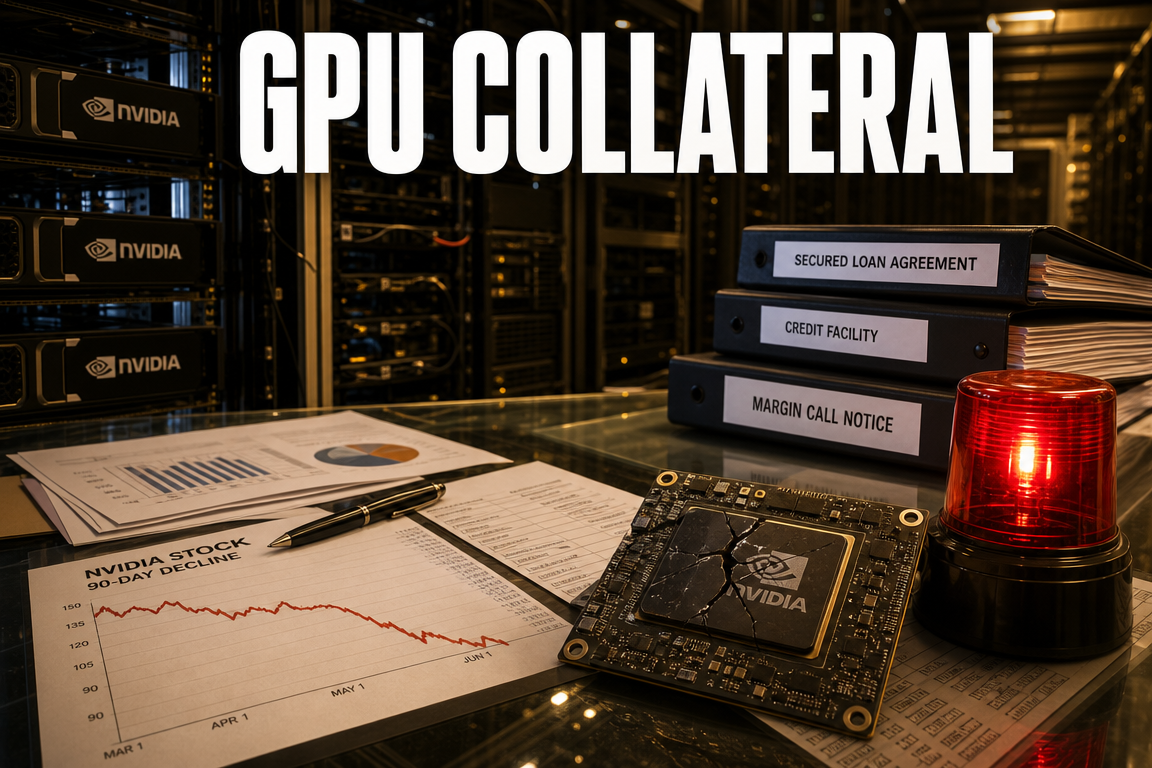
If the operator fails to service the debt, GPUs pledged as collateral become a key issue.
If collateral values decline or loan terms tighten, margin calls may follow.
If the operator cannot raise cash, the guarantor may have to absorb part of the loss.
In a structure where NVIDIA guarantees a portion of the downside, NVIDIA would bear the first layer of stress.
Further losses could then spread to Wall Street investors and other lenders.
If similar structures exist across multiple projects, sentiment in the broader AI infrastructure market could weaken.
9. Why NVIDIA Is Willing to Take This Risk
From NVIDIA’s perspective, the AI data center market must continue to expand.
GPU demand depends on continued investment by OpenAI, Anthropic, xAI, cloud providers, and sovereign AI projects.
But the scale of required capital is enormous.
For that reason, NVIDIA may be using credit support to reinforce confidence in the market.
If one large project succeeds, subsequent projects become easier to finance.
Wall Street may conclude that the model is viable.
Governments and corporations may accelerate sovereign AI data center investment.
That would expand the GPU and HBM markets further.
This is the positive feedback loop NVIDIA likely wants:
- NVIDIA provides credit support.
- Wall Street capital flows into AI data centers.
- Data centers purchase large volumes of GPUs and HBM.
- AI companies expand their services.
- AI usage increases.
- Additional data center investment follows.
The main risk is that this cycle may remain volatile until profitability is confirmed.
10. Why Samsung Electronics and SK hynix May Move Differently
AI data center expansion should increase HBM demand.
That is positive for both Samsung Electronics and SK hynix over the long term.
However, their share prices may move differently.
The market has already priced in a significant portion of SK hynix’s HBM strength.
By contrast, Samsung Electronics may still be in a phase where HBM expansion, foundry recovery, and memory cycle improvement are being reflected more gradually.
In addition, if concern about AI financing structures rises, early profit-taking may occur first in names that have already rerated strongly.
In other words, the HBM outlook remains constructive, but share-price performance may diverge based on expectations and valuation.
11. The Most Important Points Rarely Emphasized Elsewhere
First, NVIDIA is now more than a semiconductor company; it is becoming a key credit provider within the AI infrastructure ecosystem.
This may support valuation, but it also increases exposure to financial risk.
Second, the main risk in AI data centers is not GPU demand; it is the cash flow of the final customer.
The critical question is whether OpenAI can sustain long-term payments.
Third, a reduction in the guarantee should not automatically be viewed as negative.
It may instead reflect a more measured approach to risk management.
Fourth, GPU depreciation assumptions can materially change project economics.
A project that looks viable under a six-year schedule may become much weaker under a four-year schedule.
Fifth, U.S. interest rates are directly linked to the AI investment cycle.
Higher rates raise financing costs, weaken project returns, and can affect the AI premium embedded in U.S. equities, including the Nasdaq.
12. Investor Checkpoints
- Monitor whether revenue growth at OpenAI and other AI companies can support data center usage fees.
- Track how declines in AI token pricing affect profitability.
- Follow trends in B200 and H200 GPU rental pricing.
- Assess whether HBM pricing and supply contracts are translating into realized revenue.
- Watch whether U.S. interest rates fall enough to reduce financing costs.
- Track whether NVIDIA expands or further reduces its guarantee.
- Monitor continued Wall Street participation in AI infrastructure funding.
- Distinguish between Nasdaq gains driven by earnings and those driven by financing expectations.
13. Conclusion: The AI Data Center Boom Is Not Over; It Is Entering a Financial Validation Phase
This report should not be interpreted as a signal that the AI investment cycle has ended.
Rather, it indicates that AI data centers have become large enough that financial structure validation is now as important as technology competition.
If NVIDIA provides guarantees, AI data center investment may accelerate.
At the same time, NVIDIA would assume more risk as a financier, not just as a supplier.
If companies such as OpenAI demonstrate profitability, the structure could develop into a strong positive cycle.
If profitability is delayed and rates remain elevated, AI infrastructure investment may become more volatile.
Accordingly, investors should neither treat NVIDIA as an automatic winner nor dismiss the sector solely on circular financing concerns.
The key variable is the speed at which AI data centers generate real cash flow.
If cash flow growth outpaces financing costs, the AI semiconductor cycle can continue.
If not, the market is likely to demand a higher risk premium.
< Summary >
NVIDIA is reported to have reduced its guarantee for a large AI data center project from $250 billion to $120 billion.
This appears less like a simple negative event and more like a risk-management adjustment amid circular financing concerns.
GPU and HBM are the main cost drivers in AI data centers, and Wall Street capital is essential for financing projects of this scale.
The most important variable is whether OpenAI and similar customers can generate enough cash flow to support long-term usage fees.
Investors should monitor NVIDIA, U.S. interest rates, GPU rental prices, HBM demand, AI token pricing, and the data center financing structure together.
[Related Articles…]
- NVIDIA AI Data Center Financing Structure and Key Stock Market Checkpoints
- HBM Semiconductor Cycle and Global AI Infrastructure Investment Outlook
*Source: [ Jun’s economy lab ]
– 엔비디아 순환거래의 진실을 알아보자(ft.월가 채무보증)