● AI Power Bottleneck
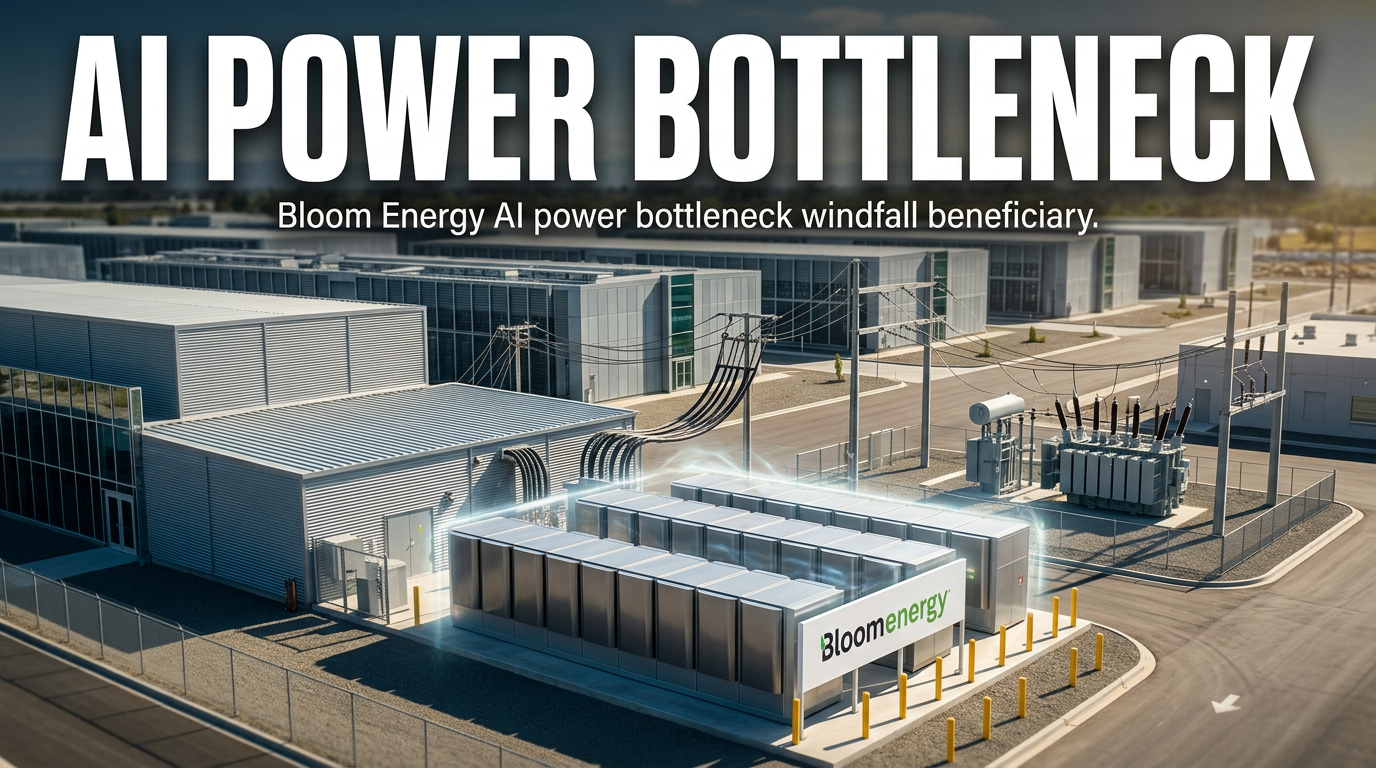
Why American Hedge Funds See Bloom Energy as a Core Player in the AI Power Bottleneck
The real bottleneck in AI data center investment is not GPUs, HBM, or network equipment, but ultimately electricity.
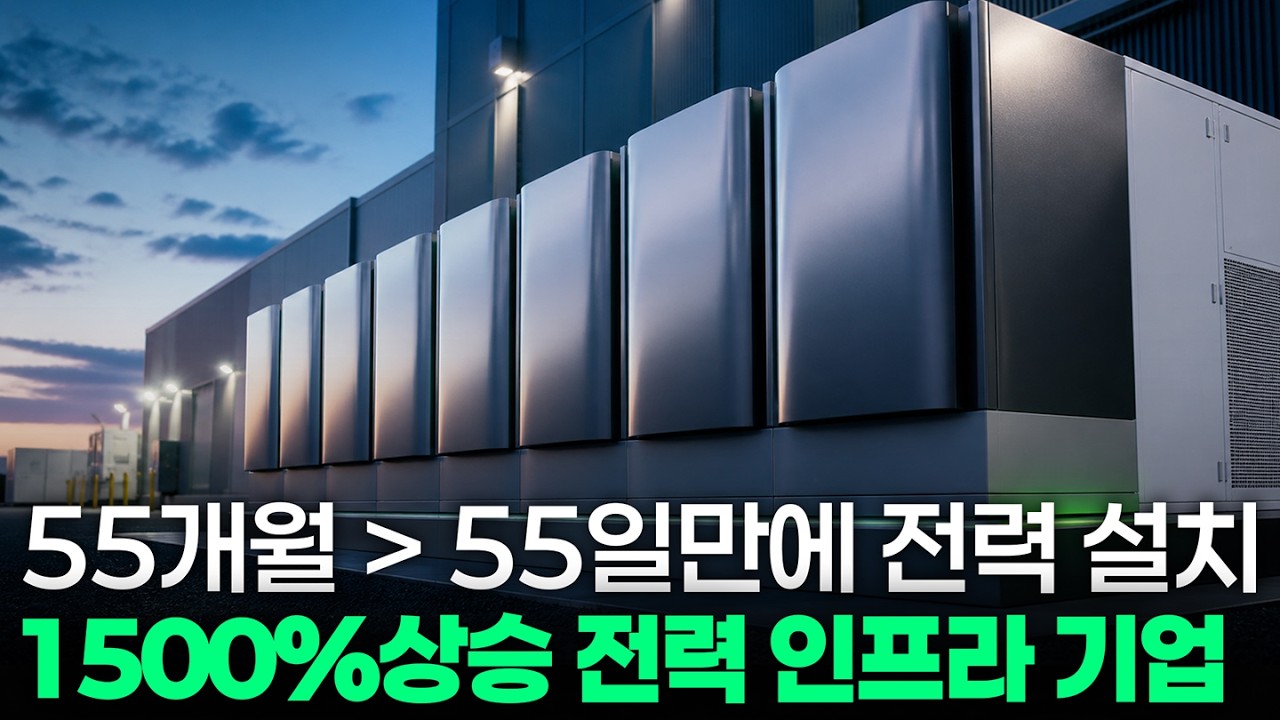
In this article, we will organize why American hedge funds see Bloom Energy as a representative beneficiary of power infrastructure, and why the story that it reduced the data center power connection period from 55 months to 55 days is being highly valued by the market.
In particular, instead of simply saying “the stock price rose a lot,” we will explain in news style the key takeaway that should be viewed together with AI data center expansion, the U.S. power grid bottleneck, onsite generation, fuel cells, hyperscaler demand, and even the future outlook for the U.S. economy.
One core point that many other news reports and YouTube videos overlook is this.
What Bloom Energy sells is not just electricity, but “time” that data center operators are willing to pay for in order to reduce trillions of won in opportunity costs.
1. Why is “power” the biggest bottleneck in the AI era?
When looking at the AI industry, most attention is focused on Nvidia GPUs, HBM memory, high-performance network equipment, and cloud investment.
However, from the perspective of companies actually operating data centers, there is a more fundamental issue.
That is power.
A data center does not run just because a building is built.
It needs GPU servers inside, and network equipment for connections between servers.
Memory and storage such as HBM, DRAM, and SSDs are also deployed at scale.
But if the electricity needed to operate all that equipment does not arrive on time, server infrastructure worth tens of trillions of won effectively becomes idle assets.
When power is delayed, companies bear two costs at the same time.
- Depreciation costs for servers and equipment already purchased
- Interest costs on data center investment funds
- Opportunity costs from delayed AI service launches
- Delays in model training and inference services versus competitors
- Business risk from missing customer acquisition timing
For AI data center operators, power is therefore not just a utility expense.
Power is a core infrastructure element that determines revenue recognition timing and service launch speed.
This is why energy infrastructure has become important again in global supply chains and the U.S. economic outlook.
2. What does it mean to reduce 55 months to 55 days?
The most important numbers in the original article are 55 months and 55 days.
In the U.S., it can take about 55 months for a data center to be connected to the power grid after construction.
55 months is about four and a half years.
In AI infrastructure competition, four and a half years is far too long.
During that period, model performance, GPU generations, customer demand, interest rates, and cloud pricing policies can all change.
But Bloom Energy reportedly installed and started up its fuel cell system at an Oracle site in 55 days.
The point the market is focusing on here is not simply that it was “fast.”
It proved that an onsite power generation model, which directly attaches a power source to the data center site instead of waiting for grid connection, is a realistic alternative.
The difference between waiting for grid connection and generating electricity directly on site can change the payback period for data center operators.
That is why Bloom Energy is evaluated not only as a power infrastructure company, but also as a company that removes bottlenecks and speeds up AI data center expansion.
3. What is Bloom Energy’s core product?
Bloom Energy’s main product is fuel cells.
More specifically, SOFC, or solid oxide fuel cells.
You do not need to understand the full chemical structure in detail.
Simply put, it is a method of producing electricity using natural gas, biogas, hydrogen, and similar inputs inside a ceramic-based fuel cell.
Instead of drawing electricity from a distant power plant, it creates power near the place where electricity is needed.
This approach fits data centers well for clear reasons.
- It can reduce delays in grid connection.
- Because it is modular, power can be added in line with data center expansion speed.
- It may reduce local resident opposition compared with gas turbines.
- It can have a relatively favorable image regarding nitrogen oxides, fine dust, and water usage.
- It aligns with the fast power procurement strategy sought by hyperscalers.
What matters here is that Bloom Energy is not viewed only as a company that supplies electricity “most cheaply.”
The market sees Bloom Energy as one of the companies that can supply electricity “most quickly.”
4. Data center opposition and Bloom Energy’s green premium
Recently in the U.S., local opposition to data center construction has increased.
The reason is simple.
Data centers use enormous amounts of electricity, cooling can create water usage issues, and onsite power generation can raise concerns about air pollution.
In particular, gas turbines, often mentioned as a traditional onsite power generation method, frequently face opposition from local residents.
This is because nitrogen oxides, fine dust, noise, and environmental permitting issues follow.
In this environment, Bloom Energy’s fuel cells are positioned as a relatively greener onsite power solution.
Of course, it would be hard to call them a completely carbon-free solution.
When natural gas is used, carbon emissions remain an issue.
But from the perspective of a data center operator, it can be a more favorable choice than gas turbines in terms of permitting and local acceptance.
Ultimately, Bloom Energy’s premium comes from the combination of three things.
- Fast installation speed
- Modular scalability
- Reduced burden from local opposition and environmental permitting
As AI infrastructure investment continues to grow, these three factors create very strong competitiveness.
5. Data centers are not completed all at once
Another reason Bloom Energy fits data centers well is its modular structure.
Data centers are not always completed as one massive project all at once.
Multiple buildings or zones are completed in stages, and the required power differs at each stage.
For example, suppose a data center complex has 10 buildings.
When the first building is completed, power can be supplied first to that building only.
Bloom Energy’s fuel cell modules fit this approach well.
You can install as much as needed, and add more modules as demand grows.
This structure is a major advantage for AI data center operators.
- Part of the operation can begin without waiting for full grid connection.
- Construction speed and power supply speed can be aligned.
- Initial investment burden can be adjusted step by step.
- Power infrastructure can be expanded in line with demand changes.
This is the point that differs most from conventional large power plants or transmission-grid-centered infrastructure.
Data centers in the AI era are a speed race.
Bloom Energy is presenting a power supply method suited to that race.
6. The high-growth structure confirmed in earnings
According to the original article, Bloom Energy’s revenue in the second quarter of 2025 was around $400 million.
And in the second quarter of 2026, one year later, it was said to have surpassed nearly $1 billion.
It is described as about 160% growth versus a year earlier and about 41.9% growth versus the previous quarter.
In a high-growth company, rapidly increasing revenue may seem common.
But the real key takeaway is margin.
In general, high-growth companies often see costs rise faster during the process of increasing revenue.
That is because they must expand factories, hire employees, secure supply chains, and add installation staff.
So even if revenue rises, operating margins can worsen.
But the original article explains that Bloom Energy showed the opposite trend.
- Gross margin is described as improving by about 6 percentage points.
- Operating margin is described as improving to about 3 times the prior level.
- As production volume increases, unit production costs decline.
- As installation experience accumulates, on-site costs also decline.
This means operating leverage is working.
As revenue grows, cost efficiency improves and profitability improves as well.
If this happens in a power infrastructure company, the market can assign a high valuation.
That is because it can be viewed not as a simple manufacturing business, but as an infrastructure platform that can repeatedly expand alongside AI data center growth.
7. Why the 3GW contract among Oracle, Brookfield, and Bloom Energy matters
The original article mentions that Oracle, Brookfield, and Bloom Energy signed a 3GW-scale power contract.
3GW is not just a project size.
It signals that data center power demand has already become a key variable in the industrial power market.
Cloud companies like Oracle need large-scale power to expand AI infrastructure.
Large asset managers and infrastructure investors like Brookfield are highly interested in power infrastructure assets that can generate long-term cash flow.
Bloom Energy provides a fast power supply solution between the two.
This combination shows how AI data center investment may evolve in the future.
- Cloud companies must secure power quickly.
- Infrastructure investors look for stable returns based on long-term contracts.
- Power solution companies receive a premium for fast installation and operational efficiency.
This structure is also linked to the interest-rate environment.
When rates are high, data center operators want to bring the payback point forward.
If power connection is delayed, the burden of interest costs grows.
Conversely, a company like Bloom Energy, which can move up the timing of power supply, can help reduce the burden of rates.
8. What it means that hyperscalers and AI labs approved it
In its earnings release, Bloom Energy said that more than 12 major U.S. hyperscalers, neo-clouds, AI labs, and data center operators had validated and approved its solution.
This sentence is extremely important.
Power infrastructure is not an area where something can be adopted just because it “looks good.”
Stability, maintenance, fuel supply, power quality, scalability, safety, and permitting feasibility all need to be verified.
Power quality is especially important for AI data centers.
If servers shut down unstably or power supply fluctuates, huge outage costs can occur.
Therefore, validation and approval from hyperscalers and AI labs is not merely a sales achievement, but a market entry barrier.
This is also why the original article mentions future expansion potential to 10GW, 20GW, and even as much as 50GW.
Once a power solution is validated, it can be repeatedly applied across multiple data center projects.
That is why Bloom Energy is seen not as a short-term thematic stock, but as a key candidate in the AI power infrastructure cycle.
9. Supply bottlenecks among the three major gas turbine makers also work in Bloom Energy’s favor
The equipment most often used in traditional onsite power generation is the gas turbine.
Companies such as GE Vernova, Siemens Energy, and Mitsubishi Power are strong in the gas turbine market.
However, the original article explains that much of their capacity has already been booked through 2029.
That means even if you order now, you may not receive it until at least three to four years later.
From the perspective of AI data center operators, there is no time to wait.
GPUs are already ordered, buildings are being built, and customer demand is growing quickly.
But if power equipment arrives three to four years later, the entire business plan is pushed back.
At that point, Bloom Energy’s fuel cells, which can be supplied relatively quickly, emerge as an alternative.
In other words, Bloom Energy’s competitiveness comes not only from the technology itself, but also from the supply bottlenecks of competing equipment.
From a global supply chain perspective, the AI infrastructure bottleneck is now spreading from semiconductors to power equipment.
This shift can directly affect the earnings and stock prices of power infrastructure companies.
10. Why American hedge funds are paying attention to Bloom Energy
The original article mentions Bloom Energy as one of the stocks heavily held in hedge fund portfolios related to Leopold Aschenbrenner.
It also notes that the stock price rose several hundred percent over the past year.
The reason American hedge funds are focusing on Bloom Energy is not only the green energy theme.
The core point is the judgment that the most scarce resource in the AI infrastructure investment cycle is power.
If you break the AI investment cycle into stages, it looks like this.
- Stage 1: Competition to secure GPUs and HBM
- Stage 2: Securing data center sites and cooling infrastructure
- Stage 3: Securing grid connection and onsite generation
- Stage 4: Commercialization of AI services and expansion of cloud revenue
The market is currently shifting its attention to stage 3.
That is because without power, GPU investment does not translate into revenue.
Bloom Energy is gaining attention as one of the fastest solutions at this stage.
So from a hedge fund perspective, Bloom Energy can be evaluated not as a simple energy company, but as an AI bottleneck relief company.
11. The nature of the premium Bloom Energy receives is the “time premium”
This is the part most often missed in other news reports and YouTube videos.
What Bloom Energy sells is not electricity alone.
Bloom Energy sells time.
One year is enormously valuable to a data center operator.
If server infrastructure worth tens of trillions of won starts operating one year earlier, cloud revenue and AI service revenue can be brought forward by that much.
On the other hand, if power connection is delayed by one year, server equipment depreciates, interest costs accumulate, and competitors take the market first.
From this perspective, even if Bloom Energy’s price looks expensive, operators have a reason to pay it.
It may seem expensive if you only compare electricity unit costs.
But the story changes when you include the opportunity cost caused by delayed data center operation.
Bloom Energy’s real product is not kWh, but the time-saving effect that allows AI data centers to start operating faster.
12. Why revenue growth and margin improvement matter at the same time
When looking at high-growth companies, focusing only on revenue growth can be risky.
That is because many companies keep increasing losses in order to grow revenue.
But what the market sees positively in Bloom Energy is that growth and profitability improvement are occurring at the same time.
The more factories run, the lower the fuel cell manufacturing cost becomes.
The more installation projects repeat, the higher on-site work efficiency becomes.
As customer companies get larger, contract sizes also grow.
In this kind of structure, operating margins can improve as revenue scale increases.
Of course, not every manufacturing-based company can maintain this structure stably.
Parts procurement, quality control, installation labor, maintenance costs, and fuel price fluctuations remain variables.
Even so, the reason the market currently values Bloom Energy highly is that the potential for operating leverage is beginning to show up in the numbers.
13. Key variables that will determine Bloom Energy’s growth scenario
It is true that Bloom Energy’s growth looks strong, but unconditional optimism should be avoided.
There are quite a few variables to watch going forward.
- Order volume: After the 3GW contract, it is important how much additional hyperscaler business actually follows.
- Production capacity: Even if demand explodes, revenue recognition can be delayed if production cannot scale quickly.
- Margin retention: During revenue growth, parts costs, labor costs, and installation costs could rise again.
- Fuel prices: Natural gas price volatility can affect customers’ economic decisions.
- Policy changes: Green subsidies, power permitting, and carbon regulation changes can affect business viability.
- Competing technologies: It must compete with gas turbines, reciprocating engines, battery storage, small modular reactors, and renewable PPAs.
- Valuation: Since the stock has already risen sharply, volatility can increase if results fail to meet expectations.
Especially for power infrastructure stocks, short-term stock price volatility can be large even if long-term growth is solid.
When AI data center expectations become overheated, these stocks can receive high valuations, but if orders are delayed or margins worsen, corrections can also come quickly.
14. Key checkpoints to watch from an investment perspective
When viewing Bloom Energy from an investment perspective, you should not stop at the phrase “AI beneficiary.”
You should continue to check the following items.
- Whether actual contracts with major cloud companies beyond Oracle expand
- The pace of growth in the share of revenue from data centers
- Quarterly trends in gross margin and operating margin
- Backlog and production capacity expansion plans
- Whether installation time is actually continuing to shorten
- Fuel cell maintenance costs and the structure of long-term service revenue
- How long the gas turbine supply bottleneck lasts
- Changes in U.S. power grid investment policy and permitting conditions
The more a stock has already risen, the more likely good news has already been reflected in the price.
Therefore, the core point is less “Is it a good company?” and more “Can it grow faster than expectations?”
In Bloom Energy’s case, market expectations have already risen.
Going forward, actual orders, revenue recognition, and margin improvement must continue to keep pace with those expectations.
15. The most important points not well covered in other YouTube videos or news reports
First, Bloom Energy’s core competitiveness is not the cost of electricity, but the ability to bring forward the time when data centers start operating.
For AI data center operators, the most expensive cost is not the electricity bill, but the delay in operation.
Time with idle servers, time lost to customers, and time given to competitors are even larger costs.
Second, Bloom Energy is not rising only because it is a green company.
What matters more is that it is a practical alternative that can reduce local opposition and permitting issues.
As data center moratoriums and resident opposition increase, the acceptability of onsite generation becomes an important competitive advantage.
Third, the gas turbine supply bottleneck is Bloom Energy’s hidden catalyst.
If you have to wait until 2029 even after ordering traditional power equipment, data center companies have no choice but to seek faster alternatives.
When Bloom Energy proves actual delivery speed, the potential for market share expansion grows.
Fourth, Bloom Energy is a manufacturing company, but operating leverage is appearing.
If the structure in which margins improve as revenue grows continues, it could receive a higher valuation than a simple equipment seller.
Fifth, the AI infrastructure cycle is shifting from semiconductors to power.
After Nvidia, HBM, and cloud companies, the market will look at power grids, generation equipment, cooling, transmission and distribution, and energy storage systems.
Bloom Energy is at the center of that shift.
16. Conclusion: Bloom Energy is not a “company that sells electricity,” but a “company that sells AI speed”
The reason Bloom Energy is drawing interest from American hedge funds is clear.
In the AI data center era, the scarcest resource is power, and Bloom Energy has a solution that can supply that power quickly.
The story that it shortened a grid connection that could take 55 months to an onsite generation model of around 55 days sends a strong message to the market.
With large contracts with Oracle and Brookfield, hyperscaler validation, approval from neo-clouds and AI labs, and the gas turbine supply bottleneck all overlapping, Bloom Energy is emerging as a representative company in AI power infrastructure.
However, since the stock has already risen substantially, risks must also be recognized clearly.
Valuation burden, production capacity expansion, margin retention, fuel prices, policy changes, and competing technologies all need to be monitored.
Even so, the reason Bloom Energy has emerged as an important company amid the continued expansion of AI infrastructure investment is clear.
The real bottleneck in the AI era is power, and Bloom Energy is being viewed as one of the companies that can break that bottleneck the fastest.
< Summary >
Bloom Energy is attracting attention as a representative onsite power generation company that can solve the AI data center power bottleneck.
While grid connection for U.S. data centers may take about 55 months, Bloom Energy drew market attention with a case in which fuel cell power was started up in 55 days at an Oracle site.
Its core product is the SOFC solid oxide fuel cell, and because it can be installed modularly, it can supply power in stages in line with data center construction speed.
The 3GW-scale contract with Oracle and Brookfield, validation by hyperscalers and AI labs, and the gas turbine supply bottleneck are all factors raising expectations for Bloom Energy’s growth.
The most important point is that Bloom Energy is not simply a company that sells electricity, but a company that sells the “time premium” that brings forward data center operating time.
However, after the stock’s strong rise, valuation burden, production capacity, margin retention, fuel prices, and policy changes must all be watched carefully.
[Related Articles…]
- AI Data Center Power Bottlenecks and the Infrastructure Investment Cycle
- U.S. Data Center Investment Expansion and Beneficiaries of the Energy Transition
*Source: [ 월텍남 – 월스트리트 테크남 ]
– 미국 헤지펀드들이 ‘전력 병목’ 1위 기업으로 꼽는 이유..