● Rate Shock, Oil Surge, Bitcoin Breakout
U.S. Long-Term Yield Rebounds to 5.2%, Oil Tops $94, Bitcoin Breaks $70,000: The Key Variables Driving Markets Now
Today’s market story is not simply that rates rose, oil rose, or Bitcoin surged.
The U.S. Treasury eased immediate pressure through longer-dated bond buybacks, but the market has already begun pricing in the side effects.
Walmart’s earnings signal not a collapse in U.S. consumption, but greater price sensitivity among consumers.
Alibaba’s results show that China is now fully engaged in the AI investment race, while also highlighting capex pressure more than revenue growth.
Bitcoin’s rally reflects not only speculative demand, but also expectations that U.S. crypto regulation could shift.
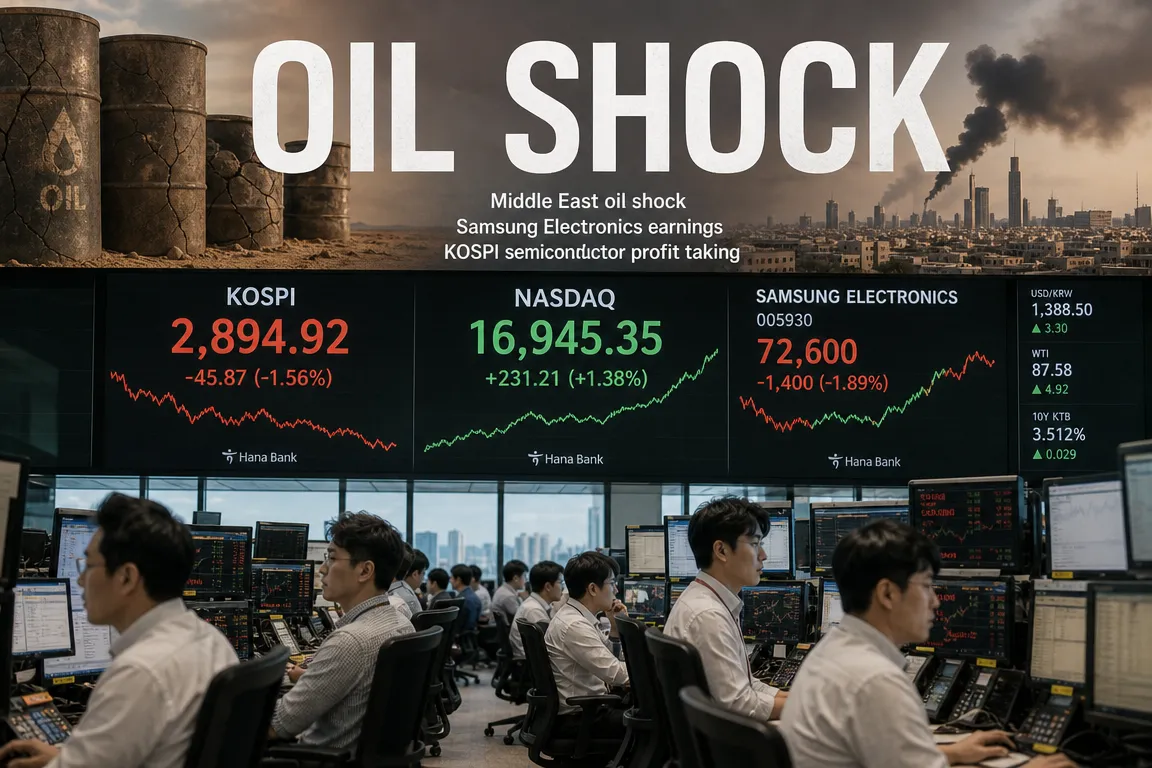
In Korea, expectations for large-scale shareholder returns from Samsung Electronics and SK hynix helped lift semiconductor stocks again.
1. Early U.S. Market Tone: Rates and Oil Pressured Equities Again
U.S. equities traded lower in early session activity.
The Dow fell about 0.6%, the S&P 500 declined about 0.3%, and the Nasdaq 100 was down roughly 0.3% to 0.4%.
The main pressure came from long-term yields and crude oil.
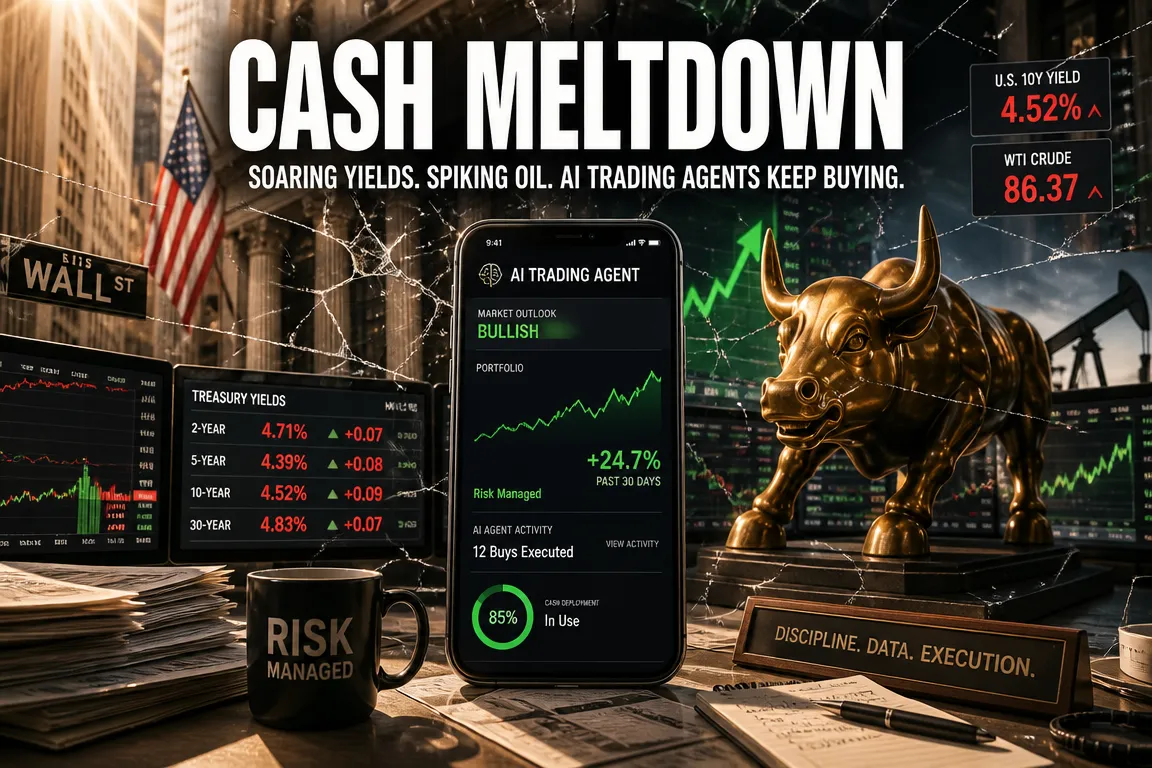
Following the U.S. Treasury’s expanded buyback announcement, the 30-year Treasury yield had briefly fallen to around 5.18%.
It rebounded to near 5.2% within a day.
Oil was also firm.
WTI rose by nearly 3%, while Brent gained more than 2% to around $94 per barrel.
Rising rates and oil together are negative for markets because they increase financing costs and inflation pressure.
This combination also weakens expectations for Federal Reserve rate cuts.
2. What the Treasury Buyback Really Means: It Lowered Yields, but Did Not Solve the Problem
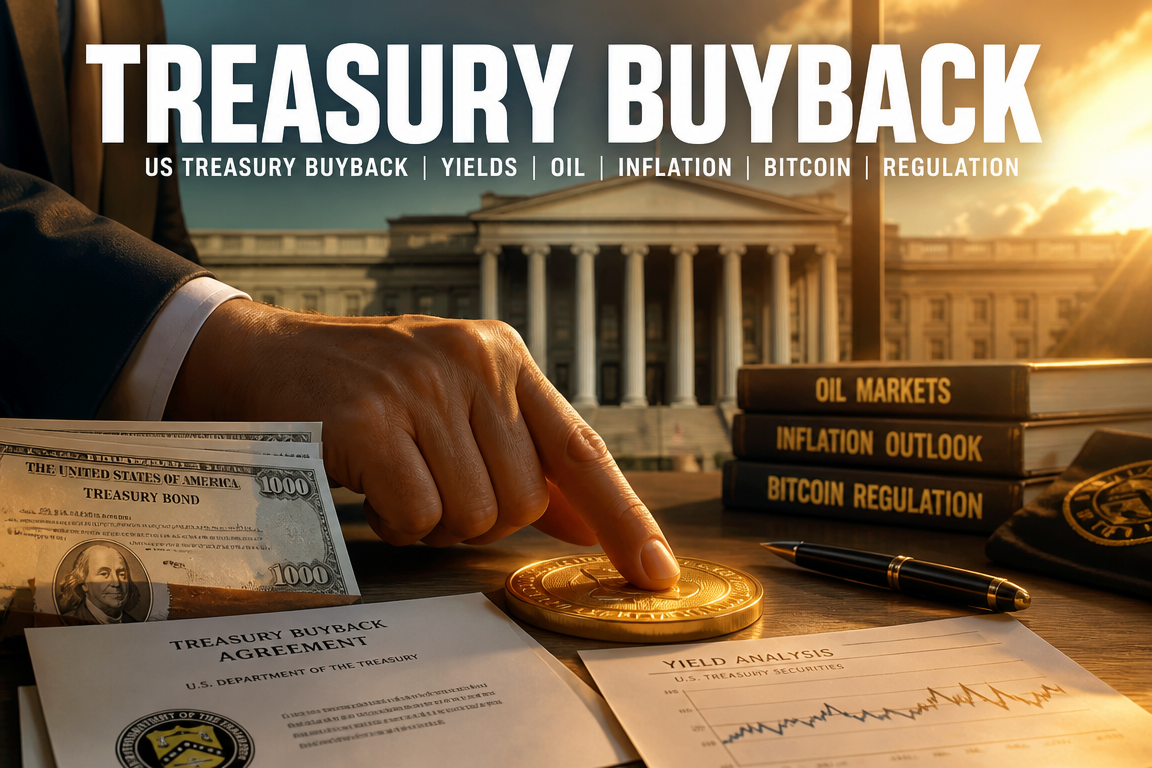
The U.S. Treasury increased its buyback size for 10- to 30-year Treasuries from $2 billion to at least $4 billion.
Markets viewed the move as a circuit breaker against sharp long-end yield increases.
After the announcement, buying interest pushed 10-year and 30-year yields lower.
However, the effect did not last.
The reason is straightforward.
The underlying drivers of higher long-term yields remain in place.
The U.S. fiscal deficit remains large, and debt burdens have not eased.
Oil-driven inflation concerns are also rising again.
At the same time, large corporate bond issuance tied to AI investment is adding upward pressure on long-term yields.
3. The Less Discussed Key Point: Buybacks Are Not Free
The most important issue is that the U.S. Treasury cannot print money to buy bonds in the way the Federal Reserve can.
It must fund buybacks through some source of financing.
Markets expect the Treasury to increase T-bill issuance to finance longer-duration purchases.
That would reduce long-dated supply and support long-term yields.
But it would also increase short-term bill supply, keeping short-term rates relatively elevated.
This matters because it may worsen the U.S. government’s interest burden.
Thirty-year bonds lock in funding costs for a long period.
By contrast, 3-month or 6-month bills must be refinanced repeatedly.
In a high-rate environment, the government is forced to borrow more often and at higher rates.
As a result, suppressing long-term yields may come with the cost of higher short-term funding pressure.
4. The Federal Reserve Faces a More Complicated Environment: Easier Financial Conditions, Higher Inflation Pressure
Lower long-term yields are positive for housing and equities.
Mortgage rates may decline, and corporate long-term funding costs may ease.
That effectively loosens financial conditions for consumers and businesses.
However, this creates a problem for the Federal Reserve.
The Fed is maintaining high rates to bring inflation down.
If the Treasury suppresses long-term yields and eases financial conditions, consumption and investment may remain resilient.
That could slow disinflation.
As a result, the timing of Fed rate cuts may be pushed further out.
The gap between market expectations for early easing and the Fed’s actual policy stance could widen further.
5. U.S. Economic Data Remained Solid: Manufacturing and Labor Were Both Firm
The Philadelphia Fed manufacturing index came in at 47.4.
That was well above the consensus estimate of 24.1.
Readings above zero indicate expansion.
A level of 47.4 suggests very strong manufacturing sentiment.
Initial jobless claims were 206,000.
That was below the expected 210,000 and down from the previous 212,000.
This suggests companies are not yet moving into broad-based layoffs.
With both manufacturing and labor holding up, the Fed has little urgency to cut rates.
These data points also support higher Treasury yields.
6. Walmart Earnings: U.S. Consumers Are Not Breaking, but They Are More Price Sensitive
Walmart beat expectations on both revenue and earnings.
Revenue came in at about $188.79 billion, slightly above the expected $188.6 billion.
Adjusted EPS was $0.81 versus the expected $0.74.
E-commerce sales rose 23%.
On the surface, the report was solid.
Yet the stock fell more than 8% in early trading.
The issue was same-store sales in the U.S.
U.S. same-store sales increased only 2.6%, well below the expected 3.7%.
That was the slowest pace since Q4 2020.
However, this should not be read as a collapse in U.S. consumption.
Pharmacy sales were affected by Medicare prescription drug price reductions.
Excluding healthcare and pharmacy effects, same-store sales growth was 3.4%.
That is still below the 3.7% forecast, but materially better than the headline 2.6% figure.
The takeaway is that U.S. consumption remains resilient, but consumers are becoming more price conscious.
Inflation has made basket spending more cautious.
7. Alibaba Earnings: AI Revenue Improved, but Capex Pressure Was Greater
The key theme in Alibaba’s results was AI investment.
Revenue rose 9% year over year to 268.9 billion yuan.
The cloud division was strong.
External customer cloud revenue increased 45%.
AI-related product revenue extended its streak of triple-digit growth for the 12th consecutive quarter.
On the surface, the report was strong.
However, the stock declined.
The reason was capex pressure.
Capital expenditure rose 75% year over year to 67.7 billion yuan.
The increase reflected heavier investment in data centers, servers, and AI chips.
As a result, net income fell 76% year over year to 10.5 billion yuan.
The market is now focusing less on AI revenue growth alone and more on how quickly AI investment turns into earnings.
This applies not only to U.S. megacap tech, but also to Chinese internet companies.
8. AI Investment Benefits Are Spreading Beyond Semiconductors to Industrial Equipment
Deere’s earnings offered a useful signal.
Deere is best known as an agricultural equipment company, but its construction equipment business is also important.
Adjusted EPS was $5.10, up from $4.75 a year earlier.
Revenue rose about 6% to $11 billion.
The stronger segment was not traditional farm equipment, but construction equipment.
Demand improved as infrastructure spending and AI data center construction increased in the U.S.
This is an important market shift.
The AI investment cycle is no longer limited to Nvidia, TSMC, or SK hynix.
It is also reaching equipment makers, power infrastructure, cooling systems, and construction-related suppliers.
AI should now be assessed across the semiconductor chain and the broader infrastructure ecosystem.
9. A Sharp Rebound in Korean Equities: Shareholder Returns from Samsung Electronics and SK hynix Lifted the KOSPI
Korean equities rebounded strongly after the previous day’s sharp decline.
The KOSPI rose more than 5%.
Semiconductors were the main driver.
SK hynix announced a 40 trillion won share cancellation plan.
The company also said it would return more than 50% of free cash flow to shareholders from 2025 to 2027.
Samsung Electronics is also being discussed as a possible candidate for a new shareholder return program worth more than 100 trillion won.
However, this remains unconfirmed.
The market is focusing on the possibility of a special dividend.
Expectations that AI memory cycle profits may be returned to shareholders helped drive semiconductor valuations higher.
10. In Shareholder Returns, Timing Matters More Than Size
Share buybacks are not automatically positive.
The key question is the price at which a company repurchases its own stock.
Before the financial crisis, U.S. companies aggressively increased buybacks in 2007, when valuations were high.
They then reduced buybacks in 2009, when prices were much lower.
In effect, they bought more when stocks were expensive and less when they were cheap.
That pattern can reduce the value of buybacks as a shareholder-return tool.
SK hynix is being viewed differently.
The company raised capital through its U.S. ADR listing at a relatively high valuation and is now executing large-scale buybacks and cancellations after the stock has pulled back.
Structurally, that looks like selling at a higher level and repurchasing after prices have fallen.
That is one reason the market is responding positively.
11. Bitcoin Breaks $70,000: Regulation Clarity Matters More Than Rates
Bitcoin rose sharply, briefly moving above $72,000 before trimming gains and trading around $71,000.
Coinbase, Strategy, and Circle also advanced.
The first driver was the expectation of lower long-term yields.
Lower rates generally support risk assets, including Bitcoin.
However, the more direct catalyst was expectations for a shift in U.S. crypto regulation.
Reports that President Trump met with crypto industry executives at the White House and urged Congress to pass the Clarity Act affected sentiment.
The Clarity Act is intended to define how digital assets are regulated in the U.S.
Until now, the legal treatment of cryptocurrencies as securities or commodities has remained unclear.
If a token is treated as a security, it falls under SEC oversight.
If it is treated as a commodity, the CFTC has jurisdiction.
Clearer rules would make it easier for companies to plan and for institutional investors to enter the market.
In other words, the market is reacting less to deregulation itself and more to the reduction of regulatory uncertainty.
12. Another Factor Behind Bitcoin’s Rally: A Short Squeeze
Bitcoin had been range-bound in the $60,000 area for some time.
That led many traders to position for further downside.
When long-term yield expectations improved and pro-crypto policy expectations rose at the same time, prices moved up quickly.
Traders betting on a decline were forced to close positions to limit losses.
That created additional buying pressure.
This is a short squeeze.
The rally was therefore amplified by policy expectations, rate expectations, and short-covering.
13. Sector-by-Sector Market Reaction
Semiconductors: Mixed early trading, followed by partial recovery in some names.
Nvidia edged higher, and the U.S.-listed SK hynix ADR remained firm.
AMD, Micron, and TSMC were weaker in premarket trading.
Big Tech: Tesla extended early losses.
Amazon, Alphabet, and Microsoft also traded lower.
Meta and Apple were relatively resilient.
Retail: Walmart fell sharply after earnings.
Revenue and earnings were solid, but weaker same-store sales weighed on sentiment.
China ADRs: Alibaba declined despite AI and cloud growth because of capex pressure.
Energy: Higher crude prices supported Exxon Mobil and Chevron.
Pharmaceuticals: Moderna gave back part of the previous day’s gains as profit-taking emerged.
The broader pharmaceutical group also traded weakly.
Crypto: Bitcoin’s rally lifted Coinbase, Strategy, and Circle.
14. The Bigger Picture Investors Should Watch
First, U.S. long-term yields are not yet stable.
The Treasury’s buyback signals a willingness to intervene, but fiscal deficits and inflation pressure remain.
Second, higher oil prices could unsettle rate-cut expectations.
Oil near $94 per barrel may add to inflation pressure.
Third, U.S. consumption has not broken, but it is slowing.
Walmart’s results show consumers are becoming more cautious.
Fourth, the AI investment cycle is still intact, but the market is now demanding returns.
As Alibaba showed, revenue growth alone is not enough; the speed of capex conversion into earnings now matters.
Fifth, Bitcoin is increasingly sensitive to policy variables.
The crypto market is moving beyond a simple liquidity trade toward a regime where regulatory clarity is the key variable.
Sixth, Korean semiconductor stocks are now being judged not only on AI memory demand, but also on shareholder return policy.
The way Samsung Electronics and SK hynix allocate cash may have a greater impact on valuations going forward.
15. The Most Important Point Rarely Discussed Elsewhere
The key issue is not simply that the U.S. Treasury has pushed long-term yields lower.
The more important point is that the process may require greater short-term bill issuance, which could increase the U.S. government’s near-term interest burden.
That can stabilize markets in the short term, but over time it may expose fiscal risks to the market more frequently.
Another important point is that the benefits of the AI investment cycle are no longer confined to semiconductors.
Capital is also flowing into data center construction, power infrastructure, cooling systems, and industrial equipment.
Deere’s results are a good example of that trend.
Bitcoin’s rally is also more than a simple price rebound.
It reflects expectations that the U.S. regulatory framework may become clearer.
Institutional investors generally prefer markets with defined rules rather than markets with regulatory ambiguity.
That could become a structural shift for digital assets.
< Summary >
U.S. equities weakened as long-term Treasury yields rebounded and oil rose to around $94 per barrel.
The Treasury’s long-duration buybacks provided temporary support, but possible increases in T-bill issuance and higher interest costs remain a concern.
The Philadelphia manufacturing index and jobless claims showed that the U.S. economy remains firm, reducing the case for near-term Fed easing.
Walmart’s results indicated stronger price sensitivity among consumers rather than a collapse in U.S. demand.
Alibaba delivered AI and cloud growth, but heavy capex weighed on earnings and the stock.
The AI investment cycle is spreading beyond semiconductors into data center construction and industrial infrastructure.
Korean equities rebounded sharply on expectations of major shareholder returns from Samsung Electronics and SK hynix.
Bitcoin broke above $70,000 on expectations of clearer U.S. crypto regulation and a short squeeze.
[Related Articles…]
U.S. Long-Term Yield Outlook and Fed Cut Scenarios
AI Data Center Investment Cycle and Semiconductor Outlook
*Source: [ Maeil Business Newspaper ]
– 美장기금리 다시 상승·유가 94달러ㅣ월마트 급락·알리바바 실적ㅣ비트코인 7만달러 급등, 美코인 규제 바뀌나ㅣ홍혜진의 뉴욕브리핑